A visit today to a man few will know. An artist who worked with stone creating images to illustrate other authors works. #JosephNash (1809 – 1878) was born in Great Marlow which is west of London. As a child he displayed aptitude for art and studied with Augustus Charles Pugin who specialised in writing about and drawing medieval architecture. 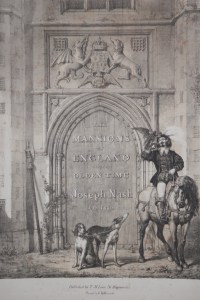 Around 1830, Nash became interested in lithography. As his mentor was so was Nash. His early career saw him concentrate his work on architectural images and genre scenes. He was able to combine the authenticity of the architectural place settings with an historical romanticism portrayed by the people in his images. His most famous work might well be his illustrating of Sir D Wilkie’s “Oriental Sketches” but he created many large sets not just to compliment others works but on his own as well.
 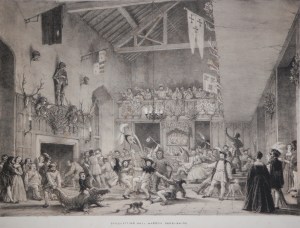 The images displayed here are taken from his work ‘The Mansions of England in the Olden Time. Nash produced 104 lithographs in 4 volumes showing the famous and not so famous country homes found across England. A fifth volume accompanied the original four containing only text regarding the lithographs. It took ten years to complete the work – 1839 to 1849. Nash visited every house and recorded in detailed drawings his observations. From these sketches, he then created a romanticised image by adding people and animals in a tableaux of Tudor life.
  These images brought him fame and popularity.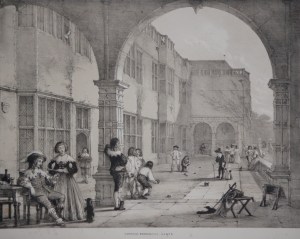
I came across the first volume of 26 and added it to my collection this past week. They are fine works by a master craftsman.


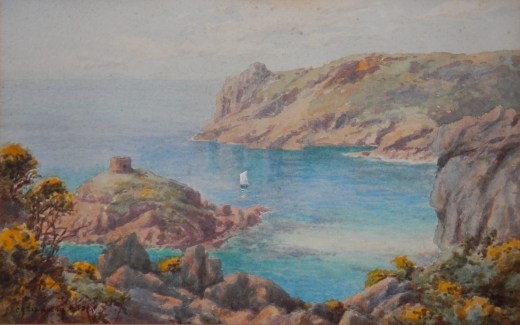 The scene which we see here is titled ‘Janvrin’s Tomb’. It is found on the tidal island of L’Ile au Guerdain in Portelet Bay. The tomb/tower is also known as Portelet Tower. It was built in 1808 by the British. It was 17ft (5m) tall and 27ft (8m) in diameter – housed a garrison of 12 men and their commanding sergeant and was armed with an 18-pounder carronade.
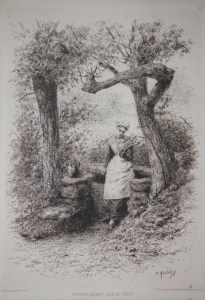 He was born in Verdun and went on to study painting and etching under artists like Lanielle, Leclaire and Boulanger. He began to exhibit at the Salon in 1863. Rudaux was a foundational member of a group of artists which revived etching in France after the passing of Charles Meryon. He along with others like Corot, Daubigny, Jacque, and Bracquemond all made etching a vital part of their artistic life and output.
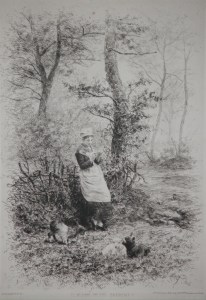 Both etchings shown here (from my collection) Passablement…pas du tout (Quite a bit…not at all) and Il M’aime un peu..beaucoup? (He loves me a little …a lot?) bear the publisher’s name and printers address “Vve Cadart Edit. Imp. 56 Blvrd Haussman, Paris. Both were printed between 1874 and 1882.
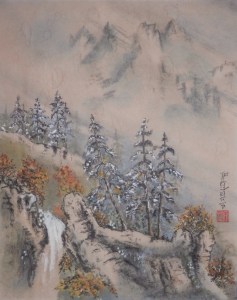 It is associated with a refined scholarly taste. The Chinese term for ‘landscape’ is made up of two characters which translate as ‘mountains and water’. This type of painting is also tied to Daoism and its’ emphasis on harmony with the natural world. Mountains are seen as reaching up to heaven and therefore good for the soul to look upon.
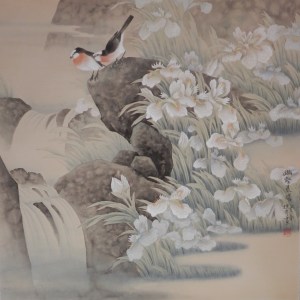 The intensity of the ink colour would depend on the wetness or dryness of the brush and the amount of water used in the ink.
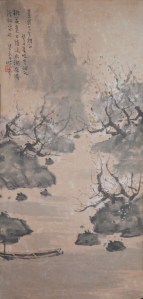 During the 17th century training manuals began to appear. They described a step-by-step approach as to how to paint like a particular artist. They explained the techniques used in illustrating various subjects/objects. The different types of brush strokes were named and explained.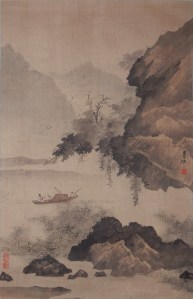
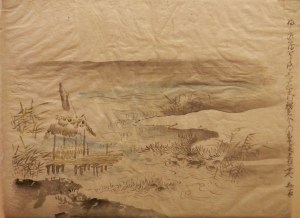
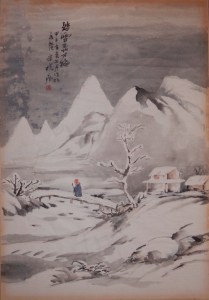 Simplicity. A combining of sublime technique and imagination to produce art that inspires and lifts the spirit. What more could one ask for.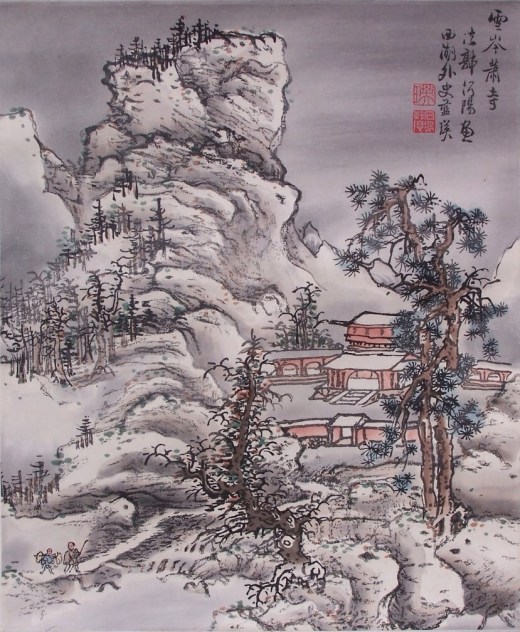
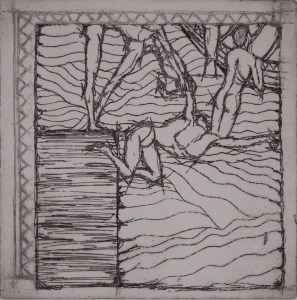
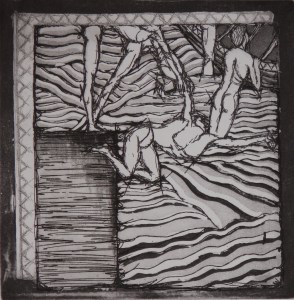
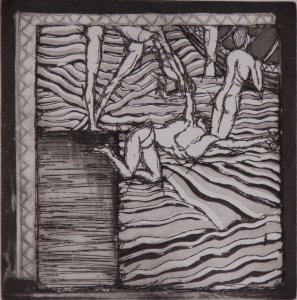
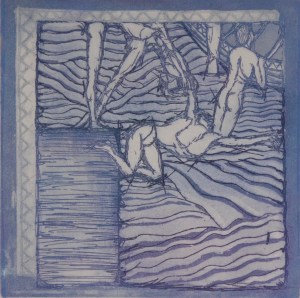

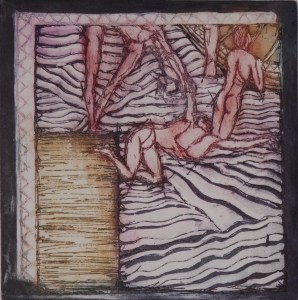 I cannot say for sure that these etching were created by Grant or another of the Bloomsbury Group since they are unsigned but it would be a brave artist to create these without his permission. I have not found anything like these six ‘states’ on the web.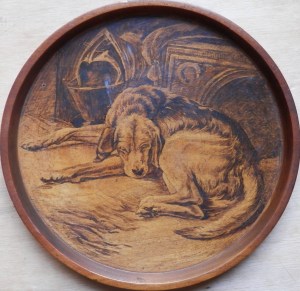
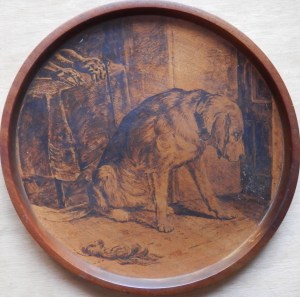 I acquired two 9″ diameter mahogany plaques with finely painted representations of Landseer’s work. ‘Sleeping Bloodhound’ and ‘Suspense’ are presented here done with black oil paint over graphite. They were painted no later than 1900 and possibly much earlier even to Landseer’s time. Might they even be by the great artist. He was known to paint on mahogany panel. They are fine works and unique in shape and material in my searchings.
 The mezzotint ‘Waiting for Master’ was etched by William Giller after Landseer’s painting called ‘Favourites’ which resides with the Royal Collection.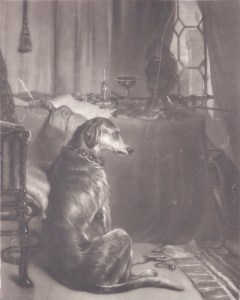
 One can understand Edwin Landseer’s popularity just from these few works and the reproducing of his work in other mediums allowed his reputation to grow and grow and grow. One quirky point about Landseer is that he was reported to be able to paint with both hands at the same time. A skill indeed seeing the wonderful technique in his works.
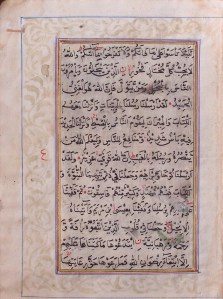
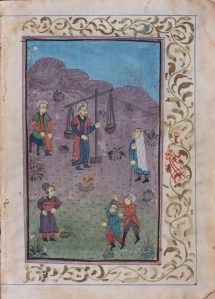 The decorating of books by great artists has been done in most societies. Each with their own styles and techniques. Here presented are the recto and verso of a decorated book.
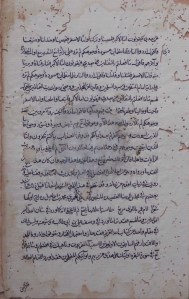
 And we finish with a piece which has been decorated – but in this case the painting has been inserted over the top of the original written text. Still beautiful but why paint over the text.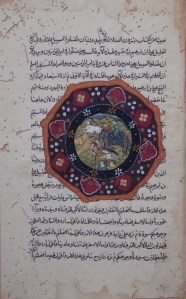
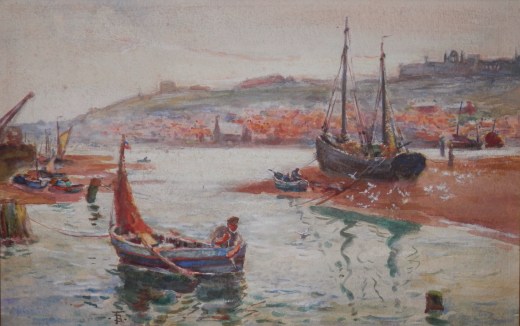 Birket Foster traveled widely ; Scotland, Germany, the Alps, Italy, Venice, the Mediterranean, and the Rhine Valley. He eventually settled in Witley near Godalming, Surrey where he built his residence called ‘The Hill’. He was friends with William Morris and Edward Burne-Jones, his contemporaries, and decorated his home with a number of their works.
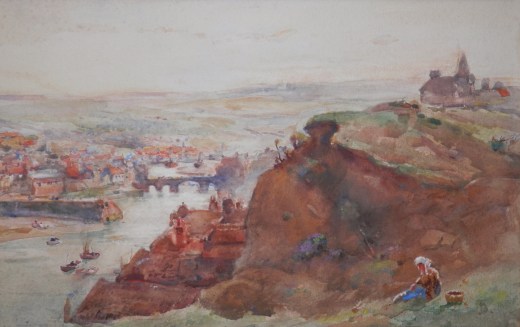 The two paintings, presented here, are, I believe, early in his watercolour phase. They are monogrammed (in the regular way) and titled on the verso ‘Whitby Harbour’ and ‘Whitby from West Cliff’. They show only the beginnings of the sentimentality found in his later works and certainly show his eye for detail and hand for execution. Both pieces are 6.25″ by 10.5″ and traveled through the hands of J Pratt Art Dealer in Nottingham. Two lovely pieces by a deservedly well thought of artist.
 ronsartblog