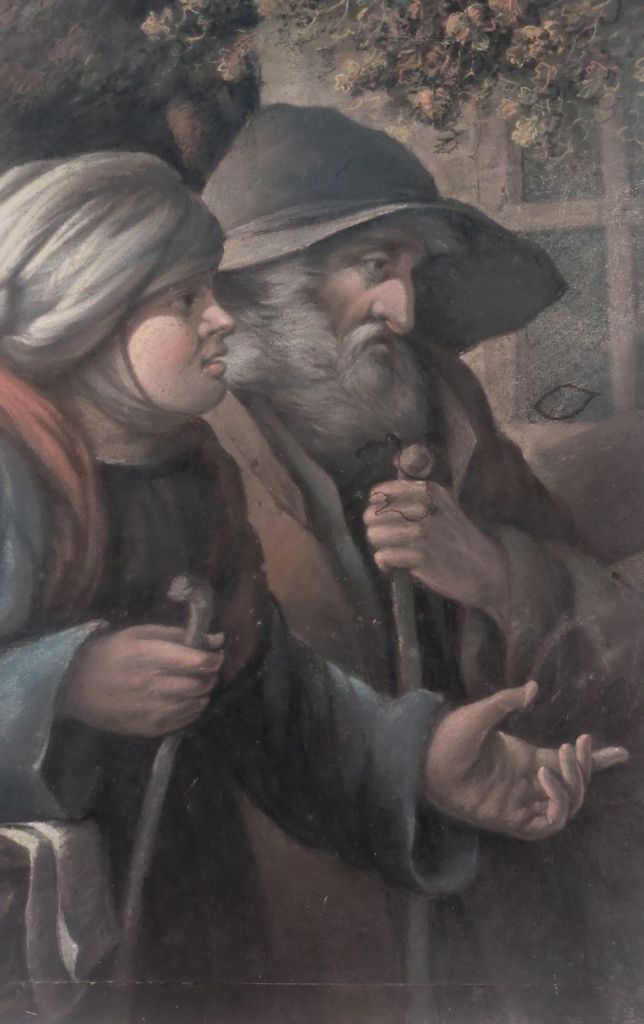
I recently added a pastel drawing to my collection. it was described as after Italian artist Antonio Rotta (1828-1903) and titled Charity to a Family of Beggars. This would mean that it is a 19th-century artwork. As with all pastel works, one must be careful while handling since pastel as well as chalk do not harden or soak into the paper. They are laid on top, which means they can be smudged or rubbed off.
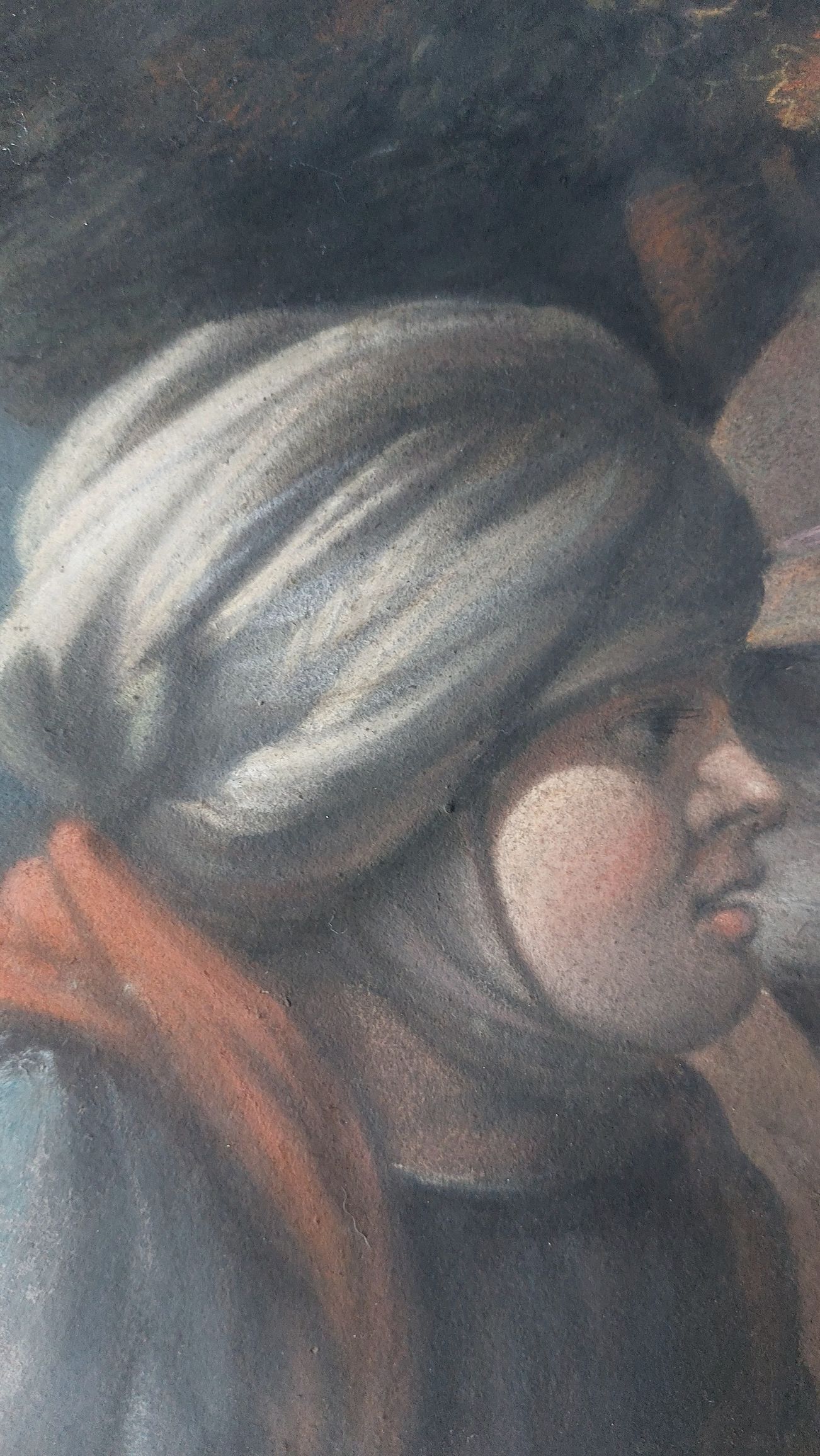
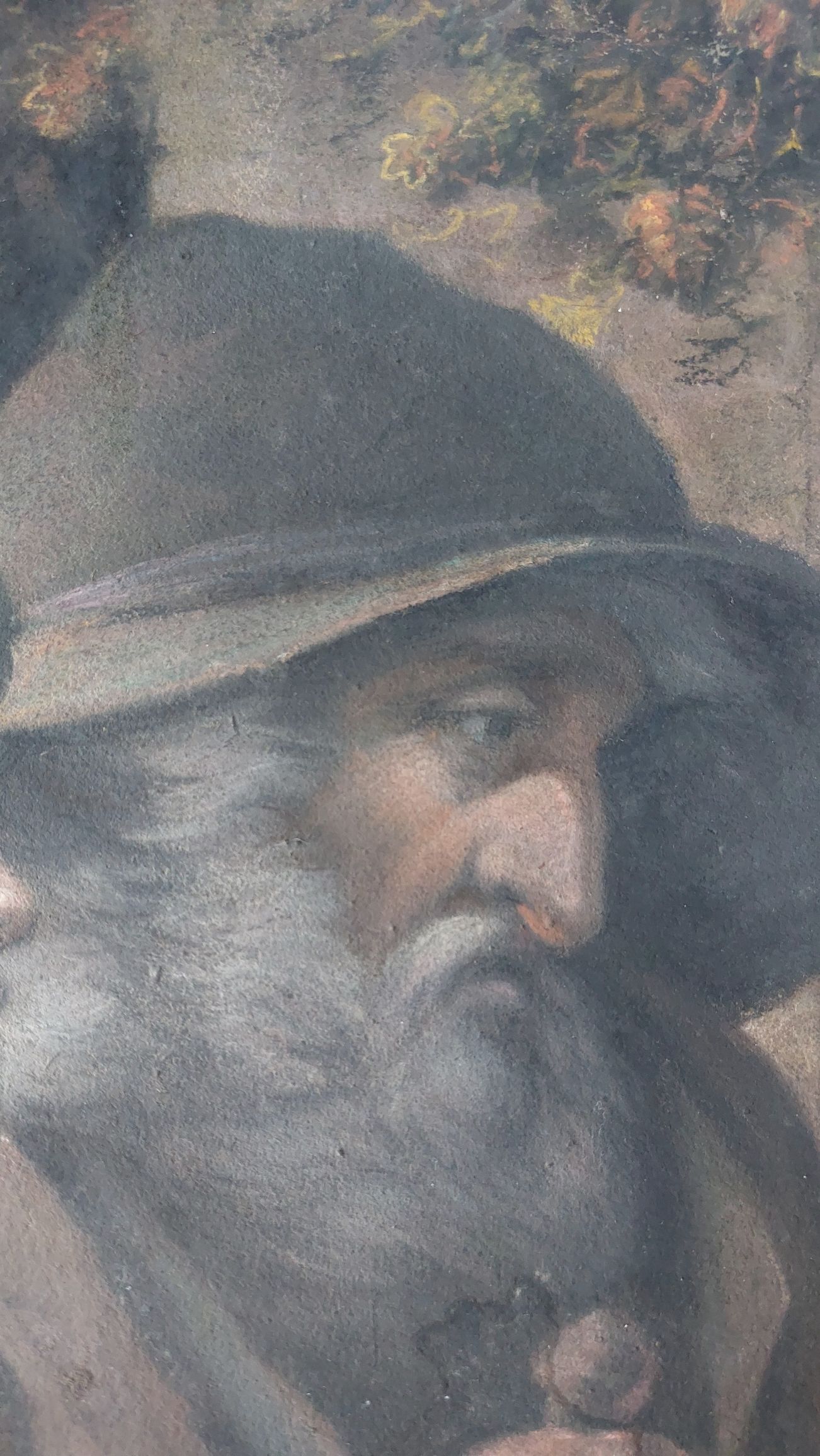
The colours are laid and then rubbed or brushed to blend. The blending is often done with a finger. This blending creates an image with soft undefined edges.
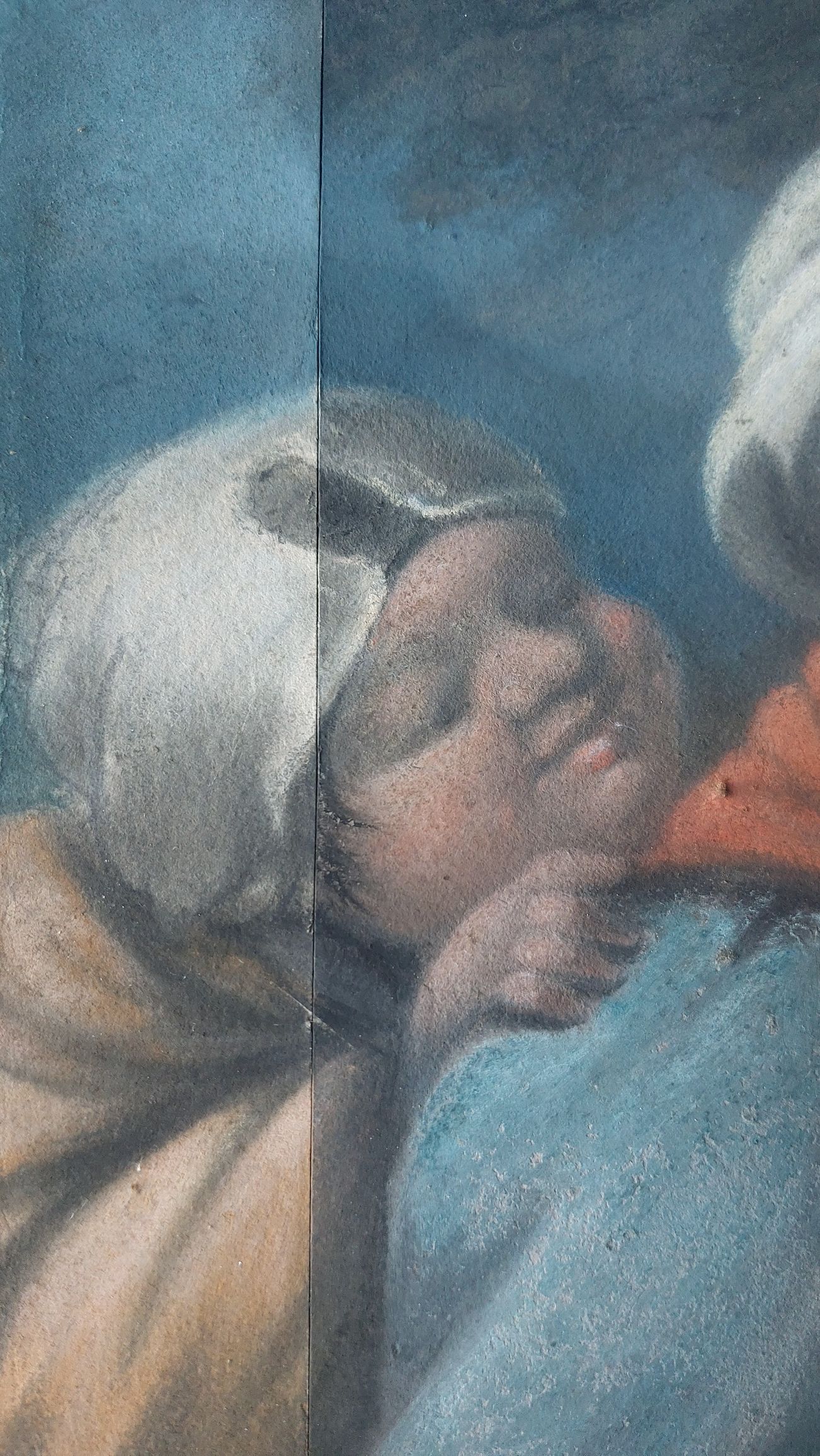
The artwork is made up of several pieces of paper that were laid on a backing sheet. I think this might mean the original artwork was much larger and has been cut down. The edges of the sheets are slowly separating from the backing sheet, as can be seen by the image below.
I thought that the image was familiar in some way, and it took me a while to realise that it is reversed and slightly different angle of the family in Rembrandts’ Beggars Receiving Alms at the Door of a House (below)
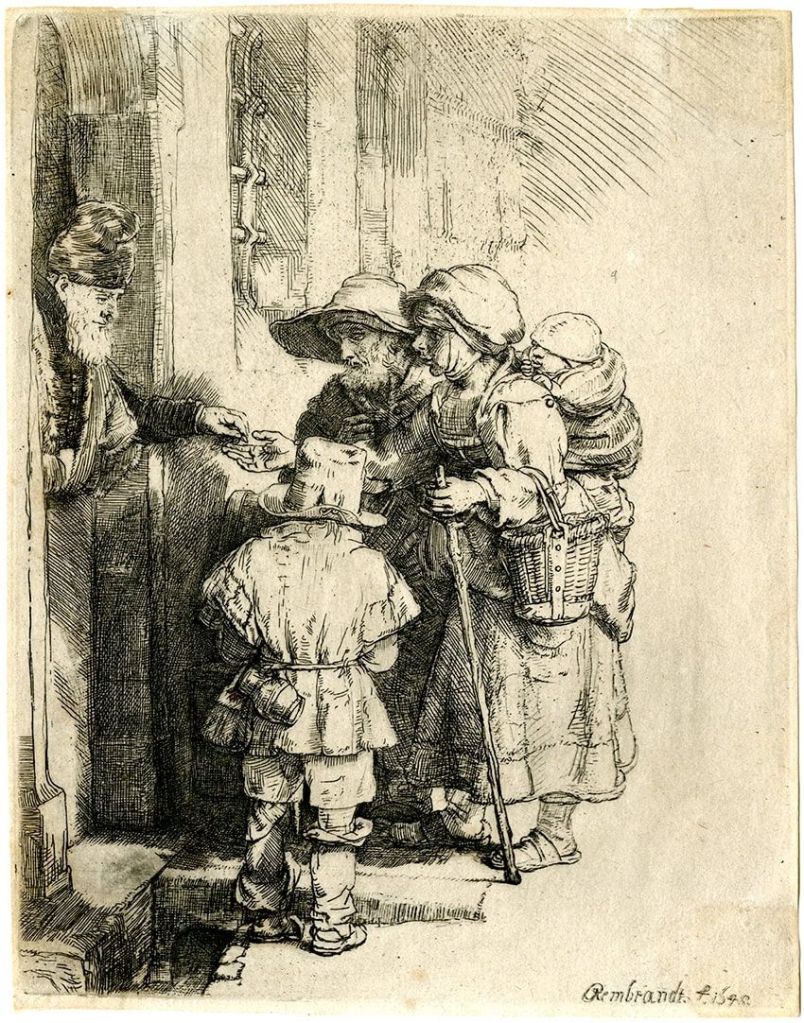
The pastel work is roughly half to a third of the overall image, but one can easily observe the similarities between the two artworks. Because of this, I do think that the original pastel piece was much larger and a complete copy of what we see in Rembrandts’ engraving.
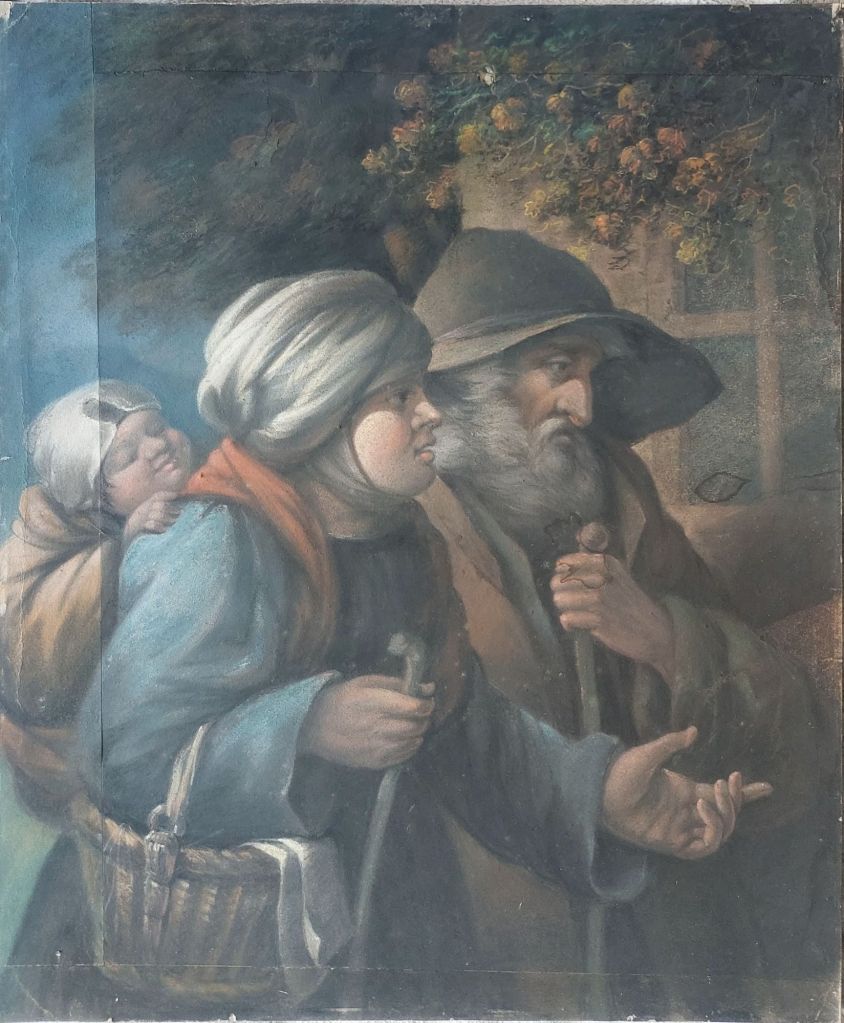
A beautiful and delicate artwork.