One might consider a chapter on a poet to be out of place in a blog about collecting art I have a previous chapter on Robert Bloomfield (rural bard). So when I came across a hand written edition of ‘The Wren’, I thought John Clare would be a fine literary artist to share with people.
#JohnClare (1793-1864) was born in Helpston, near Peterborough. He was the son of a farm labourer. Clare’s writings celebrate the English countryside and his dismay at its’ disruption. His poems are poignant and reminiscent of his rural upbringing. Powerful portrayals of nature in its’ rawest form. Clare spent a number of years in his later life in an asylum where he continued to write and produce his poetry.
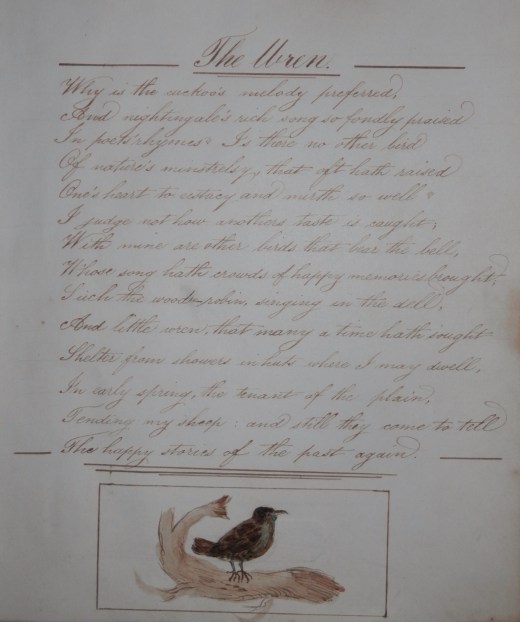 This hand written edition of the poem #The Wren comes from 1864. It was the second sheet of a pair. The first is displayed as the second image here.
  Possibly written by a Master Wallis on June 22, 1864. I have not found a publication date for ‘The Wren’ but John Clare is considered its’ author. John Clare died in May of 1864. Both sheets of paper bear an 1862 watermark.
This blog ,I guess, inadvertently, enters me into the area of the true wordage used by Clare. In the seventh line With mine are other birds that bear the bell occurs as With mine, there’s other birds that bear the bell and again in the penultimate line Tending my sheep: and still they come to tell is given as Tenting my sheep: and still they come to tell. Questions have been raised by scholars as to the correct words or possible meaning of the words used in the versions of the poem. I confess that I prefer the words used in the copy in my collection.
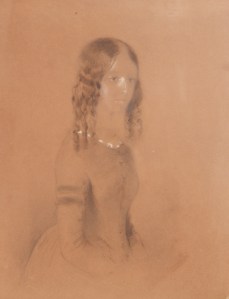
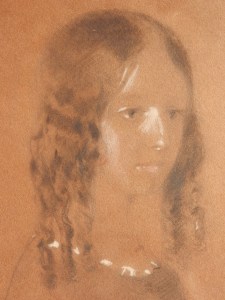 Here are two images of the portrait I own and now I wish to show you a couple of images found on line of the young #PrincessVictoria. I see quite a resemblance from the known images to my artwork.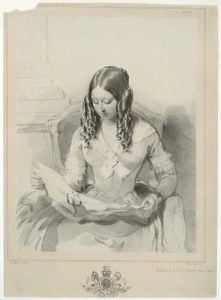
 The royals have always been a popular choice to portray and many a fine artist has attempted it. My portrait comes from 1836 which would make Victoria 17 years of age (1 year prior to her taking the throne). The portrait bears a date 1836 and a stylised ‘A’ (I think) which might stand for #Alexandrina, which was Victoria’s first name. Which would make this image a possible self-portrait. Victoria was known to be a very respectable artist. My artwork also bears the name Ellen Douglas but she could not have been the artist since she would have been 12 years old (a gift to a friend perhaps). It is certain she knew Victoria and likely spent a good deal of time with her since she was the daughter of the 17th Earl of Douglas who was a Scottish Tory politician who spent time at Westminster in London (House of Lords). I also have a small watercolour which I will set beside another portrait of the young princess.
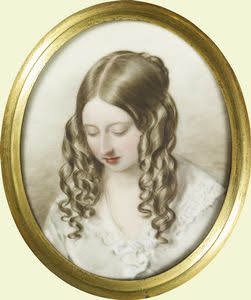 After looking at more online images, another thought has crossed my mind. Queen Victoria’s husband Albert was also a fine artist. This can be seen in the drawings held by the Royal Collection. He at times is signified by a stylised ‘A’. Might this be a portrait of the young Victoria by her yet to be husband. I think both of the portraits in my collection might actually be of the young Princess Victoria. I leave you to ponder the images and what might be.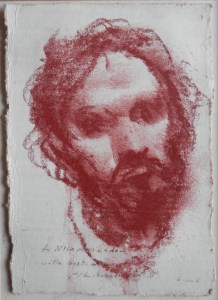
 In 1921, he again returned to Paris, where this time he met and became friends with Pablo Picasso. He was associated with the group of artists known as the #SchoolofParis and was considered a member of the #JewishSchoolofParis.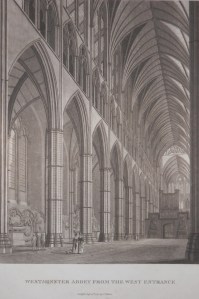
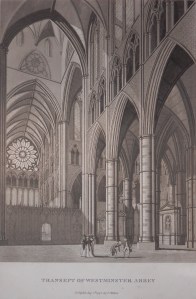 The magnificent #WestminsterAbbey. All the images, I have, are of the interior of the Abbey. Portraying its’ majesty and exquisite design.
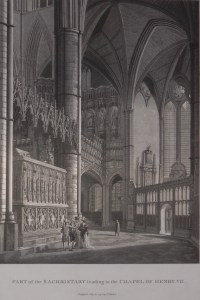 For all his success as an artist, Malton loved to teach. You might actually have heard of a couple of his students, Thomas Girtin and JMW Turner. That’s what you call a legacy.
 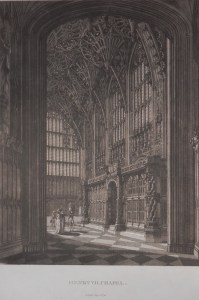 Meticulously rendered. An homage to one of the great places in Britain.
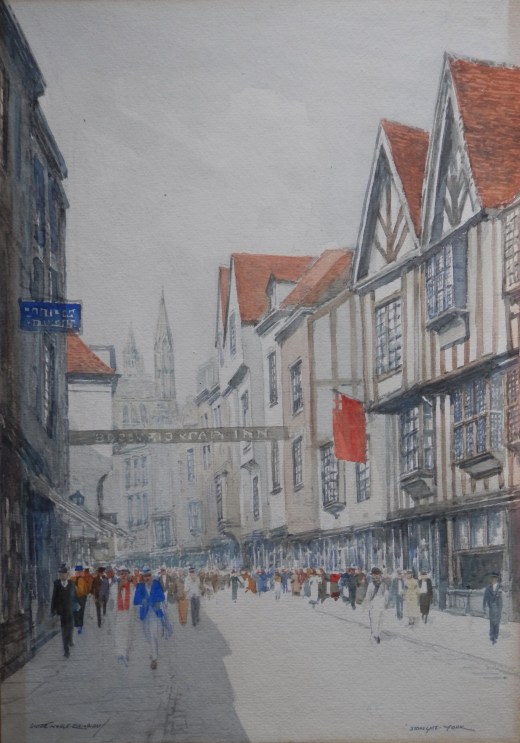 His paintings predominately portray the north of England although he did travel into Europe (France, Belgium, and the Netherlands. His European works mostly display Dutch fisher folk, Rouen, Amiens and Dieppe. While his British scenes display the sea and seafront around North Shields and numerous British city scenes.
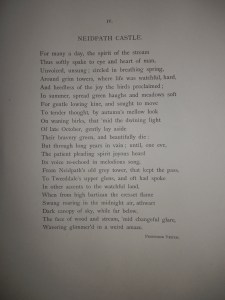
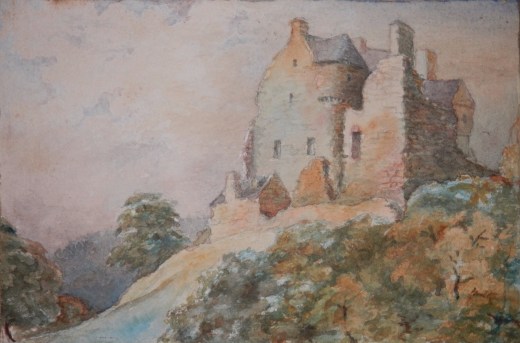 The castle has seen a lot of history but can only be visited by appointment, nowadays. The tower dates back to the 14th century but major renovations and alterations occurred during the 16th and 17th centuries. Neidpath Castle was the longest surviving bastion against Cromwell but even it fell due to the incredible damage done by cannon barrages which led to the defenders surrender. The castle was visited by Mary Queen of Scots in 1563 and was an inspiration to Sir Walter Scott and William and Dorothy Wordsworth. It has been the set of a number of movie scenes which include The Bruce, Merlin, and Joan of Arc.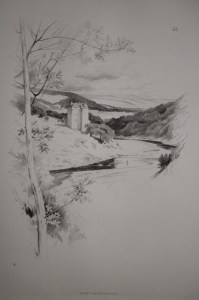
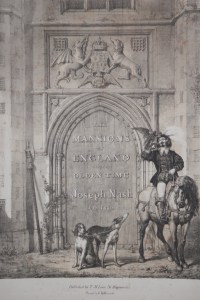 Around 1830, Nash became interested in lithography. As his mentor was so was Nash. His early career saw him concentrate his work on architectural images and genre scenes. He was able to combine the authenticity of the architectural place settings with an historical romanticism portrayed by the people in his images. His most famous work might well be his illustrating of Sir D Wilkie’s “Oriental Sketches” but he created many large sets not just to compliment others works but on his own as well.
 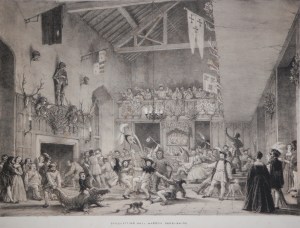 The images displayed here are taken from his work ‘The Mansions of England in the Olden Time. Nash produced 104 lithographs in 4 volumes showing the famous and not so famous country homes found across England. A fifth volume accompanied the original four containing only text regarding the lithographs. It took ten years to complete the work – 1839 to 1849. Nash visited every house and recorded in detailed drawings his observations. From these sketches, he then created a romanticised image by adding people and animals in a tableaux of Tudor life.
  These images brought him fame and popularity.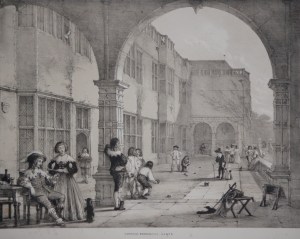

 ronsartblog