We look at another artist who contributed to the publications ‘Good Words’ which we considered in the previous chapter. #JohnEverettMillais (1829-1896) was a regular contributor to the artworks for the magazine over a number of years. His commission to produce 20 designs to portray the parables from the bible by the #DalzielBrothers became for him a work from the heart and nothing less than utter beauty and near perfection could be enough. 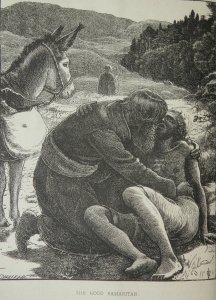 We will only consider a few of them. It took Millais seven years to complete the commission. He illustrated each parable with close to a dozen different images for each before deciding on his preferred choice. After finishing his chosen drawing he would then transfer it onto a prepared woodblock and give it to the Dalziels to be carved. They would be pressed and Millais would then inspect and make any alterations he thought necessary.
 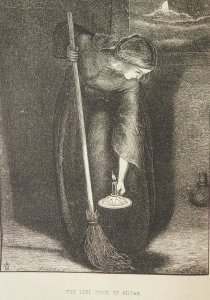 Twelve of the woodcuts appear in ‘Good Words’ for 1863. I also have a complete set found in ‘Art Pictures from the Old Testament and Our Lord’s Parables’ published around 1900. As one considers them, one cannot doubt the great effort and consideration which went into them. Beautifully rendered by the Dalzeils, one can sense a depth beyond just an image. There is an emotional depth imbued into each portrayal.
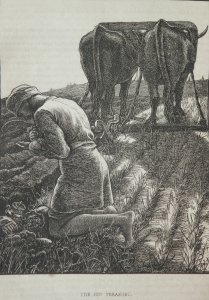 Through this depth we join in the searching for the lost coin, we feel the pain of the beaten man, the empathy of the Good Samaritan, the elation and fear of the man who found a treasure which he hides in the ground until he can buy the field, and the over-whelming joy of the father at the return of his child in the prodigal son. One is confronted with the realisation that these images were special – something important to the artist. They were created by body and soul. There can be nothing else said.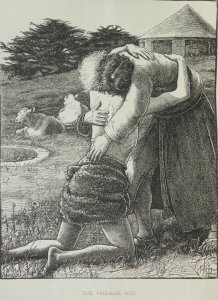
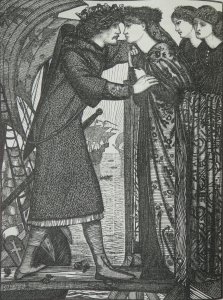 The volumes contain the monthly magazine which was edited by Queen Victoria’s Chaplin, Dr. Norman McLeod. Each monthly magazine contain parts of novels ( in serialisation), travel stories, poetry. It proved to be huge success.
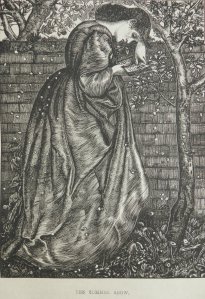 The second design produced by Burne-Jones was published in 1863 to illustrate the poem ‘Summer Snow’ by #DoraGreenwood. Here, we certainly see the individual style which Burne-Jones had developed. It was a step apart from the normal or regular woodcuts of the time. The beautiful lady who posed for this image was no other than #JaneBurdenMorris. The wife of artist William Morris. I have the photogravure by Emery Walker of Jane in my collection too.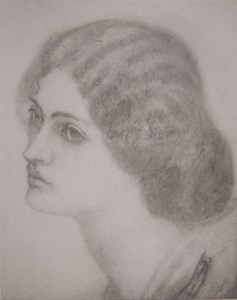
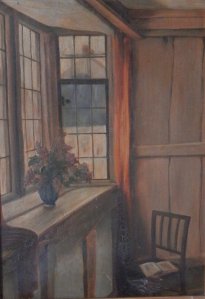 The two paintings in my collection might be considered somewhat out of the ordinary for Grainger-Taylor. As you will see they are both oils on canvas of the interior of an inn. The information I have gleaned from the web puts her more as an artist working  with pastels. Even so, both paintings bear a label on the verso giving title, price, and signature with residence. Edith Granger-Taylor said at the Royal Academy, St John’s Wood Art School, and the Slade School of Fine Art with Henry Tonks.
 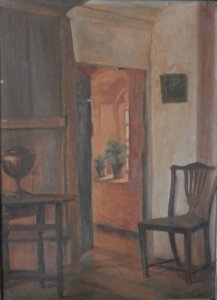 She, in some ways, was a successful artist exhibiting regularly in the 1920’s and 1930’s with two solo shows included but she suffered from non-acceptance mainly based on that she was female. This frustration saw her withdraw from the art world and she did not exhibit her work again after the 1930’s. 
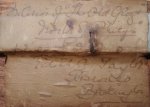 The two works display a good eye for depth and shading. The two paintings show the interior of The Old George, Norton St. Philip.
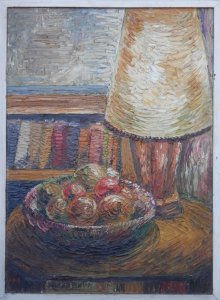 This work is done completely using only a palette knife. A nice work and very heavily painted allowing for the play of shadows on the work itself. It may be that all three women knew each other since they studied with #HenryTonks at the Slade School of Fine Art.
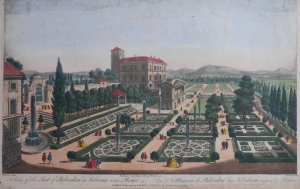 We begin with an image showing a view of the gardens and buildings of the Cortile del Belvedere at the Vatican Palace in Rome. The space was designed to link the Belvedere Court to the Vatican Palace via a series of terraces and stairs. Our next two views are not published by Laurie & Whittle. There were a number of publishers at the time which also held vue d’optique in there production books. Three of those were #RobertWilkinson, #RobertSayer, and #CarringtonBowles.
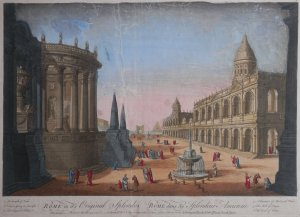 These two prints have all three of the aforementioned publishers on them. At times appearing in different order depending on which publishing house they came from.
 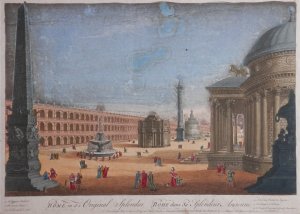 These depict Rome at its’ beautiful best. Sites as the Trojan Arch, the Tomb of Cestus, the Imperial Palace, the Senate House, the Egyptian Obelisk, and the Temple of Fortune appear in these two views. Again all are hand coloured and show their age in one way or another. We look at another pair published by Laurie & Whittle. These show events rather than specific sites.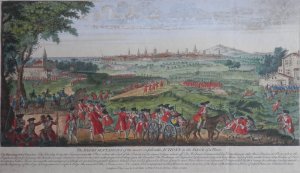
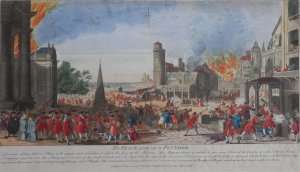 This pair of views show events pertaining to the siege of Barcelona. The first shows men digging trenches to fortify their position as well as captured building which would then be used as barracks and hospitals. In the distance stands Barcelona. The second attempts to display the barbarity which can ensue when soldiers succumb to battle fury and becoming ravagers, looters, and plunderers.
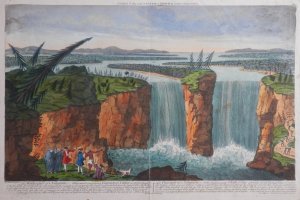 The magnificent Niagara Falls. A place that certainly most who would view this print would never have seen in person. A written description in English and French appears at the bottom of the image.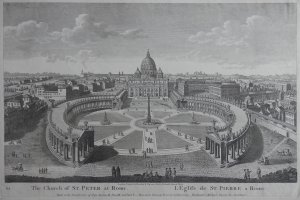
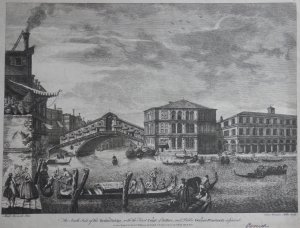 We return to Rome for a view of The Church of St Peter published by Bowles & Carver. The piazza and basilica are wonderfully portrayed here. The last, a plate published by Robert Wilkinson shows the stunning Rialto Bridge in Venice as it crosses over the Grand Canal at its’ narrowest point. I appreciate that these final two have not been coloured.
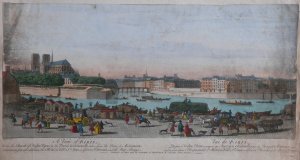 We see a scene of the river Seine as it divides to bypass the Ile de la Cite. It is considered to be the epicentre of Paris and the site of Norte-Dame Cathedral. The bridge seen connects the Ile Saint-Louis to Ile de la Cite. I am not quite sure why the horsemen are riding down the ramp into the river.
 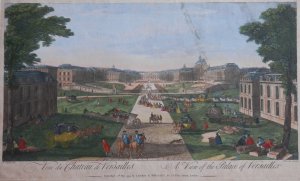 From here we move to the Chateau de Versailles. We look down towards the palace. It was the royal residence until the French Revolution in 1789 and is located some 12 miles from Paris. A place of great events in history. Marie Antoinette married here, the Peace of Paris (1783) was signed here as well as the Proclamation of the German Empire and the Treaty of Versailles to end WWI. It is now a Unesco World Heritage site and welcomes close to 8 million tourists a year.
 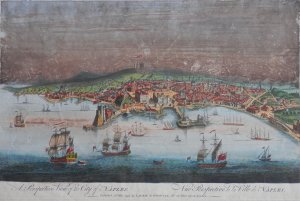 We now take to the water and visit the city of Naples. If Italy is a boot then Naples is it’s ankle. Nearby sits Mount Vesuvius, a still active volcano, which destroyed the city of Pompeii. The city is a focal point of art and architecture, Neapolitan cuisine which includes pizza. We board our ship again and sail out of the Mediterranean to the Portuguese city of Oporto.
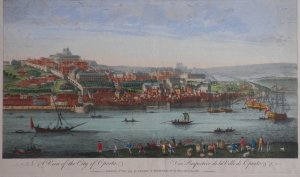 A coastal city located in north-west Portugal. It is known for its’ bridges, the Ribeira (riverside) district, and its narrow cobbled streets. The city is also known as Porto – a mistake by the English in pronunciation led to the Oporto name. The city lies at the mouth of the Douro River. It is the second largest city in Portugal and is famous for port wine created in 1678. We re-board our ship to sail up the coast to the city of Amsterdam.
 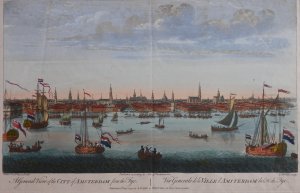 This capital city of the Netherlands is famous for its elaborate canal system, its narrow houses with gabled facades, its artistic heritage. The Rijksmuseum holds works by Rembrandt and Vermeer and a visit to the Van Gogh Museum would be special too. A visit to the Anne Frank house would not be amiss and there are many small eccentric museums to visit. And we board again to set sail for distant Bombay.
 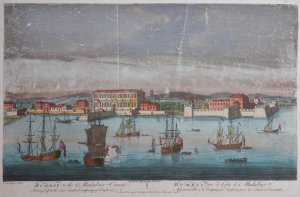 Today, this city is called Mumbai and lies on India’s west coast. It is a financial centre for India, it’s largest city, and the centre of the Bollywood film industry.
 #RobertLaurie (1755-1836) and #JamesWhittle (1757-1818) formed a partnership in 1794 to take over the publishing company of #RobertSayer. Sayer’s collection of maps and atlases and decorative prints were the foundation of the new partnership but the new owners added new material to freshen up the atlases and also printed on topical issues such as the Napoleonic Wars.
 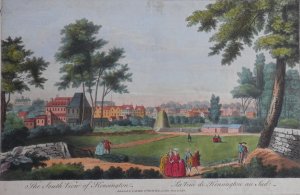 Laurie was apprenticed to Sayer from 1770 to 1777. He was a talented artist as well as engraver of mezzotints. Producing portraits, scenic views and decorative works. Whittle was apprenticed to the Needlemaker’s Guild.
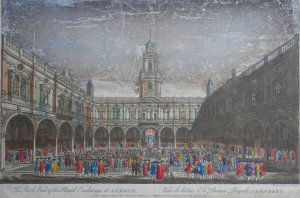
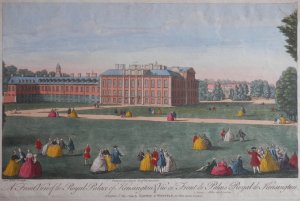 All of these prints were printed in 1794 and are hand coloured. The image size of the first four without lettering measures 9″ by 15″ while the last is 10″ by 16″.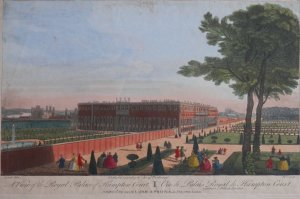
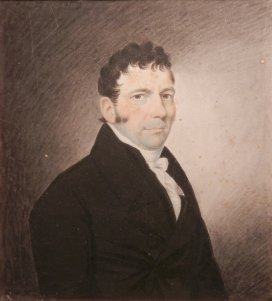 The first portrait is of an unknown gentleman. Painted in the 19th century. The image measures 6″ x 6 1/2″ . Finely painted in watercolour with the focus on the face. This is quite typical of the style of portrait painting at that time. The accuracy leans toward vagueness as one goes further away from the face. This allows the artist to finish his work quickly while still presenting the subject with their desired object – a beautiful image of themselves.
 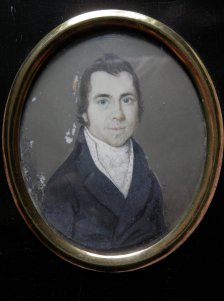 We go to a somewhat more delicate portrait. This miniature is 2 1/4 x 2 3/4 in an oval frame. It is, I believe, painted on ivory. You can see through the damage to the paint work the underlying white ivory it is painted on. I think possibly an 18th century work. The execution is superb. Once again the face being the focal point and having an almost three dimensional feel to it. Luckily the damage has not reached the face so this man’s visage is still wonderful to look at. Once again the gentleman is not known nor is the artist.
 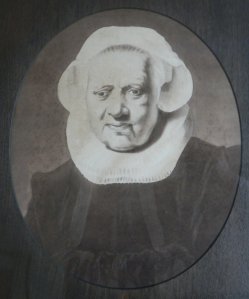 We finish with a large portrait done in 1908. It sits again in an oval matte. The image is 14″ by 17″. This of course is a copy of a painting by Rembrandt – his portrait of Aechie Claesdr done in 1634. This copy is painted by Lilian Harries in 1908. It is fairly true too the original but it lacks precision and accuracy bis t still manages to convey that Lilian had some talent as an artist. I have found no information about her.
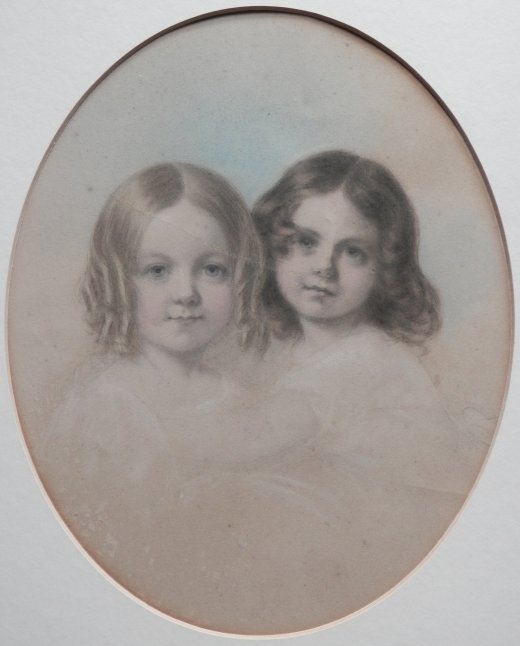 The portrait is of two young people. I would guess their ages at 2 1/2 and 3 1/2 years. One positioned slightly forward of the other with the arm of the older child protectively across the breast of the younger. The portrait is unsigned and undated, no watermark or any other identifying marks can be found. From the age and browning of the paper I would suggest first half of the 19th century.
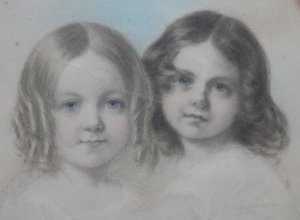 Here, I am going to suggest that this piece, even though unsigned, is by a very important artist and that this portrait is of two very well known people. This of course is all conjecture. But. What if.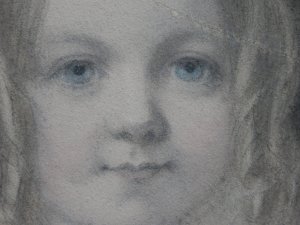
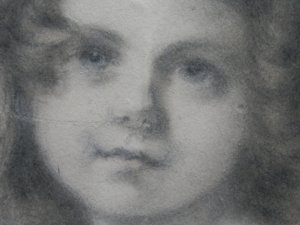 The quality of the work is evident. The subtle shading, the minimal use of colour, the white outlining of the children’s bodies only adds to the focus on the faces of the two sitters. And two very finely done faces they are.
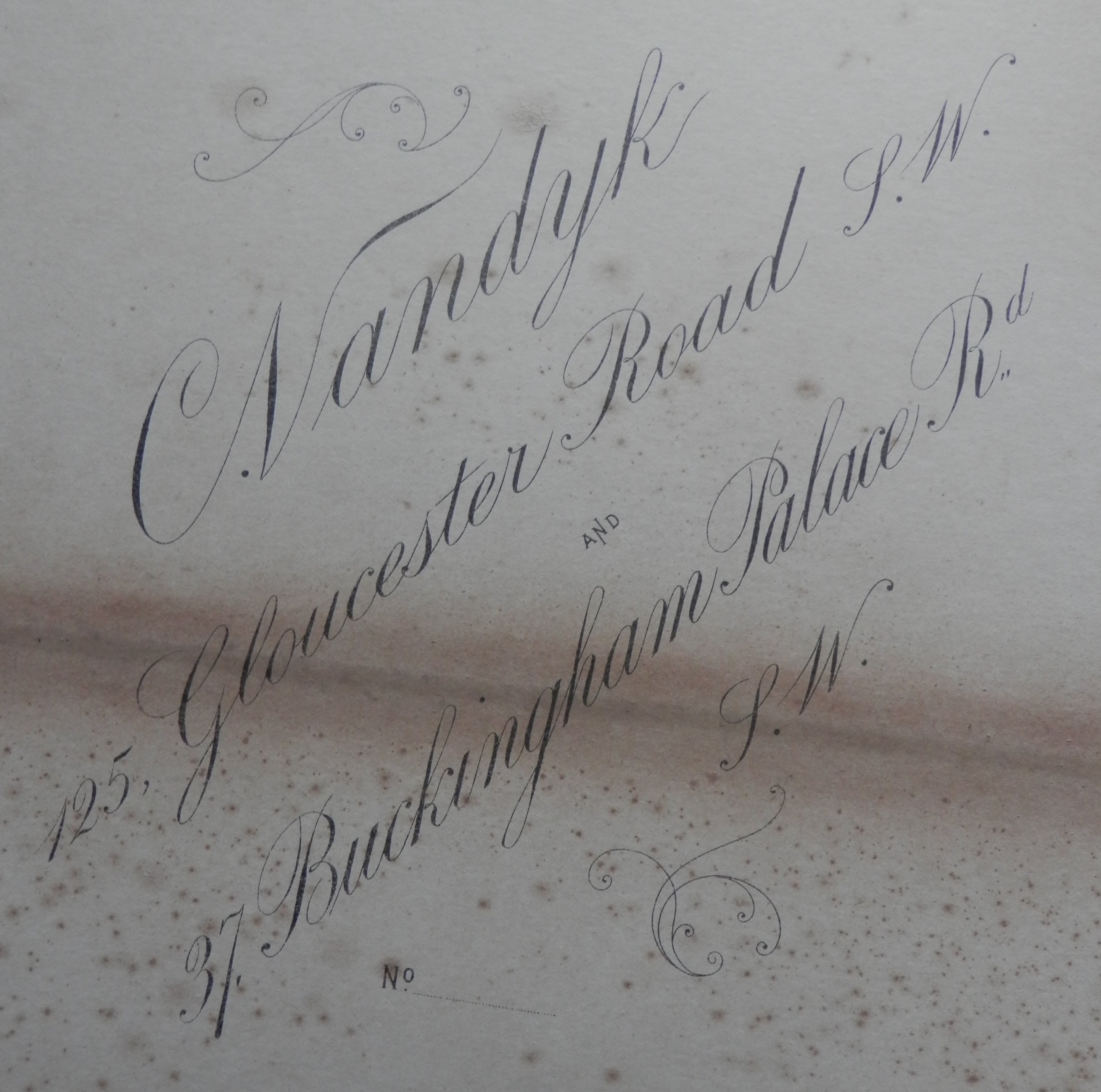 He was a royal photographer, taking portraits of Queen Victoria, Edward VII, George V as well as notables such as Alexander I of Yugoslavia, Christian X of Denmark, Buffalo Bill, and Enrico Caruso. Vandyk is associated with 659 portraits in the #NationalPortraitGallery in London. This portrait does not appear in the NPG catalogue. His two brothers were also photographers with their own studios and his son carried on his studios after his death.
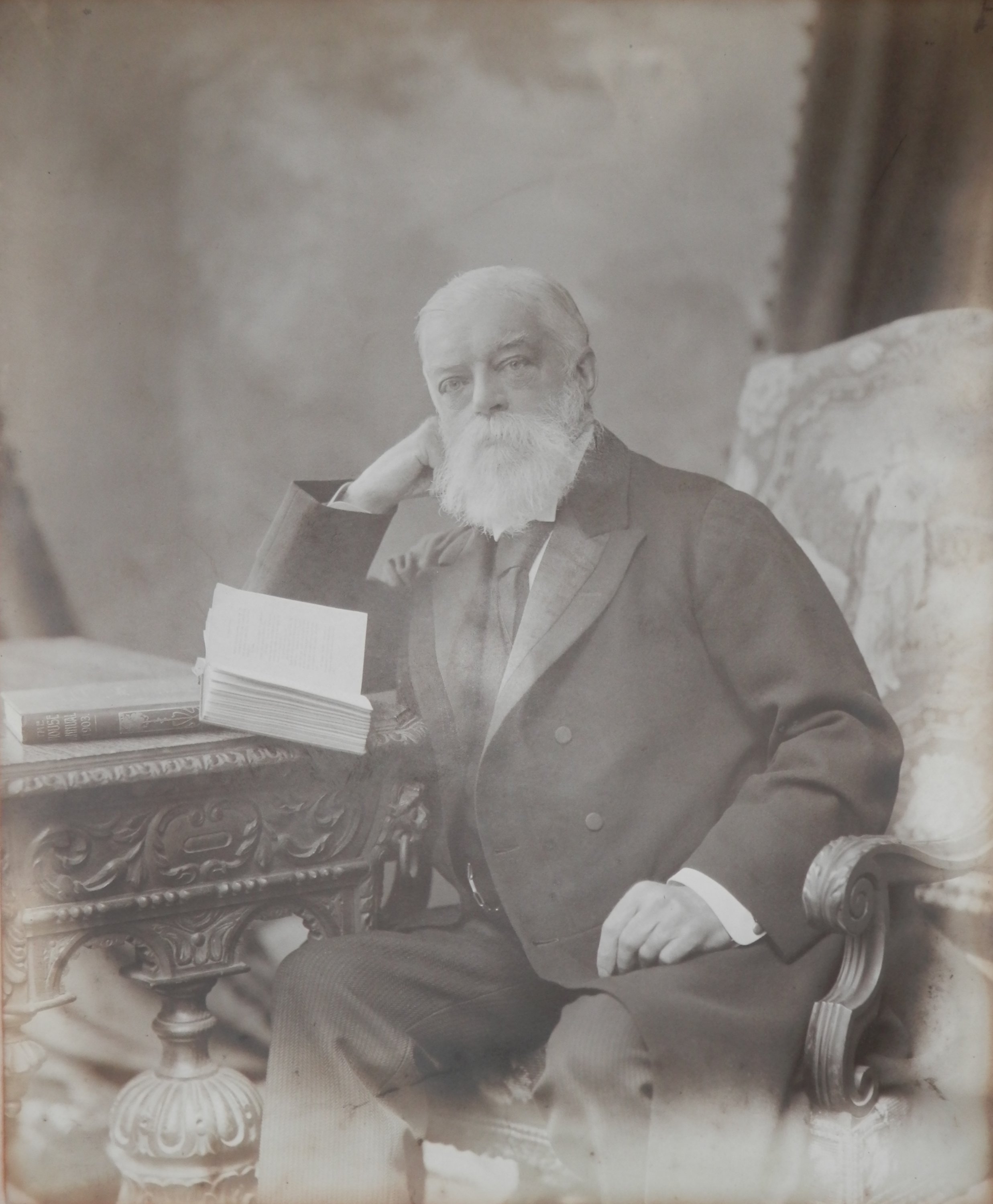 It is a superb image of a man very comfortable in his surrounding. The image is so good, one can read the title of the unopened book (The House Annual – 1903), make out that the gentleman is reading German poetry, that his suit is of superb quality, and that he is wearing an Albert chain to his pocket watch. A very fine portrait indeed.
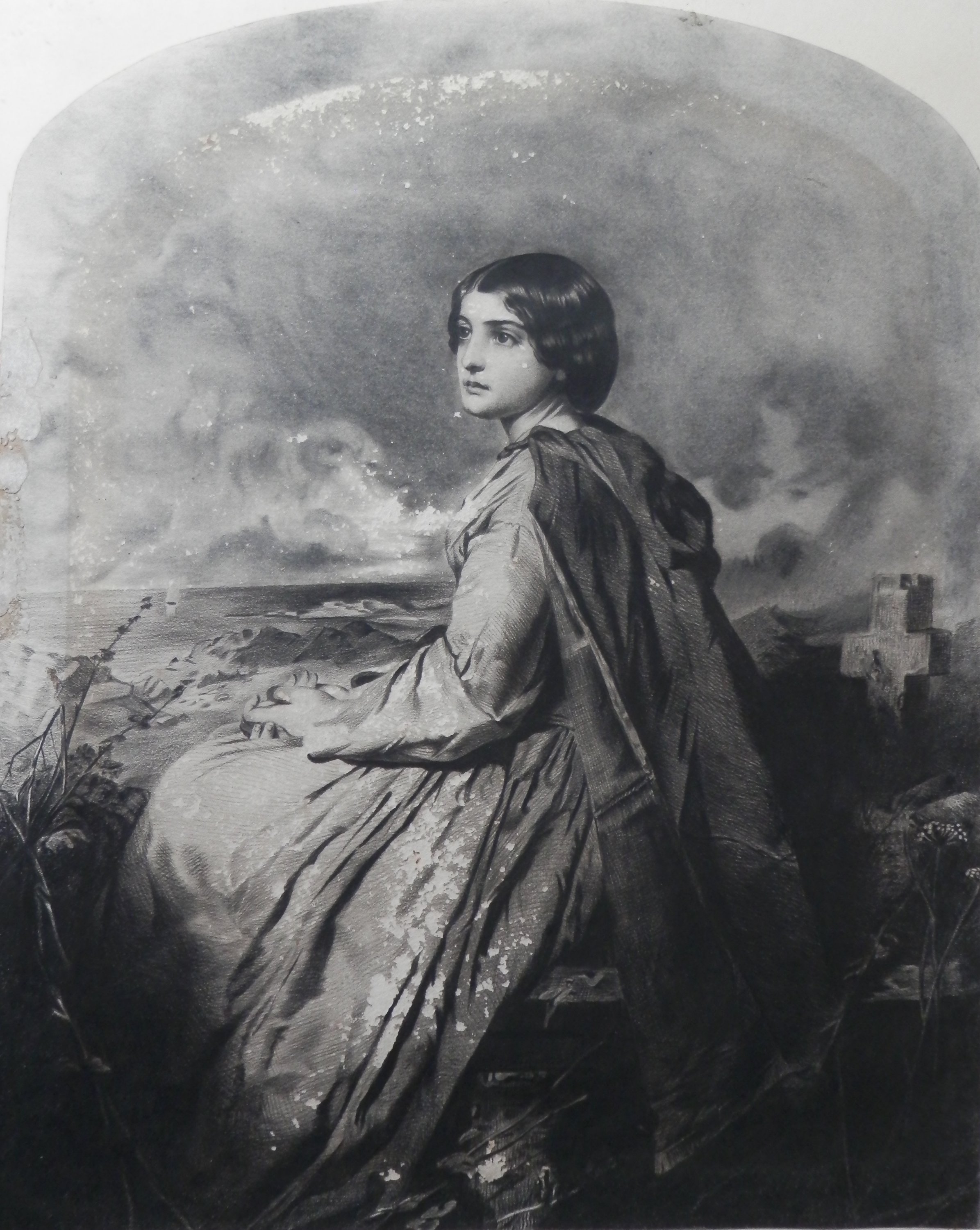 #ThomasFaed (1826-1900) was born in Kirkcudbrightshire, Scotland. He and his siblings were all artists. Educated in Edinburgh, he eventually moved to London and found fame as a painter of domestic genre scenes.
 The sublime technique presented here certainly displays the virtuosity of the artist. It is said that Thomas Faed was to Scottish art what Robert Burns was to song. I believe this is the image from which Thomas’s brother James created the mezzotints and engraved prints. Even with all its’ small flaws and imperfections, it is an amazing work to look at. The photographs don’t really do it justice.
-
Recent Posts
Archives
- April 2026
- March 2026
- February 2026
- January 2026
- December 2025
- November 2025
- October 2025
- September 2025
- August 2025
- July 2025
- April 2025
- March 2025
- February 2025
- January 2025
- December 2024
- November 2024
- October 2024
- September 2024
- July 2024
- April 2024
- March 2024
- January 2024
- October 2023
- September 2023
- August 2023
- July 2023
- June 2023
- April 2023
- March 2023
- February 2023
- December 2022
- November 2022
- October 2022
- September 2022
- August 2022
- July 2022
- June 2022
- April 2022
- March 2022
- February 2022
- January 2022
- December 2021
- November 2021
- October 2021
- September 2021
- August 2021
- July 2021
- June 2021
- May 2021
- March 2021
- February 2021
- January 2021
- December 2020
- November 2020
- October 2020
- September 2020
- August 2020
- July 2020
- June 2020
- May 2020
- April 2020
- March 2020
- February 2020
- January 2020
- December 2019
- November 2019
- October 2019
- September 2019
- July 2019
- June 2019
- May 2019
- April 2019
- March 2019
- February 2019
- January 2019
- December 2018
- November 2018
- October 2018
- September 2018
- August 2018
- July 2018
- June 2018
- May 2018
- April 2018
- March 2018
- February 2018
- January 2018
- December 2017
- November 2017
- October 2017
- September 2017
- August 2017
- July 2017
- June 2017
- May 2017
- April 2017
- March 2017
- February 2017
- January 2017
- December 2016
- November 2016
- October 2016
- September 2016
- August 2016
- July 2016
- June 2016
- May 2016
- April 2016
- March 2016
- February 2016
- January 2016
- December 2015
- November 2015
- October 2015
- September 2015
- August 2015
- July 2015
- June 2015
- May 2015
- April 2015
- March 2015
- February 2015
- January 2015
- December 2014
- November 2014
- October 2014
- September 2014
- August 2014
- July 2014
- June 2014
- May 2014
- April 2014
- March 2014
- February 2014
- January 2014
- December 2013
- November 2013
- October 2013
- September 2013
- August 2013
- July 2013
- June 2013
- May 2013
- April 2013
- March 2013
- February 2013
- January 2013
- December 2012
- November 2012
- October 2012
- September 2012
- August 2012
- July 2012
- June 2012
- May 2012
Categories
Meta
 ronsartblog