This past week saw me purchase a small artwork. I went to the local Saturday market at which there are several dealers of curios. One of them had a number of old prints and some watercolours. But a small black and white image caught my eye. I had a cursory glance at the piece and liked what I saw. The stall holder said it was an etching and that he had been unable to decipher the signature. I will state here that so far I also have failed but since I liked it and the price was right I acquired it. I took it home and as you can see it is a fine work with a great degree of finesse but here is the hook. It is not an etching. After a better study of this piece, I have come to the conclusion that it is actually an original #pencil/graphite drawing. This certainly makes the piece more interesting. It is done with very little shading but is worked with lines. This style of work is called #crosshatch. The more lines you add the deeper the tone. This can be and is very tedious work. ‘Shading’ or ‘colouring in’ is possibly the norm. One tends to find this type of work in etchings/engravings (often not to this degree of finesse) and is not as popular as a drawing technique.
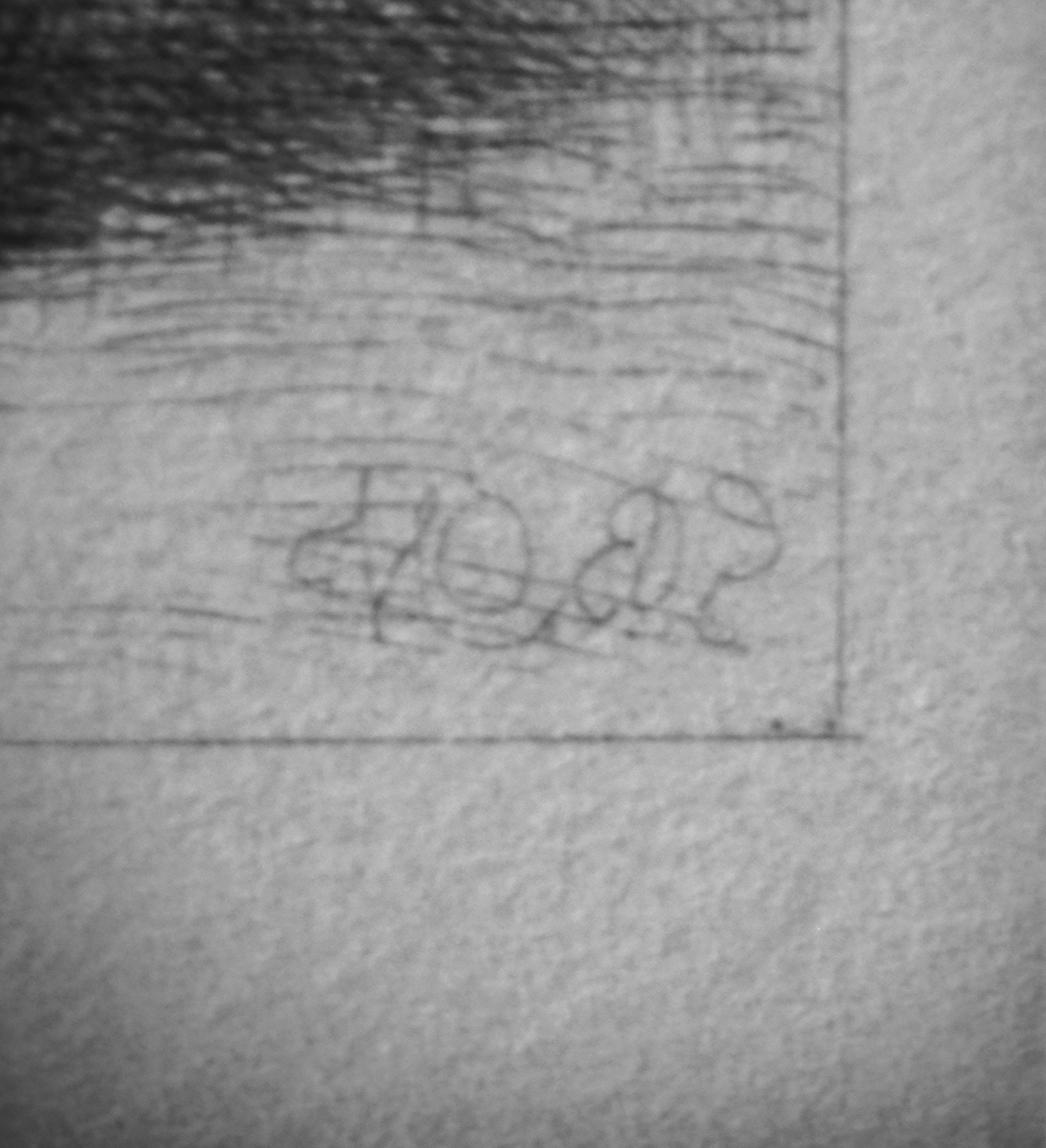 I attach an image of the signature, in the hopes that my readers might have better luck than I at deciphering the signature. In the second image, one can see the myriad of fine lines which are used the give the drawing depth and tonality. A superb #drawing, even if I don’t know who the artist is. And I can’t shake a feeling that I should know who this artist is.
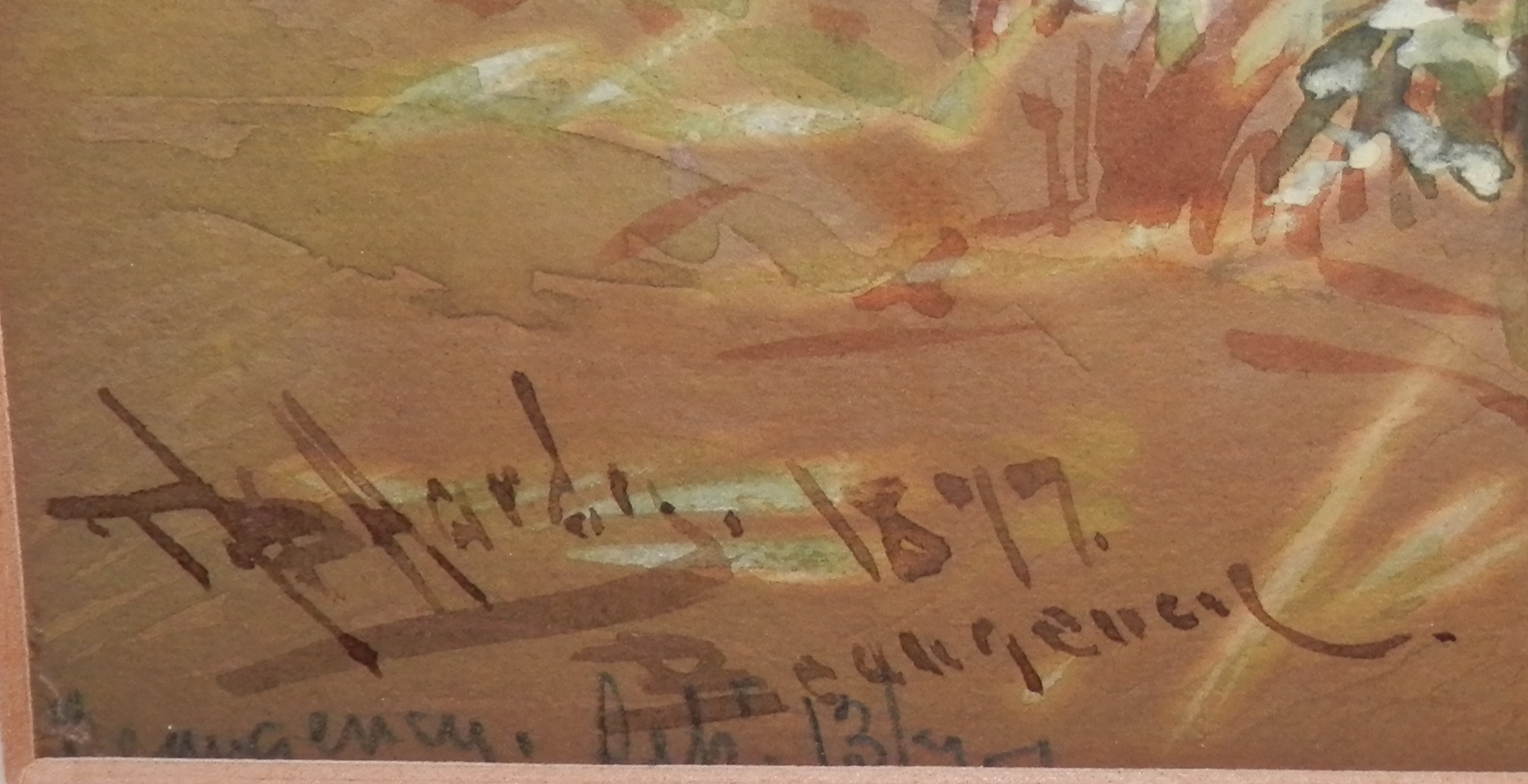 The watercolour in my collection has little to do as a marine painting. It is a view of Beaugency in the Loire Valley in France and hence the water in the image is the Loire River. We stand on the river bank and look along the 12th century stone bridge (it has 26 arches) toward the village. We see the tower of the Eglise Norte Dame and the Tower of Caesar, Place Dunois. The four bells of Saint-Fermin bell tower play the Orleans, Beaugency, Norte-Dame de Clery, Vendome. A tune you will be whistling soon after your arrival here.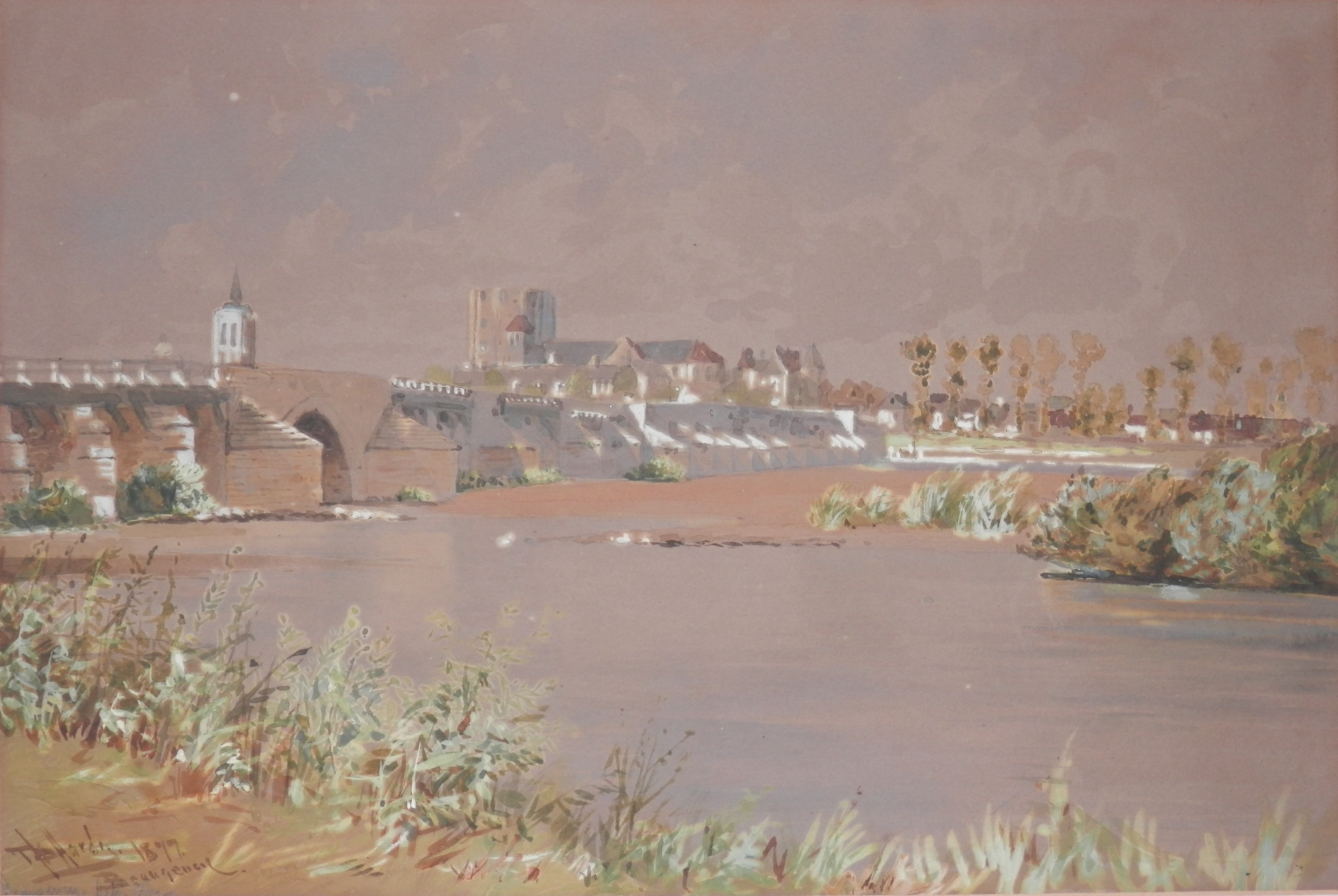
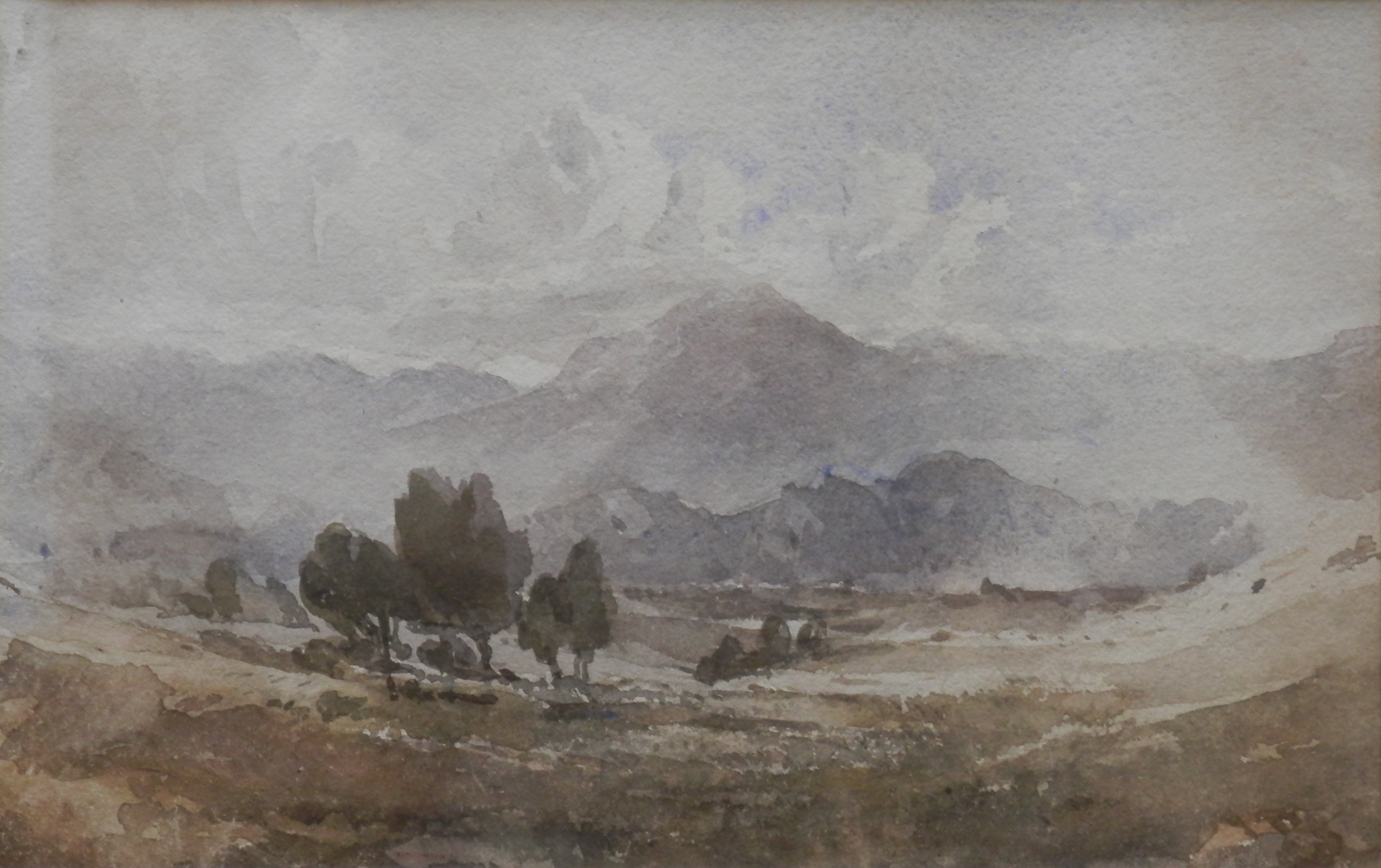 Cox studied in Birmingham and started his working career painting miniatures. From there he progressed to painting backdrop scenes for theatres. This brought him to London, where he decided to turn professional. Cox’s talents peaked around 1841. His works were a precursor to Impressionism. He simplified his works by decreasing detail and combining it with abstraction. Cox used this generalisation to focus on the overall effect of the work. Cox painted with a boldness and pushed the boundaries of technique leading to the later impressionist.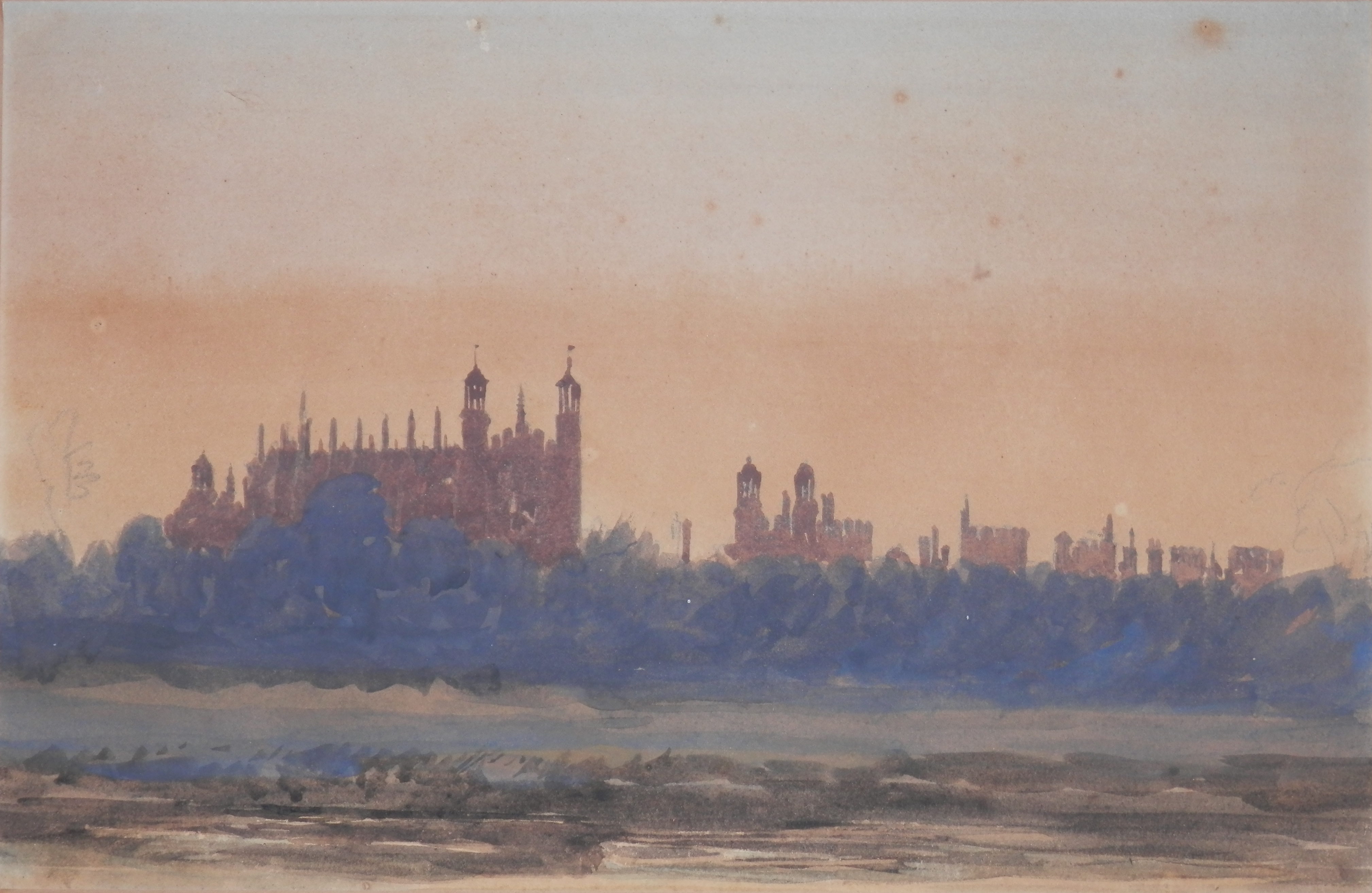
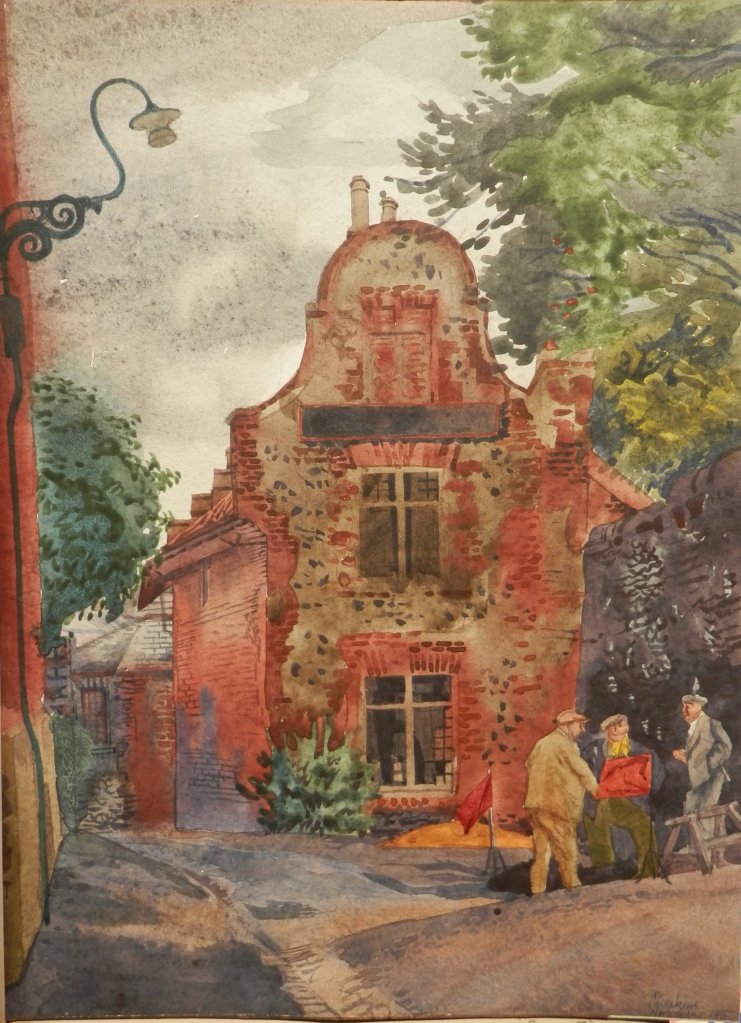
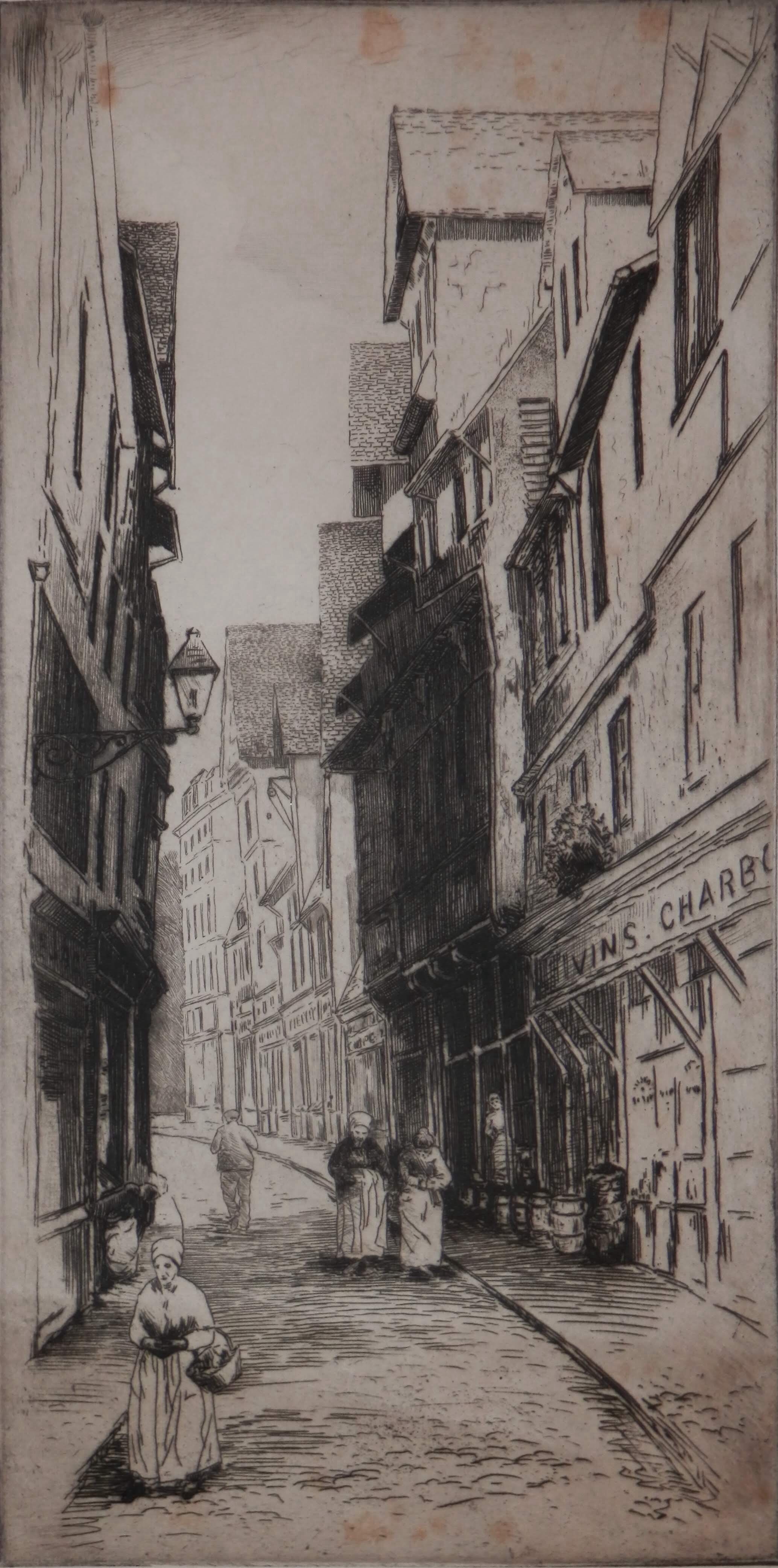 Although the words on the shop front are definitely French – the picture has a Dutch feel to it. It is expertly etched with good tonal difference and architectural/perspective accuracy. Other than the image there is no clue as to whom the artist is. But that is not today’s consideration.
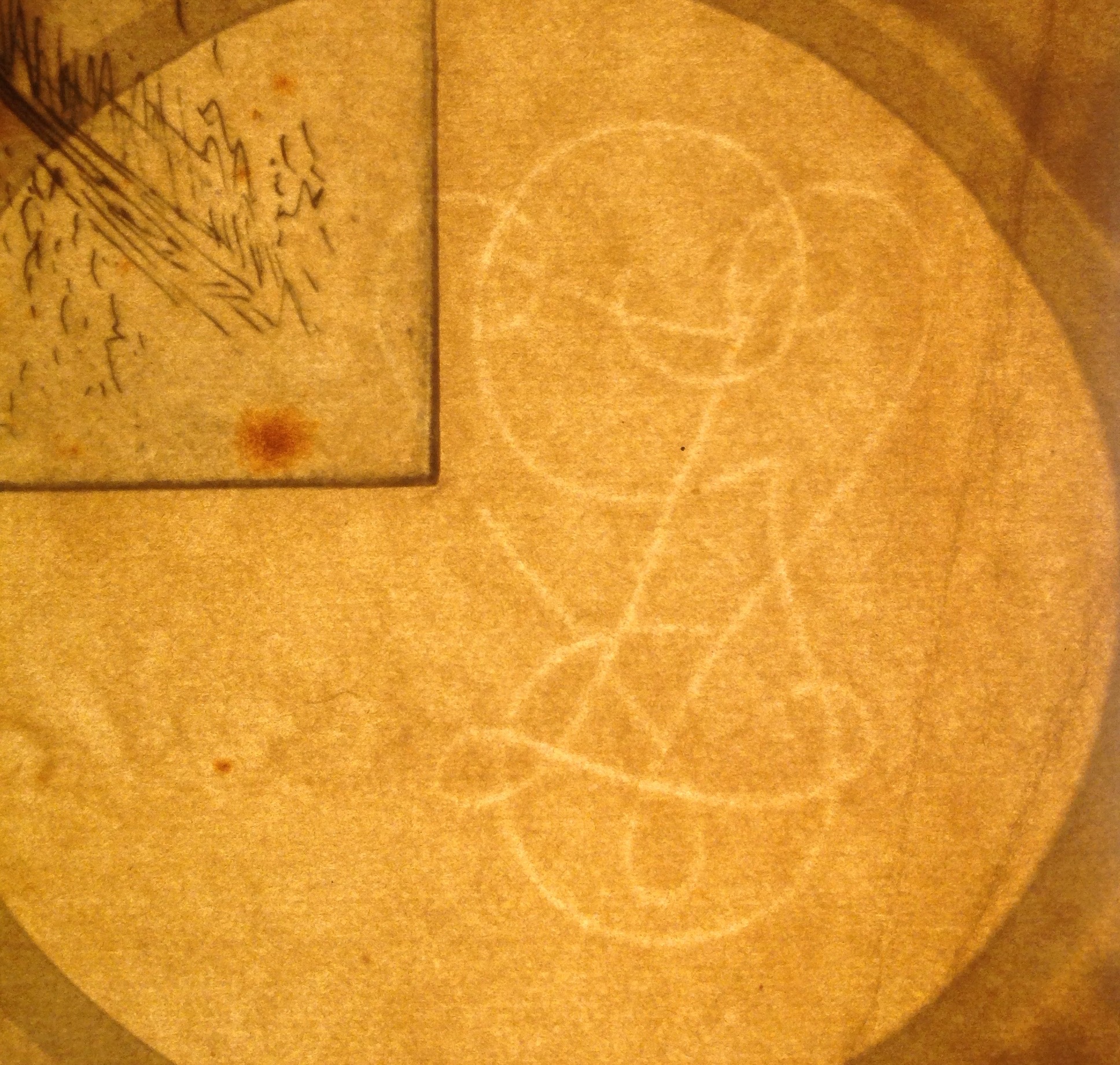 As you can see there are no lines on the paper so it is not ‘laid paper. It appears to be rag paper. Rag paper was hand-made in trays (up to 48″ x 60″) by workers in factories. When looked at closely, it is very fibrous. This would mean the paper is certainly 19th century or earlier. From the early 1880s, most paper being made came from wood pulp – except for specialty papers.
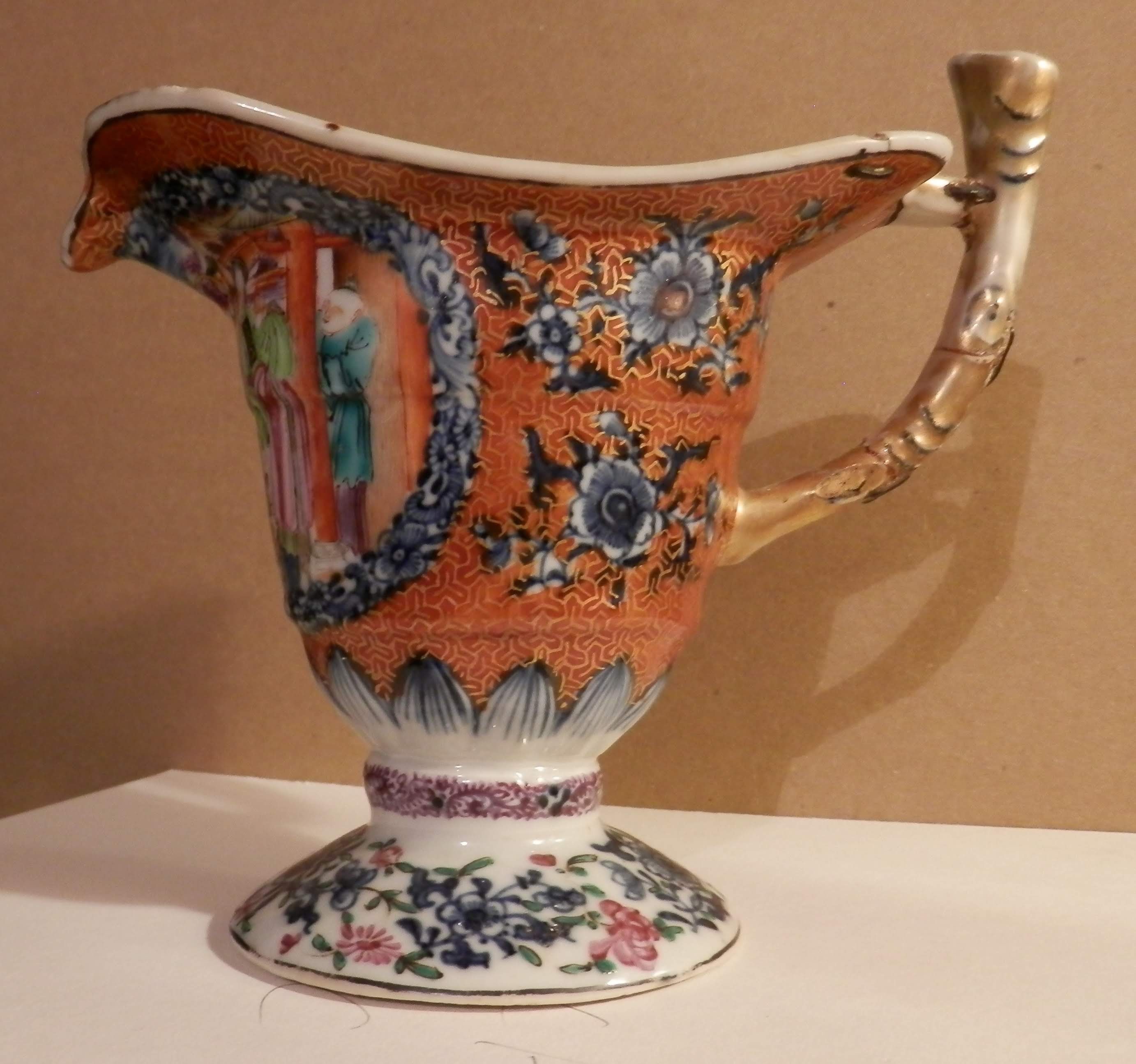
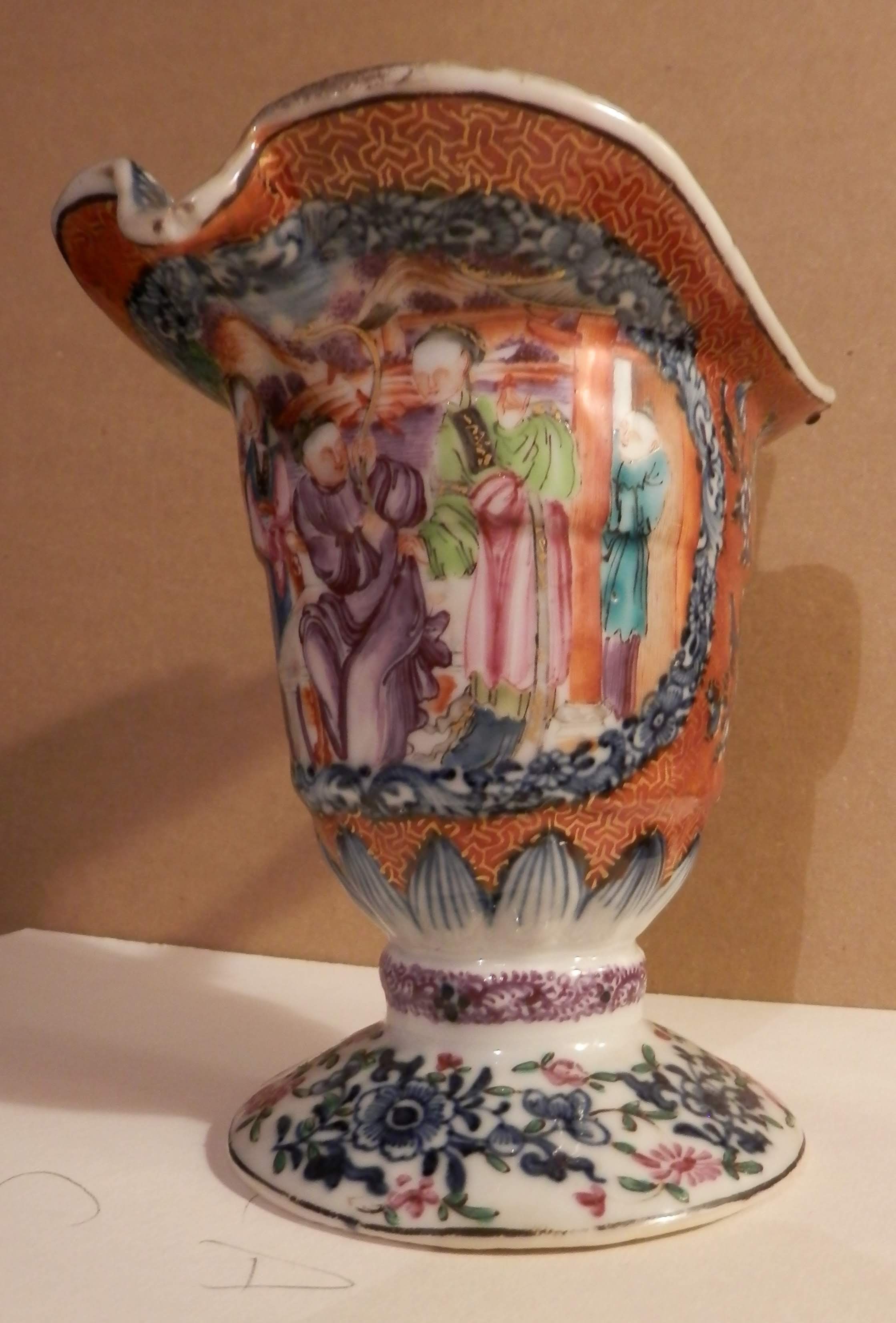 The classic Rose Medallion decoration usually includes a number of panels painted (depending on the size and shape of the piece) with depictions of people, birds, and flowers. The predominant colours being green, pink, blue, yellow, black, and gilt. You, of course, will notice that my piece was broken and has been repaired. Repairs were once done quite differently than today with our modern adhesives.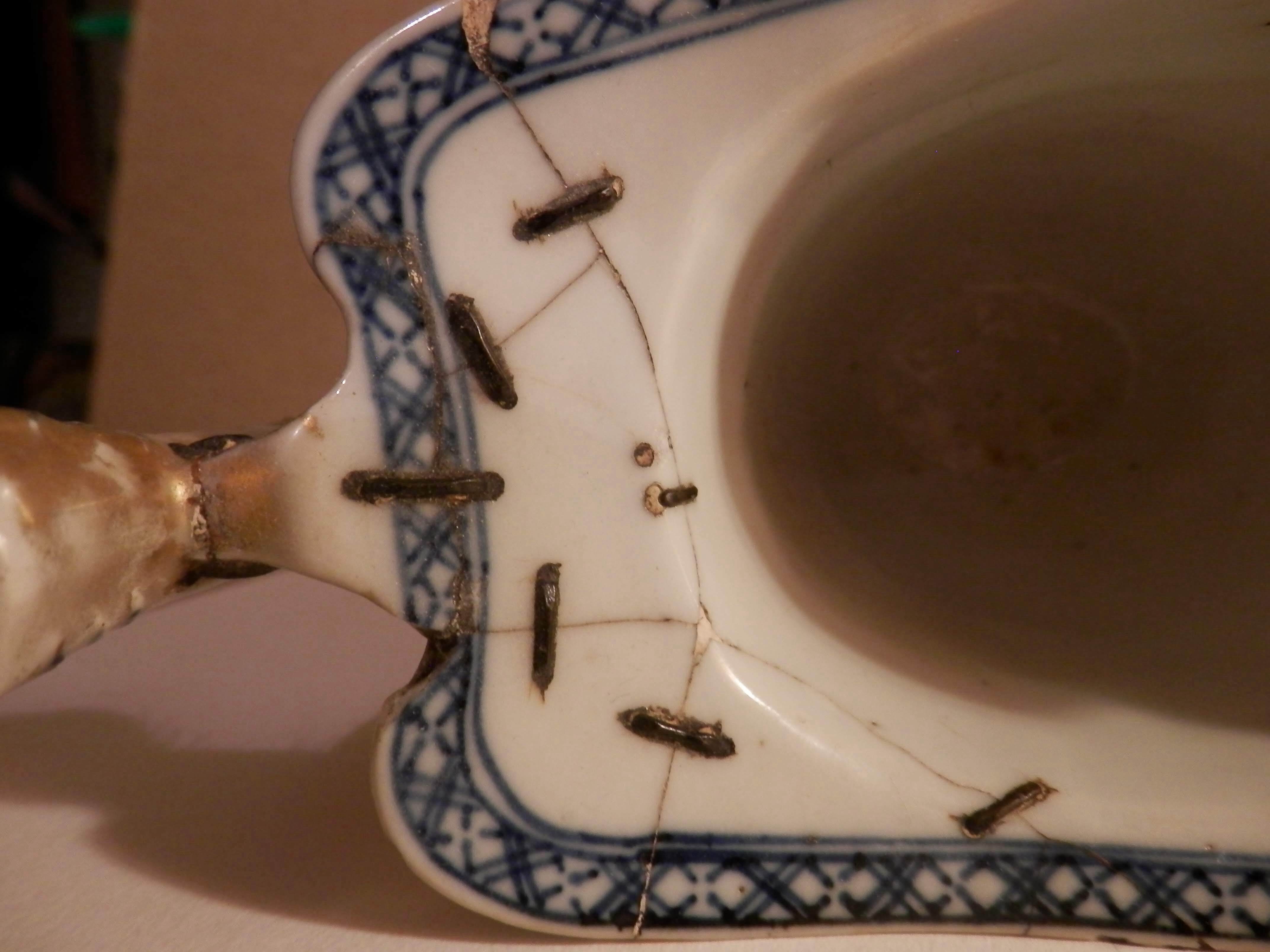
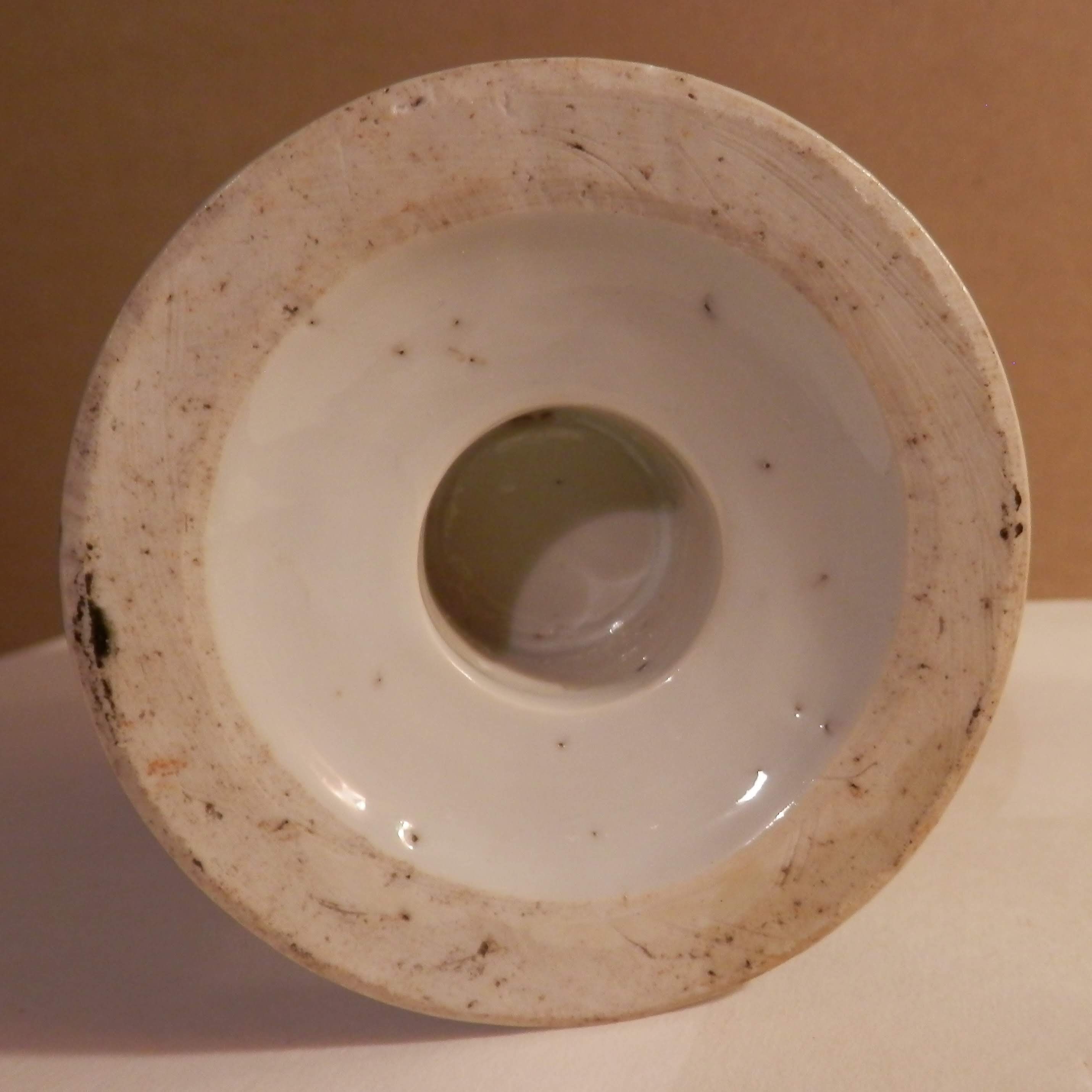
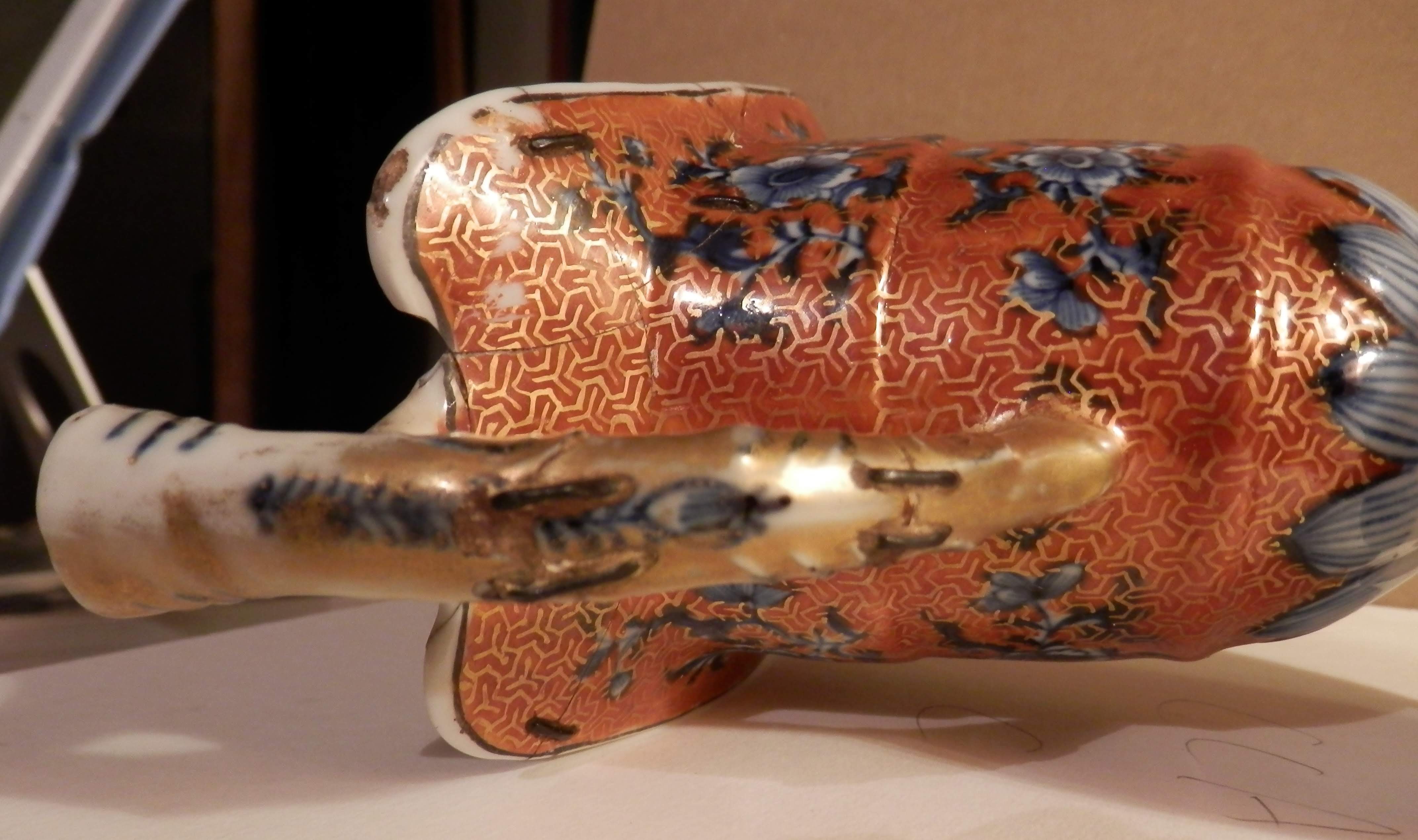 Repairs to such things as porcelain were not easy. So, repairs were done to items which were valuable in some sense. The tools used would have been similar to dentist tools. A small drill, diamond sparks, metal files, pliers, hammer, wire, solder, plaster, and cement. Tiny holes were drilled into the porcelain (not completely through) and staples would be inserted after a fine layer of plaster or cement was placed onto the broken edges. Repairs were done this way because until our epoxy resin adhesives were invented all adhesives were made of natural materials and thusly water soluble.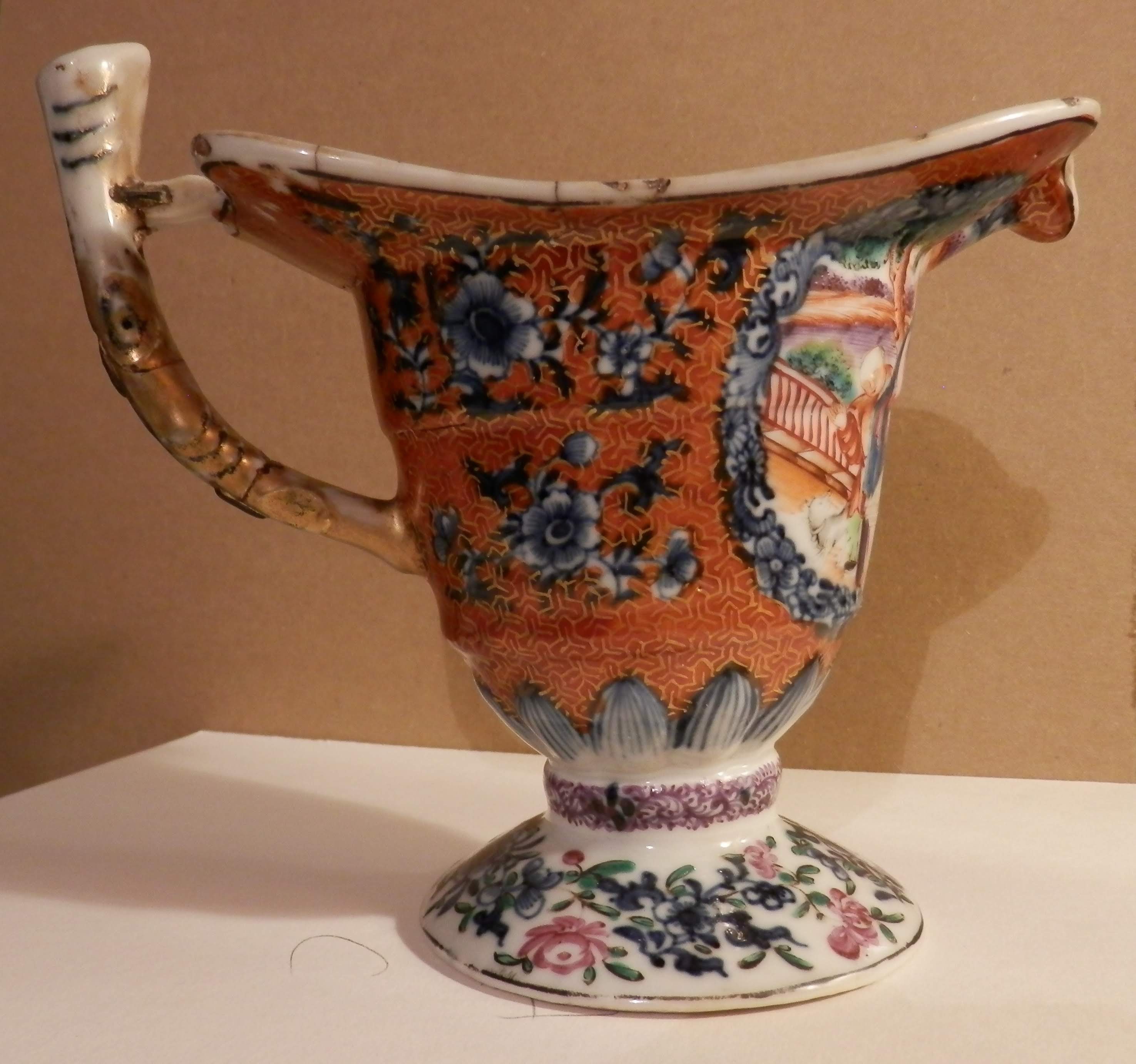
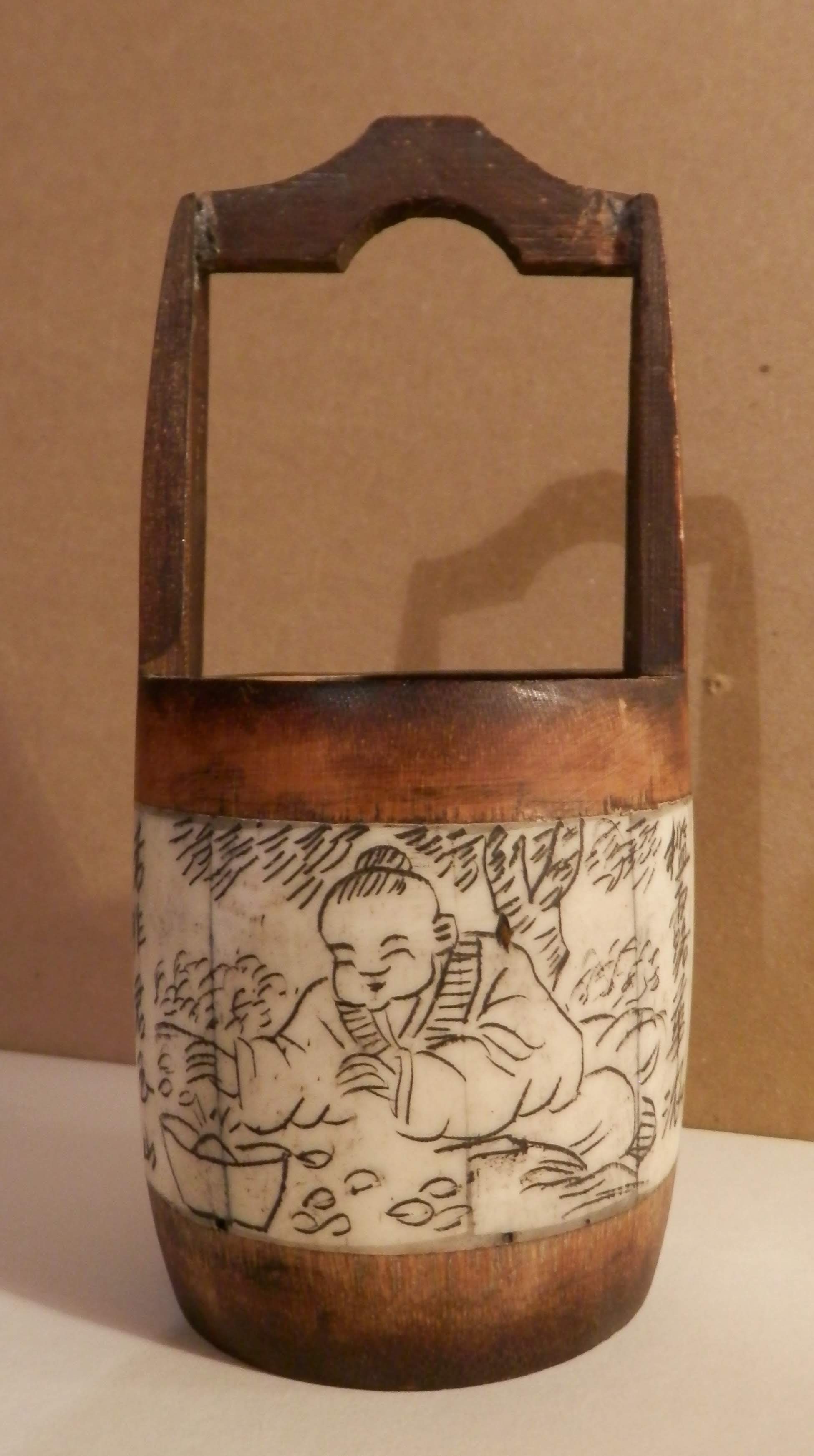
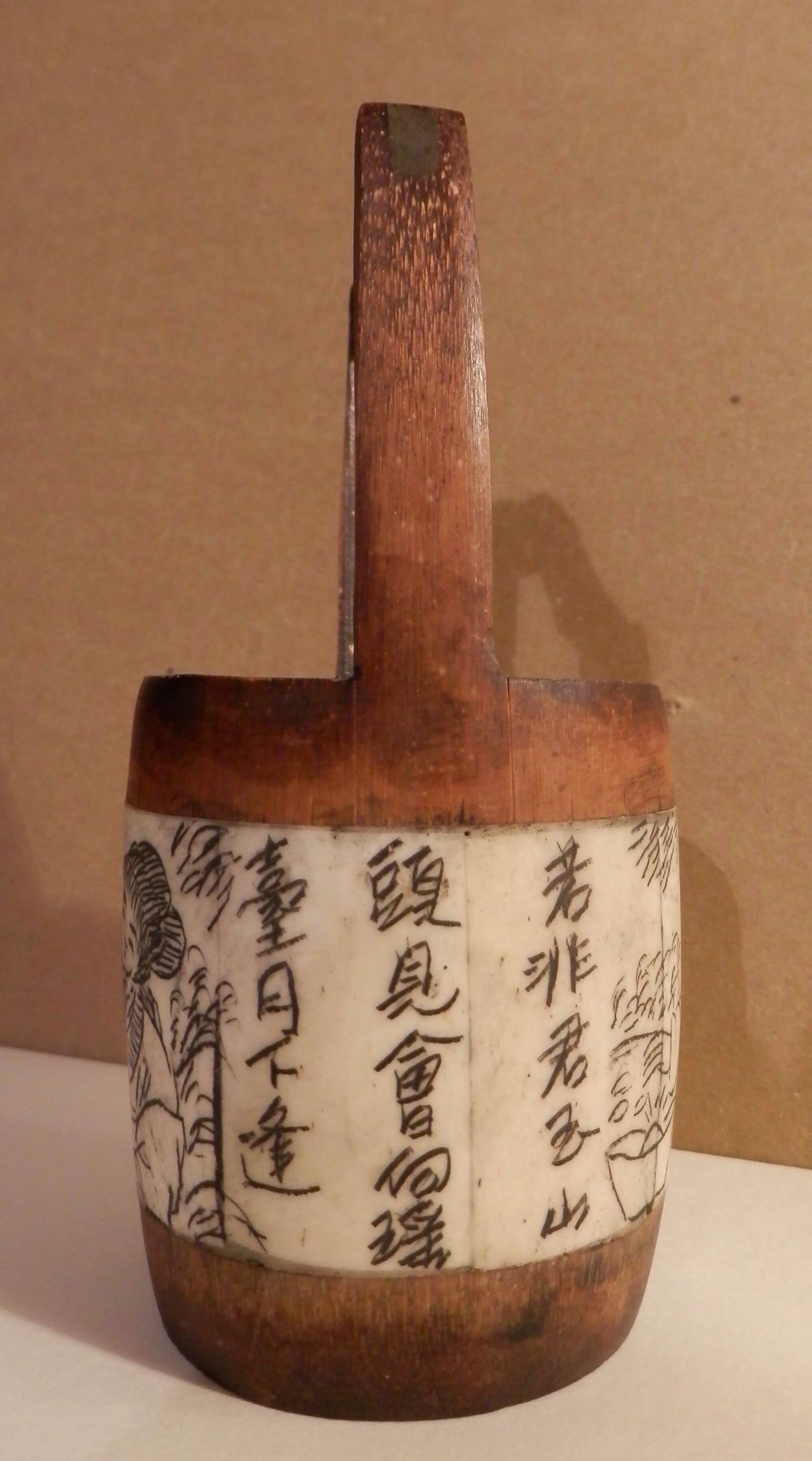
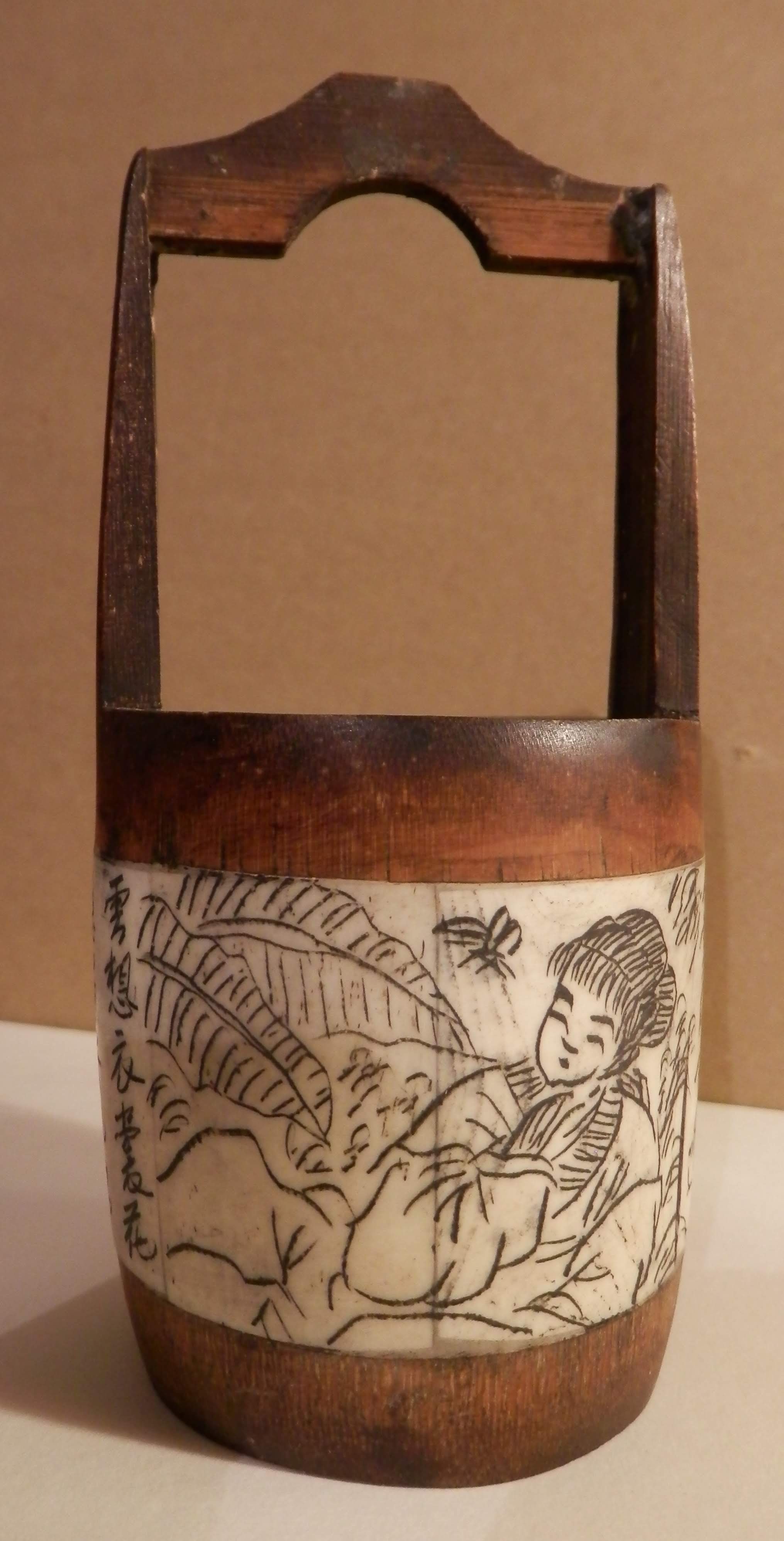
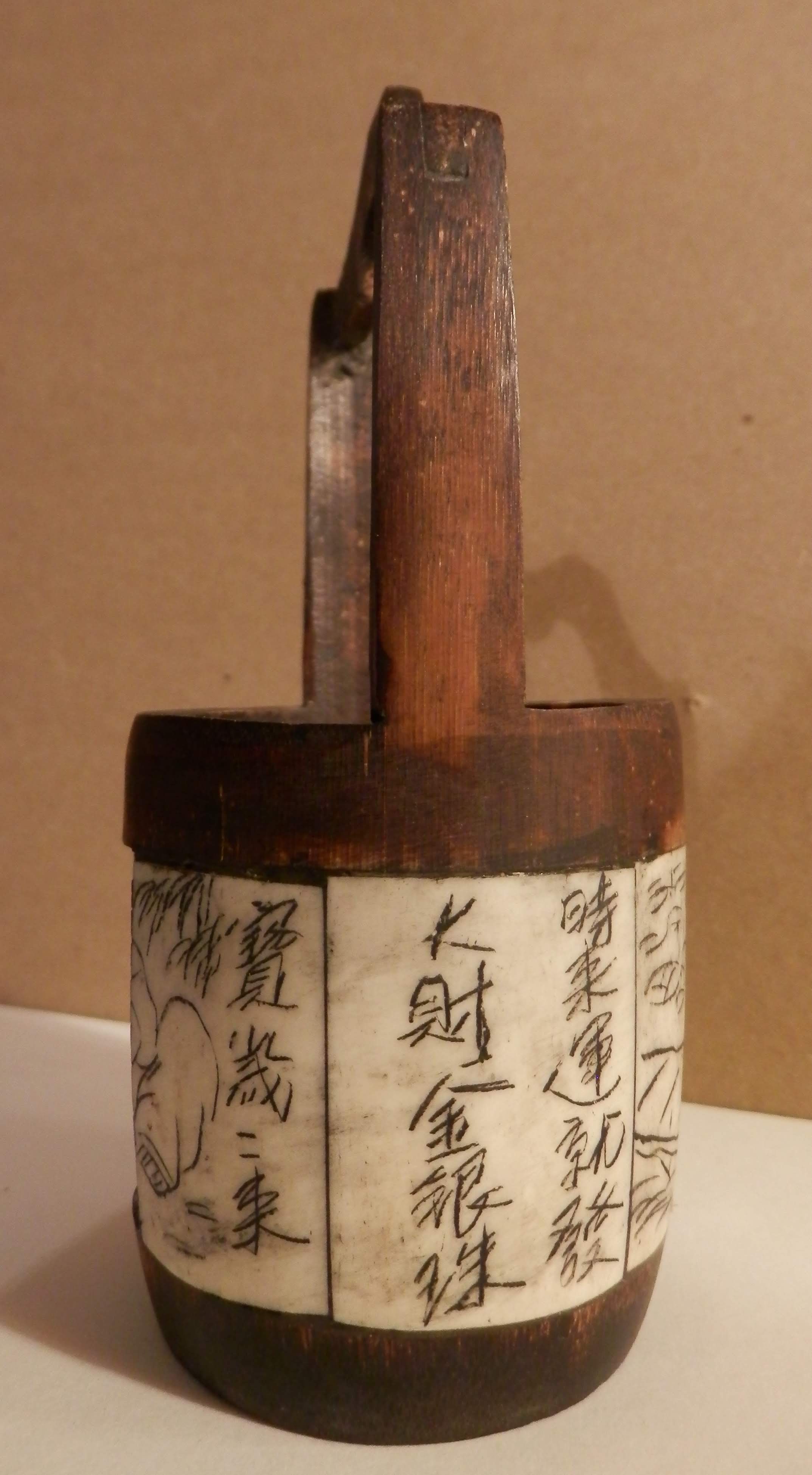
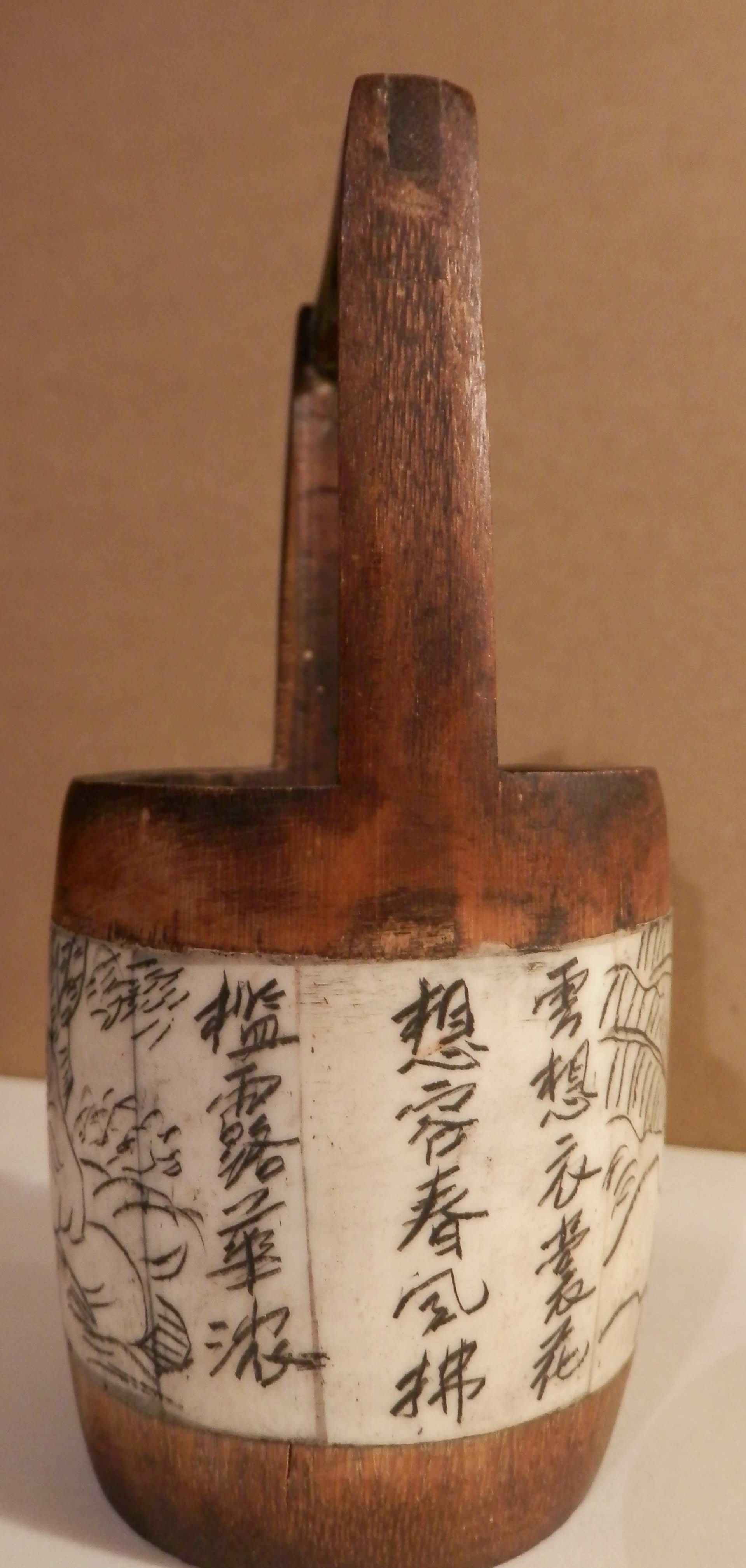 It was originally practiced by sailors who carved whale bone to make crude tools. In their leisure time they carved pieces as artworks and less utile objects. Whale bone is ideal for carving as it is easy to work and was plentiful in years past. Sailors used rough needles which would likely have been used to mend sails. Often the etched images would be rubbed with candle black/soot/tobacco juice or ink to bring the etching into view. Today, scrimshanders (those who work with bone and ivory) use fine tools derived from dental instruments to work their etchings/carvings and even ink their pieces in various colours.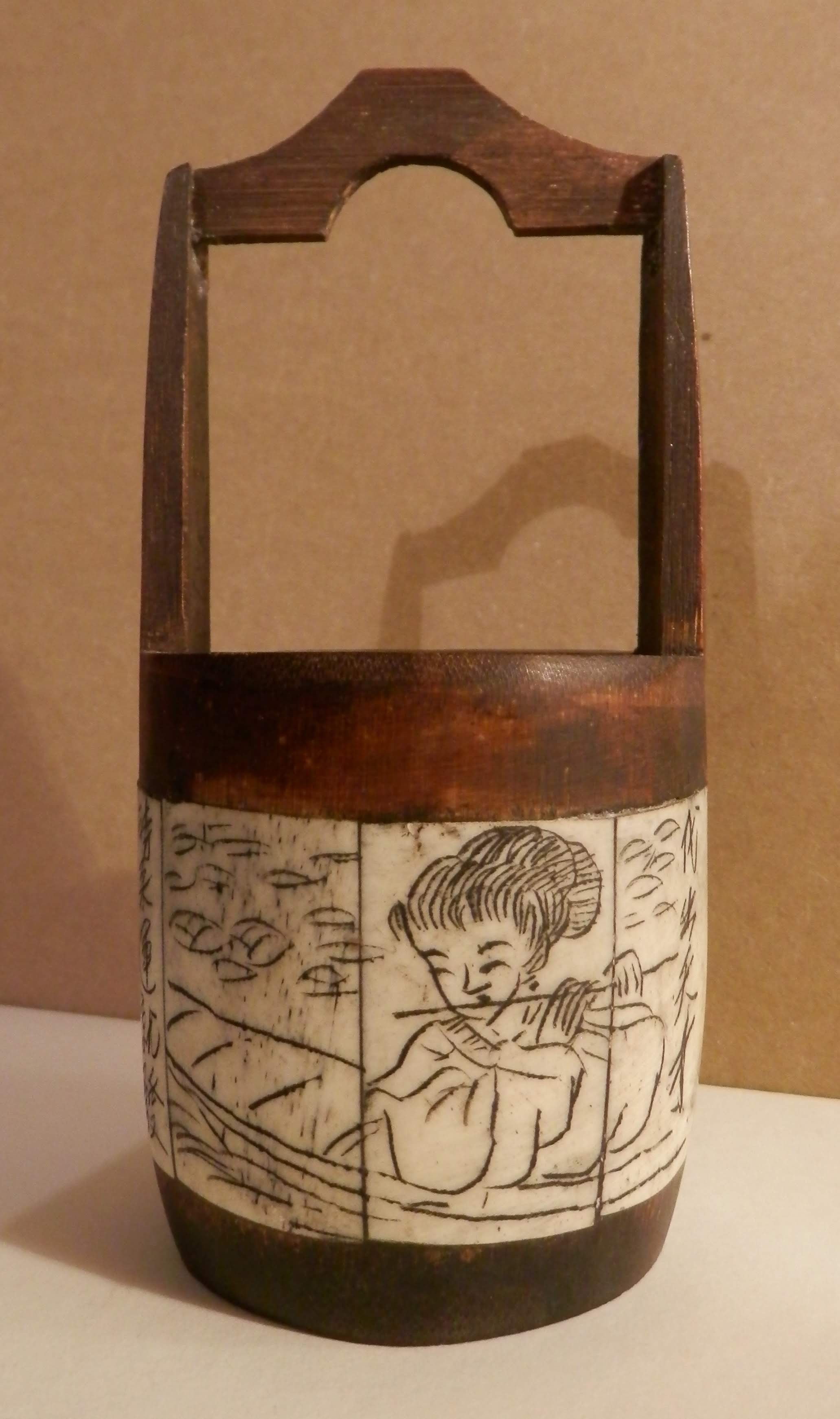
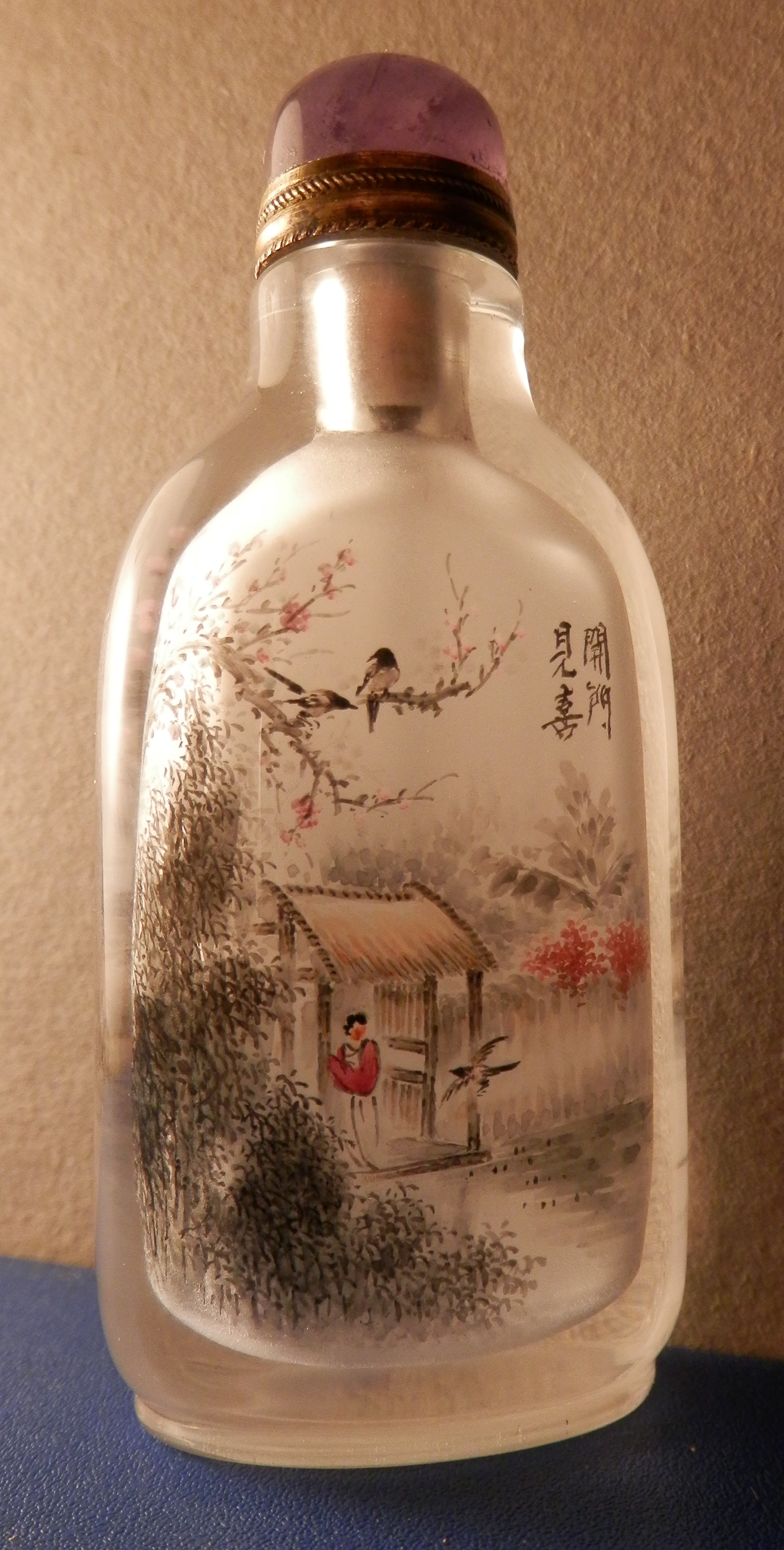
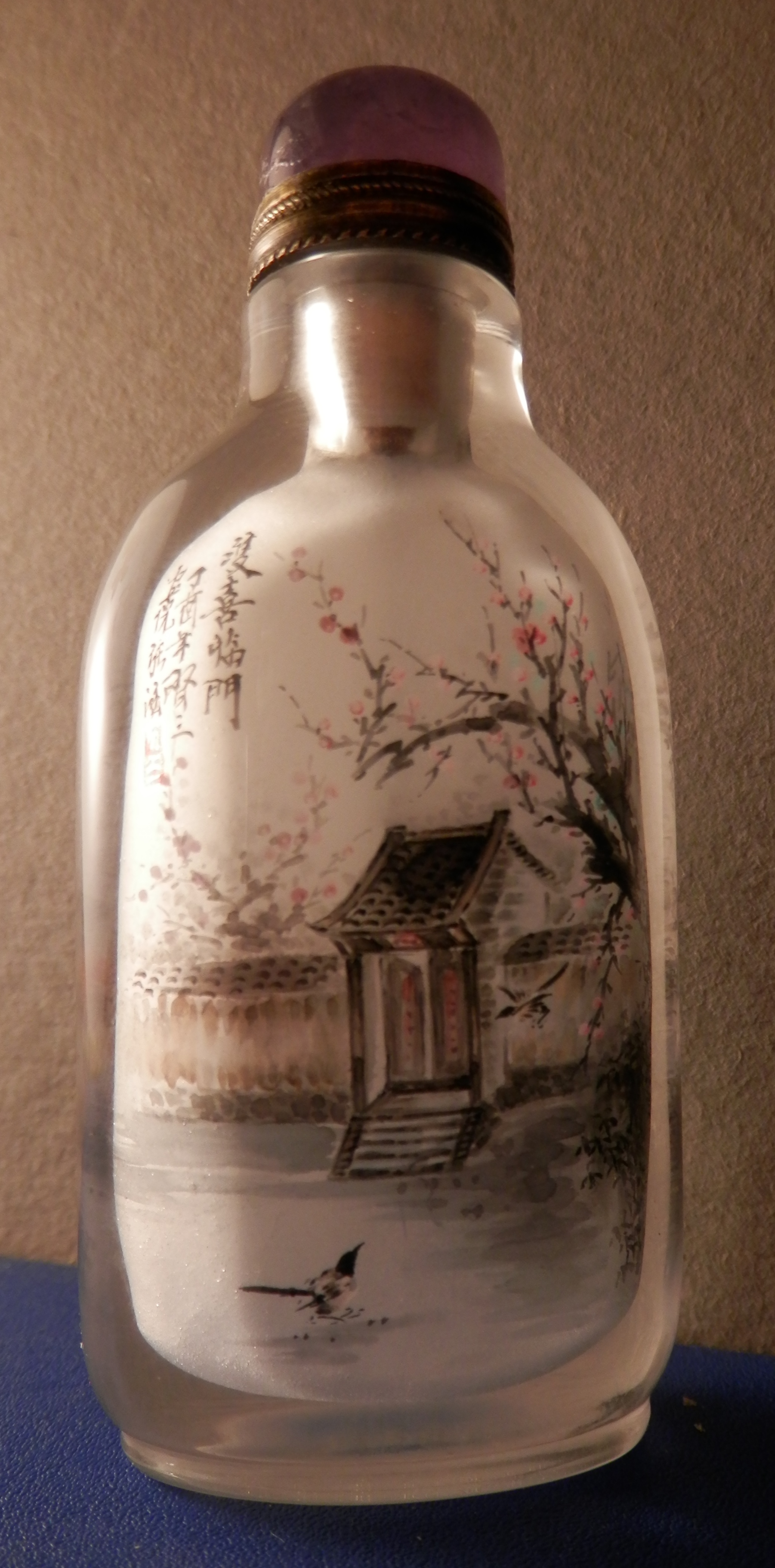 Snuff bottles were made to fit in the palm of ones hand. Easy to carry and small enough to not be overly noticeable when being carried. Snuff bottles were made from a variety of materials – porcelain, jade, ivory, wood, rhinoceros horn, tortoise shell, ceramic and metal – but the most used was glass. The stopper usually had a small spoon attached.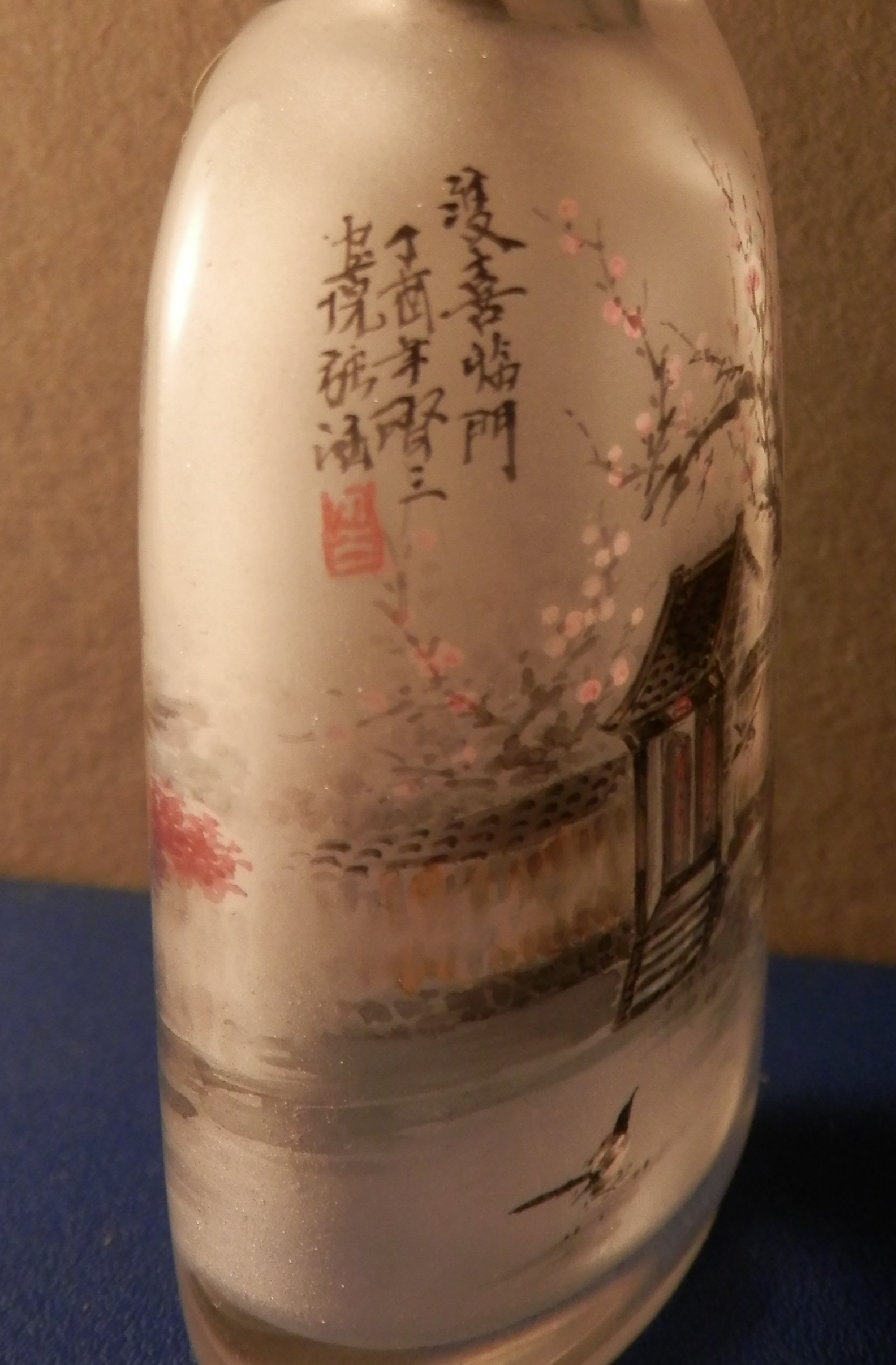
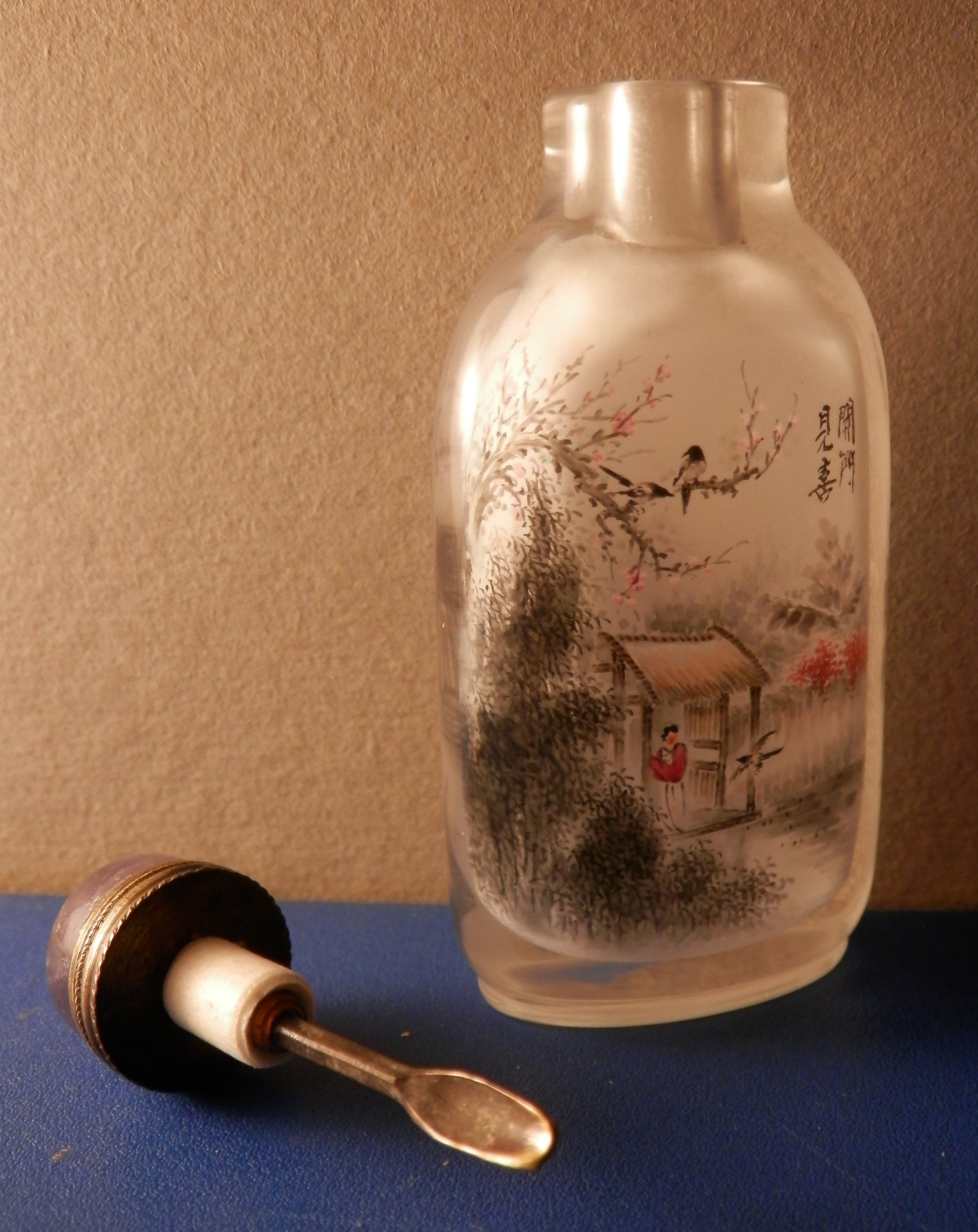 The #snuffbottle in my collection has painted on it – a buildings entrance or gateway on one side and a person in a hut on the other. Foliage flows around the bottle and birds can be seen on both sides. It stands just over 3″ (76mm – with stopper in) and 3/4″ (18mm)wide. It has a tourmaline stopper with a gold metal strip and a tiny gold spoon attached. A nice piece and very finely paintings ed.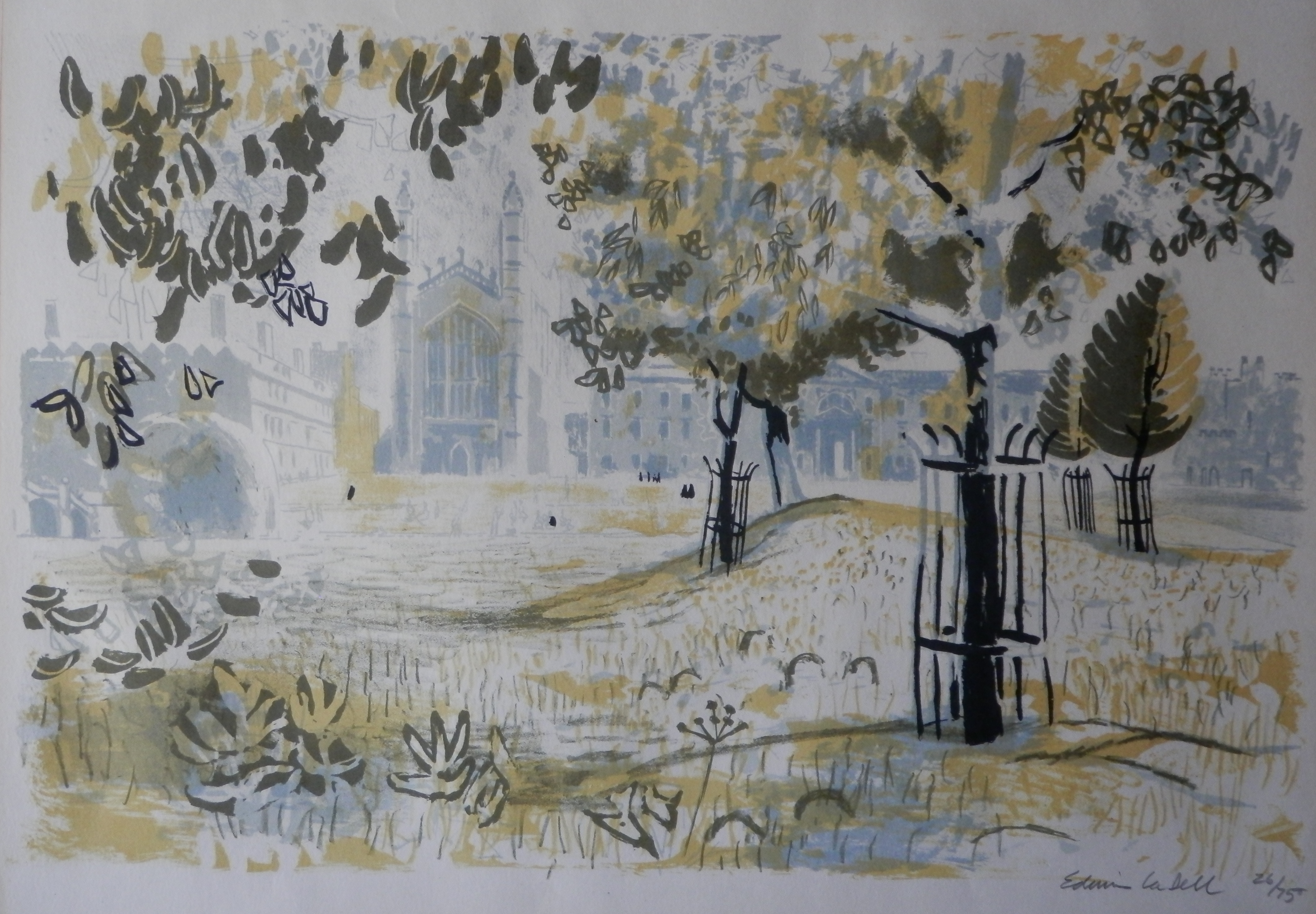
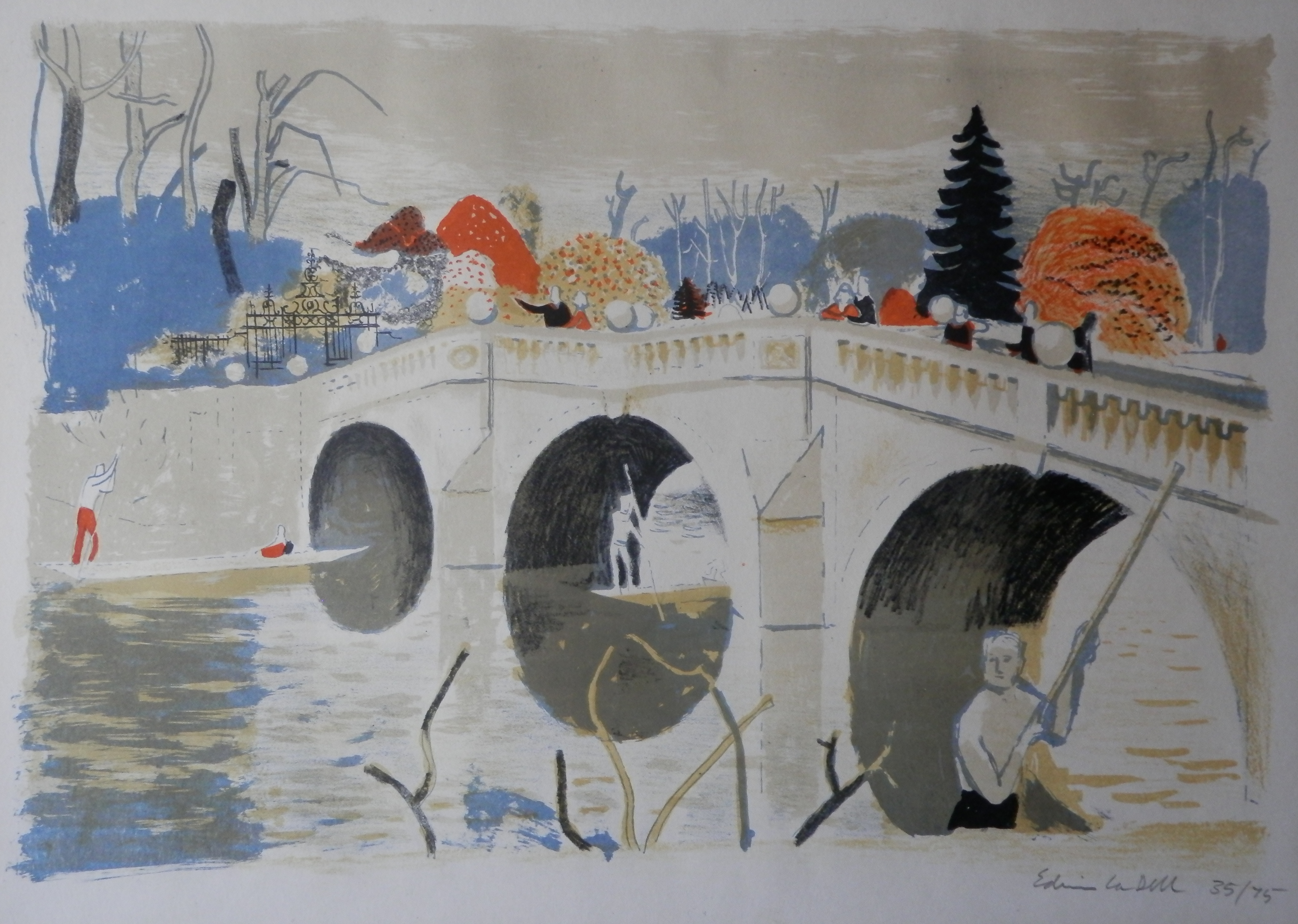
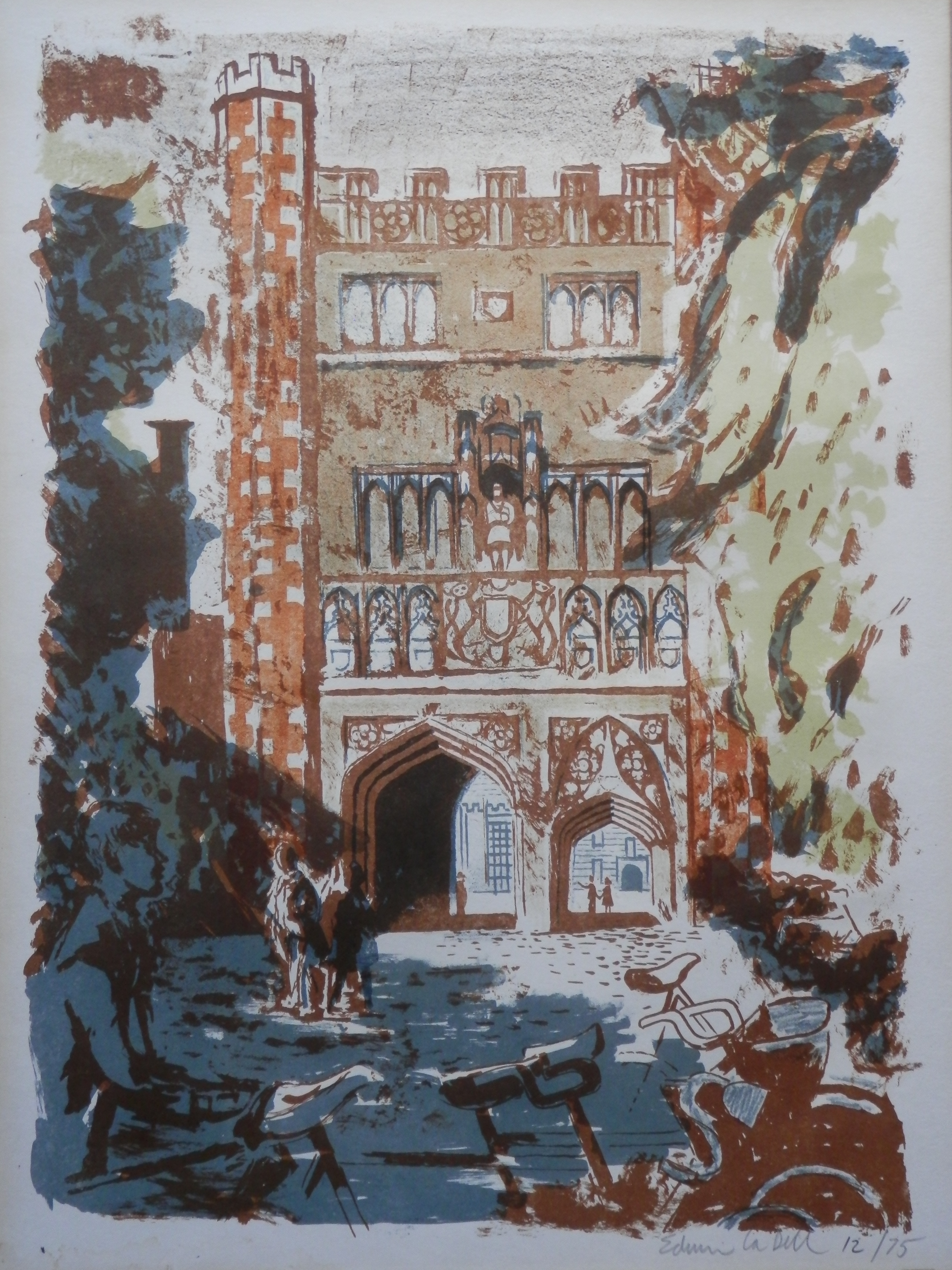 I came across a set of three prints, not long ago. They just happen to be of a favourite place of mine – Cambridge. The three show King’s College from the Backs, punting at Clare Bridge, and the Great Gate of Trinity College. All these lithographs display La Dell’s fine artistic eye and a man at the peak of his artistry. The last image is also in my collection – Fishing at Marlow- was created as part of the Lyons Tea Rooms series.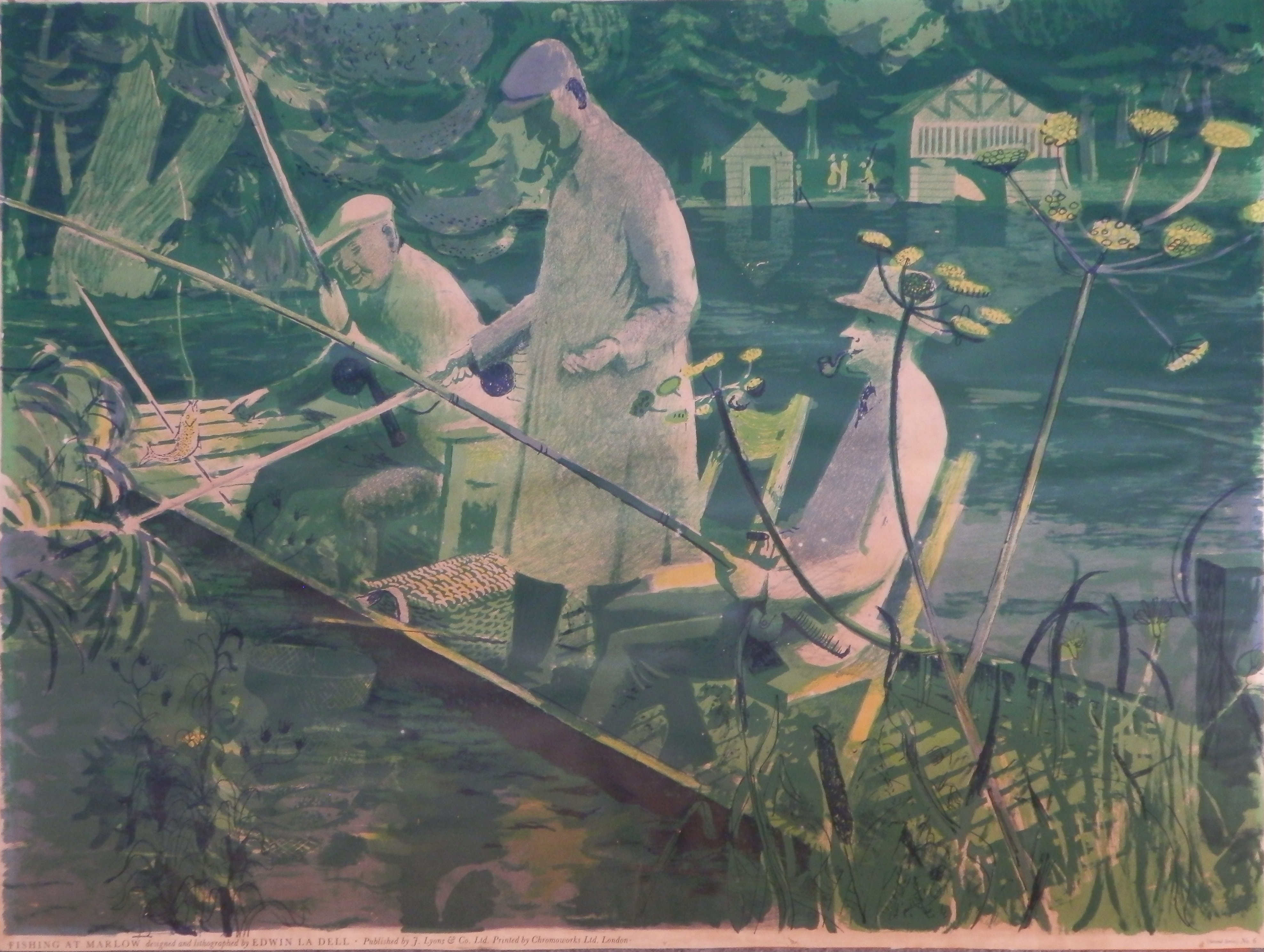
 ronsartblog