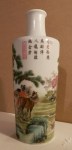
 I recently came across, what I think are two very fine #Chinese vases. They are not very large, standing only 5 5/8″ (142mm) and 2 1/8″ (54mm) in diameter. Often, I see pieces which are, for me, poorly painted – feel wrong in weight and shape but this pair seemed to tick the right boxes for me.
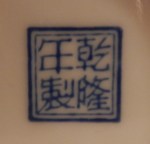 Both vases bear a seal on the base which reads #qianlong nian zhi ch’ien-lung. This mark was used from 1736-1795. Different styles of this seal were used. The seal might be written underneath the glaze in cobalt blue, or atop the glaze in various enamels (iron red, pale blue, or black). It may even be written in gilt, incised or impressed into the base.
 The #Qianlong Emperor was the sixth ruler of the Qing dynasty. He was a man who was fascinated with collecting and preserving the Confucian culture. He did this by using any means necessary to acquire the great private collections and integrate these treasures into the imperial collection. The emperor’s demand for truly high quality porcelain (both artistic and utile) meant that the Qianlong period was the epitome of pottery creation in China.
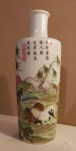
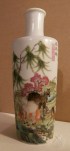
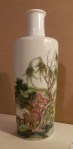
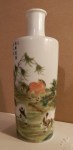
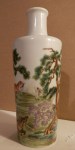
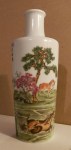
Both vases feature horses galloping and cavorting amidst trees and flowering shrubs. They, also display a verse of poetry with a poets seal. I find the skill in the use of the enamels to be quite fine and the colouring and shading to be very expertly executed.
Items like these were also made or copied during a period from 1911 to 1949 (called the Republic era). I am not qualified to say which but often the copies quality of artwork is lacking. Whether they are old or more recent they remain two small but very beautiful vases.
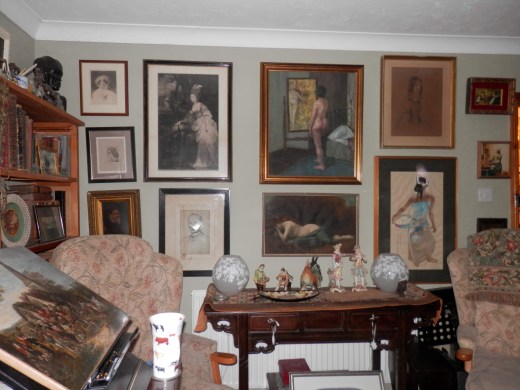 I certainly do not claim to be an interior designer in any sense and my picture walls tend to be items which I like to look at. This room has a wall which is mostly devoted to the female form and has a pair of chairs for relaxing and reading.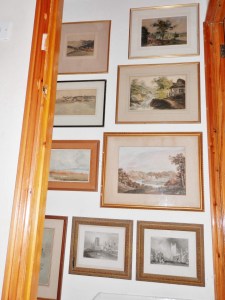
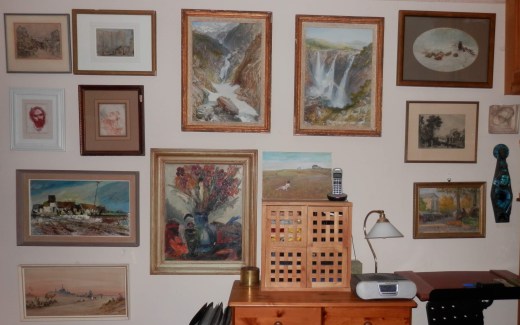 Over the six years which I have collected, I believe I have found some lovely things. Not all perfect but they have been loved and appreciated by those who owned them. The pieces on my walls range from an old French master to living British artists and so many in between – some known and some not. They each tell their own story and I, hopefully, will carry their tale forward to others.
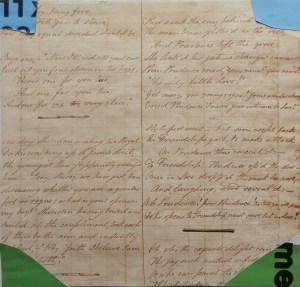 On the verso are a number of snippets of poetry or verse which all are sourced back to a publication called The Literary Magnet of the Belles Lettres, Science, and the Fine Arts published in 1824 – edited and compiled by #TobiasMerton. Please excuse the corners where the previous owner glued a backing page to aid in reading the recto. The pieces are are all hand written with no obvious link since they come from various parts of the publication other than the ‘Red sank’ and Sly Cupid’ which are verses 2 and 3 of a poem called Frederick and Maria.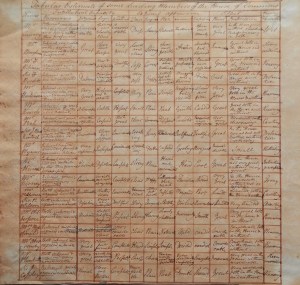
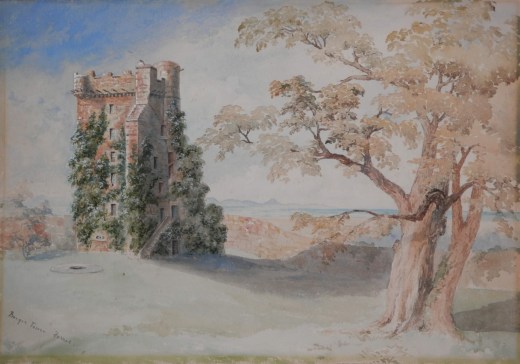 But we have not visited. Granted it does not quite appear as it does in this watercolour. Time has taken it’s toll and although it is now a ‘listed building’, finding funds to keep it in shape is challenging.
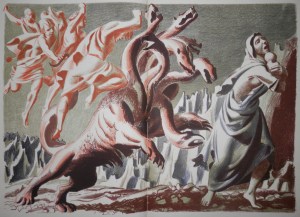
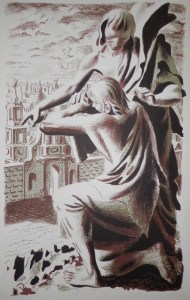
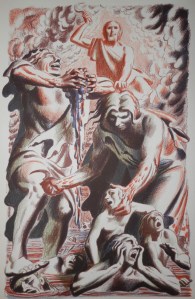 The Revelation of Saint John the Divine is a book which depicts what is to come. It foretells the return of the Christ and the final judgement and destruction of evil, the devil, and mankind as well as the rescuing of the redeemed. It provides, for the artist, inspiration allowing them to imagine and then create visages of a great and terrible time.




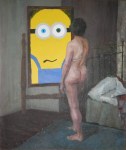 Here is an image of the work before a little work was done on it. You can just see the possible quality but the addition of a Minion is somewhat distracting and overpowering. I decided that the minion had to go but what would be in it’s place.
 ronsartblog