Art of Gustave Dore

In my journeys in the search for art I have acquired some things which might not be considered art but they are works which contain artworks.  I have in my collection a set of ‘The Graphic Illustrated Paper’ from September to December 1870 but they are for another day.  Today, I wish to talk about two publications which are illustrated by the same artist.  One of the great etchers and engravers of all time.  Gustave Dore by name.  And the two books from my collection in to-days  blog are DON QUIXOTE (2 volume set published Cassell 1906) and ‘THE NATIONAL FAMILY BIBLE ( published by Pike & Brothers @ 1880).

Don Quixoteby Gustave Dore

Don Quixote
by Gustave Dore

The wonderful artist Gustave Dore (1832-1883) was a French engraver, illustrator, and sculptor.  Doré worked primarily in wood and steel engraving.  He illustrated a number of books and in the 1860’s he illustrated a French edition of Cervantes’s Don Quixote, and his depictions of the knight and his squire, Sancho Panza, have become so famous that they have influenced subsequent readers, artists, and stage and film directors’ ideas of the physical “look” of the two characters.  Dore’s illustrations for the English Bible were also very successful.  Amazingly, Dore was known for his painting while he was alive and although fine paintings they are his woodcuts and engravings are where he excelled as an artist.

The first two images come from the Don Quixote and the third comes from the Family Bible.  The first image is the frontispiece of Volume 1 and is titled ‘A world of disorderly notions, picked from out of his books, crowded into his imagination’ and if you look closely you will find images from throughout the whole two volumes.
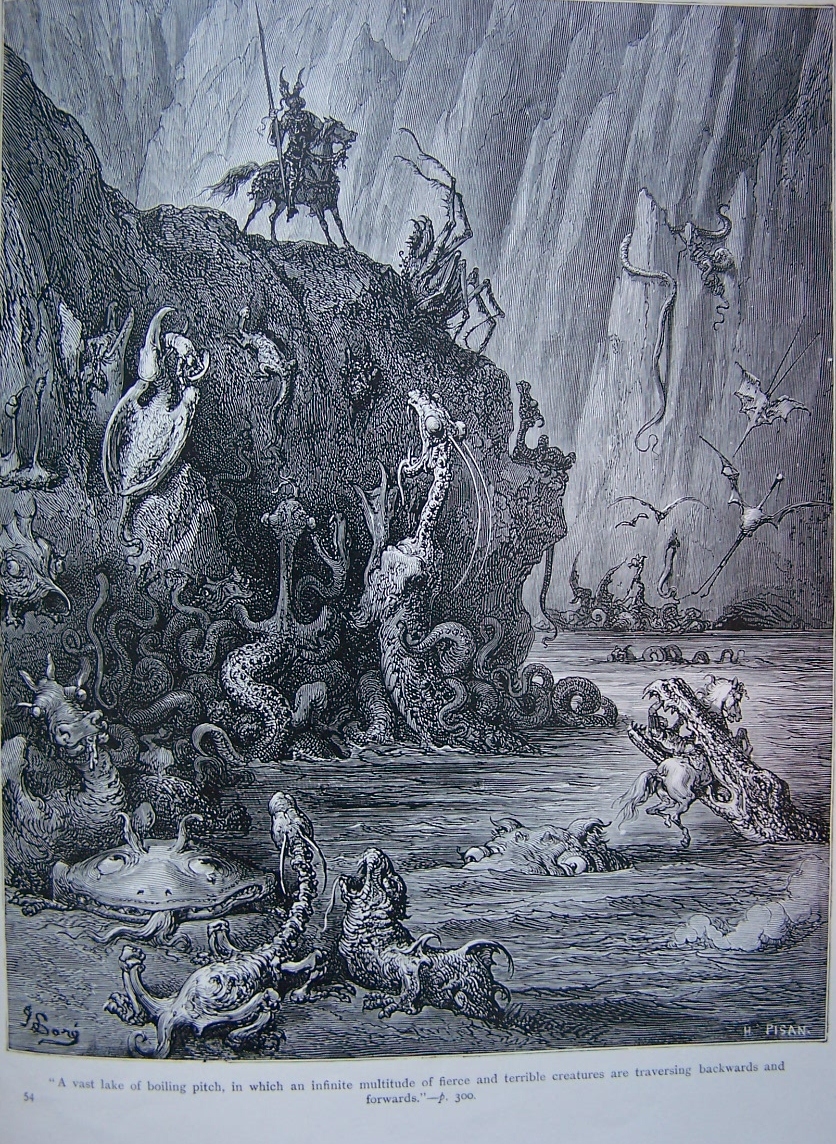
Lake of Boiling Pitchby Gustave Dore

Lake of Boiling Pitch
by Gustave Dore

‘A vast lake of boiling pitch, in which an infinite multitude of fierce and terrible creatures are traversing backwards and forwards’ is our second image and our trusty hero,  Don Quixote,  without reflection or considering dangers cast himself into the midst thereof, only commending himself to heaven and to his lady.

And finally, ‘The Temptation’ from the national Family Bible.

One can easily see from these few images that Dore was a truly gifted artist and well deserves his renown.
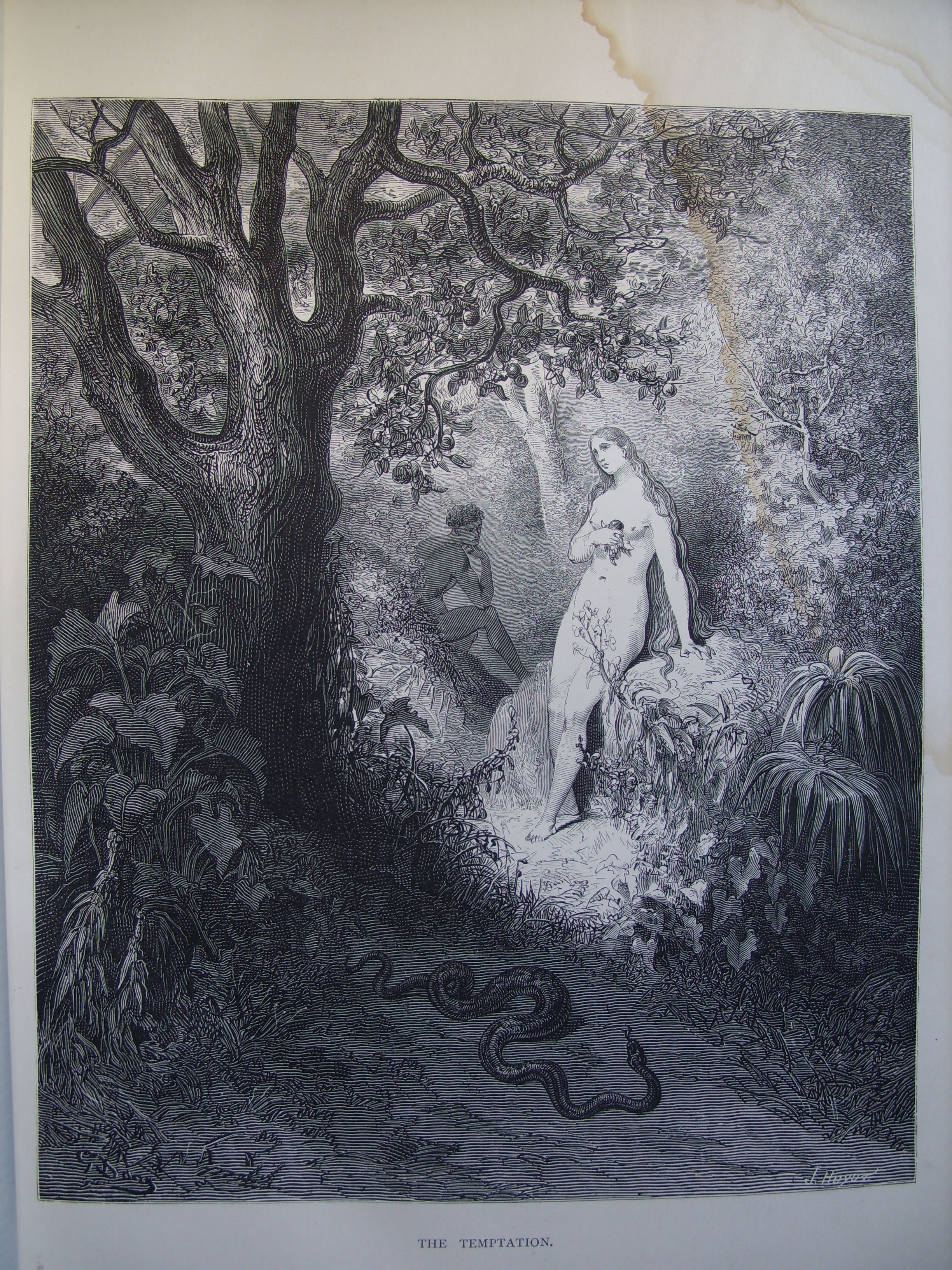
The Temptation of Eveby Gustave Dore @ 1880

The Temptation
by Gustave Dore @ 1880

Posted in Etching, Modern prints | Tagged , , , , , , , , , , , , | 4 Comments

Art of Line and Colour

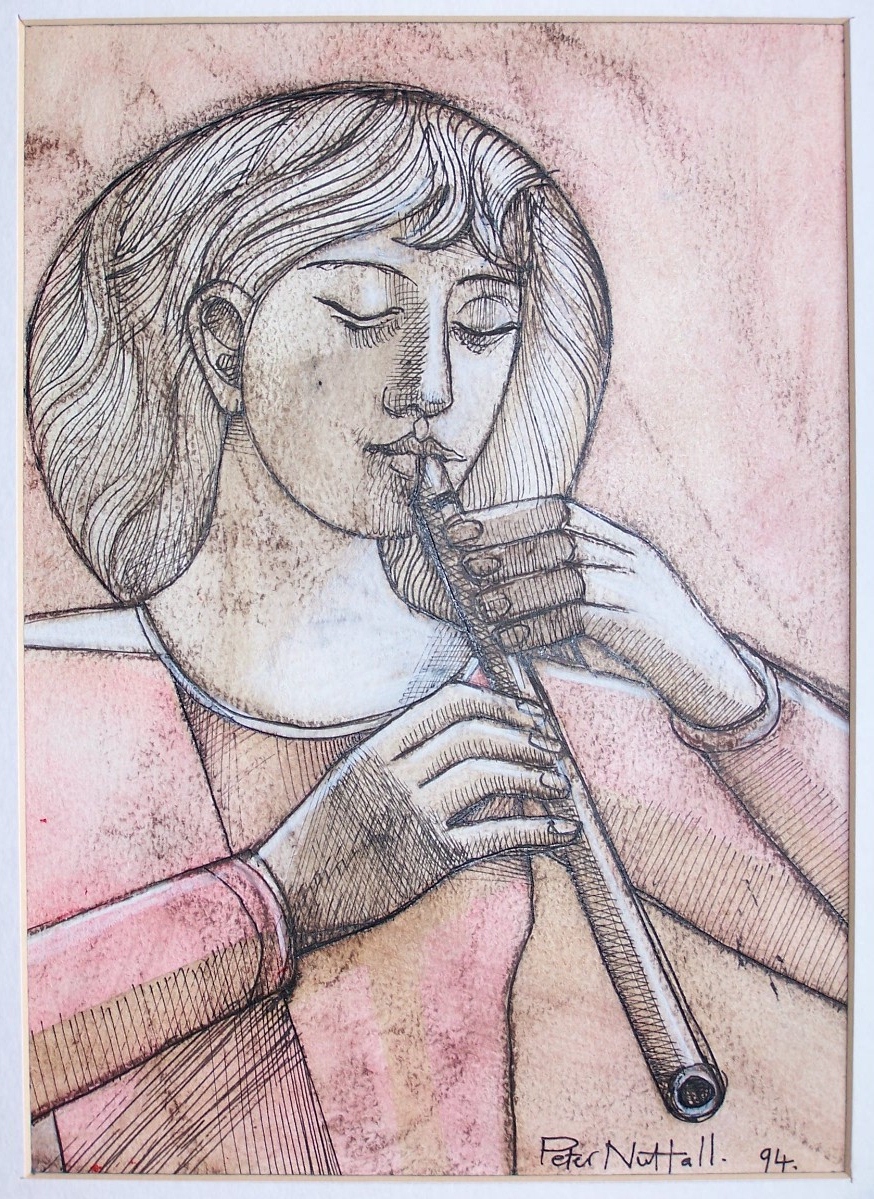
I, at times, wonder what draws me to a piece of art but this week I know full well that it is the sublime skill with pen and ink.  Two pieces by artist Peter Nuttall in my collection are the main topic for today.

Head of a Girl - pen crayon & washPeter Nuttall, 1979

Head of a Girl – pen crayon & wash
Peter Nuttall, 1979

Peter Nuttall (1943 – 2011) was born in Blackburn.  He studied at the Maidstone College of Art where he developed his unique drawing style, his distinctive colour palette and his use of mixed media.  His art in ways is surrealistic and yet in others  is very baroque.  Much of his art embodies the spirit of the north of England – he being a Lancashire lad.  The earthy tones in his colouring of his works gives the subjects a solidity a firmness as if from rock they are drawn.  A beauty expressed in a moment of melancholy.  A day dream caught in its’ passing.   A reflection of the real and yet with so much depth beneath it.

Upon the Flute - pen and ink, crayon, and watercolourPeter Nuttall, 1994

Upon the Flute – pen and ink, crayon, and watercolour
Peter Nuttall, 1994

Surreal in representation and yet a surety of line which harkens to an earlier time.  An interpretation of what the artist is seeing and his depiction is of what he is  feeling- how these figures have moved him – are expressed here in line and colour.  There is beauty here  and to depths which we are privileged to see through an artists’ eye.

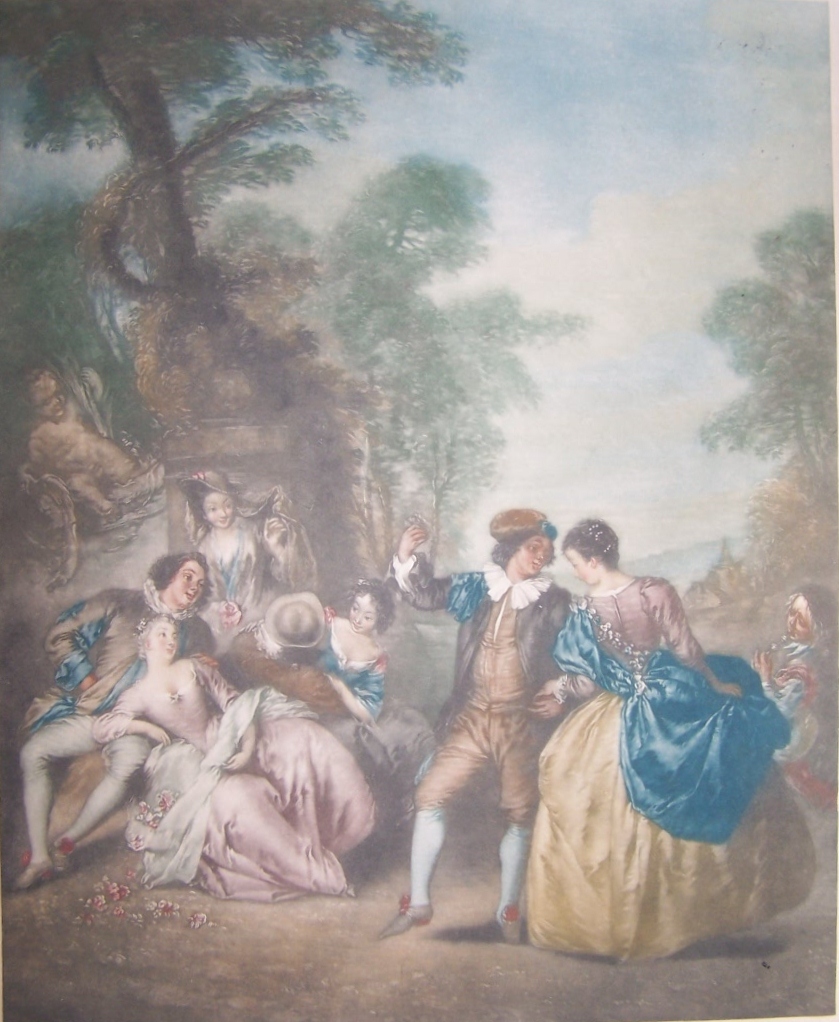
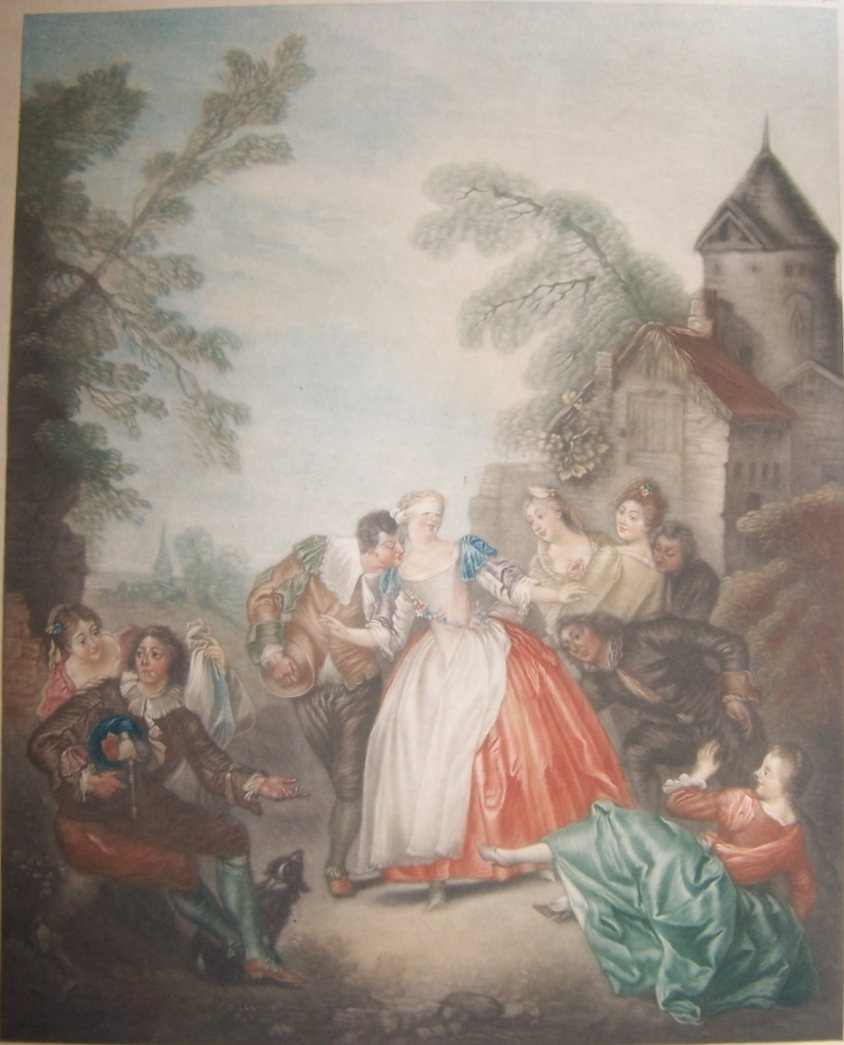
And from  1910, here are two mezzotint engravings published by Virtue & Co., 7 City Garden Row, City Road, London, England.  The one on the left is signed in pencil by Frank Sternberg and the one on the right by F. Petitjean.  Just over 100 years old and still with wonderful colours.  Images of a genteel time – whether truth or myth – to lighten the eye and mind.

Frank Sternberg =-mezzotint published by Virtue & Co, 1910

Frank Sternberg =-mezzotint
published by Virtue & Co, 1910

F Petitjean - mezzotintpublished by Virtue & Co, 1910

F Petitjean – mezzotint
published by Virtue & Co, 191

Posted in Drawings and Sketches, Lithographs, Watercolour paintings | Tagged , , , , , , , , , , , | Leave a comment

Art of the Dot

I beg your indulgence as I return to a topic which I have talked about earlier.  The artistry and beauty of the stipple engraving.

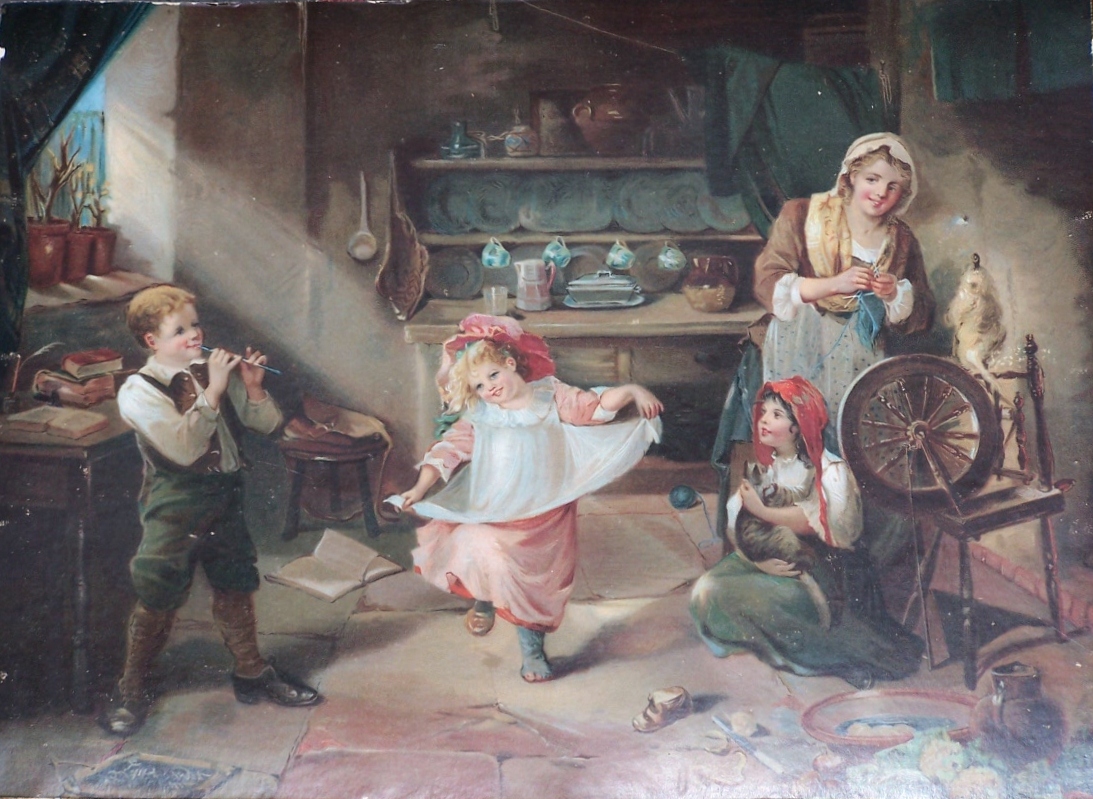
Dancing in Pinkunsigned & undated

Dancing in Pink (my title)
unsigned & undated

Perhaps some might call what is portrayed in this picture dated, idealistic or naive and in truth it might be.  But what can not be argued is the beauty of the colours. The ray of light which falls upon the dancing child can but lead your eye to the joy which is expressed in her face and make you smile in response.

Many of the stipple engravings which you see around today are copies of or have been inspired by paintings or drawings.  When one produces such a wonderful artwork in response to another artwork it can but be a compliment to the original.  So could this picture be a tribute to George Morland, Henry Singleton, or by Bartolozzi.  I don’t know. I just like soaking up the joy and happiness it exudes and the memories which it brings to mind and that is enough for me.

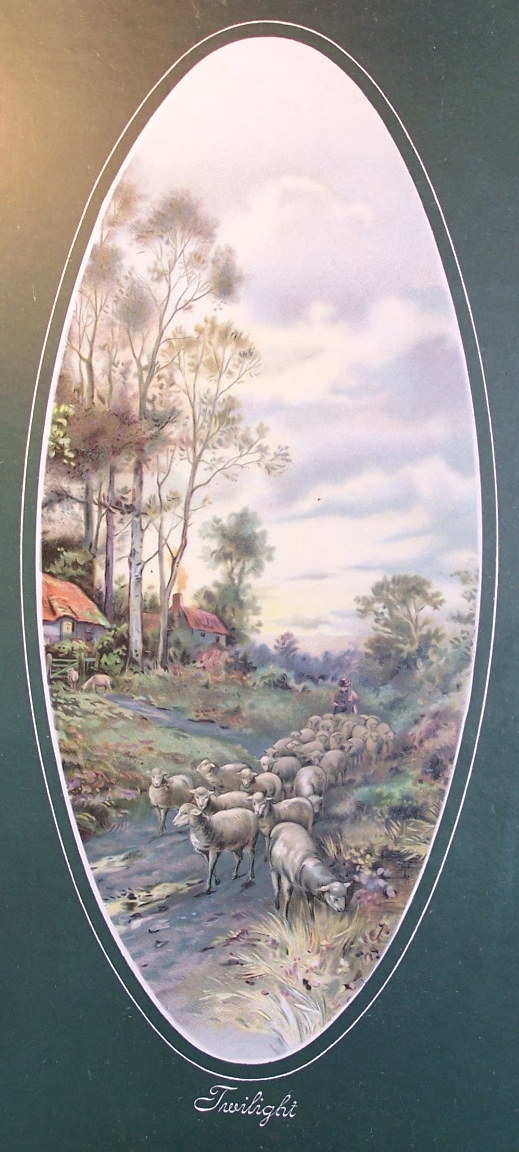
Twilightunsigned & undated

Twilight
unsigned & undated

Once again the thing which drew me to this stipple engraving was its’ vivid colours. It draws the eye from title into the image – over-top the flock – past the shepherd – toward the expanse of sky.  The colour of the roof on the cottage forces your eye to the left – then up into the trees which stand beside the house and again into the sky overhead.  A pleasing picture to look at and consider that you are standing on the edge of the road as the sheep converge upon you.  A calm and placid place to be with a depth of wonderful colours to please the eye.

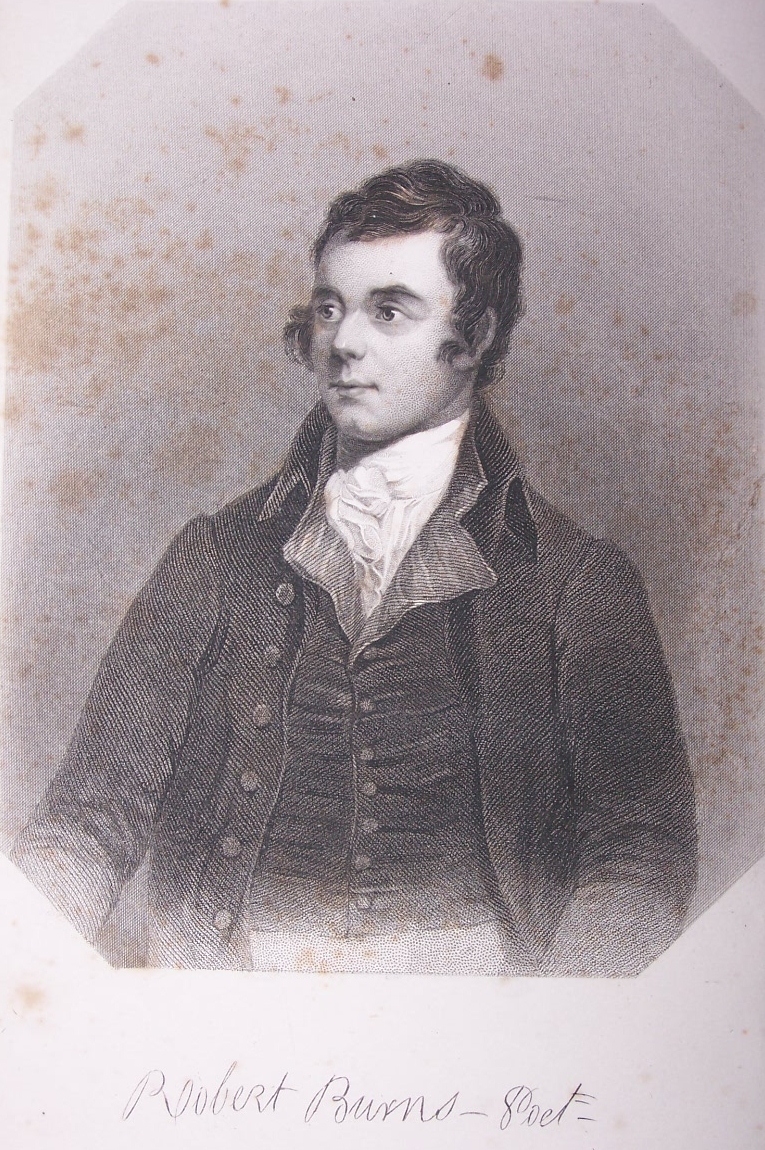
Robert Burns - Poetunsigned, @ 1842

Robert Burns – Poet
unsigned, @ 1842

And my final stipple is actually a book plate.  It is of the Scottish poet Robert Burns and comes from an 1845 edition of his complete works. It shows its’ age with some foxing but still has some lovely qualities about it.   It is not purely a stipple engraving since it has some line engraving in it but it does show what one can do when you combine the two styles.  I hope you enjoy and do read a bit of Burns’ poetry to bring ye ta the highlands.  You might just pass the shepherd on the road with his flock and overhear the music and laughter coming from the cottage in which the children are playing.

Posted in Etching | Tagged , , , , , , , , , , , , | Leave a comment

Art in Sequence

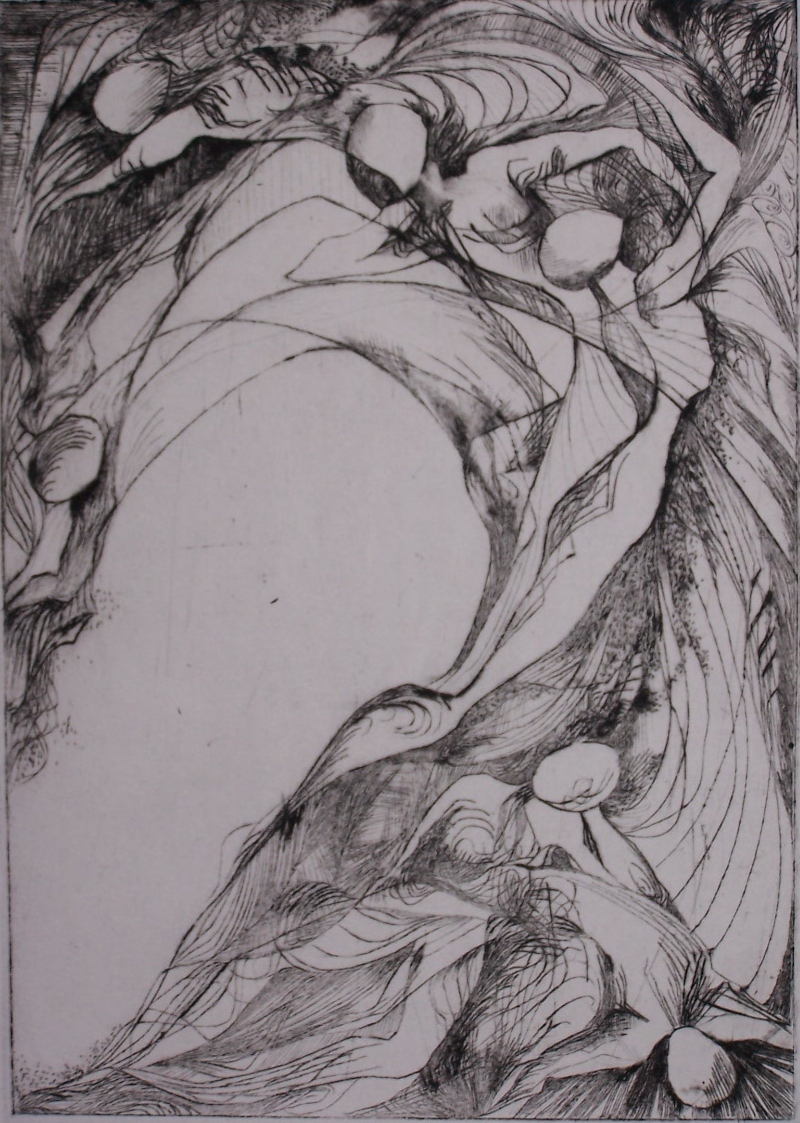
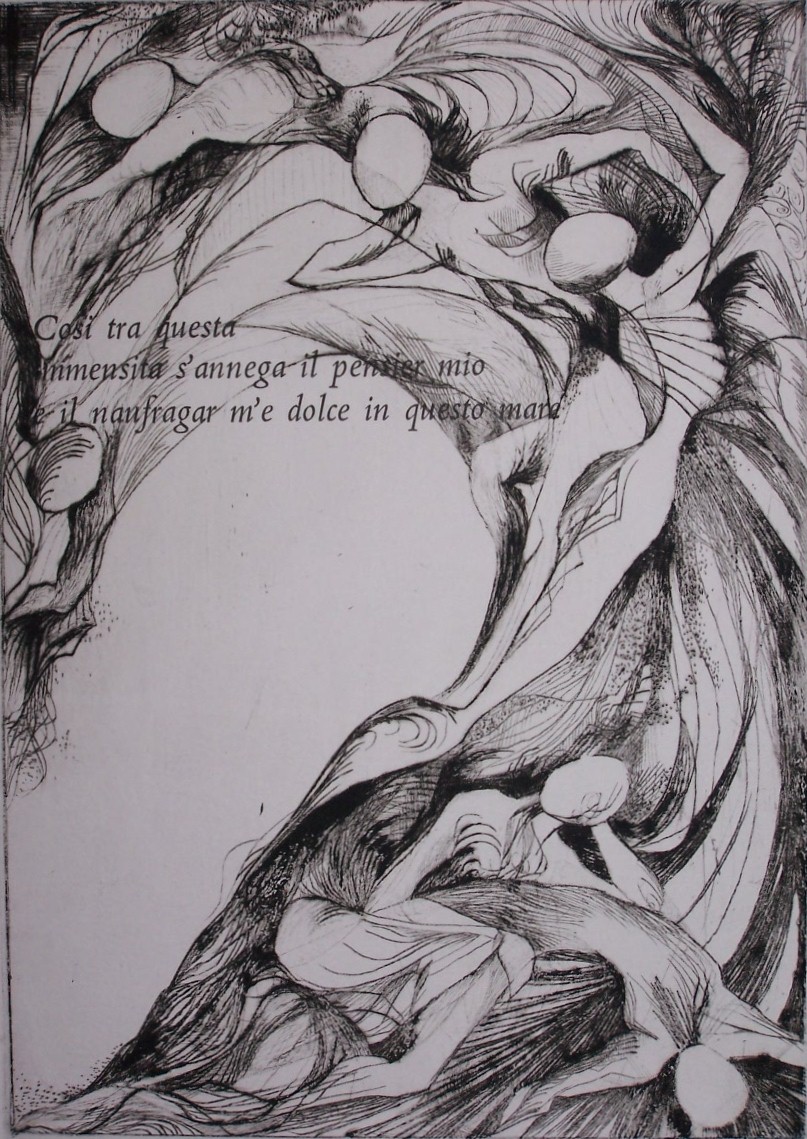
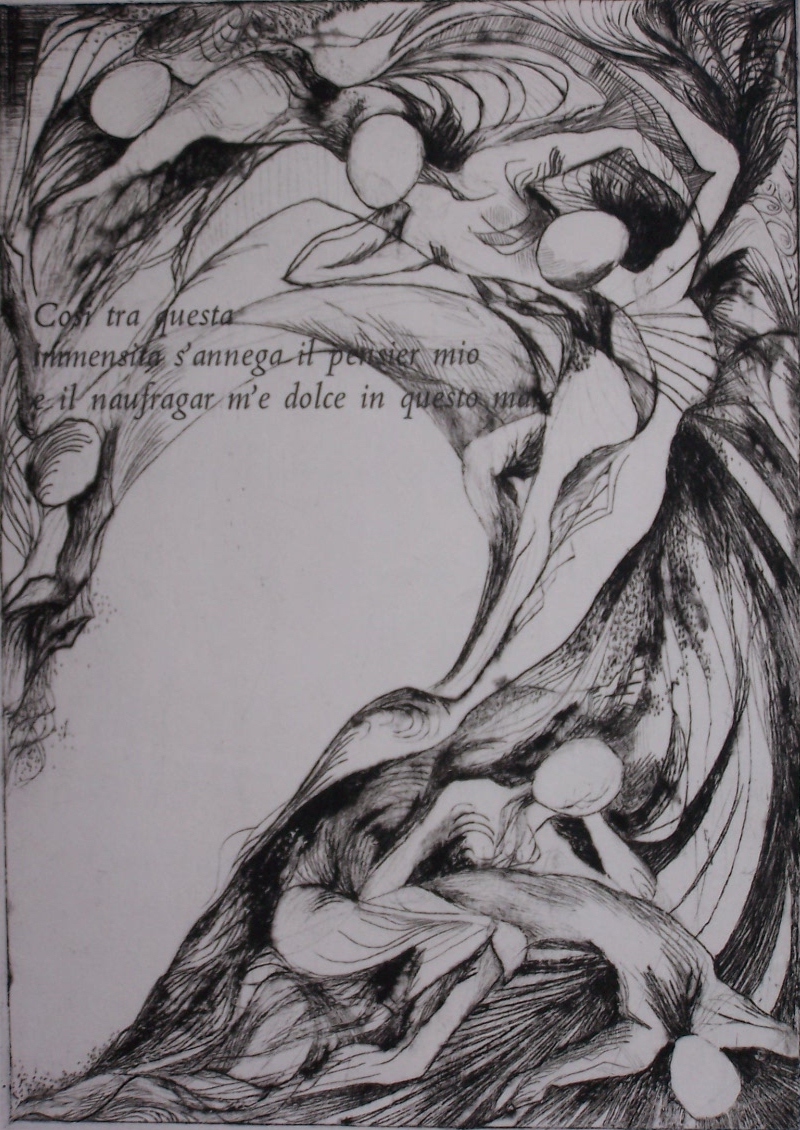
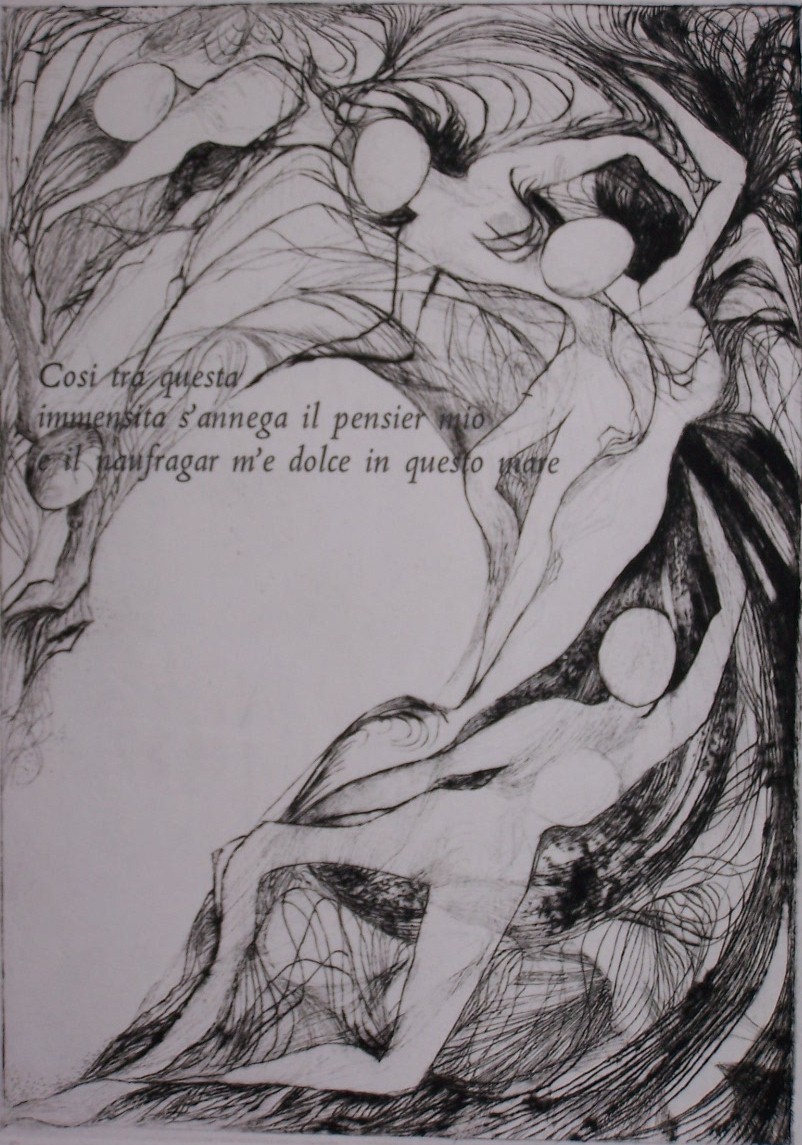
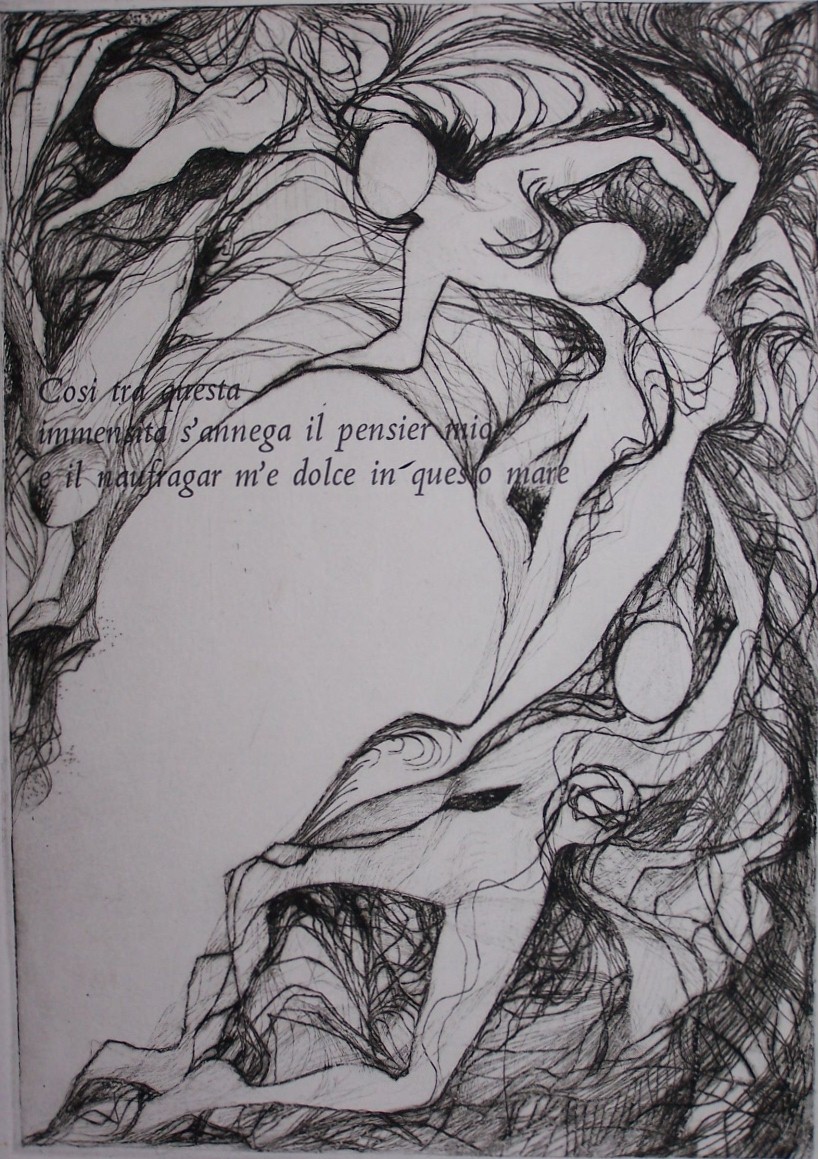
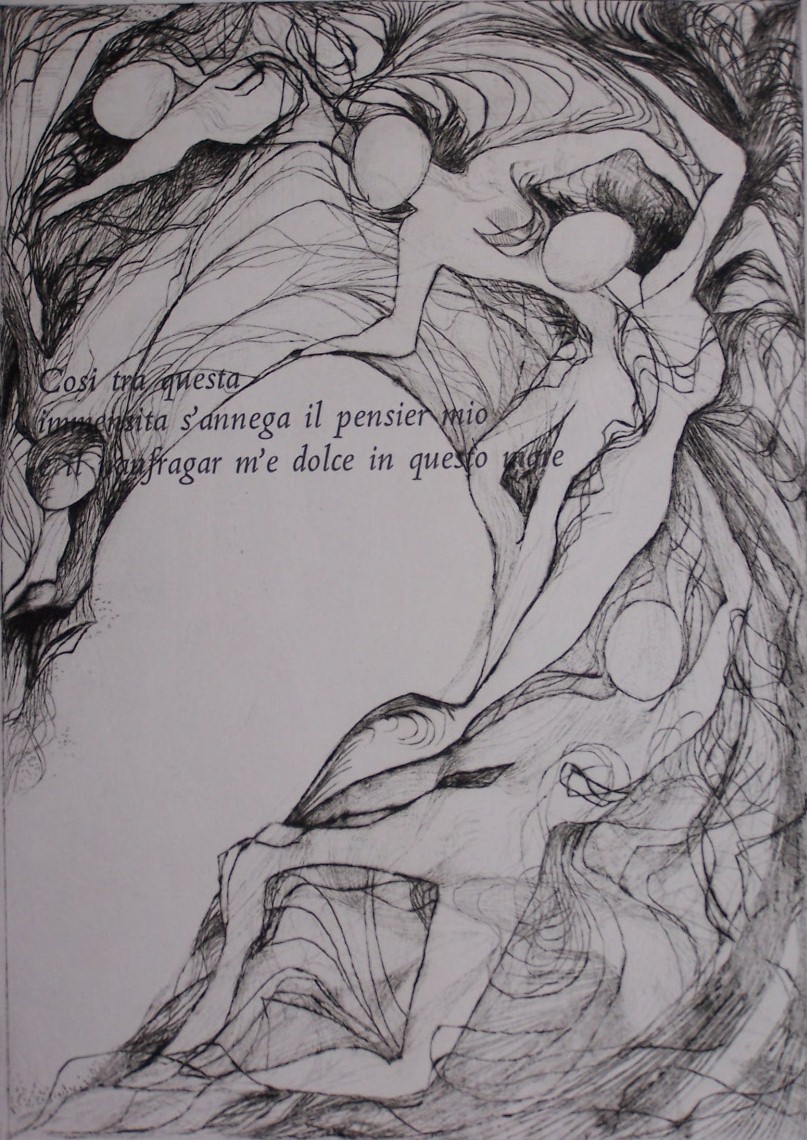
I came across a set/series of etchings a few days back.  They are numbered from I to IX.  Alas, I have only six of the series (I, III, IV, V, VIII, IX).  I have enjoyed and continue to enjoy looking at them finding  differences in line and shading,  Why has the artist changed this print over this series of productions?  What did they not like or what did they like.  A look at an artist’s mind as they proceed from form to form and depth to depth  in their works.  I present all six views here for your enjoyment and perusal.  I know nothing in regards to the artist – E. Sainsbury.  The translation for the Italian goes something like this (apologies)

So in this vastness are my thoughts drowned

And in this sea sweet is my shipwreck

State Roman IE. Sainsbury, March '78

State Roman I
E. Sainsbury, March ’78

State Roman IIIE. Sainsbury, march '78

State Roman III
E. Sainsbury, March ’78

State Roman IVE Sainsbury, March '78

State Roman IV
E Sainsbury, March ’78

State Roman VE. Sainsbury, April '78

State Roman V
E. Sainsbury, April ’78

State Roman VIIIE. Sainsbury, April '78

State Roman VIII
E. Sainsbury, April ’78

State Roman IXE. Sainsbury, April '78

State Roman IX
E. Sainsbury, April ’78

Posted in Etching | Tagged , , | Leave a comment

Art around the Globe

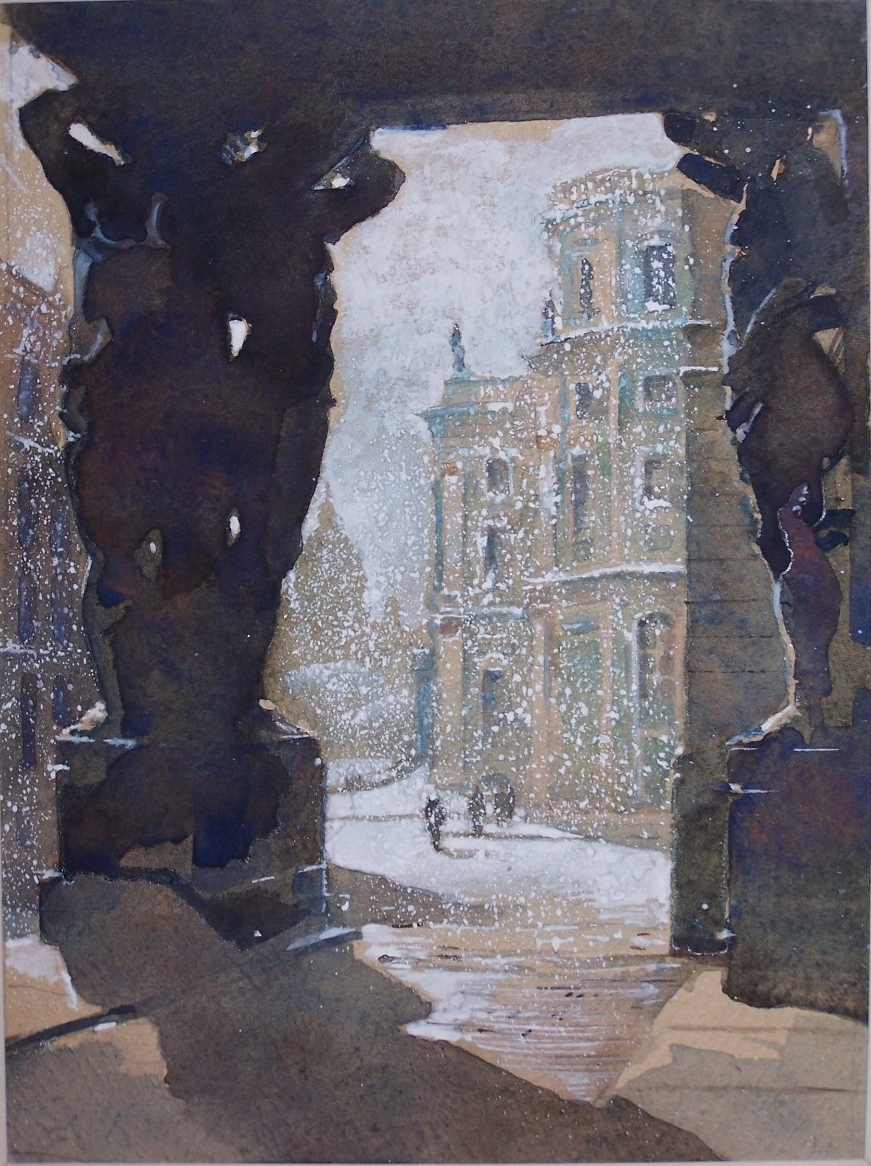
This week has brought me into contact with a couple of pieces of art which come from locations which are on my list of places to visit.  I begin in the wonderful city of St Petersburg at one of the oldest and largest museums/galleries in the world.

Atlantestitled, signed & dated watercolour

Atlantes
Victor Tukhachevsky – watercolour     St Petersburg, 2000

We find ourselves at the entrance of the Hermitage Museum standing dwarfed by the Atlantes (Latin plural of Atlas). They are sculptured males figures which serve as supports of entablatures in place of columns or piers.  They are ten in number and created from grey Serdobol granite by Alexander Terebenev.  These granite men stand 5m (15 ft) in height(without plinth) so they are imposing and grand.  We stand in the cold and look toward St Isaac’s Cathedral.  A place filled with culture and history (it is a UNESCO world heritage site).  The most northerly city in the world with more than 1 million people (it has 5 million) and it lies on the Baltic Sea making it an important port as well.  Truly a place I hope to visit.

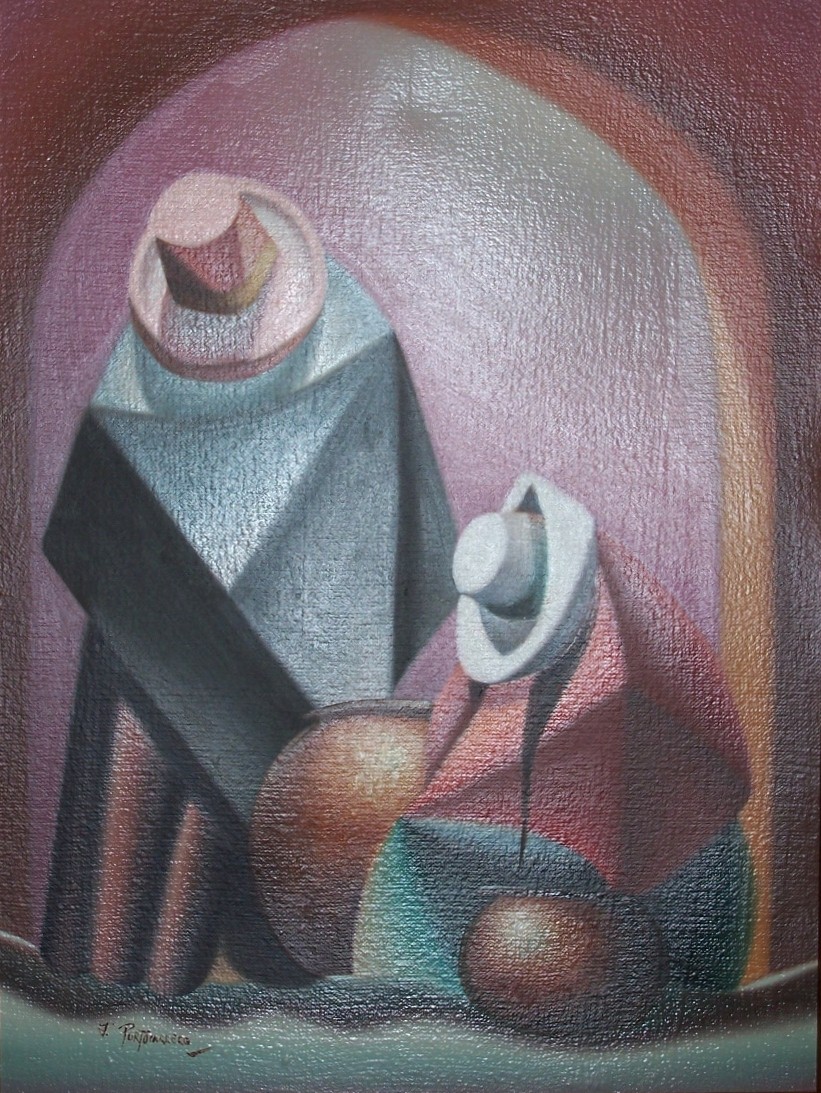
The next painting comes from Arequipa, Peru by the artist, Jose Portocarrrero Millones.  Portocarrero’s oil paintings (somewhat cubist in style) portray the every day lives of the people.

Water-carriers RestJose Portocarrero Millones - oil on canvas

Water-carriers Rest
Jose Portocarrero Millones – oil on canvas

I love the colours of this painting and the lines – straight lines – clean lines.  It has wonderful warmth and restful feel.   The people in traditional dress with their water jars beside them take a moments respite from their labours.  Alas, although I learned about this country while in school, it consisted mainly of Inca gold and conquistadors.  I’m sure their is so much more to this place but for now Peru is much of a mystery to me.  Hopefully some day I will visit and experience this place for myself.

Posted in Oil Paintings, Watercolour paintings | Tagged , , , , , , , , , , | Leave a comment

Art of Queen’s

While considering what to blog about this week, I found myself going through my collection and discovering a couple of prints which might be of interest to some.  These prints are not tremendously old but they are local in perspective.

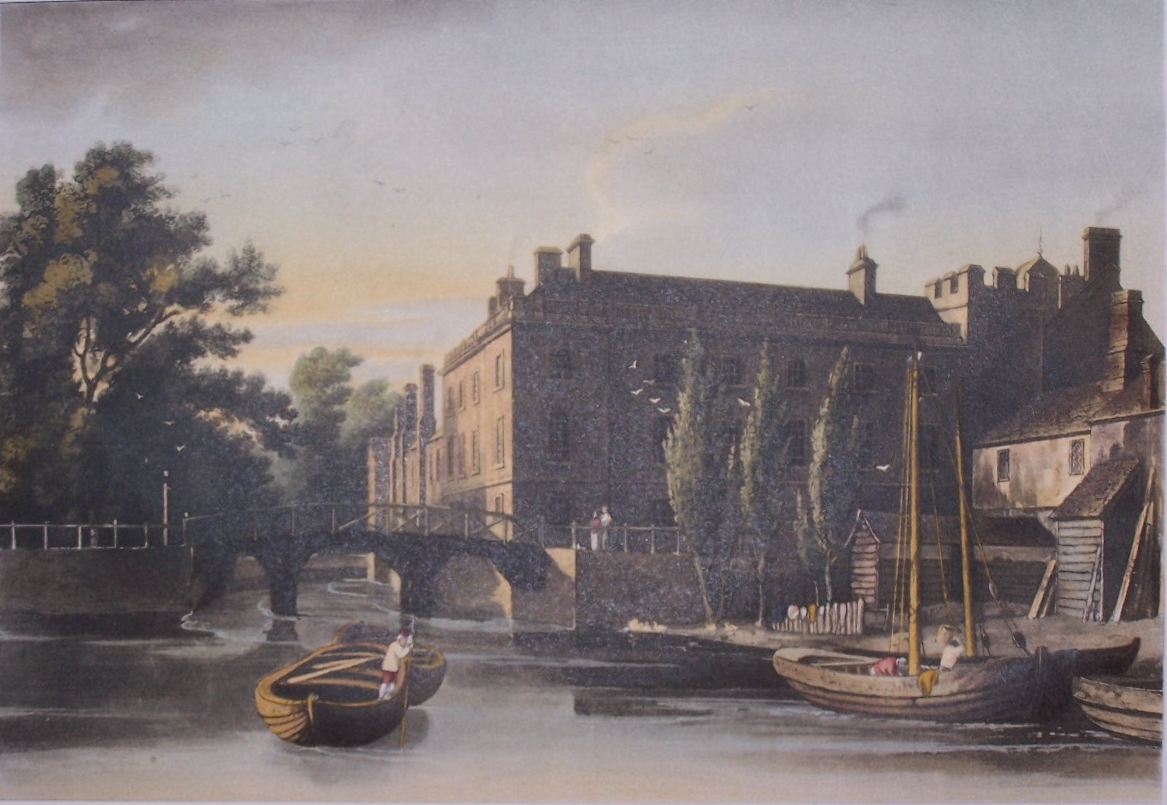
Queens’ College
W Westall del & J C Stadler sculpt

We have two views of Queens’ College, Cambridge.  These two images were originally produced for R. Ackermann’s ‘History of Cambridge’ in 1815.  In my search for information regarding these two prints, I have yet to find and image of  this first print.  The river is the River Cam and the bridge seen in this first view is the Silver Street Bridge.  The river which is used for punting nowadays was used for commercial trade as well as ferrying.

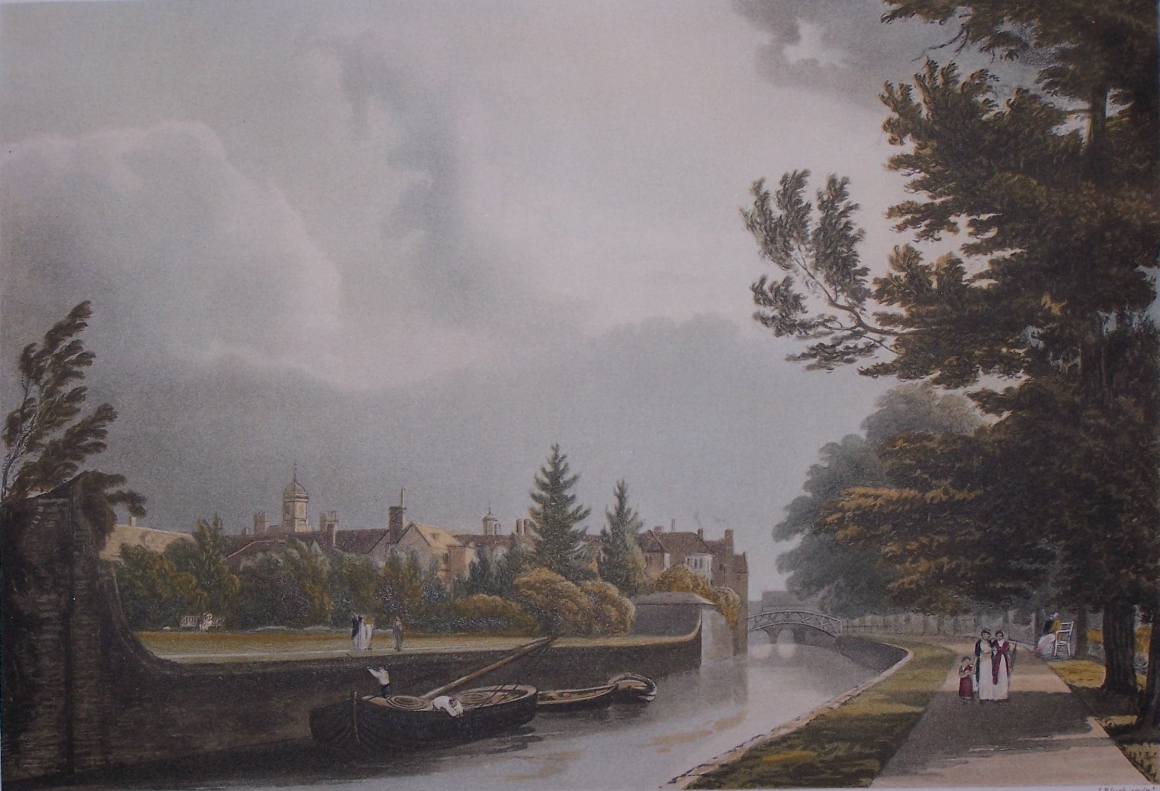
Queen's College from the Private WalkW Westall del & J Bluck sculpt

Queens’ College from the Private Walk
W Westall del & J Bluck sculpt

The second image is from the opposite side of Queens’ College but still along the River Cam.  One can see the Wooden Bridge or the Mathematical Bridge from this side. Although the bridge appears to be a curve it is comprised of only straight pieces of wood which were originally held together by iron spikes driven into the joints from the outside thus giving the appearance from the inside that it just fit together.  Bolts are certainly a modern addition to today’s bridge.  And the idea that Sir Isaac Newton built it is a myth since he died some 22 years prior to the construction of the original bridge.

These two prints are not old since they read ‘Reproduced from R Ackermann’s History of Cambridge and are printed on Basingwerk Parchment (which stopped being made about 25 years ago).  Whether this means that they are printed with the original plates, I do not know.  To me they have more of a lithograph appearance and are certainly not a dot matrix in any way.

And since I am talking about Queens’ College, I will repost my pen and ink drawing of ‘ The Lodge, Queens’ College’ with the Brandon Clock Tower in the background.  The clock tower can also be seen in the second image rising up above the college roof.

The Lodge, Queens' College pen & ink drawingH Toussaint 1880

The Lodge, Queens’ College pen & ink drawing
H Toussaint 1880

Posted in Drawings and Sketches, Modern prints | Tagged , , , , , , , | Leave a comment

Art from Wales

As I walked the hills of Wales during this past holiday season, I found myself revelling in the beauty of the countryside.  Whether in fine sunlight or blustery winds or even in rain and gusts there is a beauty to be seen and absorbed into one’s self.  The space of freedom; to roam shrouded in blue expanse or foreboding grey , to wander wrapped by green field or  stately forest, charmed by ewe and lamb, soaring with kite or buzzard.  Many of these simple things art caught by artists today in their work.  They revel in the daily, ordinary things and make them beauty.

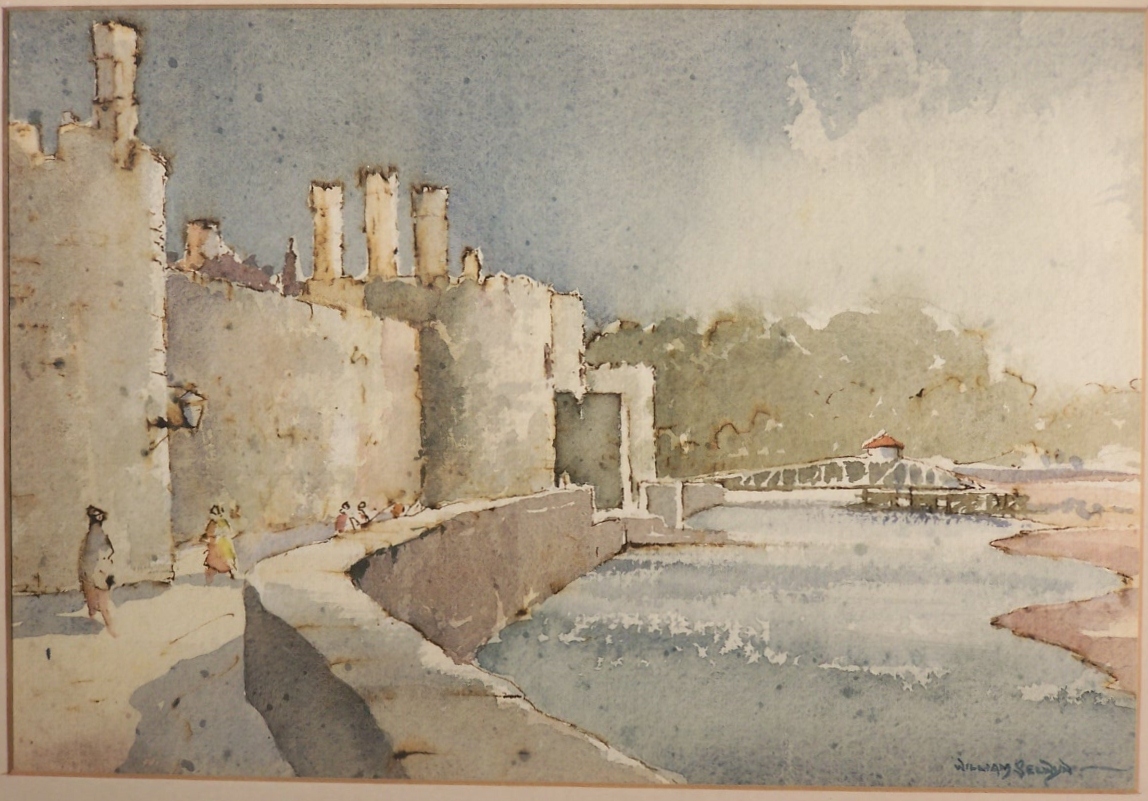
One such artist is William Selwyn.  Born 1933 in Caernarfon, William Selwyn studied in Bangor and became a teacher.  He retired in 1990 and and is now an artist solely.  His focus for his art is the landscape of Gwynedd, its farm workers and fishermen.

Town WallWilliam Selwyn

Town Wall
William Selwyn

This watercolour in my collection is of the ‘Town Wall’ of Caernarfon.  It has a grace and serenity about it that takes on to wander the path with those ahead of you.  I have titled this watercolour ‘ Town Wall’ since while delving into William Selwyn’s history, I found that an oil painting which appears greatly the same to be owned by ‘The Caernarfon Royal Town Council Collection’ and it is titled ‘Town Wall’.  You may enjoy looking at it and comparing the two paintings.

William Selwyn is a painter of light, and its’ warmth radiates from his works.  A surety of art founded in his drawing skills which can be seen at the forefront in his paintings of fisherman on the Menai straight and of farmers and their dog.  An artist who is one of Wales’s finest watercolourists and is an artist whose interest in the common and ordinary and has made them extra-ordinary.

‘Apart from work done in Venice and Paris most of my subjects are inspired by the landscape of Gwynedd and its people. I am most grateful to the fishermen and the farming community for providing me with much material to paint. I aim to record an experience at a specific time at a location where the elements also play an important part.’ – William Selwyn

Posted in Watercolour paintings | Tagged , , | Leave a comment

Art on the Move

The holiday season draws to a close and I and my wife have have just returned from a short break with our dear friends in Wales.  And as is my wont, I bought some art.  After loading the car and departing, I thought it might be nice to stop at a charity shop which we pass by and lo and behold I bought a painting.  Mind you not just any painting.  A painting which would in fact barely fit into our loaded car.  It is a large 48″ by 36″ oil painting.  I did like it but in truth I bought it for the frame.  I have several large canvases which have never been stretchered or framed.  So into the car it squeezes for our trip and it had to live with us in the guest bedroom(no room for extra people with it in the car).  And travelled home it has.

Lakeside sceneby Harald Wentzel - oil painting

Autumn Lakeside scene
by Harald Wentzel – oil painting

As you can see there is some quality to the painting itself – which attracted me to it – as well as the frame.  It was signed but took me several hours to work out the correct lettering.  On deciphering the name, I ‘googled’ him and found that H. Wentzel is a listed artist.    Harald Wentzel (1897-?) was born in Praestoe, Denmark and was educated as a painter at private schools. He travelled extensively in Scandinavia and was especially fascinated by the changing seasons of nature – flora and fauna. He exhibited from 1927 at Den Frie (the Free Exhibition) and had a number of one-man exhibitions in Denmark and abroad. His paintings illustrate a fine sense of colour and a tremendous talent for capturing the harmony and solitude of nature.  If I am honest, it is too large for my small house but I could not resist hanging it, if only for a short while on the chimney breast.

I have a number of paintings in my collection which, so far, I have been unable to make out the artists name.

Swans in Flightunknown artist

Swans in Flight
unknown artist

This is one of them.  A lovely watercolour of two swans in flight on the coast.  In this case the signature has faded to unreadability – so I may never know who this artist is.  Well executed and finely drawn – a fine addition to my collection.  And to my readers, blessings in the new year.

Posted in Oil Paintings, Watercolour paintings | Tagged , , , , , , , , | Leave a comment

Art of the Southeast

Living where I do provides me with easy access to many wonderful sights and attractions  and there are so many places which I would love to visit.  Some of those places appear on my list because artists have taken the time to portray them.

Beachy Head by Noel Hill - watercolour

Beachy Head
by Noel Hill – watercolour

Such are the next two watercolours by Noel Hill.  The first of Beachy Head with its’ lighthouse.  Found on the south coast of England near the city of Eastbourne, Beachy Head is a small part of the chalk cliffs which form the coastline in that area.  These imposing cliffs run to a height of  530 ft (162 m).  The lighthouse was built in 1902 and was run manually for 80 years, it was fully automated in 1983.  On a truly clear day one can see for almost 40 miles looking east and close to 70 miles looking west from the cliff-top.  One cannot tell from this painting but Beachy Head Lighthouse is known for its red and white stripes.

Alfristonby Noel Hill - watercolour

Alfriston
by Noel Hill – watercolour

The village of Alfriston is one of those wonderful and quaint villages which one loves to visit.  Filled with small shops and intriguing  and inviting store front windows.  The hymn ‘Morning has Broken’ was written in Alfriston by Eleanor Farjeon relating the beauty which surrounded her in the village.  It was made famous when recorded by Cat Stevens.    Sites and attractions abound in the South Downs.  Which ones would I go to?  I’m not sure but these two would be high on my list and possibly even at the top of.

For those that  like to look at a little bit of history, here is the ‘Market Place’ at Cambridge in 1801.  A hand- coloured print by Rowlandson.  The Cambridge market is far more crowded  with people and stalls these days. As it continues to be  a vital part of  Cambridge city life.

Market Place at Cambridgeby Rowladson - 1801

Market Place at Cambridge
by Rowladson – 1801

Posted in Modern prints, Watercolour paintings | Tagged , , , , , , , , | 1 Comment

An Artists Eye

It continues to cause me wonder as to how an artist sees.  I live in a beautiful part of the country (to some a little flat).  I have seen beautiful things.  But how does one move from seeing to actually putting what one sees onto paper – no matter what medium they are using.  How does an artist take a truly mundane thing and turn it into art.

Seamer nr Malton, Yorkshireby H Bennett

Seamer nr Malton, Yorkshire
by H Bennett

This is just a typical street which one would find in many of the small villages in this country at one time. And yet Mr Bennett has deemed it artistically worthy of portraying.  Would I have chosen this view?  And if I had – could I have made it as inviting and serene as Mr Bennett.  One must thank artists for choosing such normality and preserving it. For by it we see what actually was/is and not what we might like it to have been/be.  A history of the mundane things which we take for granted.  A street in a village, a style of housing (Is the far left window the window of the outside loo?), an intersection (not a round-about) with no signs.  These are things to take away with you to help you keep in mind what was.  This is truly hands-on history.  History which one can touch, look at up close and say – that is what it use to look like.

Dartmoor - Dartmeetby Bertram Armitage

Dartmoor – Dartmeet
by Bertram Armitage

But art can also be something of loveliness and still be a portrayal of history.  Bertram Armitage here has caught Dartmeet in a moment of time.  A moment which cannot be repeated.  The lovely hills of Dartmoor are a picture to behold.  They are beauty serene.  Is it Dartmeet Hill we see in the distance for if it is – then a visit to the Coffin Stone might be in order.  Close to the road, halfway up Dartmeet Hill lies the Coffin Stone upon which coffins would be placed to allow the bearers taking bodies for burial at Widecombe-in-the-Moor a respite.  The rock is split in two, along its length.  Legend has it that the body of a particularly sinful man was laid there.  God took exception to this, and struck the stone with a thunderbolt, destroying the coffin and splitting the stone in two.

Posted in Oil Paintings | Tagged , , , , , , , , , , | Leave a comment