Charles Rennie Mackintosh – The Walberswick Florals

#CharlesRennieMackintosh (1868-1928) is world renowned as an artist and architect. His greatest architectural masterpiece was the Glasgow School of Art. After his success working for # Honeyman&Kepple, he attempted to set up a practice of his own. The failure of this business to thrive brought on a depressive illness. The illness required that he rest and in 1914 he and his wife, Margaret, moved to #Walberswick in Suffolk. It was at this time that he concentrated on painting with watercolours producing landscapes and floral images often in collaboration with his wife.

after Charles Rennie Mackintosh – watercolour/drawing by unknown artist

It is thought that the elegant flower studies which were created during his stay in Walberswick are the best of that genre. These portrayals are delicately expressed with line and use a subtlety in colour and shading to instill a lyrical and magical quality. They were meant to be compiled and then published as a set by a company in Germany but WWI ended that possibility. Within his floral watercolours was included a small cartouche at the bottom or side providing date, subject, location, and the artist’s initials.

The watercolour shown is certainly influenced by Mackintosh’s work but it is not signed, dated or titled. It is delicately drawn and nicely coloured. I would suggest that you take a look at Mackintosh’s floral drawings some of which he did in collaboration with his wife. They are truly worth a view.

Posted in Drawings and Sketches, Watercolour paintings | Tagged , , , | Leave a comment

Some Canadiana

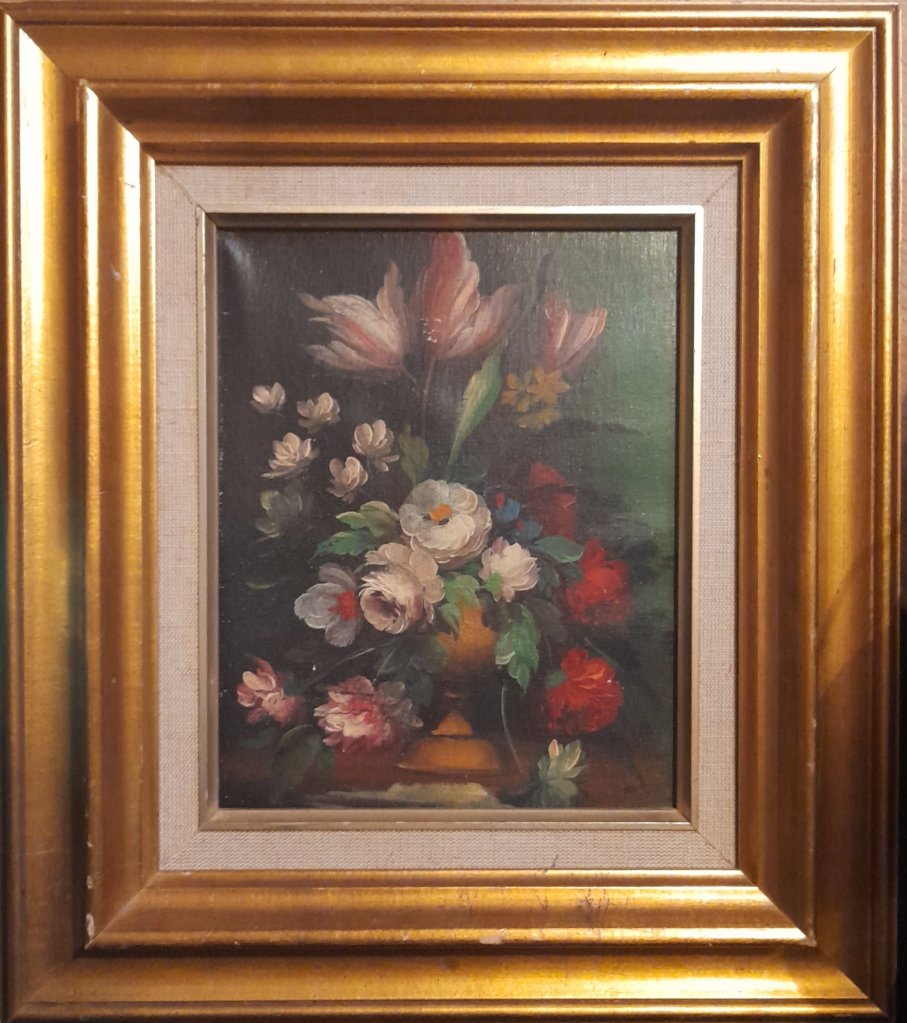
Having moved across the pond, some 25 years ago, I am always pleasantly surprised when I come across a piece of Canadian art as was the case today. To be true it is not a stunning work but just a competent one. It is a small oil on canvas which is unsigned and undated. The only reason I know that it is a work by a Canadian artist is that there is a gallery stamp on the verso.

Royal Gallery, Montreal, Canada stamp

My estimate for the age of the work is that it was created in the 1940’s to 1950’s but could be slightly earlier. The work itself is done in the Dutch School style of presenting still life images. Various types of flowers arranged in a vase. As I said, it is not an unpleasant work to look at.

Section of still life oil painting

The painting has some craquelure but that is not necessarily an indication of age since such crazing can been seen in works only a year old. There is some nice brush work and impasto to create shading and shadows.

Section of oil painting

Alas, there are a few small areas of loss. These can easily be repair by a professional restorer. Here again we see the fine brush work blending colours.

Oil painting from Royal Gallery, Montreal, Canada
Still life oil on canvas by unknown artist from Royal Gallery, Montreal, Canada

A pleasant image in the Dutch School style. If the gallery still exists possibly they might be able to tell me who the artist is from their catalogue number.

A nice find for being across the pond.

Posted in Oil Paintings | Tagged , , , , , , , , | Leave a comment

Richard Earlom engraver

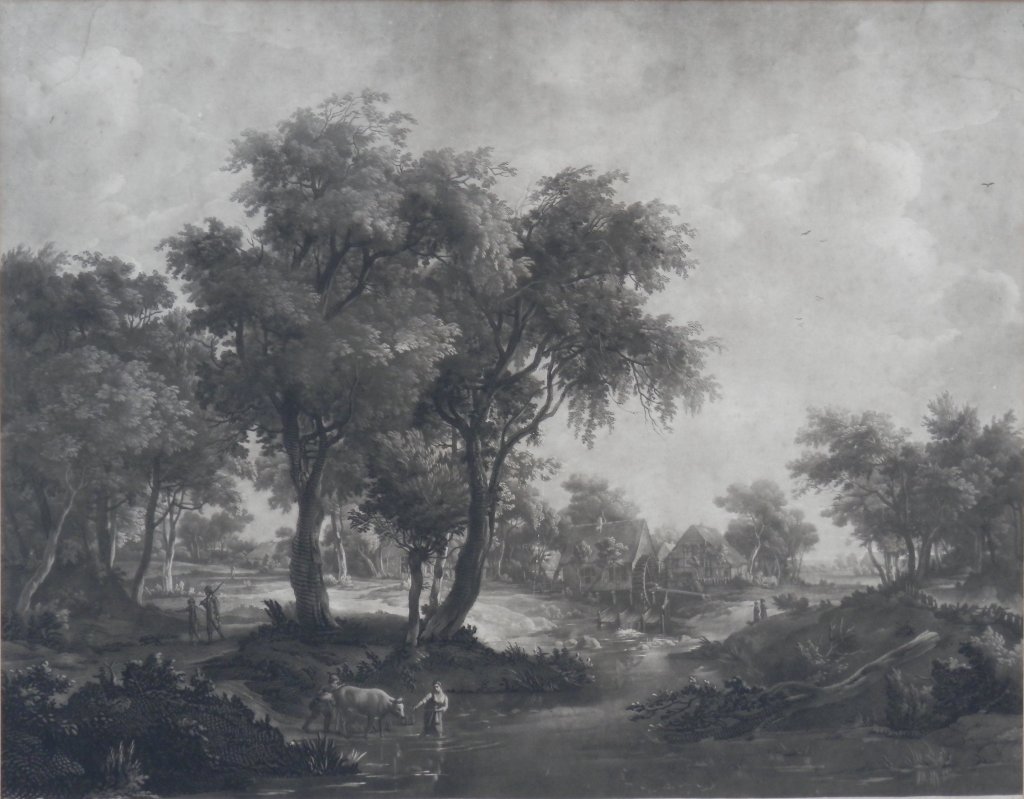
A look at one of the finest mezzotint and stipple engravers of his day. #RichardEarlom (1743-1822) apprenticed under GB Cipriani to learn his craft of engraving. His studies brought him to work with #JohnBoydell for which he produced around 300 plates after #ClaudeLorain. His engravings were drawn after his contemporaries as well as old masters.

The Water Mill – mezzotint by Richard Earlom after Hobbema published by Boydell @ 1769

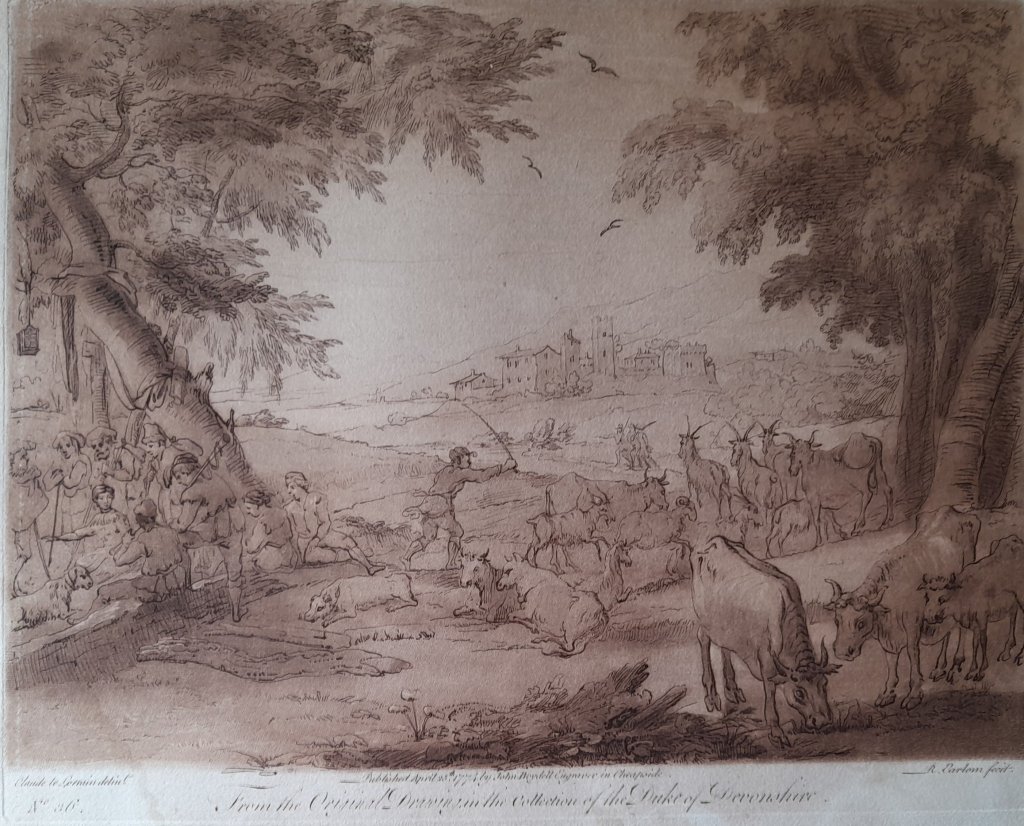
Earlom produced a great number of plates after artist Claude Lorrain who, himself, specialised in landscape painting.

from ‘Liber Veritatis’ by Richard Earlom after Claude Lorrain published by Boydell @ 1777

Boydell commissioned Earlom to produce some 200 mezzotints sfter works owned by the Duke of Devonshire. This work is known as the ‘Liber Veritatis’ and is Earlom’s greatest work and a milestone in the art of engraving.

The two pieces displayed are from my collection and show the supreme technique and artistry of Richard Earlom. A man well deserving his reputation.

Posted in Etching, Mezzotint | Tagged , , , , , | Leave a comment

David Aldus artist

We visit Wales today to drop in on painter #DavidAldus (1941-). The majority of his works are landscapes but he also created a good number of maritime scenes as well as a few portraits. David was born in the town of Brecon where he spent most of his life. His father and his father’s father were military men while his maternal grandfather was a miner.

David regularly exhibits his works ;the Royal Society of British Artists, the Royal Institute of Oils, the Royal Society of Marine Artists and has made it to the finals in a number of competitions. He is the founder of the Risborough Gallery. While exhibiting his works at Lambeth Palace under the Royal Society of Maritime Artists, he sold all the pieces which he showed.

Poppies at Dusk – acrylic on board by David Aldus @ 1989

Davids’ work has been influenced by French artists like Jules Bastien-Leigh and Cézanne. His colour palette is broad and bright.

Above is ‘Poppies at Dusk. A piece from early in his career but it is typical of his landscape work. It is 22″ by 15″, a nice size. It may hang above my fireplace for awhile.

Posted in Oil Paintings | Tagged , , , , , | Leave a comment

Malcolm Osborne engraver

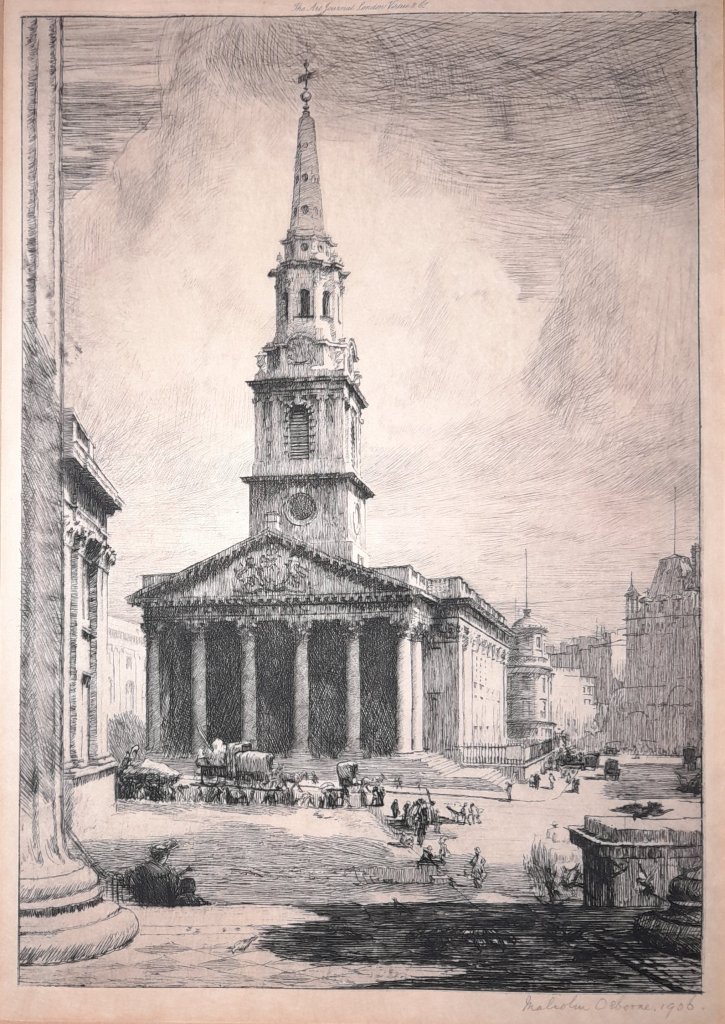
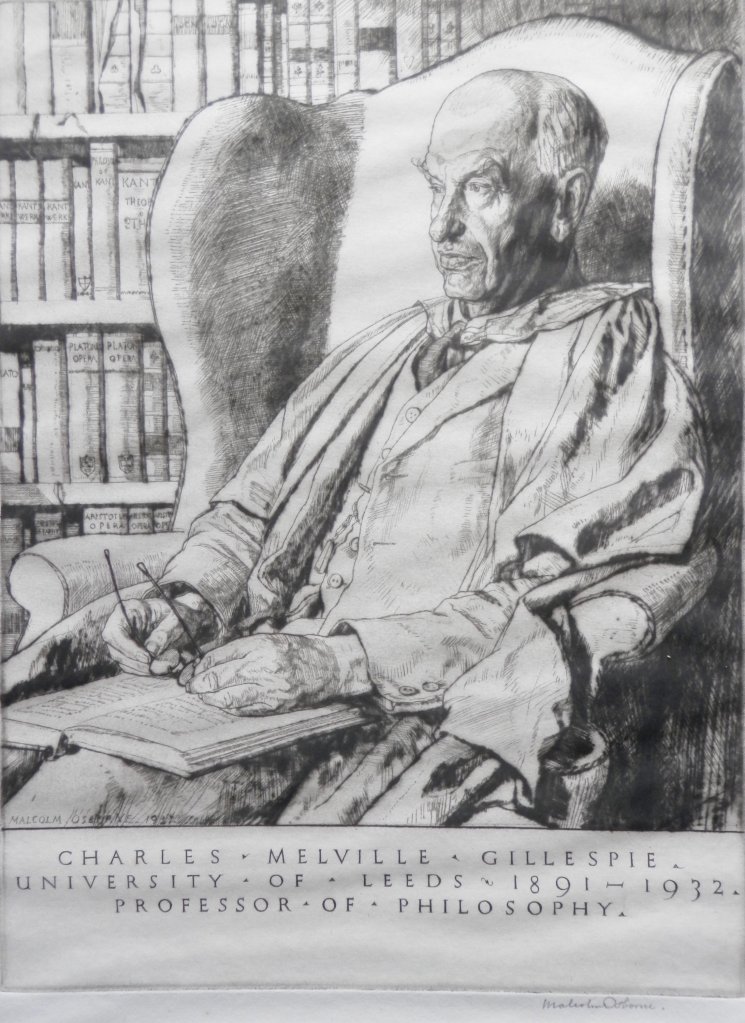
#MalcolmOsborne was born in 1880 at Frome, Somerset. At the age of 20, he moved to Streatham, London with his brother. From 1901 to 1906, he studied under artist and print maker Frank Short at the Royal College of Art.

Osborne produced intaglio landscape prints, urban scenes and portraits. He published his first etching in 1904. Over his career he created just over 100 etchings, drypoints, and aquatints. His works were published in limited editions of 50 to 150 copies.

I have two engravings by Osborne in my collection. A very fine image of St Martin in the Fields from 1906 published by The Art Journal, London, Virtue & Co.

St Martin in the Fields – etching by Malcolm Osborne @ 1906

The other a portrait of Charles Melville Gillespie, Professor of Philosophy at Leeds University. A fine example of his portrait work.

Charles Gillespie – etching by Malcolm Osborne @ 1927
Posted in Etching | Tagged , , , , , , | Leave a comment

Edward Nevil

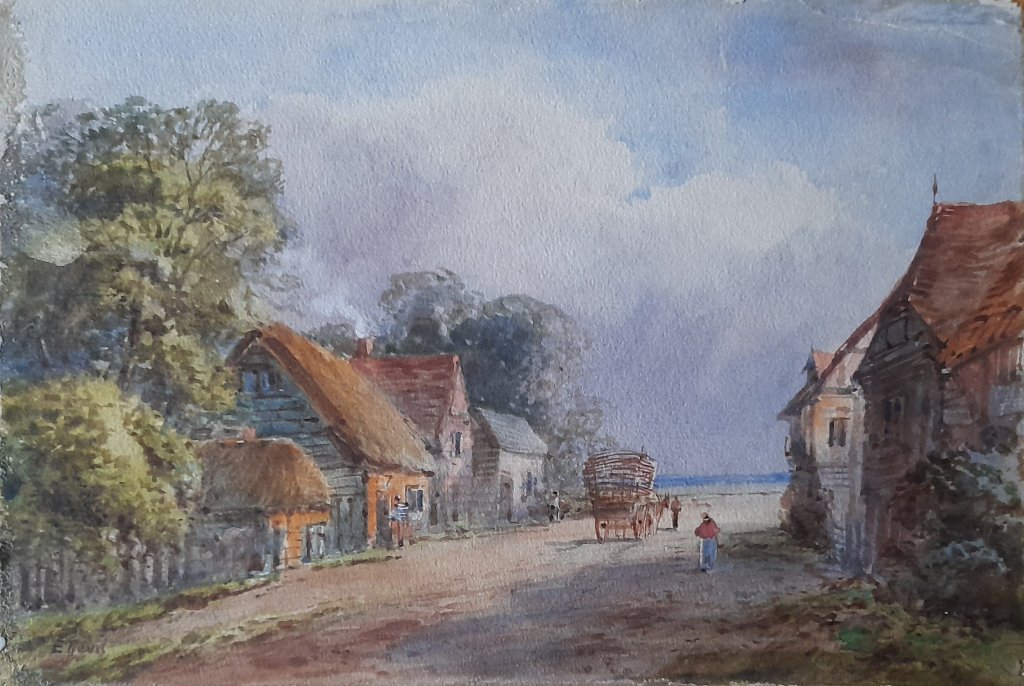
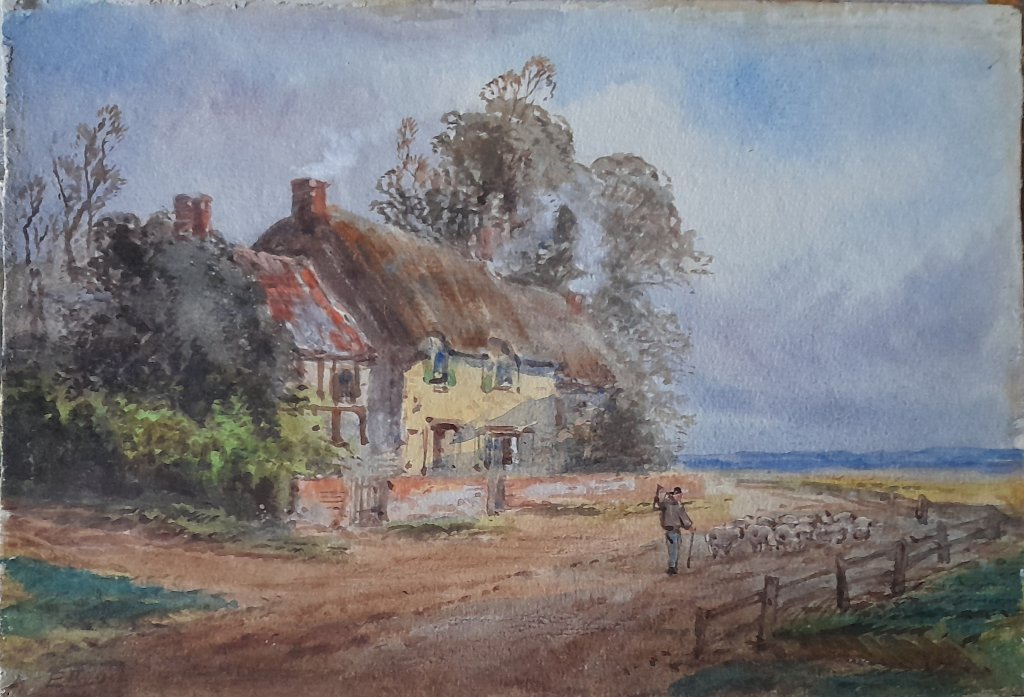
No one is quite sure who #EdwardNevil was. Little information regarding him can be found. The name may be an alias so as to avoid contractual obligations something a number of artists did. He was a prolific artist working around 1880 to 1900. He traveled extensively producing views of Buge, Antwerp, Rheims and many images of his favoured northern counties of England.

Horse and cart passing thru town – watercolour by Edward Nevil @ 1880/1900

A very competent artist producing genre scenes of the North of England. He painted a number of scenes around Whitby and Staithes. Using a wide colour palette along with smooth efficient brushwork his images are pleasing and inviting. Nevil was a painter in watercolours/gouache but did dabble in oils.

Shepherd with flock passing a farm cottage – watercolour by Edward Nevil @ 1880/1900

These two scenes may come from that area of the North of England which Nevil favoured. Two pieces displaying this artists talent and ability.

Posted in Watercolour paintings | Tagged , , , , , , , , | Leave a comment

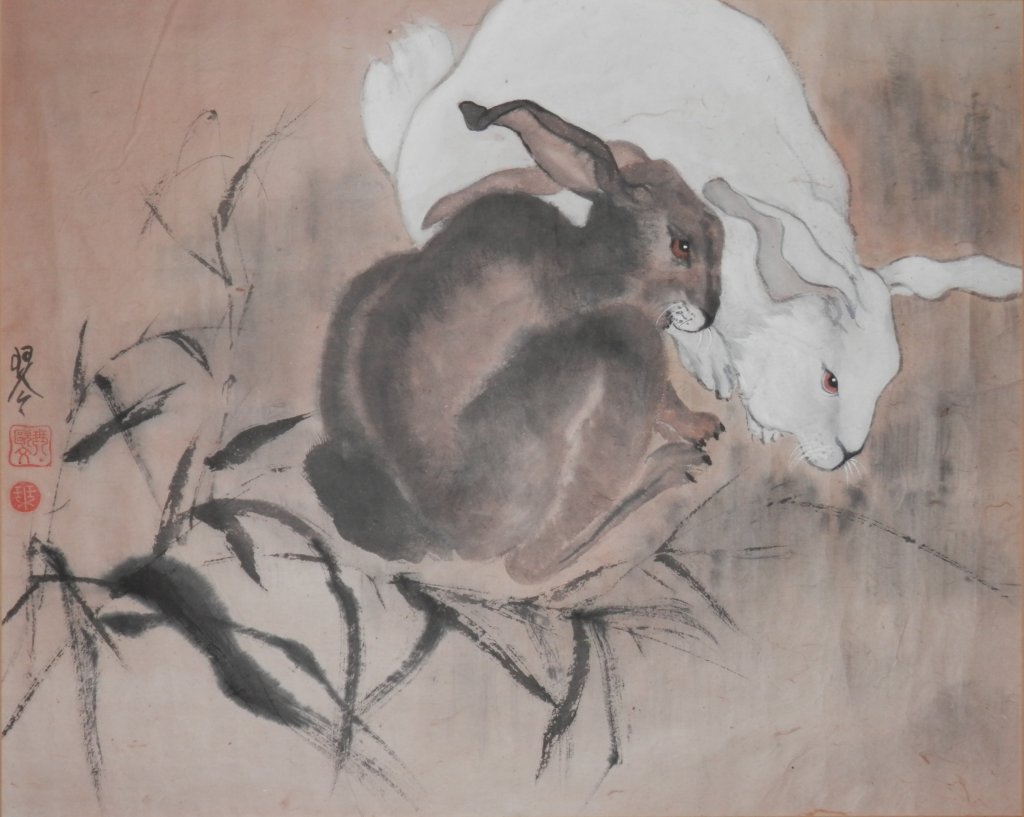
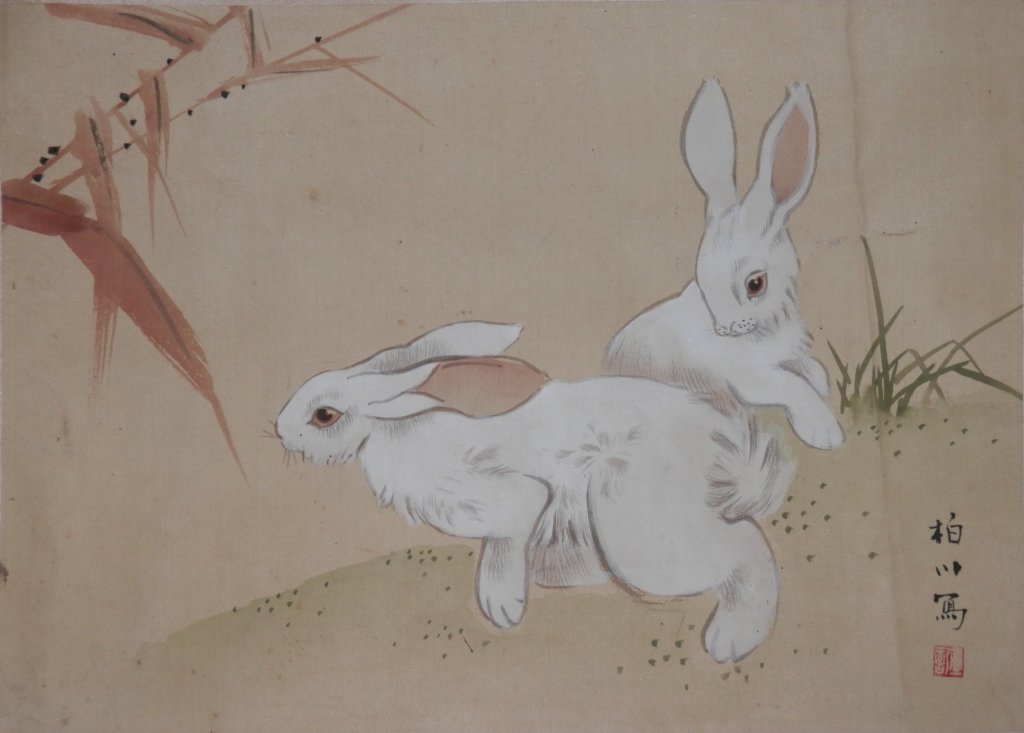
Chinese watercolours

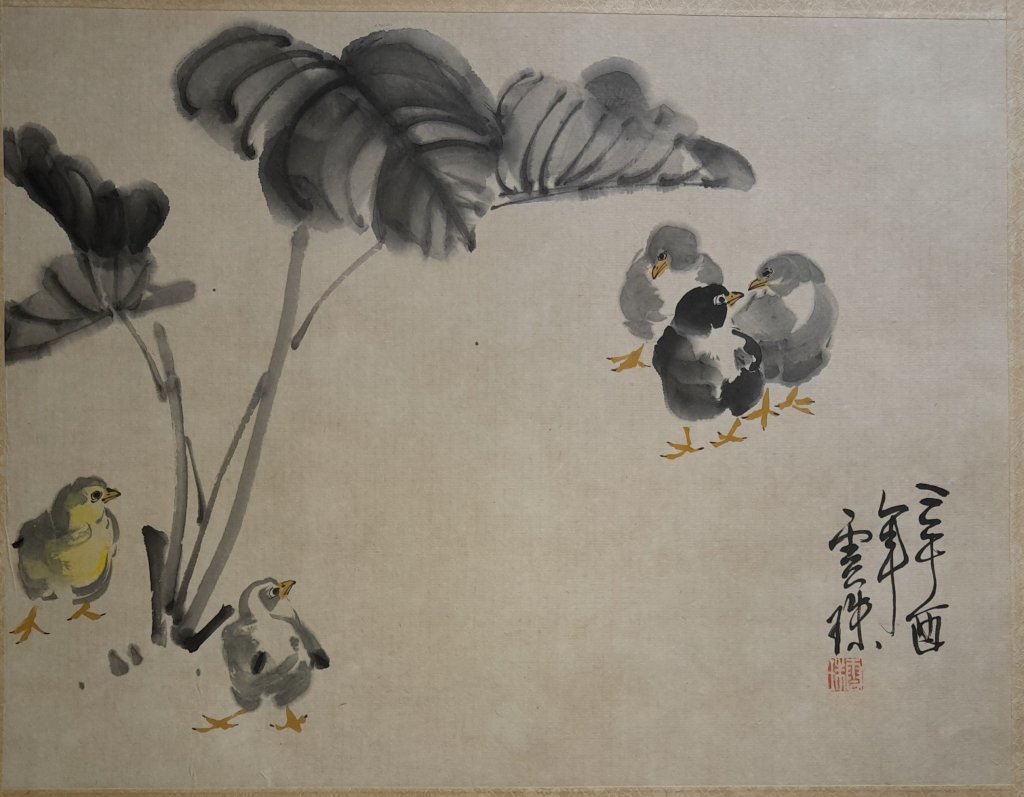
Over the time, which I have been collecting, I have found myself truly admiring the art which comes from the Far East. Chinese porcelain, sculpture, scrimshaw, drawings, and watercolours. The breadth of this facet of art is enormous. To be consider a specialist, one’s knowledge needs to be immense. This should not deter people from the appreciation of the art which comes from the Far East.

I come across works which I think are beautiful and capture the essence of this genre.

I find myself entranced by the brush work used by the artist. The opaqueness of the paint and the way it seeps into the paper. There is such simplicity in the work and yet it is pure artistry making the difficult seem simple.

Animals have meaning in Chinese society. They are based on the twelve animal signs of the zodiac. These are the rat, ox, tiger, rabbit, dragon, snake, horse, sheep/goat, monkey, rooster, dog and pig/boar. The rabbit symbolises mercy, elegance and beauty. The early Chinese believed a rabbit lived on the moon.

The light strokes of the brush leaves on the paper such wonder to look at. The above three works all bear their artists seals. I do not know their names but each has through their artistry has given us something beautiful to look upon.

Posted in Watercolour paintings | Tagged , , , , , | Leave a comment

Basil Ede, an artist twice over

I came across an oil painting this past week which was suspicious until I read up on the artist. I recognised the artist’s name but the painting which I was looking at was something way out of the ordinary for him, I thought.

Many people may not know the name #BasilEde but they likely have looked at works of his and not known it. Basil Ede (1931-2016) was a British watercolour artist who specialised in avian portraits. His talent did not go unnoticed and by 1962, he had had several one man shows. In 1964, Ede was the first living artist to have a one man show sponsored by the #NationalAudobonSociety. From there he published ‘Birds of Town and Village’ with 36 plates from his own works. He was working on ‘The Wild Birds of America’ when tragedy struck in 1968. Ede suffered a massive stroke leaving him partially paralyzed. He lost the use of his right arm and his speech. He regained his speech but not the use of his painting arm. Ede started over. Teaching himself to paint with his left hand. He chose to also re-train in a different medium – oils. Within a year he was competent and within three years he was back to his very detailed ornithological paintings.

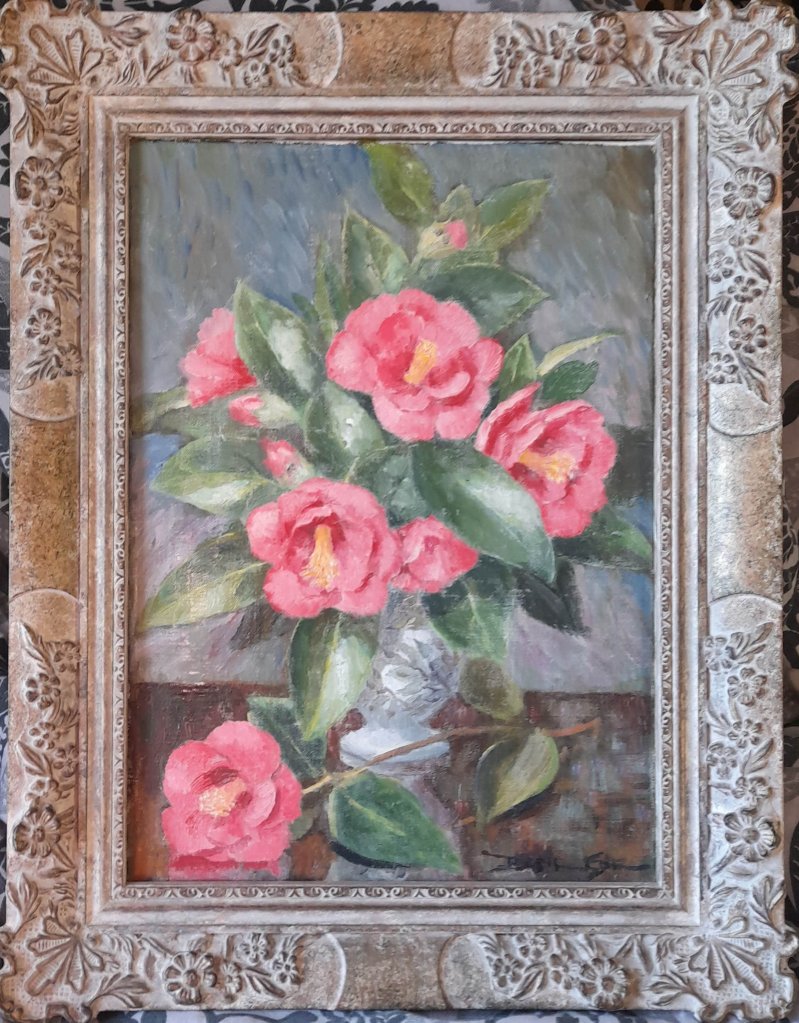
Hibiscus in vase – oil on canvas by Basil Ede @ 1990/91

The painting I came across is seen above. A still-life in oils on canvas. Signed (l.r.) but not dated – but I believe it comes from Ede’s recovery period around 1990/91 where he taught himself to paint left-handed. Ably painted but not yet to the intricate work he was known for. A nice work coming from a very determined artist.

.

Posted in Oil Paintings | Tagged , , , | Leave a comment

A glimpse at the Victorian Parlour

Art is able to show us many things. Past, present and future representations are common in art. People and events are also often the focus of art. But when we look at someone’s home are we voyeurs or historians or maybe a little of both.

Victorian living room (left side) – artist unknown @ 1860?

We see two watercolours today which display a #VictorianParlour. . Created by an unknown artist. Nice definition with very fine shading. They show the sitting room or parlour of, for me, a well to do person. Above is the left side of the fireplace. Art adorns the walls. Books lay piled. Mementos and sculptures stand around. Coordinated upholstery on the chair, arm chairs and the courting sofa reveal a person of taste and affluence.

Victorian living room (right side) – artist unknown @ 1860?

The right side of the room reveals more art, pottery, ceramics, dolls, books and more very fine furniture. The rotating armed book rack is quite unique and just seen at the edge is an upright piano with brass candle holders. A copper coal scuttle and scoop sit next the fire as too the tongs lay ready for use.

This is somewhere where I could sit and relax. I do not know who lived here. When I do an image search on Google what arises is an image of #AustenHouse in Seven Oaks by artist #CharlesEssenhighCorke. Most likely for the colour scheme than actually being from Austen House.

The piece of furniture that is worth a separate mention is the courting couch (bottom right of first image). Often seen as a two seater in an ‘S’ shape (tete-a-tete) meant for individuals to have private conversation with little physical contact. Also known as a gossip couch. The seat in the watercolour above is possibly a three seater. Courter, courted, and chaperone to oversee the liaison. They were the ‘de riguer’ piece of furniture for the modern Victorian household.

A glimpse into the past. Not too distant but revealing in many ways.

Posted in Watercolour paintings | Tagged , , , , , , , , , | Leave a comment

Arthur Anderson Fraser artist

We visit with an artist who I would call a local. #ArthurAndersonFraser was born in Bedford, 1861 and died in Holywell, 1904. His family hailed originally from Scotland but moved to the East of England in the mid 19th century. Five of Arthur’s brothers became artists also.

The Fraser family of artists worked mostly in watercolour producing landscapes. Their atmospheric paintings of rural East Anglia capture the fens in moments of stillness and calm.

Arthur was mostly self taught and by 1880 was gaining recognition and popularity. He regularly exhibited his watercolours. Arthur produced peaceful country scenes, mainly displaying sites along the River Great Ouse between Bedfordshire and Cambridgeshire We see the woods, fields, towpaths, etc. which he traveled or saw regularly.

The watercolour in my collection is from his early life when he signed his work as A. Anderson. It shows an arched stone bridge over a river in a forested area. It has some age spots and a tear but is typical of the quality pieces which Arthur created. It is signed, titled(location – near Enfield), and dated 1881.

Near Enfield – watercolour by Arthur Anderson Fraser @ 1881
Posted in Watercolour paintings | Tagged , , , , | Leave a comment