When companies change

I do not usually buy ceramics/pottery but recently I picked up a couple of pieces; one for ornamental use and the other for interest only.

The ornamental one, now sits on a corner wash stand I have in our spare room. This piece is of course meant to sit on this piece of furniture. It is a large wash basin. I do not yet have a pitcher. The basin on the outside is plain white, no decoration at all but on the inside is a blue floral pattern culminating in a central figure of a floral bouquet in a vase.
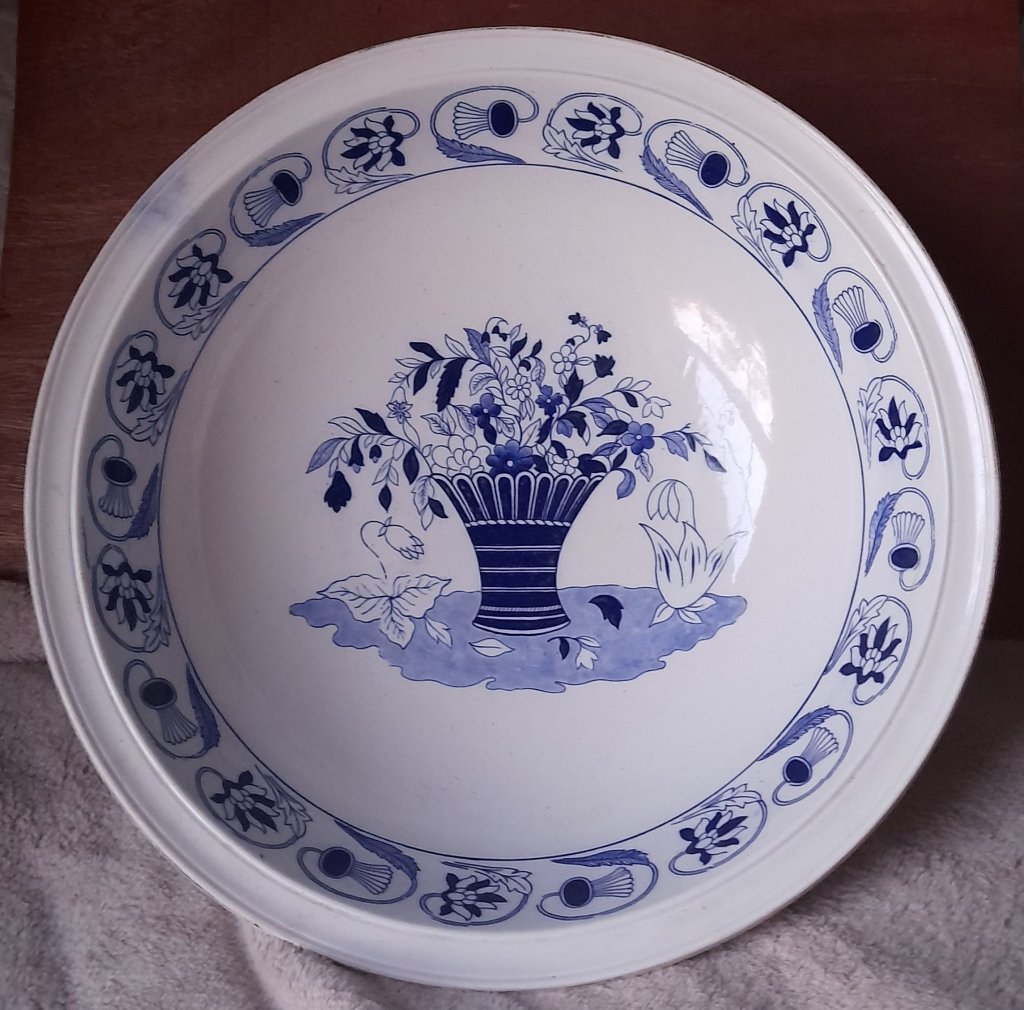
Wash basin by Copeland @ 1876

There are no cracks or chips, so a piece in wonderful condition. The date marks on the underside read as 1876. #Copeland was associated with #Spode which is a world renowned ceramics and porcelain company. Josiah Spode had established a porcelain company at Stoke-on-Trent in 1770. This company was bought by William Copeland in 1833.

The second piece we look at is not in perfect condition. It is cracked and has a chip – more noticeable from the bottom than the top. This piece was made by a porcelain factory set up by #JamesMacIntyre in Burselm, Stoke-on-Trent. Most people will not recognise the name but #MacIntyre produced very fine porcelain. In 1897, MacIntyre employed a young man by name of #WilliamMoorcroft, who within one year of working was put in charge of the companies art pottery studio as Chief Designer. Moorcroft left MacIntyre in 1913 to set up his own manufacturing company. This is the Moorcroft most people know.

Florian Blue Poppy pattern teapot trivet by Macintyre designed by William Moorcroft @ 1900

The trivet is not in perfect shape. It has been well loved. It possibly was part of a set of maybe just a loved single piece. It is not signed by Moorcroft as a number of his designs were. Moorcroft’s penchant for producing very beautiful and creative pieces meant they were also expensive to buy. So, I’m happy with this well loved piece just to remind me of the exceptional talent Moorcroft was.
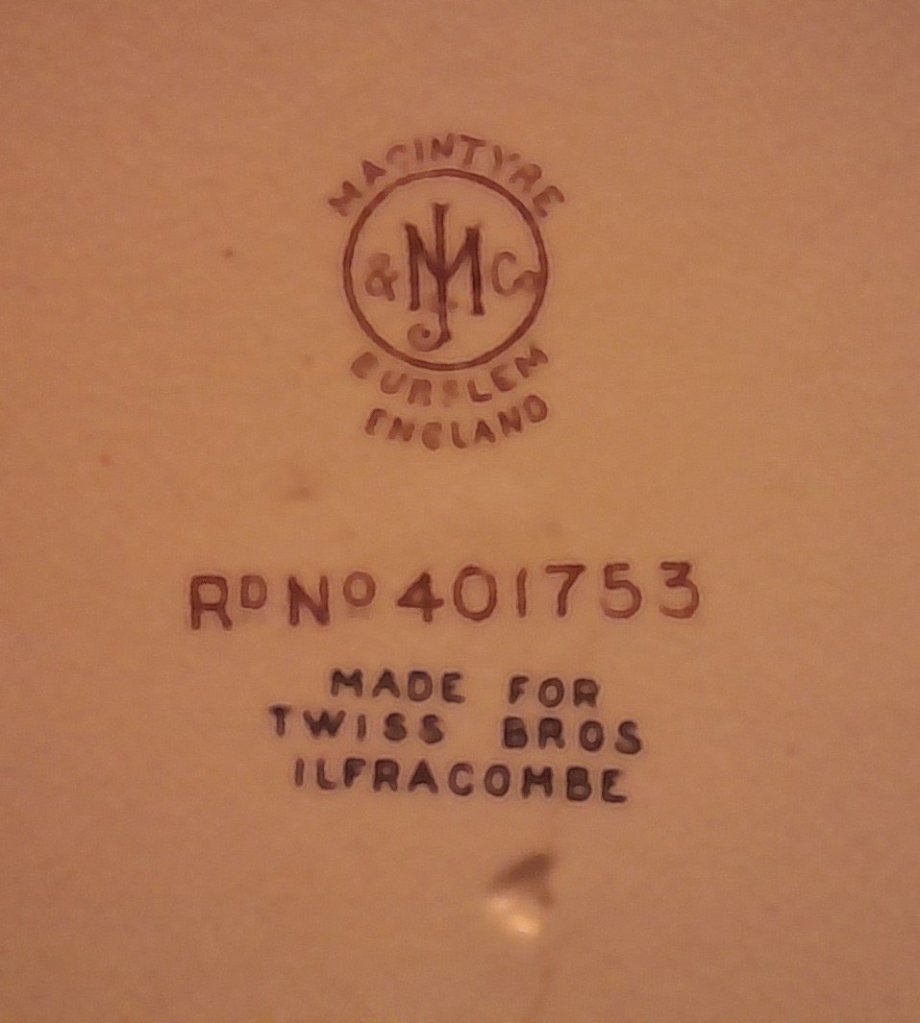
Florian Blue Poppy pattern teapot trivet by Macintyre designed by William Moorcroft @ 1900 – underside image
Posted in Ceramics/Pottery | Tagged , , , , , , , | Leave a comment

Gwen Raverat woodcuts

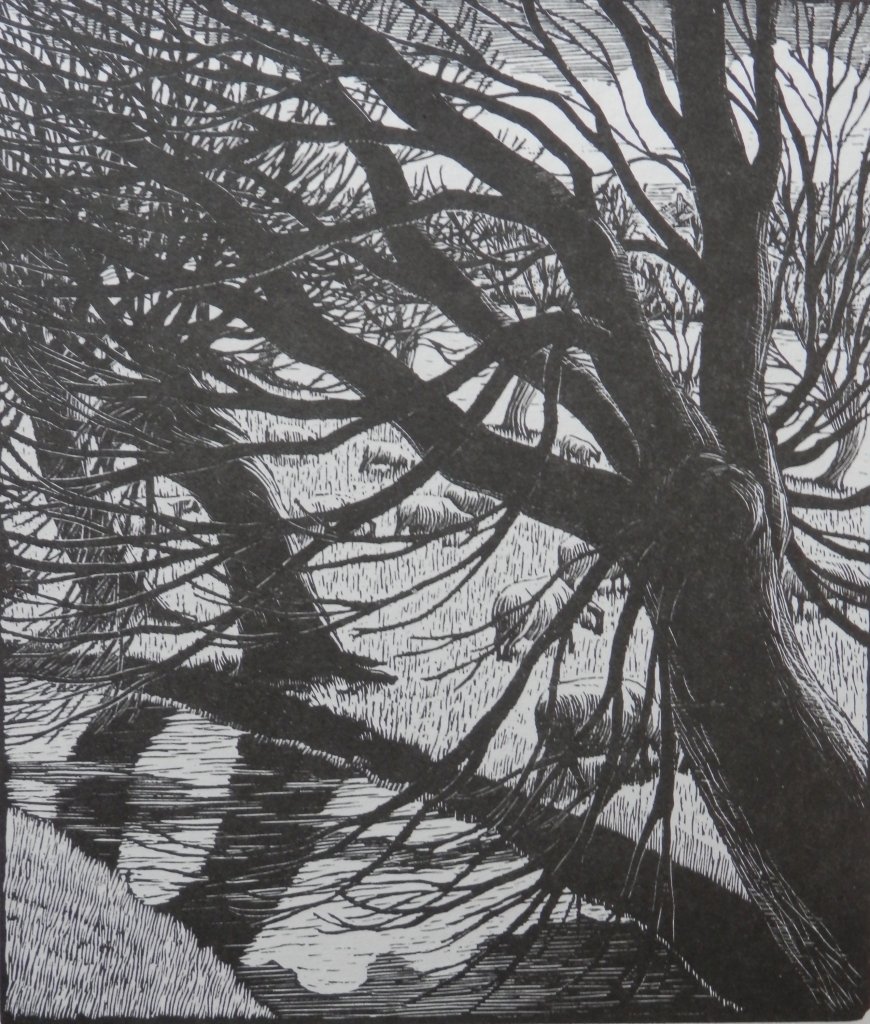
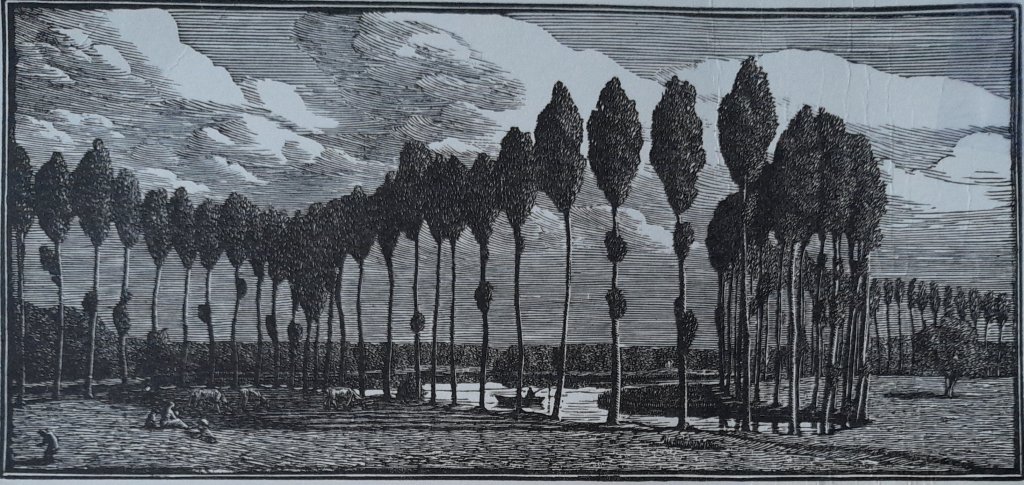
I came across a woodcut by artist #GwendolenMarieRaverat (nee Darwin) 1895-1957, this past week. Again from a charity shop but it was in their trash bin ready to be disposed of. It was a little damp (no long lasting damage) and had a small taped over tear (not what should happen). So, I paid my £1 for this piece of ‘trash’. In reality, this woodcut was bought in 1973 at the exhibition put on by The Wren Gallery, Cambridge commemorating her works. It is not signed or titled maybe making it a trial pressing, possibly.

Poplars in France – woodcut by Gwen Raverat @ 1916

The woodcut is called #PoplarsinFrance and comes from early in her career. Her first woodcuts come from around 1905 and she soon excelled in this medium. Her formal training was done at the Slade School (1908 -1910) after which she moved (1915) along with her husband and two daughters to France. Except for 1915 to 1928, Raverat resided in or near Cambridge. She was a founding member of the Society of Wood Engravers in 1920. Raverat concentrated on scenes of rural life and landscapes. Gwendolen Marie Raverat was the granddaughter of Charles Darwin as well as being a member of the Bloomsbury Group. She was friends and acquaintance of Ralph Vaughn Williams (second cousin)¿, Vanessa Bell, Stanley Spencer, Rupert Brooke and many more well known artists.

The Fen – woodcut by Gwen Raverat @ 1935

The second woodcut by Raverat in my collection is called ‘The Fen’. Very typical of the work created by her. The first is one of her finest works, the second is typical of her style and both display the artistry of the carver. Sublime skill combined with imagination and originality in the production of her works.

Posted in Lino/woodcuts, Lithographs | Tagged , , , , , , , , , , | Leave a comment

George Cattermole artist

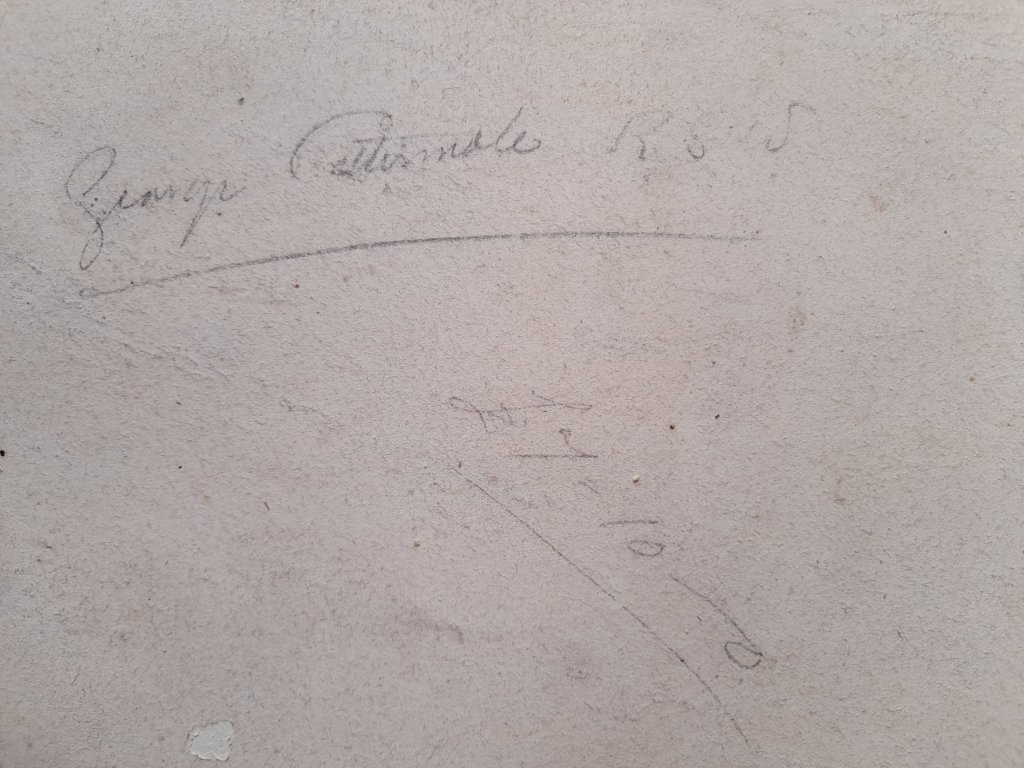
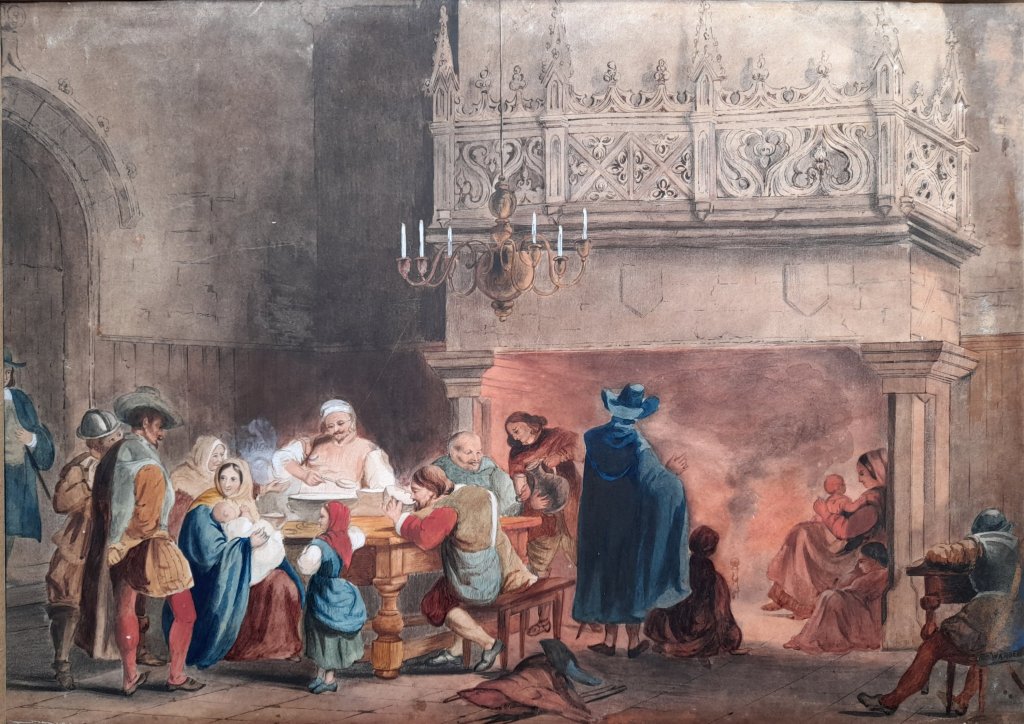
A while back, I purchased a watercolour to add to my collection. It is a scene showing a group of people crowded around a table beside a very large fireplace. The signature on the verso reads #GeorgeCattermole (1800-1868).

Verso of watercolour

When one looks at the painting, we discover a surprising thing. On the seat of the chair on the extreme right side of the image is a name. I am not convinced that this is the artist’s name thusly the image not being painted by Cattermole but rather might be a sly way of giving credit to Cattermole’s sponsor/benefactor for this painting. It is too surreptitious for my thinking to be an legitimate signature.

Fireplace scene by/afterGeorge Cattermole

There was a lithographic plate done by #LouisHaghe (1806-1885) of this image. It was created around 1835. Hague was done of the great lithographers of his time and published many works. Quite an efficient work by whomever did it.

Posted in Watercolour paintings | Tagged , , , , , , | Leave a comment

William Etty artist

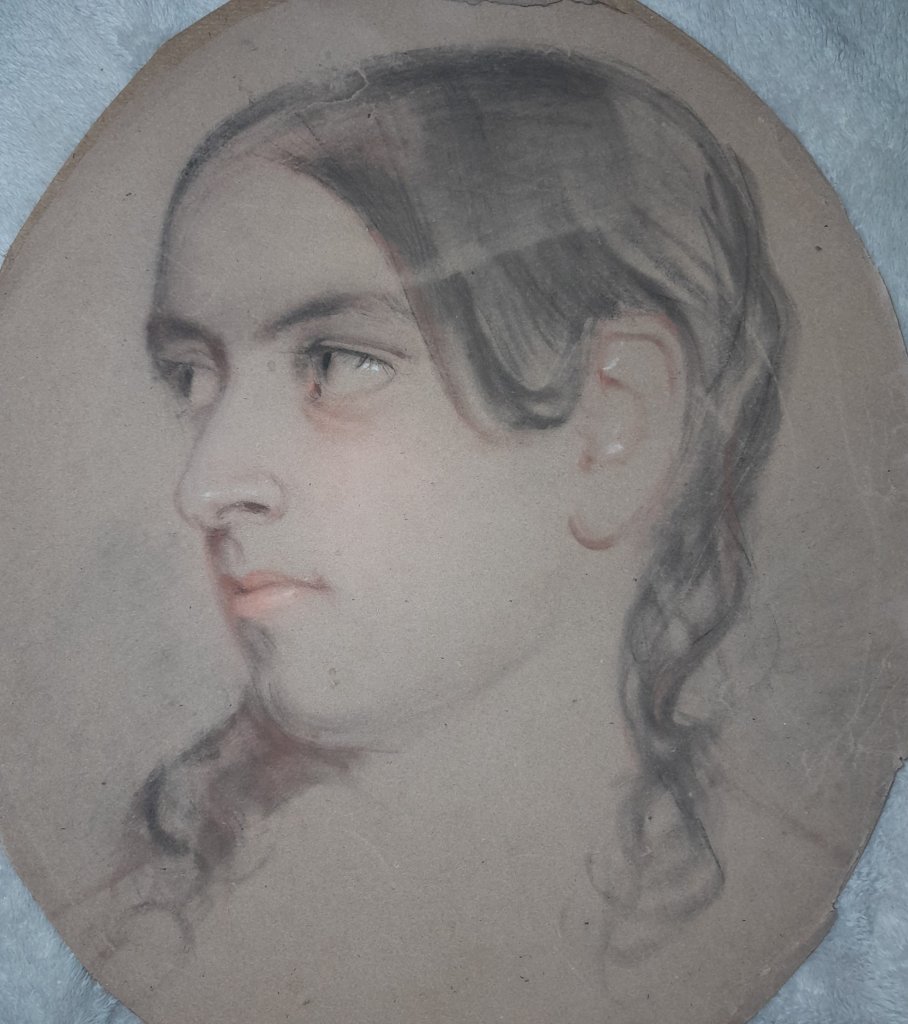
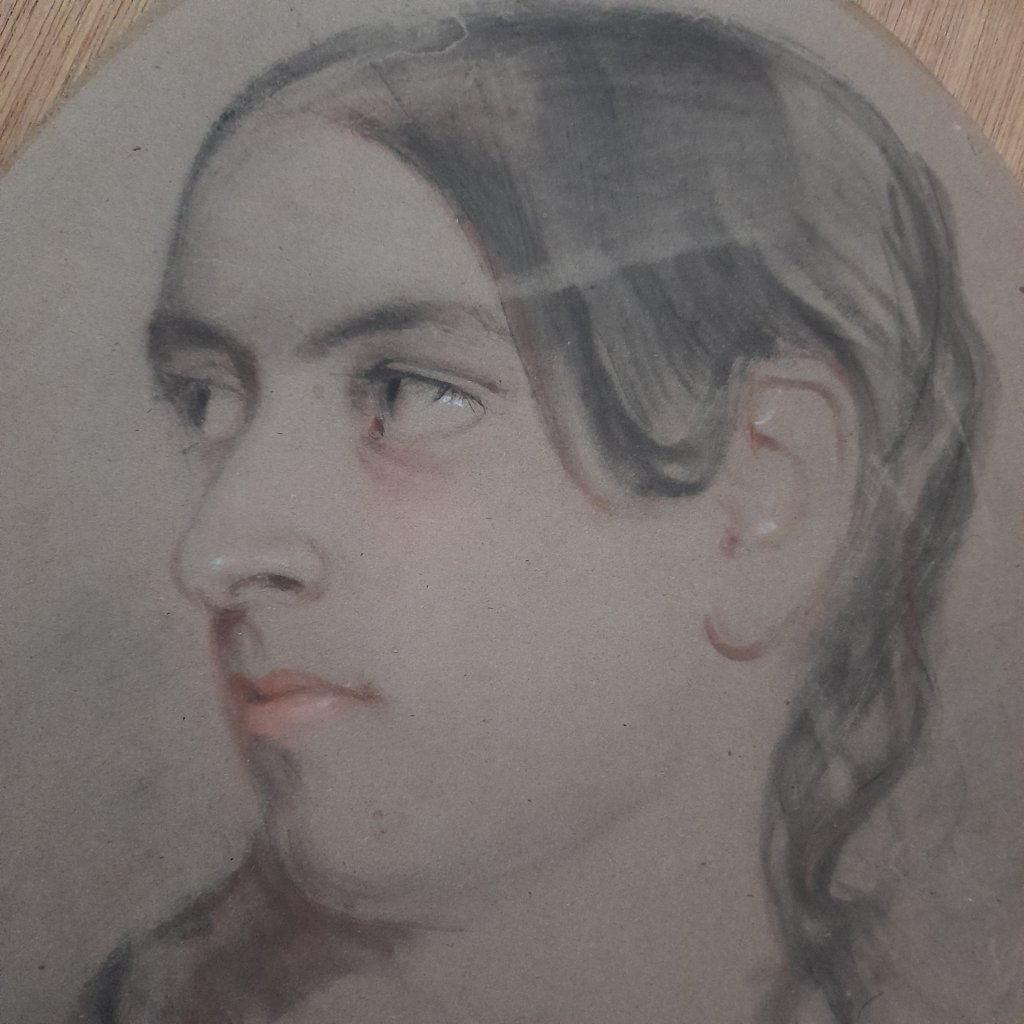
Not that long ago, I purchased a drawing. It is a portrait ofb a young lady done with black and red chalk and a touch of body colour white. The portrait itself is not signed but on the backing paper there appears the name #WilliamEtty.

Etty (1787-1849) was the first significant British painter of nudes which he used in his historical paintings. Etty was born in York but left school early to apprentice as a printer. After his apprenticeship, he enrolled in the Royal Academy to study under Thomas Lawrence. His talent for painting realistic skin tones brought him commercial and critical claim.

Portrait of a young lady – by William Etty

When one looks at this portrait, the artist’s talent is immediately recognised. Using only three colours, he manages to portray an intimacy with his sitter and catches her character as she glances to the side. The touches of white body colour are perfectly placed. Especially the one on her eye. It draws you in to look at it and the beauty of the eyes. Who is this young lady. I do not know but she comes from the time of Jane Austen. Does she appear in one of his paintings. Again, I do not know. She is just lovely to look upon.

Portrait of a young lady – by William Etty
Posted in Drawings and Sketches | Tagged , , , , , , , , | Leave a comment

Joseph Syddall artist

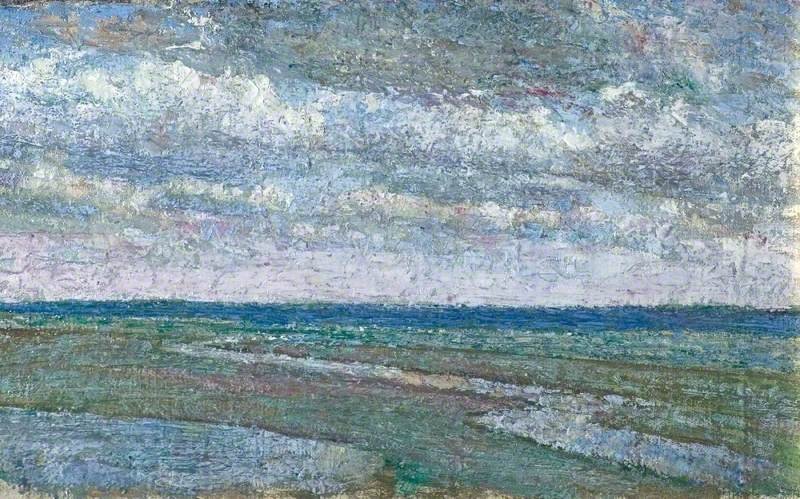
I recently picked up an oil painting by #JosephSyddall. Joseph Syddall (1864 – 1942) was born in Old Whittington near Chesterfield, Derbyshire. The son of a master carpenter he started his working life as a clerk in a solicitor’s office. His aptitude for drawing was noted by Miss Mary Swanwick and she financed his place at the Herkomer Institute of Art. Syddall excelled at pencil/graphite drawing and Herkomer boasted that his student was the best draughtsman in the country. His drawings earned him admittance to the Royal Academy. Syddall was hired to illustrate Thomas Hardy’s Tess of the d’Urbervilles for the The Graphic Illustrated Magazine in 1891.

The Ebb – oil on artist board by Joseph Syddall

Above is the work which I acquired. It shows the tide receding into the distance. The beach is riven with channels of water beneath a heavy and blustering sky. Visitors to the seaside sit and watch while others venture far out onto the flat to chase the tide.

The painting above is a version of the painting which Syddall left to the town of Chesterfield and its’ museum. Below is the painting which the Chesterfield Museum and Art Gallery hold. Syddall rarely dated his works so exact dates of creation are unknown and thusly are dated roughly. Most of his works come from between 1890 to 1914. One notices the differences immediately. I like the way he has added the people into the image creating an early focus which then leads outward onto the flats in the far distance.

The Ebb – oil on canvas by Joseph Syddall – image credit to the Chesterfield Museum and Art Gallery
Posted in Oil Paintings | Tagged , , , , , , , | Leave a comment

Wu Shuang Pu – heroes and heroines

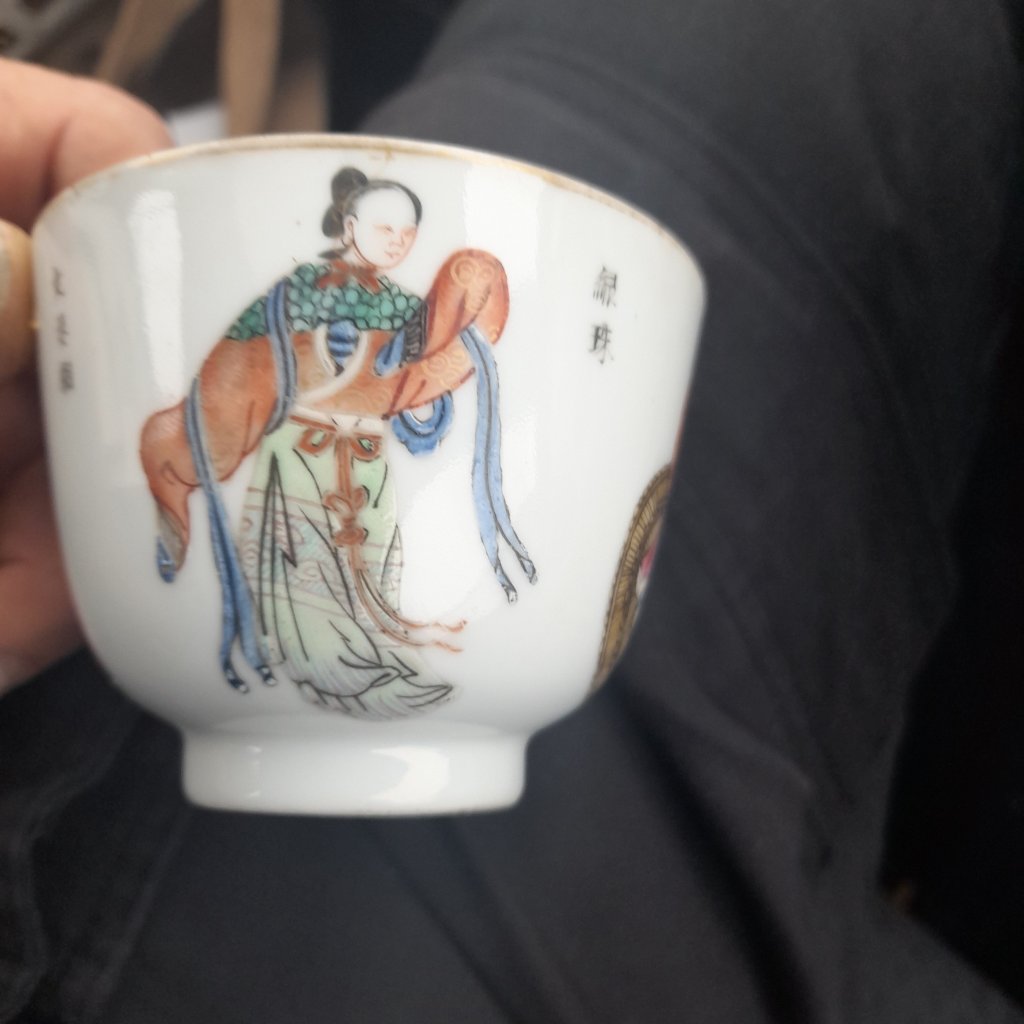
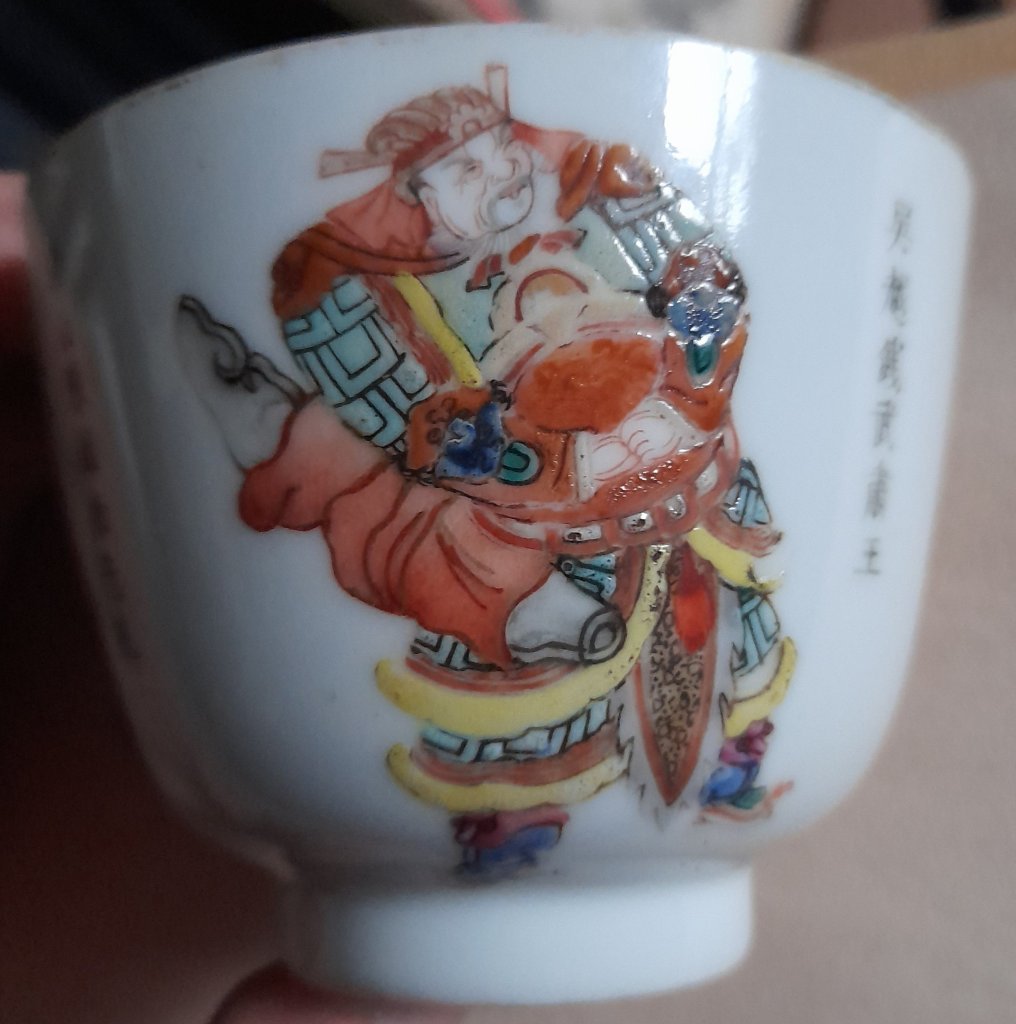
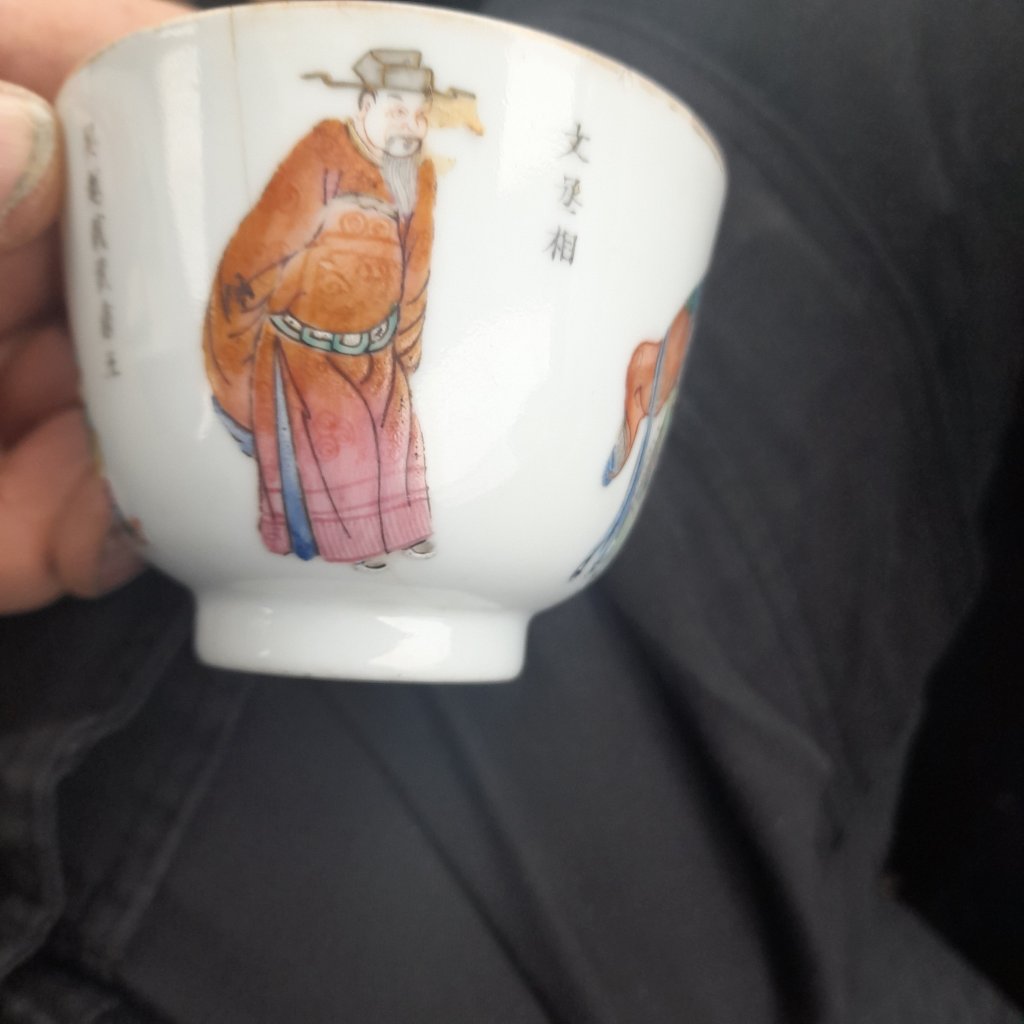
I bought a teacup some time back. Not what westerners would call a teacup since it has no handle but a Chinese teacup. It has around the outside four images from a book created by #JinGuliang in 1694 called #WuShuangPu. The book itself contained some 40 woodcut images of different heroes and heroines. The portraits come from the artist’s imagination.

Lu Zhu – #20 from Wu Shuang Pu

We begin with #20 of the images in the book. #LuZhu was a concubine to a wealthy man, Shi Chong, but desired by General Sun Xiu. Shi refused to find Lu to the general and he then sent troops to forcefully take her. Instead of being taken Lu Zhu jumped to her death from an upper window where she lived.

Chen Chuan – #35 from Wu Shuang Pu

Chen Chuan was a legendary Taoist sage. Little is known of his life. It is thought that he was born around the end of the Five Dynasties and Ten Kingdoms Period. It is believed that he created a form of Kung Fu (Six Harmonies and Eight Methods). He also is associated with ‘chi’ (energy) along with sleeping meditation and exercises designed to prevent seasonal illnesses.

Qian Liu – #36 from Wu Shuang Pu

Qian Liu was founder and king of Wuyue during the Five Dynasties and Ten Kingdoms Period. This Kingdom was found on the coast of southern China. At first Qian was only Prince over the regions of Yue and Wu but when the Tang dynasty fell to Liane dynasty he proclaimed himself to be King over Wuyue.

Wen Tian Xiang – #40 from Wu Shuang Pu

When Tianxiang was a scholar general and Prime Minister during the Song dynasty. He held a number of very influential positions and his writings are still taught in China’s schools today.

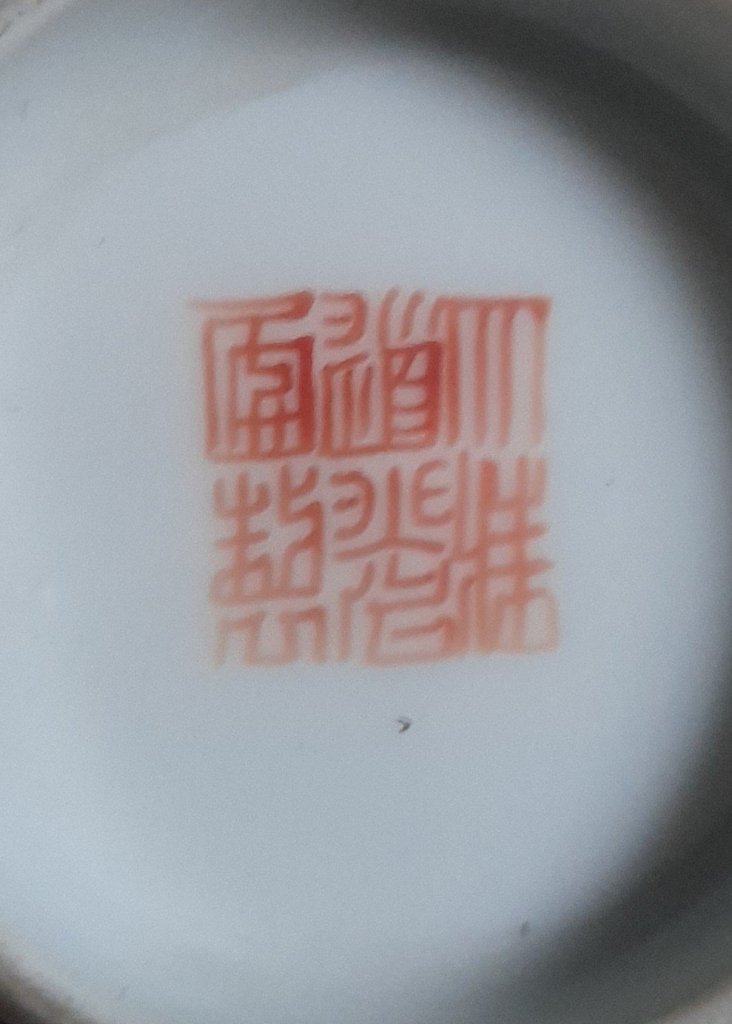
An interesting little cup. I do not know if there is any overall meaning in regards to all four images on the cup. Maybe. It is finely made in the 19th century and bears the mark (shown below) on it’s base.

Base mark on Wu Shuang Pu teacup
Posted in Ceramics/Pottery | Tagged , , , , , , , , | Leave a comment

Bessie Hevenor artist

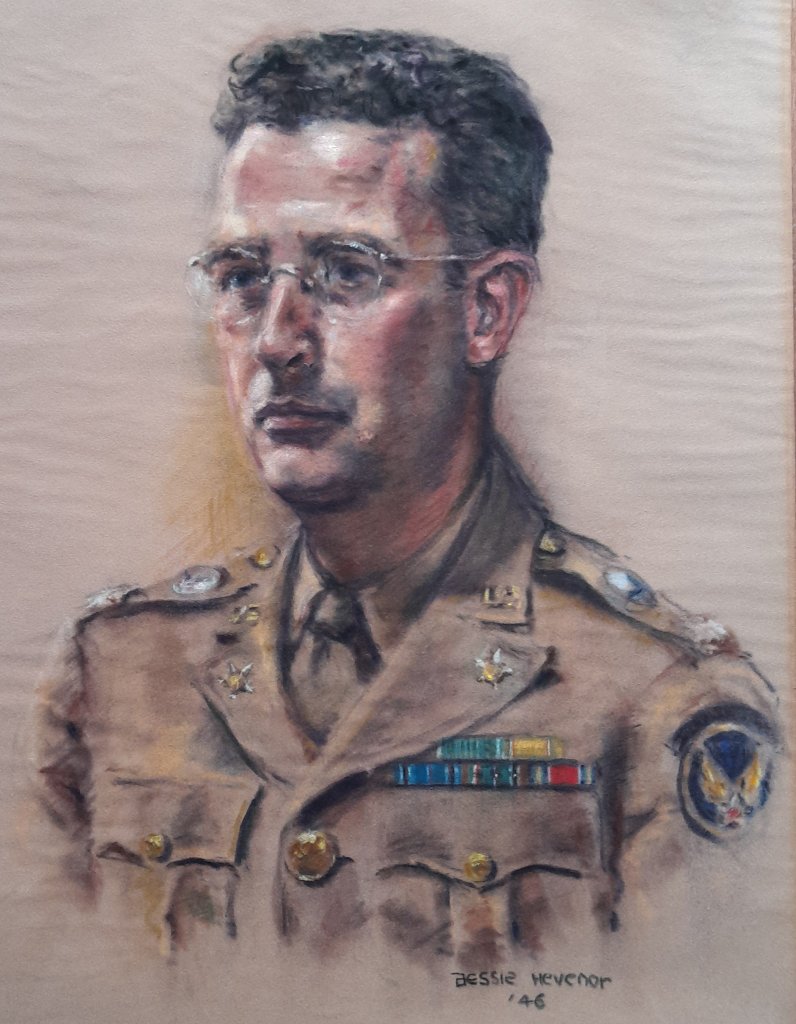
I picked up a pastel portrait at a charity shop this past week. It is nicely drawn and coloured and created by artist #BessieAcker (neeHevenor). Not an artist which I had come across before and there is not too much information about her. Her mother was silent film star actress #MaryKelly and her father was lumber magnate #HarveyHevenor.

#BessieHevenor was born in New York City in 1922. She passed away in 2005. Her artistic talent was spotted early and was honed by the tutelage of Ethel Paxton. During WWII, she worked for Gibbs & Cox’s naval division as a draftsperson. She also produced commissioned portraits of GI’s to augment her income. She has won numerous awards regarding her work in pastel producing exquisite portraits of both adults and children.

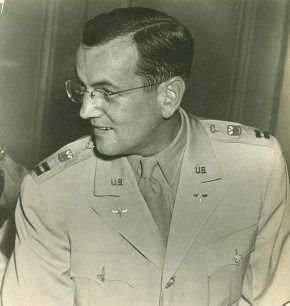
Above is the work picturing according to the note on the back an unknown soldier. But I think the soldier is not unknown but actually very famous. This image would have been created posthumously for the soldier died/disappeared in 1944. I think this is an image of #GlennMiller, trombone player and possibly best leader/conductor of a swing band ever.

Glenn Miller

Some might say maybe maybe not but I am convinced that Bessie did a posthumous portrait of Glenn Miller. I base my decision on the structure of the ear which is as identifiable and individual as a finger print aside from the glasses.

Miller disappeared in 1944 while flying to Paris from London. The loss of his plane has never fully been explained though several causes have been postulated.

I think a good likeness of a great musician and a loss of a man much too early.

Posted in Drawings and Sketches | Tagged , , , , , , | Leave a comment

Andrew Watson Turnbull and William Tatton Winters engravers

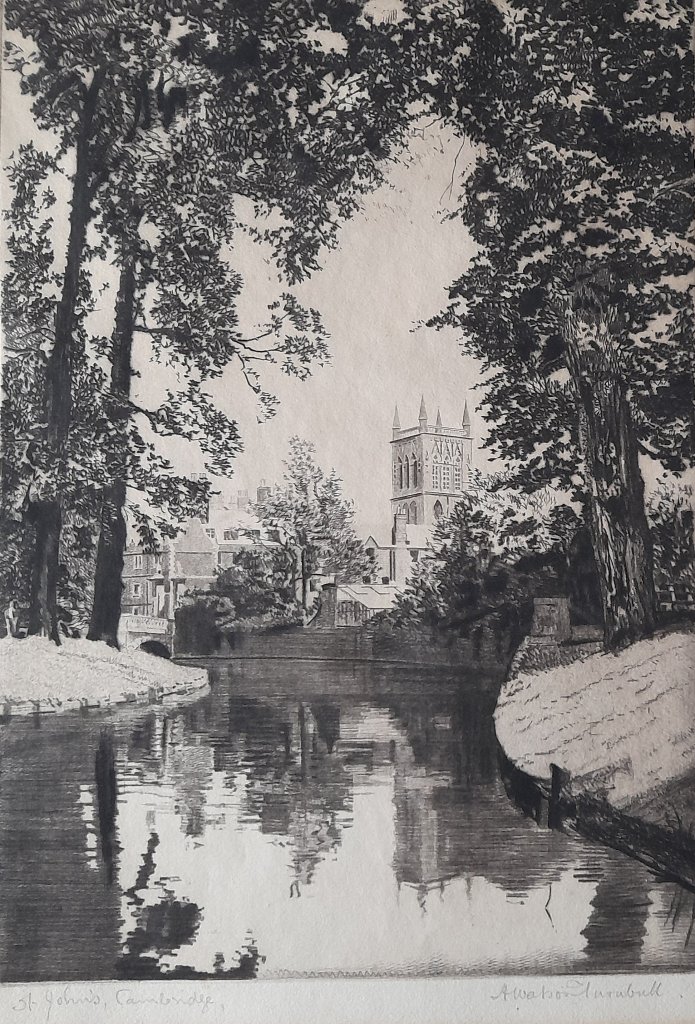
I added a couple of engravings to my collection this week. #AndrewWatsonTurnbull (1874-1957) was a painter, etcher, and stained glass designer. He was born in Edinburgh. His training was done at the Royal College of Art and the Royal Academy. His work with glass can be seen at St Mark’s Episcopal, St Cuthbert’s Episcopal – in Edinburgh – and St Peter’s Episcopal in Montrose.

St John’s College, Cambridge – drypoint etching by Andrew Watson Turnbull

The drypoint etching of St John’s College, Cambridge is fine example of his work in this genre – beautiful detail and excellent colour tonality throughout.

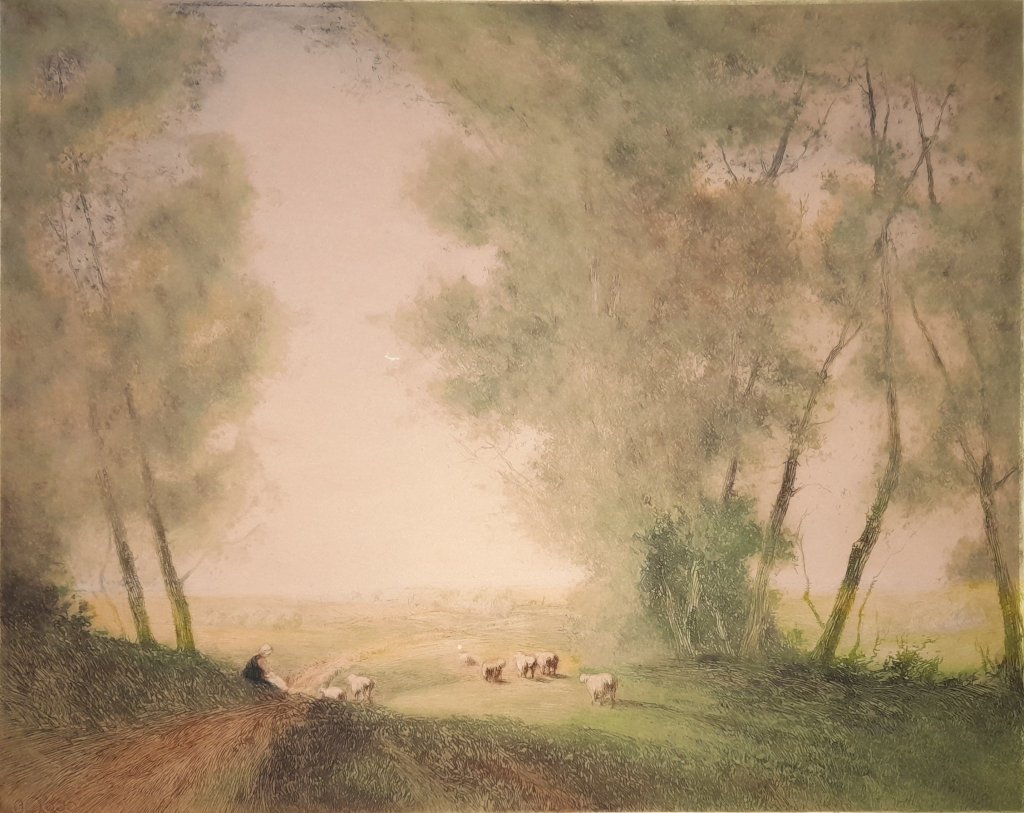
We go to an artist born in the north of England. #WilliamTattonWinter (1855-1928) was a well known and respected northern artist. His studies took him to Europe but he returned to England and settled in Reigate. He received royal recognition from both Queen Victoria and Queen Mary and exhibited across Europe. Winter worked mostly in watercolour with which he created many an atmospheric landscape picturing shepherds and sheep and north country life.

The Resting Shepherdess – engraving by William Tatton Winter @ 1923

Published by #TheMuseumGalleries in 1923, this engraving displays Winter’s wonderful use of colour and perspective in producing his works.

Posted in Etching | Tagged , , , , , , , | Leave a comment

Schloss Oranienstein

#SchlossOranienstein is found at Diez on the Lahn. It is a castle or palace which was home to #WilliamV,PrinceofOrange for a number of years. The palace was built on the ruins of #DiersteinAbbey for the CV ountess Albertine Agnes of Nassau.

The French invasion of the Dutch Republic forced William V to flee; first to England and then to Oranienstein. From there he renounced his claim to any and all territories in the Netherlands and recognised the Batavian Republic. This was offset by First Consul Napoleon Bonaparte, who granted him financial and territorial benefits elsewhere.

Some years later William VI refused his support of Napoleon and as a result his claim to the castle was rescinded and all the furniture and art was sold by Napoleon. The palace then became the summer house/hunting lodge to the Grand Duke of Luxembourg.

In 1866, the Duchy of Nassau was annexed by Prussia and the palace was given to the Prussian army the following year. The castle remains a station for the army but now contains offices and a museum. Being a military base, one must book tours and have identification to enter.

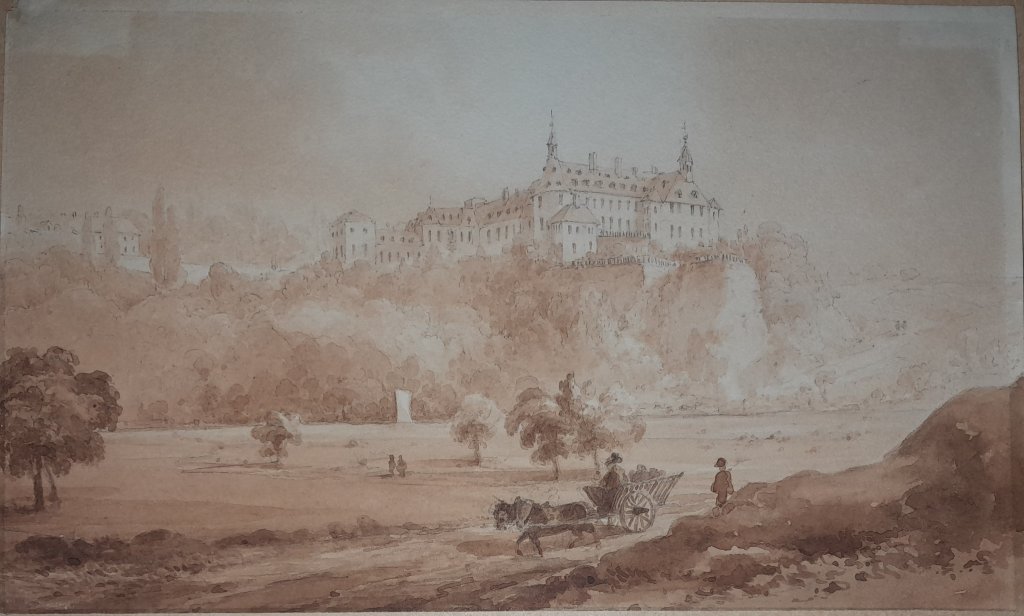
Schloss Oranienstein near Diez – graphite with sepia wash drawing by unknown artist @ 1780

The whole image is lightly drawn in graphite and the sepia tones added to give depth and shading. This sepia wash drawing from my collection shows the palace standing tall and majestic at the rim of a promontory A river runs a the foot of this precipice although not seen. A fine home to the royal family even in exile. A finely executed drawing from history.

Posted in Drawings and Sketches, Watercolour paintings | Tagged , , , , , , , , , | Leave a comment

Ferdinand Jean Luigini artist

We visit a French Impressionist painter known for his many landscapes, marine views and city scenes. #FerdinandJeanLuigini (1870-1943) was born in Orleans, France. His father was a renowned composer of ballets and operas. His sister was a concert harpist and his nephew Jean Tardieu was a major French poet.

Ferdinand learned his craft in Paris under Emile Verhaeren and by 1892 was exhibiting his works regularly. Within a handful more years he had broadened his shows to London, Brussels, Amsterdam and New York.

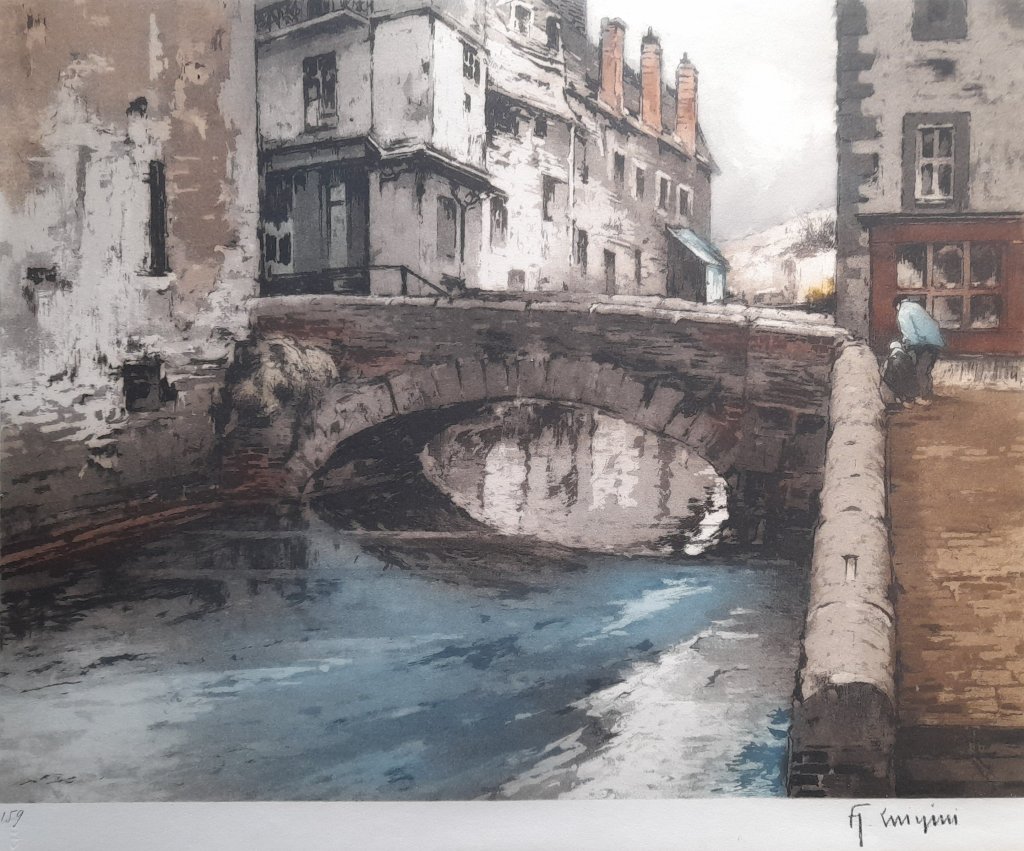
Le Petit Pont – aquatint with etching by Ferdinand Jean Luigini @ 1920 published by Estampe Moderne

In fact, he was equally well known for both his large colour aquatints and his watercolours. Around 1920, the artistry of printing in aquatint with colours reached it’s peak. The publisher #EstampeModerne was a leading company in this field. It published works by many of the leading artists of the day including Kashmir, Pollack, Figura, Robbe, Helleu, Coussens,Luigini and Icart. These pieces were published in limited runs of around 200.

The aquatint (above) displays the extent to which publishing in aquatint had come. It bears the Estampe Moderne imprint (lower left) by the edition number. Rich tones of colour combine with smooth tonal shading bring this street scene to life. A fine example of not only Ferdinand’s talent but also Estampe Moderne’s publishing prowess.

Posted in Aquatint, Etching | Tagged , , , , , , , , | Leave a comment