Art of Maps

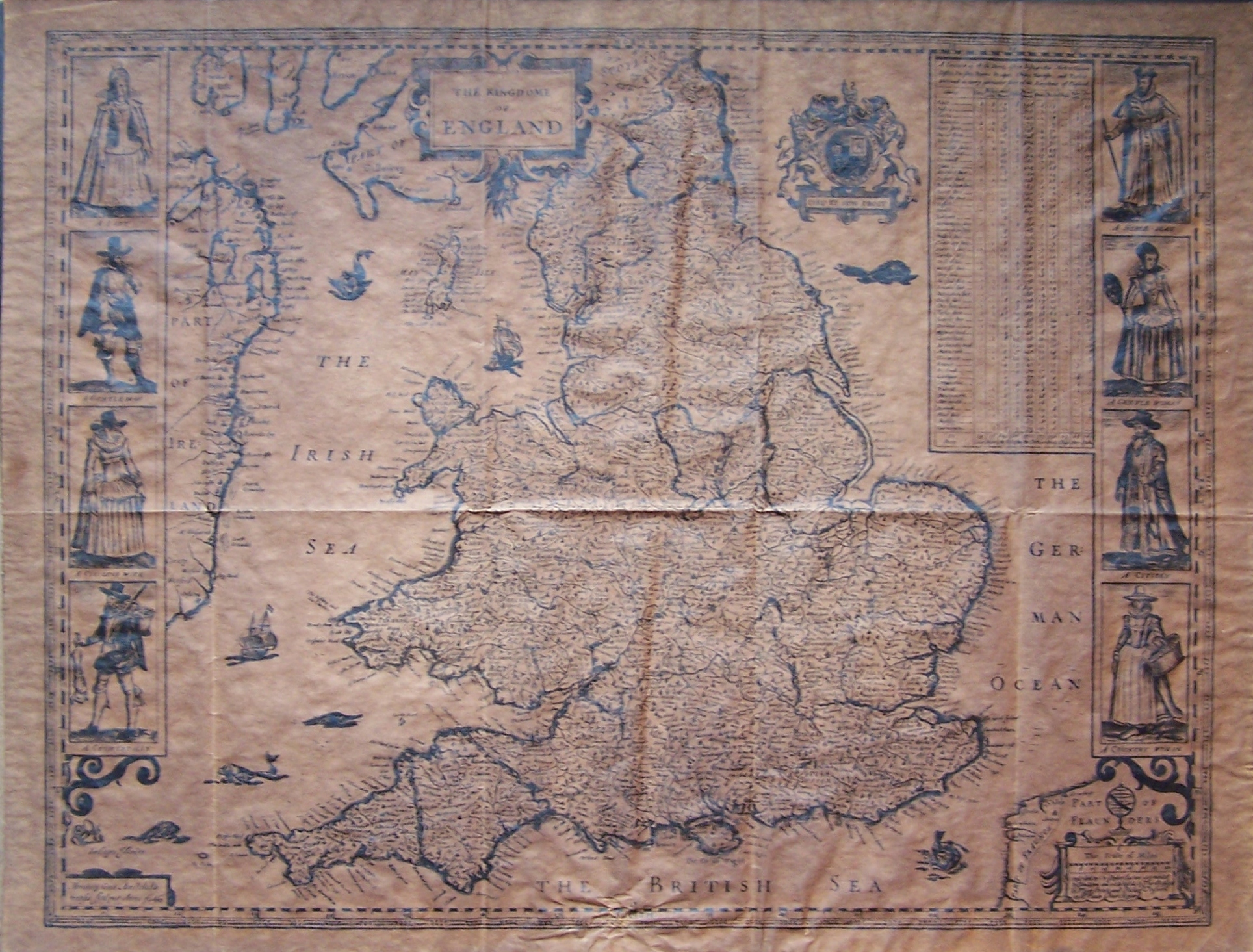
To all things change comes as seen with the previous chapter and its’ etchings. Travel takes one down many roads. We now use GPS to find our way around but before we used maps (pilot and co-pilot). They have gotten us from A to B for hundreds of years. Styles change, place names change, new roads appear and yet they are still what get us to where we are going. The following map I picked up recently and it is titled ‘The Kingdome of England’.

The Kingdome of England 1646
by Abraham Goos 1590-1643

It is by the renowned map engraver Abraham Goos. It is not in wonderful shape any more. It has been folded and put away somewhere and left. If it was coloured it no longer remains so. And yet even in the shape it is in, it remains a wonderful thing to look at. Images of a Noble man, a Lady, a Gentle man, a Gentle woman, a Citizen, a Citizen’s wife, a Country man , and a Country woman adorn the sides of the map. A glossary of shires, cities, bishoprickes, market towns, castles, parishes, rivers, bridges, chases, forests, and parkes has been added. It has ships sailing the seas and leviathans rising out of the deep. It has the British Monarchy logo with its’ motto ‘Dieu et mon Droit’ – God and my right’. It’s a doorway into another time, its’ costumes, its’ class system, and its’ monsters which ruled the seas.

There are maps still being made today but do we use them or even look at them any more. We rely on technology and have displaced the map into the category of art.

Posted in Etching | Tagged , | Leave a comment

Art of Place

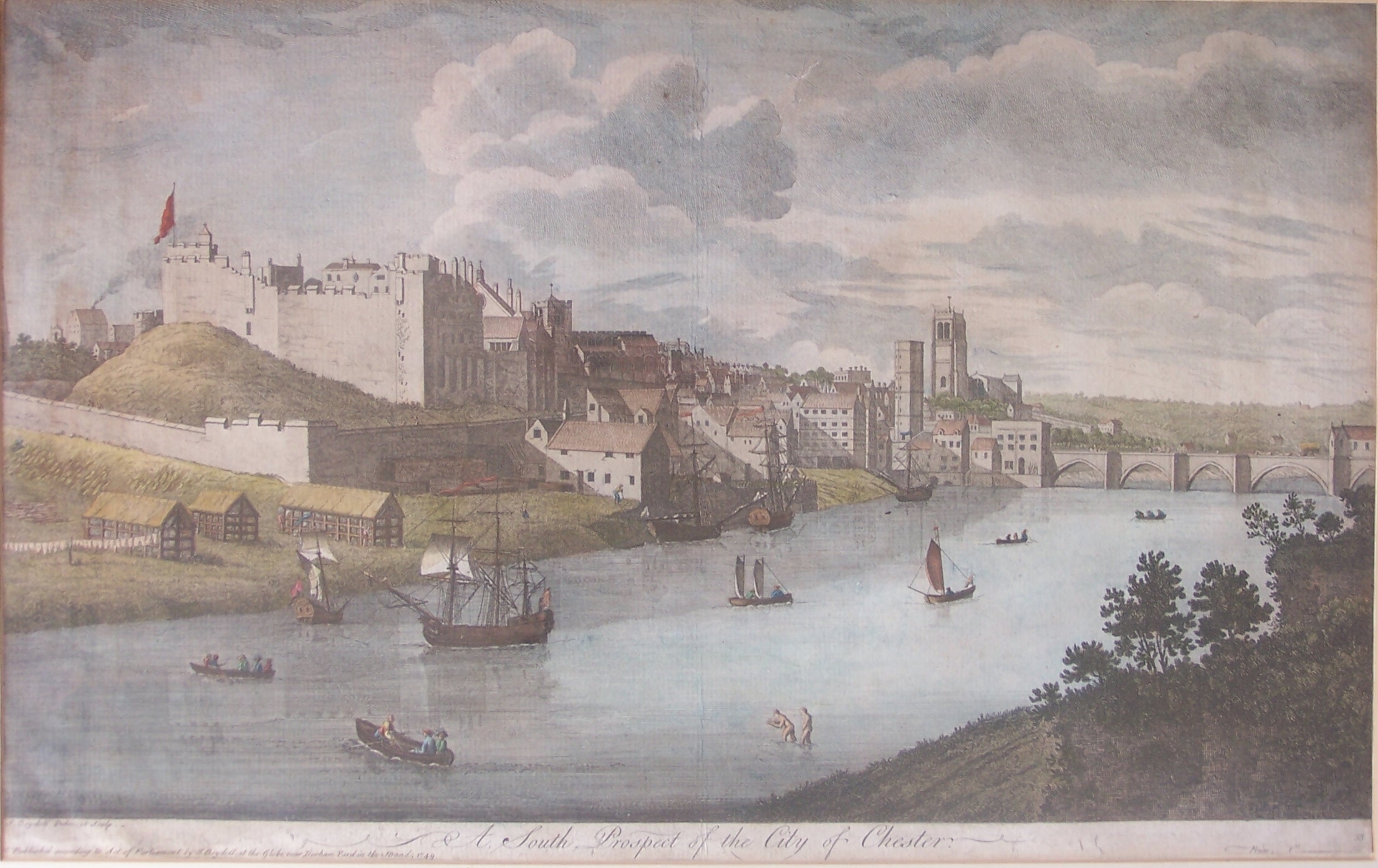
In my travels around this country, many of the roads which I have driven pass places which have changed over time. For better or worse, some places have fallen into non-existence into ruin and yet others have grown into huge cities I give you three engravings which show things as they used to be. Was it a better time or just a time – no better no worse. I know the city of Chester has changed extensively since this view was engraved in 1749.

South Prospect of the City of Chester
by J Boydell 1749

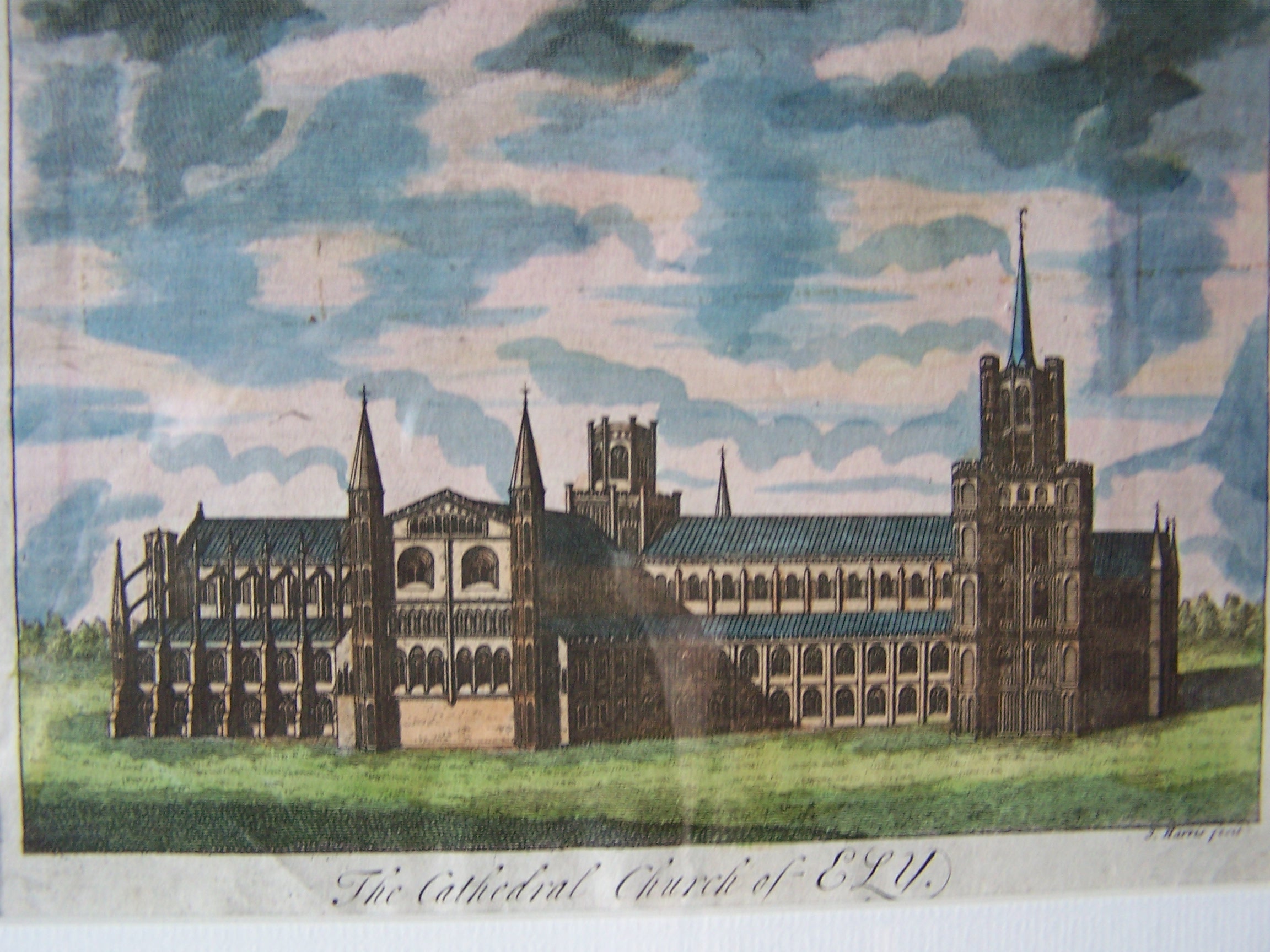
Yet the following place, which is close to my heart, has not really changed for hundreds of years. It is a house of prayer and will continue to raise the prayers of the saints as sweet incense for hundreds more. It stands high and regal – the ship of the fens- holding forth its’ reason for being. You cannot tell from this etching that Ely Cathedral stands on a bit of raised ground once surrounded by many miles of fenland or swamp. A mire for all to fall into unless you knew the way to enter.

Ely Cathedral ‘The Ship of the Fens’
possibly by Johannes Kip/J Harris

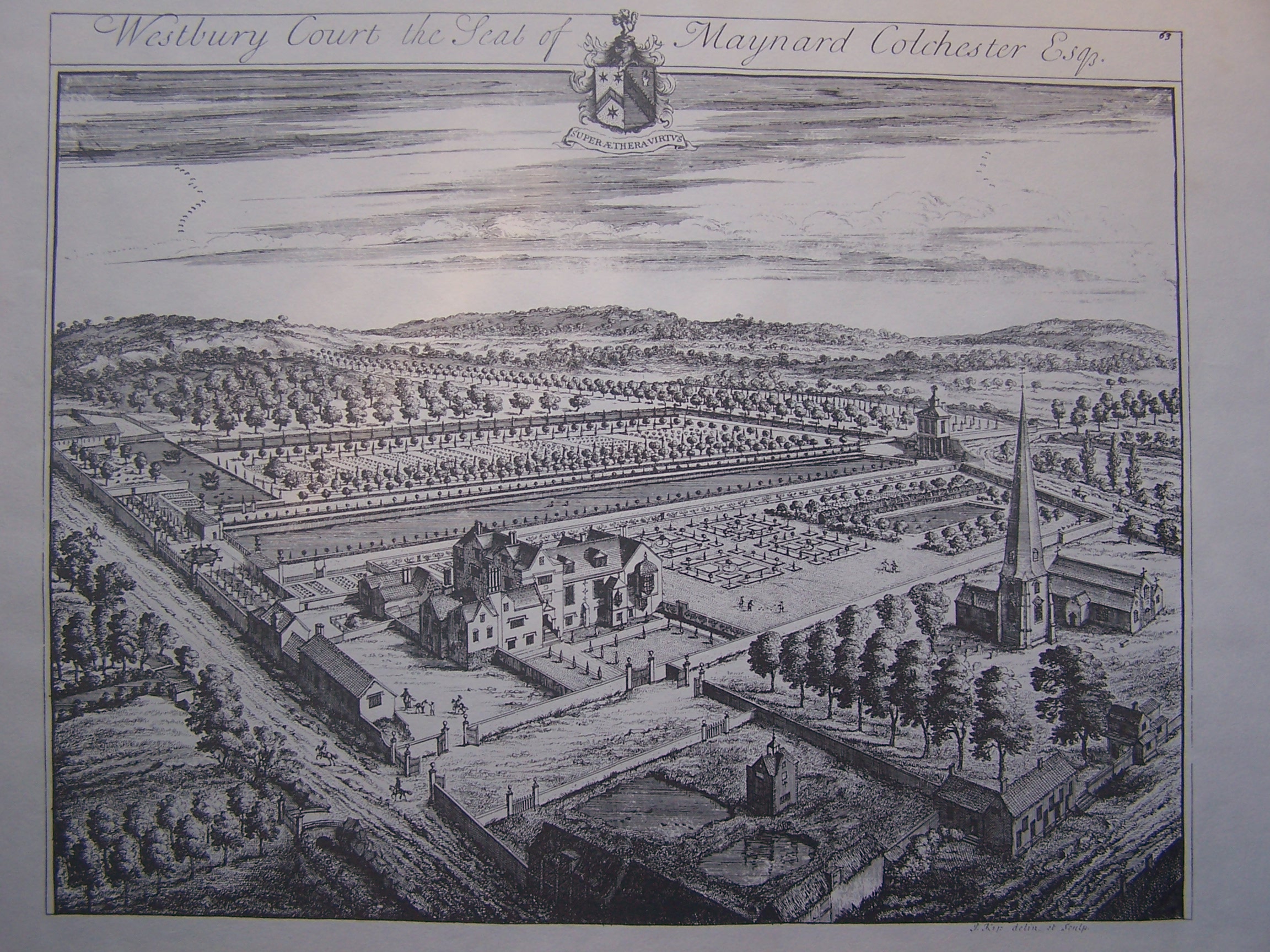
We also have in this country, houses and estates which have been taken over by either English Heritage or The National Trust. Westbury Court was offered to the National Trust in 1967 and they used the etchings by Johannes Kip (like the following etching) to re-instate the gardens and grounds to their original form. Westbury Court was the home of Maynard Colchester who was the co-founder of ‘The Society for the Propagation of Christian Knowledge’ (better known as the SPCK).  Maynard Colchester’s original planting  records still exist. The oldest holm oak tree in England is said to stand in the garden at Westbury Court. It was planted around 1600.

‘Westbury Court Seat of Maynard Colchester Esq’
engraving by Johannes Kip 1712

Posted in Etching | Tagged , , , , , , , , | Leave a comment

Art of Locality

Living where I do has allowed me to travel but I also like to visit places which might not be considered far away. The following pieces of art which I have chosen are by local artists.

‘Going Home’ by E Herbert Whydale
etching undated


We begin with an etching of a couple walking past a barn door on their way home at the end of a long day. It is by E Herbert Whydale 1886 1952.

Well known for his etchings of country life he also loved to paint horses especially while they laboured.

The Royston Museum and Art Gallery have a fine collection of this local man’s paintings and etchings.


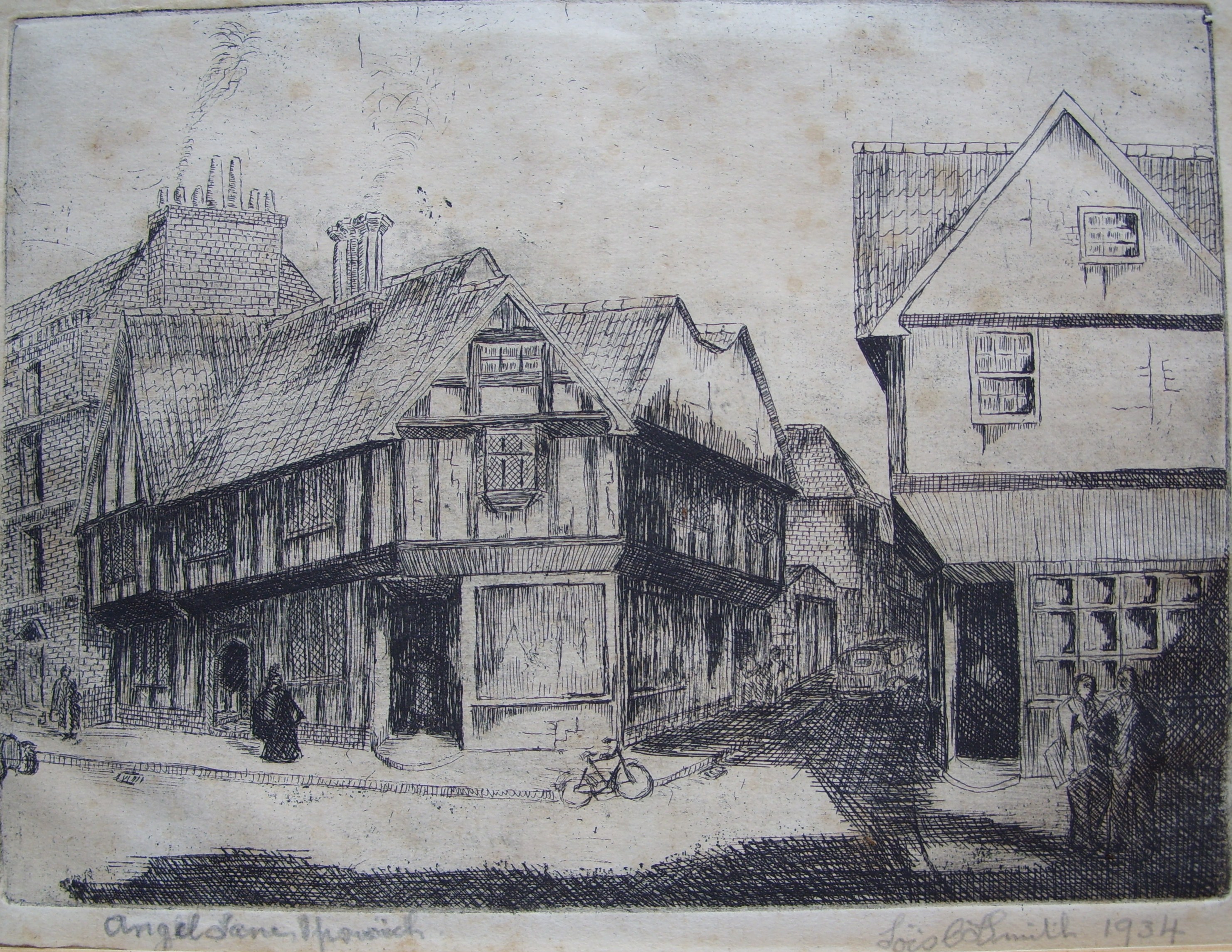
‘Angel Lane, Ipswich’ by Lois Goldsmith
etching from1934


My second picture today was done in 1934. I know nothing in regards to the artist, Lois Goldsmith but I do think that she has a very good eye for detail and the skill to portray it on the page.


Both of these etchings hang on the wall in my office. I find the skill and artistry in them amazing and I know that if I drive for a short distance I can be in the same spot where these two artists found their inspiration. Amazing what is so near and at times not seen.

Posted in Etching | Tagged , , , , , | Leave a comment

The Gift Of Art

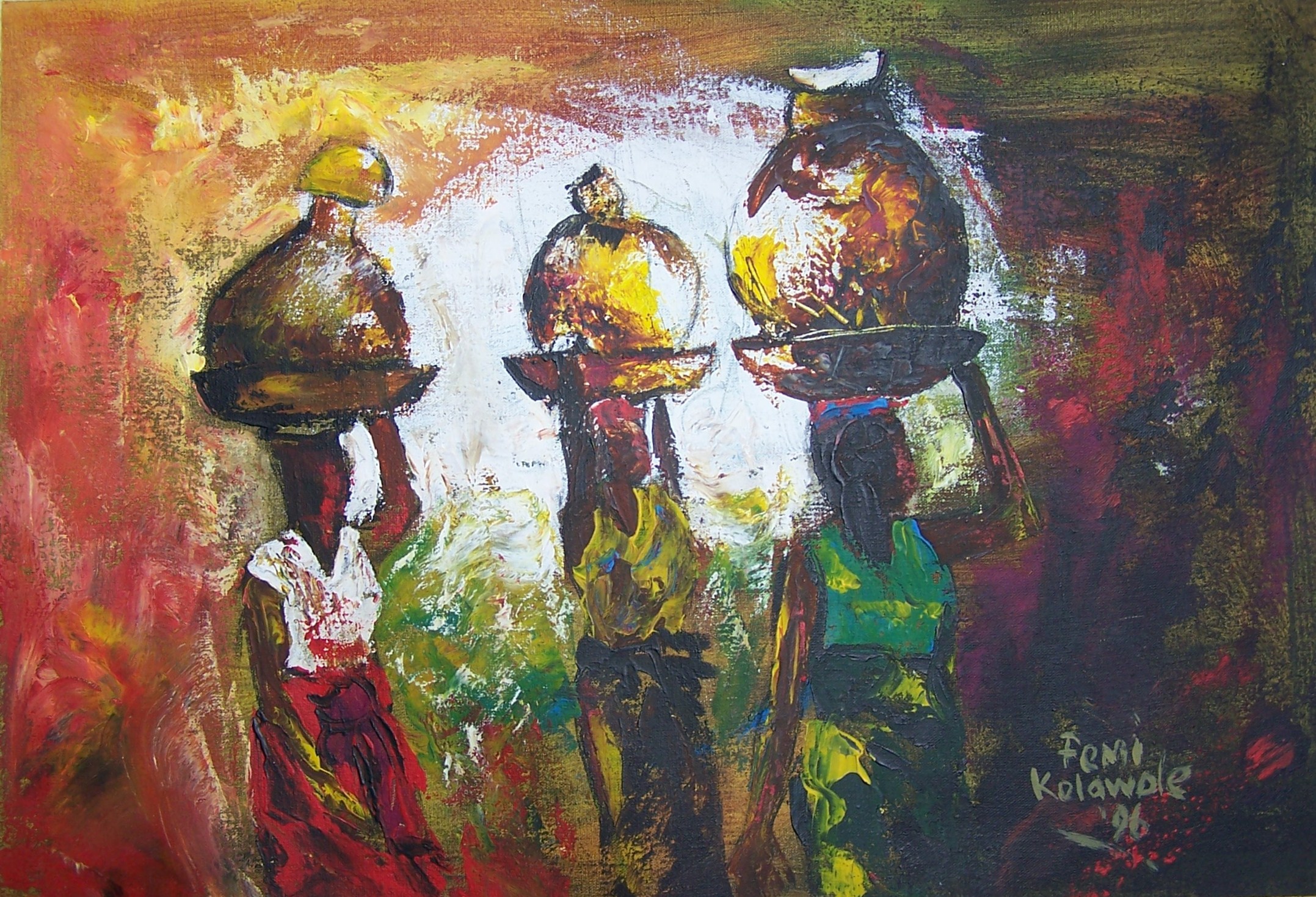
Recently, I assisted a friend and her family move due to unforseen circumstances in their family life. I volunteered my services but in thankfulness for my assistance I was given a gift. This gift consisted of artworks which my friend had brought from her home country of Nigeria. Three paintings which are vibrant, full of life and colour. A joy to look at and imagine that I am there as horse and rider (vuvuzela in hand) thunder towards me or the drummer singing and praising with his song while I watch on, or just admiring the women singing as they carry water from the river to their homes. They are by Nigerian artist Femi Kolawole (now living in the USA, I believe).

‘Talking Drum’ by Femi Kolawole 1996
acrylic on canvas

‘Durbar’ by Femi Kolawole 1996
acrylic on canvas

‘Water from the River’ by Femi Kolawole 1996
acrylic on canvas

Posted in Oil Paintings | Tagged , , , | Leave a comment

Oil and Water

Today, I came across two very different pictures. One an oil and the other a watercolour. Both lovely and yet very different in style.

Frelser Kirke, Christianshavn, Copenhagen by Chr F Beck 1947
oil on canvas

The oil painting is by Belgian artist Christian Frederick Beck 1876 – 1954. Beck is better known for his many early landscape paintings with motifs from the Randers area, and in recent topographic architecture pictures in which he especially cultivated motifs from Christianshavn.This picture is of the interior of Frelser Kirke (Our Saviours Church) Copenhagen. Signed and dated 1947. It shows the pulpit , pews and some of the alter designed by Nicodemus Tessin. The church is one of Denmark’s major tourist attractions with it’s twisted spire. It is a national treasure and a living parish church to some 8000 people.


My second picture today is a street in Paris. A watercolour by the artist DRYZE and dated 1979. Depicting a Paris street in winter (hence the barren trees) its’ lines and colours convince one of the dull cold  and yet with the expectation of life inside the structures pictured. A space awaiting its’ fulfilment, a space soon to awaken with life.

A Paris Street Scene by DRYZE 1979
watercolour

Since posting this, I have been contacted by several people with information as to who Dryze was.  His real name was Michel Frydzinski and sadly he passed away in 1990.  For many years he lived off the Sacre Coeur near Place du Tertre where he worked in Rue Lamarck.  He had a regular stall in Montmartre and painted scenes of the Normandy coast as well as his beloved Paris.  He was French by birth and Polish by descent.  An artist sadly missed but remembered through his expressive art.

Posted in Oil Paintings, Watercolour paintings | Tagged , , , , , , , , , | 31 Comments

Discovering Art

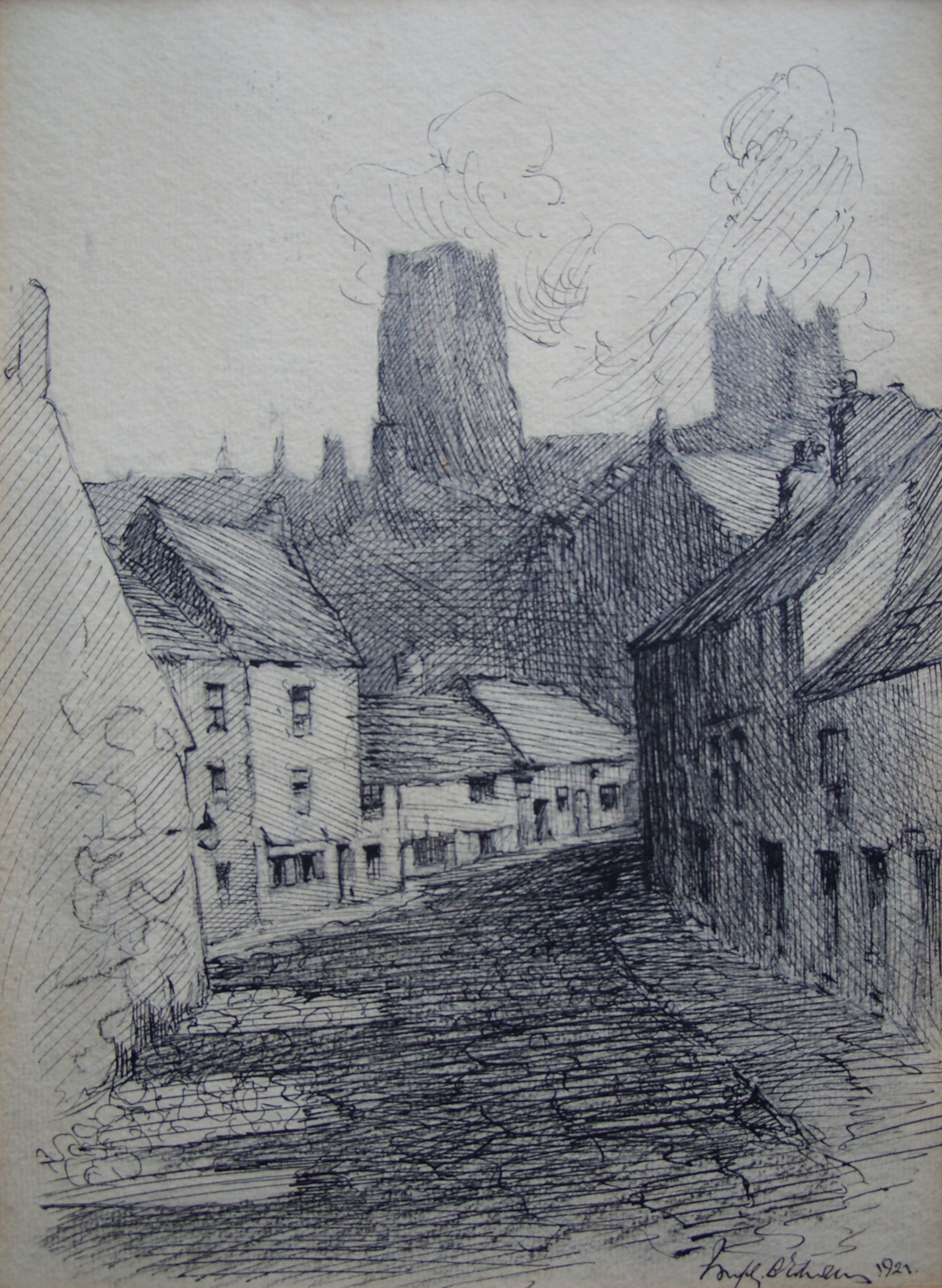
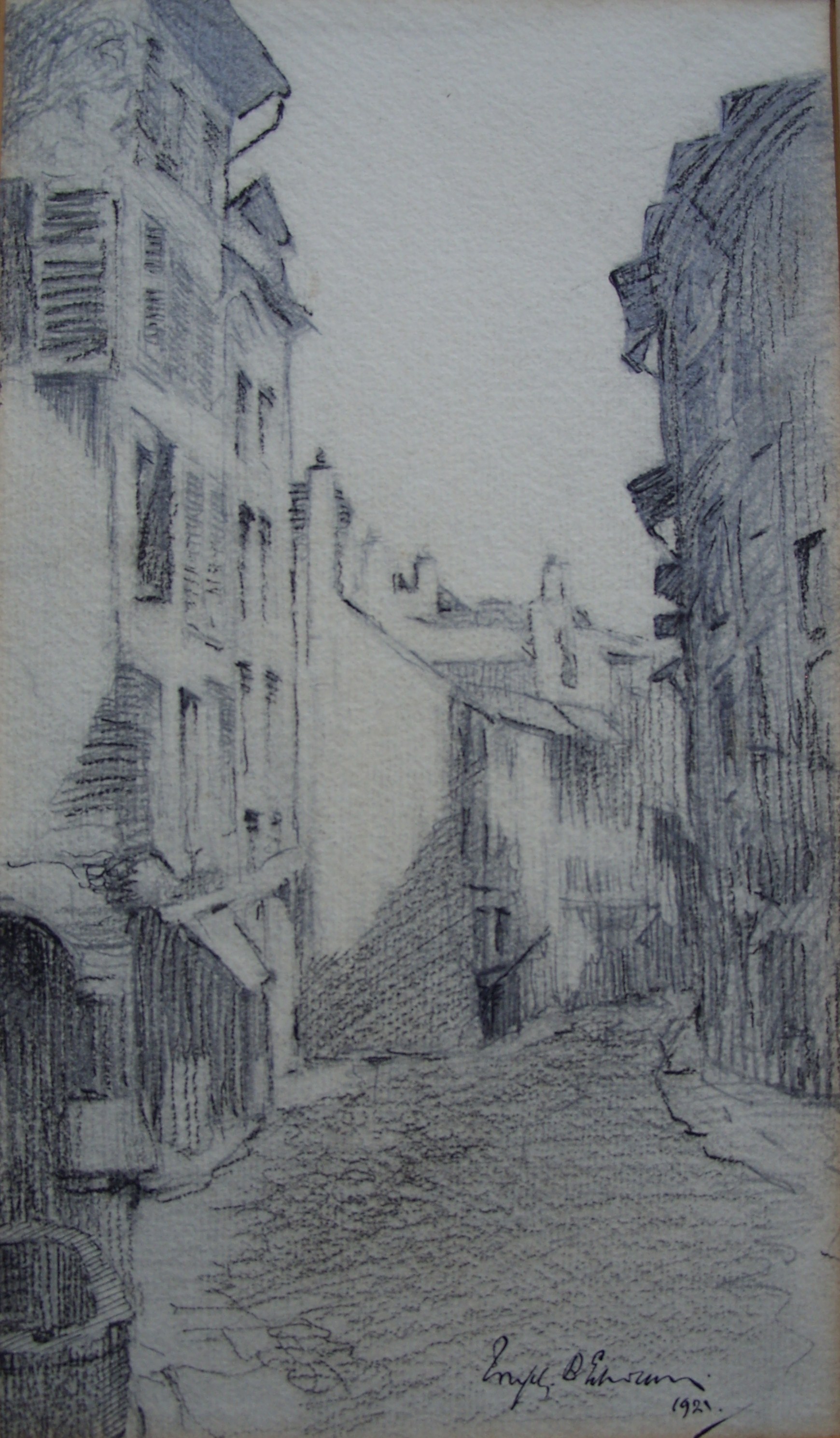
I find it amazing what one can do with just a pencil or pen. Here are three original works. The portrait of an unknown lady in a bonnet, I believe to be quite old. It is unsigned and undated but of extremely good quality.

Lady in a Bonnet – pencil sketch
artist/date unknown

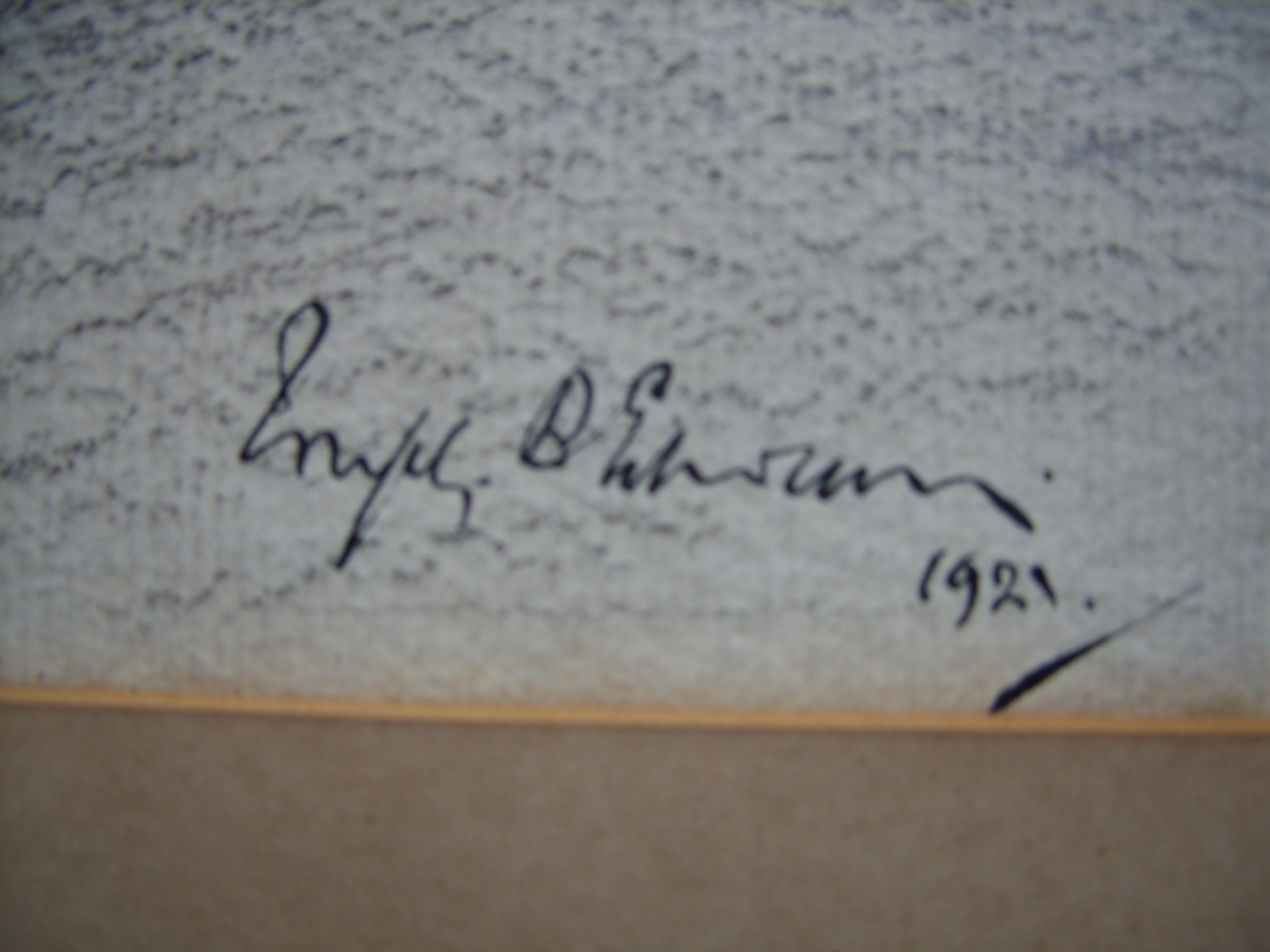
The next two pieces are by the same artist and are city scapes. The cathedral view could well be a British cathedral but the second street scene looks far more southern European to my eye. I have been unable to decipher the signature at the bottom of the drawings but they are both dated 1921. Anybody recognize either of these places? I will also add a photo of the signature just on the chance someone might be able to decipher it for me.

Cathedral view/street scene – pencil sketch
illegible signature – 1921

Street scene – pencil sketch
illegible signature – 1921

the illegible signature

Posted in Drawings and Sketches | Tagged , , , , , | Leave a comment

Discoveries in Arts

Lately, I have found a new delight in the art which surrounds me day to day.  Much of this art comes from previous centuries but not all. It is art which has caught my eye and is not neccessarily worth much but to me it has had something to say. I will start my art blog with two watercolours which I ran across last year.

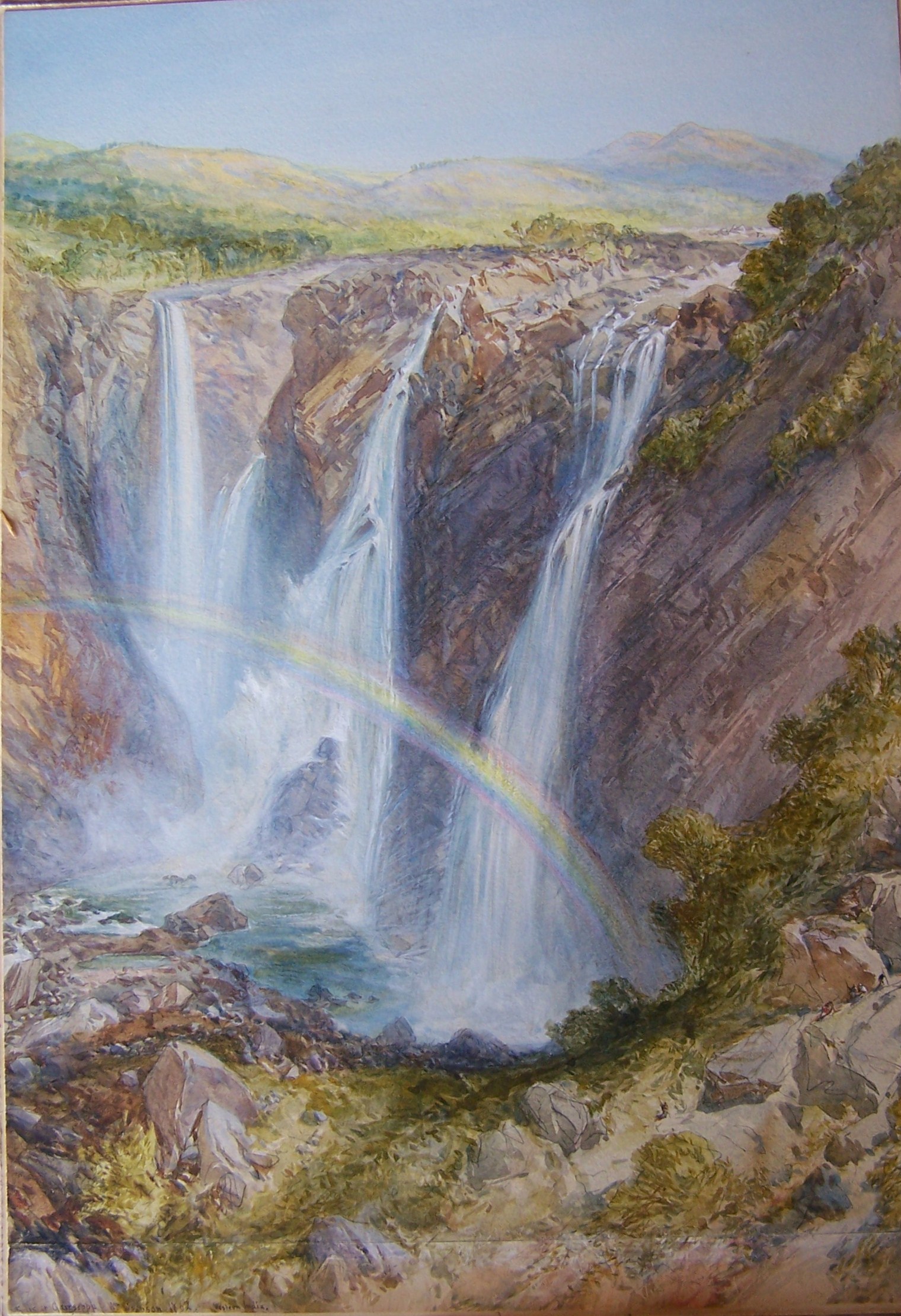
I saw these two pieces and the quality of the work was evident from the start. They were painted in 1862 by artist William Simpson. He came from Glasgow, apprenticed in the printing trade, became not only a war artist but also an artist who covered many of the important events during his life time.

These two watercolours dating from 1862 are from a period in Simpson’s life when he had been hired to go to India and capture the sights, and life on the Indian sub-continent on paper. The two landscapes come from either end of India. The first being titled ‘The Falls of Gairsoppa’ comes from the south west coast while the second finds its’ inspiration in the north west and is titled ‘The Source of the Jumna, Jumnotree’. They were finished along with 248 others after his return to England  and were intended to be published in a two volume set on life in India. Alas, this did not occur since his publishers ran into financial difficulty and sold off his paintings to acquire cash and pay debts. The V & A in London have a most amazing collection of William Simpson drawings , sketches, and watercolours.
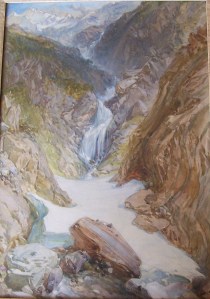
Source of the Jumna, Jumnotree
William Simpson – watercolour 186
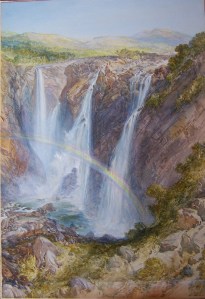

Falls of Gairsoppa
William Simpson – watercolour 1862


The picture on the left is the ‘Falls of Gairsoppa’ painted in 1862 and the one on the right is ‘The Source of the Jumna, Jumnotree’ also painted in 1862.I hope you enjoy them as much as I have. The quality is wonderful


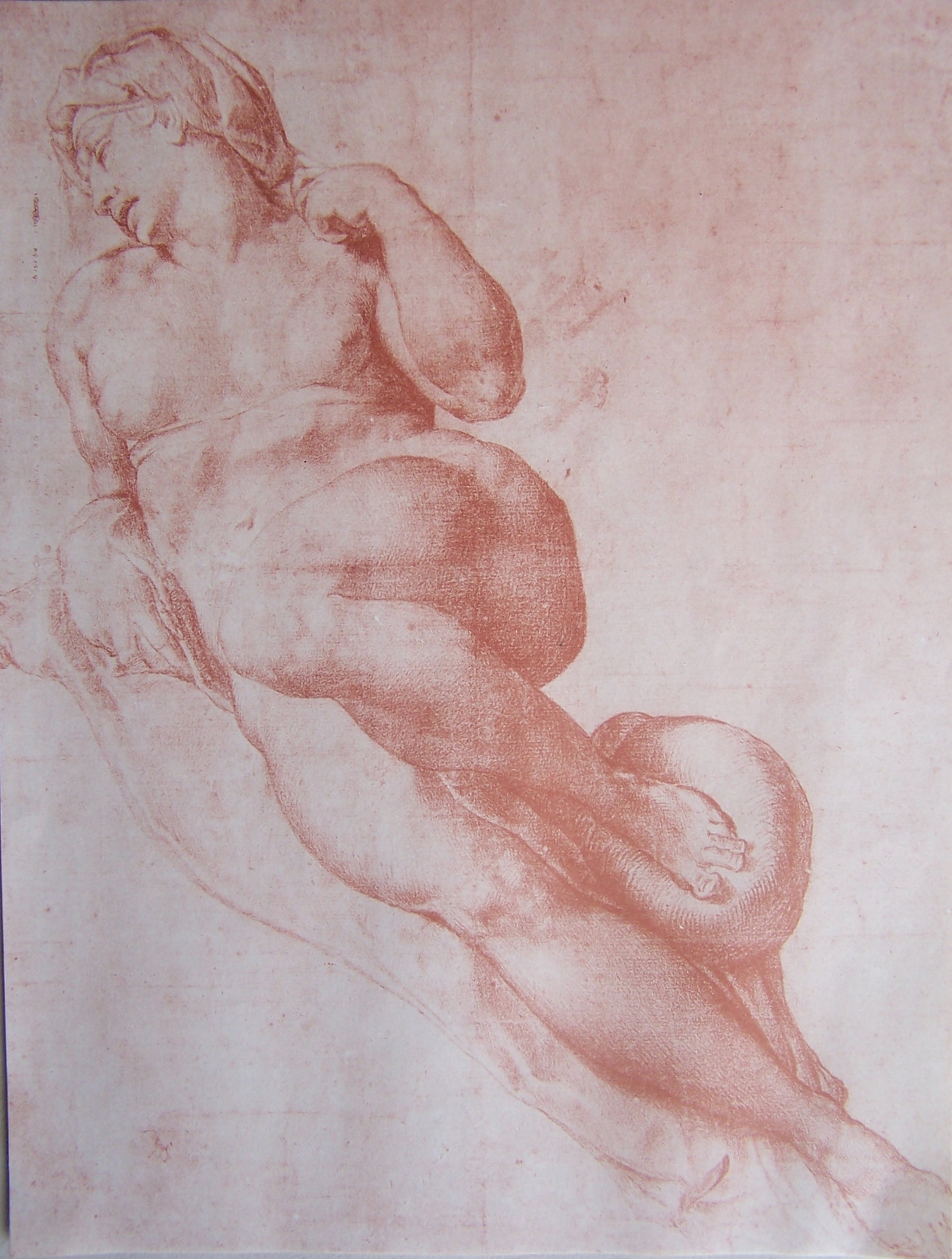
Here’s a lithograph that I picked up the other day. It’s after Michelangelo attributed to Francesco Salviati and is the figure of ‘Dawn’ from the Medici Chapel in the Basilica of St Lorenzo in Florence. Done in red ink(chalk), a truly beautiful study of the female form.
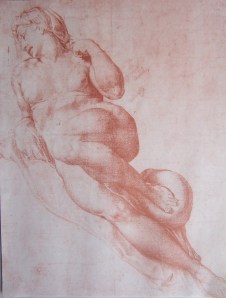
‘Dawn’ by Michelangelo


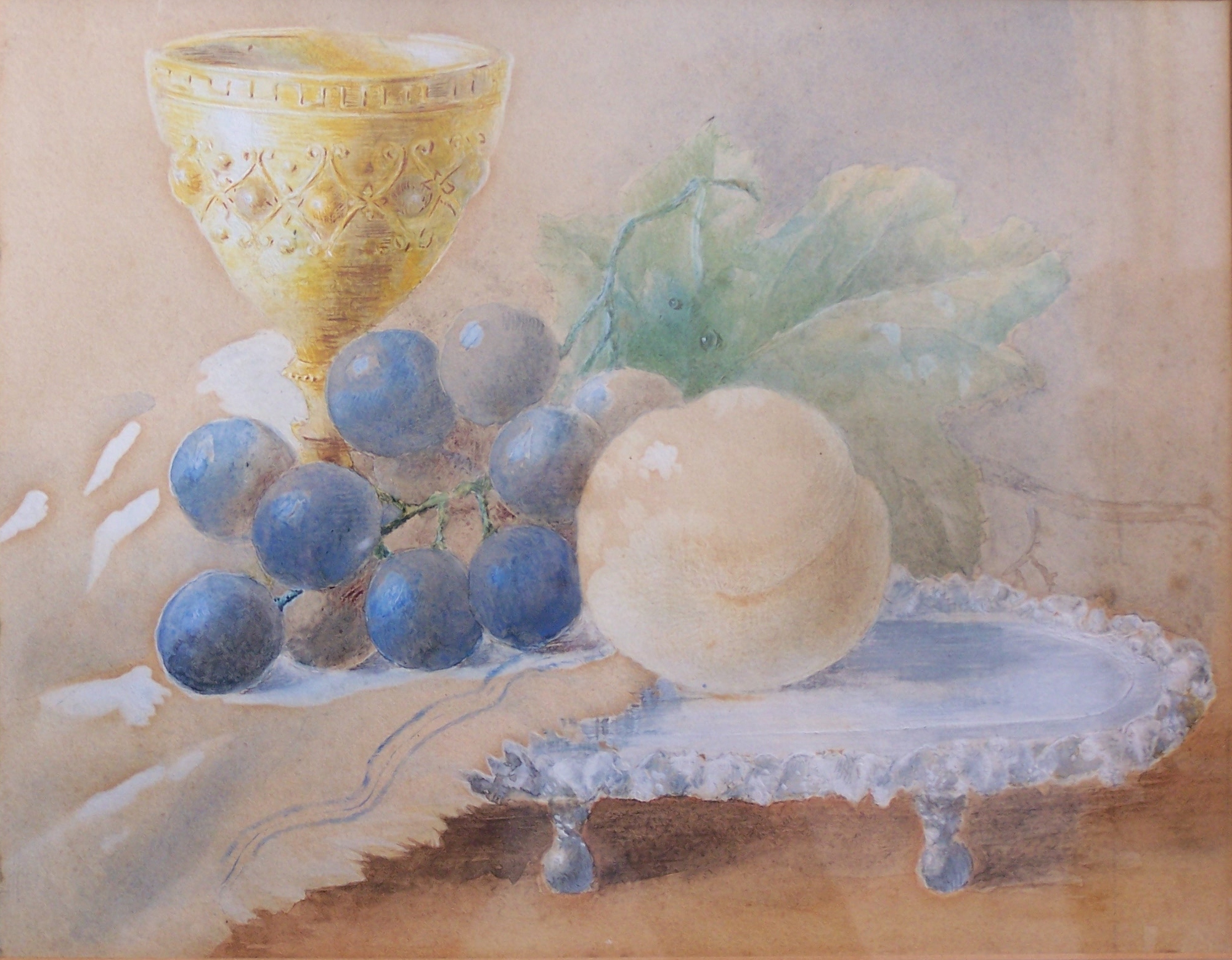
Another find in the last month  is a lovely watercolour by the artist A J Crosfield and dated 1871 in the style of William Henry Hunt.
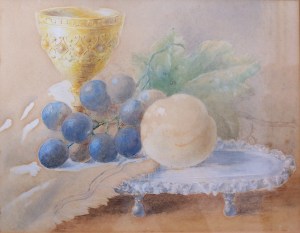
Still life by A J Crosfield 1871

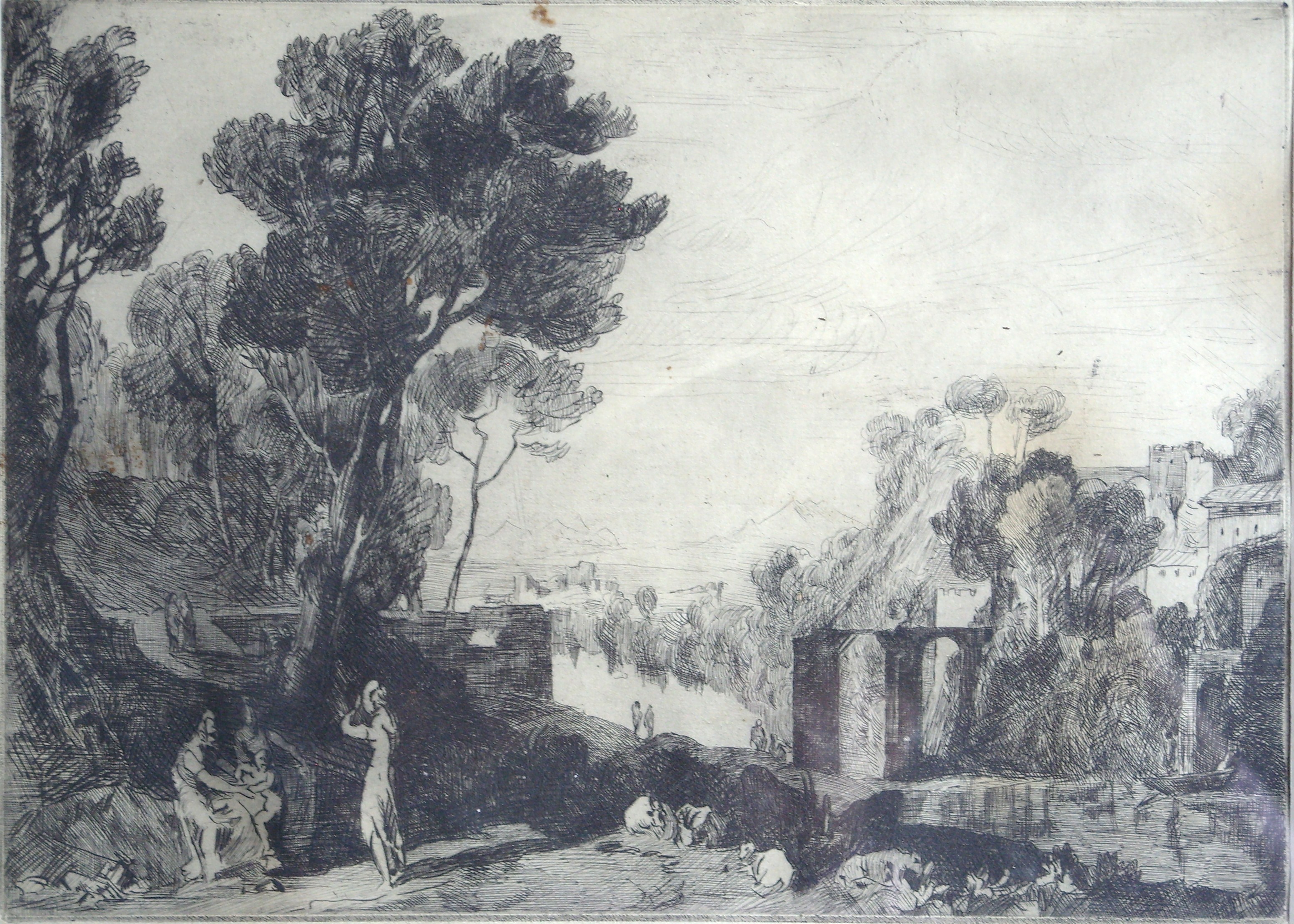
‘Woman and Tambourine’ by Joseph Mallard William Turner is another antique etching which I have come across. It was engraved for the ‘Liber Studiorum’ around 1807 and exemplifies Turner’s elegant and classical landscape.

Woman and Tambourine by Joseph Mallard William Turner

Now to a more contemporary painting. The following watercolour is signed E. Dimock, I believe it to be by American painter Edith Dimock Glackens (1876 – 1955) of Hartford, Connecticut. Quite a simple picture of people strolling on a beach. It is said that Edith Dimock was a droll woman who painted droll watercolours. Even if that was so, I find this watercolour to be quite peaceful and yet full of energy seen both in the figure running on the beach but also in the apparent movement of the clouds.
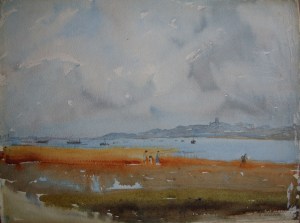
Beach Scene by E Dimock

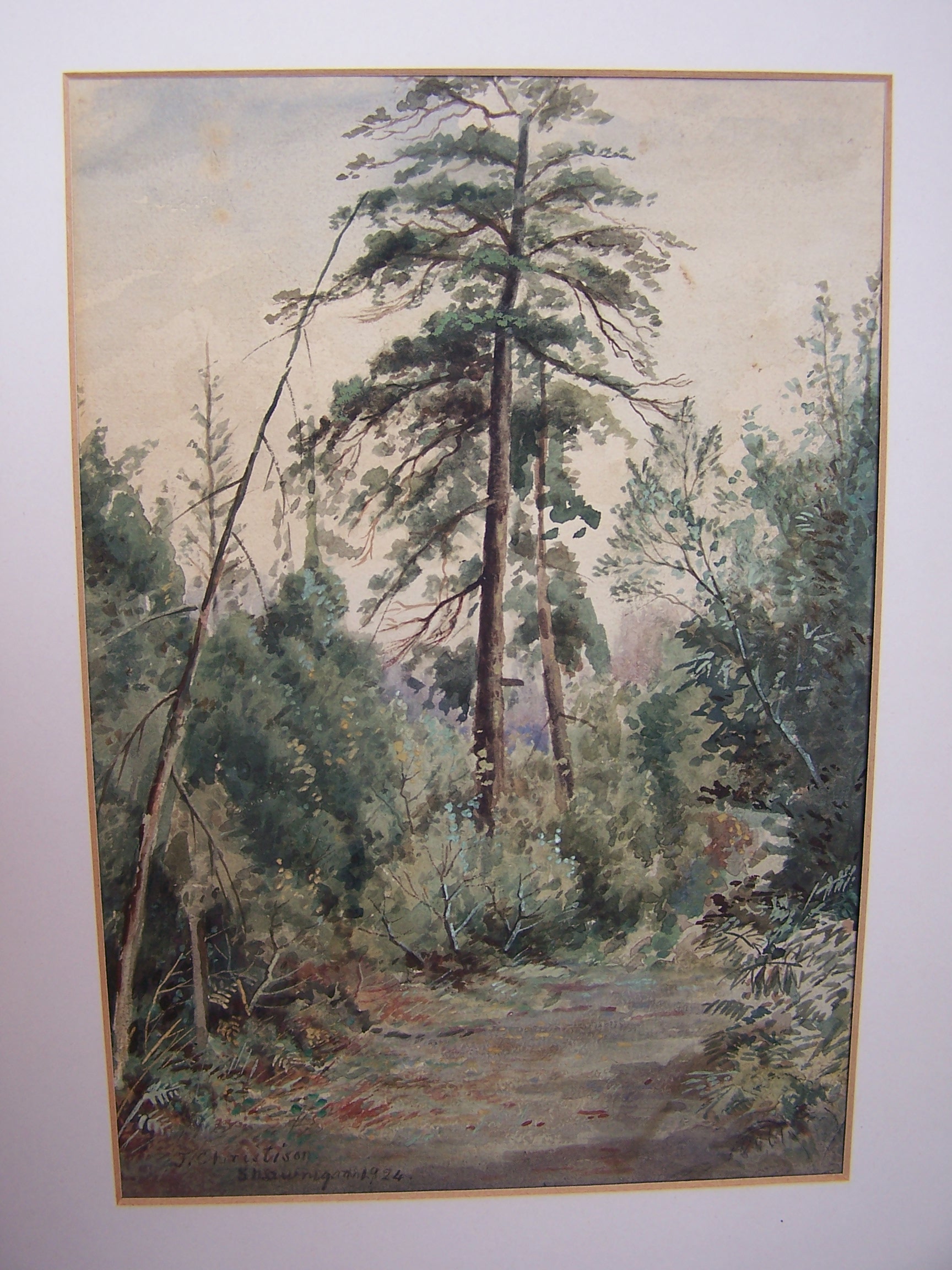
Since I have switched continents with the previous painting, here is one more which I have come across. It is signed by J Christison, titled ‘Shawnigan’, and dated 1924. James Christison (born in Scotland 1859) lived in Shawnigan Lake village from 1913 until he died in 1929. Shawnigan Lake is found on Vancouver Island in British Columbia, Canada.  A forest scene with path running into it. An inviting pathway to walk. I wonder where it might lead me to. The Shawnigan Lake Museum has on display an oil painting by James Christison if you are in the area drop in and have a look.
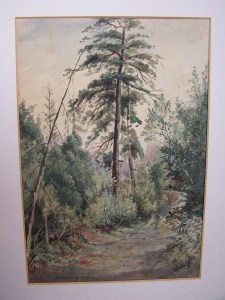
‘Shawnigan’ by J Christison 1924
Posted in Lithographs, Watercolour paintings | Tagged , , , , , , , , , , , , , , , | Leave a comment