We travel to Glasgow, Scotland, to visit with artist #RobertWMacbeth (1848-1910). Robert belonged to a family which produced a good number of artists. His father was a well known portrait painter, two of his brothers were artists and his niece was also a painter.
Macbeth was a painter, etcher, and watercolorist who specialised in pastoral landscape scenes. Rustic rural life was his inspiration.
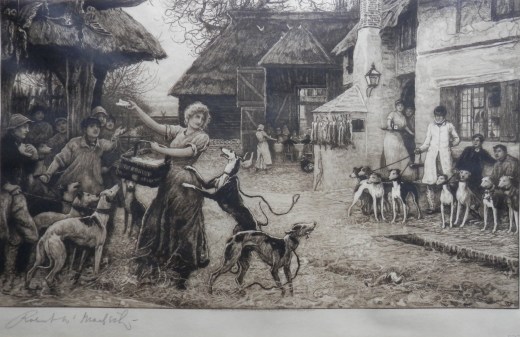
Like many artists, Macbeth traveled to London to study. His focus on realistic everyday scenes brought him to the attention of ‘The Graphic Illustrated Magazine’ for which he worked at the end of his studies.
His paintings display the rural country life found in the Lincolnshire and Somerset counties. Macbeth often painted out-of-doors, working from real life to produce his works. From 1871, Macbeth exhibited his art regularly. He achieved many honours for his works. Macbeth was a highly talented engraver and his works include numerous plates after artists like Burne-Jones, Velasquez, Titian, Mason and Walker. His engravings exude vigour and depth mirroring their original source paintings.
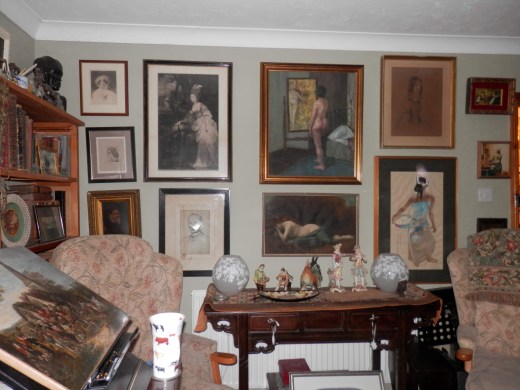 I certainly do not claim to be an interior designer in any sense and my picture walls tend to be items which I like to look at. This room has a wall which is mostly devoted to the female form and has a pair of chairs for relaxing and reading.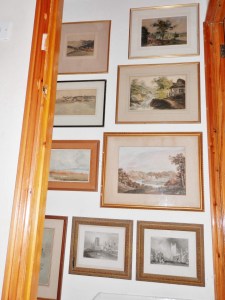
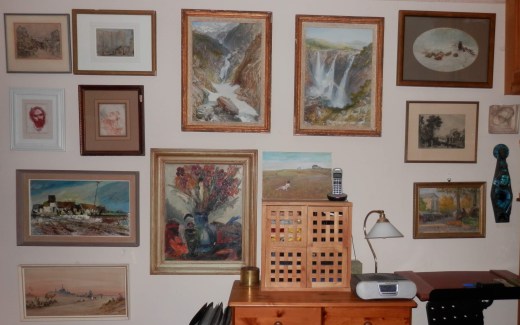 Over the six years which I have collected, I believe I have found some lovely things. Not all perfect but they have been loved and appreciated by those who owned them. The pieces on my walls range from an old French master to living British artists and so many in between – some known and some not. They each tell their own story and I, hopefully, will carry their tale forward to others.
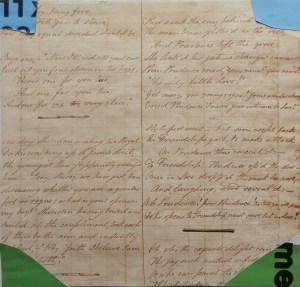 On the verso are a number of snippets of poetry or verse which all are sourced back to a publication called The Literary Magnet of the Belles Lettres, Science, and the Fine Arts published in 1824 – edited and compiled by #TobiasMerton. Please excuse the corners where the previous owner glued a backing page to aid in reading the recto. The pieces are are all hand written with no obvious link since they come from various parts of the publication other than the ‘Red sank’ and Sly Cupid’ which are verses 2 and 3 of a poem called Frederick and Maria.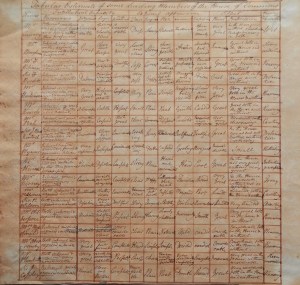
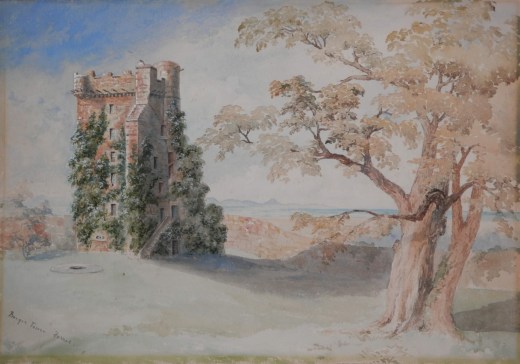 But we have not visited. Granted it does not quite appear as it does in this watercolour. Time has taken it’s toll and although it is now a ‘listed building’, finding funds to keep it in shape is challenging.
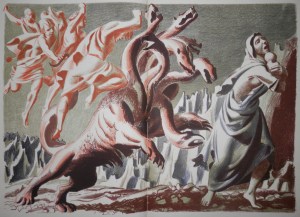
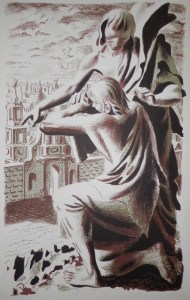
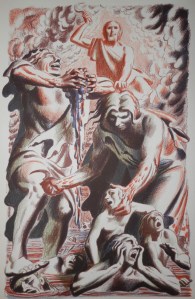 The Revelation of Saint John the Divine is a book which depicts what is to come. It foretells the return of the Christ and the final judgement and destruction of evil, the devil, and mankind as well as the rescuing of the redeemed. It provides, for the artist, inspiration allowing them to imagine and then create visages of a great and terrible time.


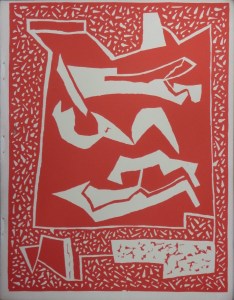
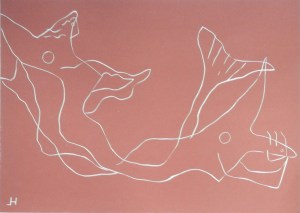

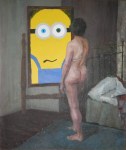 Here is an image of the work before a little work was done on it. You can just see the possible quality but the addition of a Minion is somewhat distracting and overpowering. I decided that the minion had to go but what would be in it’s place.
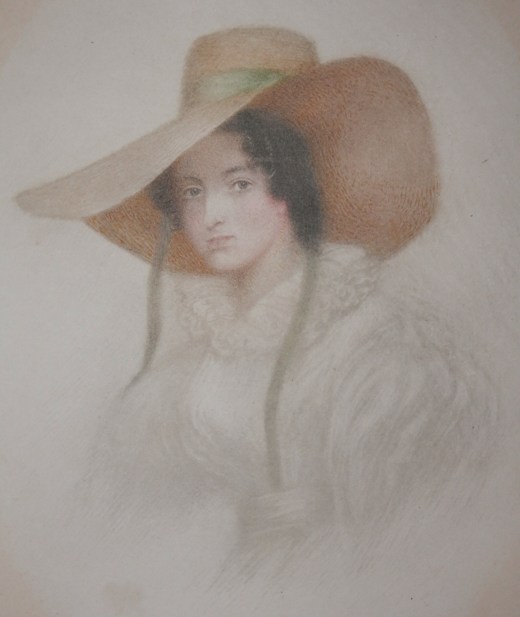 But all is not lost, for on the verso is a small label with the framing companies name and address and a few hand written notes as to owner and sitter. From the note, we find that this watercolour is a copy of a painting held by CH Parry. Being a musician and living near Ely Cathedral, when I think of CH Parry – it is #SirCharlesHubertHastingsParry (1848-1918) the composer. You might know as the composer of the song ‘Jerusalem’, the coronation anthem ‘I was glad’ or the hymn tune ‘Repton’.
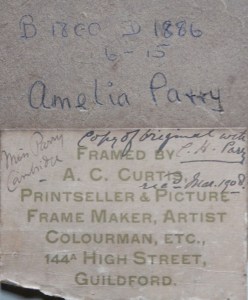 I think, at the moment, I will just appreciate the beauty of this piece and maybe some day I might find out who this young lady is.
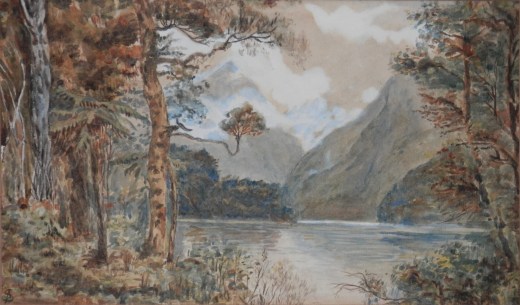 The painting, in my collection, is entitled #MilfordSound . It’s size is roughly 6 1/2″ by 10 3/4″ (163mm x 275mm). It shows Alfred’s very definitive brush technique and his wonderful use of layered washes. His monogram appears lower left but is undated. Title appears on a label verso. Although he was a successful artist none of his works were owned publicly till well into the 20th century. He is now appreciated (deservedly so) for being at the vanguard of New Zealand art during it’s colonisation.
 ronsartblog