Engravings not done by hand

It might seem odd, but not all engravings are done by hand. There is some dispute as to who first developed the machine. Some say it was an American by the name of #ChristianGobrecht (1785-1844), but others claim it was developed in France by #Achille Collas (1795-1859). This type of engraving is called an anaglyptograph and is created via mechanical means from 3D sculptures such as coins, medallions, plagues, etc. Here in England , the man best known for this type of engraving was #JohnBate. Little is known of John Bate, except that he acquired an anaglyptograph machine, redesigned it, and gained a British patent for it as if it was his own creation.

The Great Seal of England – anaglyptograph

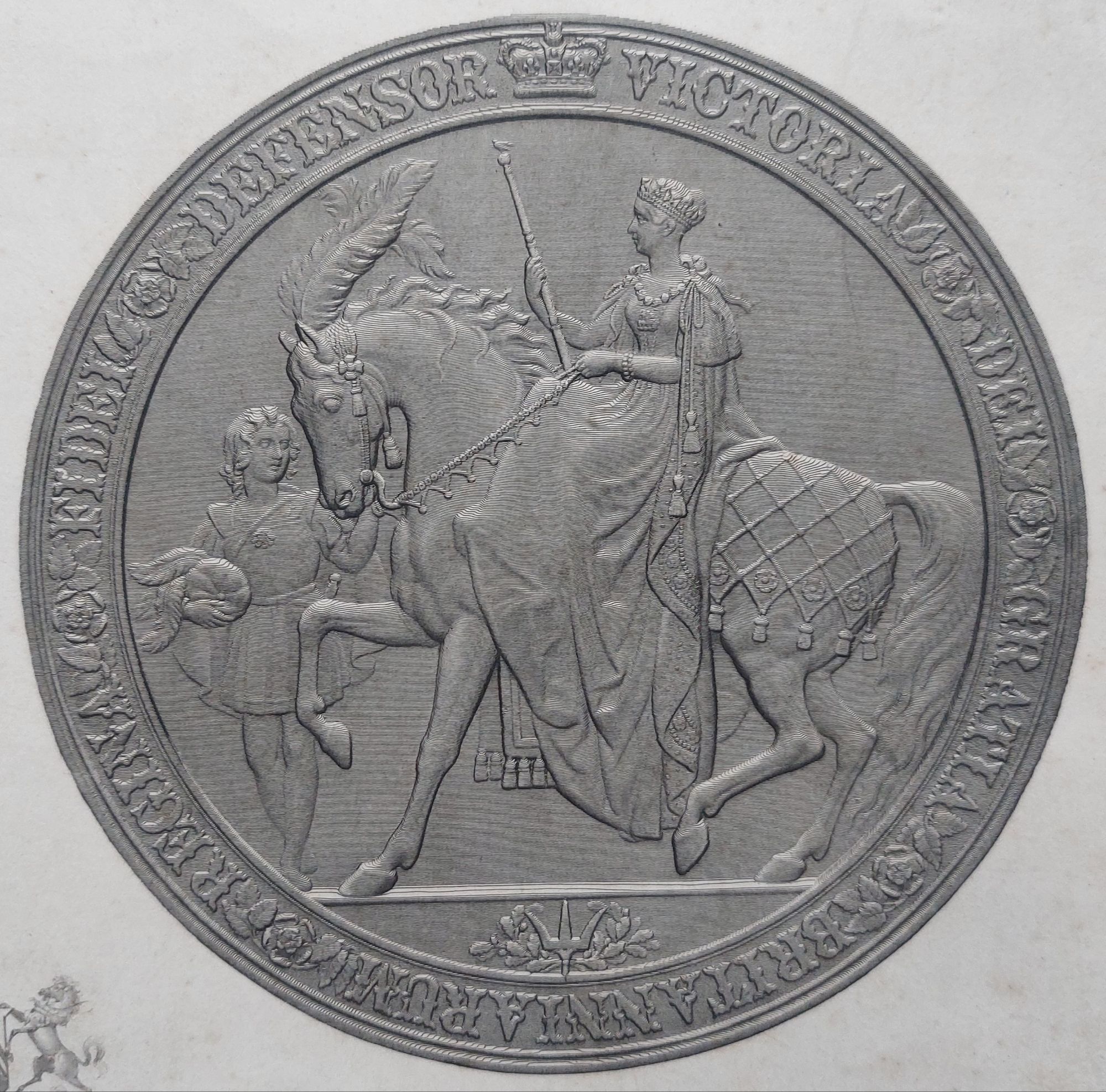
The beauty of this type of engraving is the superb accuracy of the image itself. In my collection, I have the engraving of ‘The Great Seal of England’ by #AlfredRobertFreebairn using one of John Bate’s machines.
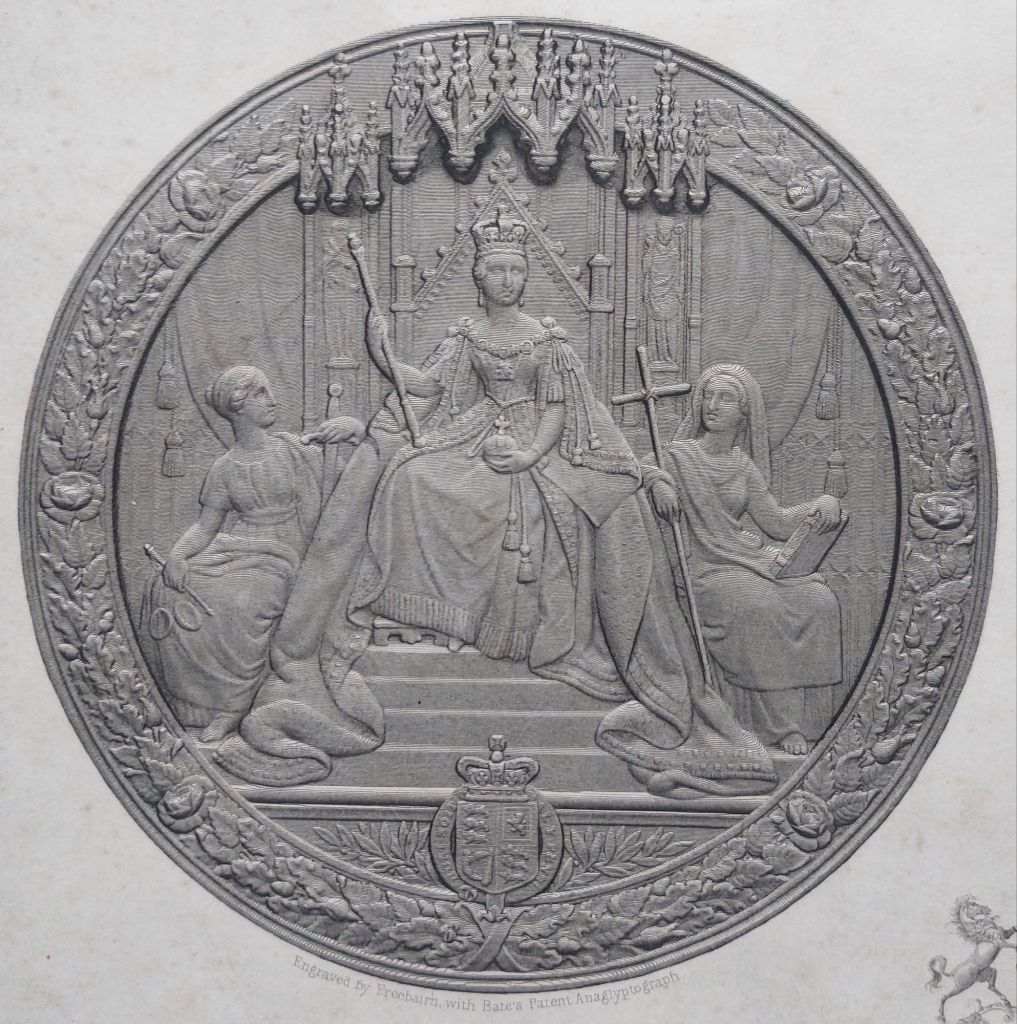
Victoria on her throne – recto
Victoria on her Mount – verso

As one looks at the precision of the lines in spacing, one comes to a realisation that a machine travelling over an object might damage the object, thus harming its value. Often, copies of rare or important items were created, and those copies were then used in the anaglyptograph machine.

Close-up of anaglyptograph
Posted in Etching, Printing | Tagged , , , , , , , | Leave a comment

William Arthur Narbeth engraver

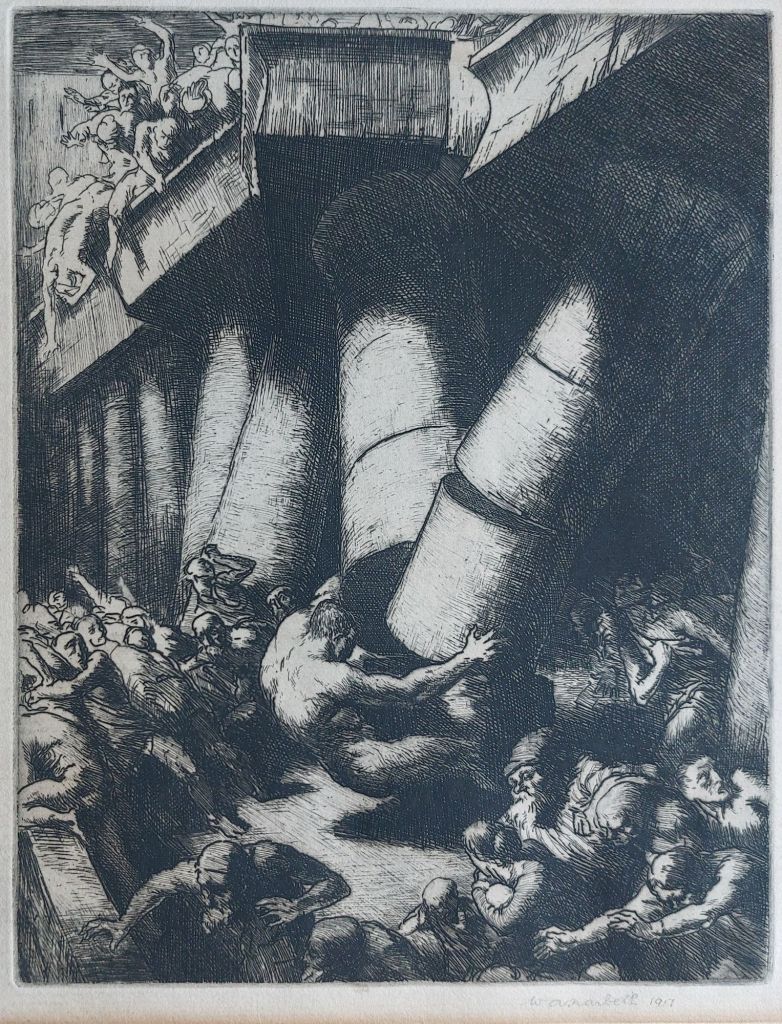
This chapter focuses on a little known artist by the name of #WilliamArthurNarbeth. Narbeth studied at Goldsmith College and was respected as a very talented etcher (finalist in the Prix de Rome), but this talent entered the art world close to the end of the etching/engraving revival. Because of this, there has never been a complete catalogue of his works. This in no way diminishes the talent and sublime technique which Narbeth displayed.

The Binding of Samson @ 1919
Samson’s Redemption @ 1917

A great many of Narbeth’s works were biblical in nature, as seen in the two above prints. Both are finely worked pieces.

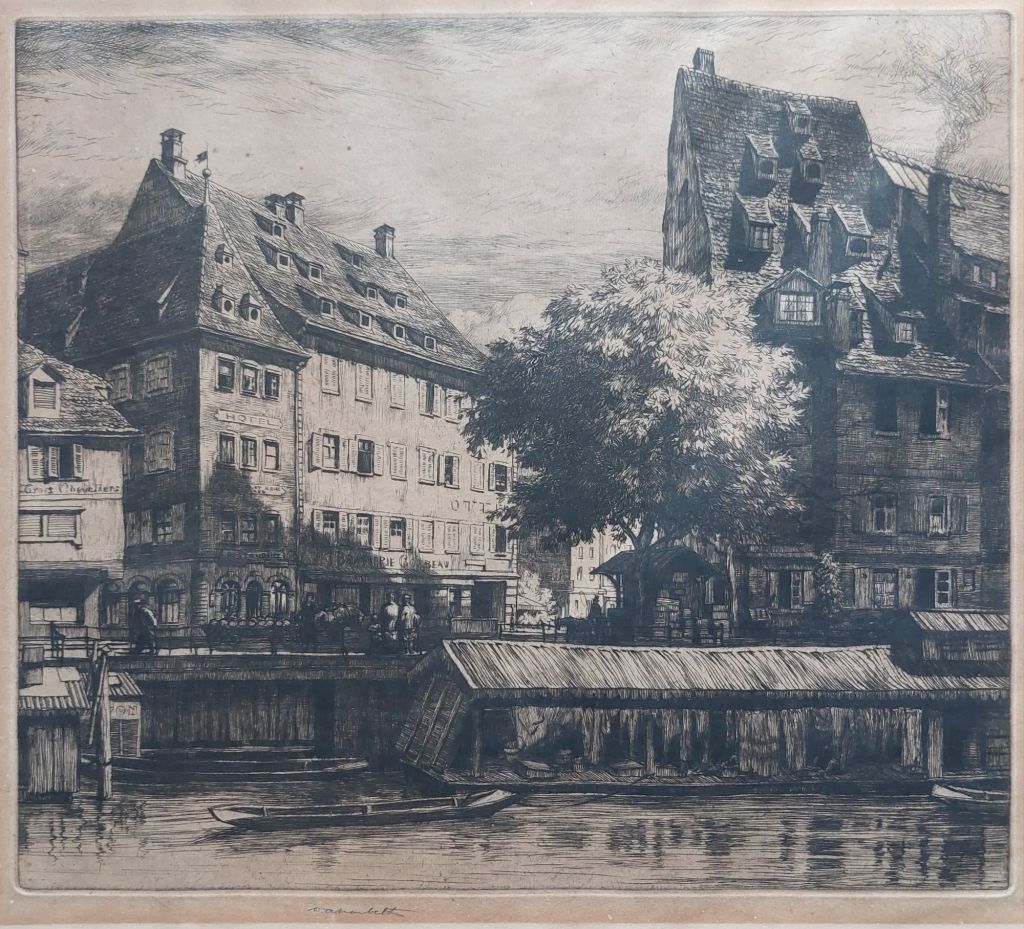
But Narbeth ventured into landscape and portraiture also where he showcased his architectural drawing skills and his life drawing talents.

Strasburg – undated
Lady in a hat @ 1916
Gentleman’s portrait

I think I can safely say that here is an artist who deserves to be better known for his great talent. He was just born at a time when his talent would be overshadowed by the changing art scene.

Posted in Etching | Tagged , , , , , , , , , , , | Leave a comment

Aeneis engravings

From the folder I bought come two engravings which were done to illustrate Virgil’s ‘Aeneis’. Publius Virgilius Maro is the full name of the person we know as Virgil. The book was published by #PierreDidot in 1798 and contained Aeneis, Bucolica, and Georgica. The engravings were done by #RaphaelUrbainMassard (1774-1843) and #JacqueLouisCopia (1764-1799). The drawings from which these two engravers worked were done by #FrancoisGerrard and #Anne-LouisGirodetdeRoussy.

Aeneis’ Sacrifice – engraving by Massard after Girodet
O Miserable Child, if thou canst destroy the terrible things , you will be Marcello – engraving from Aeneis by Copia after Gerrard

There were 23 engravings to the original publication. These two are fine examples of the engravings that illustrate the volume throughout.

Posted in Etching | Tagged , , , , , , | Leave a comment

Nyon Porcelain

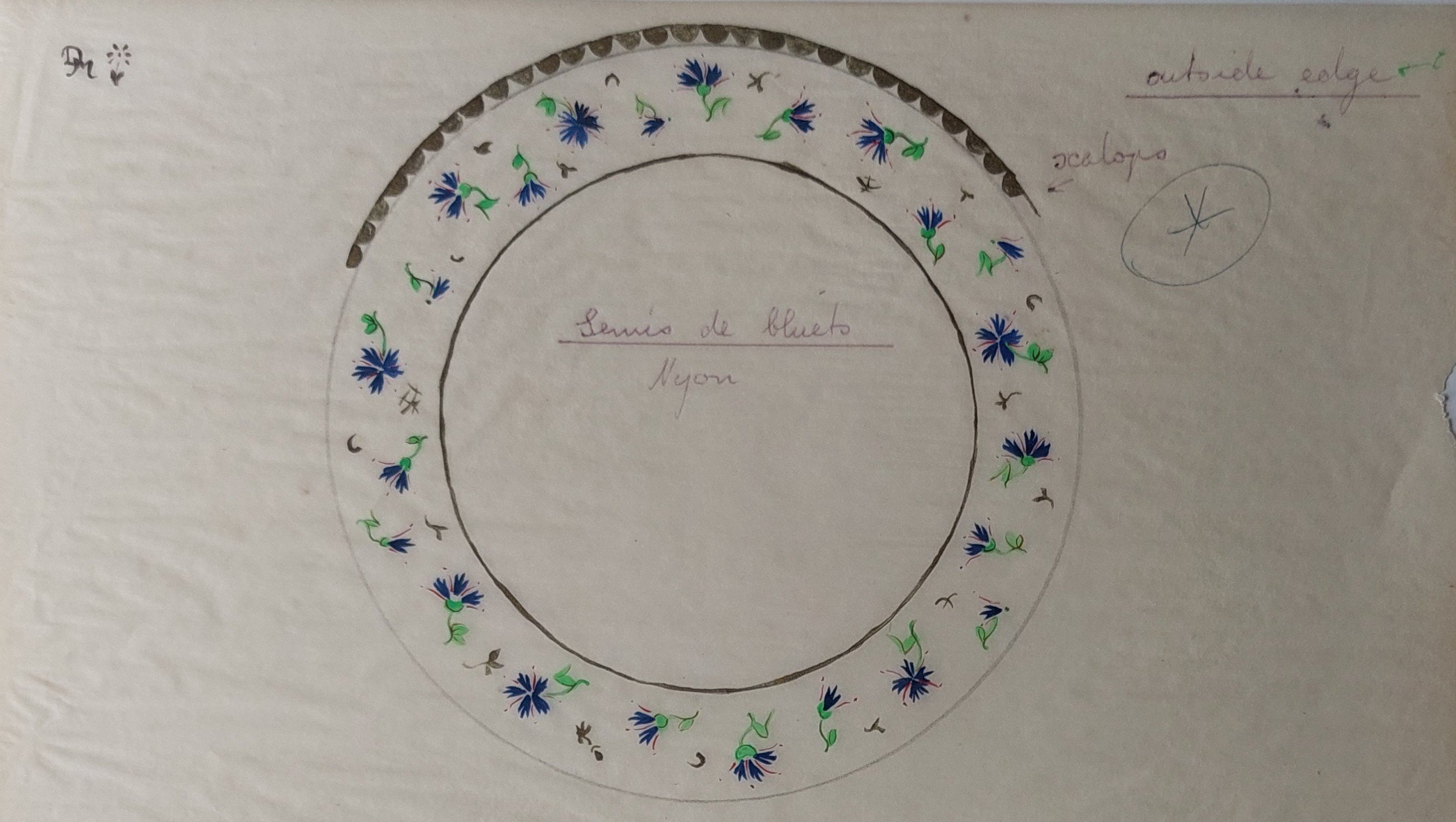
Also from the portfolio comes a link to a porcelain maker. The factory at #Nyon was founded in 1781 and produced pieces to 1813. An odd location to start a porcelain factory since all raw materials would have to be imported. #JacqueDortu was the founder/director along with #FerdinandMuller.

Border for Nyon service made of bluets

The drawing above displays a proposed design for a table service using bluets and various border styles. There were over 70 different kinds of flower designs, 17 garland designs, and numerous styles of border designs. The centres of the plates and bowls were often decorated with landscapes, human interactions, oriental designs, and figures.

Border de bluets with optional borders- Nyon
Service de bluets with borders – Nyon

Although the factory ran for only 30 years, it produced such high quality pieces that they adorned the tables of the well off in Switzerland and Russia, the Queen of Naples, the Queen of Spain, and Marie Antoinette of France.

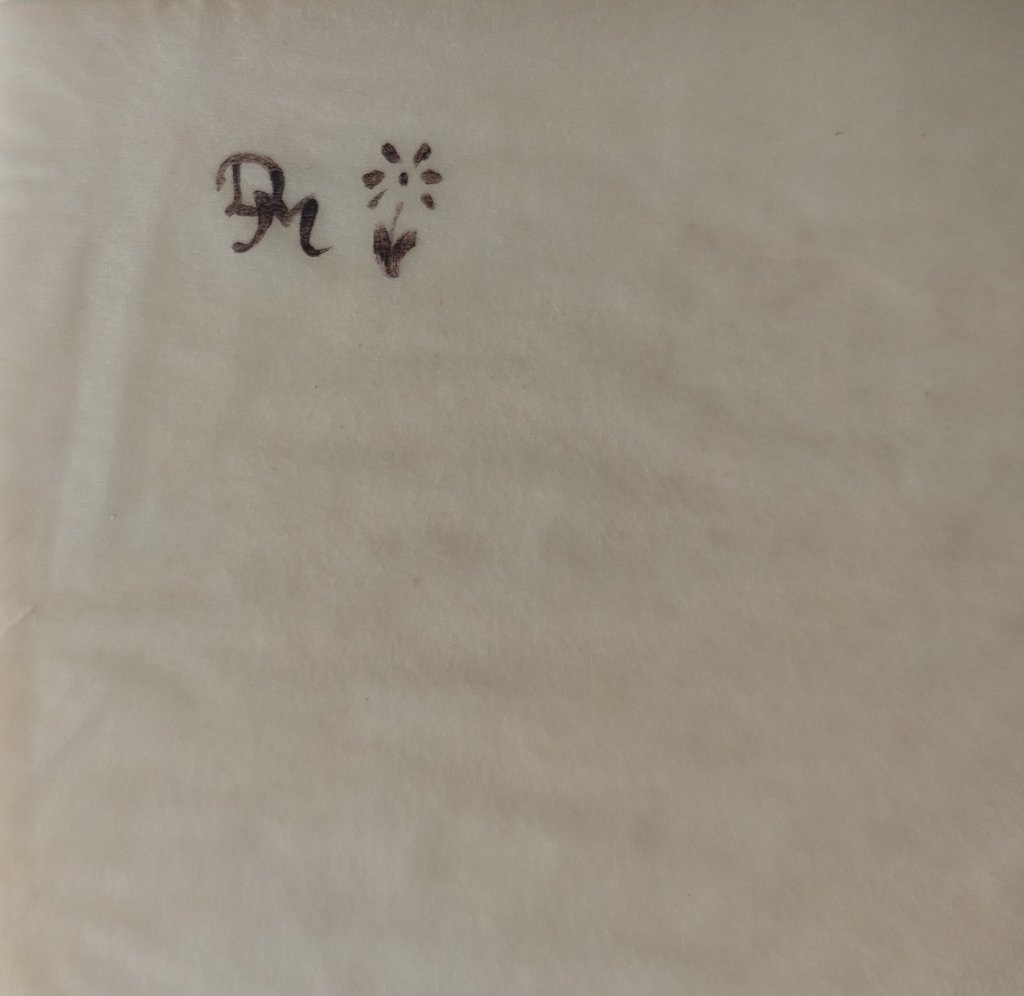
Artist mark on sheet

Above is the artist monogram with bluet symbol. The designs are admired for their almost perfect composition and timelessness of image. A different field in the arts, yet still such beauty can be produced.

Posted in Drawings and Sketches | Tagged , , , , , , | Leave a comment

Barnard Castle

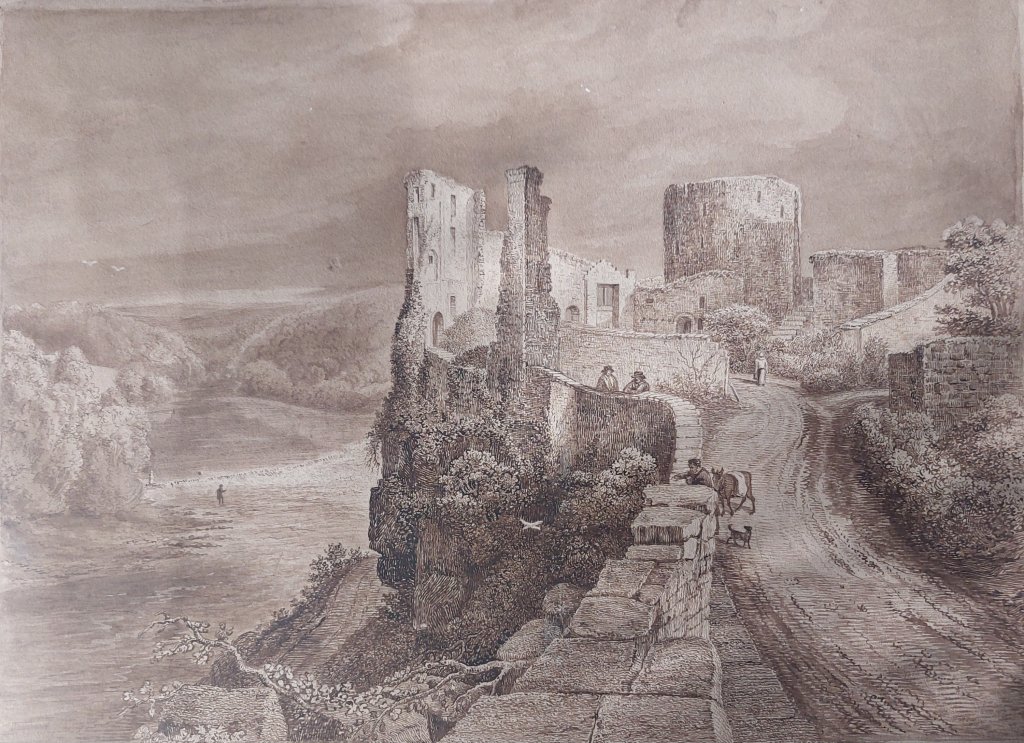
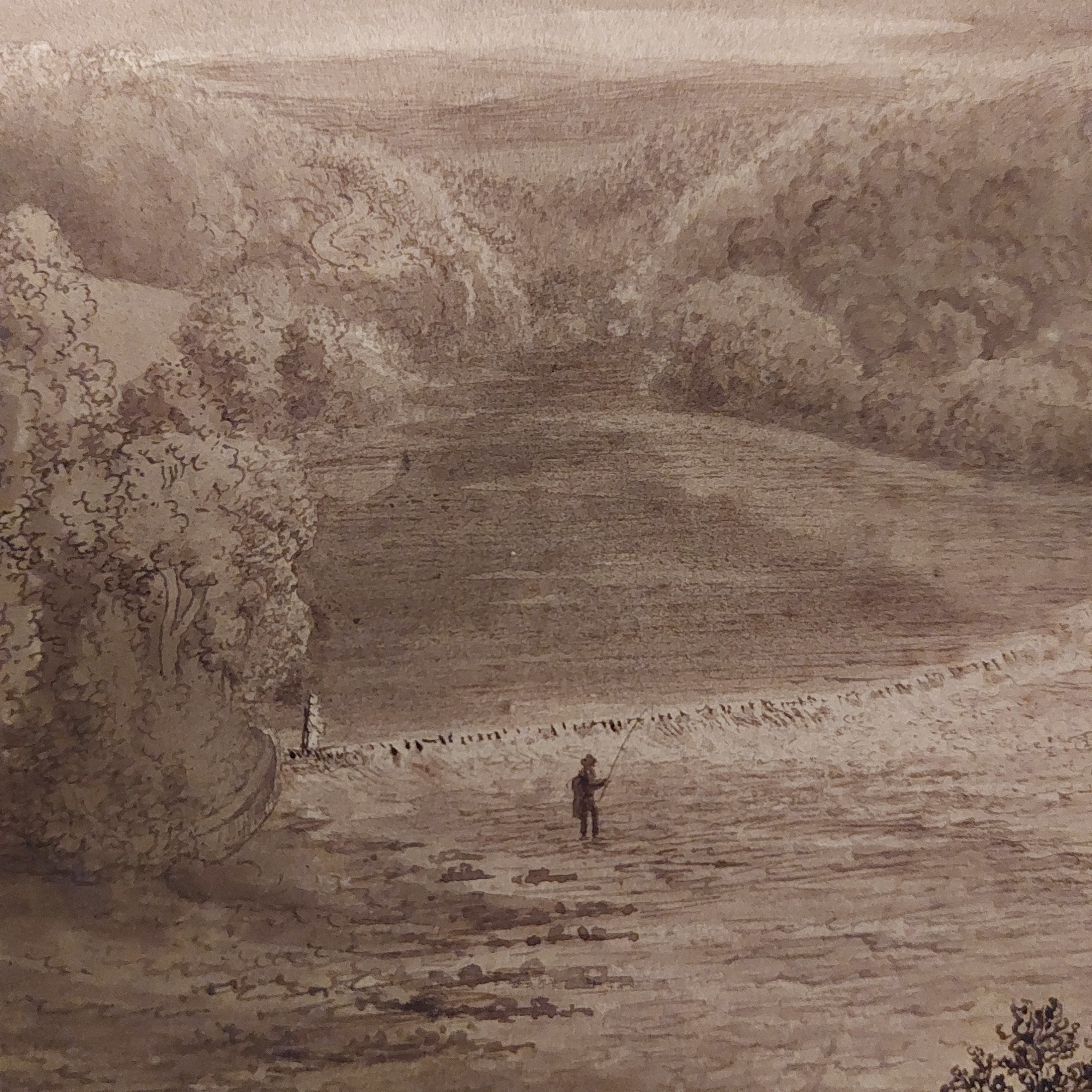
As with last week’s topic, this week’s artwork was also in the folder I bought. This extremely fine drawing is 12″ by 16″ (305mm x 405mm) and done with brown ink and wash. A monochrom since he uses only a single colour and varies only the intensity of that colour. I have found an image online of an engraving of this piece. The engraving is done by artist #GeorgeFennelRobson (1788-1833). There is also a watercolour of this scene, which is attributed to Robson, but it lacks a couple of elements that appear here in this drawing and in the engraving.

Robson was best known for his paintings of the Scottish Highlands, English lakes and cities. This drawing is of #BarnardCastle, Durham, which was the home of #JohnBalliol, who founded Balliol College in Oxford.

Barnard Castle, Durham – drawing by George Fennel Robson

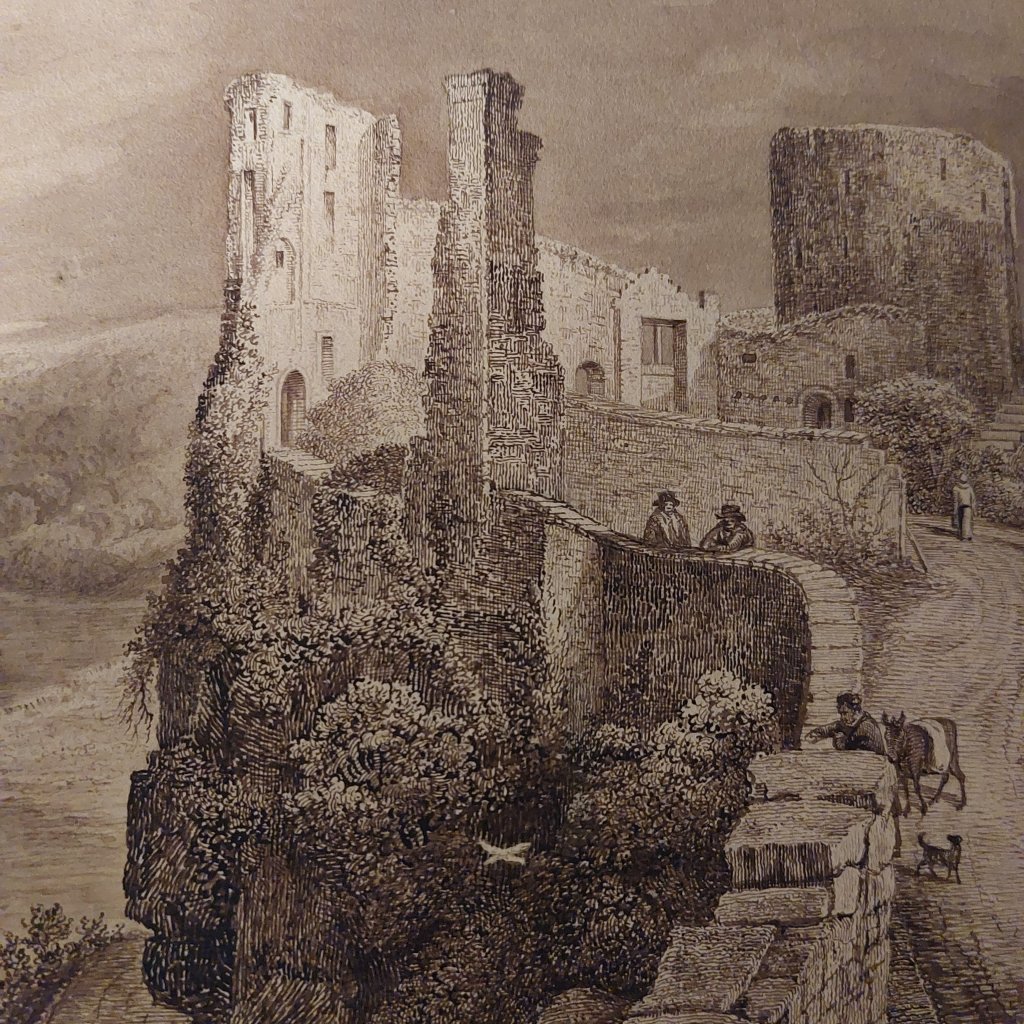
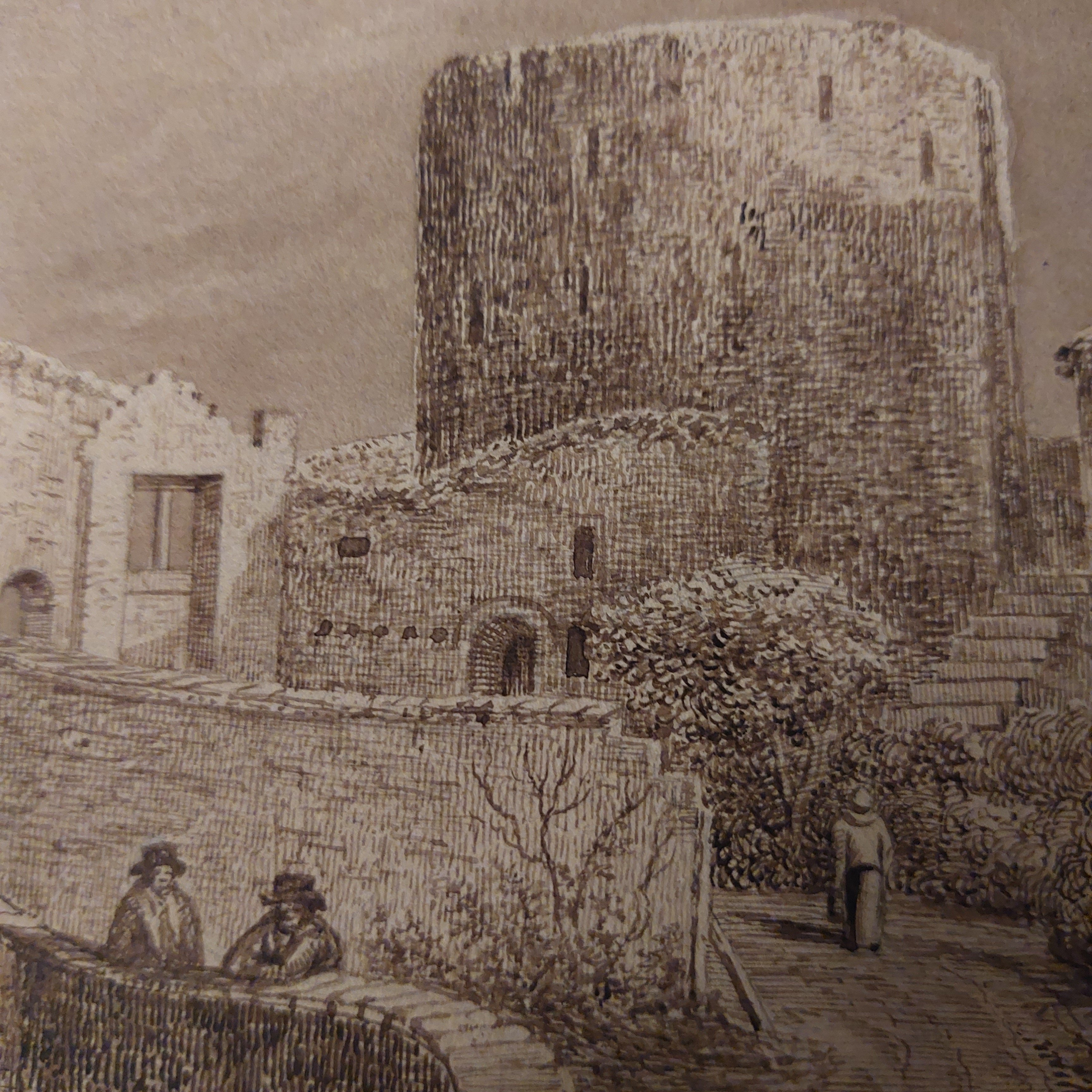
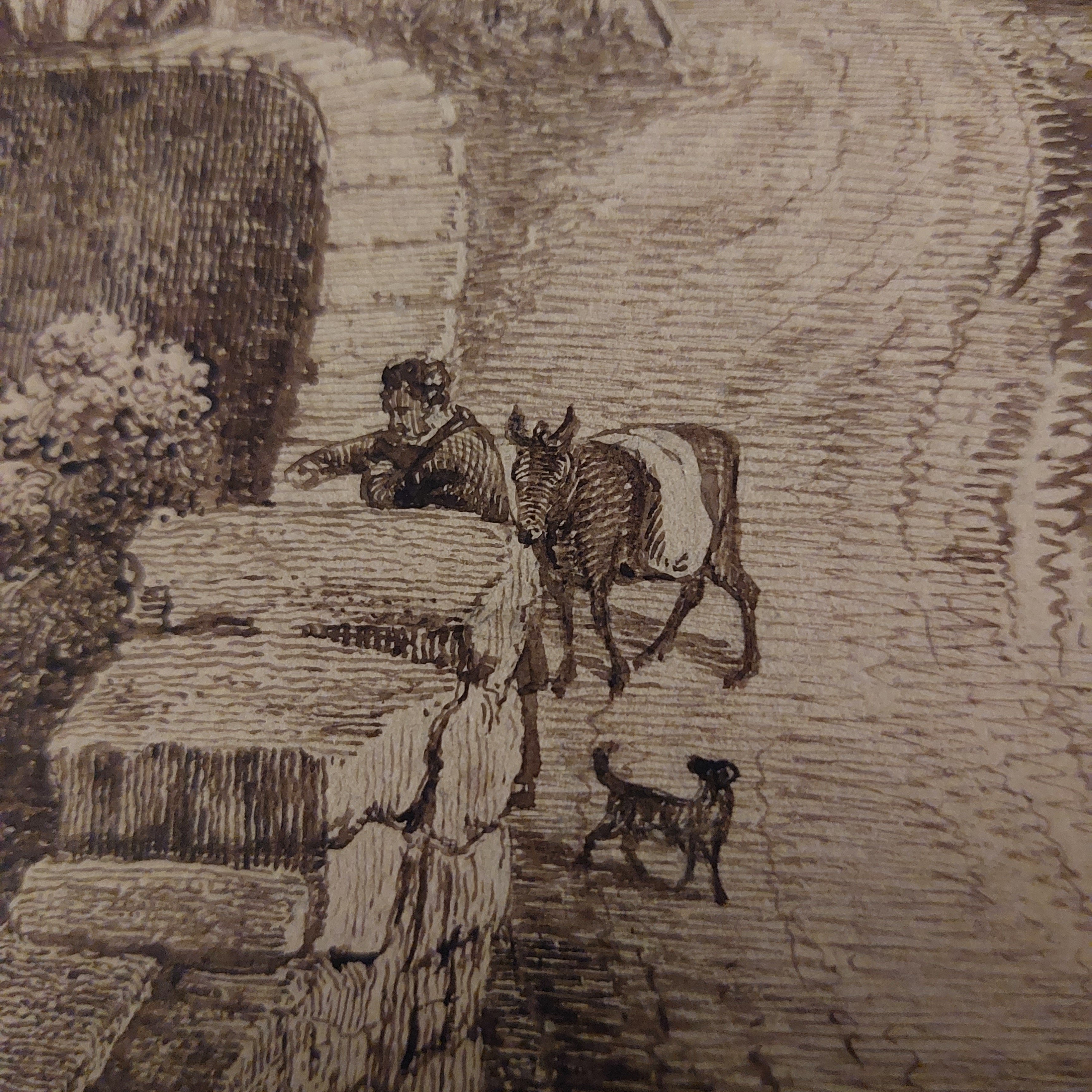
From the close-ups below, you can see the effort and time Robson put into this artwork. I do not see any evidence of graphite/pencil that has then been over-laid with ink. So, he was meticulous and pains-takingly precise – small brush stroke over small brush stroke, slight changes in the intensity of colour

Barnard Castle drawing

I really like the fisherman who is standing in the River Tees with his line in the water just past the rapids.

The quality of the work as well as age leads me to attribute the work to Robson, himself, even though it is unsigned.

Posted in Drawings and Sketches, Watercolour paintings | Tagged , , , , , , , , , | Leave a comment

A Biblical Old Master

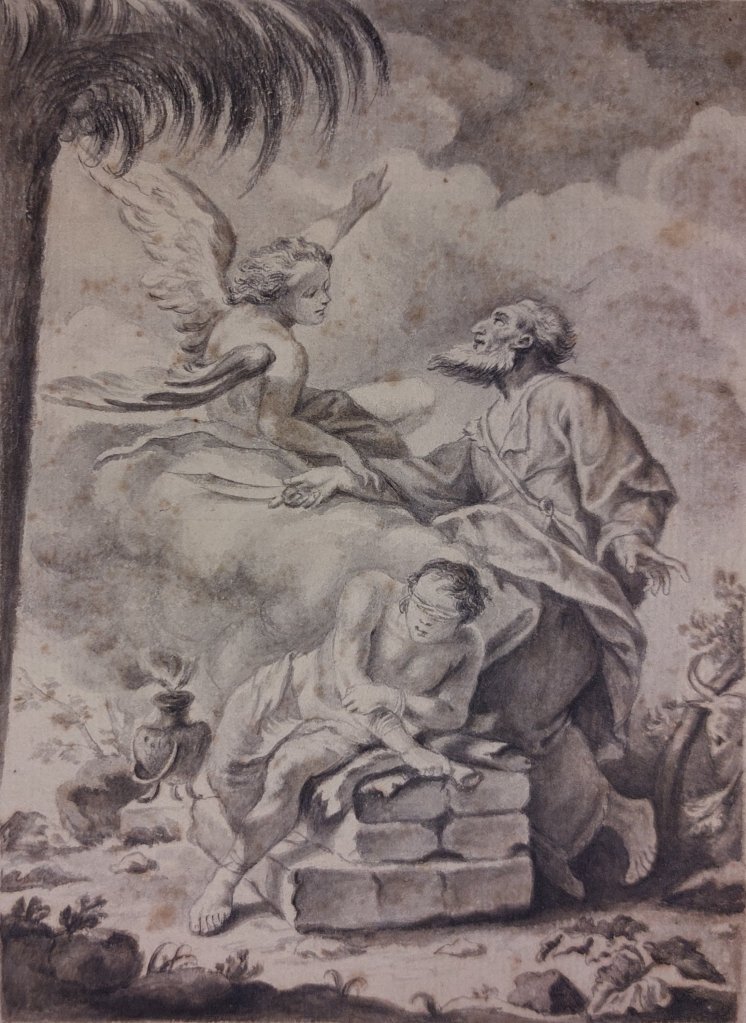
A couple of weeks back, I bought a folder of what was supposed to be engravings. I paid just over the low estimate for the folder. It was a bargain. When I got it home and looked at what it contained, I found it had not only engravings but some drawings and watercolours. The topic for today is one of those drawings.

The staying of Abraham’s hand ‘ 17th/18th century drawing by/after Giovanni Battista Piazzetta

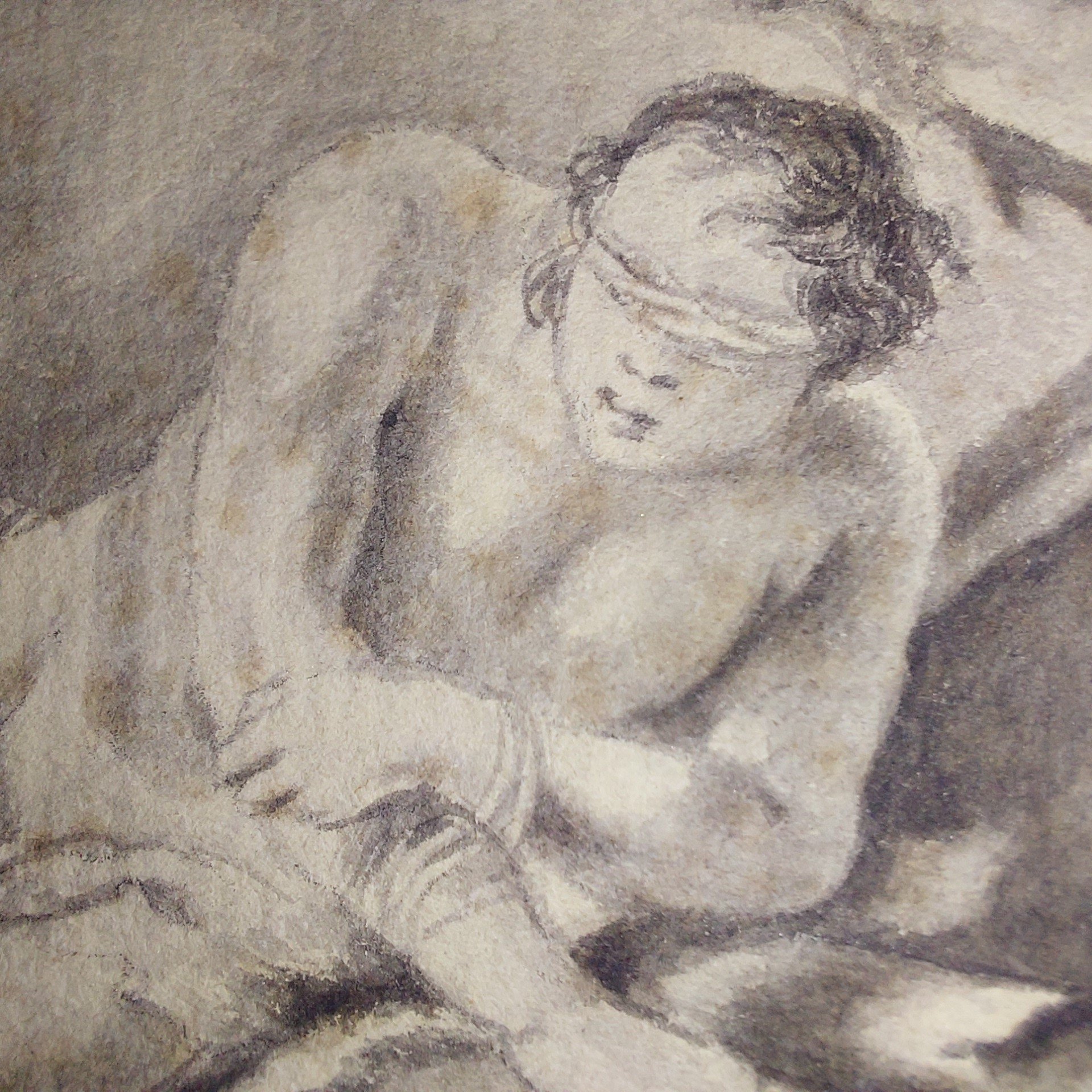
The drawing, as seen above, is a portrayal of the biblical story where Abraham is about to sacrifice his son, Isaac, when he is suddenly stopped by an angel. The drawing is superbly rendered. It is done on laid paper, which has a partial watermark – so far unidentified. The paper has aged and bears some age spots but not enough to truly detract from the image.

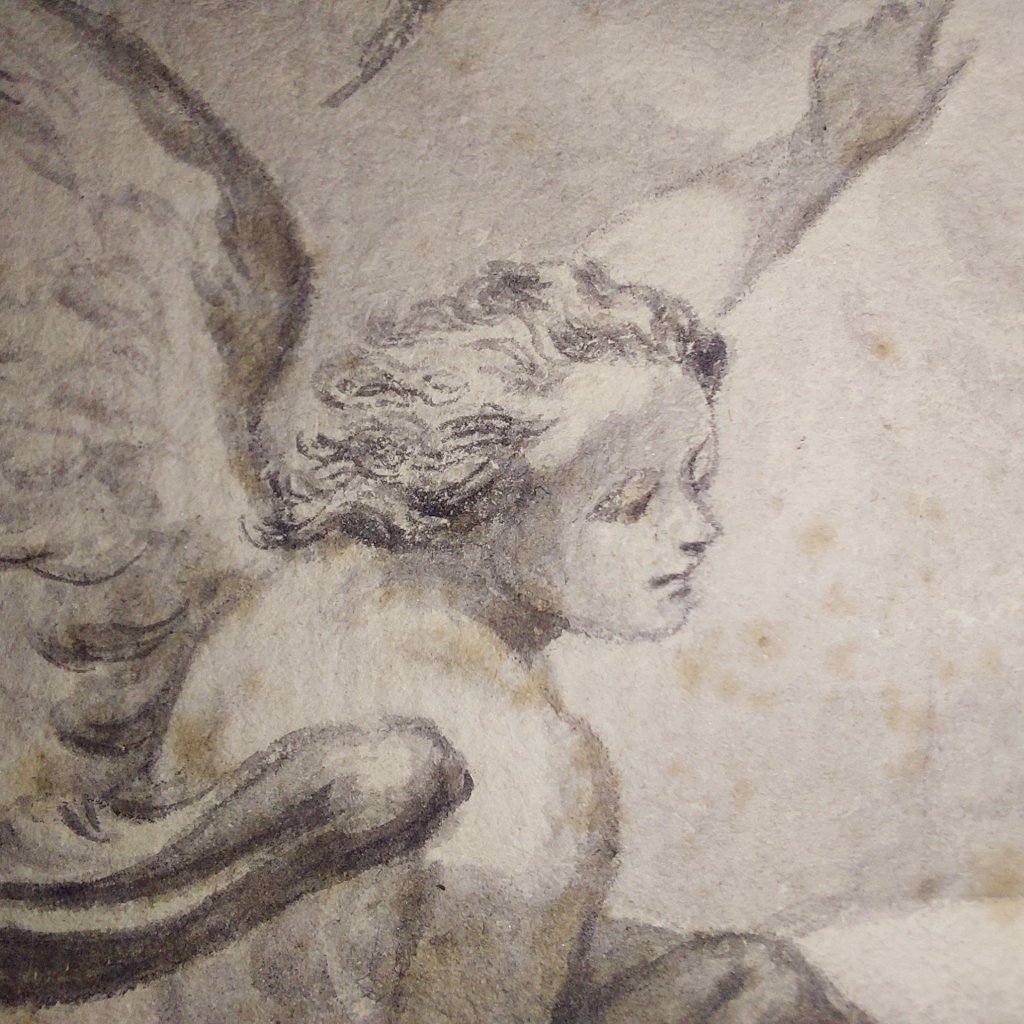
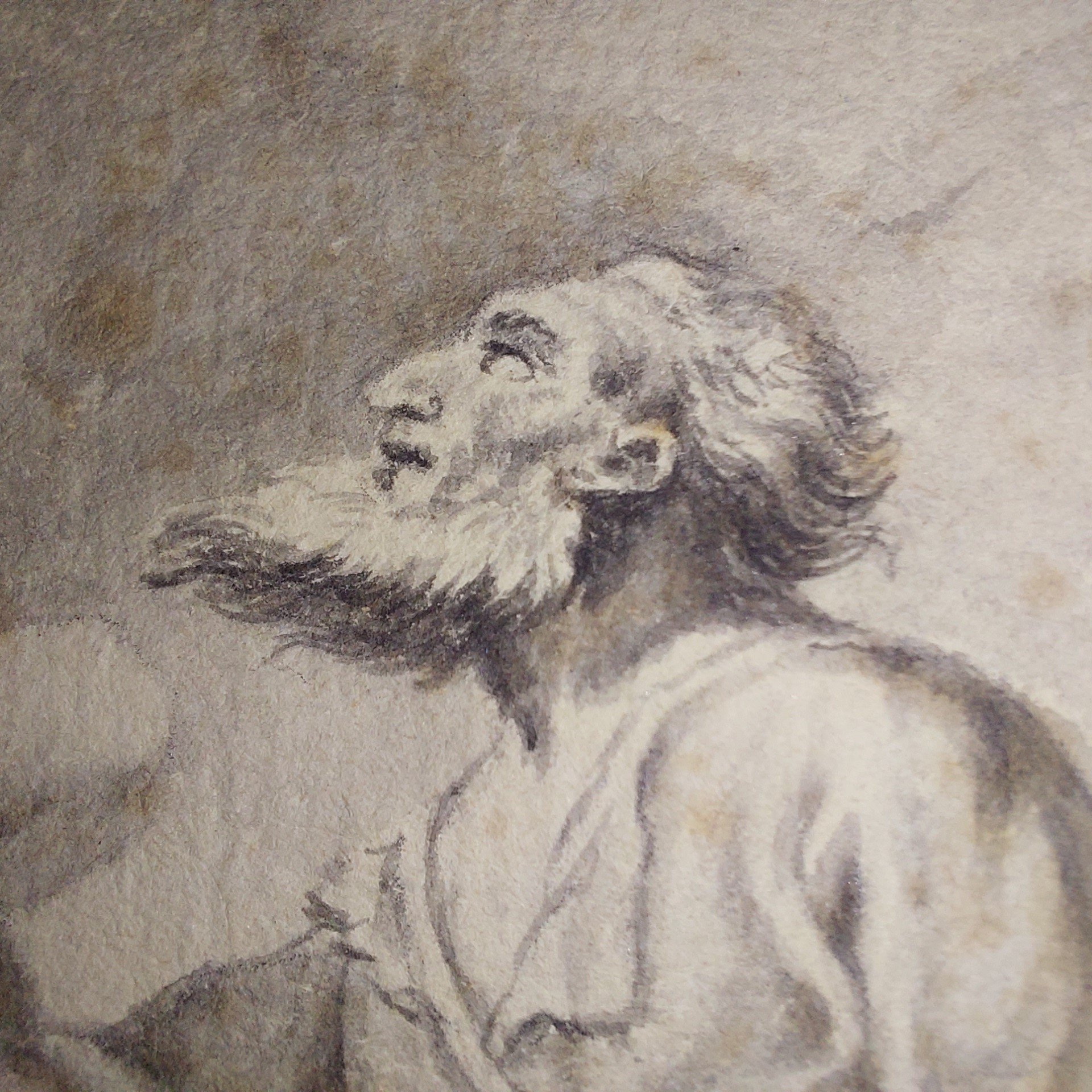
Three faces from ‘The staying of Abraham’s hand’

As I stated, the drawing is superbly done. It is 4.5″ × 6″ (11cm x 15cm), so it is quite small. Even so, you can see the sublime skill in the faces seen above. The ethereal beauty of the angels countenance, the awe and surprise of Abraham, and the surrender and confusion of Isaac are unquestionably exactly what the artist wished to create. A magnificent work by a master of his art. After more research, I have discovered that this drawing is possibly by #GiovanniBattistaPiazzetta (1682-1754)

Posted in Drawings and Sketches | Tagged , , , , , , , , , | Leave a comment

Eugene Boudin artist

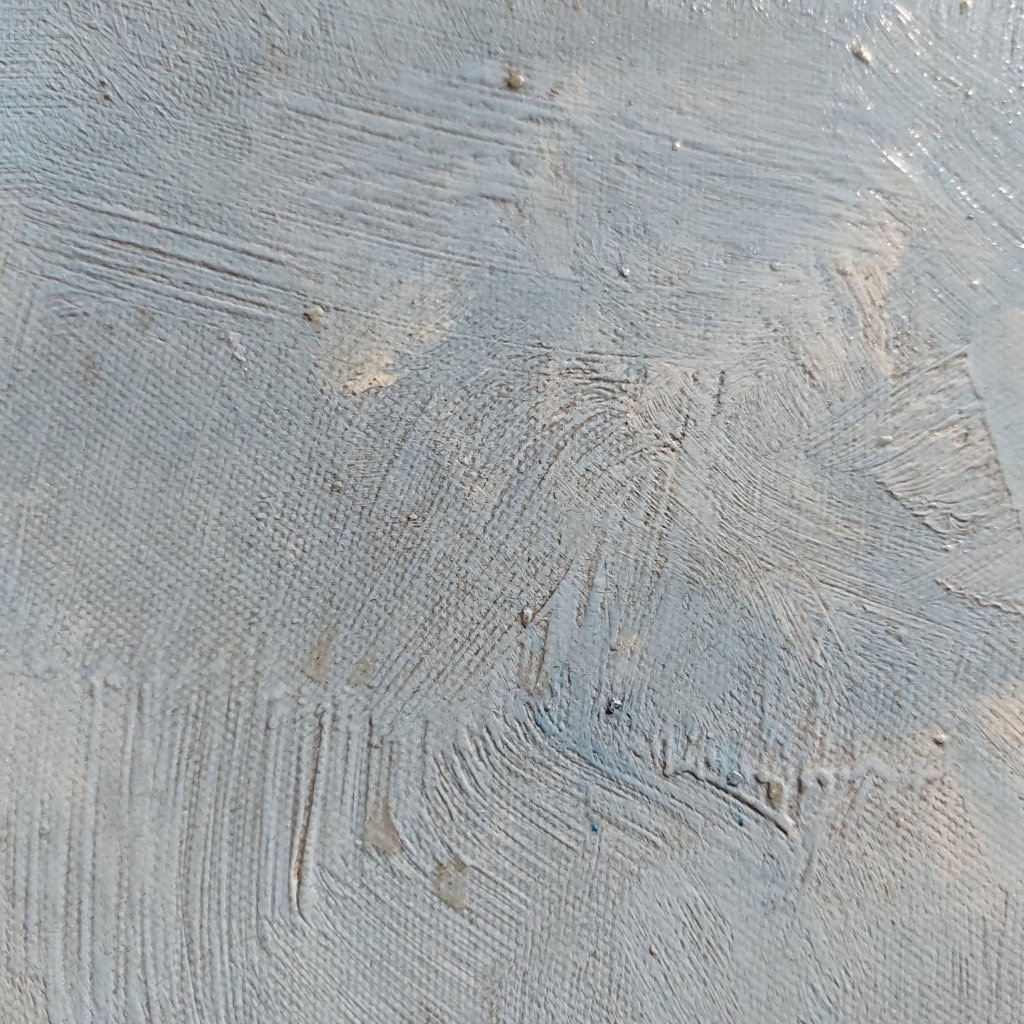
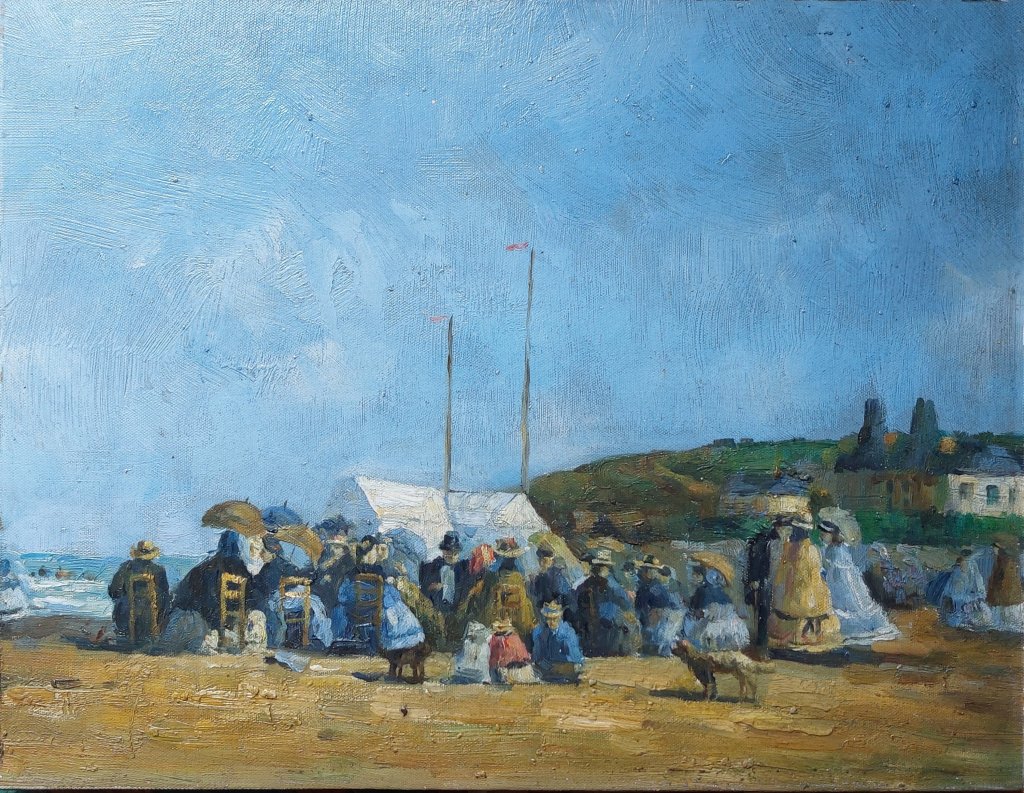
I recently came across a painting of a beach scene. It is done with oils and is quite finely done, but it is a copy (as far as I can tell) of a painting by artist #EugeneLouisBoudin (1824-1898). Boudin was at the forefront of French landscape painters who painted ‘en plein air’. The art of painting outside rather than in a studio. Boudin is considered to be a forerunner to the Impressionist movement.

Close-up of sky from painting

Boudin became an artist at 22 and moved to Paris to learn under Eugene Isabey, Johan Jongkind, and Troyon. Boudin was a marine painter and specialised in capturing the events that occurred on the sea and the shore.

Close-up from painting

Some of his most loved images are paintings of the crowds of affluent holidaymakers on the beaches of Trouville and Deauville.

Close-up from painting

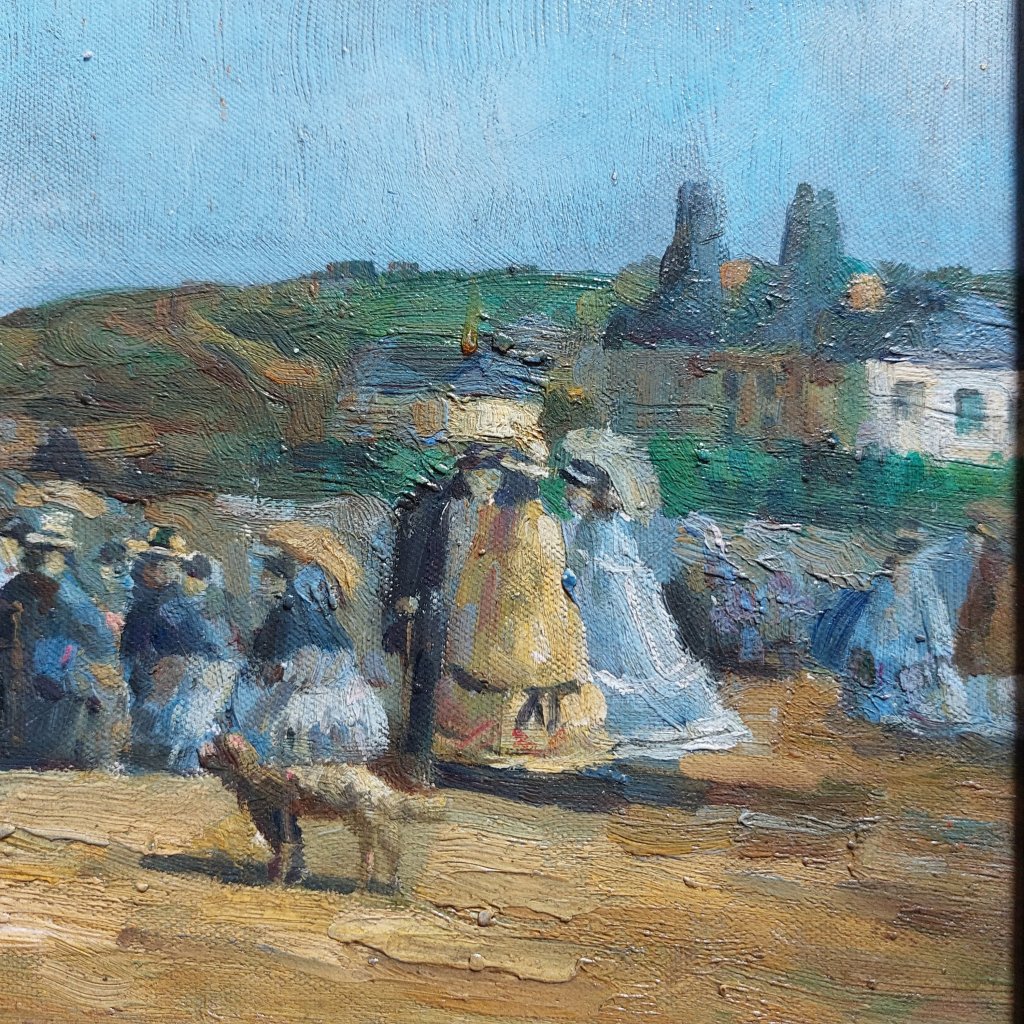
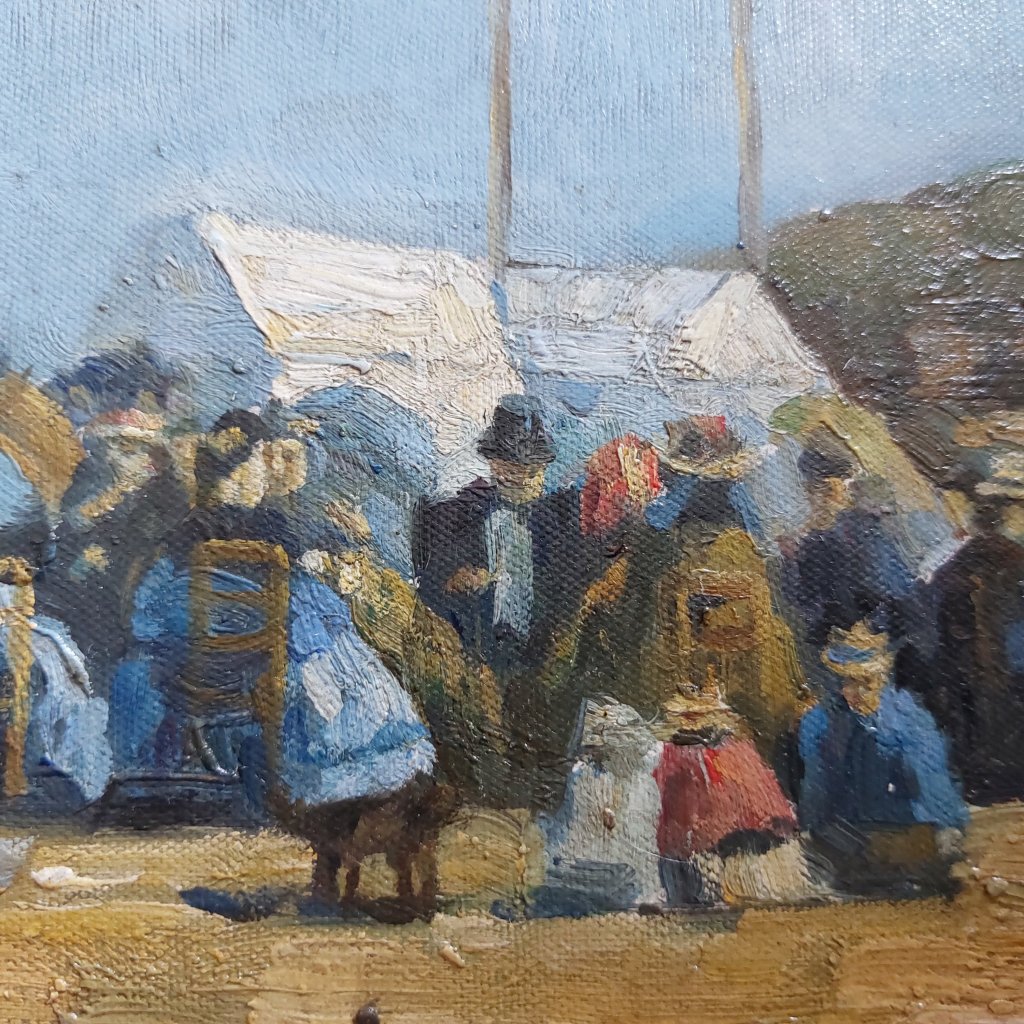
The piece, I acquired is of the beach at Trouville with its crowd of visitors enjoying the sea air.

Close-up from painting

The original of this piece hangs in the Musee d’Orsay. As one looks at the close-ups above, you can see the thickening paint at times brushed on in lumps. There is dirt, sand, and debris in the applied paint. All adding unexpected subtleties to the image. All this one would expect painting ‘en plein air’ where one is at the mercy of the wind and weather.

Holiday makers at Trouville

Even as a copy, the painting is impressive. Quick broad strokes, vibrant hues, and a surety of touch have brought this scene to life, but at some point in time, someone has trimmed this artwork. Roughly an inch on the right-hand side has been cut off and close to four inches off of the left side. Too bad. I would’ve liked to have seen it in its entirety.

Posted in Oil Paintings | Tagged , , , , , , , , | 1 Comment

Albert George Stevens artist

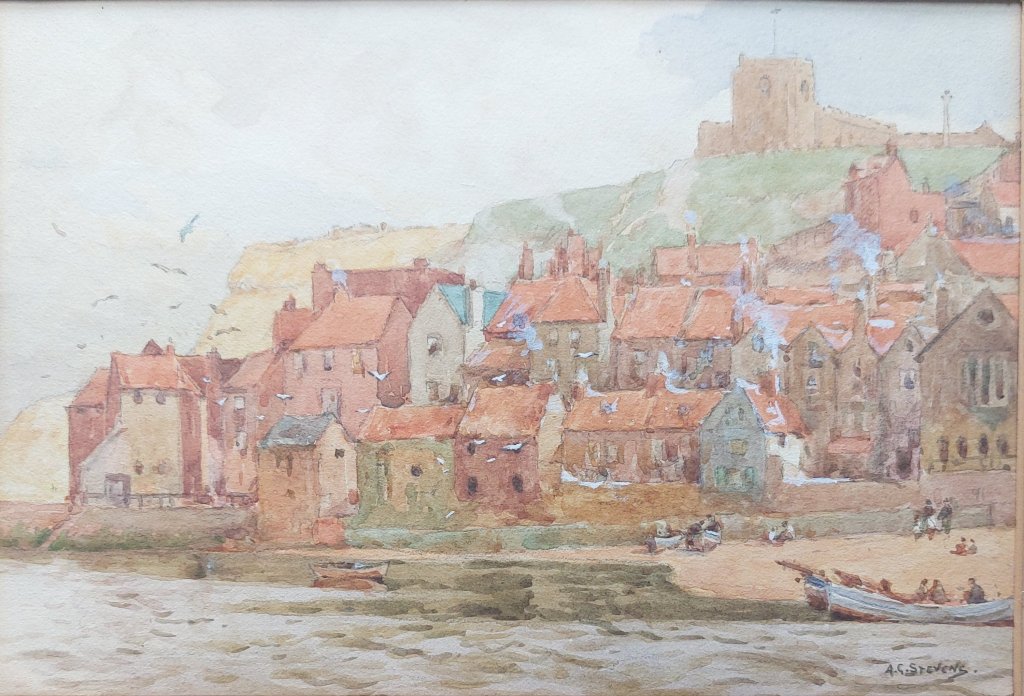
Today, we visit with a founding member of the celebrated StaithesArtClub, which was based around Whitby. #AlbertGeorgeStevens was a figurative painter who worked mostly in watercolour. He travelled to Antwerp to study at the Academy but later returned to Yorkshire to live. His works are slightly impressionistic, while his subjects were Yorkshire landscapes at times capturing local children playing, or shepherds and their sheep, milkmaids, scenes of rural life, and a number of images of #Whitby.

Whitby – watercolour by Albert George Stevens @ 1910

The watercolour in my collection is a fine view of Whitby from the river Esk with the abbey atop the cliffs. Done in pencil first, then coloured and lastly highlighted with white. A beautiful image of the city of Whitby.

Posted in Watercolour paintings | Tagged , , , , , , | Leave a comment

Myles Birket Foster revisited

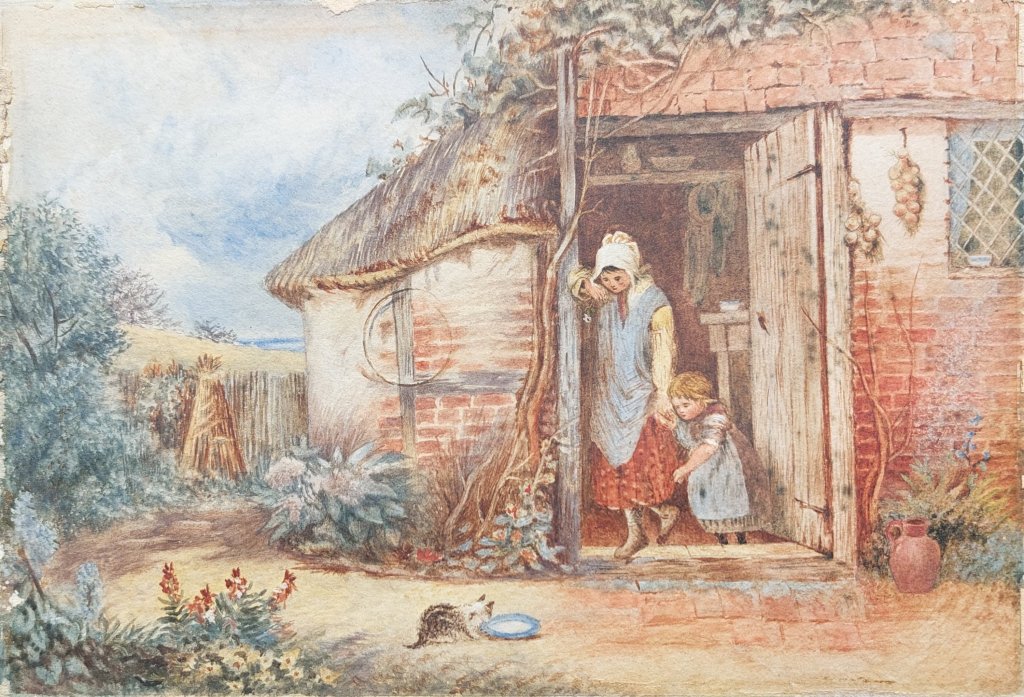
In this chapter, we visit with an artist that I have written about previously. We do so, as I have acquired another piece by the artist. #MylesBirketFoster (1825-1899) was a British artist who worked as a watercoloyrist, engraver, and illustrator. The previous chapter focused on two watercolours portraying the city of Whitby and its harbour. Today’s artwork is more in line with what Birkt Foster was renowned for. The idealised/sentimentalised portrayal of rural life sometimes referred to as the ‘cottage garden’ era.

‘Feeding the Cat’ – watercolour by Myles Birket Foster

The piece I acquired is called #FeedingtheCat and is so very typical of Birket Fosters’ work. The artistry and workmanship are absolutely beautiful.

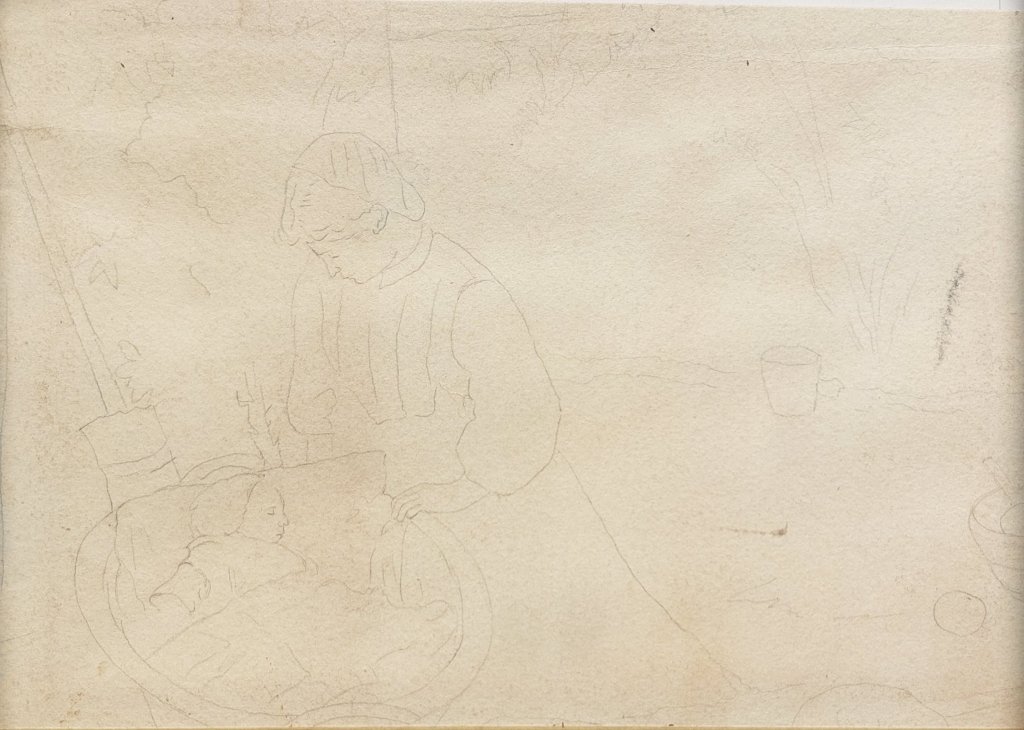
Now, one might question how I know this is by Burket Fosters’ hand because it does not bear his signature or his monogram. The age of the paper and quality of workmanship are not enough, but for me, the proof is on the verso. When one turns the artwork over, there is no writing or signature. There is, in fact, a sketch from another of his paintings.

The New Baby – sketch on verso of ‘Feeding the Cat’ – watercolour by Myles Birket Foster

The sketch is his prepatory work for his painting #TheNewBaby. This is where all artworks begin. A rough sketching to work out placement, size, etc. A nice piece to add to my collection.

Posted in Drawings and Sketches, Watercolour paintings | Tagged , , , , , , , , , , , , | Leave a comment

Maurice Brazil Prendergast artist

A small watercolour that I acquired recently leads us to artist #MauriceBrazilPrendergast (1858-1924). Prendergast was born in St John’s, Newfoundland, but his family moved to Boston where he was apprenticed to a commercial artist. He was influenced by Childe Hassam while living in Boston. He is known as a post-impressionist painter working in oils, watercolours, and monotype. He travelled to study in Paris, where he met James Morrice, Walter Sickert, James Beardsley, Édouard Vuillard, and Pierre Bonnard. Prendergast painted in an almost mosaic/tapestry style using bright, bold contrasting colours in smallish swatches or strokes but not small enough to be considered pointalist.

Sienna street scene – watercolour over pencil by Maurice Brazil Prendergast (?)
@ 1898

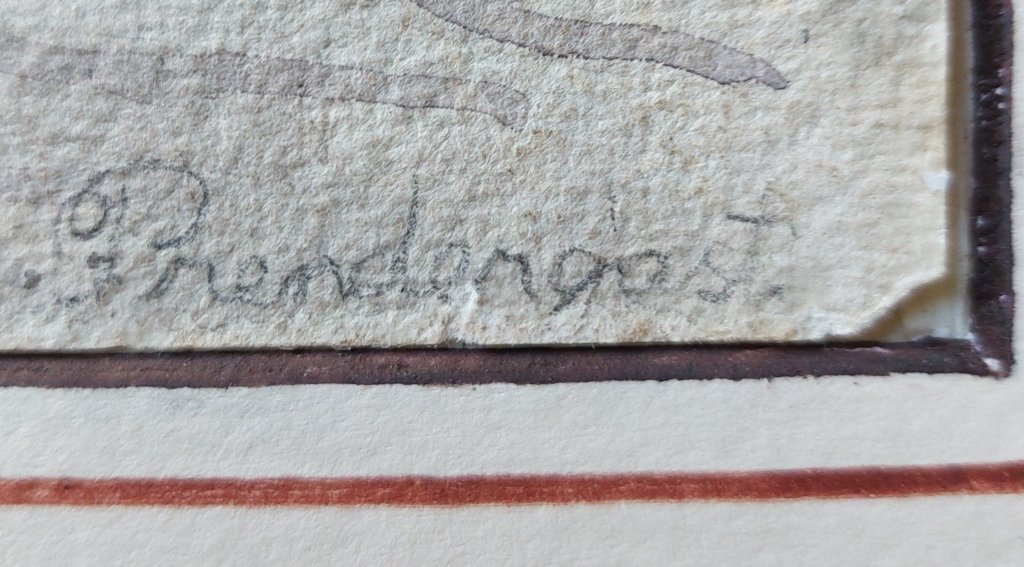
The watercolour shown is a good example of Prendergast’s loose, easy brushwork with its varied colour usage (250mm x 175mm). It is signed lower right with a very stylised ‘P’, which he often used at the beginning of his autograph.

Sienna street scene – autograph found lower right

Prendergast was a true modernist painter with a style all his own and so did not fit into any preconceived categories that set him apart from his peers. An absolutely fabulous piece to add to my small collection.

Posted in Drawings and Sketches, Watercolour paintings | Tagged , , , , , , , , | Leave a comment