We return to Isabella Hedley and her drawings. Once again, we see quite a competent artist producing good quality works.
Cottage at Hastings – drawing by Isabella Hedley after Paul Sandby Munn @ 1837
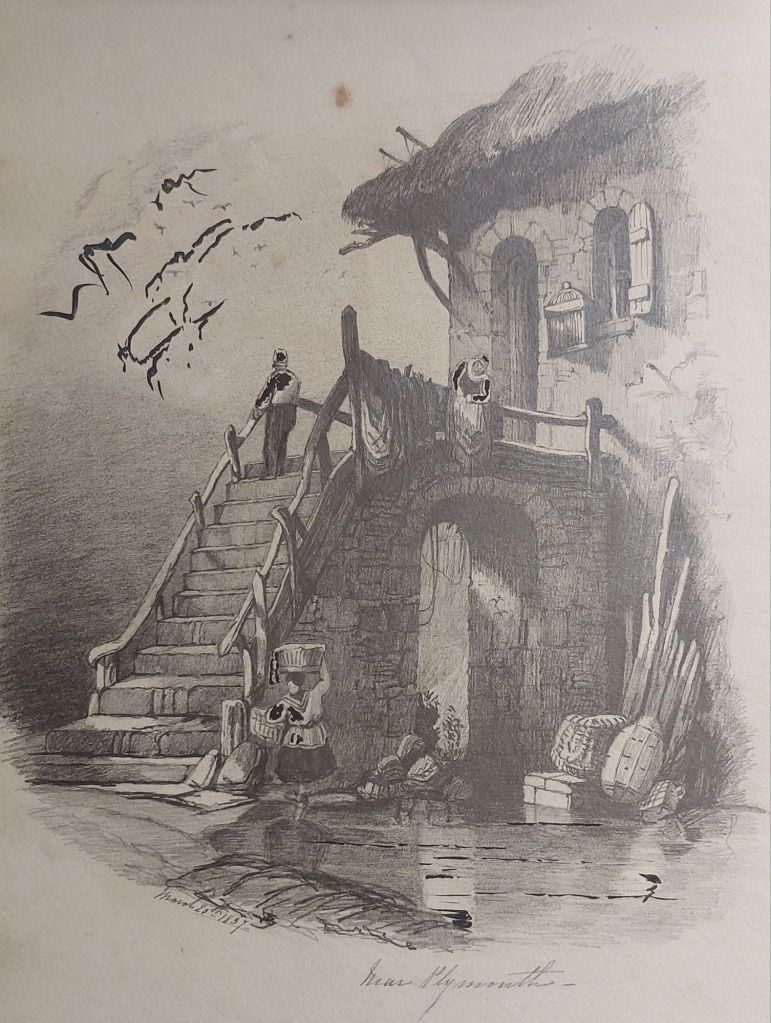
A number of these drawings come from the drawing course, which was published by SamuelProut.
Untitled – drawing by Isabella Hedley @ 1837Fisherman’s Hut, Isle of Wight – drawing by Isabella Hedley @ 1837Near Plymouth – drawing by Isabella Hedley after Samuel Prout @ 1837
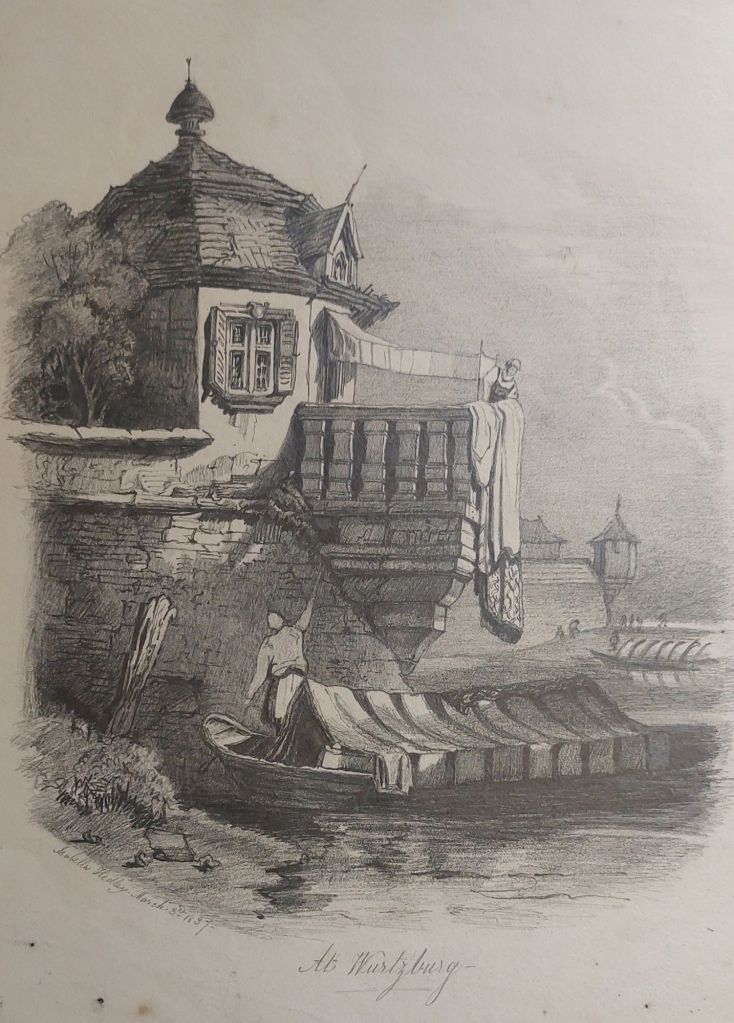
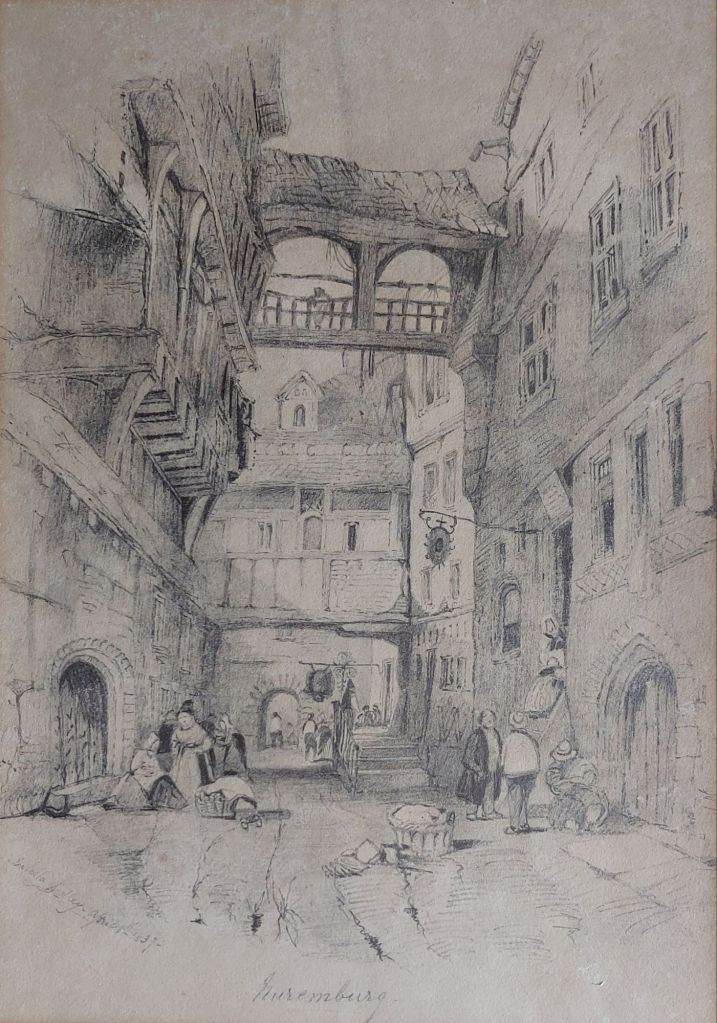
We also see two drawings from European sites.
At Wurtzburg – drawing by Isabella Hedley after Samuel Prout @ 1837St Margaret’s Chapel, Glastonbury – drawing by Isabella Hedley after Samuel Prout @ 1837
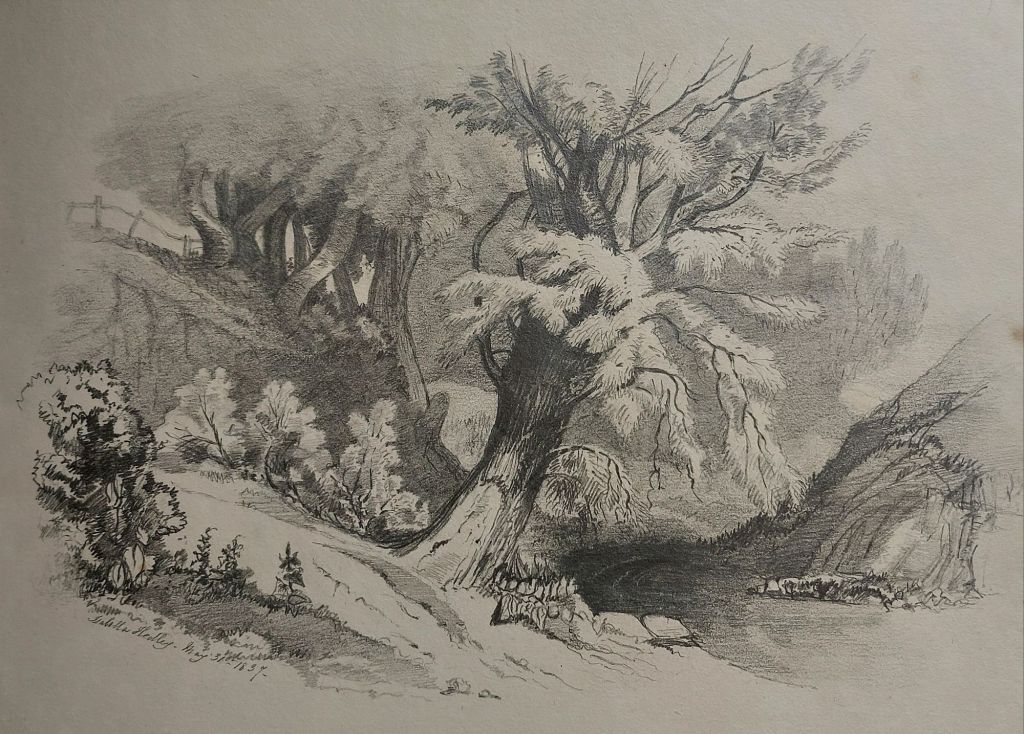
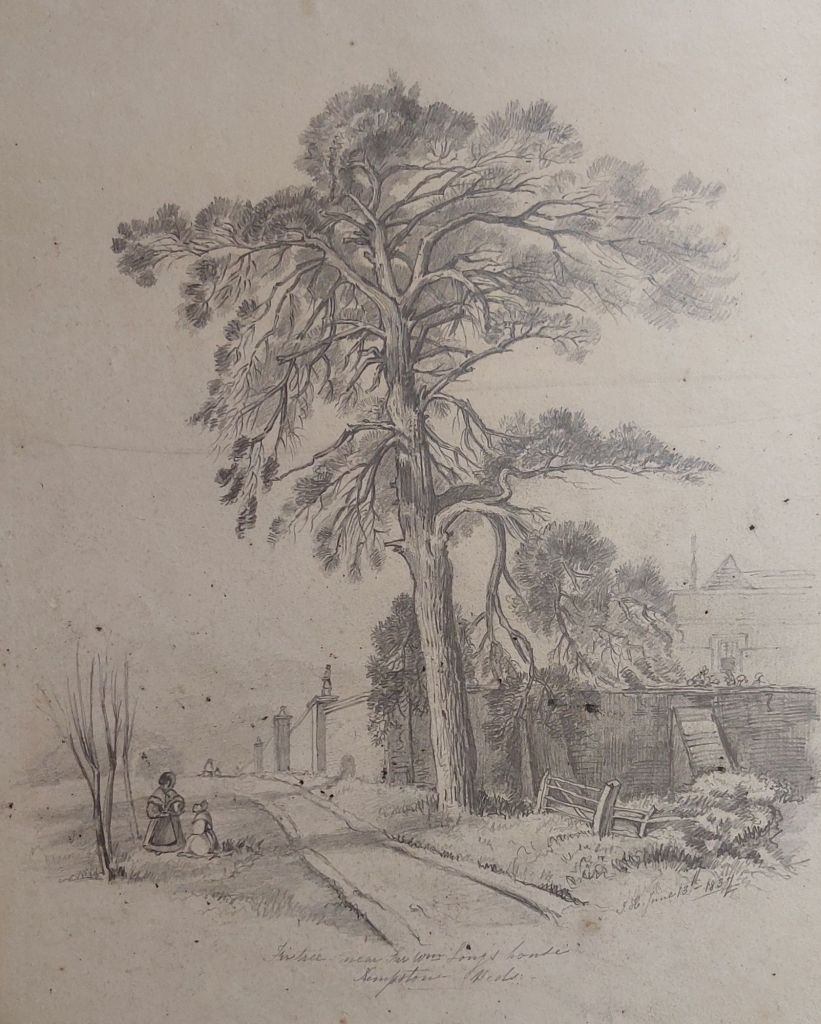
Also, in this set of drawings from 1837, there are two landscape scenes focusing on trees. These two images may be Isabella’s own works for her tutor/drawing class since I have been unable to find images of them.
Untitled – drawing by Isabella Hedley @ 1837Fir Tree near Sir William Long’s house, Kempston, Bedfordshire – drawing by Isabella Hedley @ 1837
Again, all of these drawings show a fine artistic eye and a very fine technique.
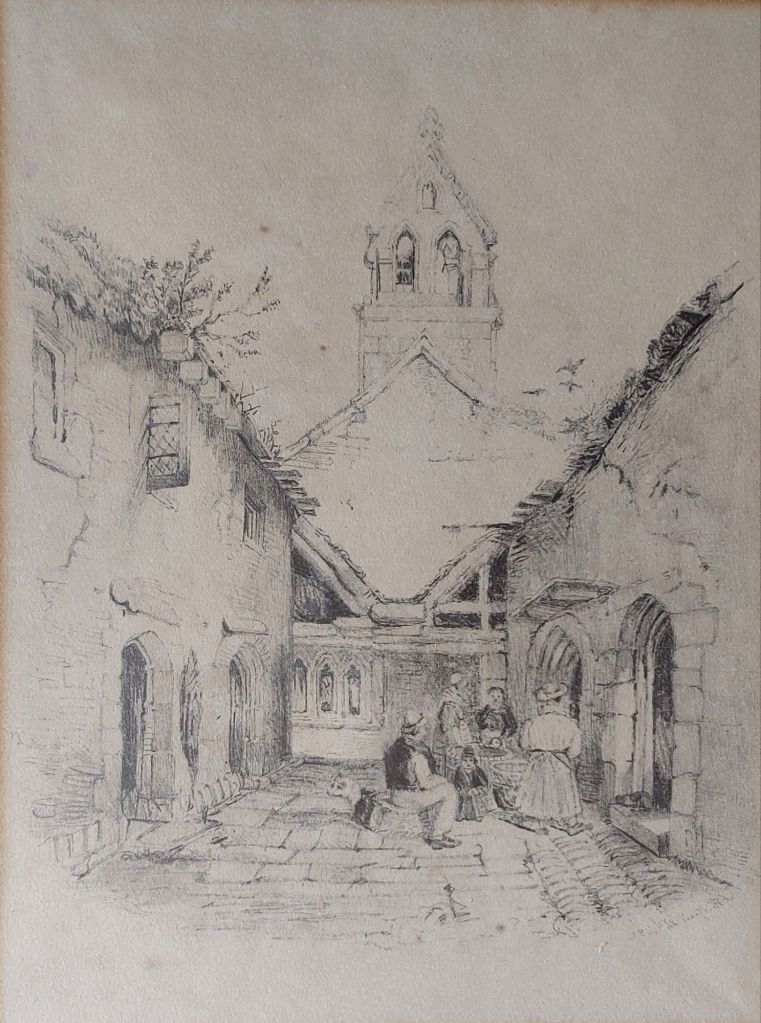
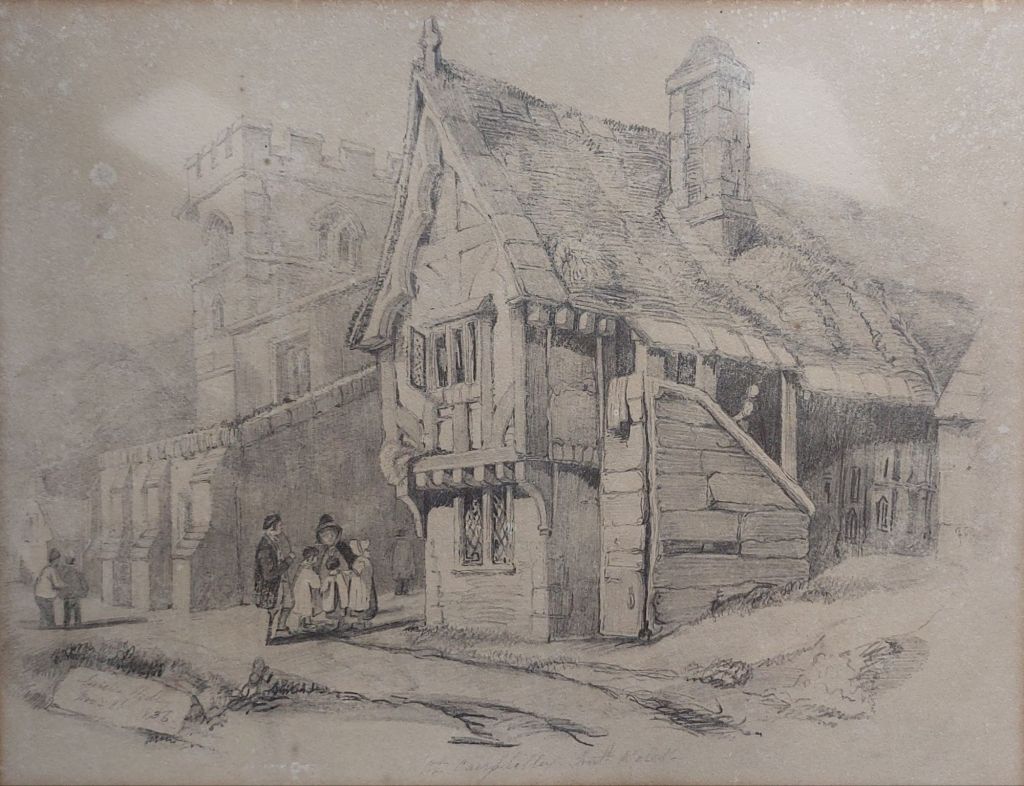
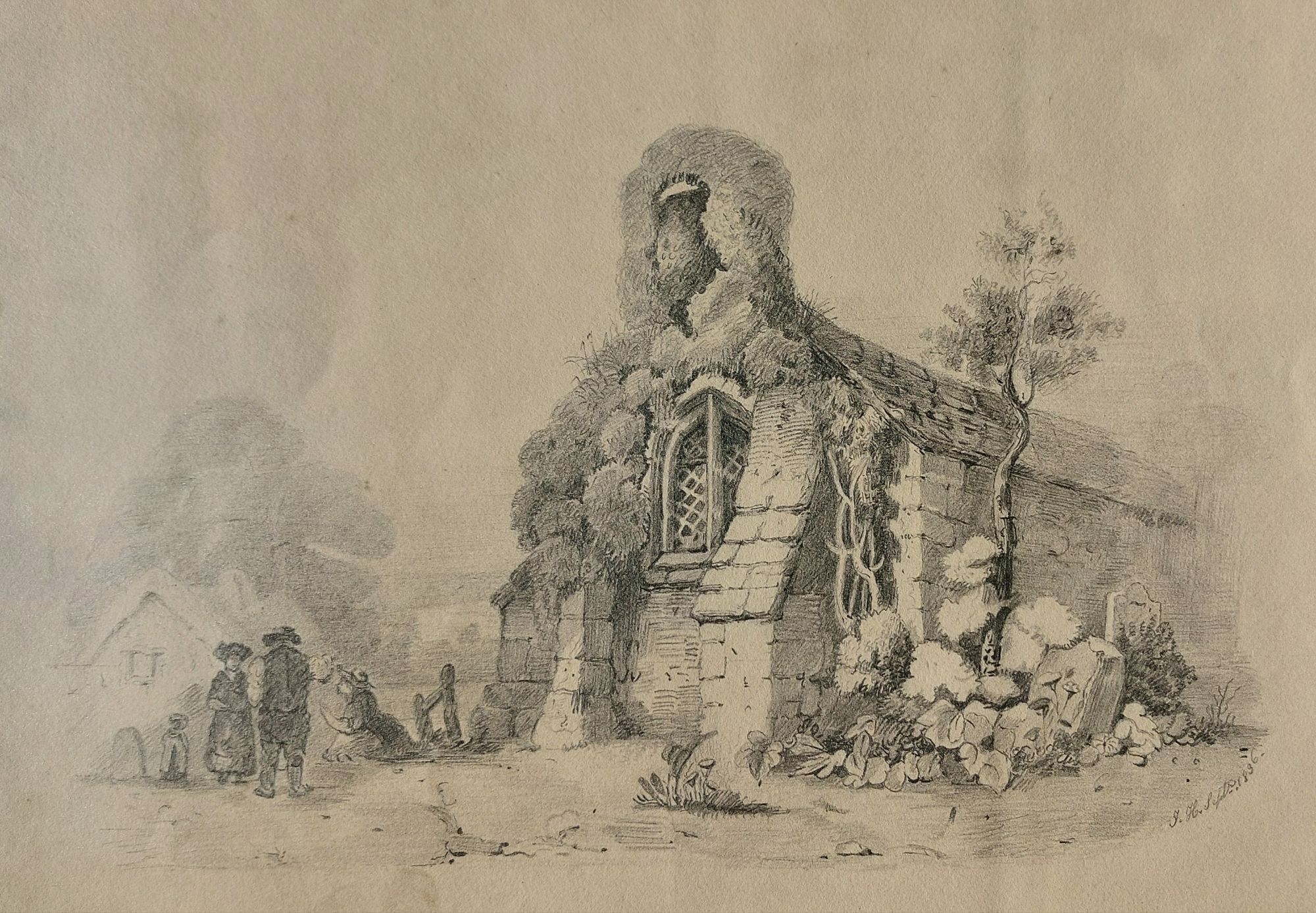
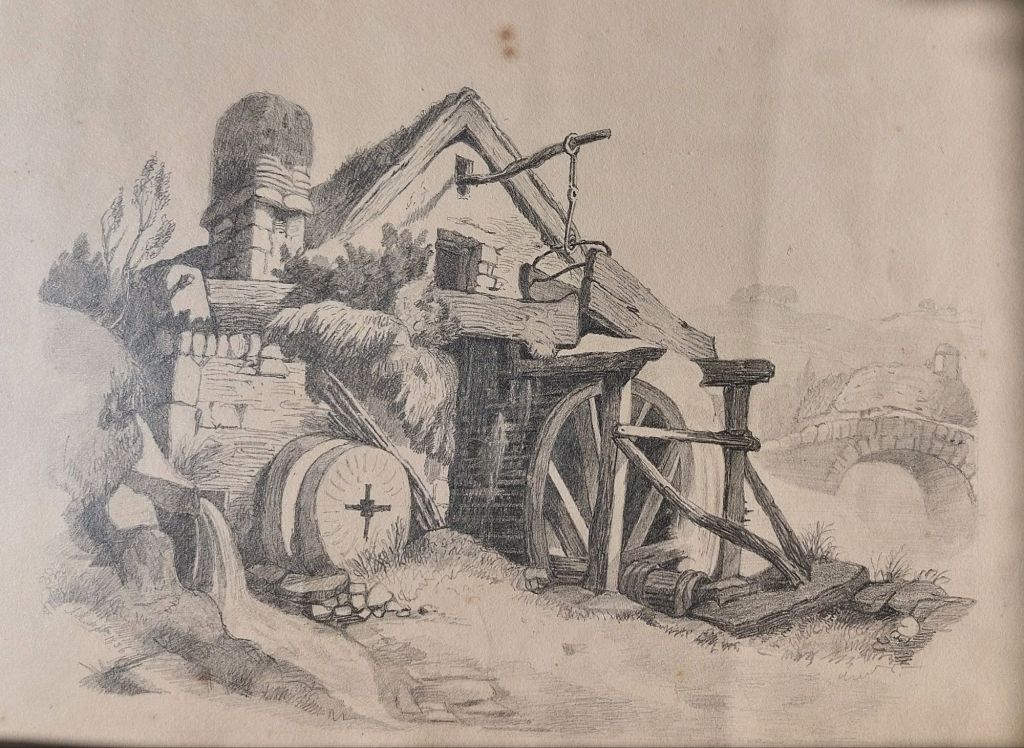
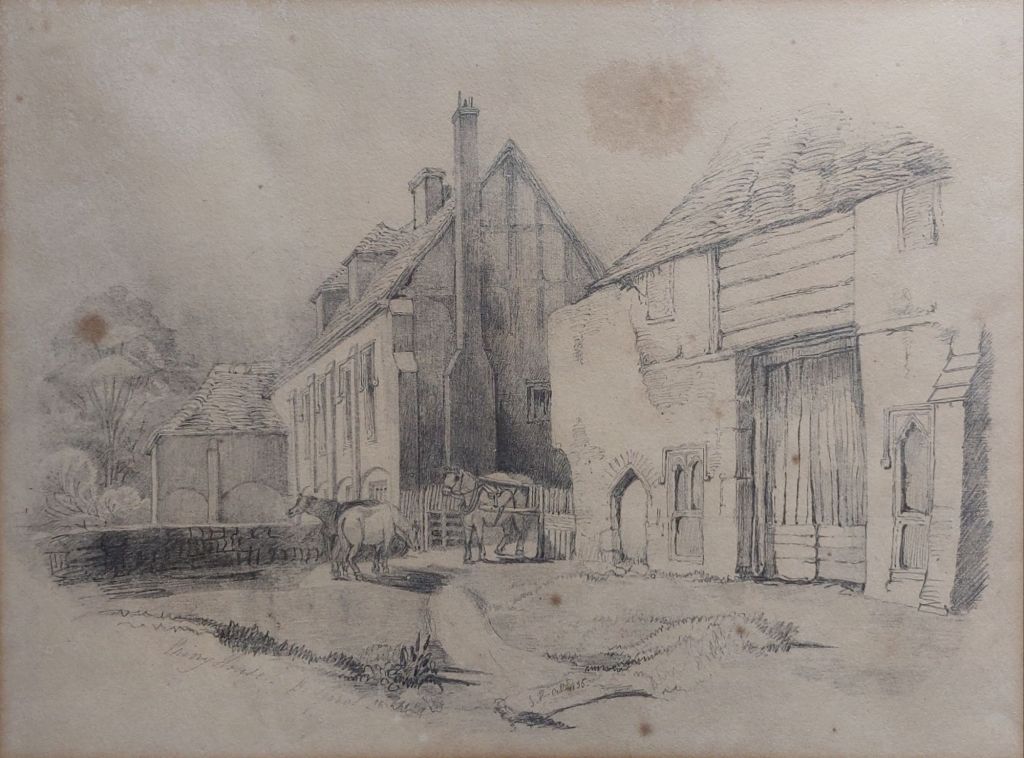
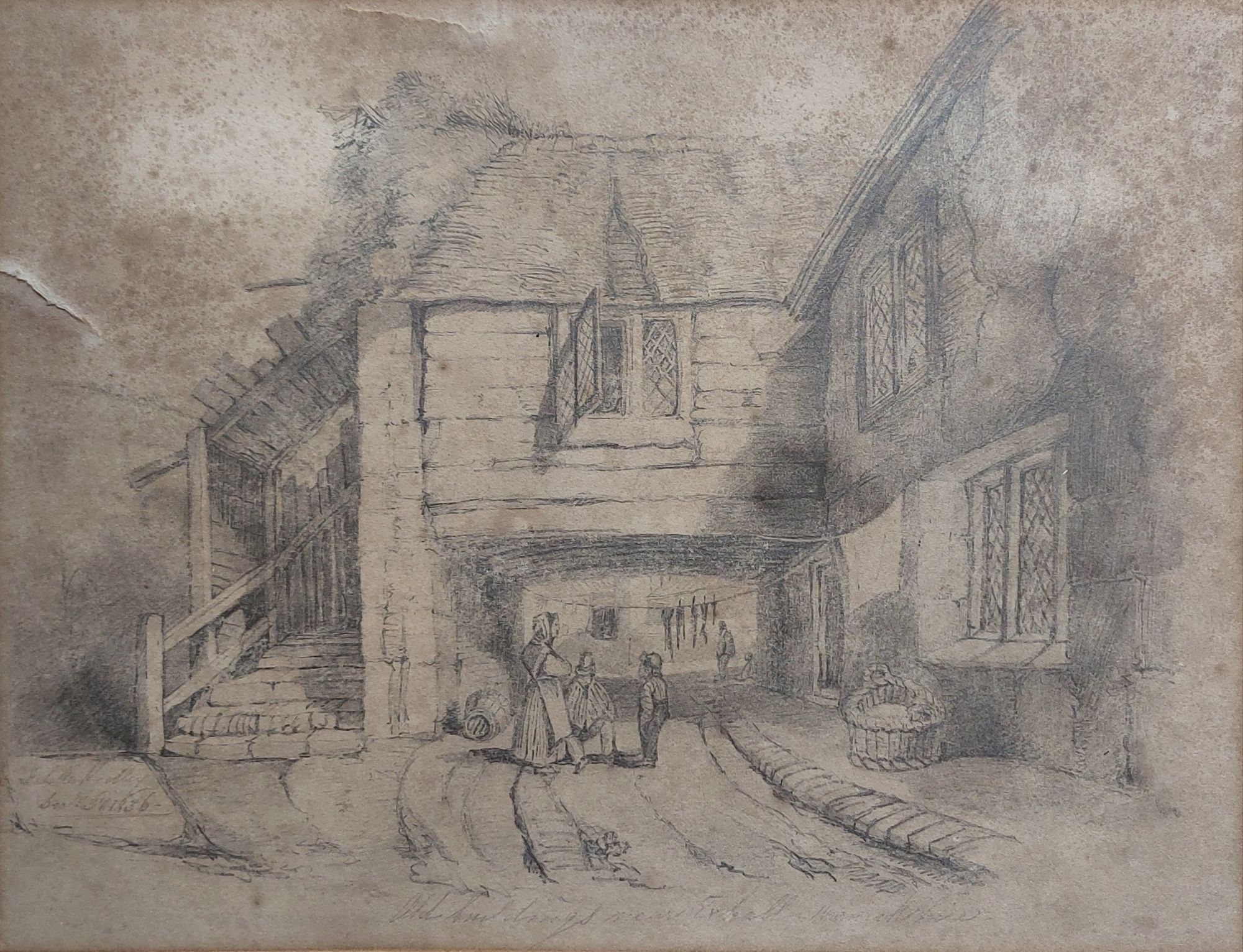
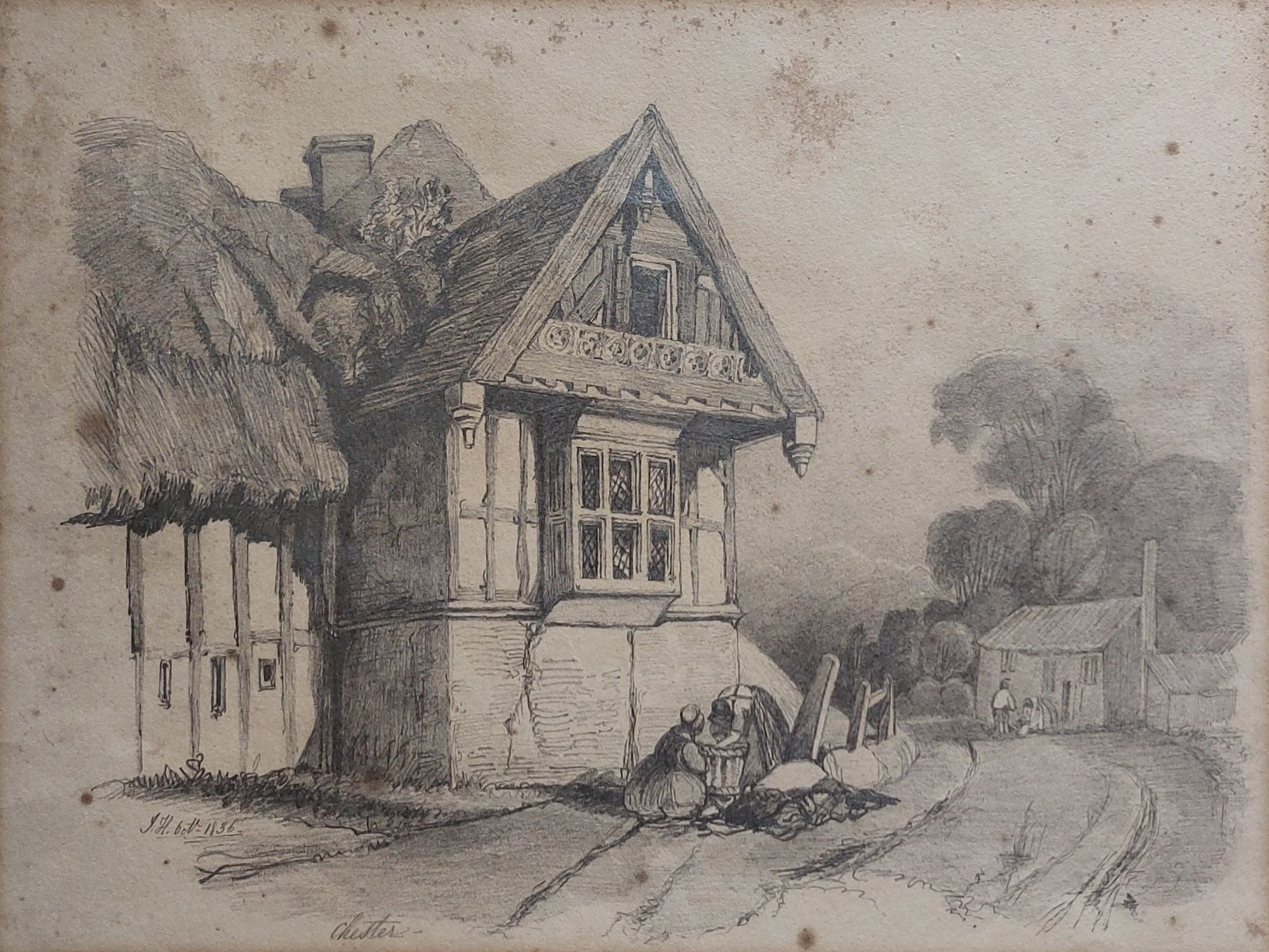
A few weeks back, I came across a set of drawings by artist #IsabellaHedley. The drawings we look at this week were created in 1836. We will look at another set next chapter, which were drawn in 1837. I have found little information about Isabella Hedley.
Near Caerphilly, South Wales – after Samuel Prout?Pennycross – after Samuel Prout
The drawings may be from Isabella’s tutoring, for most of them are images created by #SamuelProut for ‘Rudiments of Landscape in Progressive Studies. Drawn, and Etched in Imitation of Chalk’- collection of soft ground etchings published by Rudolph Ackermann c.1813. The pieces display a good hand and fine eye for copying.
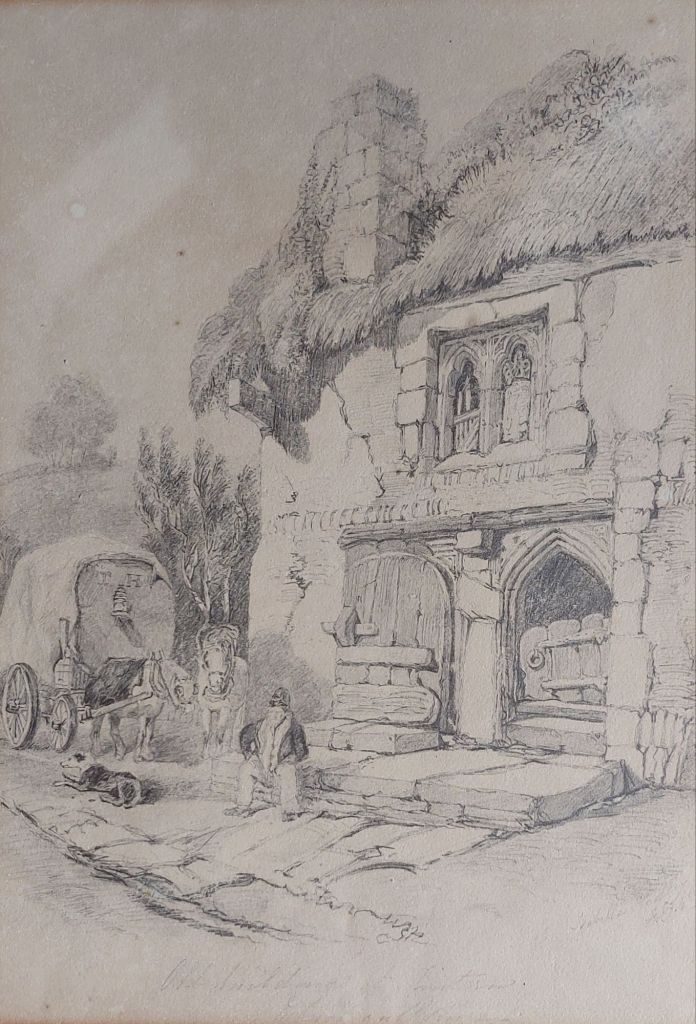
Cottage Exterior – after Samuel Prout At Tintagel – after Samuel Prout
The works are done in graphite and are of a rural landscape scenes from England and Wales.
Priory House, Bedford – after Samuel Prout?Old buildings near Exhall, Warwickshire – after Samuel Prout Chester – after Samuel Prout?
Isabella Hedley, whomever she may have been, was a fine artist. Hopefully, she will be remembered as such.
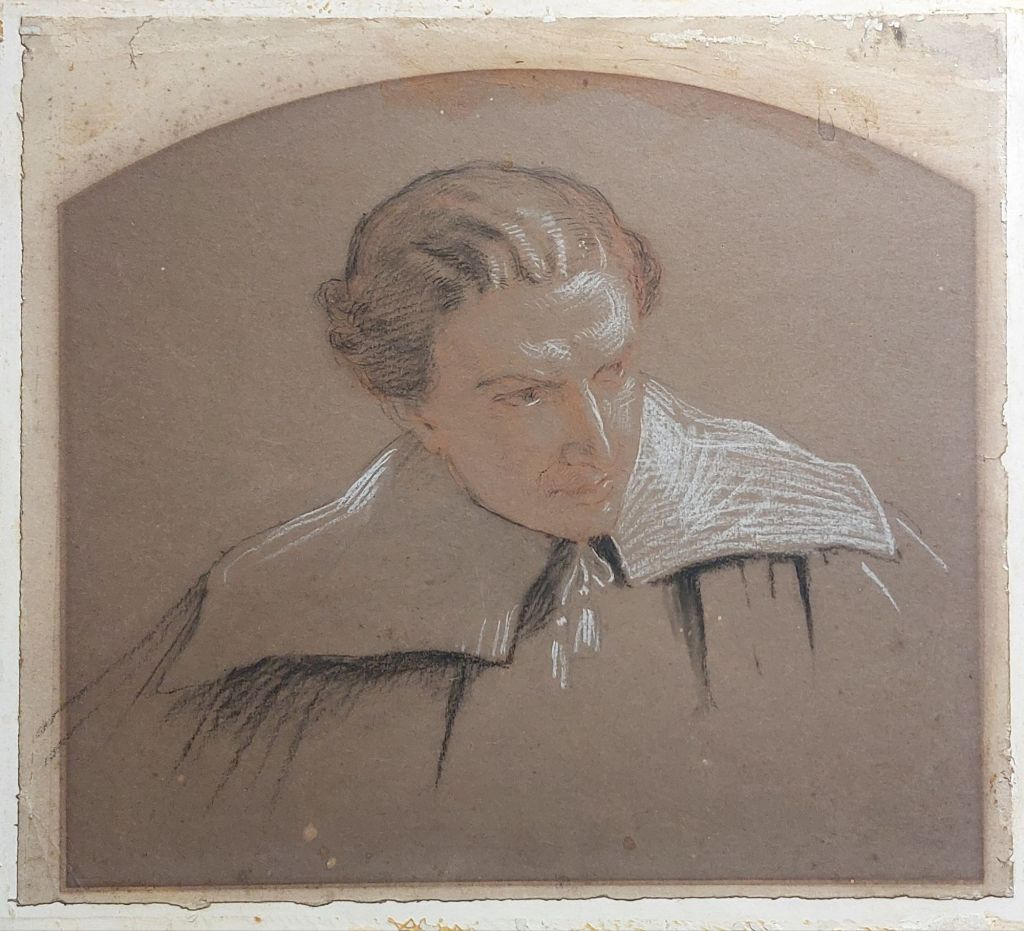
It is always a joy to come across drawings, especially when created by talented artists. The drawing we consider in this chapter is by an unknown artist. After studying it, I have come to the conclusion that it was created in the first half of the 1800’s.
Portrait of an unknown man by an unknown hand
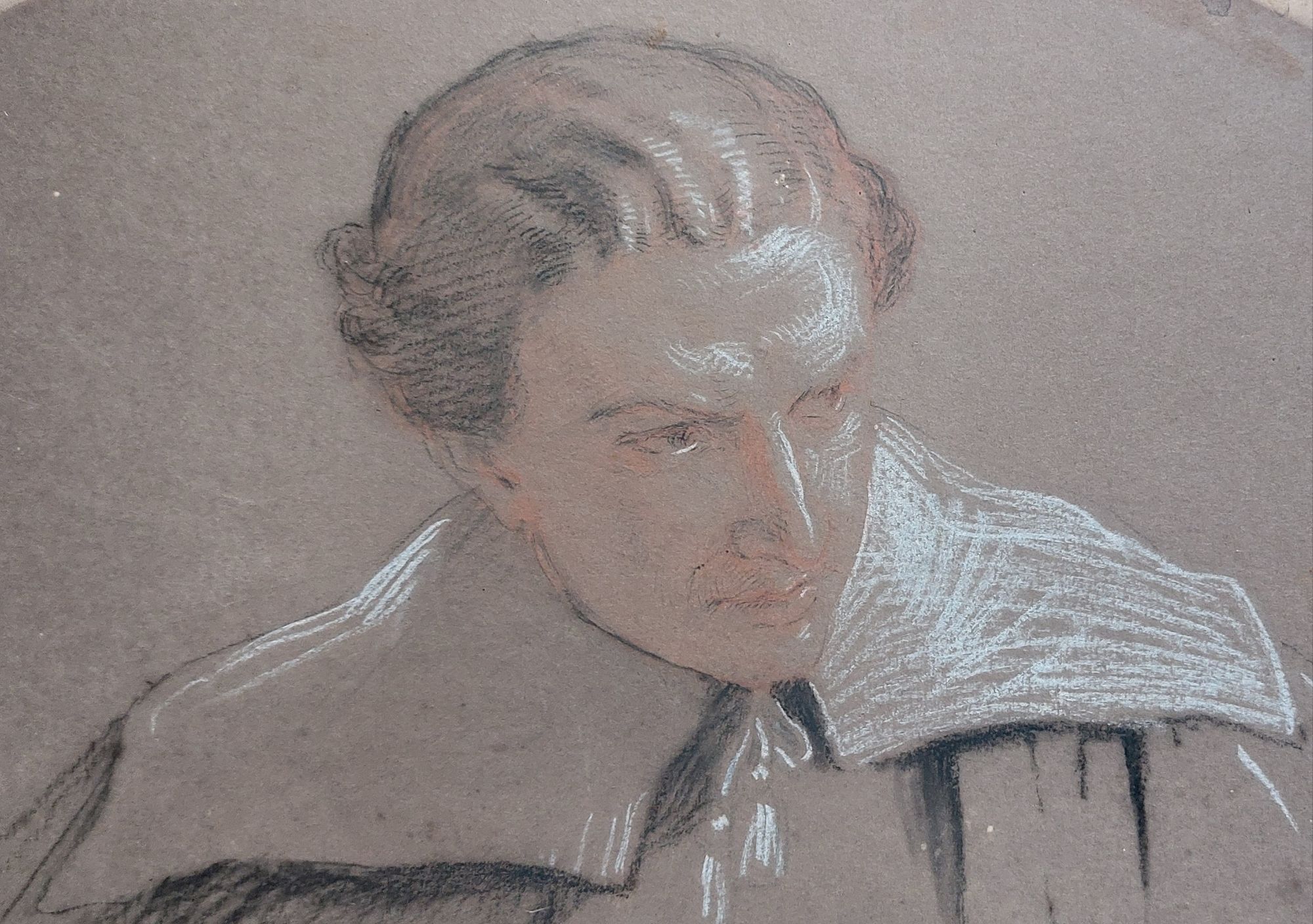
A portrait of an unknown gentleman done in three colours of chalk.The costume may mean that it might be from the late 1700’s. The paper has darkened over time, and the white chalk has brightened over those same years. An expert hand has created this image. Did it become an oil painting for some famous or wealthy patron? Is it of a famous or wealthy patron? All I can say is that it is beautifully rendered.
close-up of an unknown gentleman Portrait of an unknown gentleman by an unknown hand
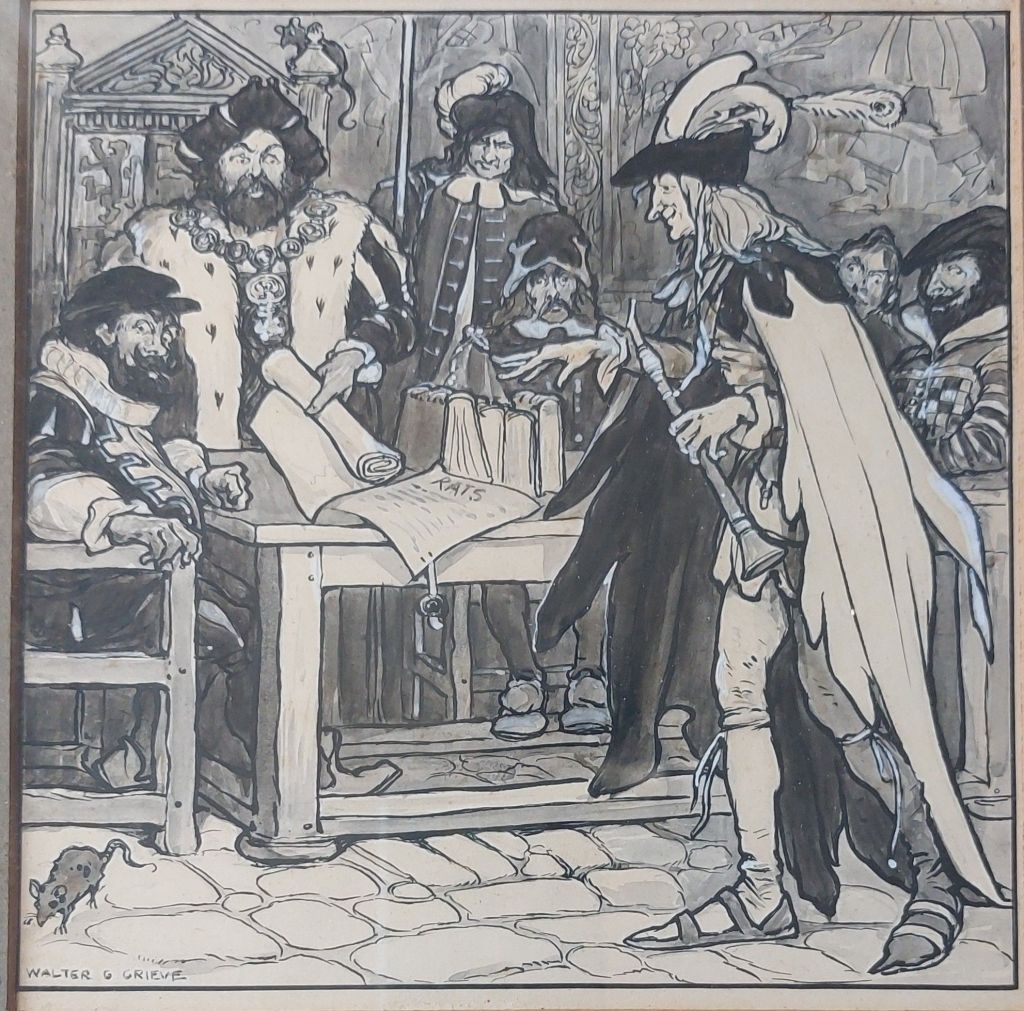
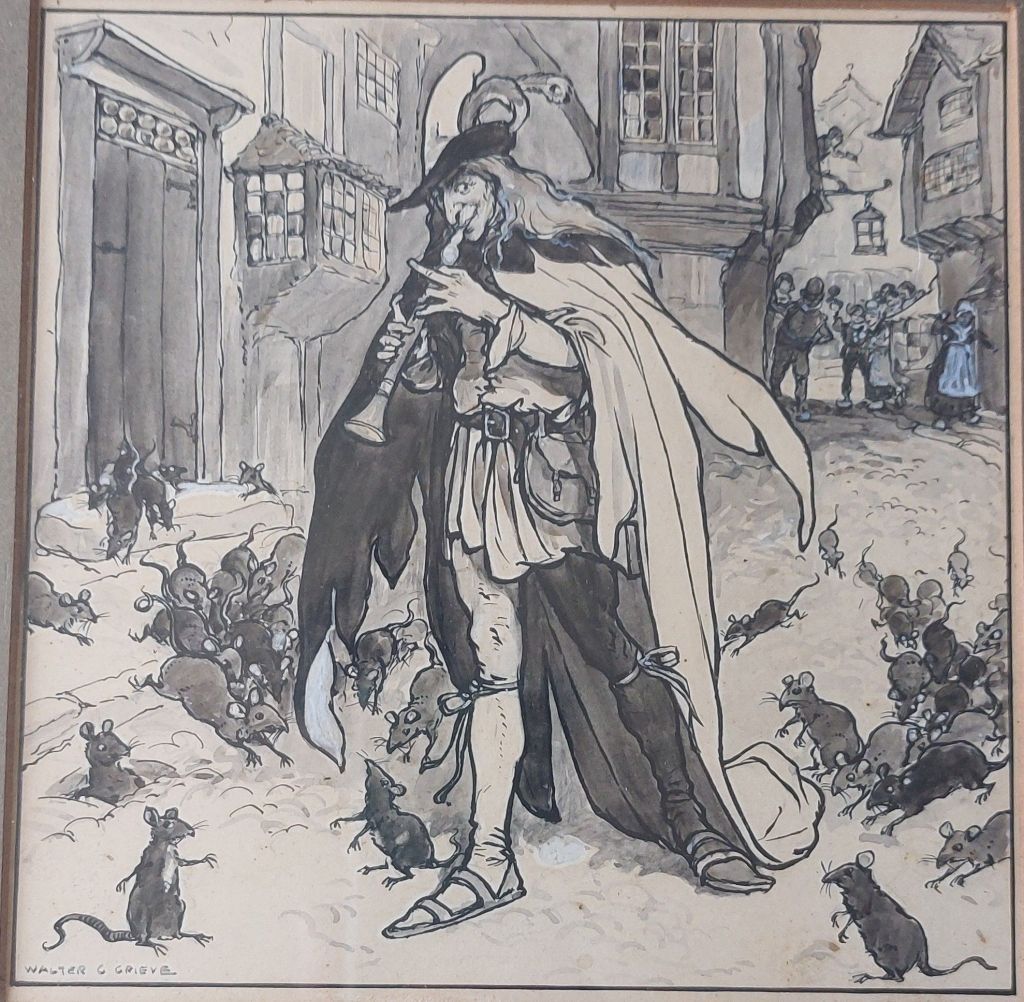
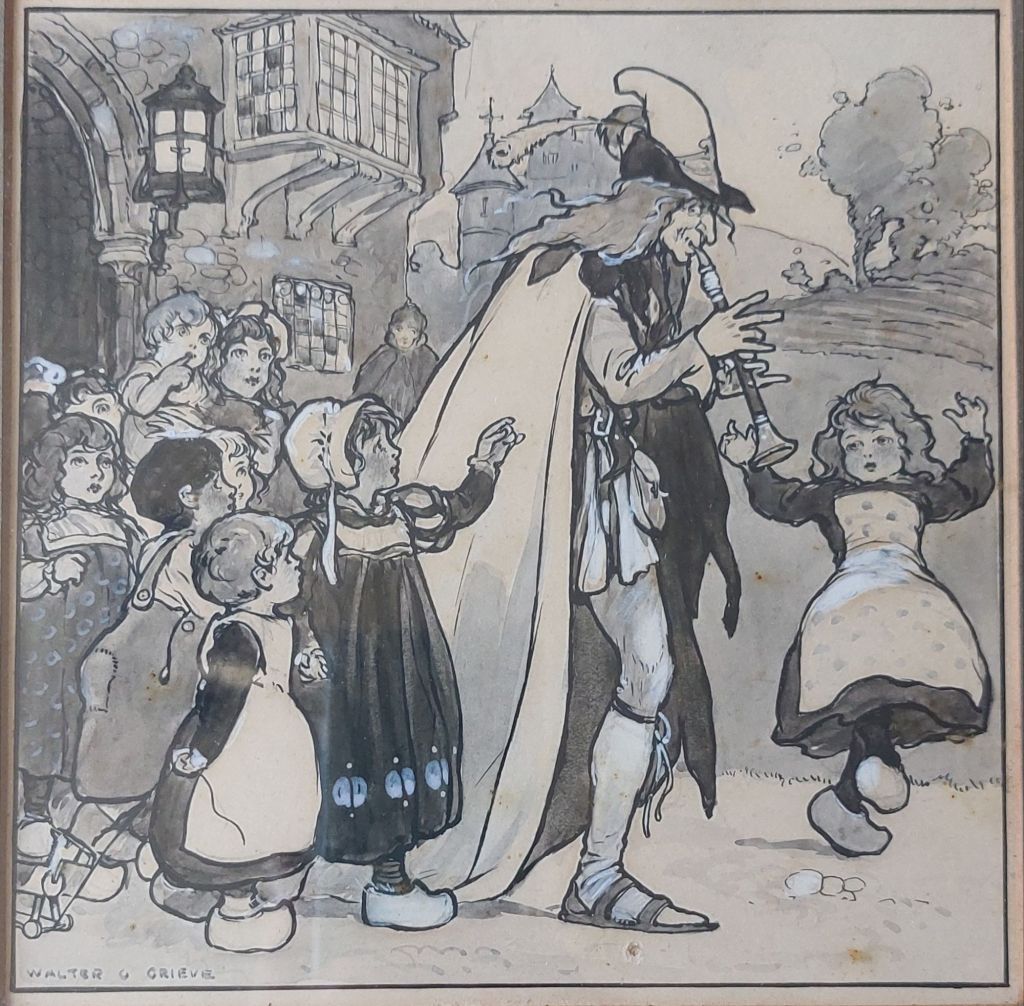
This week, I came across a set of three drawings, set together in one frame. Done by the same artist as illustrations to a children’s book. I do not know if the book was ever published. The artist is #WalterGrahamGrieve (1872-1937), who was born in Kirkliston, West Lothian, Scotland. His artistic talent was likely identified early on at his studies at St George’s Day School in Edinburgh. His later art studies were through the Royal Institution on the Mound and the Royal Scottish Academy Life School. Grieve began his career as a lithograph but transitioned to design and book illustration, which he continued to do most of his life. Grieve was highly regarded as a painter in watercolour as well as oils.
Pied Piper of Hamelin – set of 3 illustrations by Walter Graham Grieve
The three illustrations are scenes from #ThePiedPiperofHamelin. I do not know for whom this set was designed or whether they were eventually published, but they display a fine artistic eye. My favourite parts from the images are the faces of the townsmen. Wonderfully expressive. The illustrations are executed in graphite, black ink, grey washes, and white body colour. They are all signed and I think come from Grieve’s early artistic life around 1900. Each image is 6 1/2″ x 6 1/2″ (165mm x 165mm). A wonderful set.
Before the townsmen – illustration by Walter Graham Grieve Leading the rats away – illustration by Walter Graham Grieve Stealing the children – illustration by Walter Graham Grieve
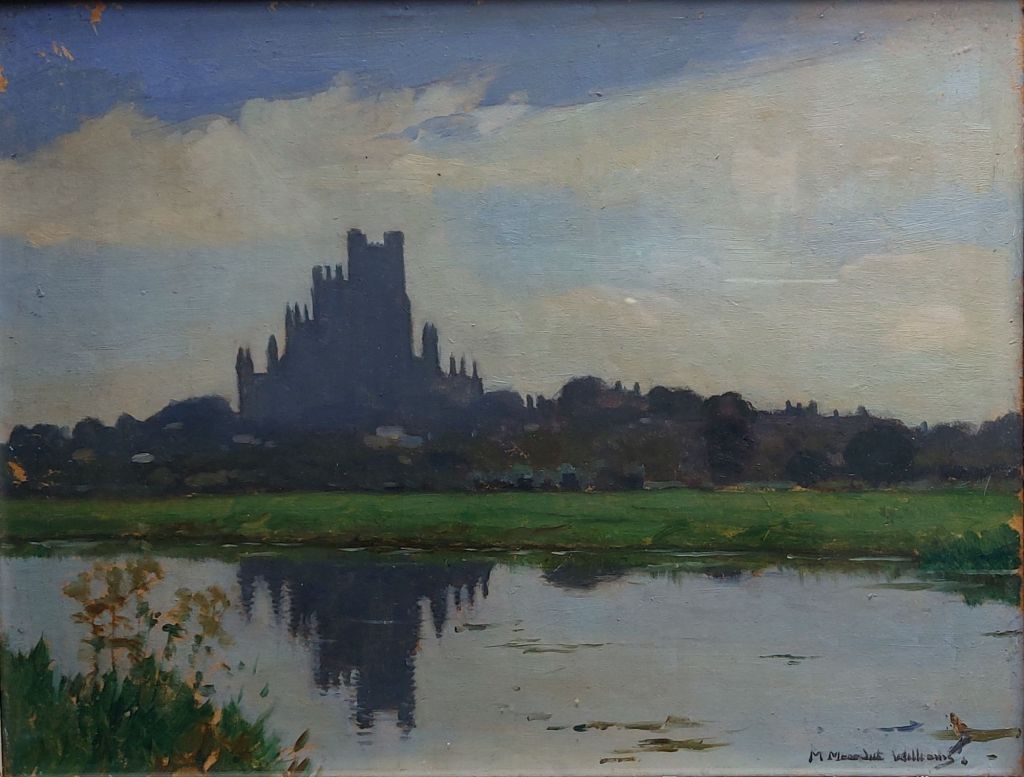
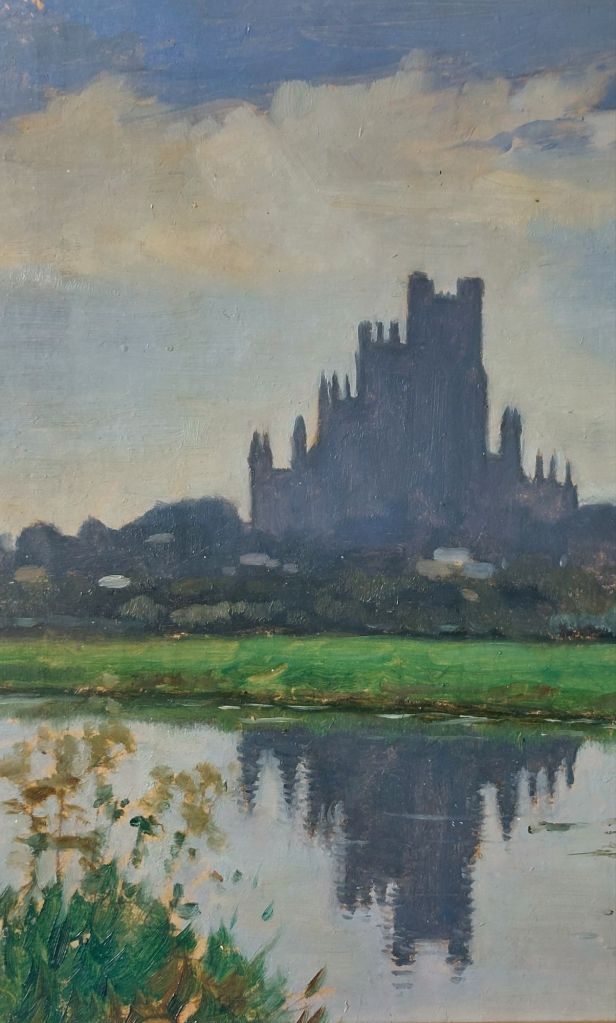
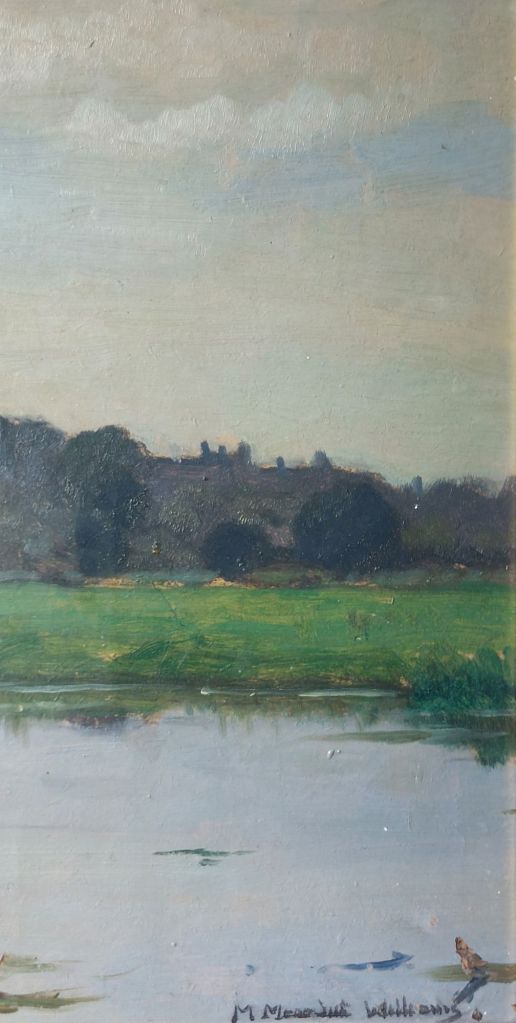
This week, saw me acquire a painting more for the image it displayed than the artist who had created it. To be honest, his was a name I did not recognise. The image is a classic image and one of my favourite views of the great ‘Ship of the Fens’ – Ely Cathedral.
Ely Cathedral from the river @ 1910?
The Cathedral appears in silhouette with reflection in the river. It is done in an impressionistic style using broad brush strokes and splashs of colour. The more I look at this painting, the more impressed I am with the technique and execution.
#MorrisMeredithWilliams (1881-1973)was an artist who painted, worked in stained glass, and as an illustrator. He is best known for the works he created with his wife, #GertrudeAliceMeredithWilliams. Morris studied at the Slade School of Fine Art as well as in Italy and France. He served in the army in WWI, and many pieces were created based on his time at the front during the war. His drawings of naval and military figures of the WWI became the Scottish National War Memorial at Edinburgh Castle. The frieze was modelled by his wife, Gertrude.
A beautiful piece to add to my collection of Ely art.
Ely Cathedral and reflection – by Morris Meredith Williams Section of ‘Ely Cathedral from the river’ – by Morris Meredith Williams
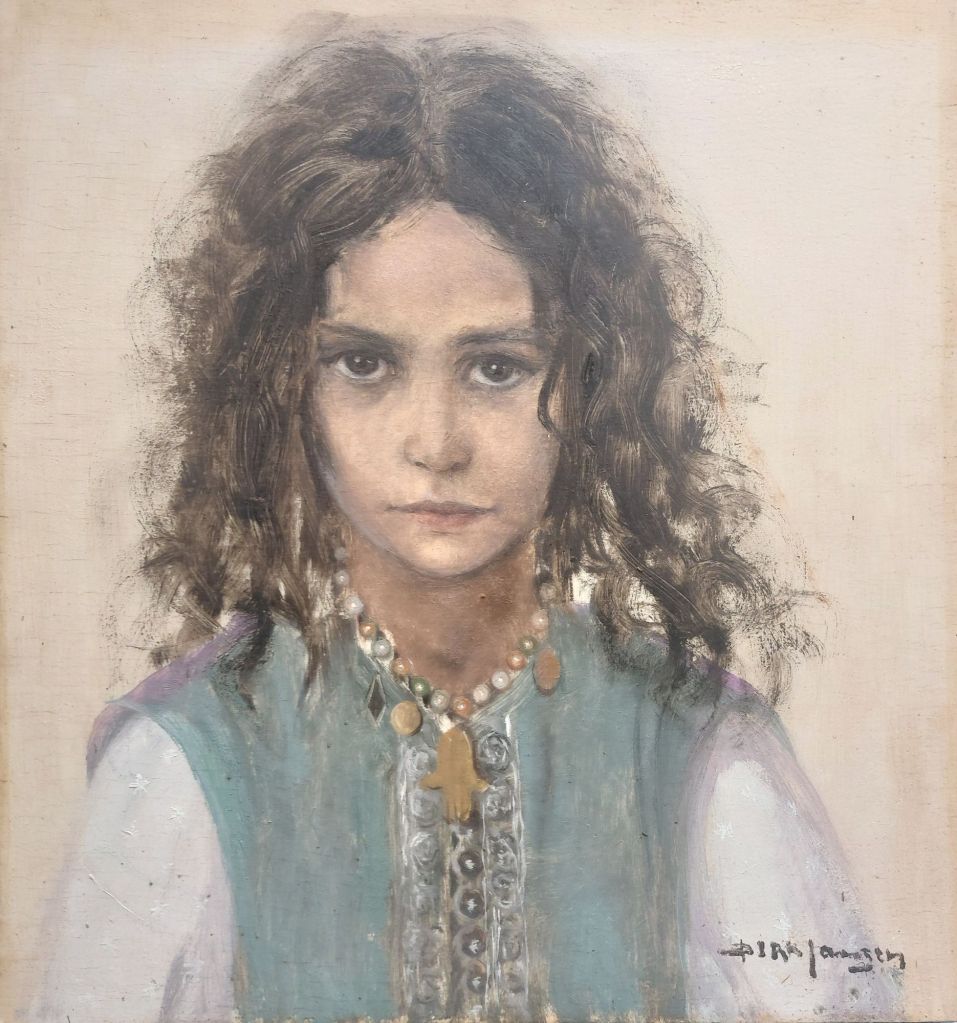
Dirk Jansen was a Dutch painter who was born in The Hague, the Netherlands, in 1878. He worked mostly in oils painting cityscapes, harbour scenes, and a number of portraits. Jansen loved to travel and often visited Italy, France, Spain, and Morocco. Although not a very well-known artist, he was quite a capable artist and technician. I came across a portrait of a young Bedouin Girl by Jansen, and it is a very lovely work.
Bedouin Girl – oil on panel by Dirk Jansen
We see above this superb technique in the rendering of this portrait. Beauty with attitude. What depth is achieved in those eyes and the innocence of youth with strength of character. The brushwork ranges from very fine and detailed for the eyes to extremely coarse in her tousled hair. A rendering both exquisite and compelling one to look and keep looking upon this young face. A fine piece from a fine artist.
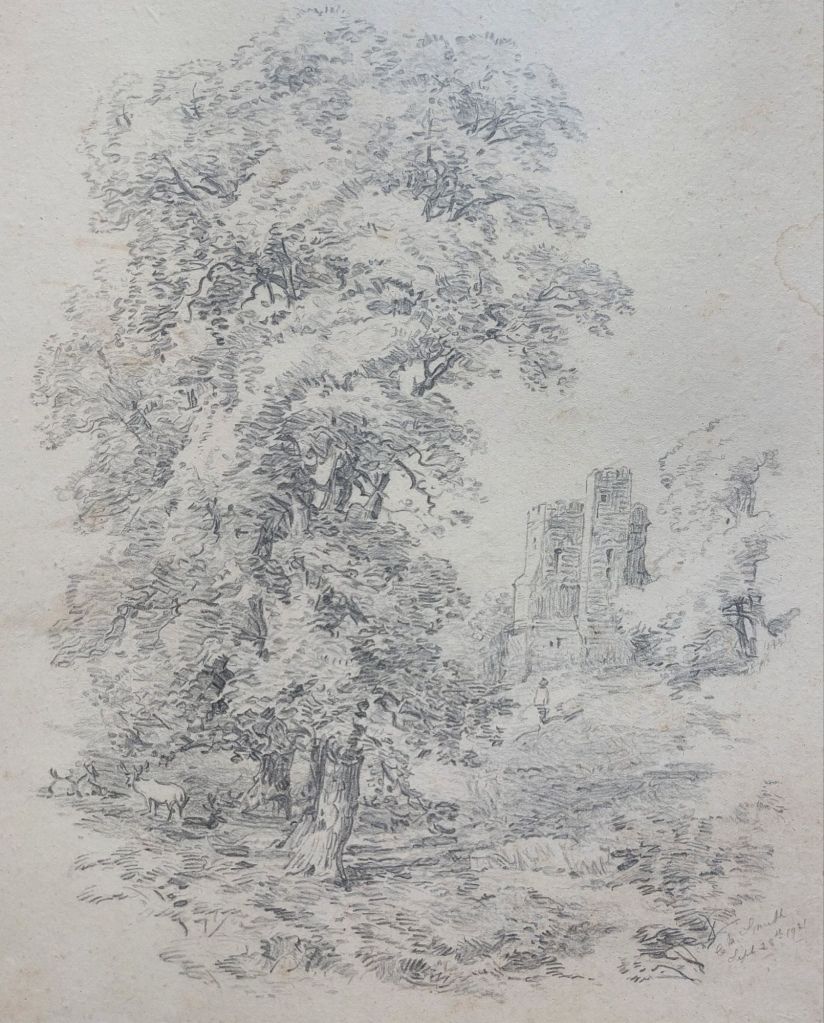
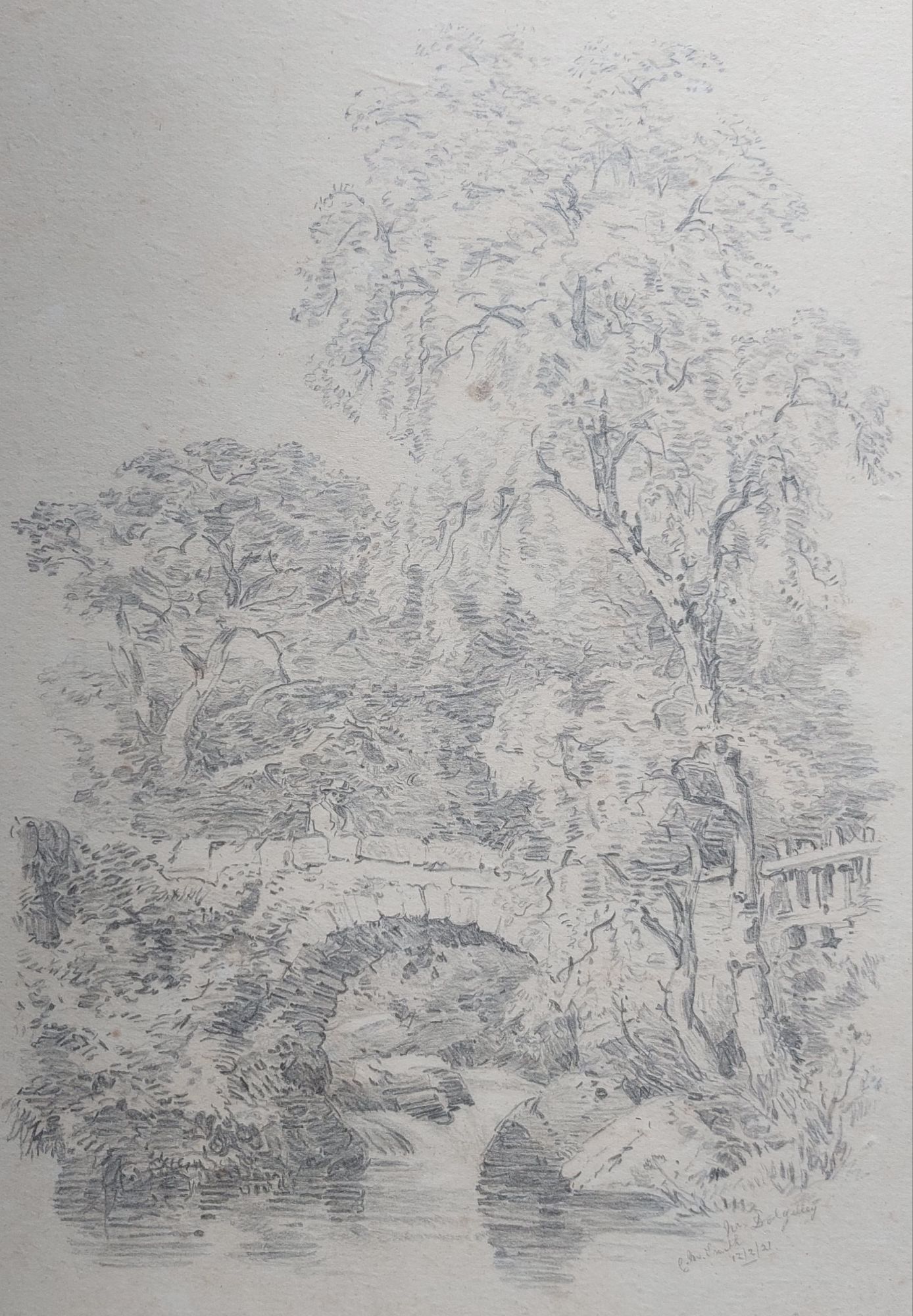
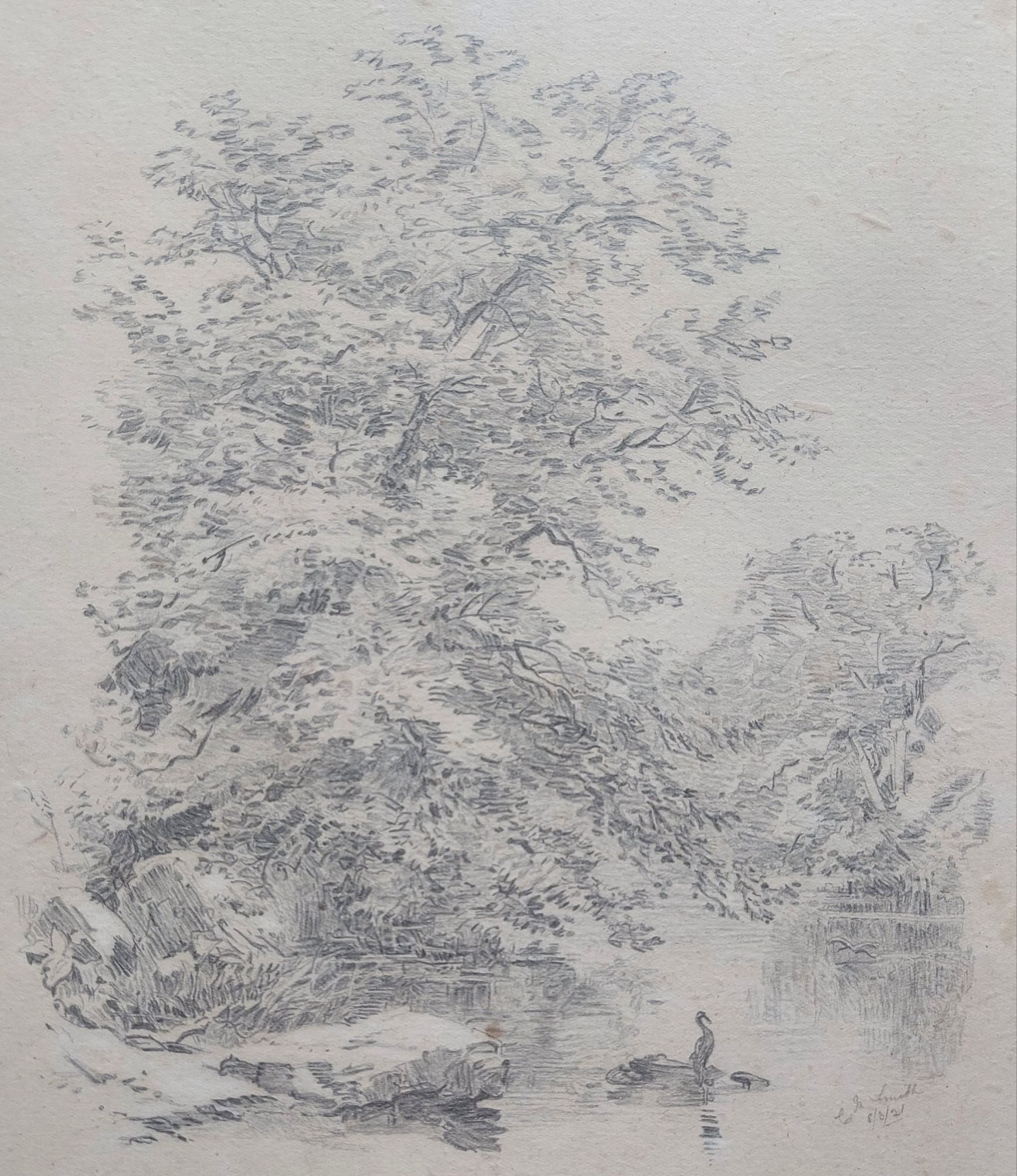
As with last weeks chapter, we remain in Wales and head south from Pont Aberglaslyn to the town of #Dolgellau and to the year 1921. Four pencil drawings are our artworks today. They were created over a 9 month period. They are all signed #CMSmith and dated but only one says that it is near #Dolgelley.
Scene with deer and traveller heading towards a castle – drawn by CM Smith @ 28/9/1921 Traveler crossing a bridge near Dolgellau – pencil drawing by CM Smith @ 12/2/1921
The mounts of Cadair Idris and Mynydd Moel are visible from Dolgellau, making it a favoured starting point/base for climbers and walkers.
Large tree at rivers edge – pencil drawing by CM Smith @ 7/7/1921Trees along ghe rivers Edgar- pencil drawing by CM Smith @ 8/3/1921
All four pieces are excellent arboreal drawings exhibiting the grandeur and magnificence of the forest growth in #Snowdonia. Well worth a visit to see places such as these.
A couple of weeks back, I acquired a watercolour painting. It is unsigned, without title and date. So, other than the image itself , there is no easy information available to me. I at first thought it might be a view of Devils Bridge in Switzerland, but after more research and study, I have decided that this is a British artists painting of a scene in the North of Wales.
We travel to #PontAberglaslyn, to one of the most famous beauty spots on the edge of #Snowdonia. Pont Aberglaslyn is a stone arch bridge that spans the Afon Glaslyn. The closest towns are Beddgelert and Nantmor. It was one of the most visited beauty spots in #NorthWales and was a favourite for numerous artists and their mediums.
Pont Aberglaslyn Bridge, Snowdonia, North Wales – watercolour unsigned @ 1830-1870
As you can appreciate, this is a fine landscape done with wonderful shading and choice of colours. I am fairly confident that I have chosen the right place, and I have given a wide time span for its creation. I may not be able to identify the artist who painted this scene but he surely has produced a very fine work.
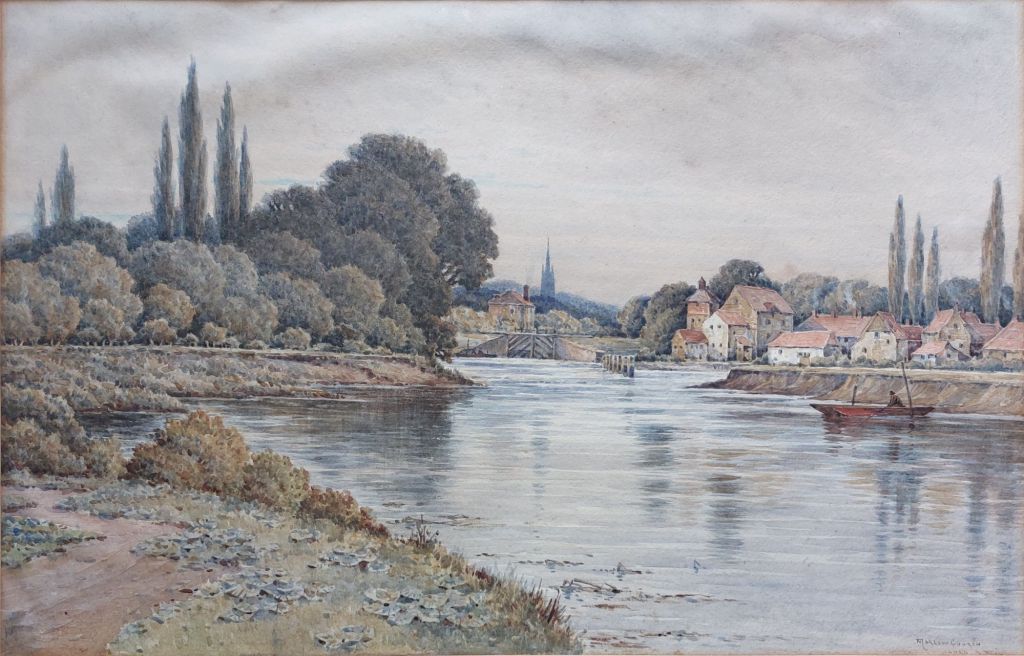
Marlow sits beside the River Thames in Buckinghamshire. It grew up due to there being a crossing of the Thames on the road from Reading to High Wycombe. Marlow is a favourite place for rowers to hone their skills. Upstream lies Temple Lock and downstream is Marlow Lock. Beside Marlow Lock stood #MarlowMills, which ground grain and produced paper using rags which came from London.
Marlow lock, All Saints Church and Mill – watercolour by unknown @ 1875
The watercolour portrays Marlow in about 1860. In the distance, we see All Saints Church with Marlow Lock in front and to the right stands Marlow Mills. The piece is signed by the signature lies mostly beneath the matte. A nice use of colours along with a good architectural eye portray Marlow as a beautiful and calm place o to live.
I love acquiring drawings. They are often undervalued but can be absolutely beautiful. Drawings, whether in pencil, chalk, or ink, are mainly small in their overall size since they often come from artist’s sketch books. Let’s look at four drawings recently added to my collection.
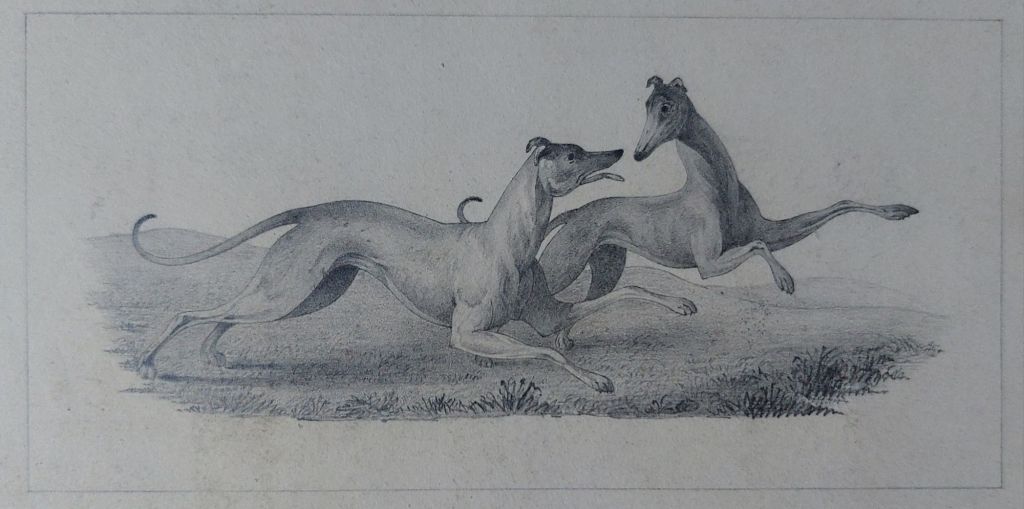
Italian greyhounds at play – unknown artist
The above drawing is 2 3/8″ x 5″ (61mm x 127mm). Exquisitely drawn with muscles rippling displaying these two at their cavorting best.
The Red Lion Inn – unknown artist
Here, we have a rural scene displaying the ‘Lion Inn’ (10 3/4″ x 6 1/2″ or 272mm x 164mm) Created in pencil with brown wash to add depth and shadow. I would date this around 1850-1880.
Portrait of a Man (possibly Carel Weight)
An unsigned portrait of a young man (9″ x 7 1/2″ or 220mmx 190mm). I acquired this at the same time as the engravings by William Arthur Narbeth, so it might be by his hand. I can not say for certain.
Young man reading a missive – signed & dated
To finish, another portrait of a gentleman who is reading a letter (11″ x 8 1/2″ or 275mm x 218mm) . This is signed with what appears to read RJ Hamilton and dated 1844. Created in pencil/graphite with red and white highlighting.
All four are excellent drawings. I often find that the natural toning of the paper actually enhances the drawings and brings to them an added depth.










 ronsartblog