Art of Biblical Illustration

Most of the Bibles produced today are text only.  Of course the font and print used is chosen to ease reading but only a few versions are illustrated.  In years past many versions were illustrated by famous artists and etchers.  The images you are about to look at were drawn by #JMWTurner and etched by E. & W. Finden.  They are taken from the Imperial Illustrated Bible circa 1870.
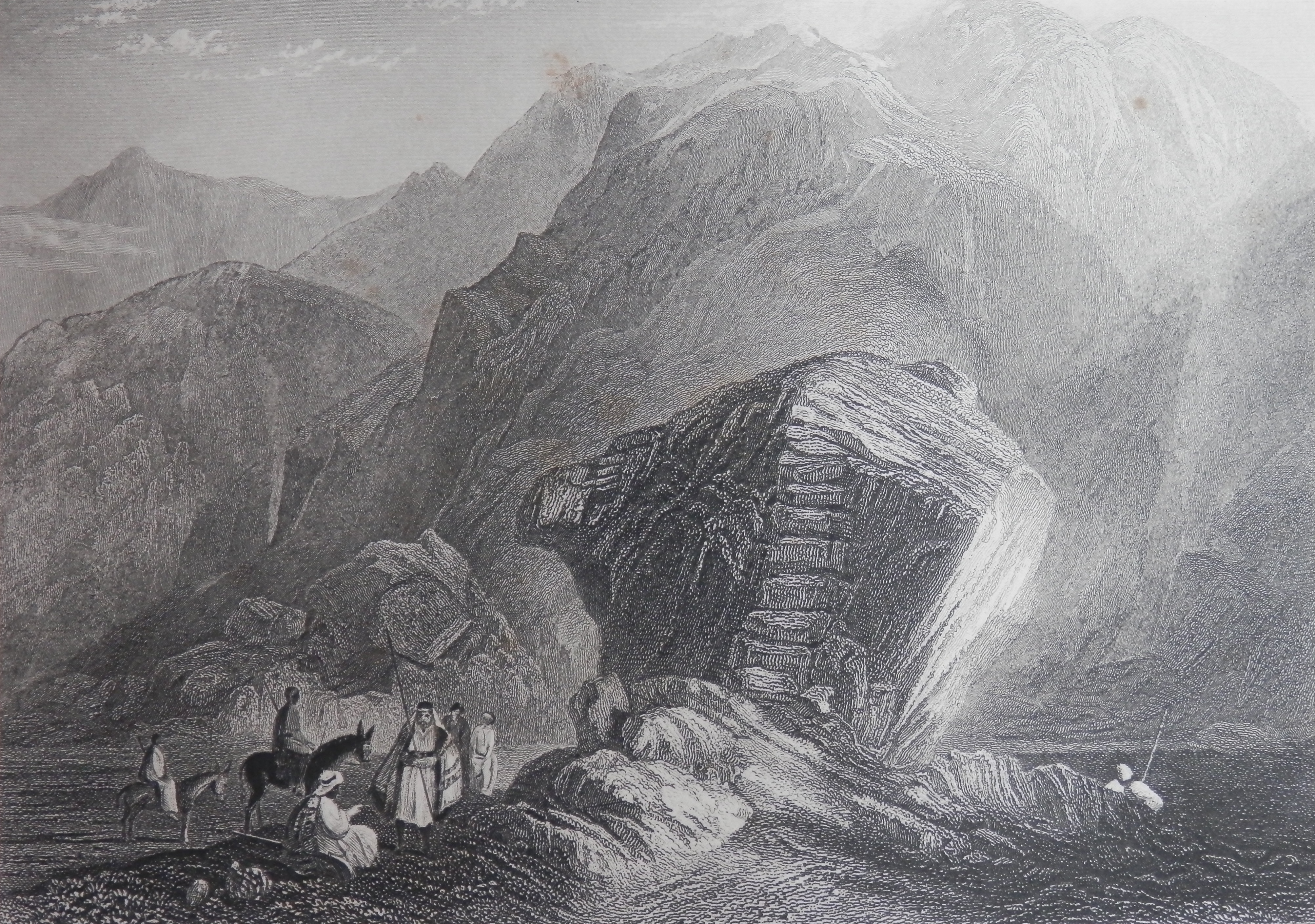
The Desert of Sinai drawn by JMW Turner E Finden sculpt

The Desert of Sinai
drawn by JMW Turner
E Finden sculpt

This family Bible presents the text of the King James version (first published 1611) along with 55 sepia-toned steel-engraved plate illustrations coming from the most dramatic moments in Scripture.  One even sees two small pin holes which helped to align the plates while printing on each of the pages.
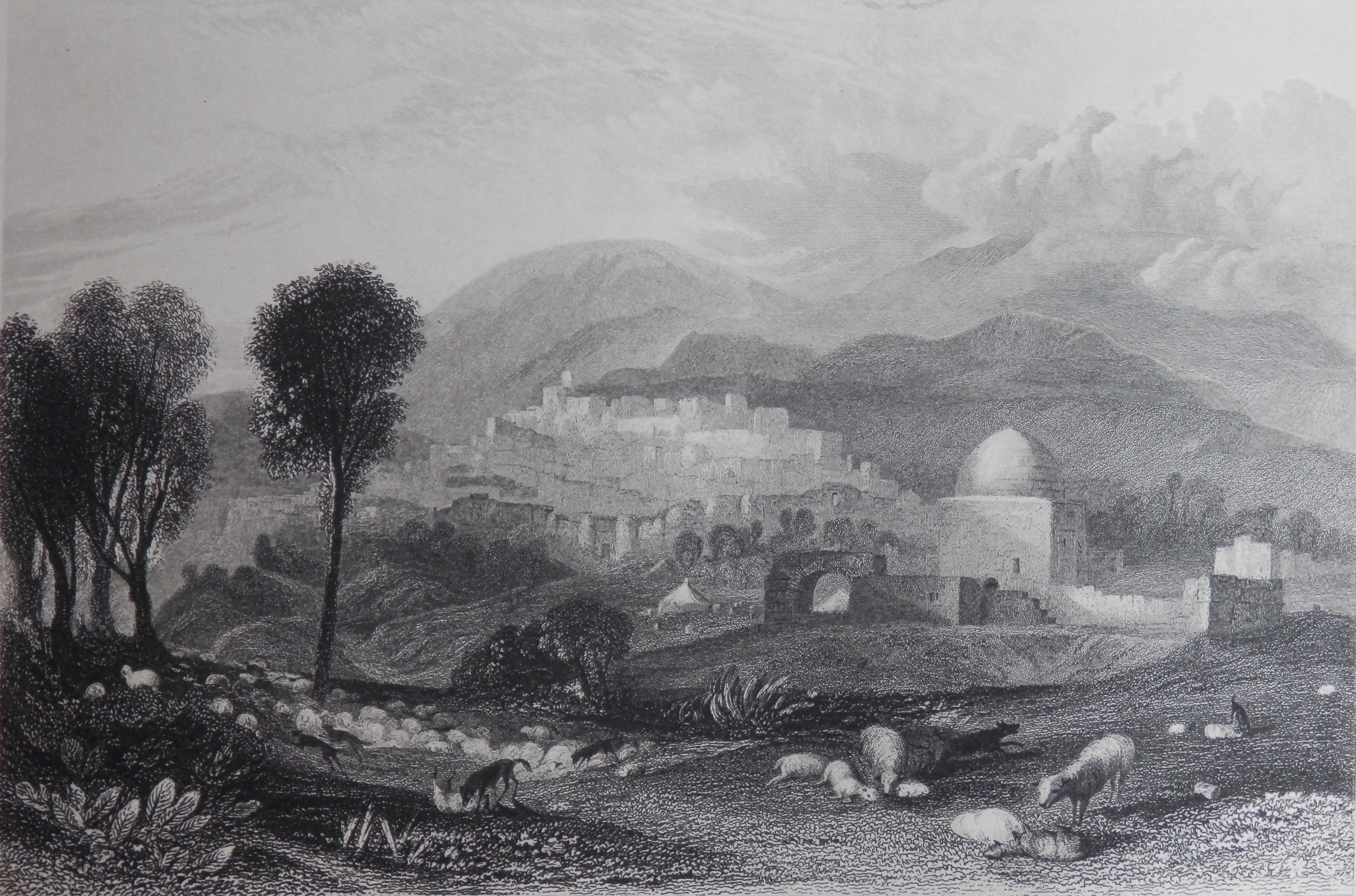
Ramah, Rachel's Tomb drawing by JMW Turner W. Finden sculpt

Ramah, Rachel’s Tomb
drawing by JMW Turner
W. Finden sculpt

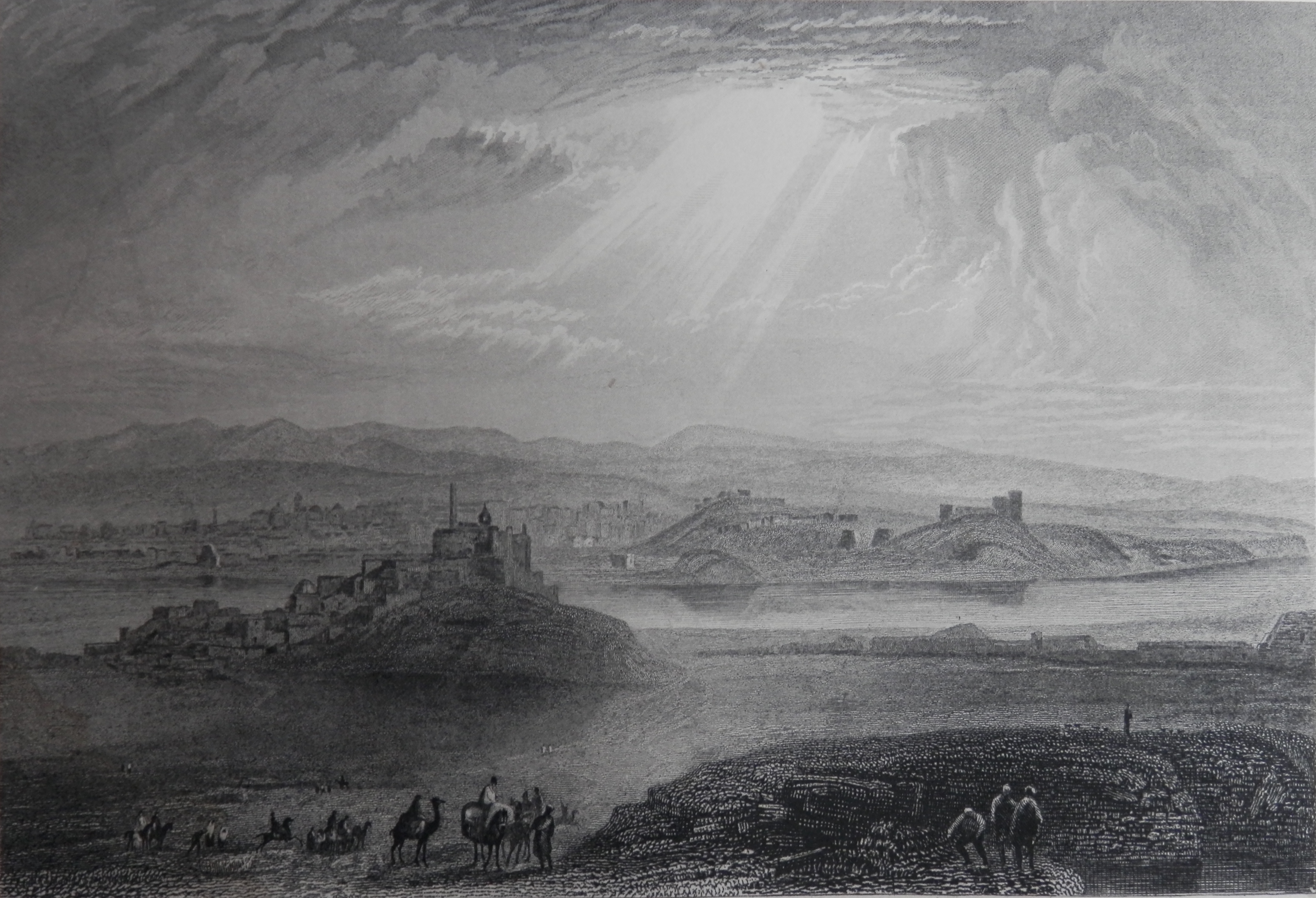
I wonder whether Turner considered that his drawings of the #HolyLand and vicinity would be used in printings of the Bible itself.  His drawings from the Holy Land are comprehensive and were originally done for a publication called ‘Landscape Illustrations of the Bible’.  Turner had never travelled to the Holy Land, but he used the pencilled drawings of a number of individuals, including Sir Charles Barry, architect of the Houses of Parliament.  Turner painted 26 watercolours for the book, fourteen of which came from Barry’s drawings.  Turner’s originality blossoms forth from a stylish imitation of the Grand Style.
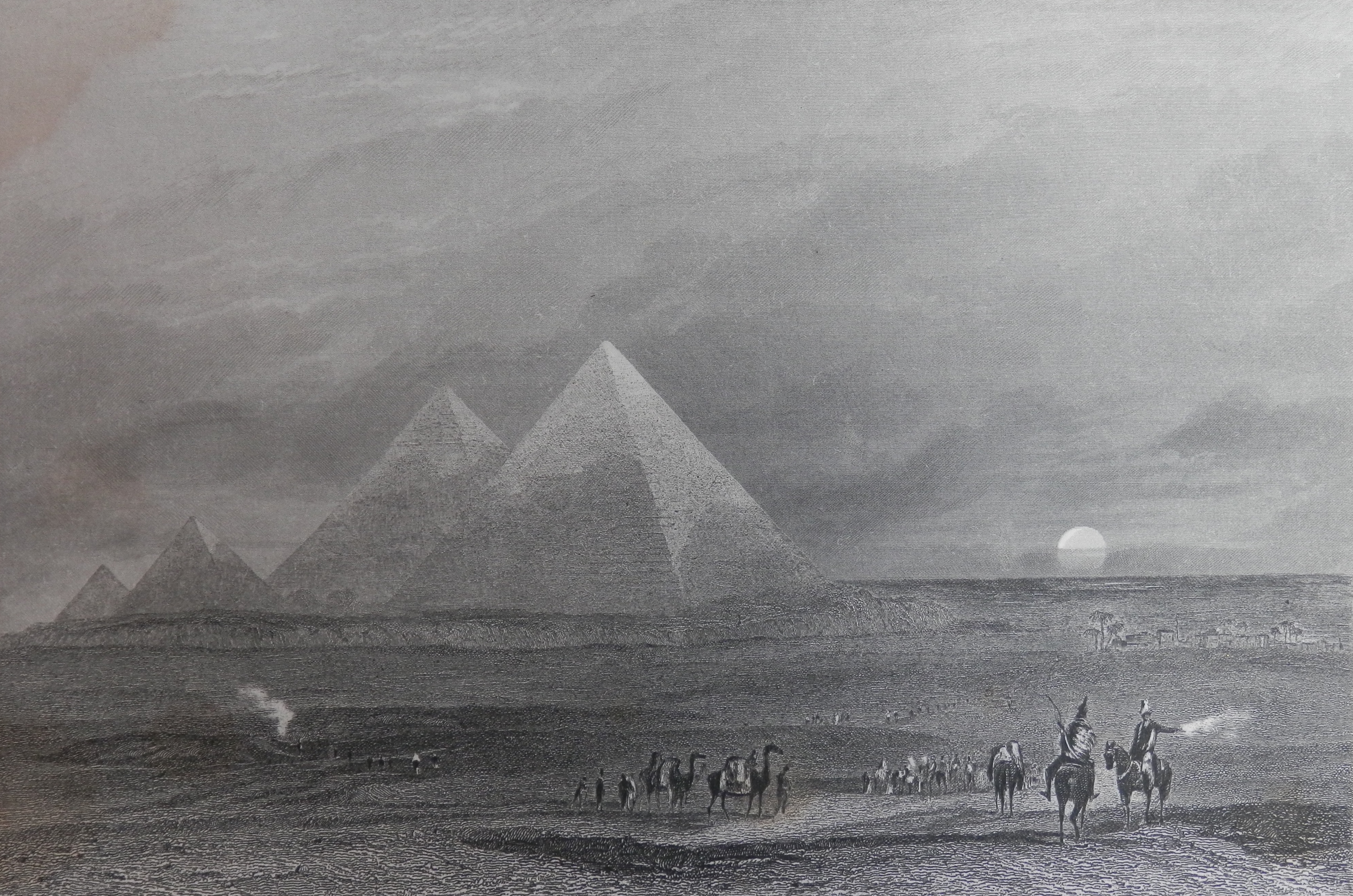
The Pyramids of Ghizeh drawn by JMW Turner E Finden engraving
The Pyramids of Ghizeh
drawn by JMW Turner
E Finden engraving

Nineveh drawing by JMW Turner W Radcliffe engraving
Nineveh
drawing by JMW Turner
W Radcliffe engraving

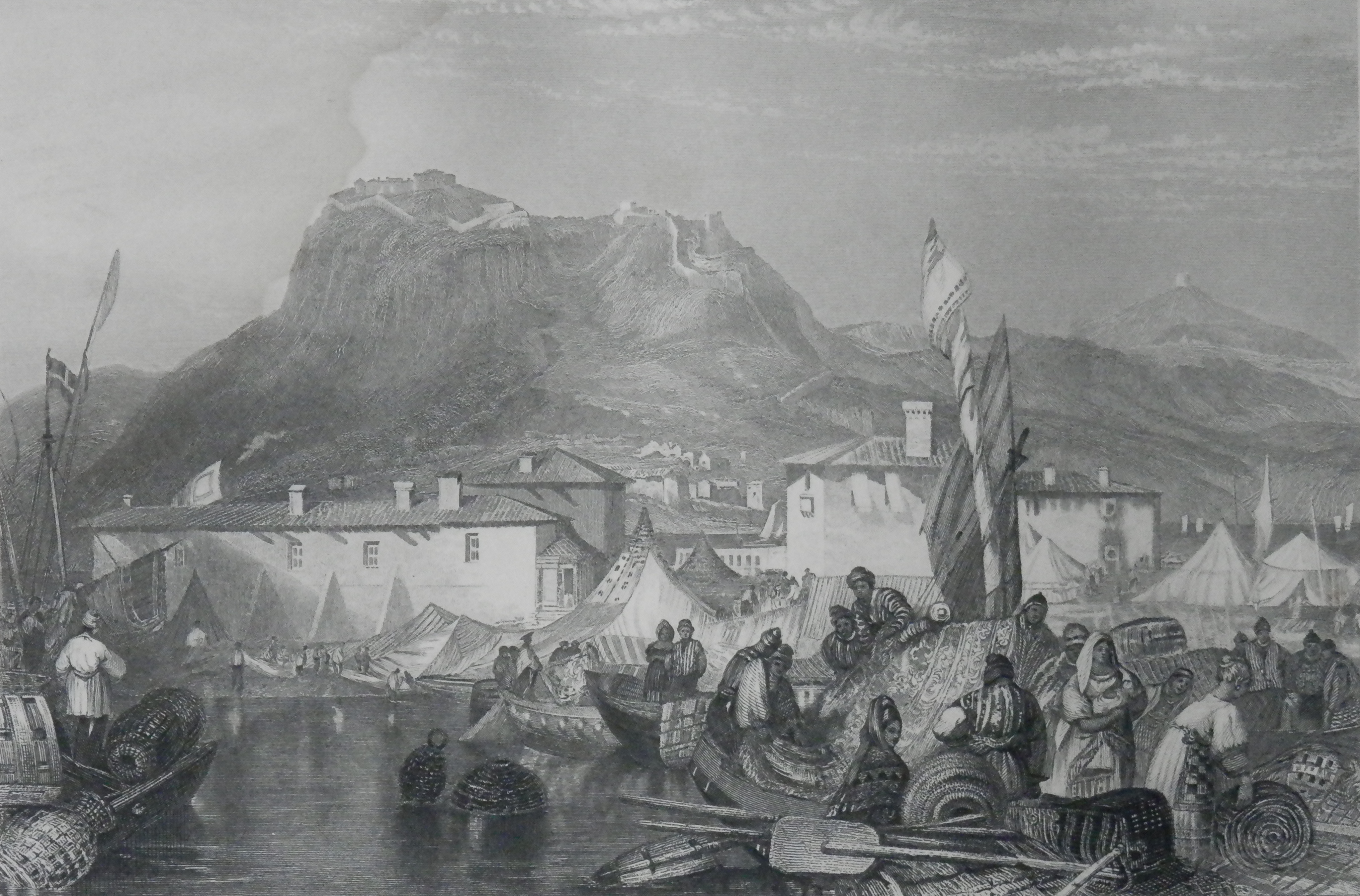
Corinth - Port of Kerkries drawing by JMW Turner E Finden engraving

Corinth – Port of Kerkries
drawing by JMW Turner
E Finden engraving

I hope you enjoy these images.  Turner was truly an artist of sublime skill.
Posted in Etching | Tagged , , , , , , , , , , , | Leave a comment

Art of ‘The Shambles’

‘#TheShambles’ or ‘Shambles’ is an old street in York although it can refer to the  maze of twisting, narrow lanes which make York so charming. It contains over-hanging timber-framed buildings some from the 14th century.  In some places it is possible to touch both sides of the street with your outstretched arms.

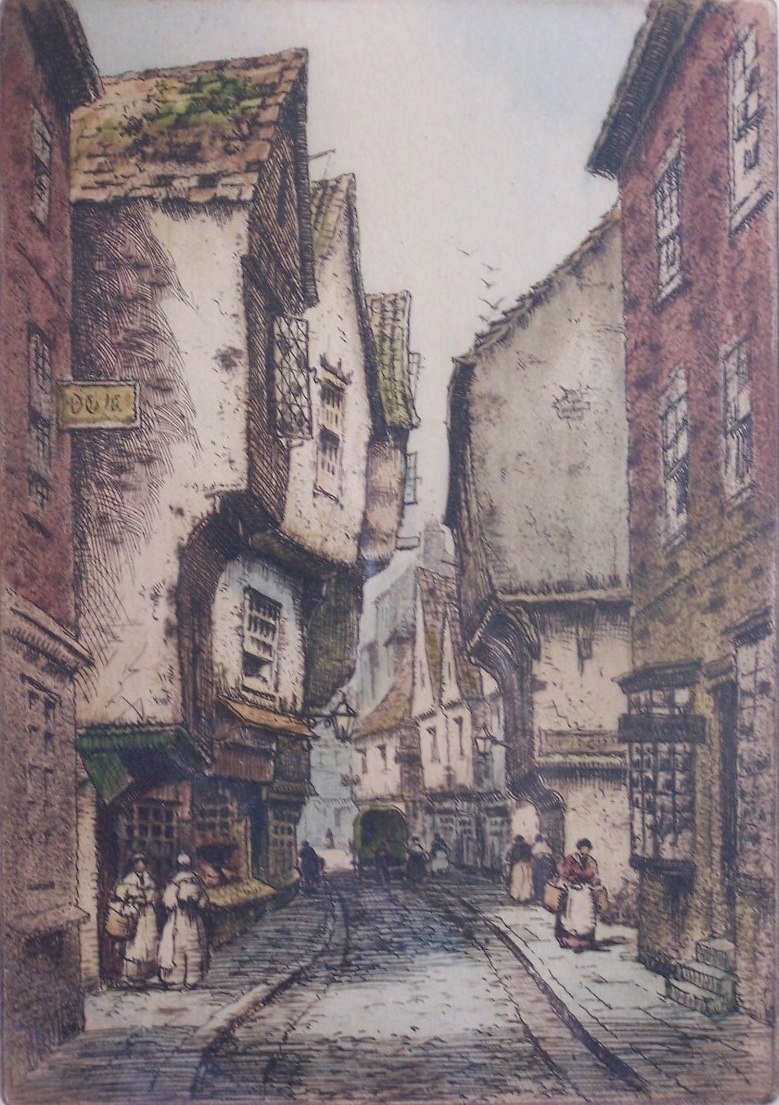
The Shambles etching - coloured by R Herdman-Smith

The Shambles
etching – coloured
by R Herdman-Smith

‘Shambles’ is an obsolete term for an open-air slaughter-house and meat market.  Originally called ‘The Great Flesh Shambles’ there were some 25 butcher shops in the street in 1872.  There are none remaining although some of the shops still have meat-hooks and display shelves on their exterior.  Most of the shops are now taken by eateries, jewellery, antique and souvenir sites as well as a bookshop and a bakery have found their way there too.  The ‘Shambles’ is mentioned in the Domesday Book, so we know that it has existed for over 900 years.  It was a dangerous and unhealthy place in the Middle Ages, and most likely a hot spot for periodic outbreaks of plague.  It has also been a source of inspiration to a great many artists over the years.  We see, firstly, an etching by #RobertHerdman-Smith (1879-1945).  Likely from around 1920-1930, one can easily see the timber buildings leaning out into the street restricting the light and deepening the shadows.

York etching by Percy J Westwood (1878-1958)

York etching
by Percy J Westwood
(1878-1958)

We see almost the same view from #PercyJWestwood in his etching entitled ‘York’.  We feel the shadows far more here, the nooks and crannies where the sunlight does not reach.  The pavements are raised on either side of the cobbled street to form a channel wherein the butchers would wash away their offal and blood twice a week.   The overhanging timber-framed fronts of the buildings are deliberately close-set so as to give shelter/shade to the ‘wattle and daub’ walls below.  The shade would also have protected the meat from any direct sunshine.  The street is the best preserved medieval street in the world.

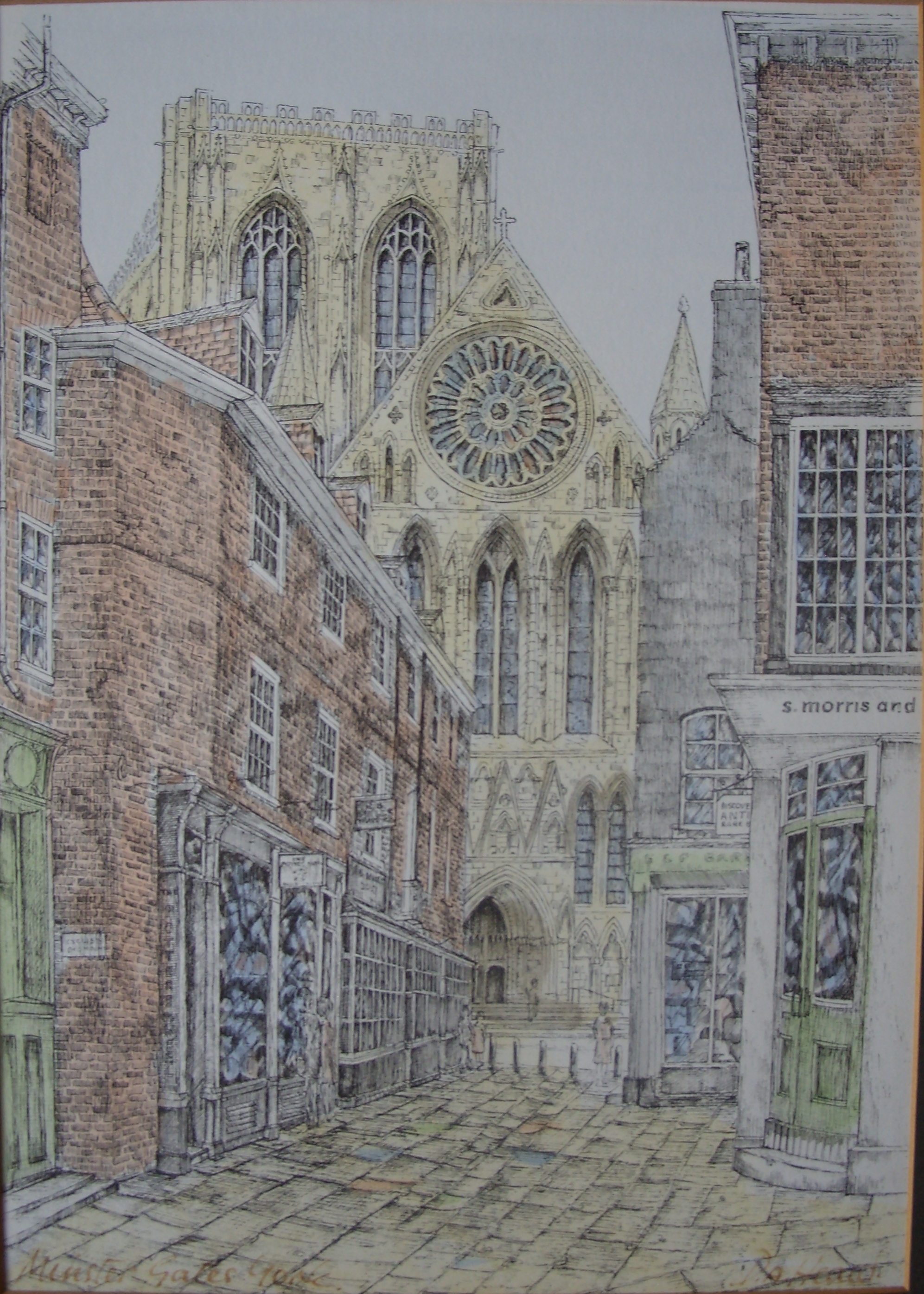
Minster Gate, York by D A Heald

Minster Gate, York
by D A Heald

And finally a view from the top end of ‘The Shambles’ which begins by the mighty York Minster.  A street well worthy of a slow amble on your visit to a lovely city.

Posted in Etching | Tagged , , , , , , | Leave a comment

Art of Black and White

I am going to again blog about etchings.  The texture that is achieved and clarity of image is to me an wonderful thing.

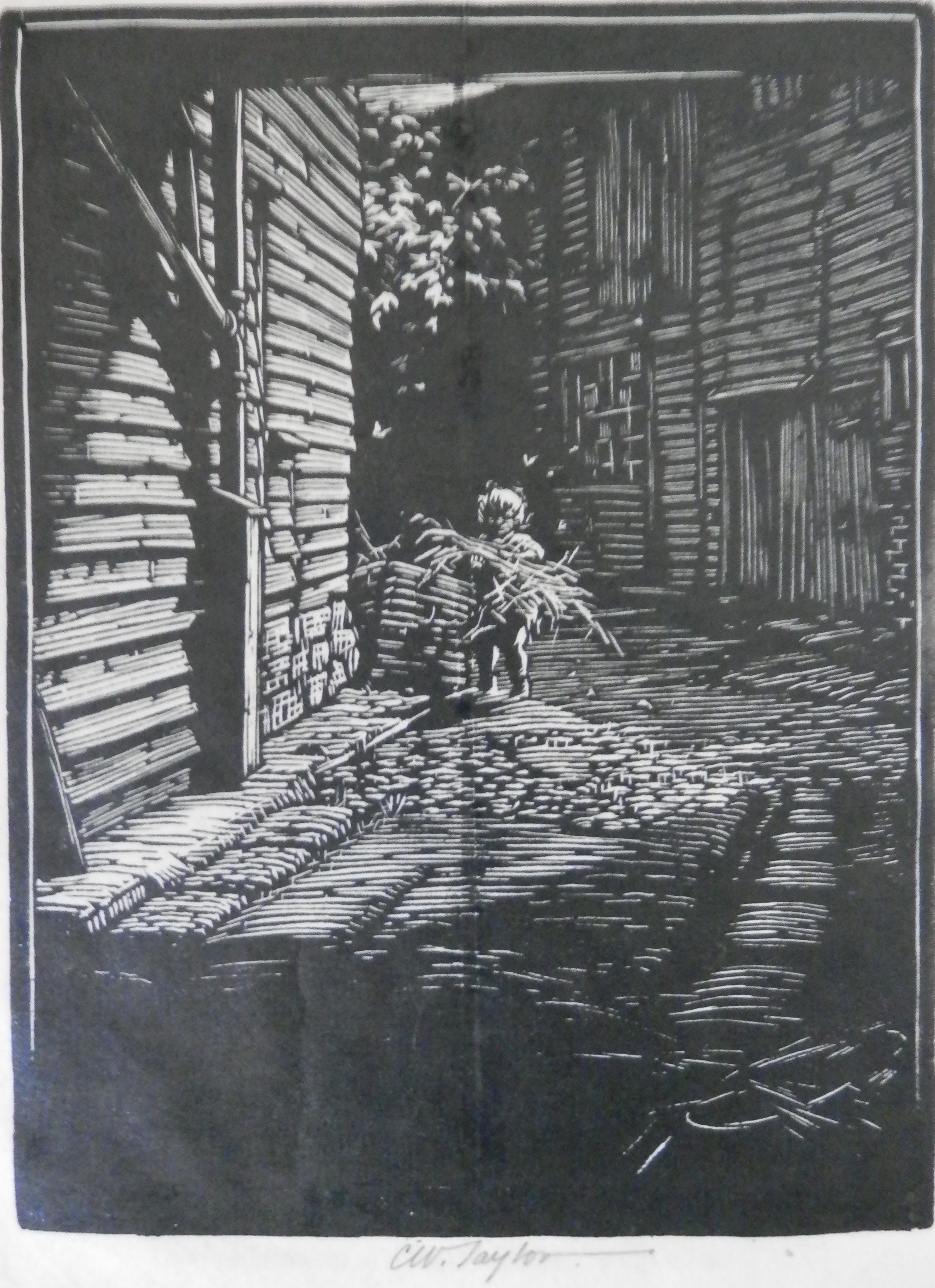
The Dust Bin etching by CW Taylor

The Dust Bin
etching by CW Taylor

#CWTaylor began working as a commercial engraver but went on to produce artistic etchings with an assured and distinctive style.  We see a child playing in a passage way, either filling or emptying the dustbin.  That would be unheard of today.  A deeply coloured image but it has no sense of danger or threat.  A place which is both safe and controlled.  Taylor loved to portray his landscapes and studies using the early morning light of the summer months.  He shows the countryside both lush and fruitful.  He uses a range of tone, of light and shadow, of perspective and detail to imbue his etchings with a wonderful intensity. He also, at times,uses more than one technique on his prints and it is his attention to both method and detail that lifts him beyond the ordinary.

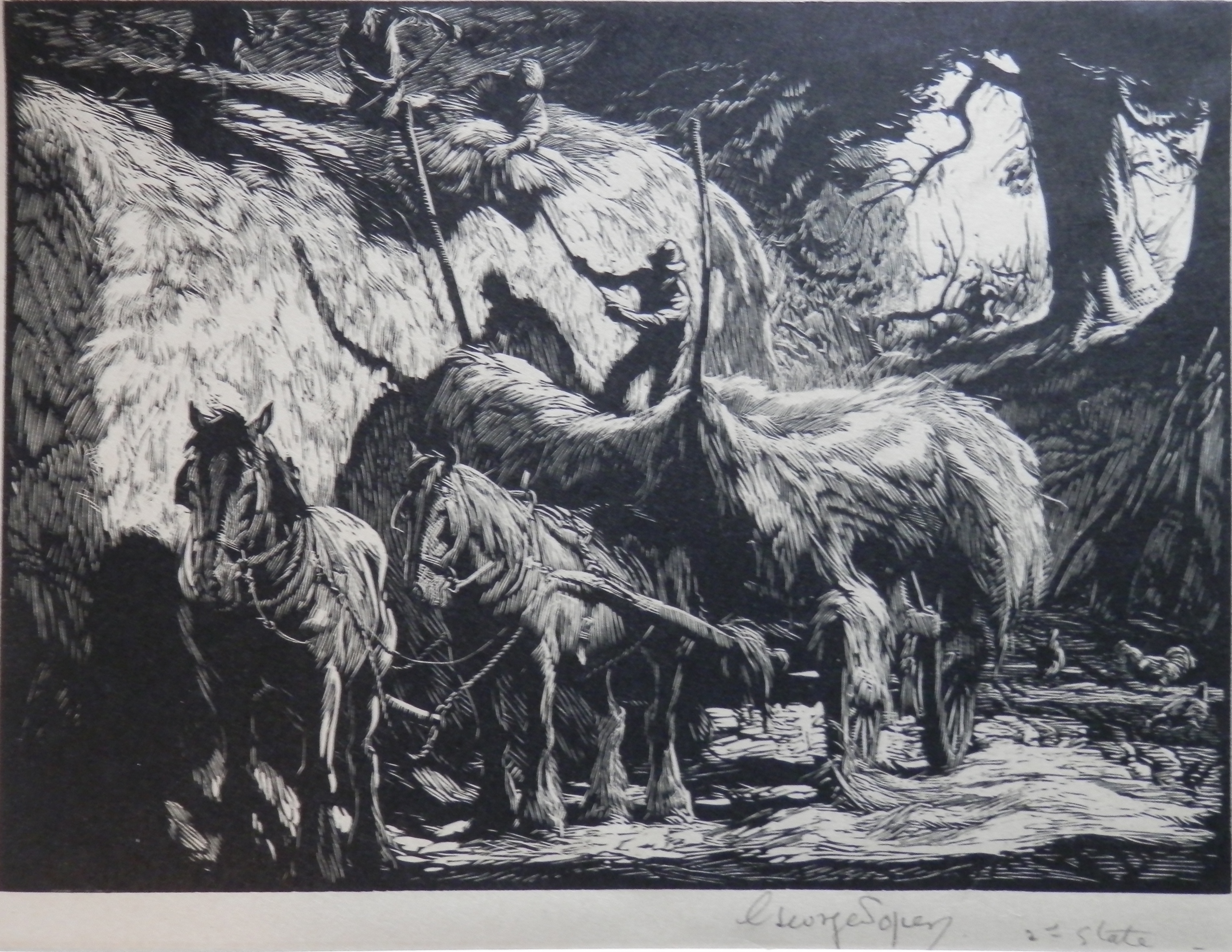
Emptying the Load by George Soper

Emptying the Load
by George Soper

An illustrator in his early years, #GeorgeSoper went on to establish himself as a painter and print maker of rural scenes. Mostly self taught as an artist George Soper was affilliated with the Royal Academy where he exhibited for many a year.  George excelled at portraying people at work likely due to his work as an illustrator in his formative years.  As He matured both in age and talent, his main subject became the land, and the men and horses who worked it; mostly based on local Hertfordshire scenes.  He portrays the land in a time before machine and city began to encroach on the  Hertfordshire countryside.  He excelled at the portrayal of horses, especially those working on the land.

Two fine examples of their genre. Enjoy.

Posted in Etching | Tagged , , , , , , , , , | Leave a comment

Art of Royalty

I usually do not add more than a single chapter to my blog per week.  I would like to make this an exception due to an etching I bought earlier this week and what day today, 2 June 2013, happens to be.

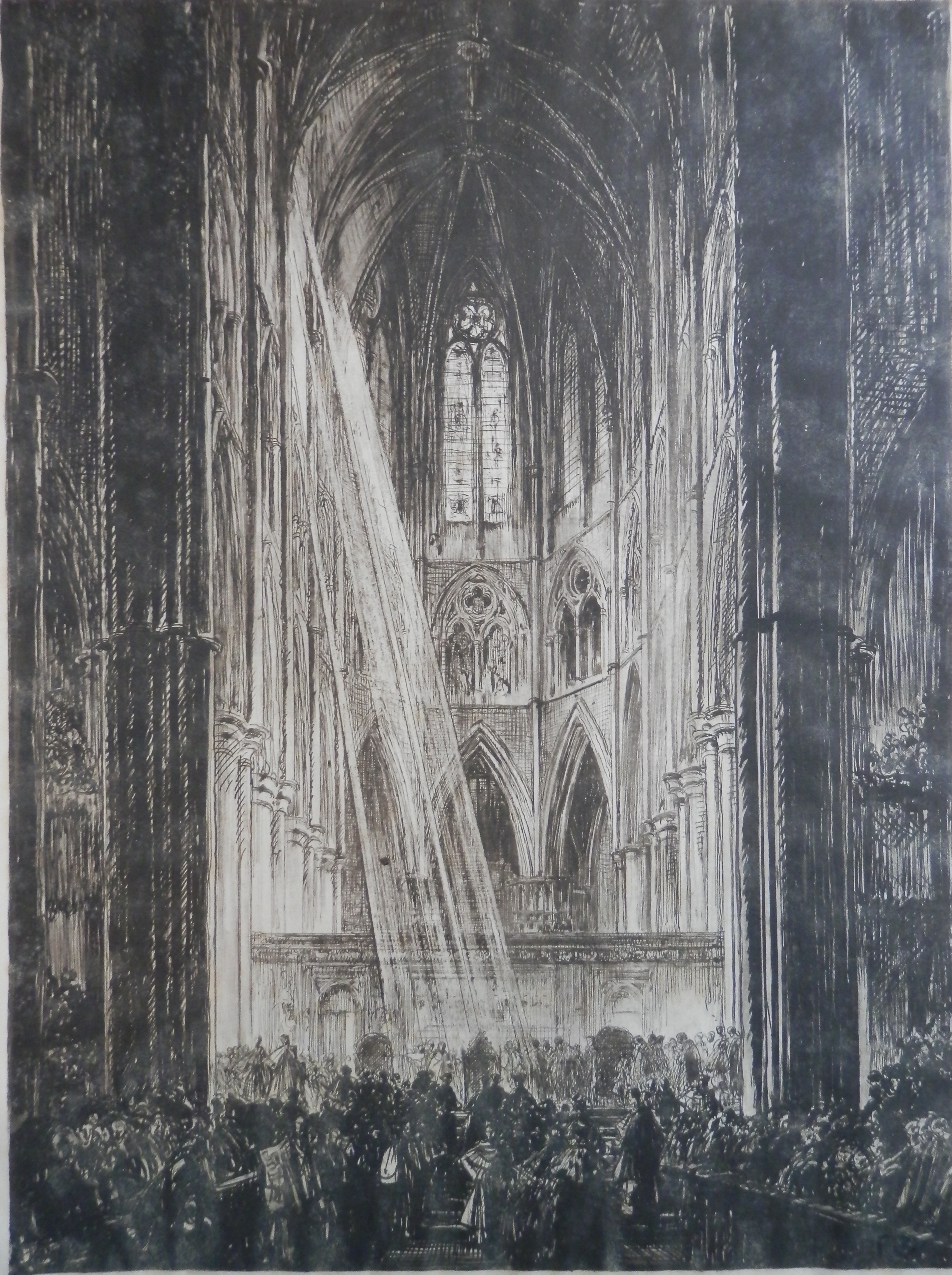
Westminster Abbey initialled FB etching

Westminster Abbey
initialled FB (Frank Brangwyn)
etching 1922

Today is the 60th anniversary of our Monarchs, Elizabeth II, coronation.  At the young age of 25, she took the throne after the death of her father, King George VI.  The #coronation ceremony was held more than a year after the accession.  This followed the tradition that a festival such as a coronation was inappropriate during the period of mourning that followed the death of the preceding sovereign.   The doors to Westminster Abbey were opened at 6am to the approximately 8,000 guests invited from across the Commonwealth. When her grandfather (1911) was crowned artists such as Joseph Pennell, Laurits Tuxen, Bacon, Gillot, as well as a couple of photographers were there to record the event on paper, canvas and film.

This etching is from 28 Feb. 1922 with the marriage of Princess Mary (only daughter of King George V) and Viscount Lascelles (later Earl of Harewood).  The etching is initialled ‘FB’ (#FrankBrangwyn) but untitled and undated and un-numbered.  Brangwyn was commissioned to design street decorations for the coronation.  This stunning image with the sunlight dappling the throne and dais displays the enormity and vastness of Westminster Abbey.  Unlike Pennell’s etching which was drawn from the organ loft.  The perspective here is from ground level.  You feel the crowd pressing on all sides and wish for the vast space above you.  A sacred space worthy of such royal duties.  A n image well worth today’s anniversary celebration.  I hope you enjoy.

I have via a new friend and long time lover of art and etching that this image is titled ‘Westminster Abbey’ and by Frank Brangwyn.  Thanks John.

Posted in Etching | Tagged , , , , , , | Leave a comment

Art in Relaxation

In this country, we love to flock to the beach on a sunny summer’s day.  We picnic, we stroll and amble the seashore.  This has gone on for many a year.  In years past it was recommended by one’s physician to ‘take the air or water’ at certain places.  Now-a-days we call it unwinding or de-stressing.  Often ,if one could afford it, one would travel to a recommended ‘spa’ in another country specialising  in some cure or other.  Sometimes, we go to a place because it is just beautiful.

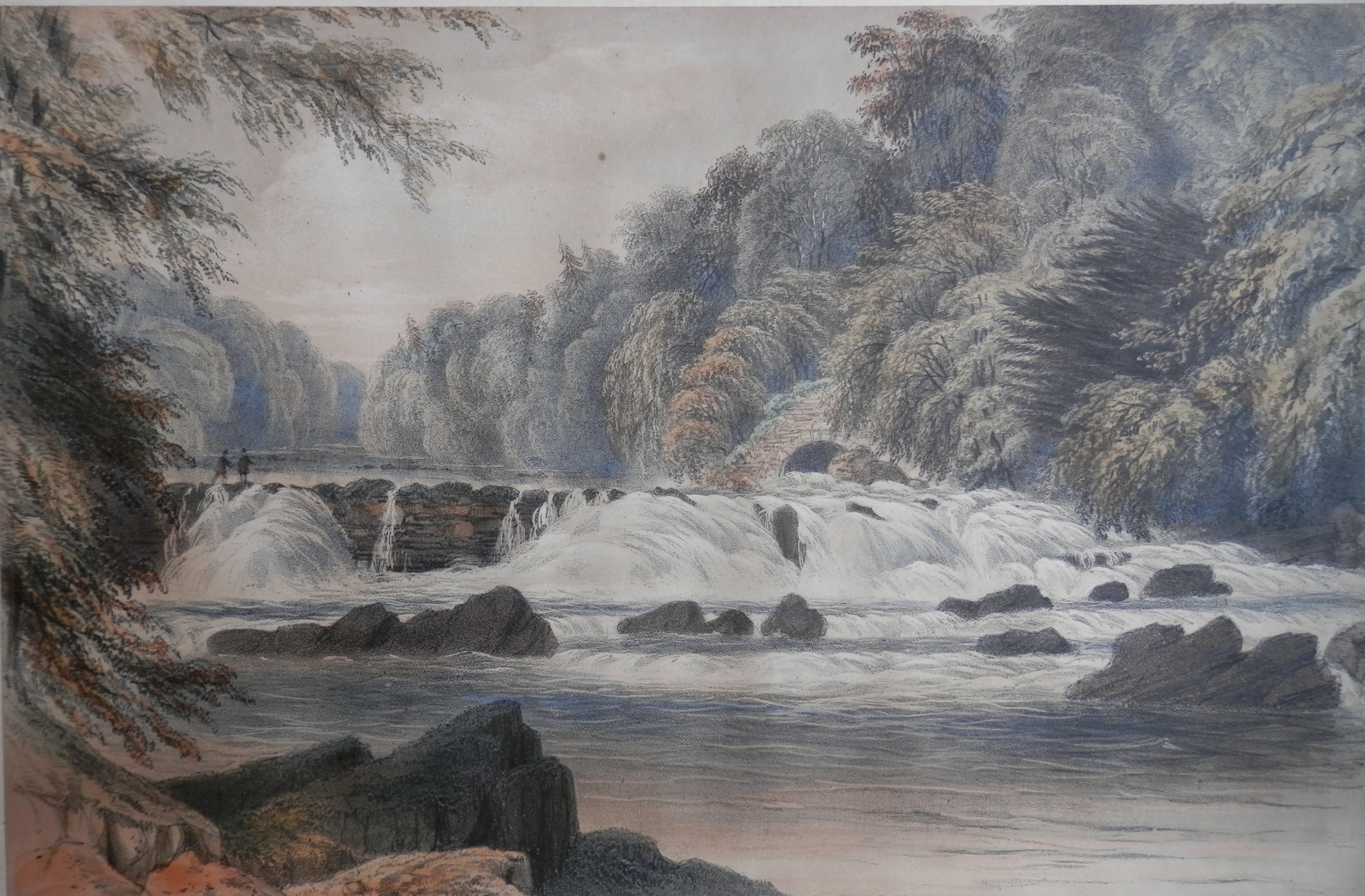
The Salmon Leap, Leixlip unsigned aquatint @ 1800

The Salmon Leap, Leixlip
unsigned aquatint
@ 1800

#The Salmon Leap, Leixlip, Ireland was described in 1840 “…one of the most beautiful bits of scenery in the kingdom … the roar of the waterfall greets the ear, and through some skilfully formed breaks among the foliage that skirts the river occasional glimpses of it are caught . The cataract is of great width and very picturesque in character. The waters glide onwards in a smooth but rapid current and dash down the rocky steep.”

The Salmon Leap was a favourite destination for picnic parties for the citizens of Dublin. Excursions would be made and respite taken on the grassy shore, or on the broad, tabular rocks, which in the dry season are left bare by the fallen waters, and afford convenient platforms for the accommodation of the gay groups assembled there, who,

“Forth from the crowded city’s dust and noise,

Wander abroad to taste pure Nature’s joys;

To laugh and sport, and spend the live-long day,

In harmless merriment and jocund play.”

It is no wonder that people went to rest in this place.  Surrounded by such beauty.

This stunning aquatint although unsigned is of the finest quality. It could possibly be by #FrancisJukes or #Thomas Walmsley. It is hand coloured with an exquisite technique.

Posted in Etching | Tagged , , , , , , | Leave a comment

Art Flowing from Life

I purchased an oil painting not too long ago which was painted in 1919.  This is of course shortly after WW1 had ended.  It portrays a market scene somewhere in Europe.

The Pumpkin Seller signed and date 1919

The Pumpkin Seller
signed and date 1919

In the background, we see people shopping at the market while in the foreground sit women selling pumpkins and cabbages.  It must have been a very hard life after the war ended.  Markets were short supplied and the variety reduced to what was grown locally.  It is hard to tell how many men are in the crowd but the war took so many of them and did not return them.  My grand-parents lived in Holland and survived two major wars before emigrating.  The painting, although portraying life, does not brim with vibrancy, with the hubbub of a thriving market.  It is subdued with muted colours and a coolness of emotion.  It has a matter-of-factness about it.  It is a statement.  The church rises in the background as a visual  reminder that it has stood fast, that it remains a focal point for community.  An image of life after the war filled with a solemnity and sadness and we should not forget the cause of those feelings.

To an coloured etching by B Wilard.  A street scene from Holland.  Two people walk away from us making their way homeward.

Dutch Street Scene by B Wilard

Dutch Street Scene
by B Wilard

In the cool of evening in the dark’ning light life is slow.  Muted blue/grey colouring infuse this image with a chilly feel.  Night encloses this space.  Winter comes anon.  No church here but a factory, a windmill and a poor gas light to show the path for those on the street.

Posted in Etching, Oil Paintings | Tagged , , , , , , , , , , , | Leave a comment

Art in Solitude

I wonder if the life of an artist is lonely at times, or possibly, do they seek out solitude for the sake of their art.   The image I present to you is to my eye a masterful example of watercolour painting.

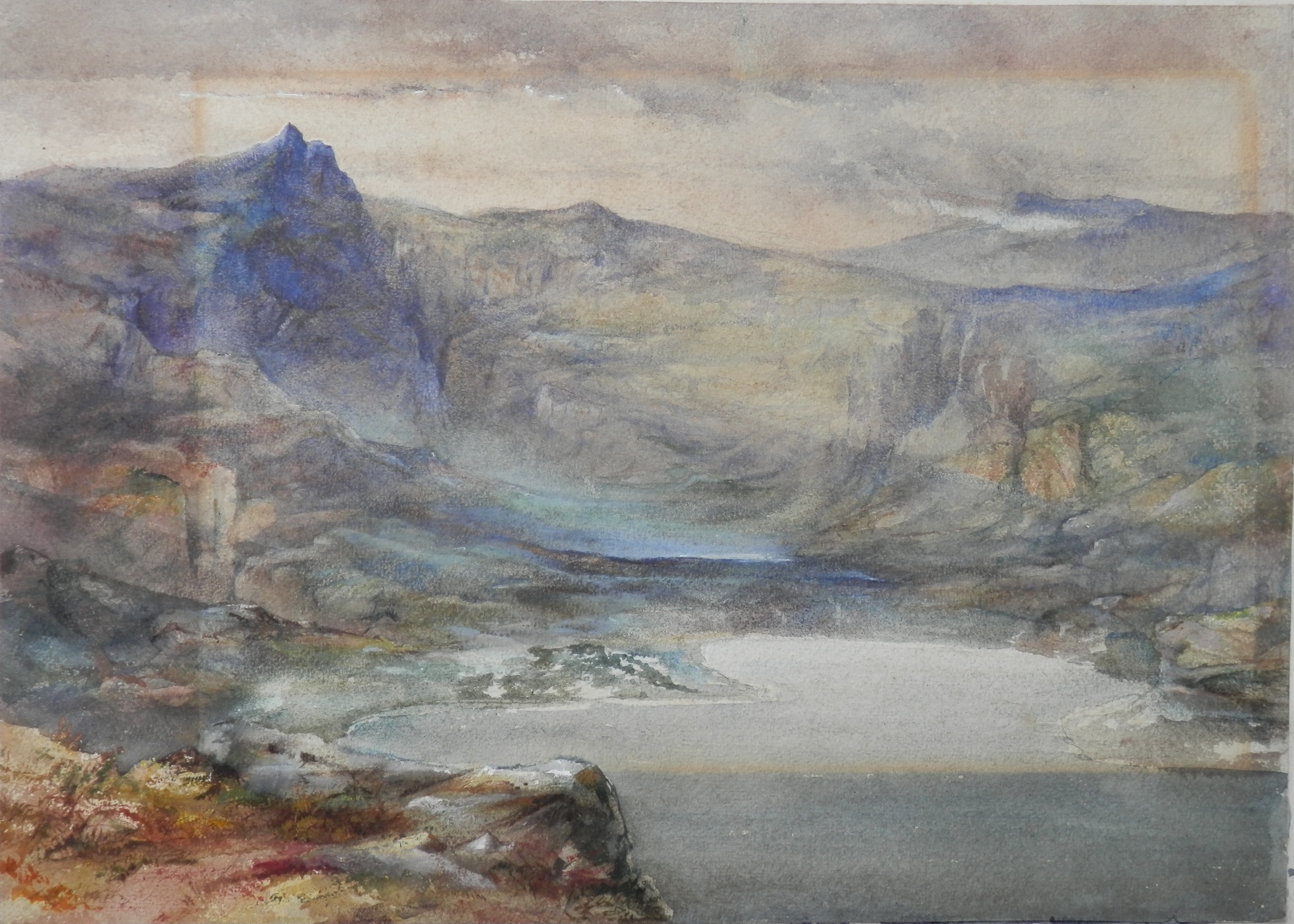
A Mountain Lake unknown artist

A Mountain Lake
unknown artist

I, firstly, give you the whole image to appreciate.  Time has faded the image where it was not hidden by the matt when it was framed.  Take a close look and see the sublime detail in the depiction of the hills.  The muting of the colours. The blending of hue into hue.  The artist sat and painted this image for how long.  Hours? Days?  Did he return more than once to capture the light? To refresh his mind?  Did he return just for the solitude of the place?  To sit and gaze upon beauty, majesty, wonder.  To watch the mist rise from the lake waters, shrouding the countryside in haze.

And now the painting as seen when the matt is over laid.  Why has the artist decided to hide part of this image?  The quality does not differ.  I do not know why.

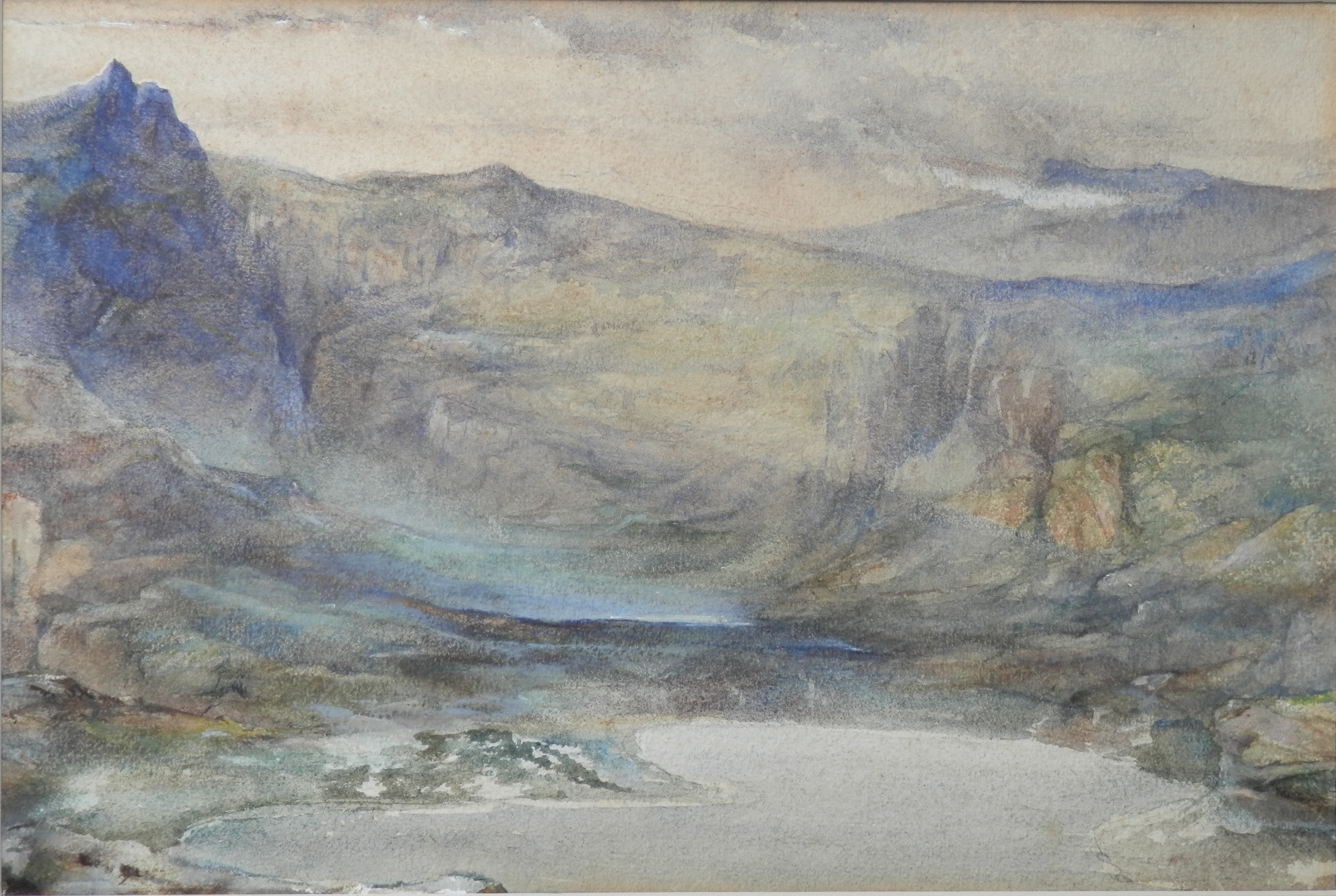
A mountain Lake2 unknown artist

A Mountain Lake2
unknown artist

The focus of the painting which one might have considered to be the misty lake has now moved to the brighter hillside in the distance. Whether this place is found in Wales, in Yorkshire, or in Scotland it does not matter.  The painting itself is very Turneresque in style . Mountain peaks and glacial valleys provided #JMWTurner with subjects for his exploring of the effects of coloured light through atmospheric mist. He mastered the use of watercolour to evoke the magnificent scale and natural splendour of this mountainous scenery.  I suggest looking into Turner’s watercolour paintings or visiting a gallery and experiencing his art first hand.  He is truly Britain’s greatest artist.

Posted in Watercolour paintings | Tagged , , , , , , | Leave a comment

Art of the Coast

From my home, the #Norfolkcoast is an hours drive .  It is a place where the British flock to in the summer sunshine.  Beaches are crowded with bodies tanning, people building sand castles or playing games, families enjoying picnics and even possibly a few people actually swimming.

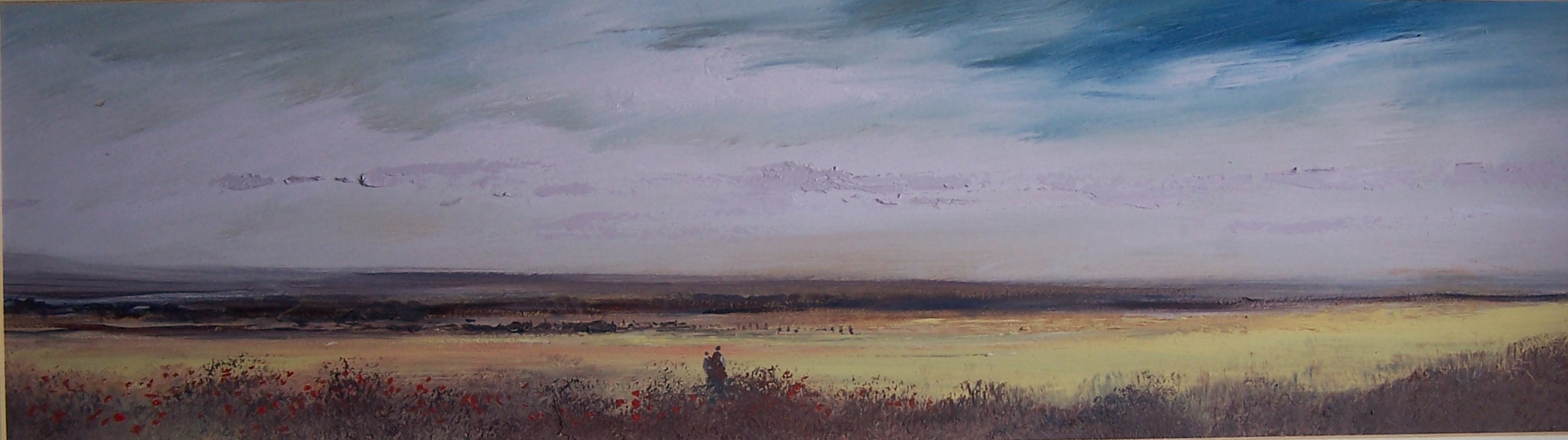
Norfolk Coast signed(illegible)

Norfolk Coast
signed(illegible)

But in the off season or e’en in early morn or late of an evening the beaches are bare, the wind unwanted, the sky scrolled in billowing white.  But this is the season to truly see the beauty of the coast in all it’s rawness.  The oil painting to the left shows the coast barren of human life. Sea birds hang in the wind.  Wild poppies reach for the warming sun.  The remains of an old pier poke out of the sand – the sea is unforgiving in it’s repetitive strength.  Here is beauty in openness, in raw strength, in nature untouched, in natural form.  A place for contemplation, reflection, observation, and meditation.

But the coastline where I live and those all around the world have changed greatly and continue to change.

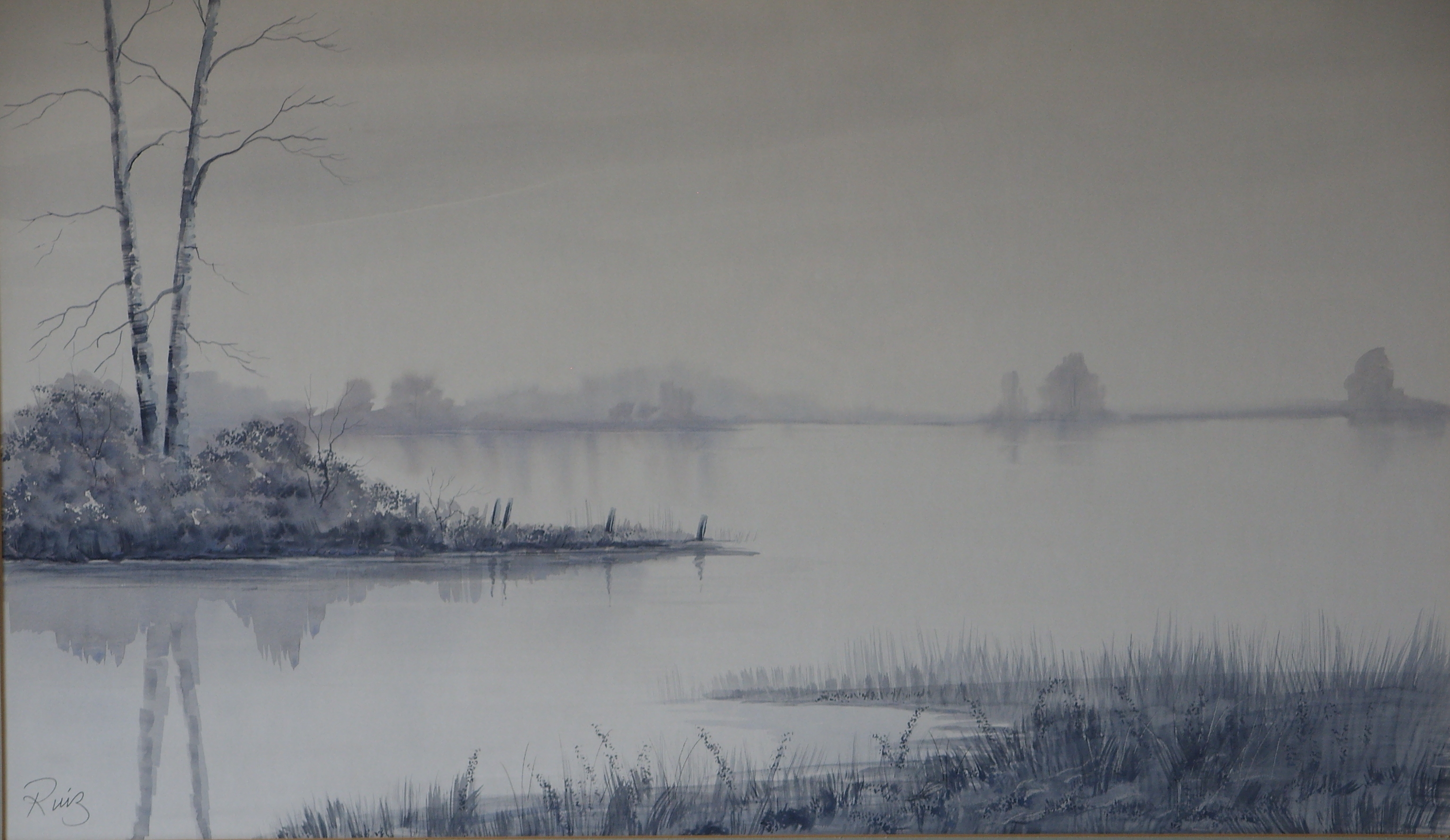
Fenland  by Ruiz

Fenland
by Ruiz

The area where I live is call #TheFens.  Fenlands are a naturally marshy region in eastern England.  Originally consisting of fresh- or salt-water wetlands, which have been artificially drained and continue to be protected from floods by drainage banks and pumps.  Most of the Fenland lies within a few metres of sea level.

The watercolour by Ruiz shows the fens as it still is .  On a misty morning in early spring, fields have been flooded to prevent flooding in other areas.  To these wetland places birds come on their migration to and from seasonal homes.  If the winter is cold enough, these places are an expansive sheet of ice.  In times past, villages arose on the high ground in the Fens.  Only with local knowledge could on make one’s way through the mire from place to place.  Travellers failed, invaders failed, armies failed to navigate these swamplands.

The Fens have been referred to as the “Holy Land of the English” because of the churches and cathedrals of Ely, Ramsey, Crowland, Thorny, and Peterborough.  A region filled with history and religion.  This is the place where I live!

Posted in Oil Paintings, Watercolour paintings | Tagged , , , , , , , | Leave a comment

Art of Majesty

I wonder at times what art should be.  Many artists use art to make a statement.  Others push the boundaries of society’s understanding saying they are just declaiming what society is becoming.   I, myself, find these arguments belittling of art itself.  Almost everything can be and is considered art today.  Much of what is is not worthy of the title.  But enough.  I want to talk about majesty as presented by artists in paintings.

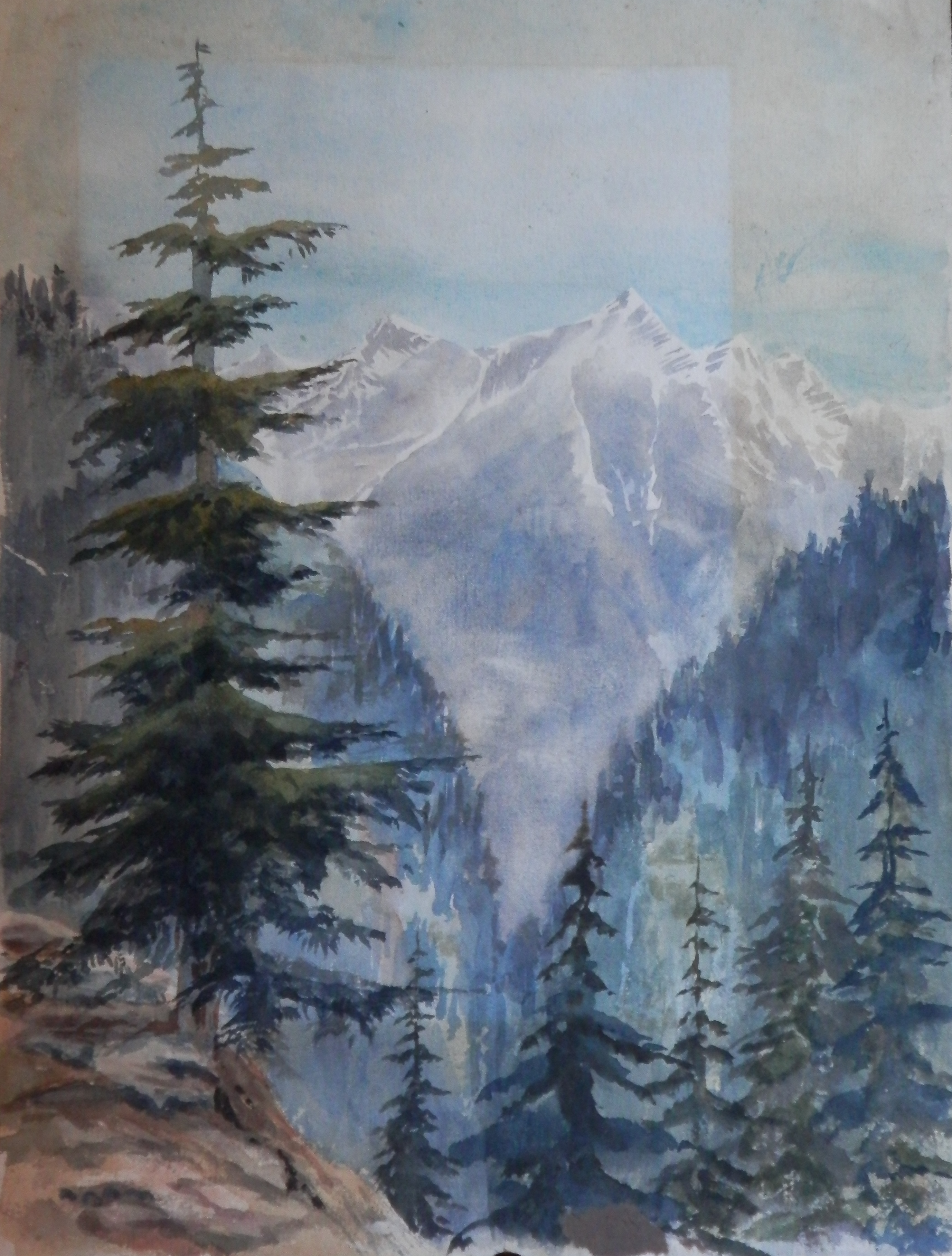
Mountain Grandeur unknown artist - watercolour

Mountain Grandeur
unknown artist – watercolour

A watercolour by an unknown artist of the Alps (possibly – #Eiger,Moench,andJungfrau-obscured by tree branch). Majesty beyond words.  Beauty reaching towards the sky.  Part of this picture was hidden behind the matt as can be seen from the lighter coloured rectangular section.  This artist has an eye for the reality of what he sees, a respect for his subject.  The beauty portrayed is intertwined with the danger which lies just a step ahead.  Stand in awe and be amazed at what we see around us.  Give it it’s due respect and honour for we did not create this – only an image of it.

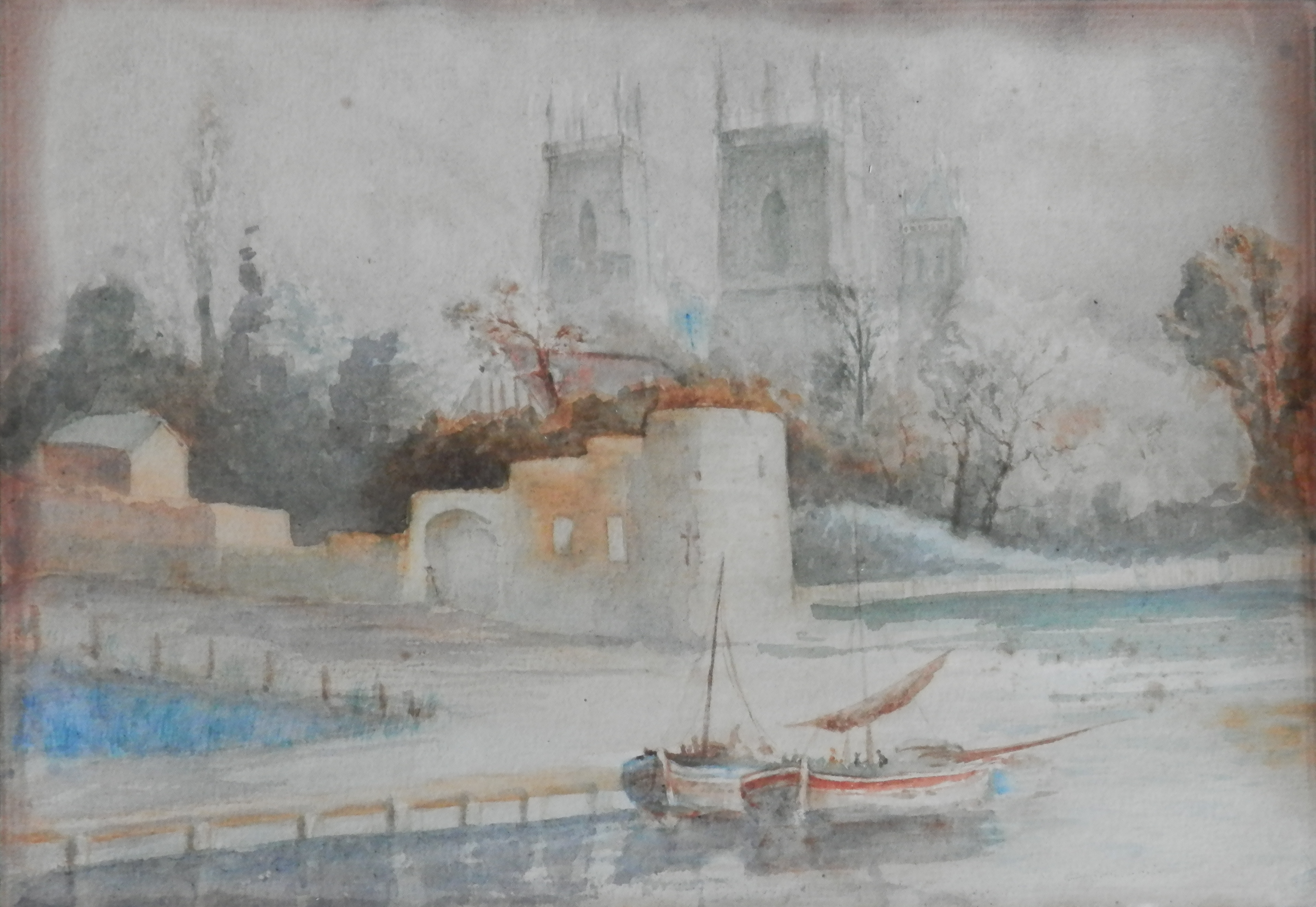
Next to something which man did build. The dual towers of the mighty #YorkMinster as seen from the River Ouse.

York Minster from the Ouse possibly by George Fall @ 1900

York Minster from the Ouse
possibly by George Fall @ 1900

A watercolour, possibly by George Fall done around 1900, displays the dignity and power of this cathedral.  A cathedral rising up from the earth pointing heavenward.  These towers have seen history come and go. Mighty men, warriors, intellectuals, politicians, theologians have appeared and disappeared.  Few leaving a mark such as this.  Renowned for it’s stained glass windows and it’s stature in the church hierarchy.  Impressive as it is, it would have been truly a sight to behold when the central tower had it’s spire.

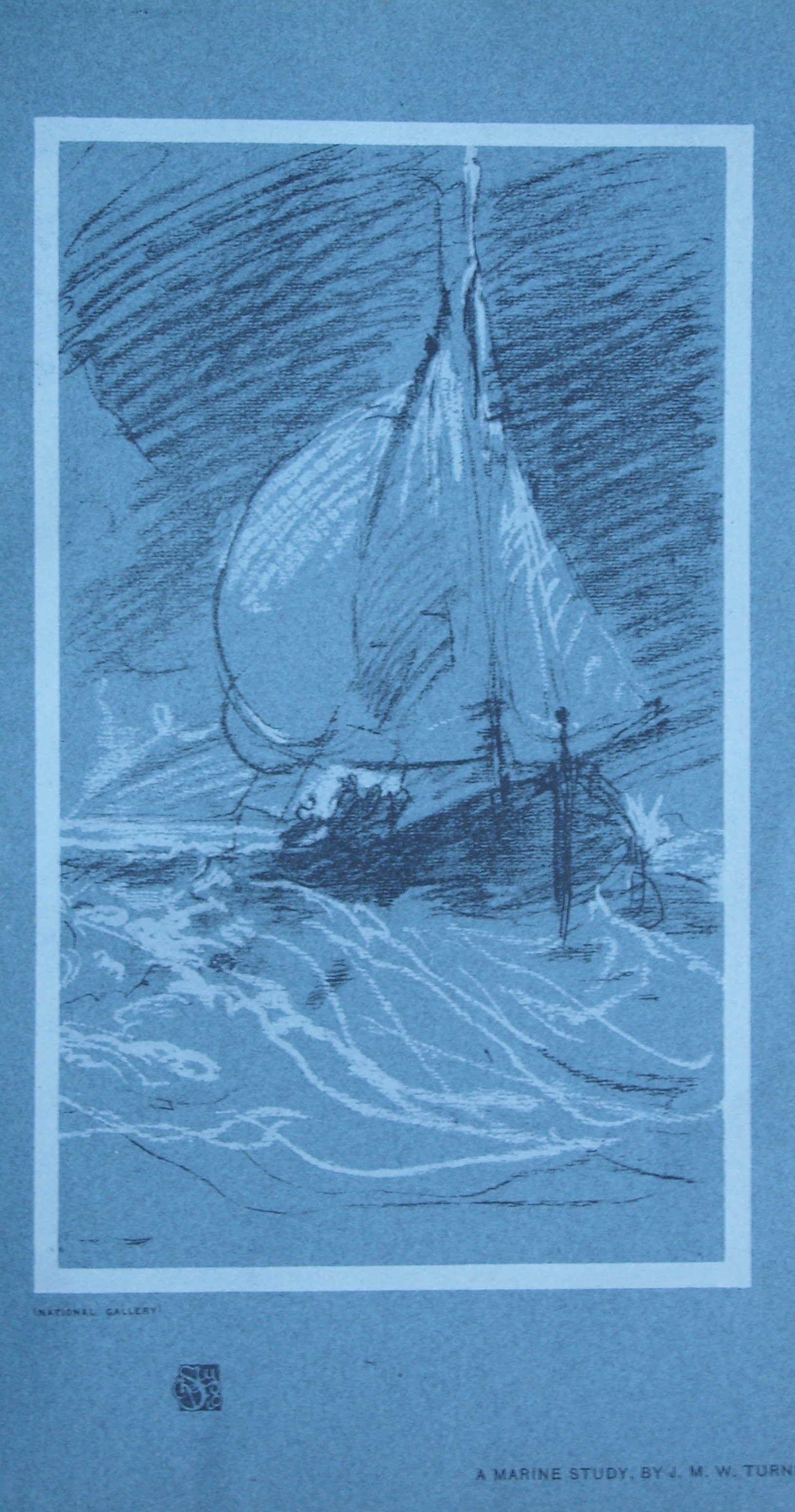
And from land to sea.  What can be more powerful than the sea at full crest and gale.  A ship with sails billowing running before the wind and storm.

A Marine Study by JMW Turner from The Studio Magazine

A Marine Study
by JMW Turner
from The Studio Magazine

By #JMWTurner.  ‘A Marine Study’ which shows Turner’s technique as well as his wonderful skill at catching and portraying the atmosphere of what he sees.  With a few deft lines, he captures the sea’s strength and power and the fragility of the ship as it struggles against the storm.

Posted in Modern prints, Watercolour paintings | Tagged , , , , , , , , , , , , , , | Leave a comment

Art of a Different Medium

While collecting, I have purchased beautiful objects which might be considered artistic but they do not fall into what one might call the focus of my collection.  Most of my collection is of paintings and prints.  Today, I present to you a few pieces which I have come across which are not in these categories and, honestly, I do have a love of beautiful plates; whether they be Dutch, German, or Spanish or from further afield.

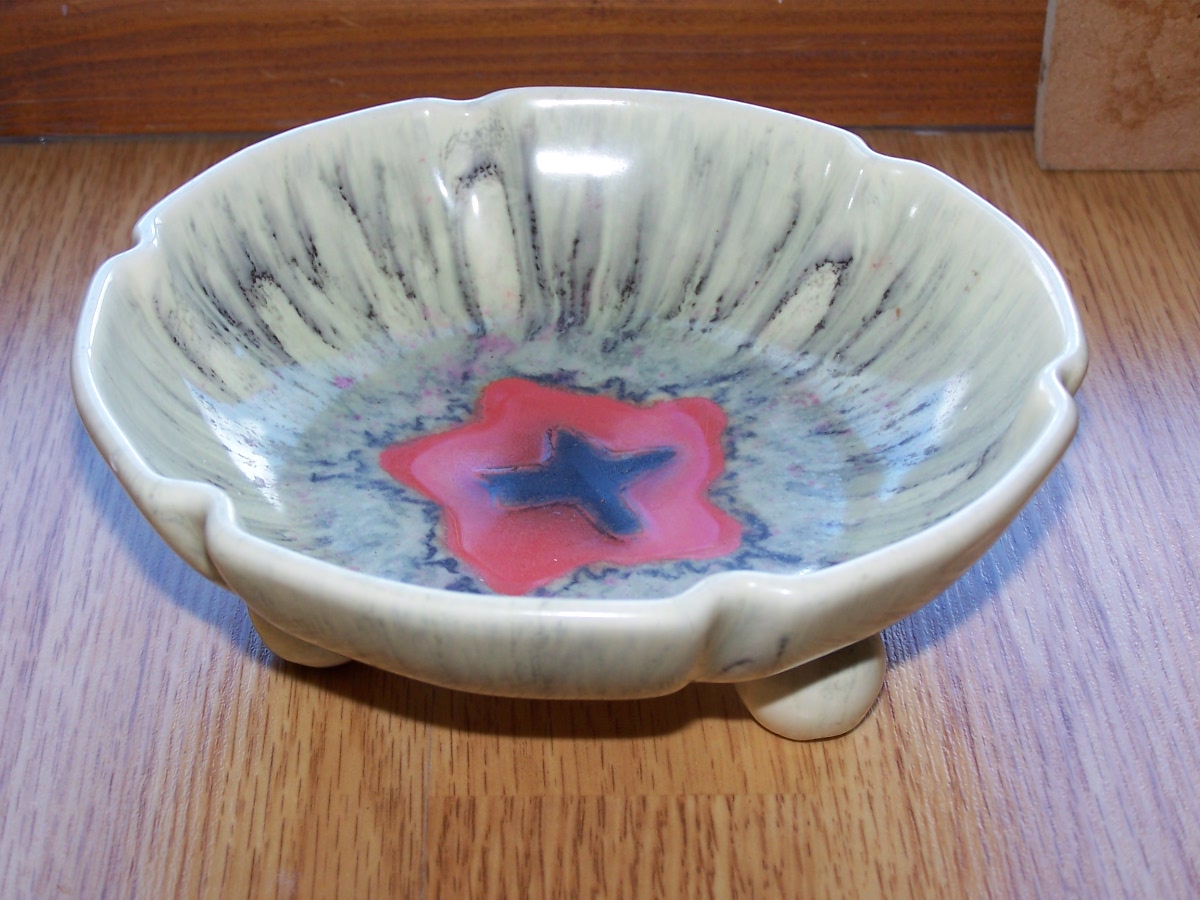
Rosenthal keramik bowl

Rosenthal keramik bowl

A small bowl from the #Rosenthal porcelain company.  Now-a-days Rosenthal is known for its china/tableware but they also produce speciality items, limited editions and figurines.  Rosenthal porcelain has been made  in Selb (Bavaria) since 1880 and they continue to make fine quality tableware and figurines to this day.  This lovely tri-legged bowl could be a bonbon dish.  It is not from a patterned set and is possibly a one-off from their pottery line.

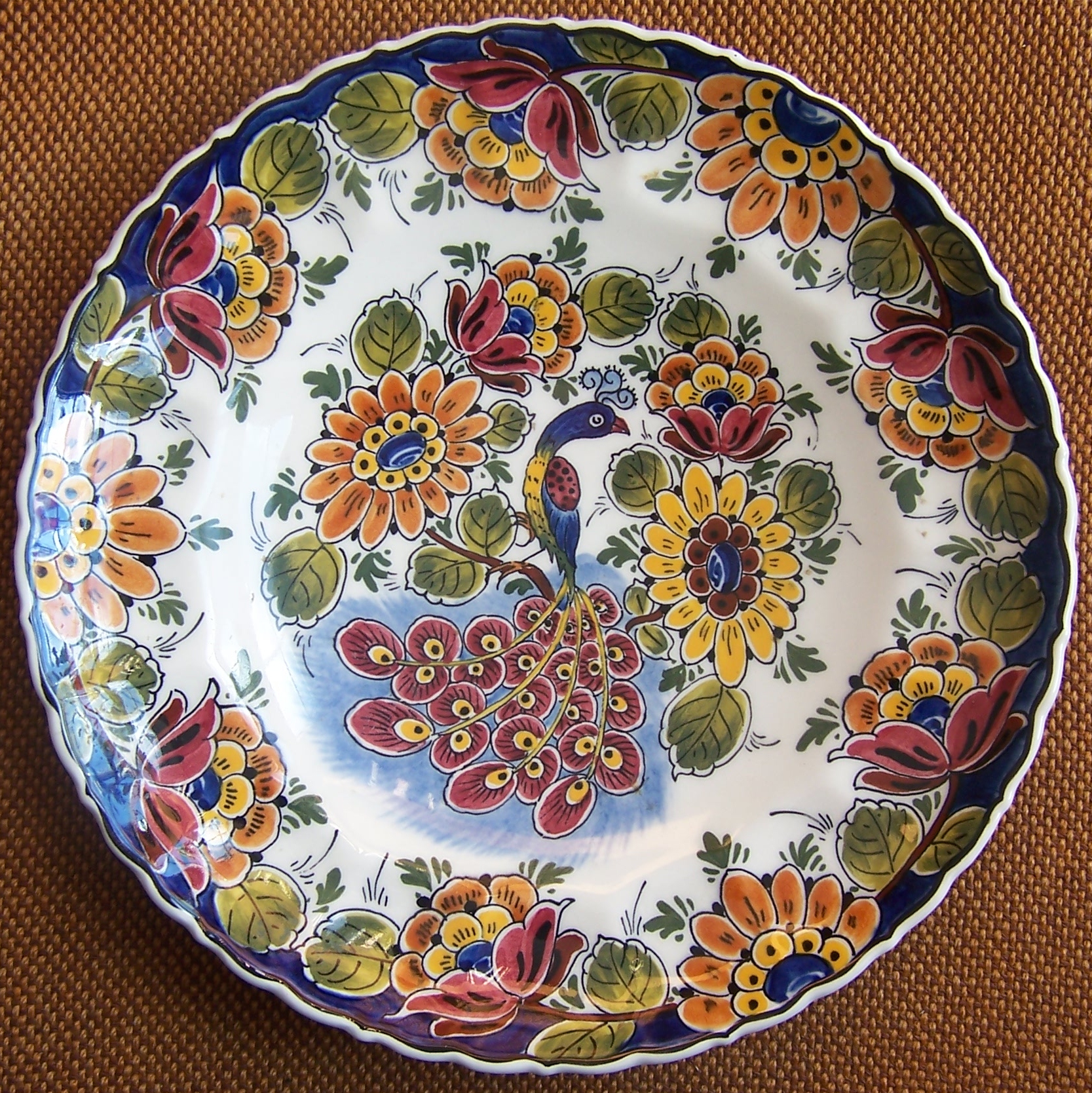
From Germany to Holland for a delft plate.  A very colourful plate by Henk van Wensveen who was a main artist at the Regina factory after the war.  He only painted #polydelfts or multi-coloured plates while at the factory.

Royal Delft Plate by Henk van Wensveen

Royal Delft Plate
by Henk van Wensveen

Wonderfully coloured flowers ring the plate and the central bouquet which centres an exotic bird of varied colours.  All plates are painted free-hand, so no two are alike. Van Wensveen’s plates are highly favoured by many for their colouring and themes.  It is easy to see why.

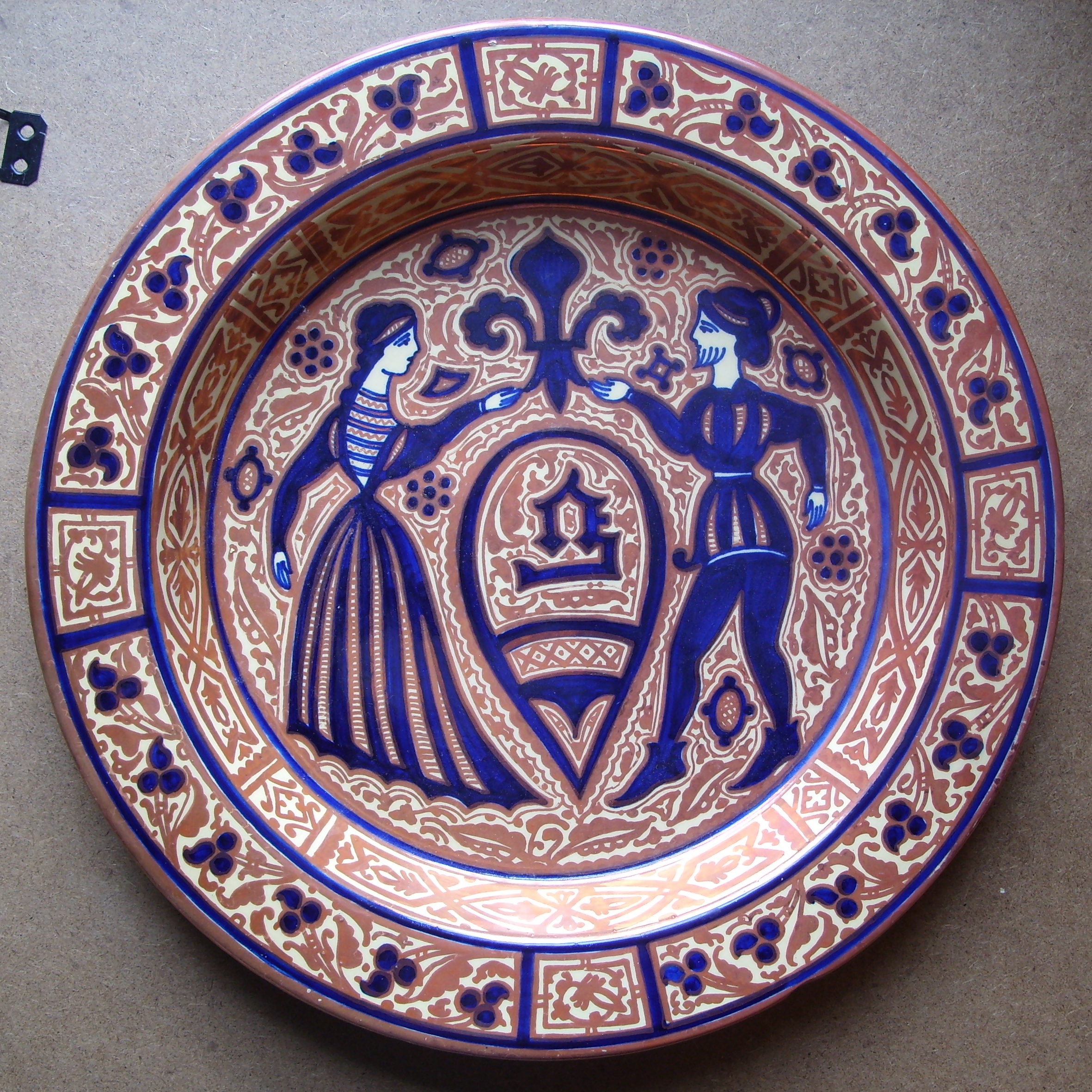
And to my last plate.  It is one which I only recently acquired and comes from Spain.  It is, I believe, what one calls #lusterware.  When I first saw this plate I loved the colouring.  The copper colour against the deep blue gives this plate a warmth and depth.

Spanish Lusterware  J J Escobar painter J Gimeno potter

Spanish Lusterware
J J Escobar painter
J Gimeno potter

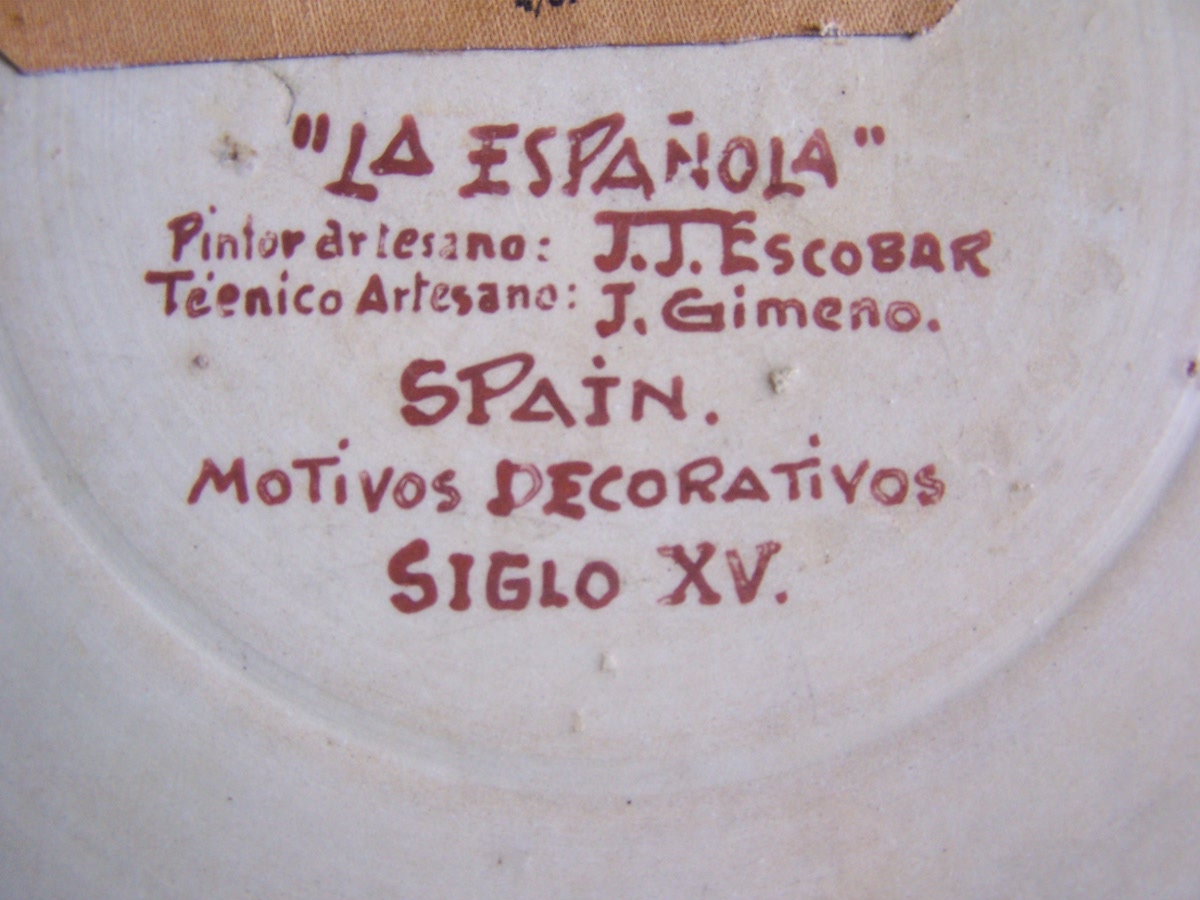
Spanish Lusterware Pate J J Escobar painter J Gimeno potter

Spanish Lusterware Pate
J J Escobar painter
J Gimeno potter

The plate is 38cm in diameter, making it quite large and heavy.  Escobar and Gimeno were both influential in the Spanish ceramic resurgence early in the twentieth century.  They delved into history to find the traditional ways of mixing colours and firing their works.  A very nice example of  lusterware from Spain decorated in 15th century style.

Posted in Ceramics/Pottery | Tagged , , , , , , , , , , , , , , | Leave a comment