Art Unsigned

I often come across pieces that are not signed but are still of good artistic value.  Today a chapter of few words but of an artistic worth of which the paintings may speak for themselves.  They all come from the 19th century.
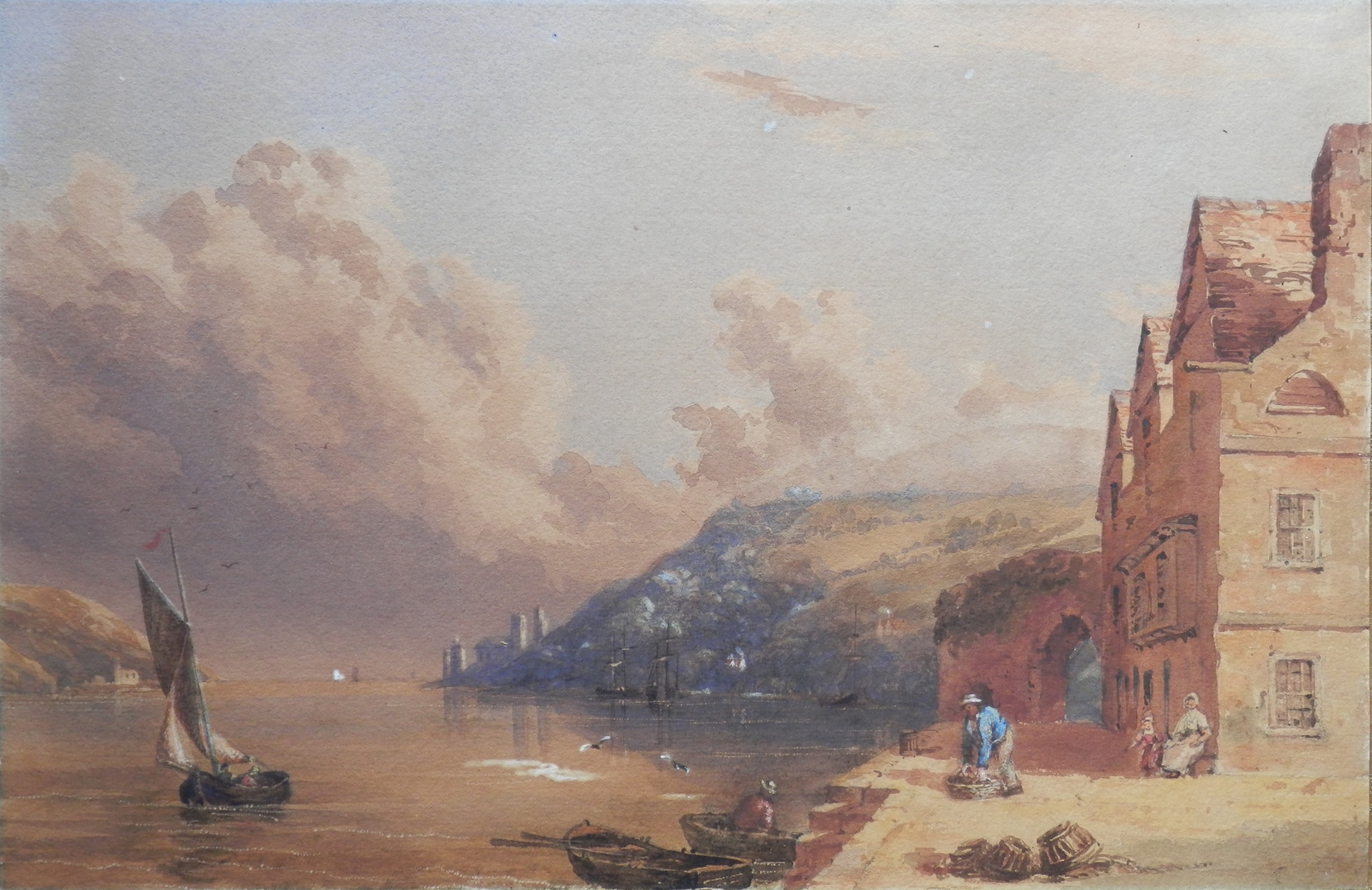
Bayard's Cove, Dartmouth Harbour in the manner of Samuel Prout @ 1860

Bayard’s Cove, Dartmouth Harbour
in the manner of Samuel Prout @ 1860

We begin with a coastal or harbour scene in the manner of Samuel Prout.  A warmth of colour and precision in expression are the proof of this artist’s talent.  I believe it to show #Bayard’s Cove on the River Dart near #DartmouthHarbour around 1860.   We see #StPetroxChurch and castle towers in the distance at the mouth of the inlet.

Old Burial Ground initialed @ 1877

Old Burial Ground
initialed @ 1877

#TheOldBurialGround at #Inceworth painted in 1877 if my reading of the inscription beneath the image is correct.  Alas, Inceworth no longer exists, it was probably erected in the 14th century and by the 18th it was a venerable pile of antiquities.  It’s chapel was turned into a granary which eventually fell into dis-repair.  Inceworth is close Plymouth on the Tamar River which forms the border between Devon and Cornwall.

Idyllic Country Scene unknown artist

Idyllic Country Scene
unknown artist

To an idyllic rural scene with children playing and fishing as their mother prepares her wares for market.  A pleasant scene done in the cool peaceful hues of autumn.

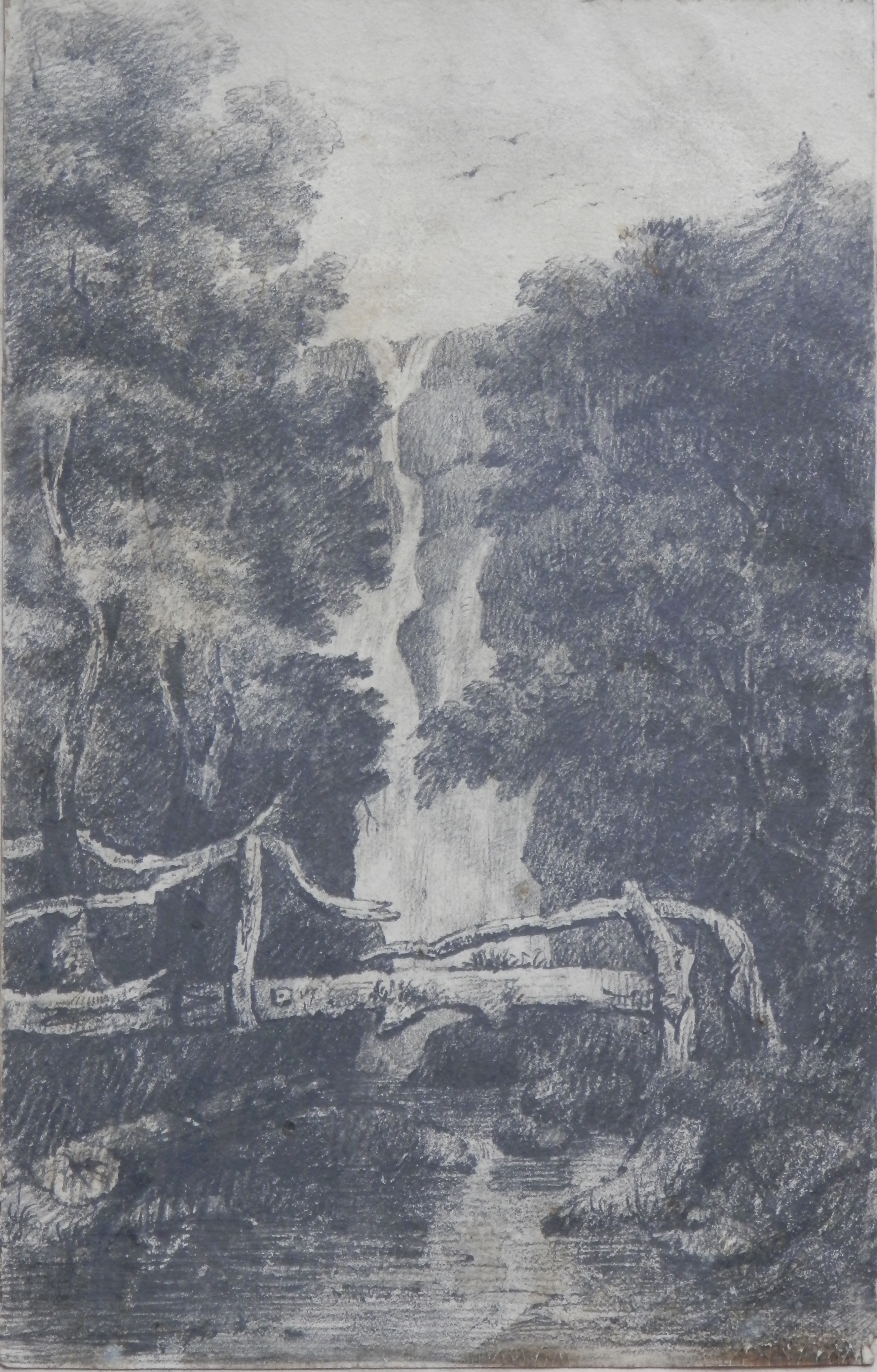
And to finish two landscapes. One with a bit of humour as a man chases his cart down the hill and the other – for me – could be an image from western Canada’s mountains and fir trees.  There are initials to be found in the bottom left corner on the greyish stone. A number of fine watercolours by unknown artists.

Chasing the Cart unknown artist

Chasing the Cart
unknown artist


Mountain River initialed

Mountain River
initialed
Posted in Watercolour paintings | Tagged , , , , , , , , , , , , , | Leave a comment

Venetian Art

Venice is one of those cities that sits high on the must see list of most people.  It has romance, intrigue, history, gondolas and the amazing carnival.  A favourite of many an artist also.

Sante Maria della Salute

Sante Maria della Salute unknown artist 19th C

When I saw this painting I recognized the view as that of the Church of #SanteMariadellaSalute in Venice.  It is one of those places that artists have painted for centuries. Painted by day and night Venice has the added benefit of having canals which allow artists to experiment with the effects of watery reflection. Painted by JMW Turner, EJ Poynter and other great painters yet this watercolour to me looks to be more reminiscent of #HerculesBrabazon and his use of white in his images.

Sante Maria della Salute by Fiona Walker

Sante Maria della Salute
by Fiona Walker @ 1989

Grand Canal, Venice print by Fiona Walker @ 1989

Grand Canal, Venice
print by Fiona Walker @ 1989

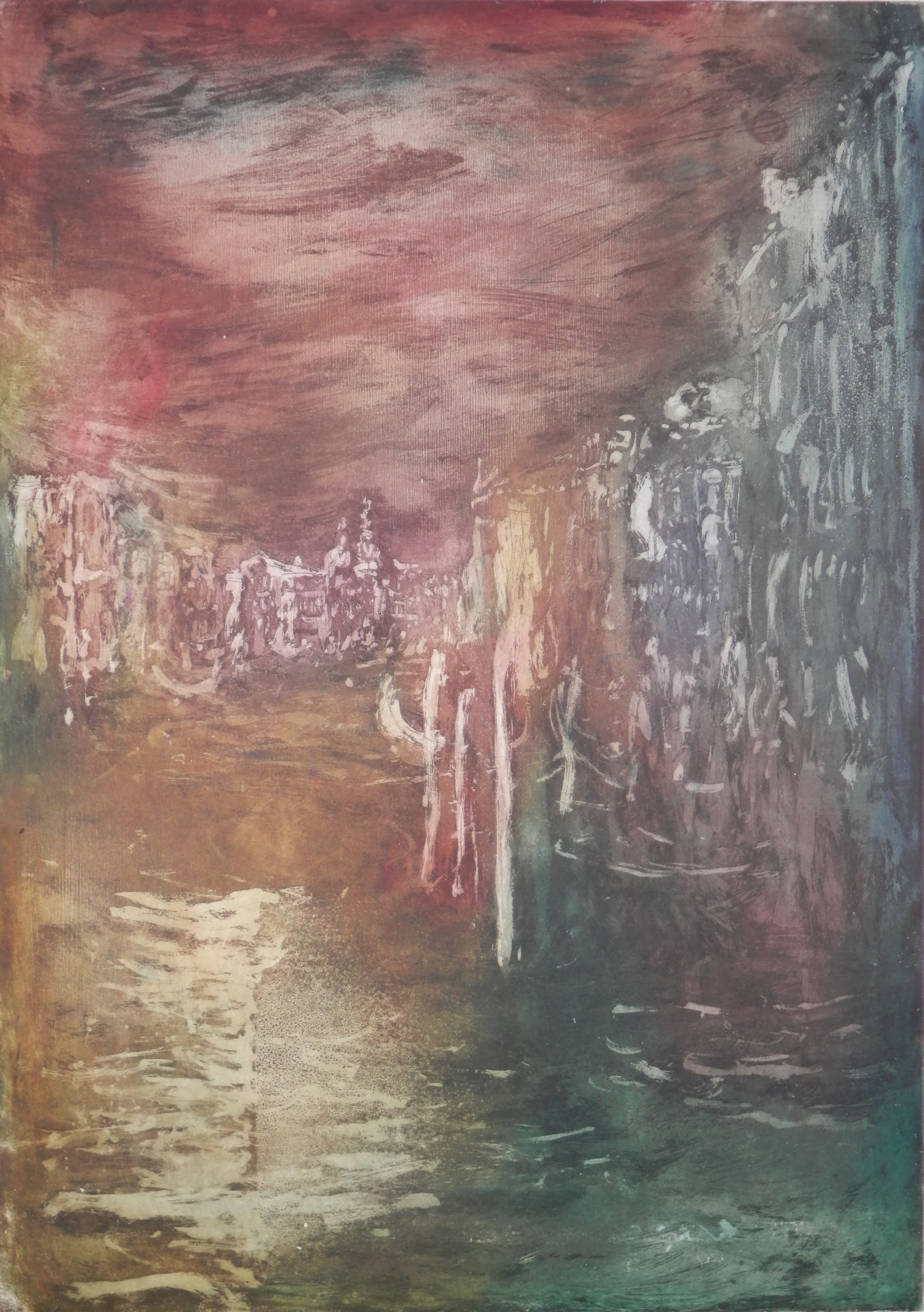
Another image of Sante Maria della Salute and a print showing the #GrandCanal with the Salute in the distance.  Both images are of the canal at night with the marvellous effects light playing on the water.  The canal snakes it’s way through Venice.  It is almost 2.5 miles long , ranges from 90 to 270 feet in width and runs an average depth of 16 feet and is one of the major water traffic corridors for the city.

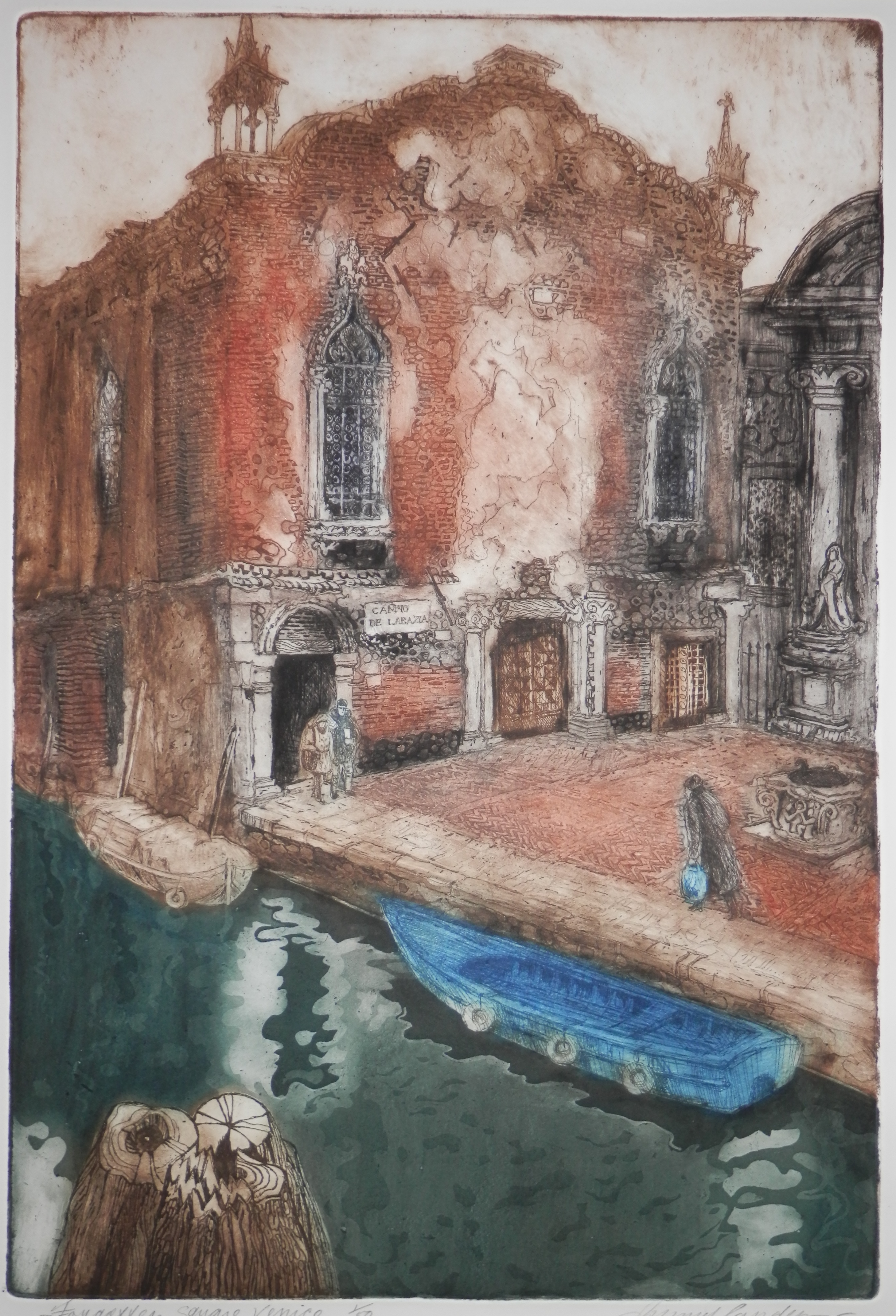
Forgotten Square, Venice by Jenny Sanders

Forgotten Square, Venice by Jenny Sanders

And if you perchance roam those byways of Venice you might happen upon some small forgotten square which is yet to be explored.  Treasures to be searched out and experienced.  A place of beauty portrayed in history past, present and future.

Posted in Uncategorized | Leave a comment

From Insurance to India

Two prints which I bought along with the drawings of the two previous chapters are this weeks focus.  One is certainly art but the other might be a surprise.  Let’s begin with the unexpected.

London Life Association Policy @ 1850 ?

London Life Association Policy @ 1850 ?

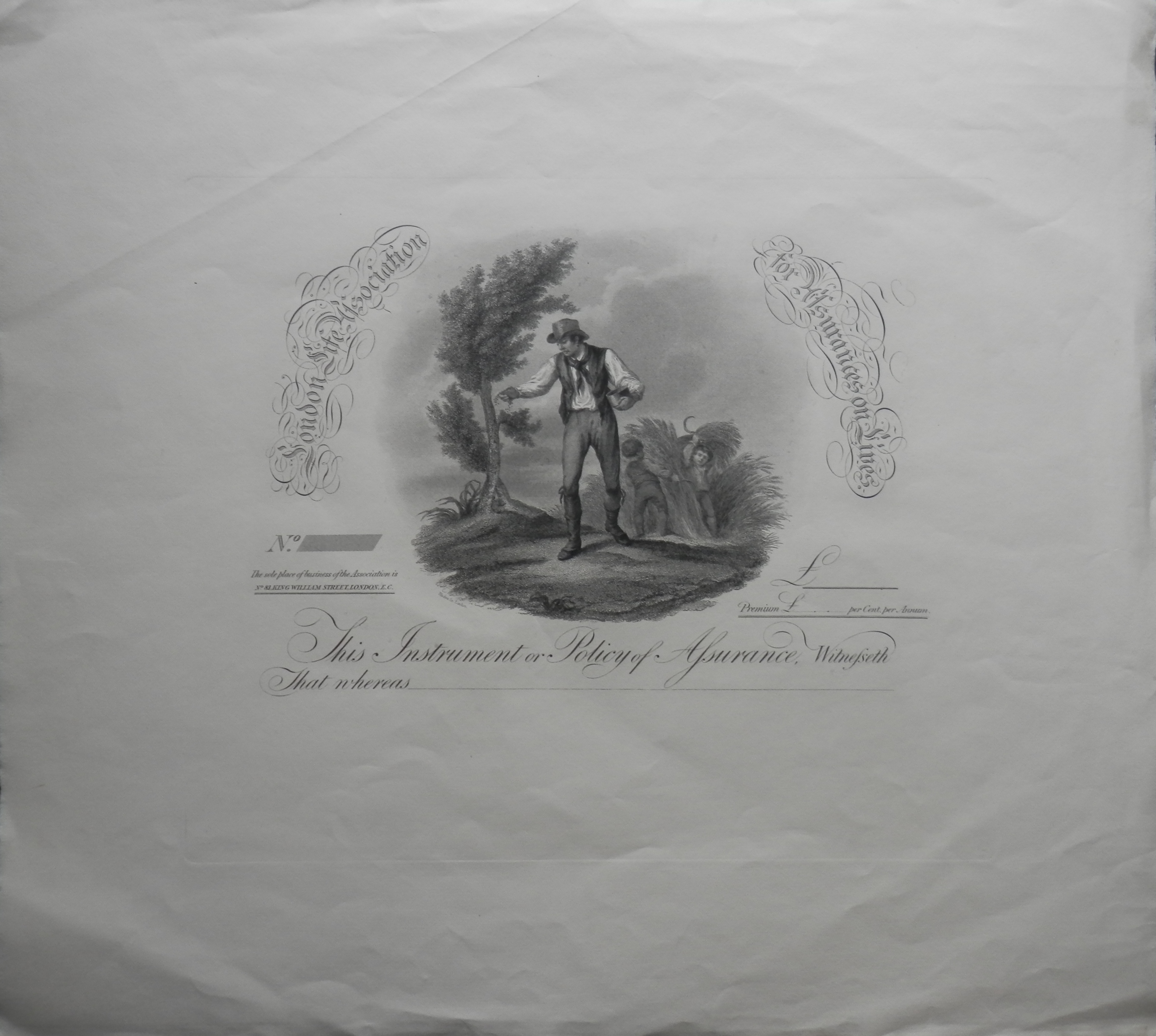
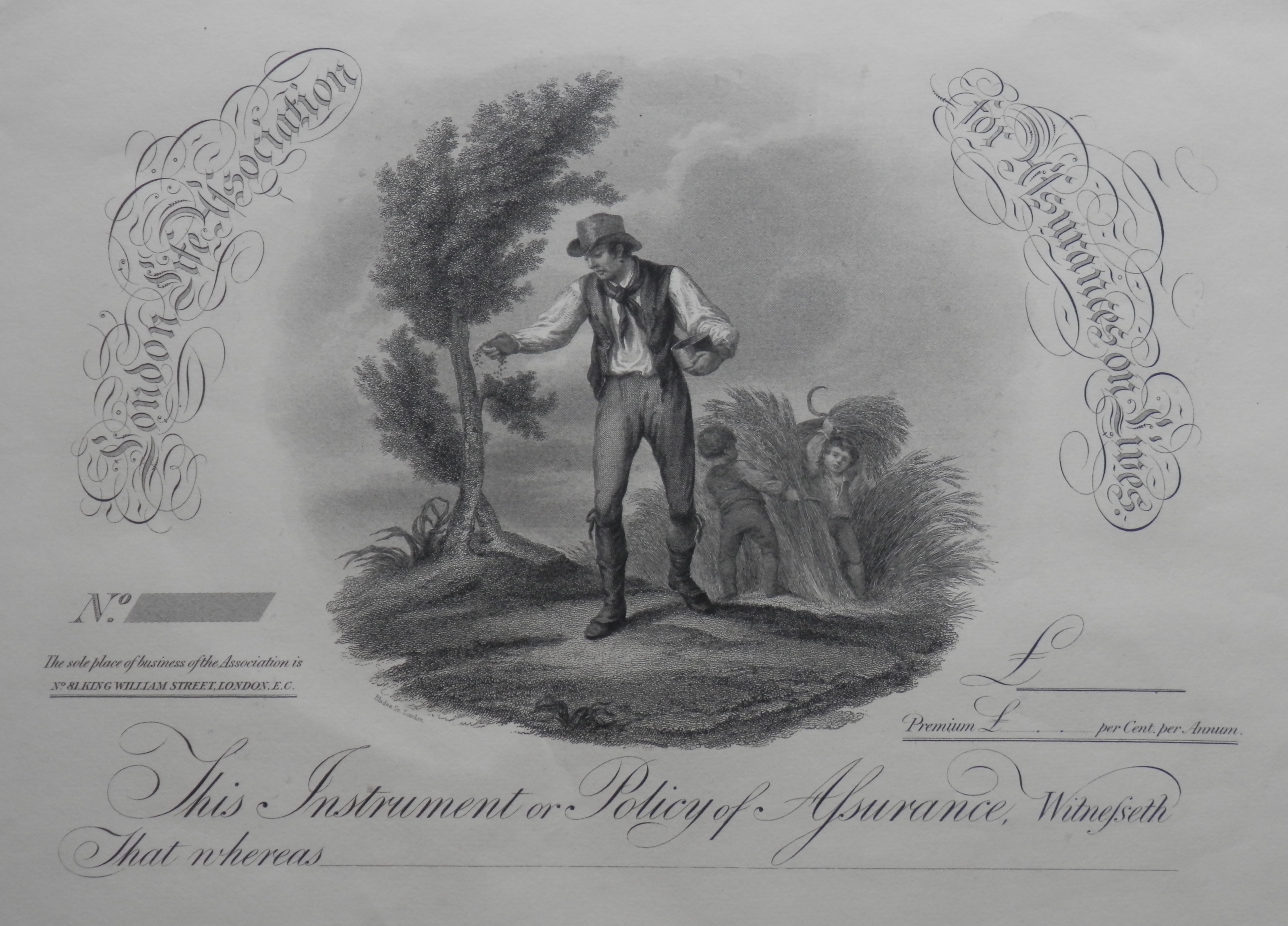
I guess this is recommended for most people whether one is single or married, a parent or not.  Life insurance is something we must all consider the importance of at some point in our lives but one would not necessarily consider ones policy art.

London Life Association Policy @ 1850 image 2

London Life Association Policy @ 1850 image 2

#LondonLifeAssurance was established in 1806.  It traded from St Paul’s Churchyard for 5 years, moved to Cannon Street and operated for 27 years and then moved to 81 King William Street in 1838 and remained in business there till 1981.  The address on this policy is from King William Street so comes from 1838 onwards.  I have not yet seen any policies which look like this but if one is down-town London head for 81 King William and you will find the seal of the London Life Association above the front door.  The building is now the Moscow Narodny Bank.

London Life Association Policy @1850 image 3

London Life Association Policy @1850 image 3

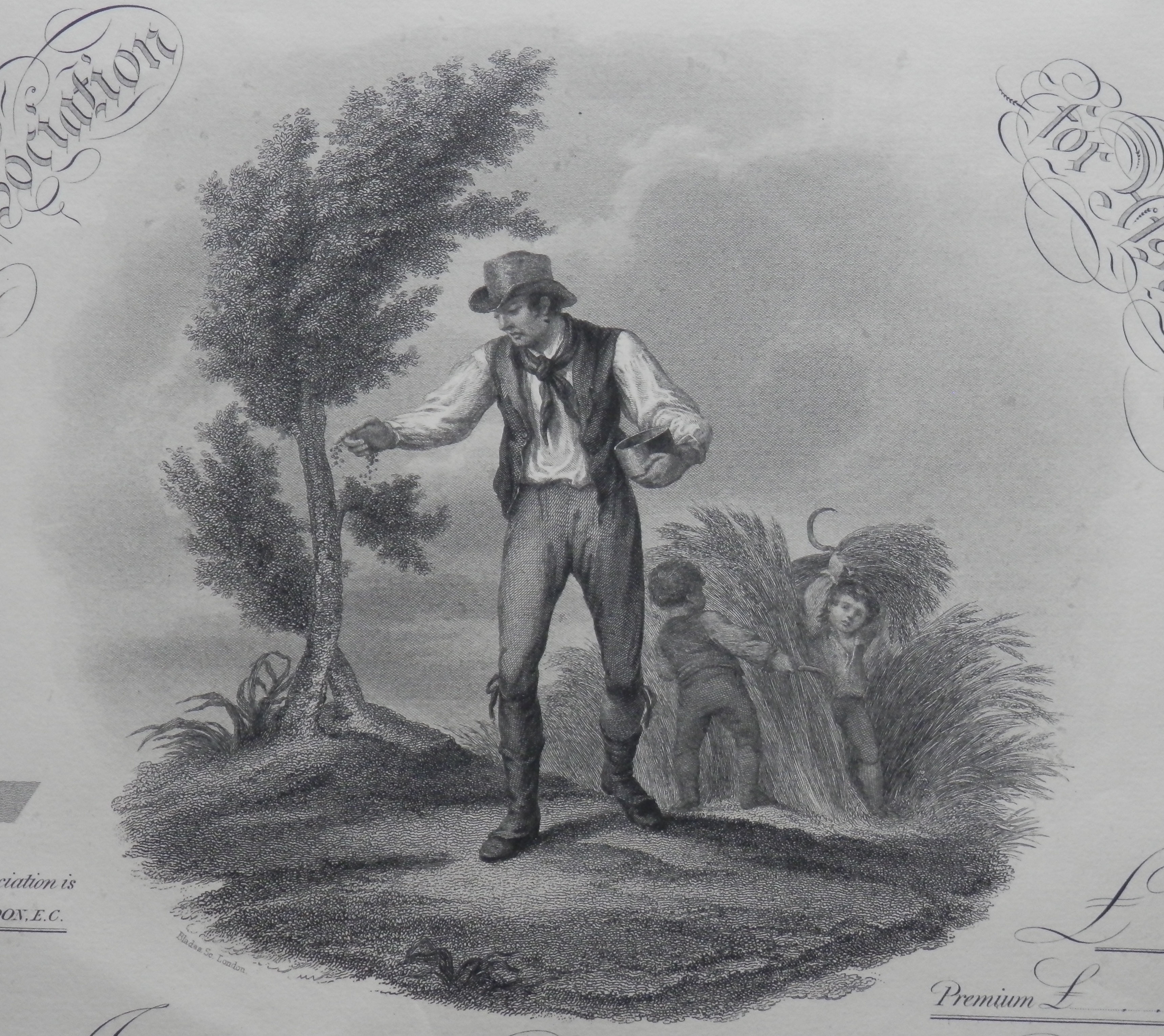
A finely executed image at the center of the policy shows a man in 18th century garb sowing the ground and behind him a pair of young children reaping the harvest.  Are we to reap what we sow or possibly to others comes the benefit of our labours which the image seems to imply.

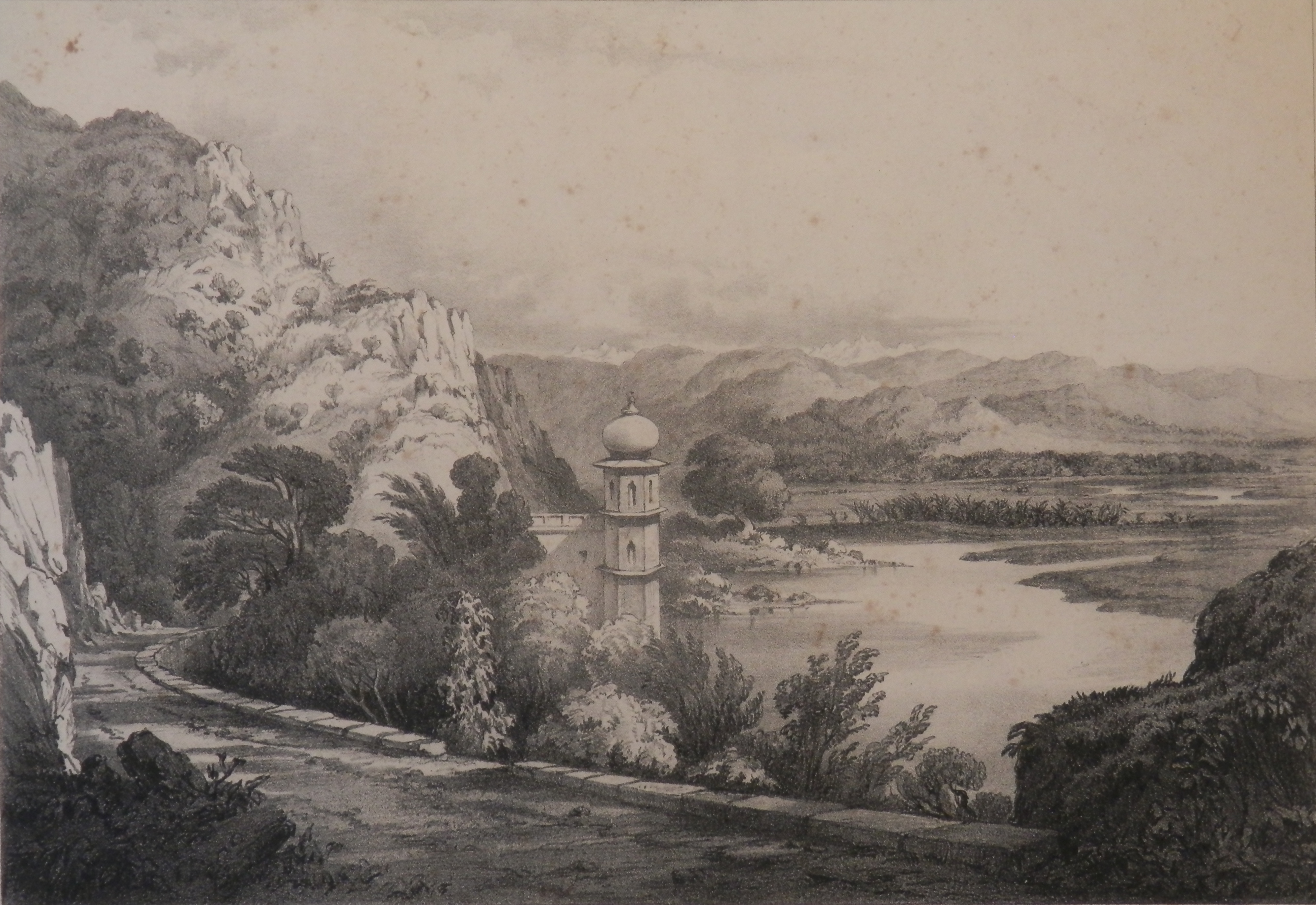
And so to the banks of the #GangesRiverAboveHaridwar for our next image.  A lithograph by #FrederickSchenck considered the leading lithographer in Scotland around 1850.

The Ganges Above Haridwar lithograph by Schenck and McFarlane after Capt. R Maclagan

The Ganges Above Haridwar lithograph by Schenck and McFarlane after Capt. R Maclagan

A well executed image after a drawing by Capt R Maclagan who was part of the #BengalEngineers and first principal of the #ThomassonCollege, Roorkee, NWP, India.  I have found little in regards to Capt. Maclagan as an artist and no other images by him.  Schenck and MacFarlane were partners from 1850 to 1859 but the company name ran until 1871.  Apart from Schenck’s artistic commercial work and book illustrations, he produced a large range of lithographed portraits. He argued for lithography in Scotland with such furtiveness, taste and skill that it advanced from mere trade to a place among the fine arts of the country.

Posted in Aquatint, Etching, Lithographs | Tagged , , , , , , , , , | Leave a comment

Drawings from an Earlier Time 2

We spent most of last weeks chapter in the middle of England.  This week as we continue with our unknown artist’s travels we journey north to Morpeth and then south to Gloucester and Worcester.  Again all drawing are from around 1850.

Ruins of Newminster Abbey by unknown artist @ 1845

Ruins of Newminster Abbey by unknown artist @ 1845

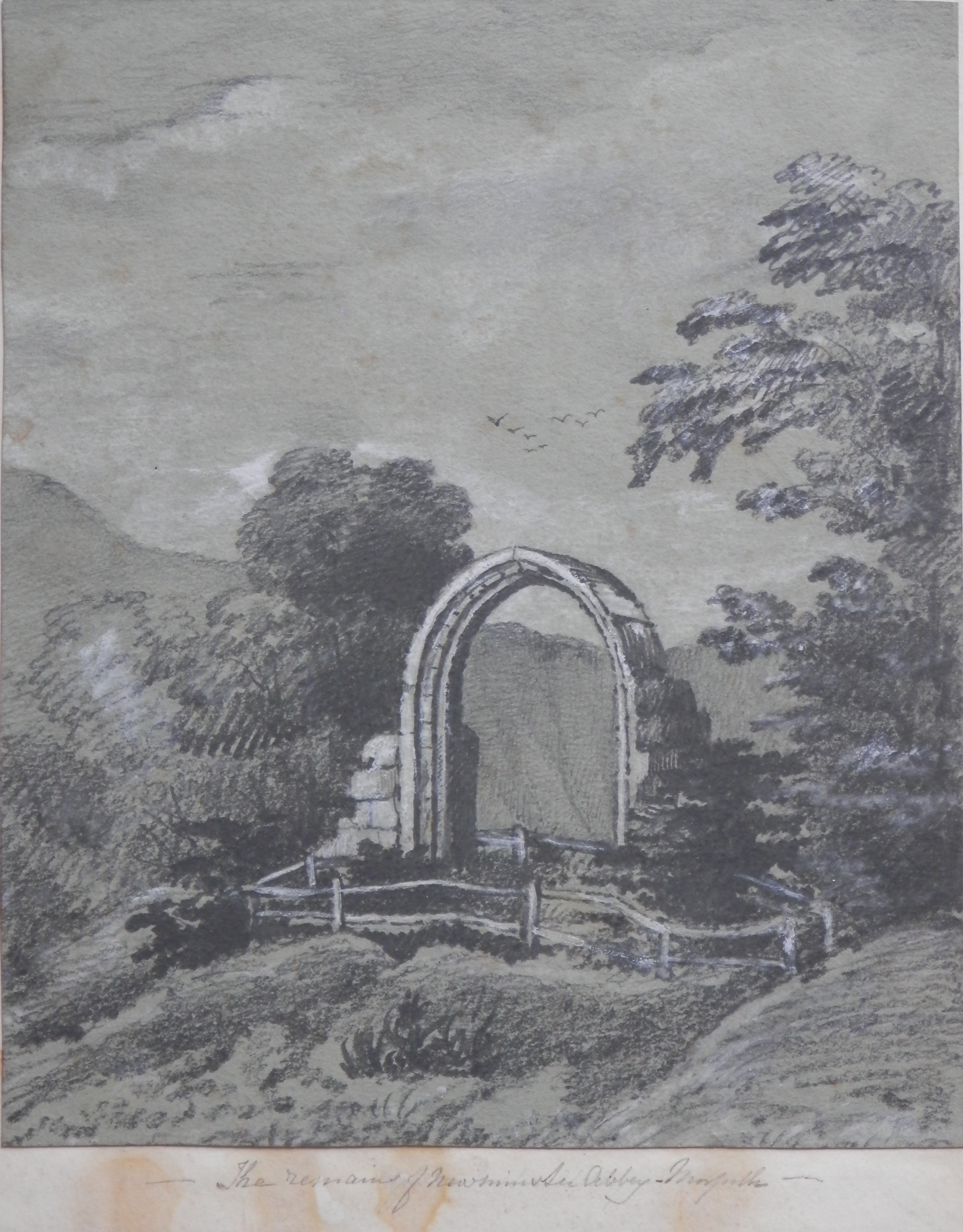
We begin at the ruins of #NewminsterAbbey near Morpeth in Northumbria Here stands the remains of a long past Cistercian abbey which once owned lands all the way to the Scottish border.  Although a protected site there is no public access since it is privately owned.

St. James the Great Church, Morpeth by unknown artist @ 1850

St. James the Great Church, Morpeth by unknown artist @ 1850

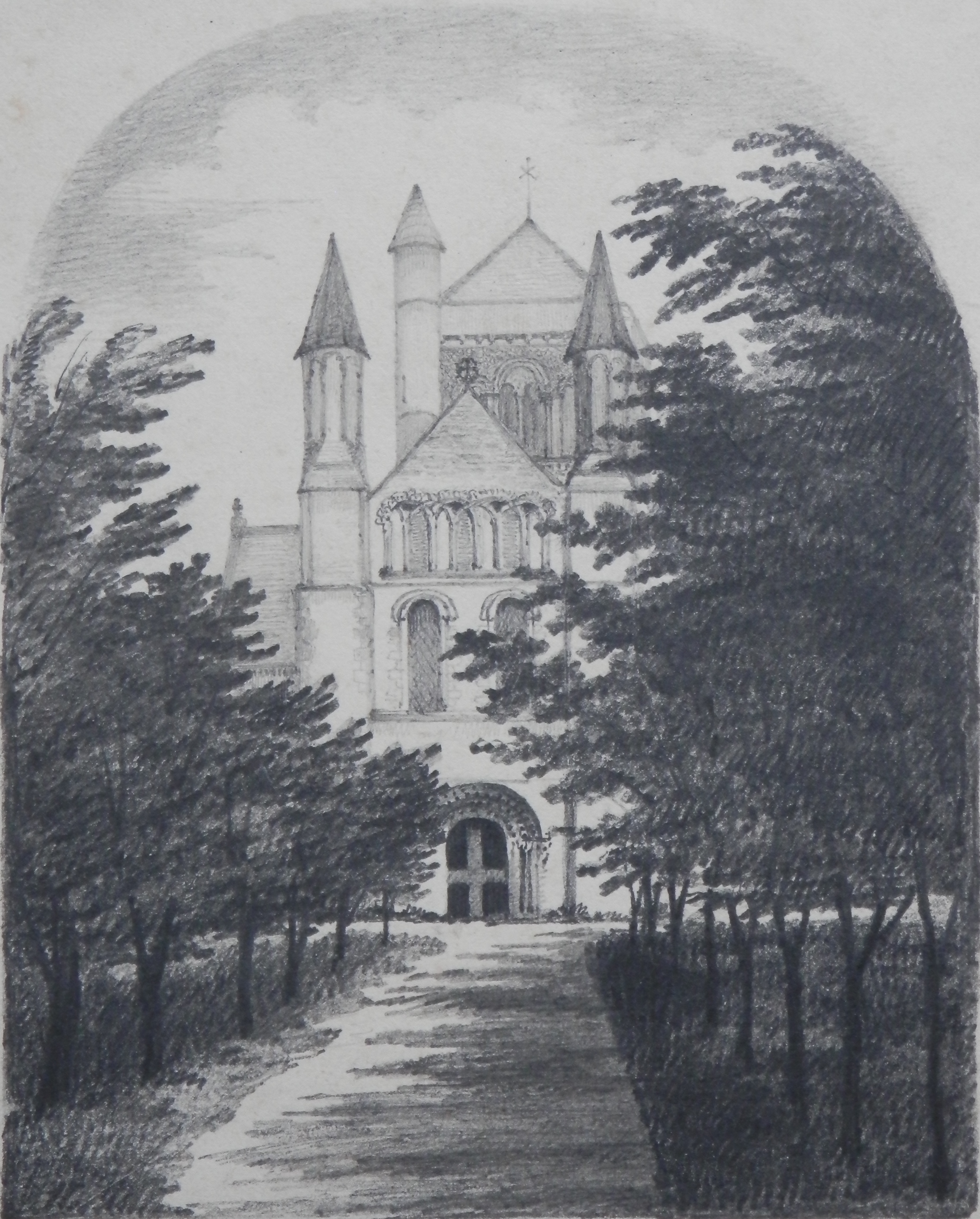
If we travel into Morpeth we come to St. James the Great Church.  It was constructed to facilitate the attending services.  The foundation stone was laid in 1844 and the building was completed in 1846 overseen by the Hon. & Rev. Francis Grey the Rector of Morpeth.   In 1537, the lands owned by Newminster Abbey were leased by the Crown to the Grey family who used many of the stones for their own buildings.  Possibly the fore-bearers of the Reverend Grey.  A full bell peal was planned but abandoned which allowed lantern windows to be added which give St. James a light and airy feeling.

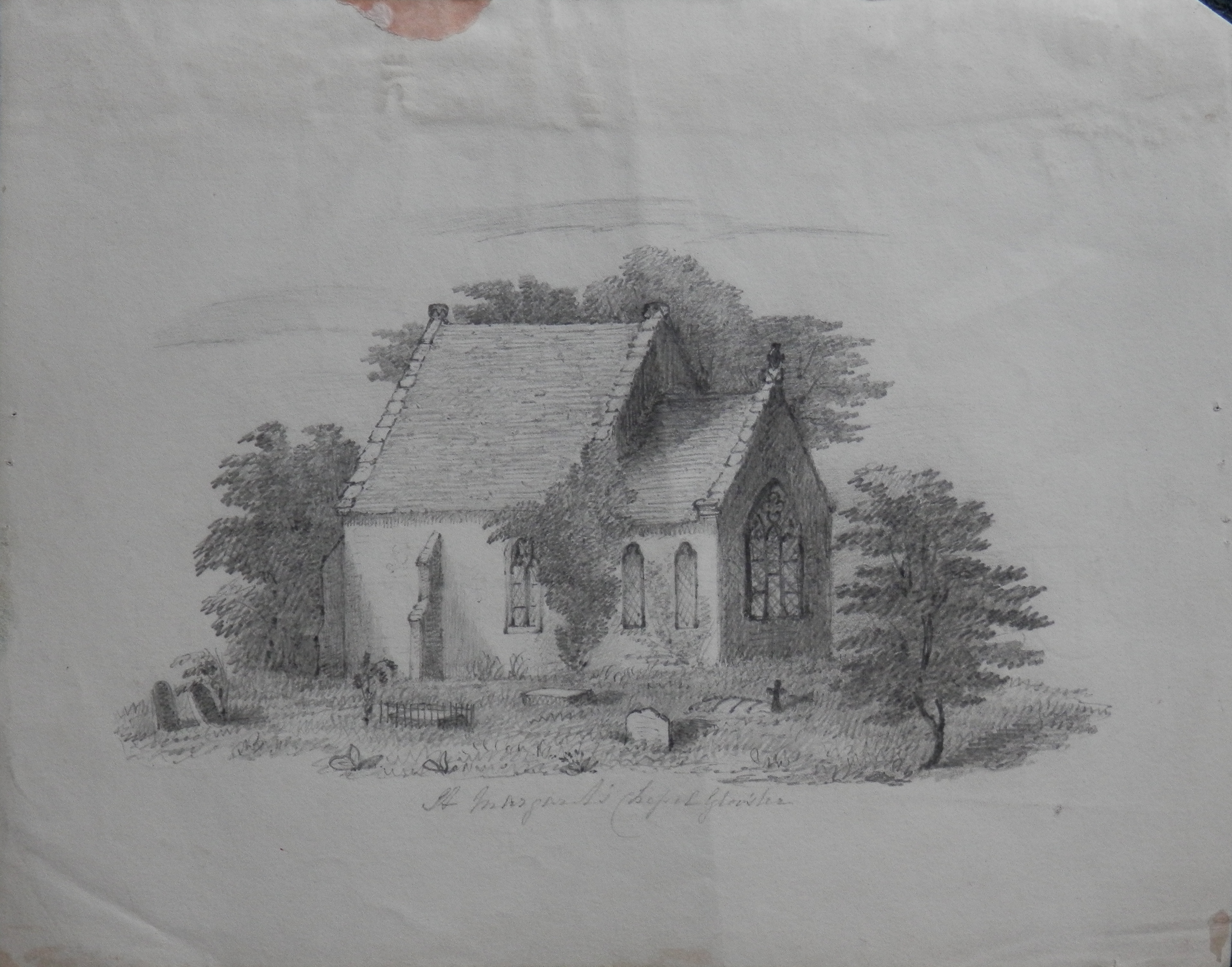
St Margaret's Chapel, Gloucester by unknown artist @ 1845

St Margaret’s Chapel, Gloucester by unknown artist @ 1845

The small but lovely #St.MargaretsChapel,Gloucester was part of a monastic body set up outside the medieval city boundary to benefit those suffering from leprosy – then incurable.  As with St. Mary’s Church last week we see the graves of parishioners near to the church with headstones askew.  A very rare and fine example of a medieval hospital chapel.

Gheluvelt Water Tower, Worcester by unknown artist @ 1859

Gheluvelt Water Tower, Worcester by unknown artist @ 1859

And if we travel a little ways north we come to Worcester.  The drawing from 1859 shows the #GheluveltWaterTower which stands on the Brabourne brook.  The tower seen here no longer exists but the rest of the pumphouse buildings remain and are now an environmental centre.  Cholera outbreaks in the early nineteenth century were blamed on the quality and availability of the water. So a sophisticated waterworks was constructed at Barbourne in 1857-8.  It was designed by Thomas Hawkesley, the greatest authority on municipal water supplies.  To finish, I will leave you with two drawings which are untitled so I do not know where they are located. I hope you have enjoyed our travels with our unknown artist-guide to places historical and artistic.

Drawing 1 by unknown artist @1850

Drawing 1 by unknown artist @1850

Drawing 2 by unknown artist @ 1850

Drawing 2 by unknown artist @ 1850

Posted in Drawings and Sketches | Tagged , , , , , , , , | Leave a comment

Drawings from an Earlier Time

Went to the local auction this past week and came away with a number of prints and drawings.  The prints are nice but it was the pencil drawings which caught my eye and which have brought me delight while researching them.  The drawings are not signed so I do not know who they are by but a number of them have titles and dates.  I believe they are by the same artist.

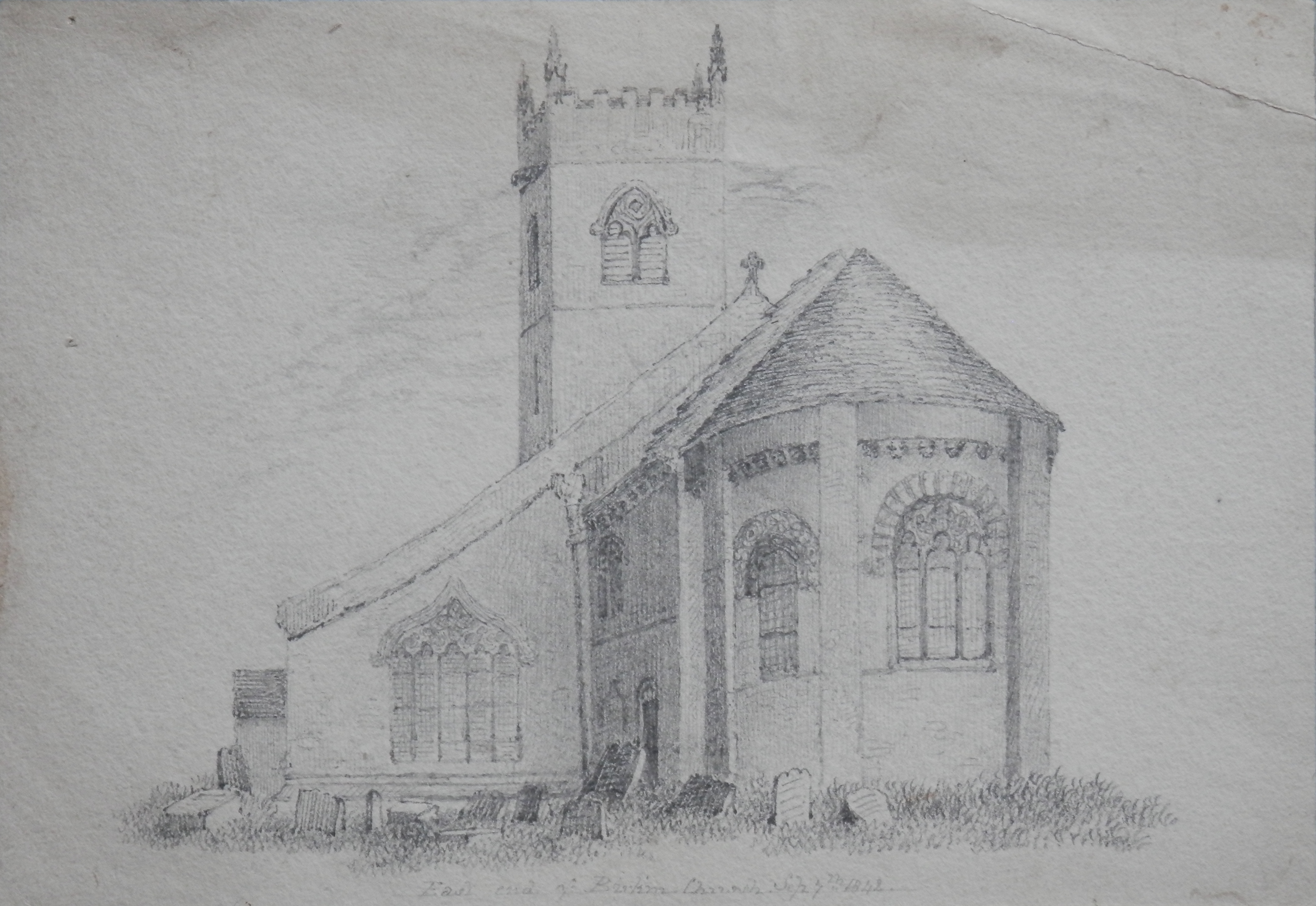
East End of St Mary's Church, Birkin drawing by unknown artist 1842

East End of St Mary’s Church, Birkin drawing by unknown artist 1842

The east end of the Church of St. Mary, on the edge of the village of Birkin, Yorkshire as seen in 1842.  I love that even back then the head-stones were leaning to and fro.  An impressively built Norman church with a Romanesque south door carved with roll mouldings and beak heads which was reset into the south wall of the south aisle when it was rebuilt in 1328 as well it has a richly carved corbel table around chancel and apse.

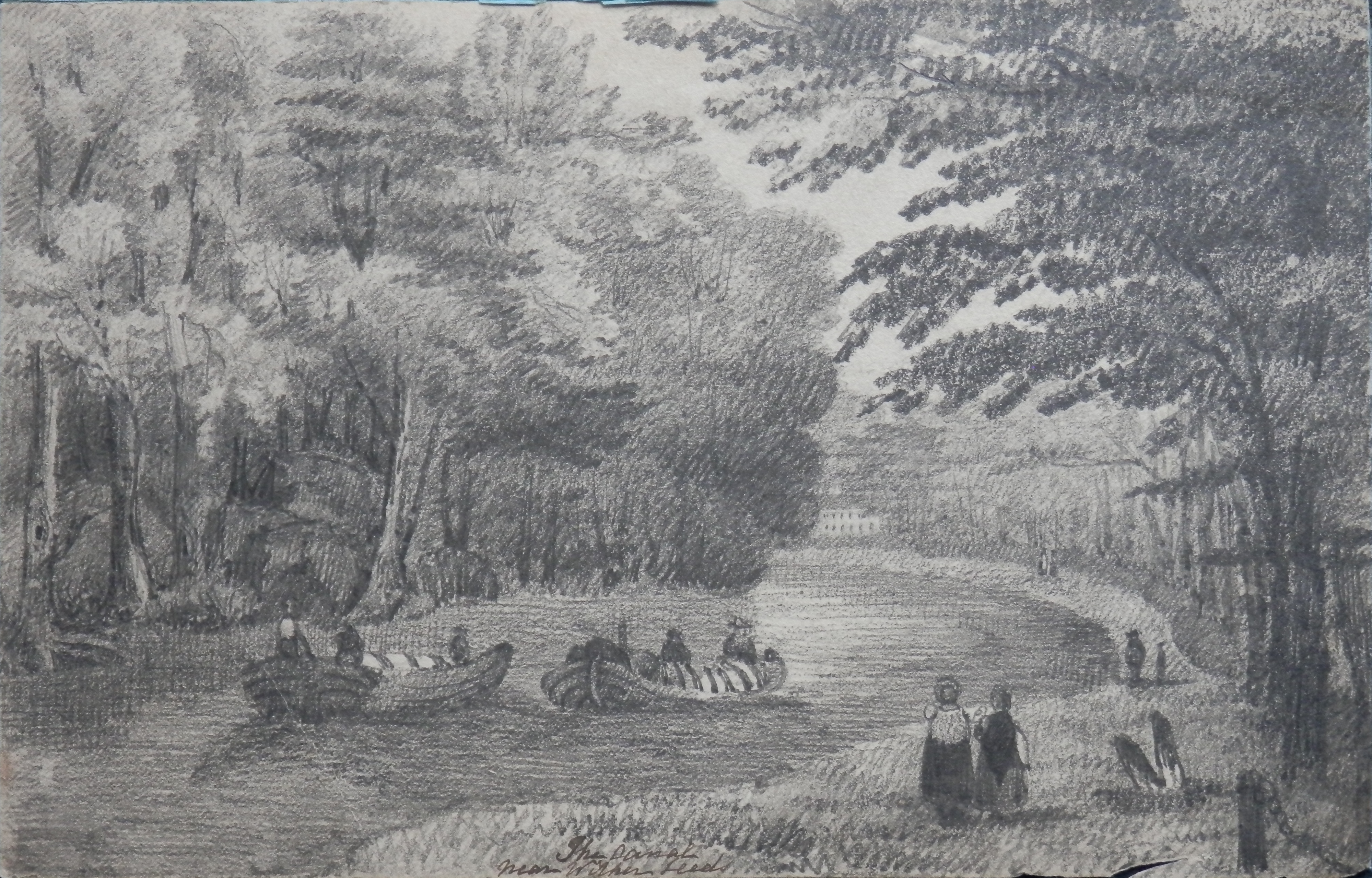
The canal near Wither, Leeds drawing by unknown artist @1850

The canal near Wither, Leeds drawing by unknown artist @1850

From #St.Mary’sChurch,Birkin lets travel over to a place called Wither Grange on the Leeds -Liverpool canal.  The canal is 127 miles long and crosses the Pennines with 91 locks in the process.  #WitherGrange no longer exists but you can walk by where it use to be.   The canal was built to facilitate the moving of goods and this can be seen in the drawing  as the barges are laden with goods.  Next let’s travel over to #TheOldHall,Knostrop the one time home of artist #JohnAtkinsonGrimshaw.

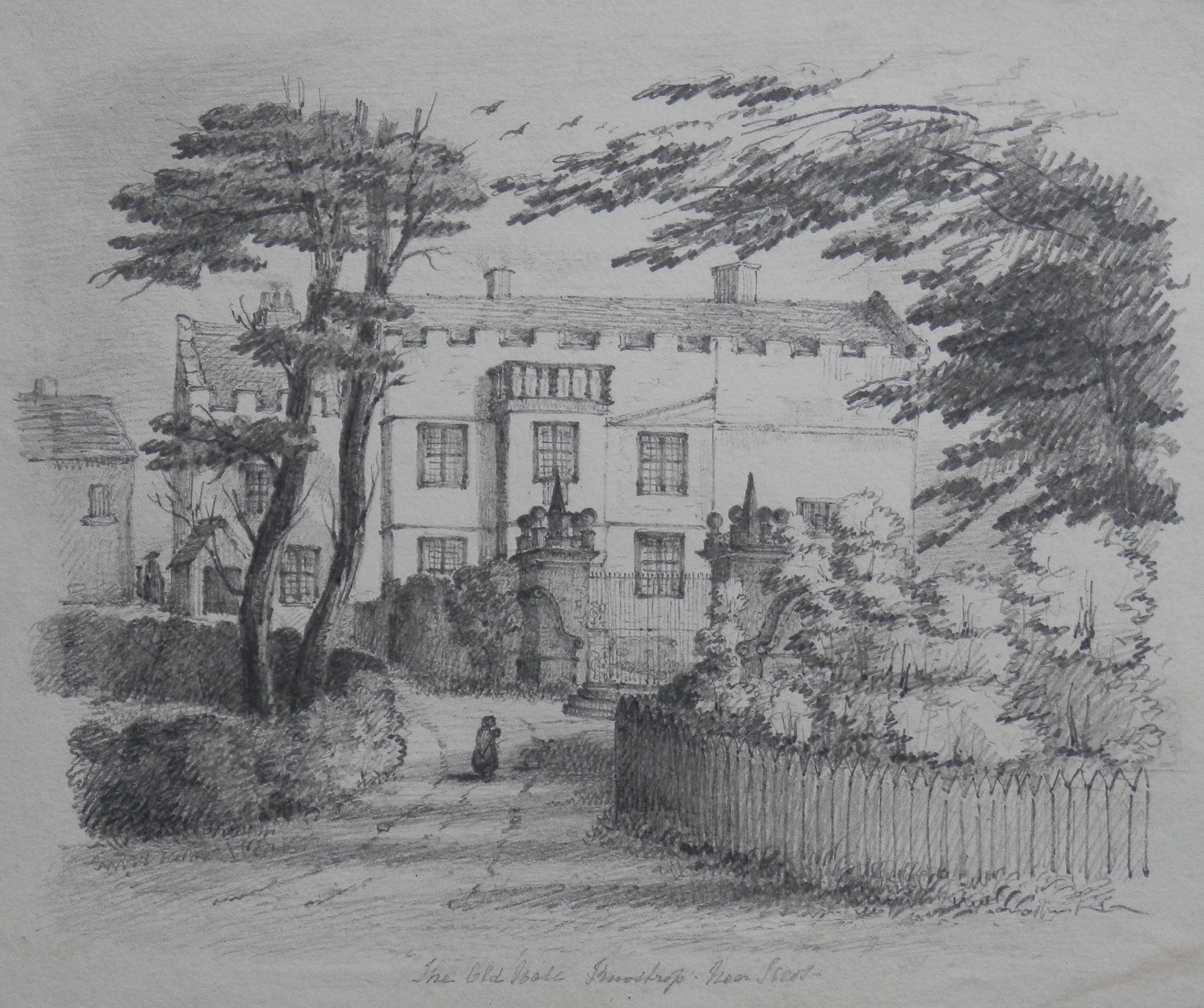
Old Hall, Knostrop drawing by unknown artist @ 1850

Old Hall, Knostrop drawing by unknown artist @ 1850


Grimshaw became a full time painter in 1861 but it is not known if he received any formal training.  He began painting still-life studies of birds, fruit, and forest scenes eventually finding that he excelled at  the depiction of moonlight, which was to become a notable feature of his work.

So as to not make this chapter too long, I will end here and we will continue our travels with this unknown artist in the next. There are more wonderful and charming places to visit down this road in history.


Posted in Drawings and Sketches | Tagged , , , , , , , , , | Leave a comment

Art Drawn

I come across drawings while I search for pieces to add to my collection to blog about.  Many are unsigned and not readily identifiable, but I add them to my collection and would like to share a number of them to you.  And so mostly images and few words in this weeks post.

Costume 1 by unknown artist

Costume 1 by unknown artist

Costume 2 by unknown artist

Costume 2 by unknown artist

Costume 3 by an unknown artist

Costume 3 by an unknown artist

Costume 4 by an unknown artist

Costume 4 by an unknown artist

I begin with four coloured drawings of costumes used in an opera.  Only the last gives any clue as to which opera, where it took place and who partook in the roles thereof.  The final image is of the sublime soprano #DameKiriTeKanawa dressed in a bird-like costume .  The opera was presented at the #RoyalNavalCollege.  I do not know if all the drawings are costumes from a single opera but I do believe them to be by the same artist or designer.  A wonderfully colourful show with magnificent costumes.

Let’s wander from the stage to the page and look at a couple of drawings from an illustrator of stories.

Story Illustration 1 by GB

Story Illustration 1 by GB

Story Illustration 2 by GB

Story Illustration 2 by GB

I have found another illustration by GB on-line but not his/her full name.  These pen and ink drawings have a familiar feel to them as if in my youth I have might have read the story.

To a pencil drawing which could have come from a Dickens novel.

Pencil Drawing by unknown artist

Pencil Drawing by unknown artist

And finally to a drawing from a Bronte novel or perhaps ‘Gone with the Wind’.

The Proposal - artist mongram and dated

The Proposal – artist mongram and dated

All of these drawings display a talent and ease with pen and pencil.  The telling of story in picture form both to capture the imagination and inform of the story.

Posted in Drawings and Sketches | Tagged , , , , , , , , | Leave a comment

Art by E M Synge

#EdwardMillingtonSynge (pronounced sing) was born in 1860 in Great Malvern.  Educated in Norwich and then Trinity College, Cambridge.  He became a land agent.  He loved to draw and one day saw an advert in a shop window saying ‘Etching taught here’.  And so this artist found, by accident, the field of art which was to become his future.

Embrun Cathedral etching by Edward Millington Synge @ 1901

Embrun Cathedral etching by Edward Millington Synge @ 1901

He continued his studies at the Westminster School of Art and was advised in his studies by Franke Short and Sir Seymour Haden.  Synge began displaying at major etching exhibitions.  In 1891 he retired from his day job as a land agent and devoted himself to his art.  He travelled to Paris (1901) to work along side Carolus Durant and where he set up his own studio.  While in Paris, he illustrated ‘The Story of the World’ a book authored by his sister.  Travels into Italy and then Spain led to some of his most beautiful and intricate work.  He married in 1908 to Miss F. Maloney, an artist erself.  Synge moved back to England and continued to work in a charming studio in Surrey.  He died in 1913.  Over the last number of years Synge aided by his wife printed all his own works.  Many of his 370 plates were for ‘The Art Journal’ and ‘The Graphic’ magazines.

The image above is of #EmbrunCathedral.  It was a Roman Catholic Cathedral but is now a national monument of France.  The interior has an elaborate Baroque high altar inlaid in coloured marbles, recently rediscovered frescoes, and an organ (the oldest working in France) donated by Louis XI.  The image is of the north nave aisle showing it’s monuments and end chapel.  A superb atmospheric etching by a sublimely talented artist.


Posted in Etching | Tagged , , , , , | Leave a comment

Art of Royalty 2

Royalty has long been a favourite subject for artists.  Sometimes because they were reimbursed for it and other times for the sake of history to mark a personage or event.

Queen Victoria engraved by Henry Brian Hall @ 1850

Queen Victoria
engraved by Henry Brian Hall @ 1850

We begin with a wonderful engraving by #HenryBryanHall (1808-1884) of #QueenVictoria who reigned from 1837 to 1901.  The length of her reign (longest to date) will shortly be surpassed by our present Queen Elizabeth.  The engraving comes from a book titled ‘Lives of Illustrious Women of England’ by J Tillotson.  A book to honour women of royal, noble, or celebrated status.  It is embellished by a number of fine engravings of the women honoured.

Charles IX King of France after Thomas de Leu @ 1850

Charles IX King of France
after Thomas de Leu @ 1850

#CharlesIX, King of France engraved by an unknown artist.  It is a very fine copy of the portrait done by #ThomasdeLeu.  It is pressed onto wove paper so stems from 1850 and onwards.  Charles reigned from 1560 to 1574. He saw tension between Protestants and Catholics break out into war in 1562.  Through his trying to appease the combatants he became very unpopular in the eyes of both sides.  He then aligned himself and with the instigation of his mother (Catherine de’ Medici) he allowed the massacre of all Huguenots who had come to Paris to attend the royal wedding, thus crippling the Huguenot movement.  It is now known as the St. Bartholomew’s Day Massacre.

Edward Alley'n etching by Etiene Bocourt @ 1800

Edward Alley’n etching by Etiene Bocourt @ 1800

And finally to a different type of royalty.  #EdwardAlleyn etched by #EtieneBocourt.  Mr. Alleyn was ‘King of the Boards’.  Of his early career little is known but by 1585, he was rated the foremost actor of his time.  Lead roles in plays by Marlowe, Greene, and Kyd were his.  He retired in 1598 at the height of his career.  Queen Elizabeth was such a fan that she requested his return to the stage.  He complied but not until 1604 a year after her death.  He is remembered not only for his prowess as an actor but also for the founding of Dulwich College and Alleyns School.


Posted in Etching | Tagged , , , , , , , , , | Leave a comment

From Rossini to Morris

The way I collect art is for most collectors of art so very random and non-specific. I do not search for works by an artist or visit galleries, or art auctions to collect but rely solely on people donating art pieces to charity.  But as I have said in other posts, I continue to be amazed at what people donate to charities to be sold.

So, today we will travel from ancient Italy with Luigi Rossini to modern England and William Morris.

Veduta di fianco del Campidoglio Romano by Luigi Rossini @1817

Veduta di fianco del Campidoglio Romano by Luigi Rossini @1817

#LuigiRossini, the last great etcher of Roman antiquities, graduated as both artist and architect from the Academy of Bologna.  In 1813, he moved to Rome to continue his studies and began to etch the beauties of Rome.  Most of his works were collected and published in a series of seven folio sized volumes entitled ‘Antichita Romane’ in 1829.

His etchings of basilicas, temples, public baths, and other monuments reveal the power and magnificence of Rome.  His depictions were so accurate that students of architecture used them as aids in their studies. His etchings include a number of monuments which no longer exist.  Rossini loved to place figures of local citizens and nobles into his images creating a more picturesque and vitalised image.

When one thinks of #WilliamMorris (1834-1896) one generally is considering his designing of tapestries, wallpaper, fabrics, furniture, and stained glass windows but Morris was so much more. He was textile designer, poet, novelist, translator, and social activist. At this point, I must admit that when I bought this it was framed and so only the page with the woodcuts was visible so was surprised to find that it folded out into something bigger.

Cupid and Psyche story and woodcut by William Morris

Cupid and Psyche
story and woodcut by William Morris

Although his epic poem was published with great acclaim in 1868-70, the woodblocks and engravings for the images which Morris created from Edward Burne-Jones’ drawings for a later lavishly illuminated version were never used.  Trial tests were done but the union of text and image was found wanting and the project was shelved.  In the 1880’s a small number of sets (total number unknown) were printed in another hopeful trial.  But it was not until 1973 that the illustrations and poem were re-united and successfully printed by Will Carter at the Rampant Lions Press, in Cambridge.   Carter printed from Morris’ original woodblocks and some of the original Troy type from the Kelmscott Press (now in the Cambridge University Press collection) to complete a limited run of the book in 1974.

Cupid and Psyche story and woodcuts by William Morris

Cupid and Psyche story and woodcuts by William Morris


Syrinx and Psyche  woodcut by William Morris @ 1860

Syrinx and Psyche
woodcut by William Morris @ 1860

Psyche fording the River woodcut by William Morris @ 1860

Psyche fording the River
woodcut by William Morris @ 1860

So, when unfolded the single page became four pages of the poem.

Enjoy and maybe go and read the rest of this poem written by William Morris.

Posted in Etching, Lino/woodcuts | Tagged , , , , , , , , , | Leave a comment

German Art

Just been to Berlin for a long weekend and enjoyed the Kupferstichkabinett (Print Gallery) special display called ‘Gone to the Dogs’.  A collection of their prints and drawings which include canines in the image.  Durer, Rembrandt, Nicholson to name a few.  Covering centuries of art. Superb works and but a few of their collection.

Fischerhafen etching by Karl Hachez @ 1910

Fischerhafen
etching by Karl Hachez
@ 1910

A fine etching by German artist #KarlHachez of the fishing fleet docked at Swinemunde.  Karl (or Carl) Hachez was born in 1880 in Oldenburg, Germany. He based himself in Berlin and was known as an etcher, portrait painter, landscape painter and poster creator.  He studied art in Berlin and Paris.  A poster designer in Germany during WWI meant creating visually arresting images incorporating graphics, words and images.  Communicating through those words, colours, and shapes the intended message.  Often a message of nationalism or to encourage support for the war in which they were engaged.  He died in 1958.

Now to two images which will be of interest to all ‘royal’ watchers out there.  Two pages (plates X and XB) from ‘The Cyclopaedia’  by #AbrahamRees  printed in 1819.  The pages display the Crowns, Coronets, Mitres of the royal families and leadership positions of Europe.

Crowns, Coronets, and Mitres from 'The Cyclopaedia' by Abraham Rees @ 1819

Crowns, Coronets, and Mitres from ‘The Cyclopaedia’ by Abraham Rees @ 1819


Crowns, Coronets, and Mitres from 'The Cyclopaedia' by Abraham Rees @ 1819

Crowns, Coronets, and Mitres from ‘The Cyclopaedia’ by Abraham Rees @ 1819

Headdresses which we might see only on a few occasions in our lifetime and some which may not exist any longer.

Posted in Aquatint, Etching, Lithographs | Tagged , , , , , , , , , | Leave a comment