Poetry and a Tale Illustrated

We begin with a connection to last weeks chapter and go from poetry to a story of a time past and a city devastated.
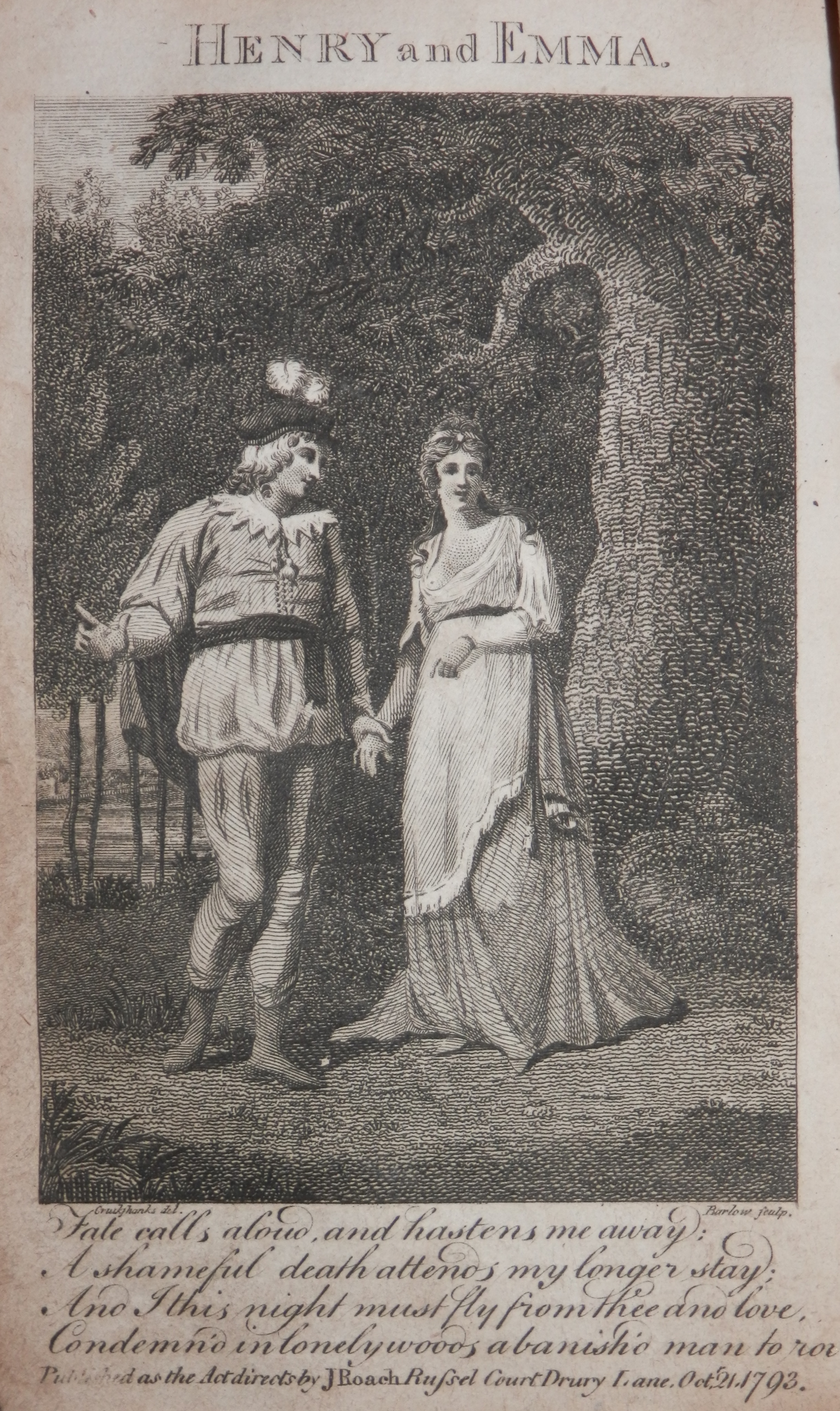
Henry and Emma - drawn by Isaac Cruikshank - etched by Barlow @ 1793

Henry and Emma – drawn by Isaac Cruikshank – etched by Barlow @ 1793

Last week’s illustrations by William Blake were from a poem titled ‘The Grave’ written by Robert Blair.  I have a copy of the poem in a book called ‘Beauties of the Modern Poets of Great Britain’.  It was compiled and printed by #JohnRoach in 1794.  In the book are several fine illustrations and etchings by Barlow.
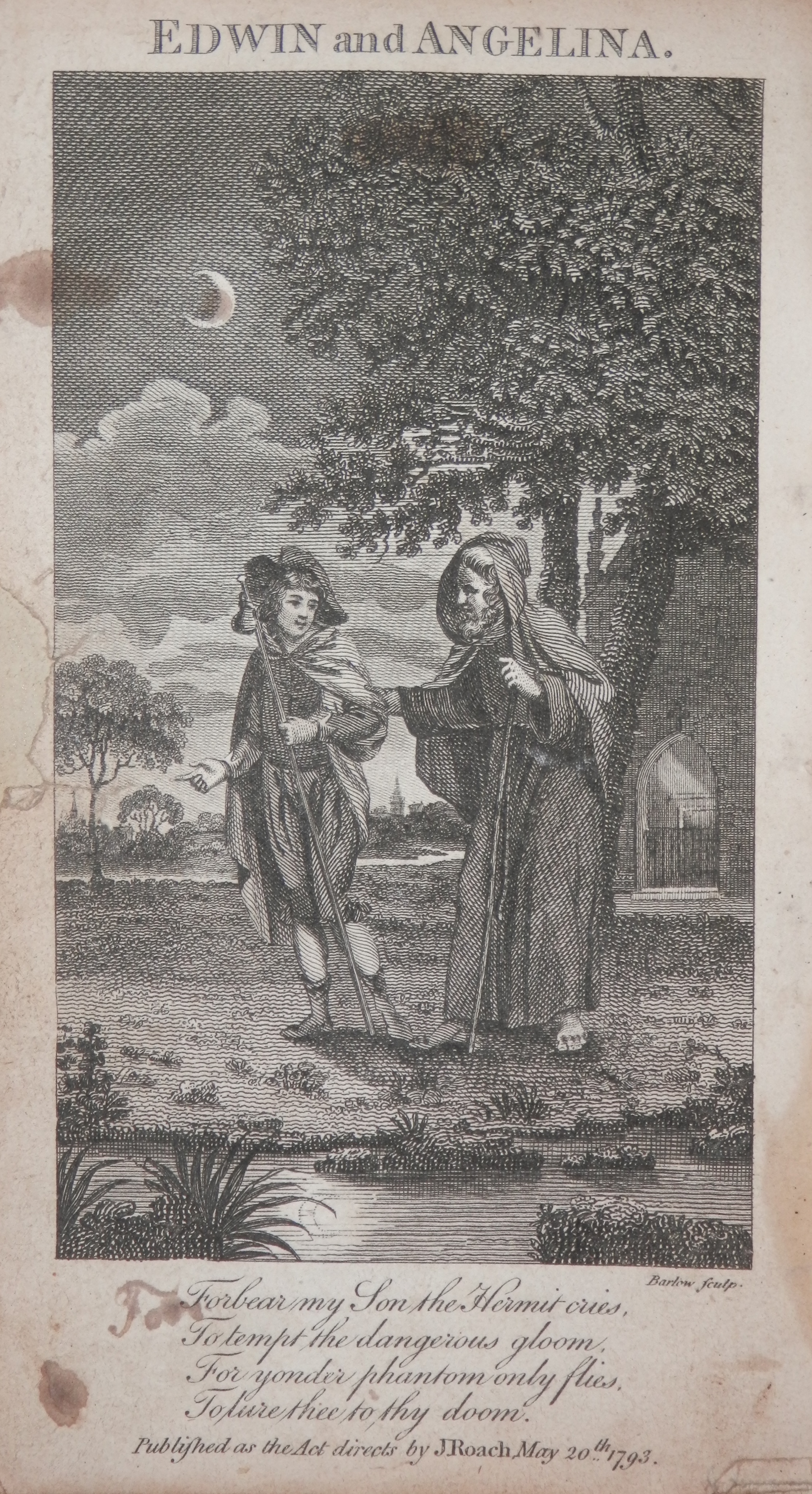
Edwin and Angelina - etched by Barlow @ 1793

Edwin and Angelina – etched by Barlow @ 1793

Henry and Emma by#MatthewPrior and Edwin and Angelina by #OliverGoldsmith and of course Robert Blair are just a few of the many poets and writers which are included in this volume.  Fine poetry and wonderful engravings – what more could one ask for.

But if one were to want more – how about a tale of old London titled Old Saint Paul’s: A Tale of the Plague and the Fire.  It was written by #WilliamHarrisonAinsworth in 1841 and contains illustrations by John Franklin and Hablot K Browne (Phiz – as he is also known).
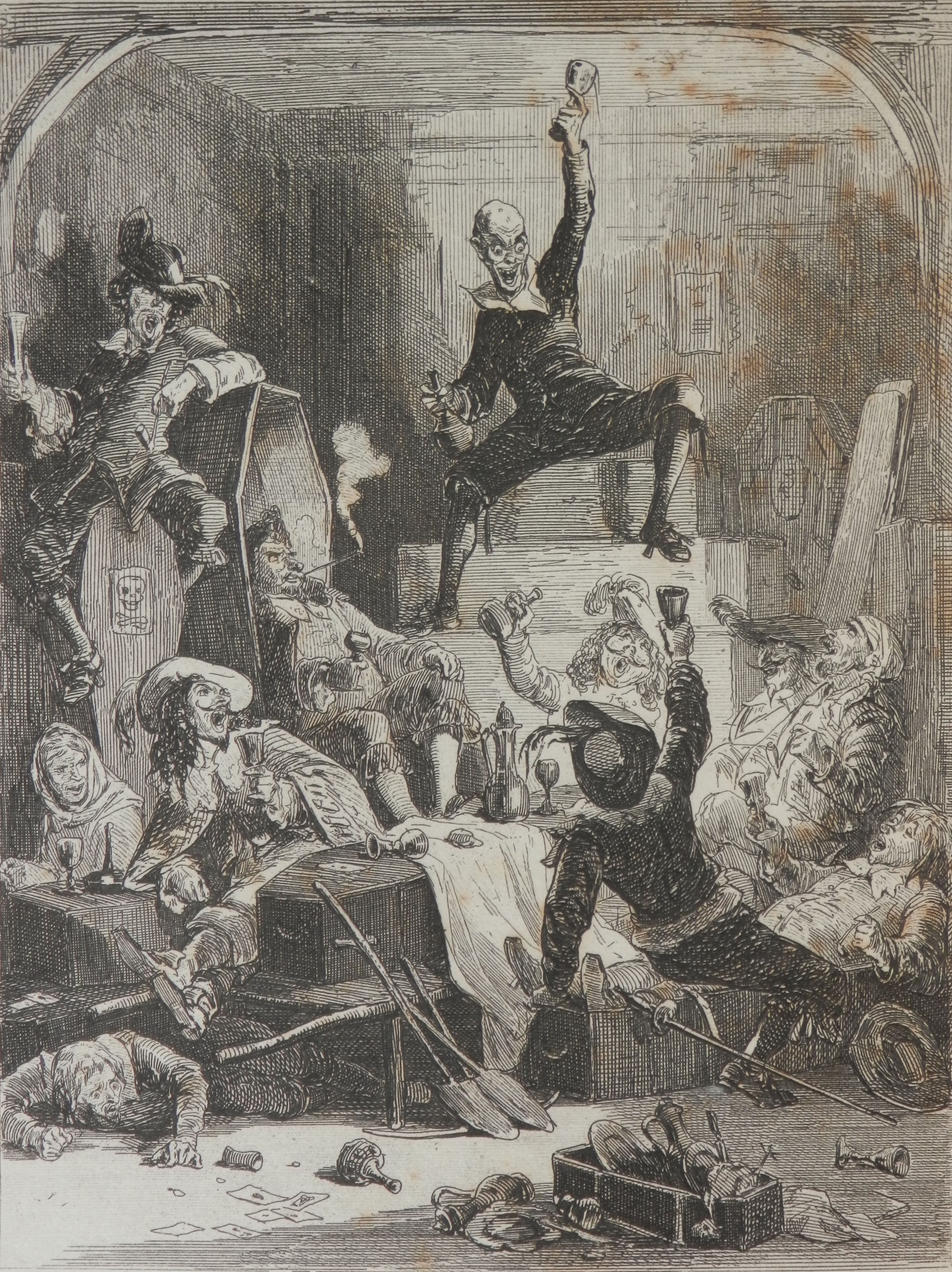
Drink the Plague etched by Hablot Browne (Phiz) @ 1841

Drink the Plague etched by Hablot Browne (Phiz) @ 1841


The Burning of St. Pauls etched by John Franklin @ 1841

The Burning of St. Pauls etched by John Franklin @ 1841

The novel is an historical romance that describes both the ‘Great Plague’ and the Great Fire’ of London.  #OldSaintPaul’s was serialised by The Sunday Times.  Ainsworth was one of the first writers to appear in a national paper in such a manner.  The original edition of the book was not illustrated but the edition which was was not illustrated by George Cruikshank (friend to and illustrator of many of Ainsworth’s books and the son of Isaac Cruikshank).  Cruikshank was asked to illustrate the book but turned the opportunity down due to many prior commitments.  He thought Ainsworth would wait till he was able to do the drawings before publishing.  Ainsworth did not and this set the pair at odds.  Cruikshank claimed that he was the source of many of Ainsworth’s works including Old Saint Paul’s which were then stolen.  Even so, the illustrations are dark, foreboding, atmospheric, eerily descriptive – just as they ought.
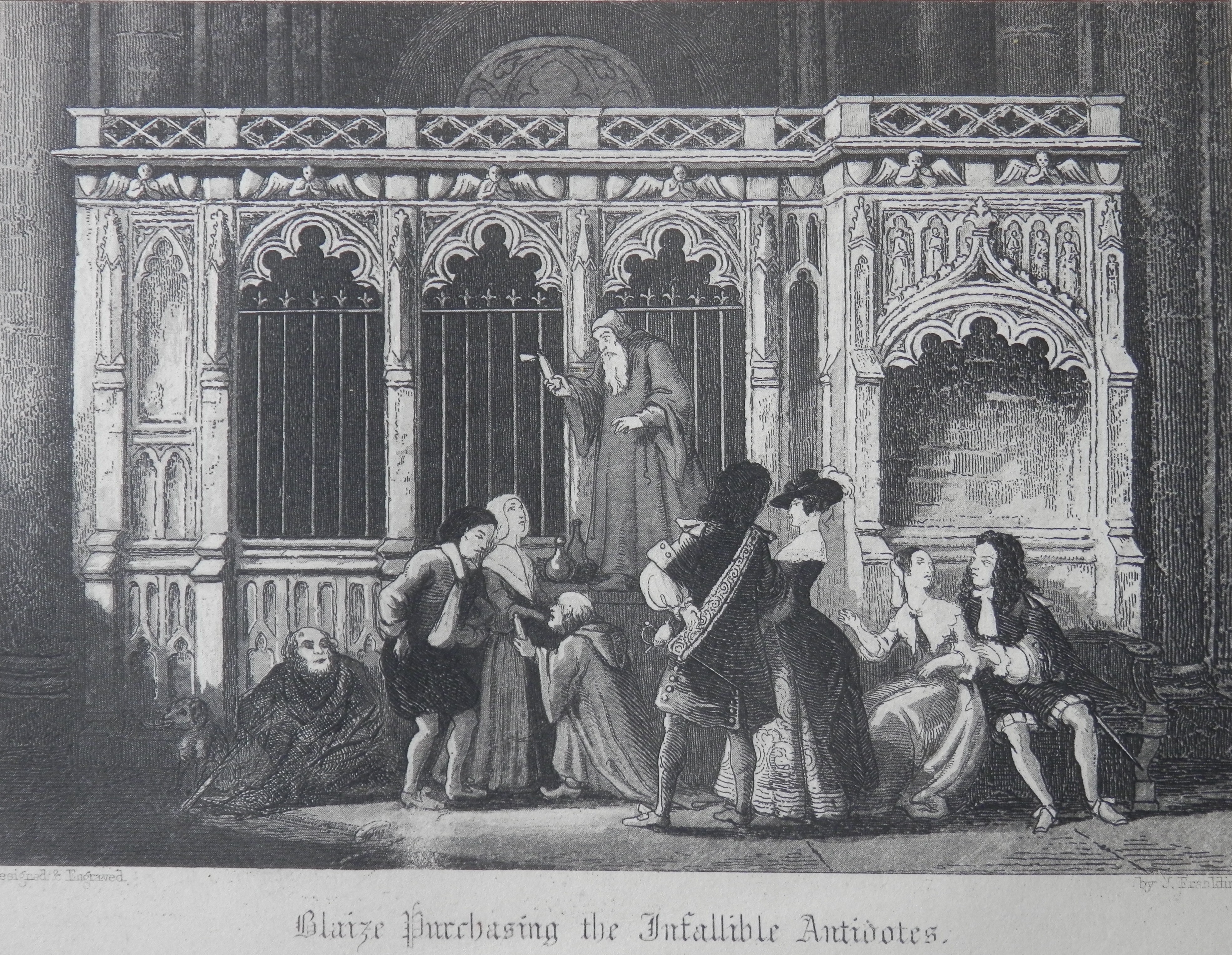
Blaize Purchasing the Infallible Antidotes - etching by John Franklin @ 1841

Blaize Purchasing the Infallible Antidotes – etching by John Franklin @ 1841
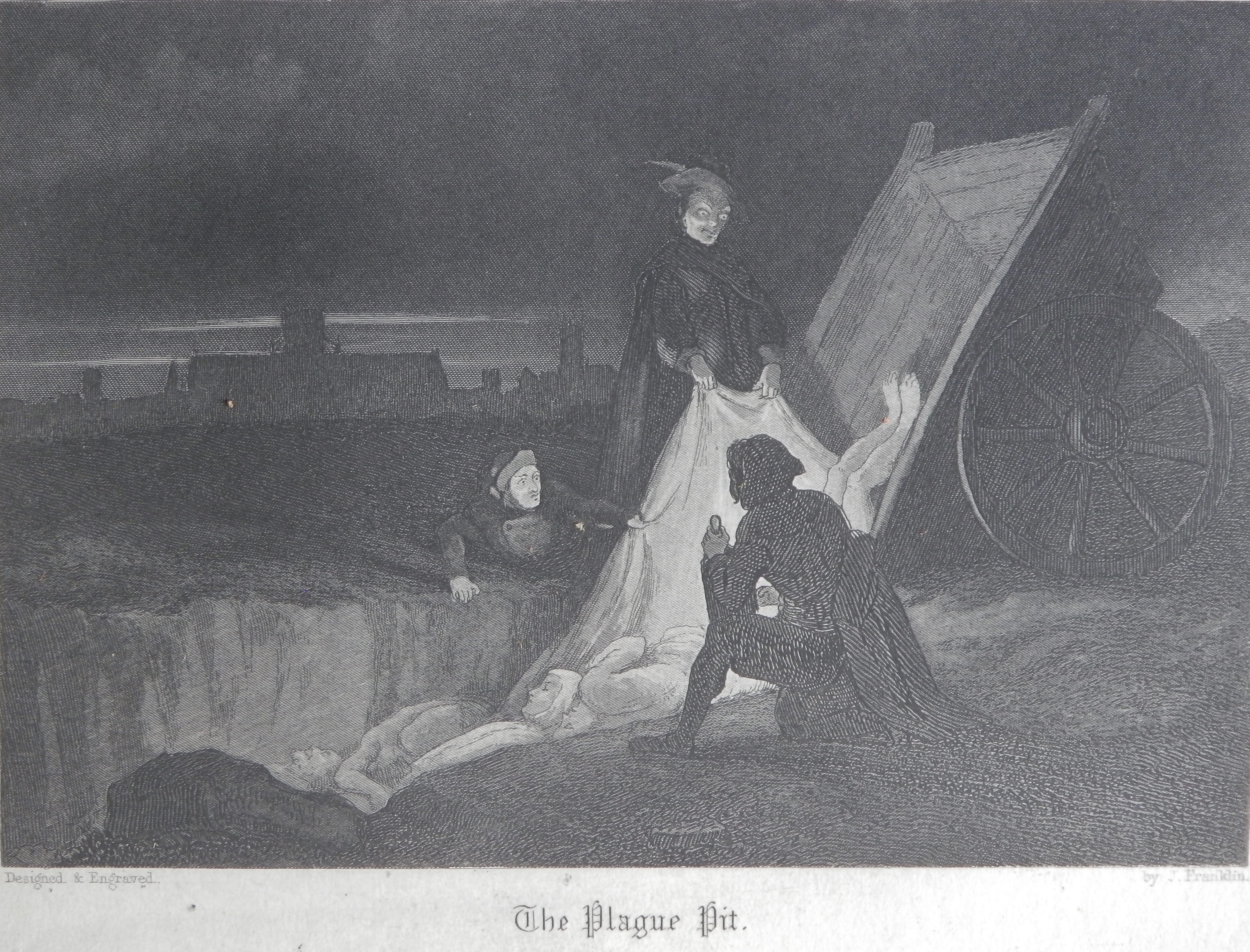
The Plague Pit - etched by John Franklin @ 1841

The Plague Pit – etched by John Franklin @ 1841
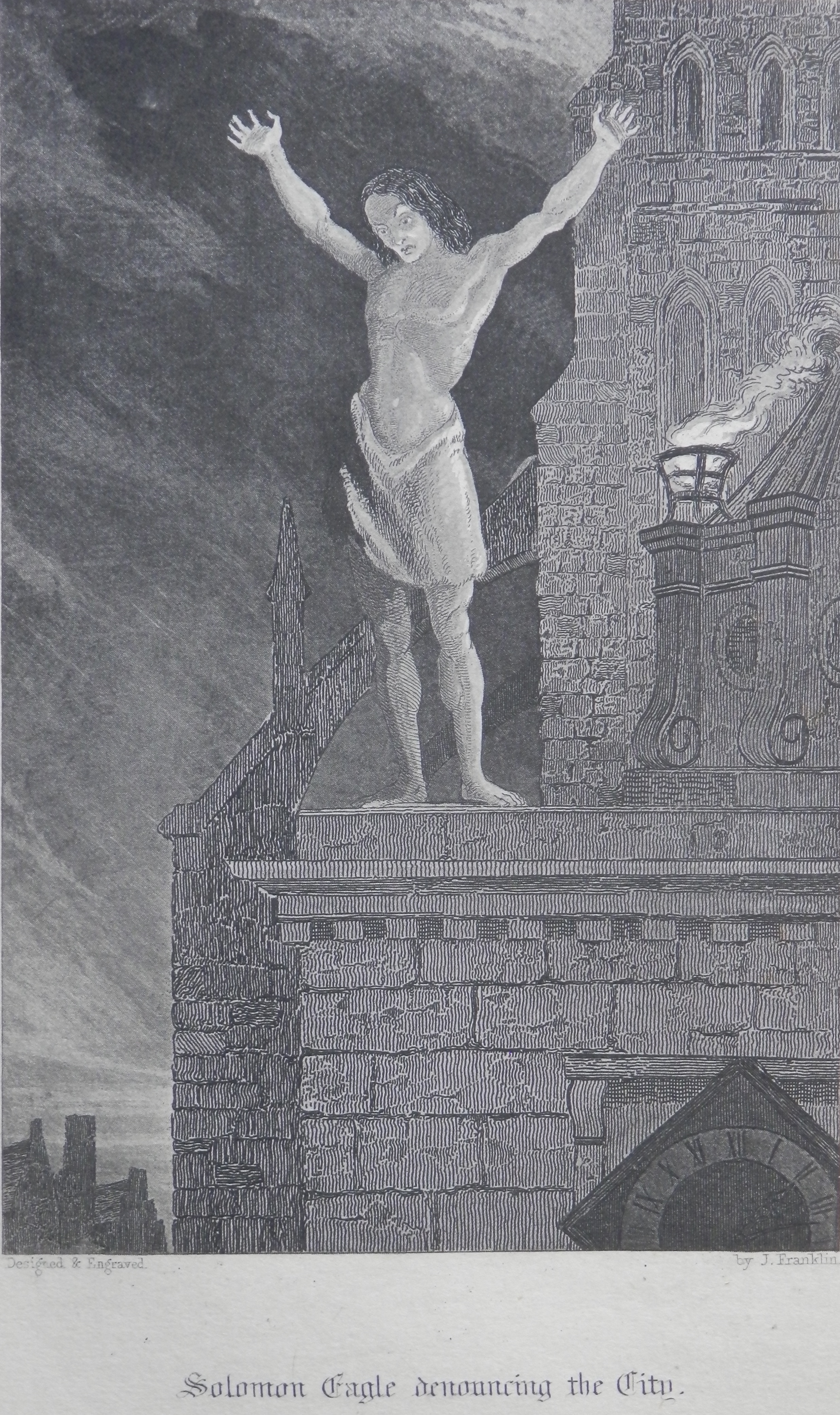
Solomon Eagle denouncing the City - etched by John Franklin @ 1841

Solomon Eagle denouncing the City – etched by John Franklin @ 1841
Posted in Etching | Tagged , , , , , , , , | Leave a comment

William Blake Juxtaposed

 Born into a middle class family, #WilliamBlake (1757-1827) was poet, painter, and printmaker. Receiving little recognition during his lifetime, Blake is now considered a foundational figure in the history of the poetry and visual arts of the Romantic Age.  Blake’s artistic talent was recognised early and he was apprenticed to engraver James Basire for seven years.  At the end of his apprenticeship, aged 21, he became a professional engraver.  During his tenure with Basire he was employed to copy images and monuments from the Gothic churches in London and especially Westminster Abbey.  Blake experienced ecstatic visions while working in the Abbey, he saw Christ and his Apostles and a great procession of monks and priests and heard their chant.  Blake claimed that Ezekiel, Solomon, Merlin, his deceased brother, and many other historical and imaginary figures sat and conversed with him as he produced his illustrations of them.

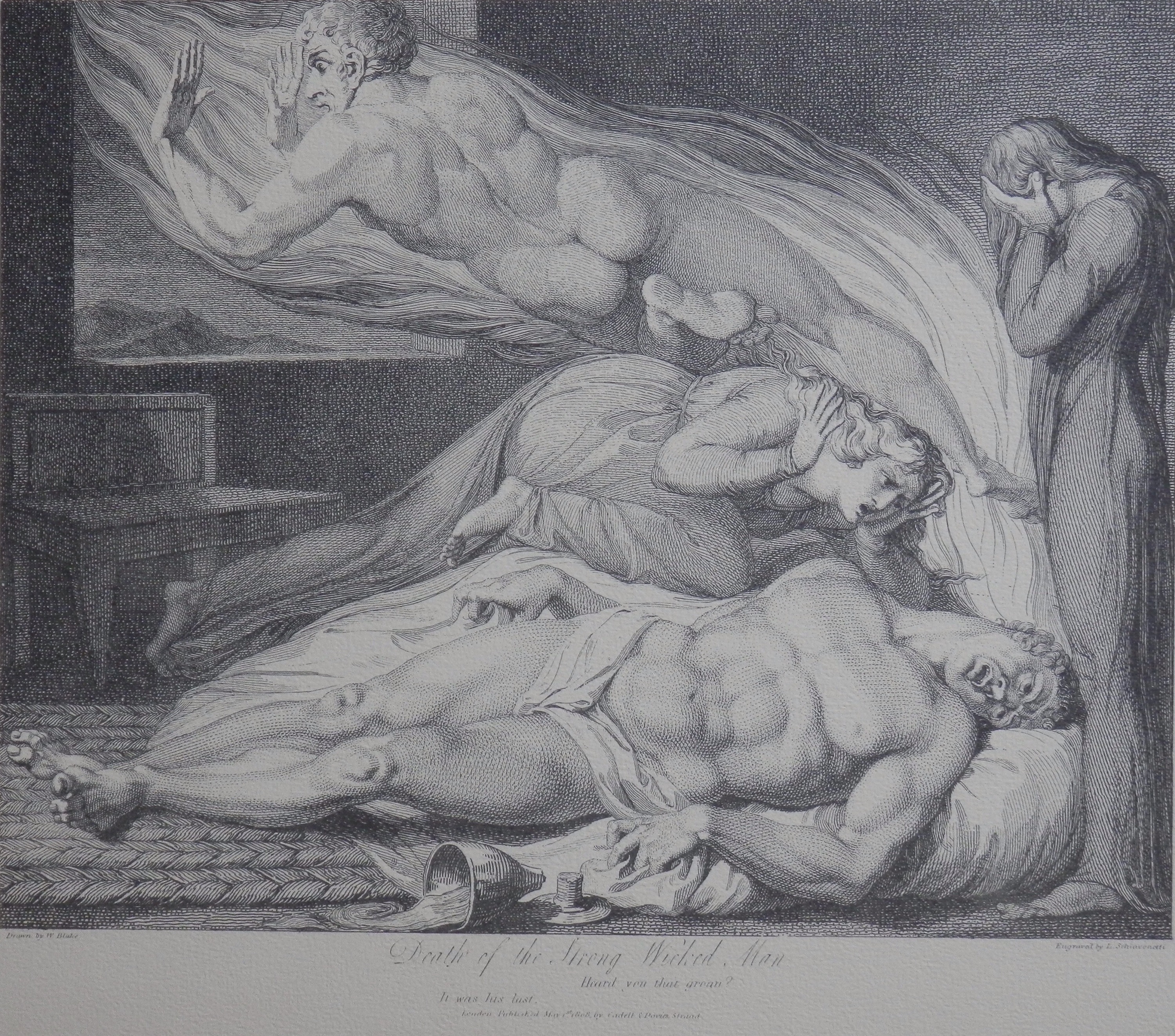
Death of the Strong Wicked Man by William Blake etched by L Schiavonetti

The engravings are by #LuigiSchiavonetti from Blake’s drawings for ‘The Grave’.  A poem penned by Robert Blair in 1743.

The powerful limbs and body of the young man heave in agony, fingers clench, toes curl, interminable excruciating torments of mind and body, depict the fearful image of the Strong and Wicked Man in the pangs of Death. His masculine soul is hurried through the window in flame to a land beyond.  His daughter hides her face in grief while his wife frantically rushes forward, as if resolved to share or halt his fate.  

Death of the Good Old Man drawn by Willia m Blake etched by L. Schiavonetti


  While here are perfect repose, a strong hope, and heavenly rewards.  Peace lies upon the old man’s visage, his hand upon the gospel, the bread and the wine having been received his soul devoutly ascends to eternal bliss. His affectionate children are seen in supplication, prayer and thanksgiving.  No fear or desperation clouds their countenance. How great is the happiness of the Good Man in the Hour of Death.  

Perhaps never were two subjects more happily conceived, and beautifully contrasted, than this and the former.  Exquisite evidence of Blake’s capabilities as creative and visionary.  William Blake genius, visionary, prophet, insane – all pieces of the whole – but what a whole.

Posted in Etching | Tagged , , , , , , , | Leave a comment

The Brumby

This story travels 100 years into the future from last weeks watercolour and is about a book which connects not only this country but one down under.  ‘The Brumby’ is the title of a book written by #MaryElwynPatchett.  A brumby is a free-roaming feral horse found all across Australia.  Originally published in 1958 by the Lutterworth Press, it is the Puffin edition from 1964 that is the topic this week.

The Brumby cover for Puffin edition 1964

The Brumby cover for Puffin edition 1964

Puffin produced a very fine cover (pictured on the left) for their publication of #TheBrumby.  I have found one site which attributes the artwork to #BarringtonLionelDriscoll.  Usually called Barry Driscoll, he was a British painter, wildlife artist, and sculptor who started as a book illustrator.

Mary Elwyn Patchett was born in Australia and grew up on a cattle station in Texas, Queensland. An independent child, her time was spent with her pets and the animals from the bush.  It is this world which she drew on for her books.  She moved to England in 1931 and worked for the BBC Children’s Hour.  Her books were translated into many languages, and she was considered to be the most widely read Australian children’s author of her time.  Her books are excellent reads and she does not back away from the harsh realities of the Australian bush.  ‘The Brumby’ is the first book in her pony series.

The Brumby watercolour signed & dated December 1964

The Brumby
watercolour signed & dated December 1964

This is the watercolour which I bought earlier this week.  It is, I believe, the original artwork for the cover of the Puffin edition.  They only used half of the image as you can see.  A detailed work of no little skill.  The overall image is as impressive as the cropped version.  It is signed in the lower right corner as well as dated but the signature does not appear to be that of Barry Driscoll.  To me it looks more like ‘Leonard’.  On the back there is a message which reads ‘Leonard Peters – typographic department – time – six weeks making approx. hours up to 100 hrs work’.  Typography is the setting of text so Mr Peters is not likely the artist.  Although there is one site which gives Barry Driscoll credit, I have not been able to confirm that anywhere else.  Be that as it may, the work is finely executed and it is no wonder so many people are impressed with the cover of the book.   Barry Driscoll specialized in animal subjects and established an international reputation as a wildlife artist and it may just be that he is the artist responsible for the cover.  The internal illustrations were done by Juliet McLeod – a well respected and renowned equine artist.

Posted in Watercolour paintings | Tagged , , , , | 1 Comment

Bayard’s Cove

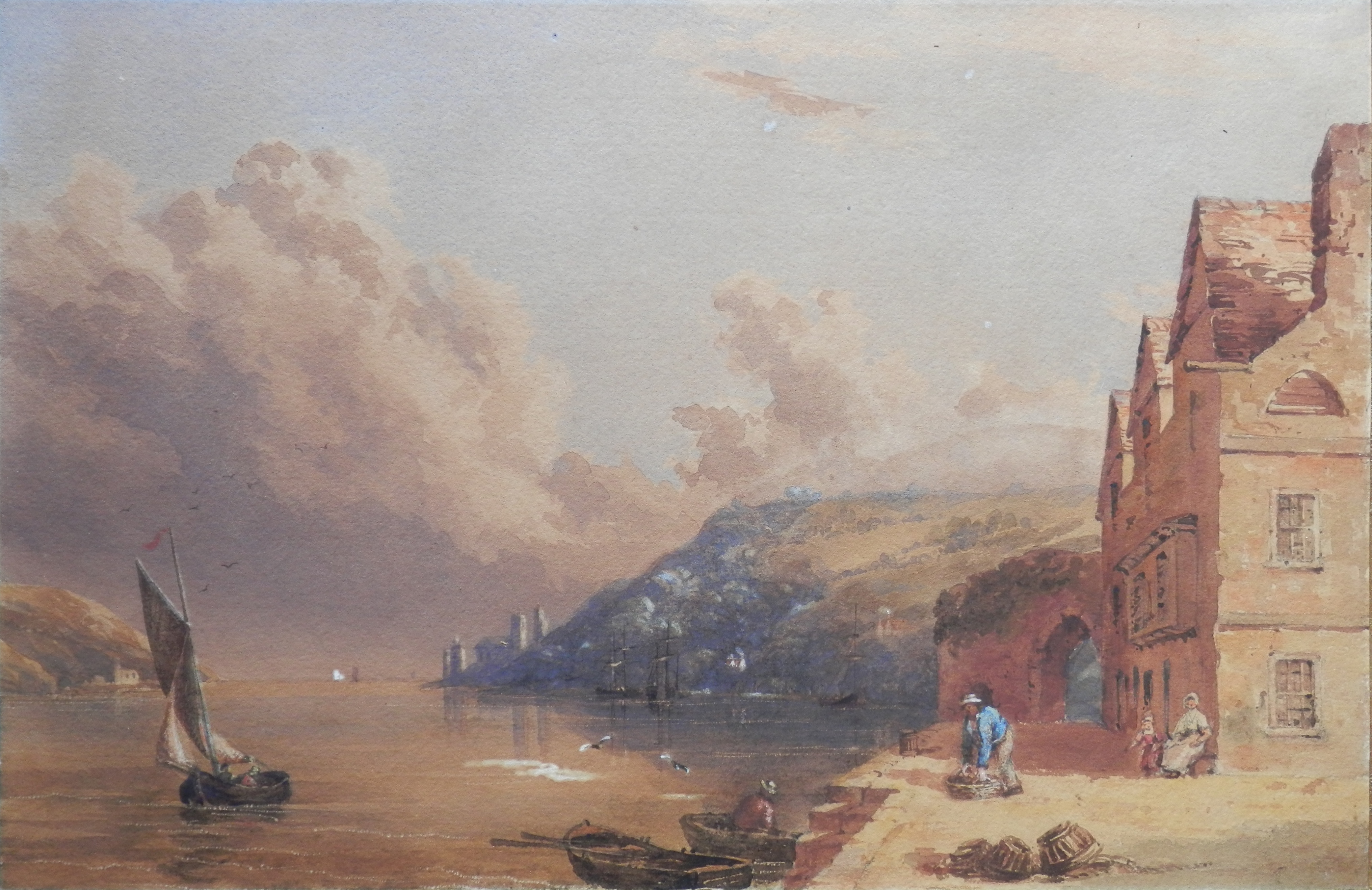
This chapter is about a picture which I talked about two weeks ago in a post called ‘Art Unsigned’.  I have continued to research the watercolour and have found new facts and some interesting proofs which arise in regards to the new information and the image itself.

Bayard's Cove, near Dartmouth Harbour in the manner of Samuel Prout 18th C

Bayard’s Cove, near Dartmouth Harbour
in the manner of Samuel Prout 19th C

I identified this watercolour as #DartmouthHarbour but it is in fact a short way down the River Dart from the harbour and is actually called #Bayard’sCove.  Bayard’s Cove is Dartmouth’s oldest wharf.  It’s cobbled quayside is where the Mayflower and the Speedwell moored in 1620 as the Pilgrim Fathers made their way to the New World.

So, I have identified the place more exactly.  I also estimated the date of this painting to be 1860 and this I did from the tower of St Petrox Church.  It is one of those distant towers at the mouth of the river.  The tower in my picture does not have a steeple on top of the tower.  The steeple was removed around 1855 and thus my estimate for the images age.  My readings tell me that the tower did not have a steeple when originally built and was a crenellated like a castle tower.  The steeple can be seen in Samuel and Nathaniel Buck’s etching of 1765.  My picture is certainly not earlier than that.  The other age proof comes from the right hand side of the painting.  We see the side of the three story building – windows on each floor and an arched access above them with a chimney rising just to the right above.

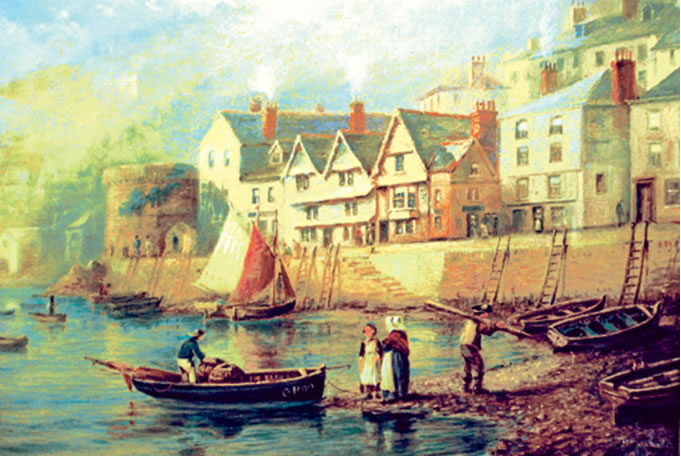
Bayard's Cove by W H Way @ 1890

Bayard’s Cove by W H Way @ 1890

All the images I have found of this site have an extension coming off the end of the building towards us the viewer as seen in the painting by W H Way -1890.  It is set back a foot or less from the corner of the building so the windows and arch are not there and the chimney has also been moved to the right down the side of the building.  It means that my estimate is possibly correct and that my painting is the earliest image of Bayard’s Cove I have yet come across.

Posted in Watercolour paintings | Tagged , , , , , , , | Leave a comment

Still-life

Still-life art is the presentation of inanimate objects and it is amazing how beautiful those simple objects can be.

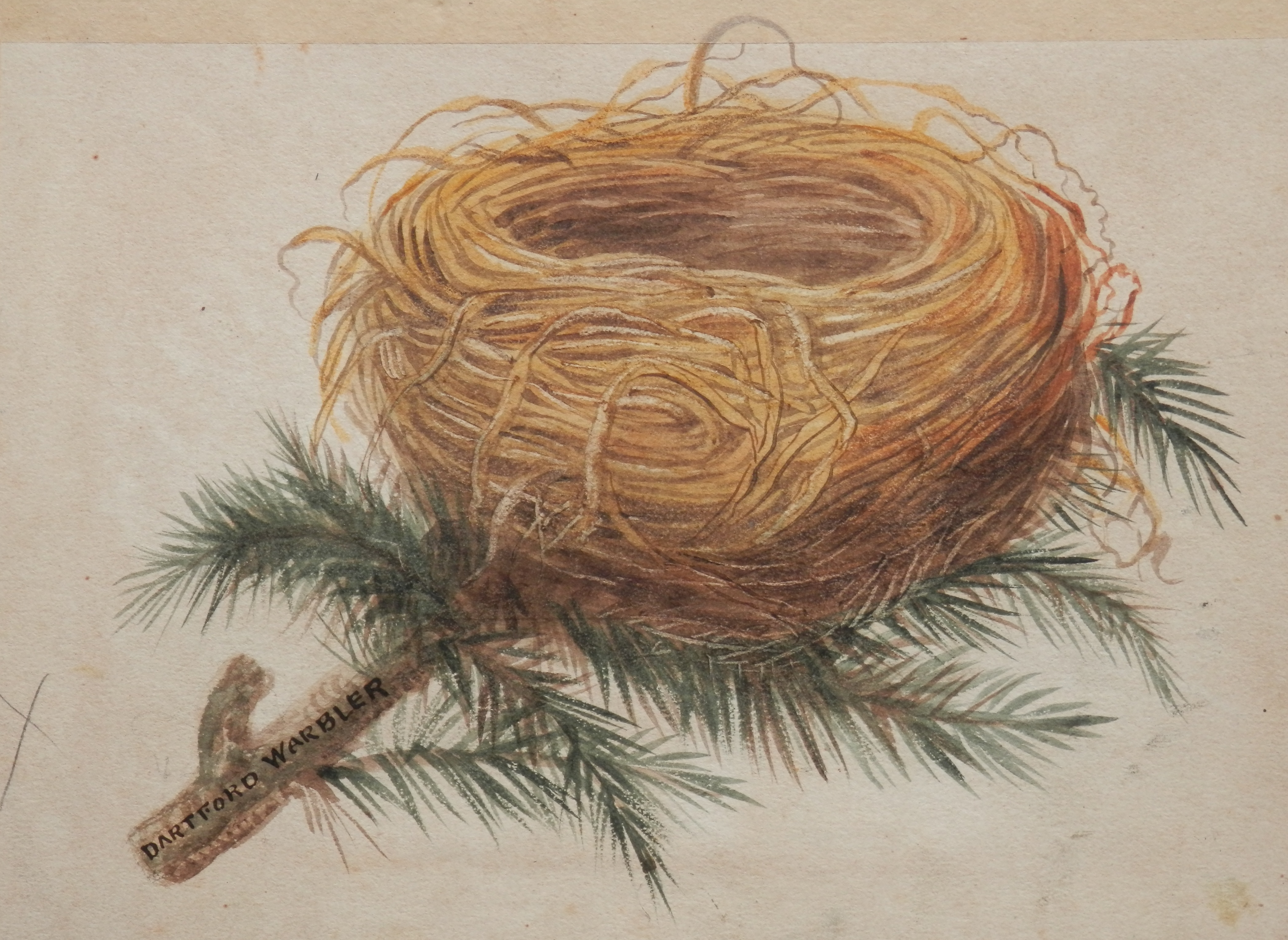
Dartford Warbler after Francis Orpen Morris & Alexander Francis Lydon @1855

Dartford Warbler after Francis Orpen Morris & Alexander Francis Lydon @1855

Black Redstart Nest after Francis Orpen Morris & Alexander Francis Lydon @ 1860

Black Redstart Nest after Francis Orpen Morris & Alexander Francis Lydon @ 1860

Two finely executed watercolours by an unknown artist.  I believe that they might have been painted for #FrancisOrpenMorris and his work ‘A Natural History of Nests and Eggs of British Birds’.  The #DartfordWarbler nest is very much like the engraving which was produced for the publication.  The book was published in 1850 and was the first of a number of very popular publications.  The Rev. F. O. Morris worked with publisher Benjamin Fawcett and engraver Alexander Francis Lydon.  The publications ranged from : A History of British Birds, A Natural History of Nests and Eggs of British Birds, A History of British Butterflies, A History of British Moths and The County Seats of  the Noblemen and Gentleman of Great Britain.  

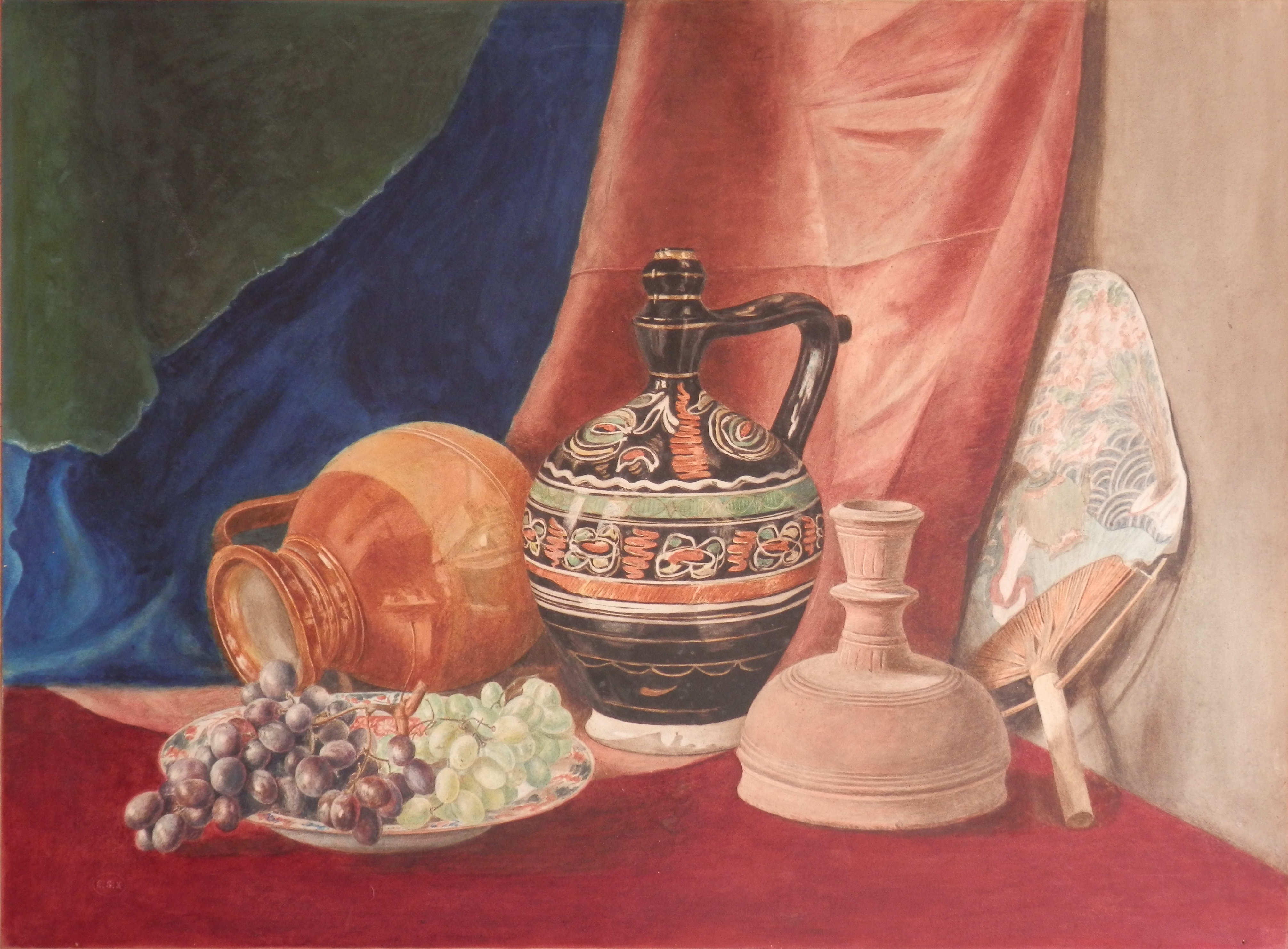
Still-life by Edward Sharard Kennedy

Still-life by Edward Sharard Kennedy

#EdwardSharardKennedy was a genre, portrait, and still-life painter.  He was born in 1837 in Sussex and died in 1900.  I can find little information on Edward Kennedy other than that he was active as an artist from 1863 to 1890.  He often did not sign his works rather he used a small embossing stamp to imprint his monogram ESK on the artwork.  It can be found in the lower left on this painting.

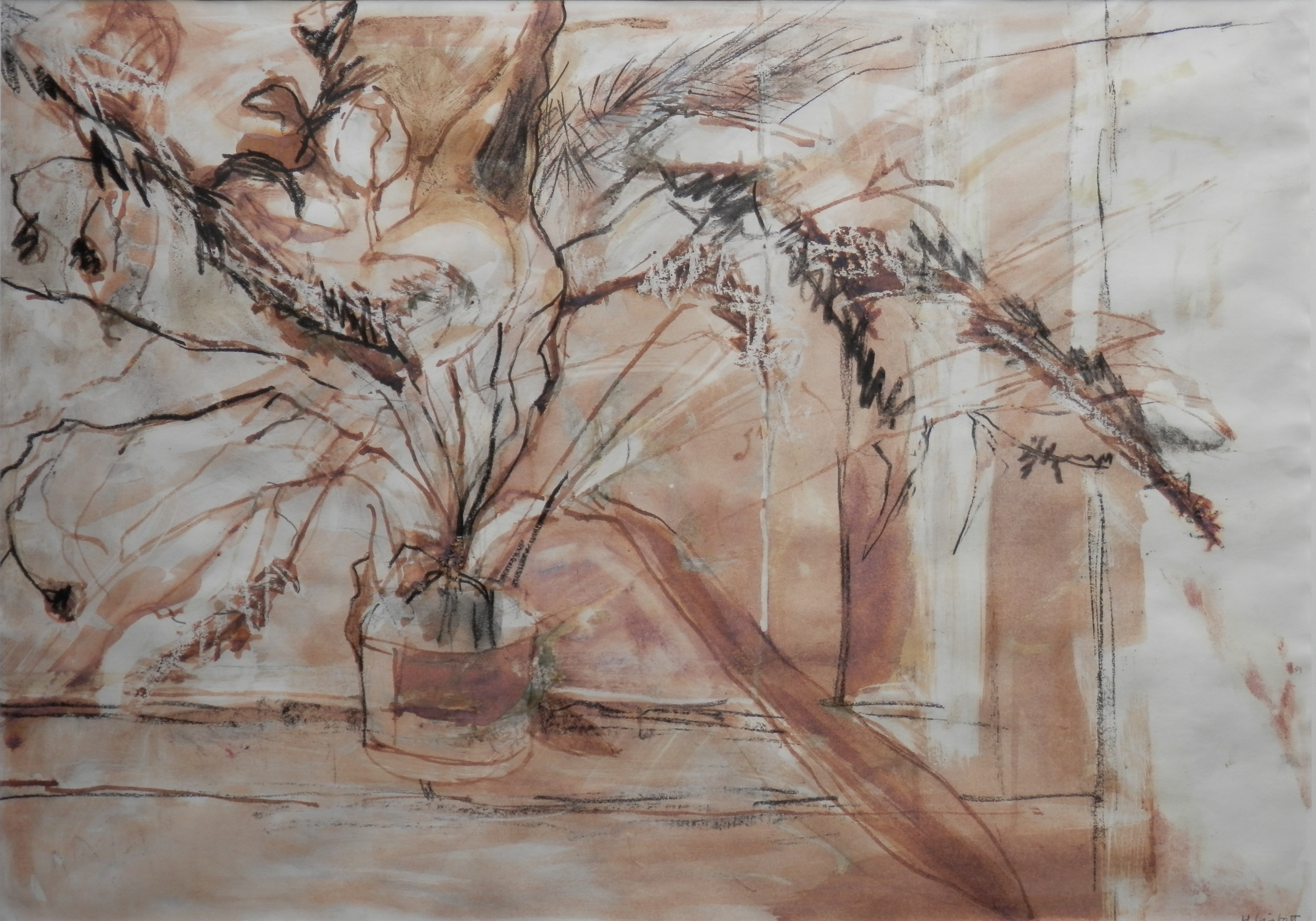
And finally to a piece by H. Lintott.  Possibly #HenryJohnLintott (1877-1965).  He was born in Brighton, studied at the Royal College of Art in London, worked at the Edinburgh College of Art, and died in Edinburgh.  His son Sir Henry Lintott was High Commissioner to Canada.

Plant Study signed H. Lintott (Henry John Lintott?)

Plant Study signed H. Lintott (Henry John Lintott?)

Posted in Watercolour paintings | Tagged , , , , , , , | Leave a comment

Art Unsigned

I often come across pieces that are not signed but are still of good artistic value.  Today a chapter of few words but of an artistic worth of which the paintings may speak for themselves.  They all come from the 19th century.

Bayard's Cove, Dartmouth Harbour in the manner of Samuel Prout @ 1860

Bayard’s Cove, Dartmouth Harbour
in the manner of Samuel Prout @ 1860

We begin with a coastal or harbour scene in the manner of Samuel Prout.  A warmth of colour and precision in expression are the proof of this artist’s talent.  I believe it to show #Bayard’s Cove on the River Dart near #DartmouthHarbour around 1860.   We see #StPetroxChurch and castle towers in the distance at the mouth of the inlet.

Old Burial Ground initialed @ 1877

Old Burial Ground
initialed @ 1877

#TheOldBurialGround at #Inceworth painted in 1877 if my reading of the inscription beneath the image is correct.  Alas, Inceworth no longer exists, it was probably erected in the 14th century and by the 18th it was a venerable pile of antiquities.  It’s chapel was turned into a granary which eventually fell into dis-repair.  Inceworth is close Plymouth on the Tamar River which forms the border between Devon and Cornwall.

Idyllic Country Scene unknown artist

Idyllic Country Scene
unknown artist

To an idyllic rural scene with children playing and fishing as their mother prepares her wares for market.  A pleasant scene done in the cool peaceful hues of autumn.

And to finish two landscapes. One with a bit of humour as a man chases his cart down the hill and the other – for me – could be an image from western Canada’s mountains and fir trees.  There are initials to be found in the bottom left corner on the greyish stone. A number of fine watercolours by unknown artists.

Chasing the Cart unknown artist

Chasing the Cart
unknown artist


Mountain River initialed

Mountain River
initialed

Posted in Watercolour paintings | Tagged , , , , , , , , , , , , , | Leave a comment

Venetian Art

Venice is one of those cities that sits high on the must see list of most people.  It has romance, intrigue, history, gondolas and the amazing carnival.  A favourite of many an artist also.

Sante Maria della Salute

Sante Maria della Salute unknown artist 19th C

When I saw this painting I recognized the view as that of the Church of #SanteMariadellaSalute in Venice.  It is one of those places that artists have painted for centuries. Painted by day and night Venice has the added benefit of having canals which allow artists to experiment with the effects of watery reflection. Painted by JMW Turner, EJ Poynter and other great painters yet this watercolour to me looks to be more reminiscent of #HerculesBrabazon and his use of white in his images.

Sante Maria della Salute by Fiona Walker

Sante Maria della Salute
by Fiona Walker @ 1989

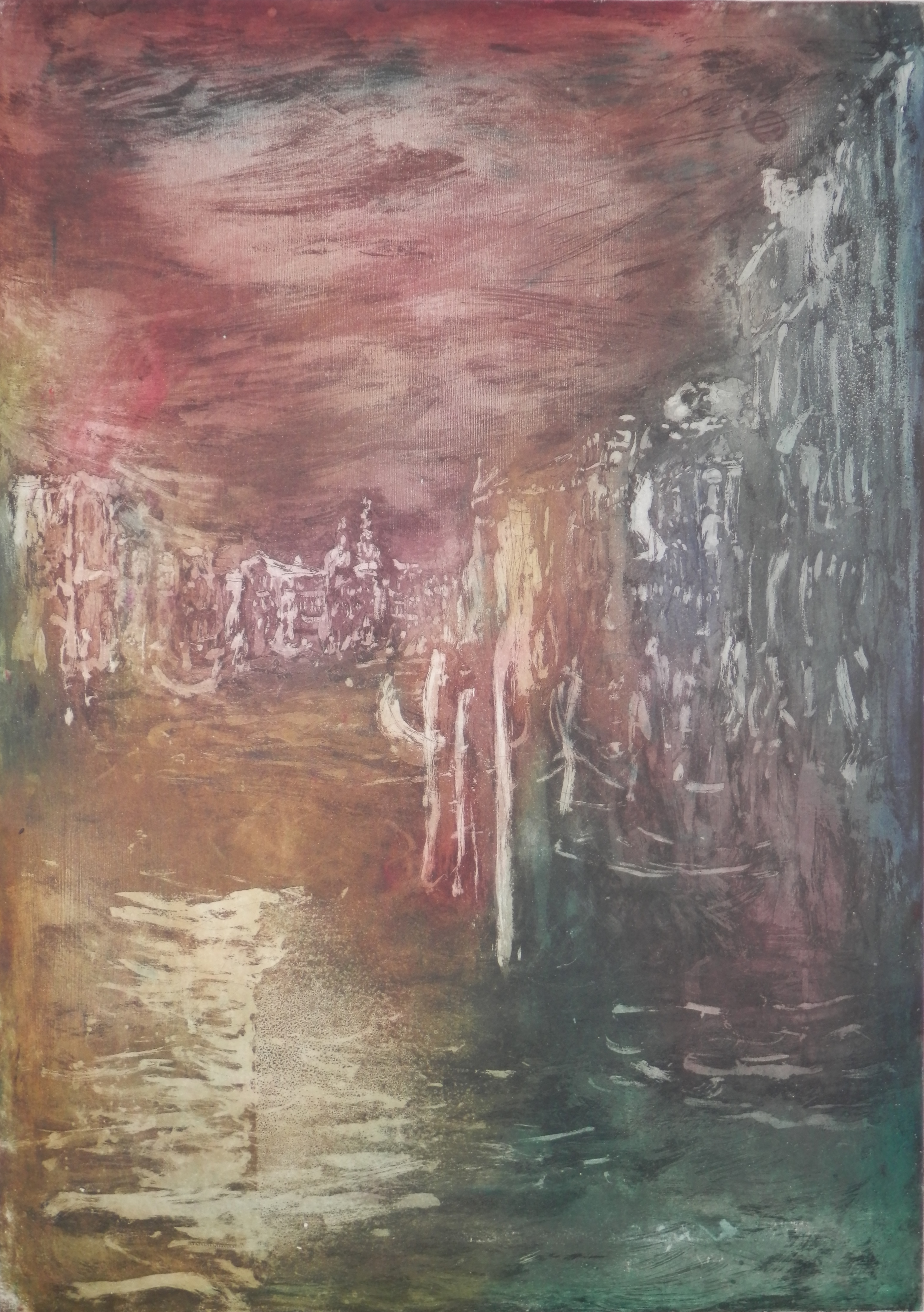
Grand Canal, Venice print by Fiona Walker @ 1989

Grand Canal, Venice
print by Fiona Walker @ 1989

Another image of Sante Maria della Salute and a print showing the #GrandCanal with the Salute in the distance.  Both images are of the canal at night with the marvellous effects light playing on the water.  The canal snakes it’s way through Venice.  It is almost 2.5 miles long , ranges from 90 to 270 feet in width and runs an average depth of 16 feet and is one of the major water traffic corridors for the city.

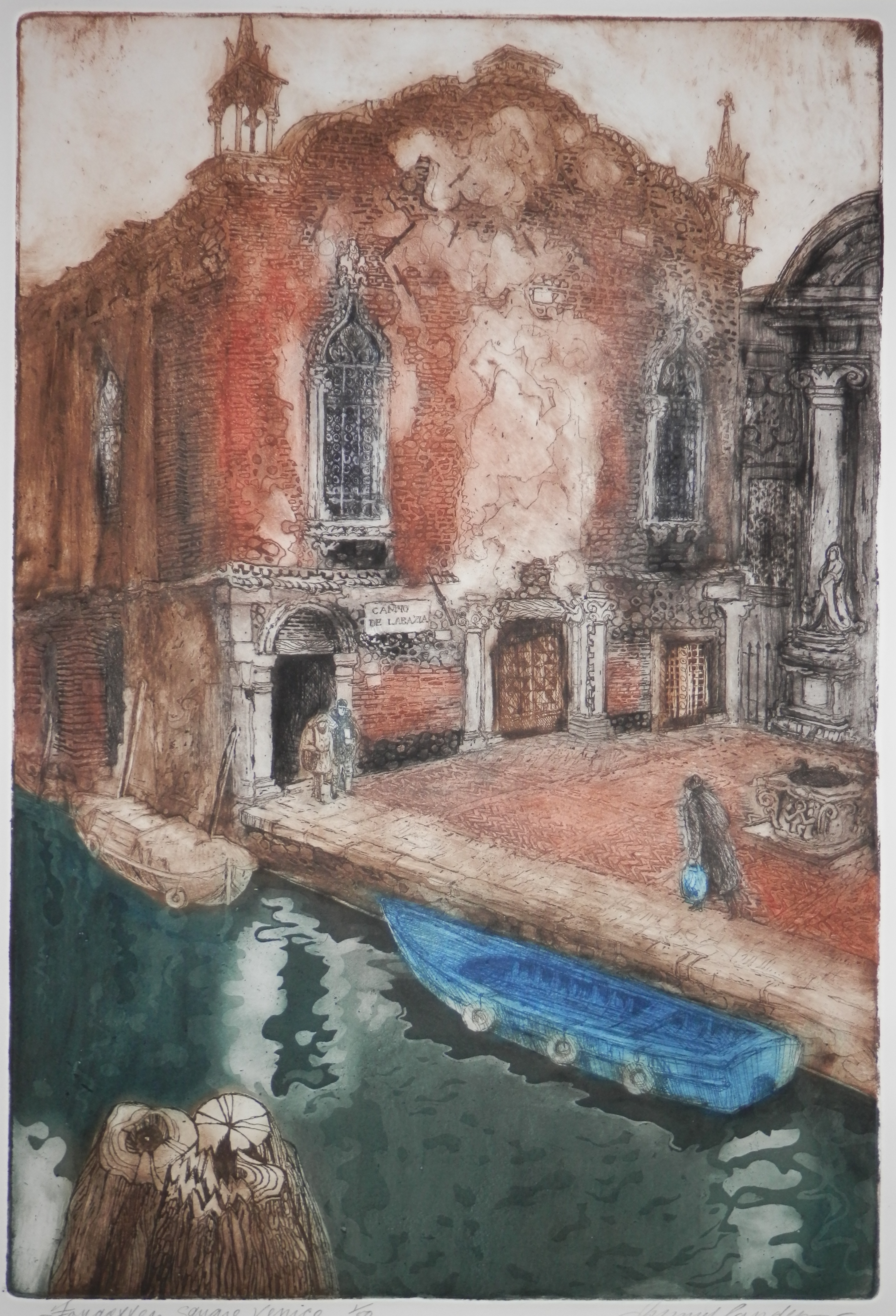
Forgotten Square, Venice by Jenny Sanders

Forgotten Square, Venice by Jenny Sanders

And if you perchance roam those byways of Venice you might happen upon some small forgotten square which is yet to be explored.  Treasures to be searched out and experienced.  A place of beauty portrayed in history past, present and future.

Posted in Uncategorized | Leave a comment

From Insurance to India

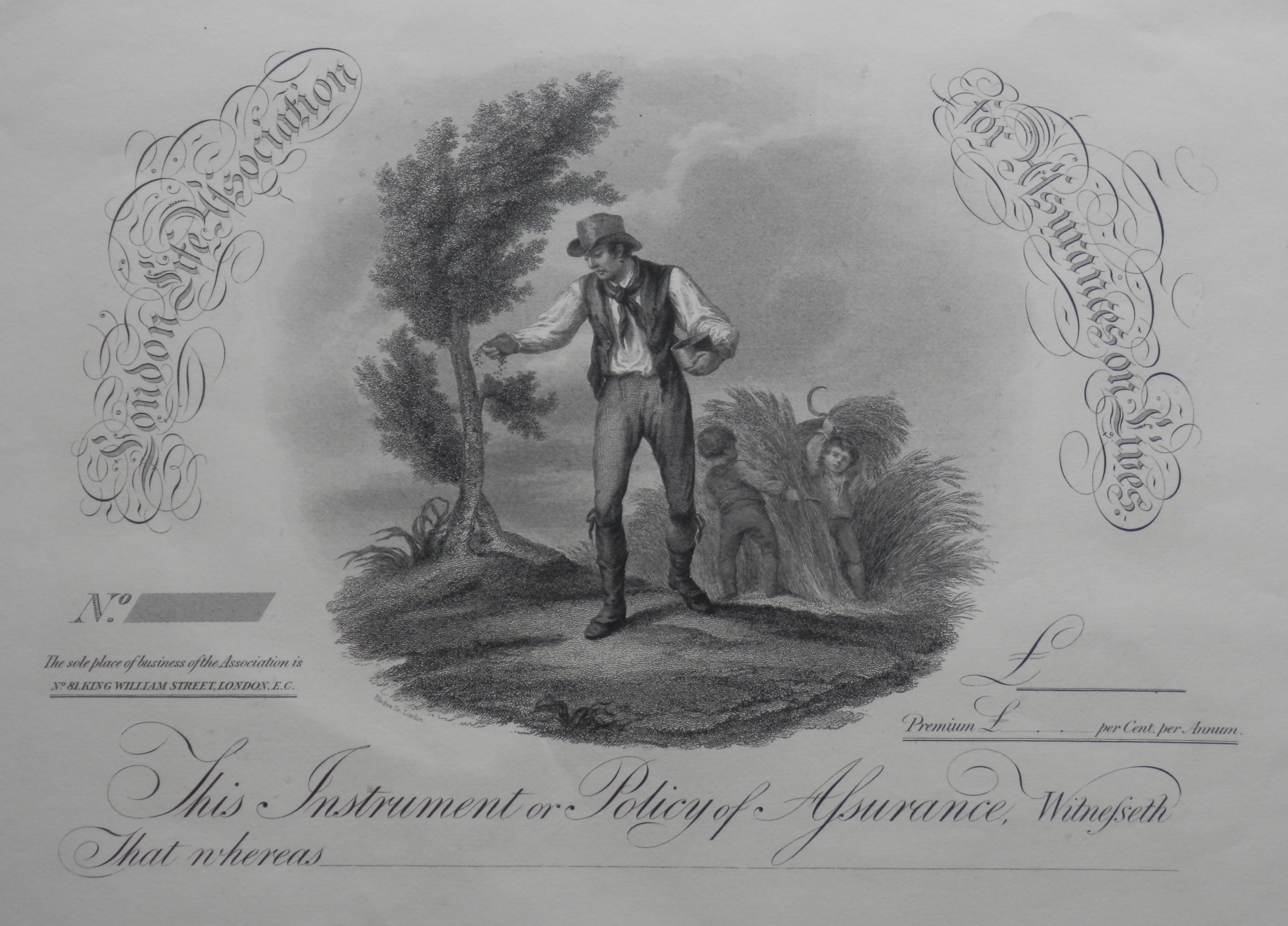
Two prints which I bought along with the drawings of the two previous chapters are this weeks focus.  One is certainly art but the other might be a surprise.  Let’s begin with the unexpected.

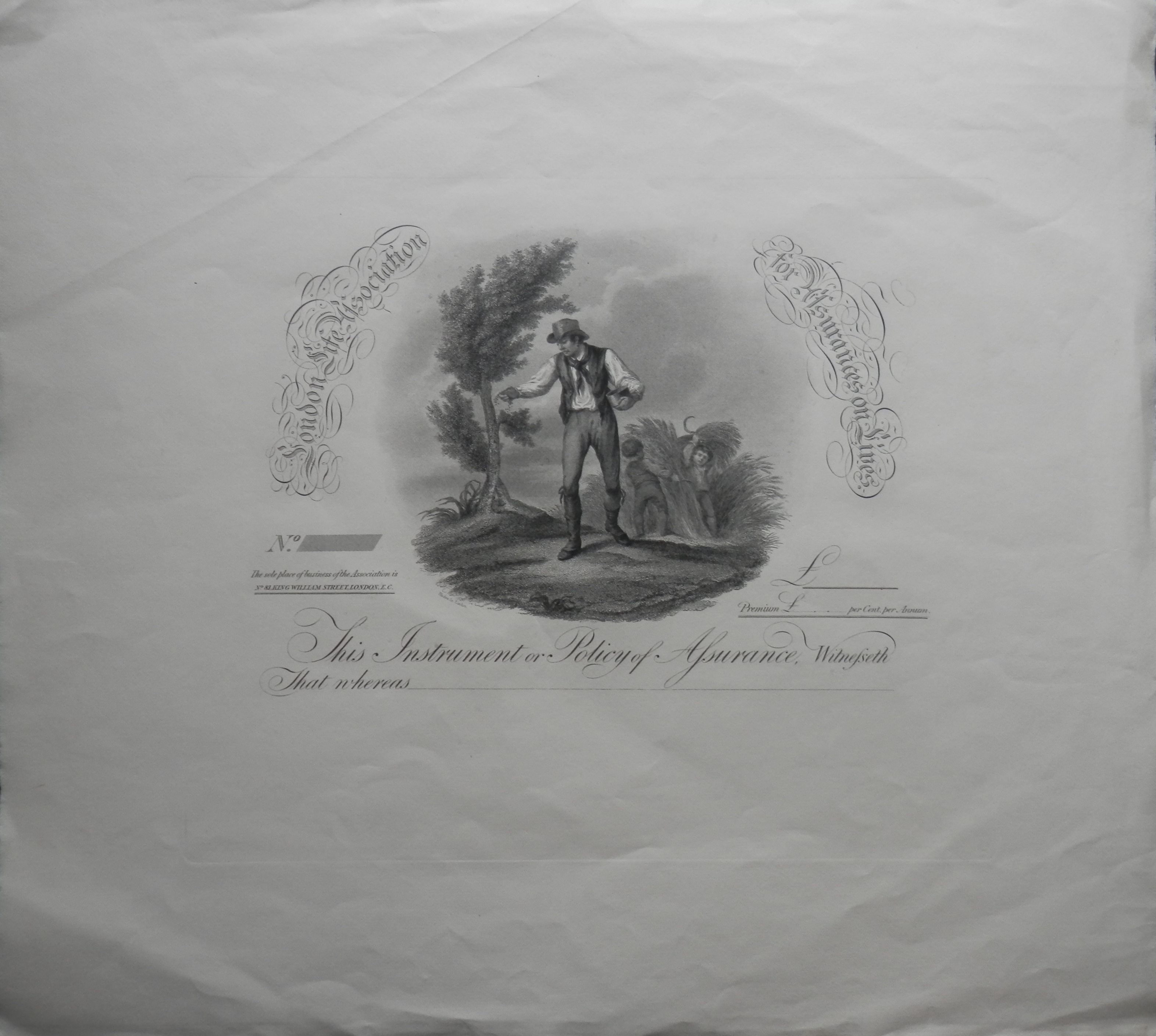
London Life Association Policy @ 1850 ?

London Life Association Policy @ 1850 ?

I guess this is recommended for most people whether one is single or married, a parent or not.  Life insurance is something we must all consider the importance of at some point in our lives but one would not necessarily consider ones policy art.

London Life Association Policy @ 1850 image 2

London Life Association Policy @ 1850 image 2

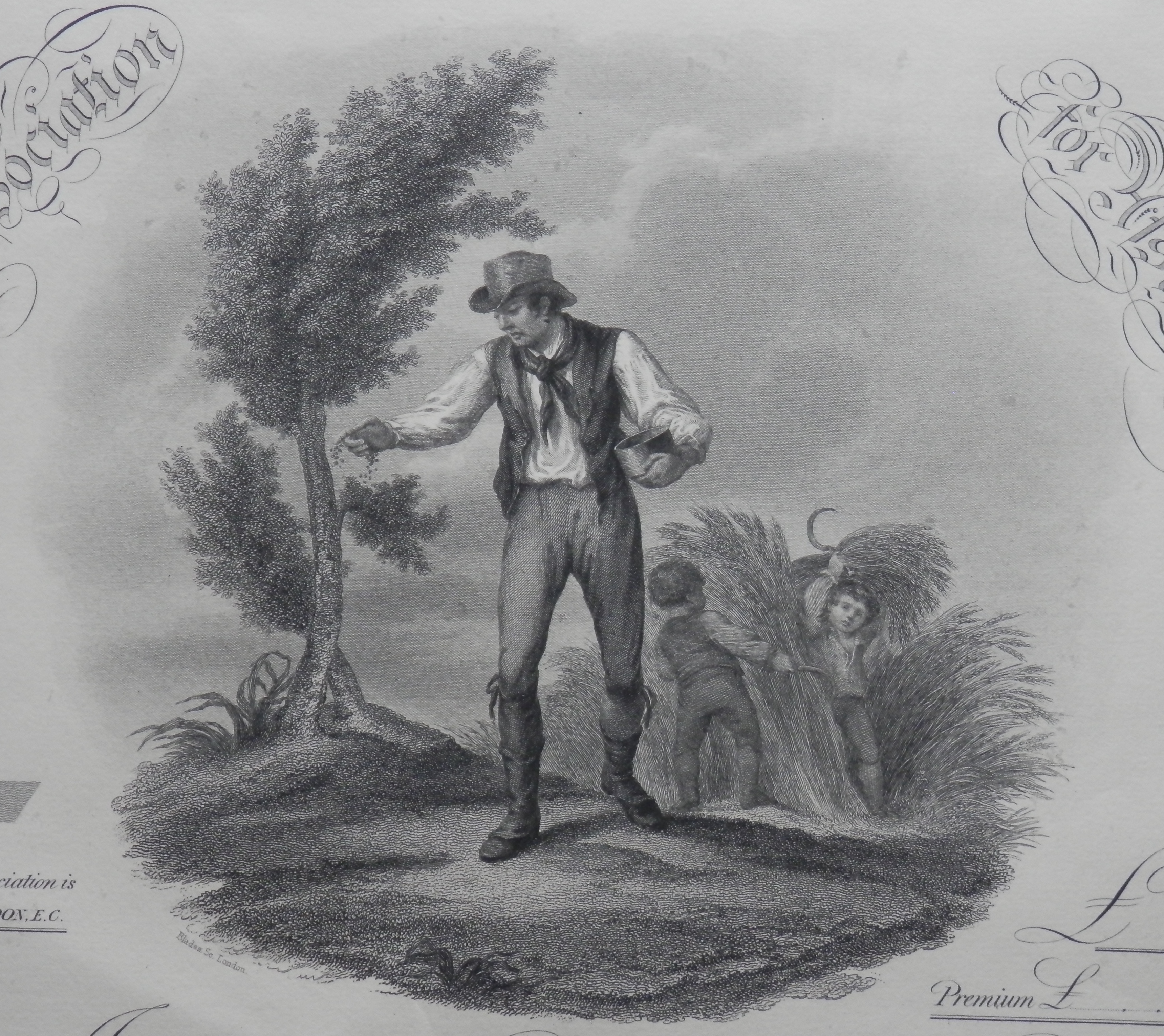
#LondonLifeAssurance was established in 1806.  It traded from St Paul’s Churchyard for 5 years, moved to Cannon Street and operated for 27 years and then moved to 81 King William Street in 1838 and remained in business there till 1981.  The address on this policy is from King William Street so comes from 1838 onwards.  I have not yet seen any policies which look like this but if one is down-town London head for 81 King William and you will find the seal of the London Life Association above the front door.  The building is now the Moscow Narodny Bank.

London Life Association Policy @1850 image 3

London Life Association Policy @1850 image 3

A finely executed image at the center of the policy shows a man in 18th century garb sowing the ground and behind him a pair of young children reaping the harvest.  Are we to reap what we sow or possibly to others comes the benefit of our labours which the image seems to imply.

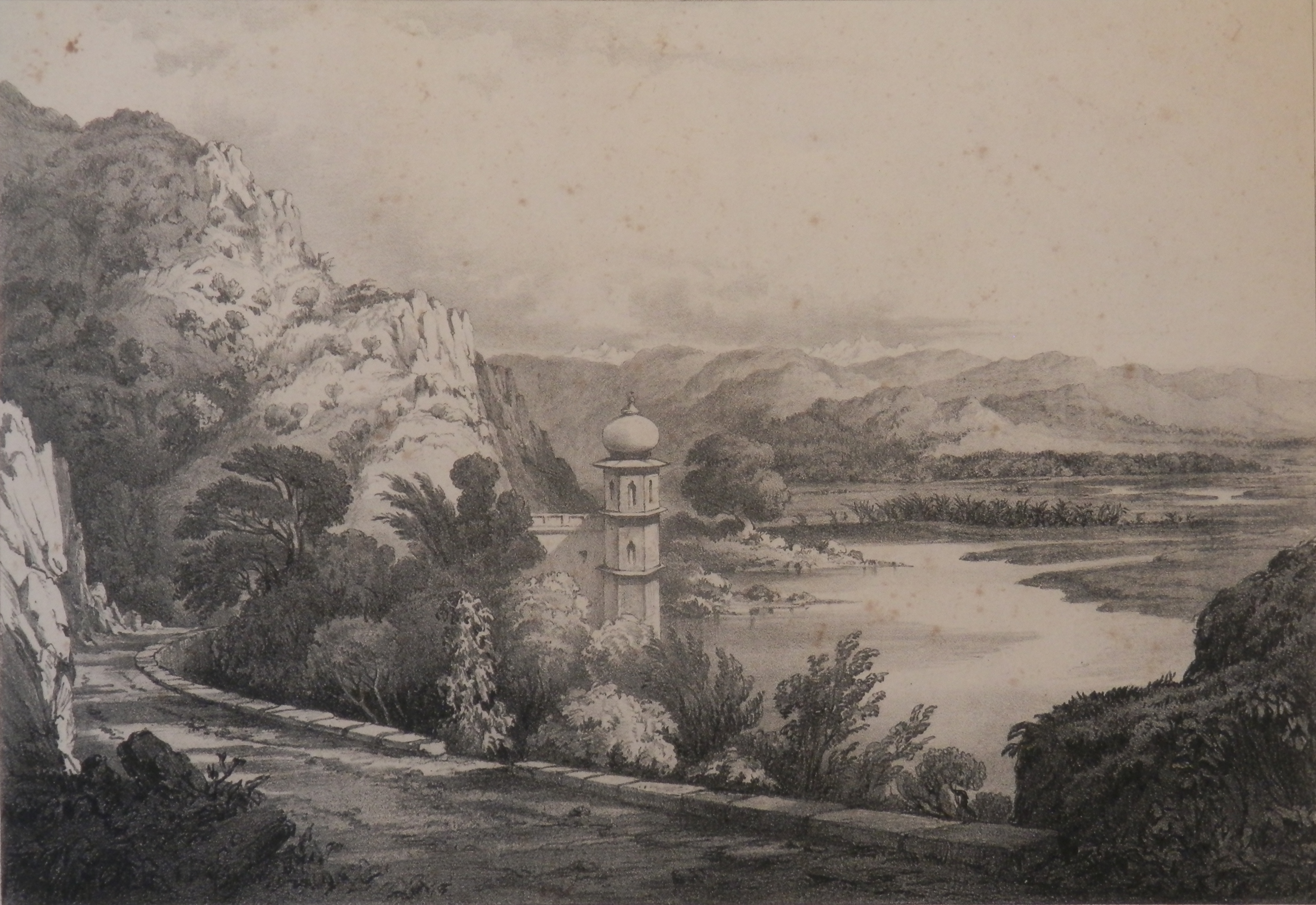
And so to the banks of the #GangesRiverAboveHaridwar for our next image.  A lithograph by #FrederickSchenck considered the leading lithographer in Scotland around 1850.

The Ganges Above Haridwar lithograph by Schenck and McFarlane after Capt. R Maclagan

The Ganges Above Haridwar lithograph by Schenck and McFarlane after Capt. R Maclagan

A well executed image after a drawing by Capt R Maclagan who was part of the #BengalEngineers and first principal of the #ThomassonCollege, Roorkee, NWP, India.  I have found little in regards to Capt. Maclagan as an artist and no other images by him.  Schenck and MacFarlane were partners from 1850 to 1859 but the company name ran until 1871.  Apart from Schenck’s artistic commercial work and book illustrations, he produced a large range of lithographed portraits. He argued for lithography in Scotland with such furtiveness, taste and skill that it advanced from mere trade to a place among the fine arts of the country.

Posted in Aquatint, Etching, Lithographs | Tagged , , , , , , , , , | Leave a comment

Drawings from an Earlier Time 2

We spent most of last weeks chapter in the middle of England.  This week as we continue with our unknown artist’s travels we journey north to Morpeth and then south to Gloucester and Worcester.  Again all drawing are from around 1850.

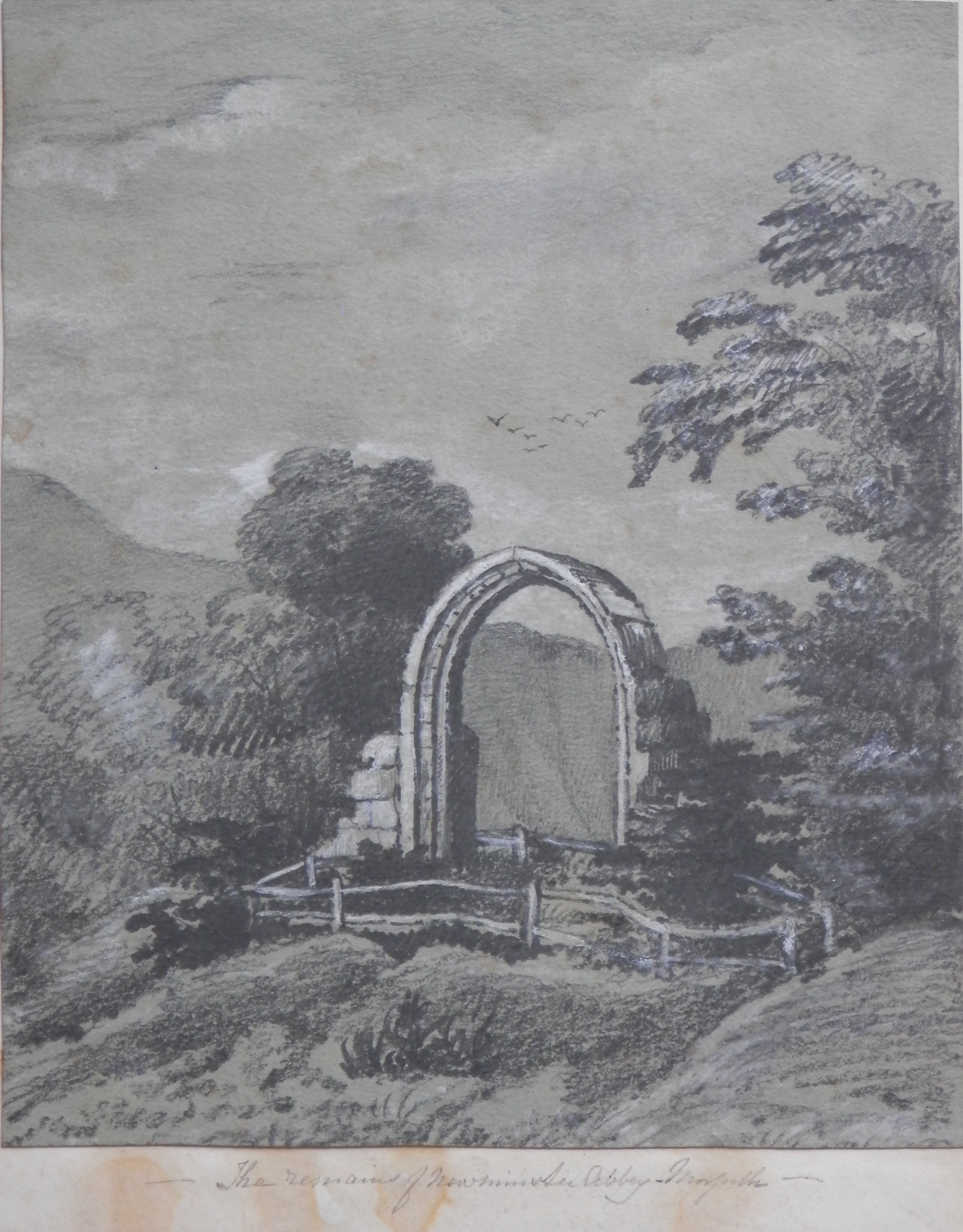
Ruins of Newminster Abbey by unknown artist @ 1845

Ruins of Newminster Abbey by unknown artist @ 1845

We begin at the ruins of #NewminsterAbbey near Morpeth in Northumbria Here stands the remains of a long past Cistercian abbey which once owned lands all the way to the Scottish border.  Although a protected site there is no public access since it is privately owned.

St. James the Great Church, Morpeth by unknown artist @ 1850

St. James the Great Church, Morpeth by unknown artist @ 1850

If we travel into Morpeth we come to St. James the Great Church.  It was constructed to facilitate the attending services.  The foundation stone was laid in 1844 and the building was completed in 1846 overseen by the Hon. & Rev. Francis Grey the Rector of Morpeth.   In 1537, the lands owned by Newminster Abbey were leased by the Crown to the Grey family who used many of the stones for their own buildings.  Possibly the fore-bearers of the Reverend Grey.  A full bell peal was planned but abandoned which allowed lantern windows to be added which give St. James a light and airy feeling.

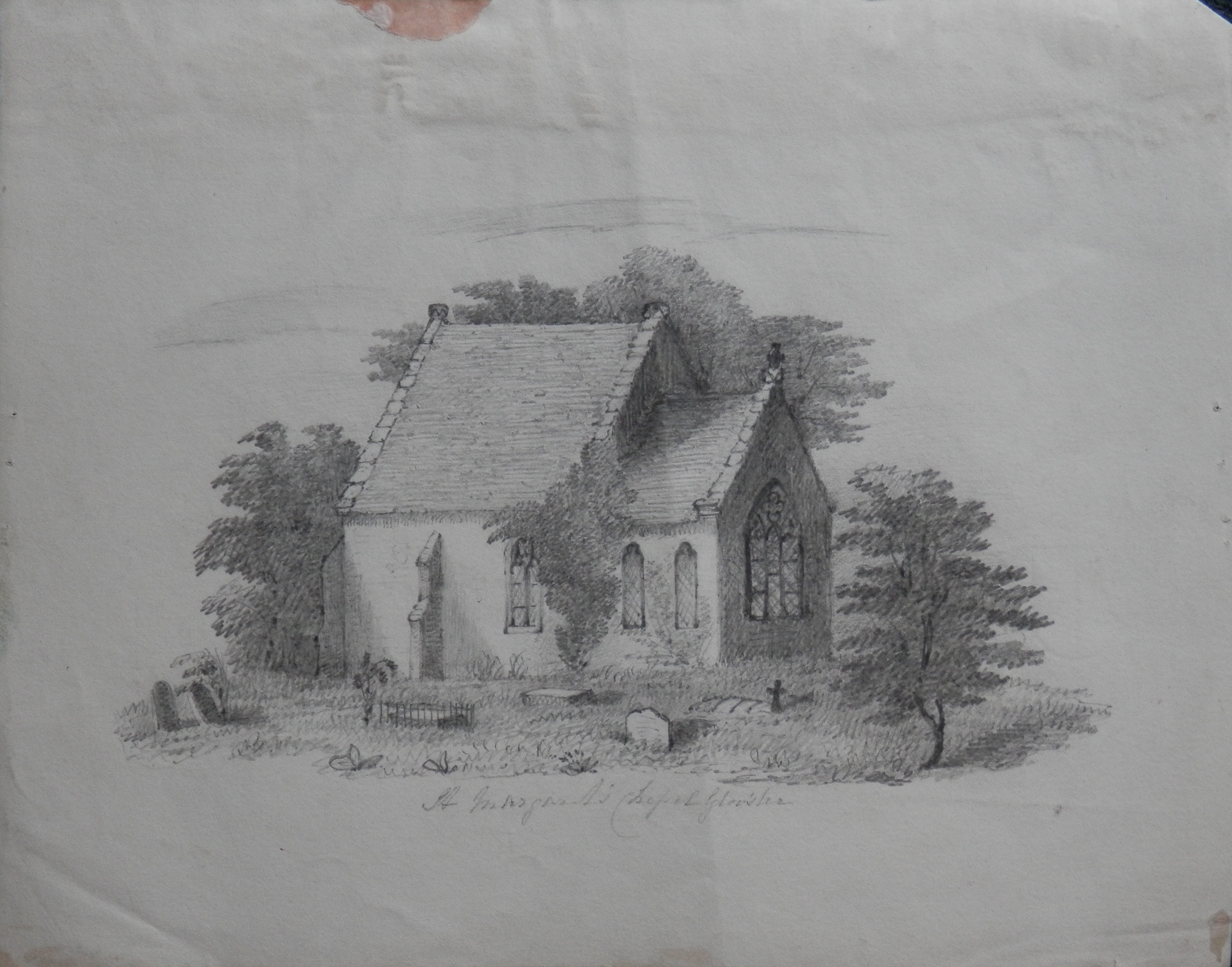
St Margaret's Chapel, Gloucester by unknown artist @ 1845

St Margaret’s Chapel, Gloucester by unknown artist @ 1845

The small but lovely #St.MargaretsChapel,Gloucester was part of a monastic body set up outside the medieval city boundary to benefit those suffering from leprosy – then incurable.  As with St. Mary’s Church last week we see the graves of parishioners near to the church with headstones askew.  A very rare and fine example of a medieval hospital chapel.

Gheluvelt Water Tower, Worcester by unknown artist @ 1859

Gheluvelt Water Tower, Worcester by unknown artist @ 1859

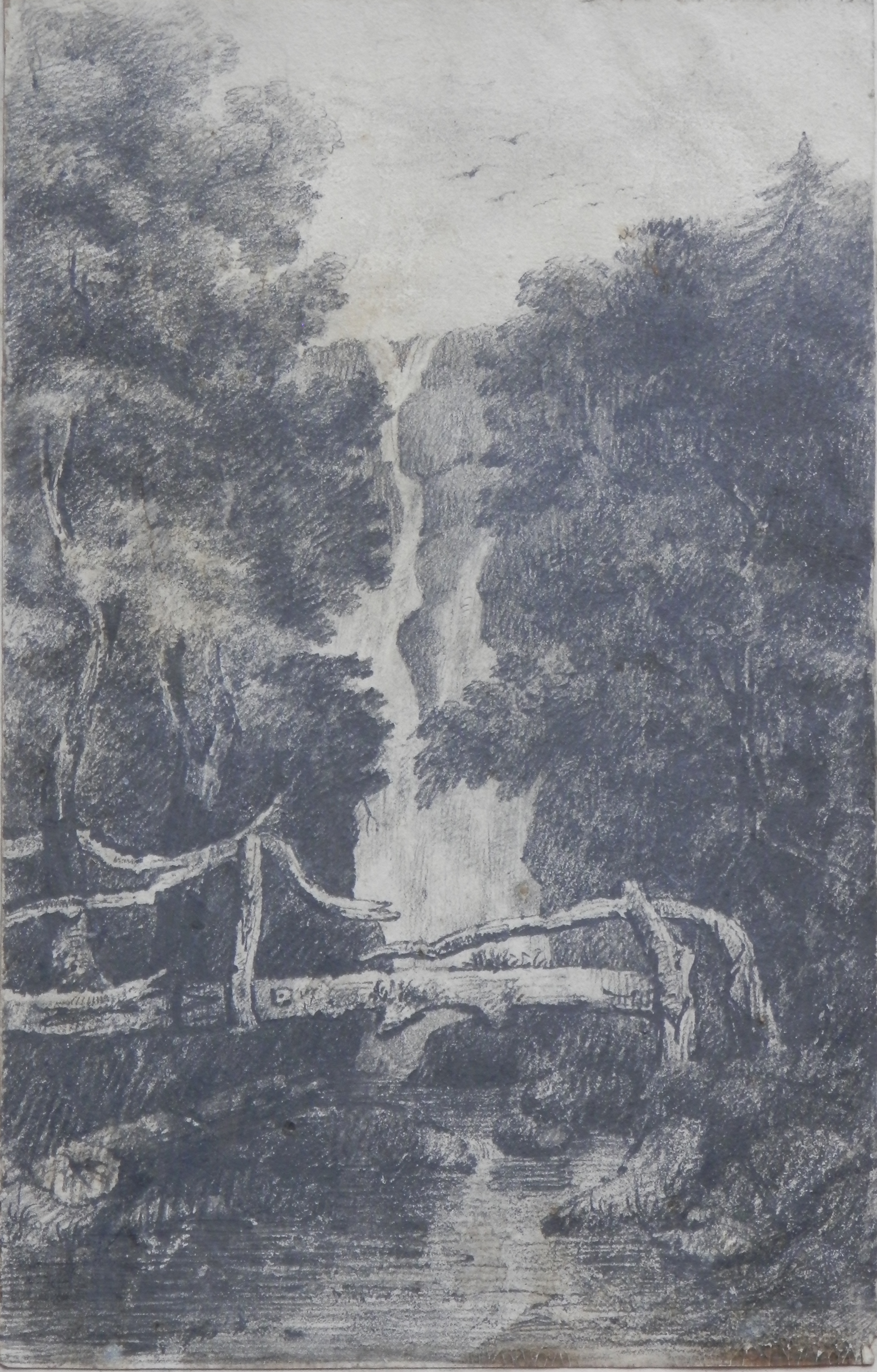
And if we travel a little ways north we come to Worcester.  The drawing from 1859 shows the #GheluveltWaterTower which stands on the Brabourne brook.  The tower seen here no longer exists but the rest of the pumphouse buildings remain and are now an environmental centre.  Cholera outbreaks in the early nineteenth century were blamed on the quality and availability of the water. So a sophisticated waterworks was constructed at Barbourne in 1857-8.  It was designed by Thomas Hawkesley, the greatest authority on municipal water supplies.  To finish, I will leave you with two drawings which are untitled so I do not know where they are located. I hope you have enjoyed our travels with our unknown artist-guide to places historical and artistic.

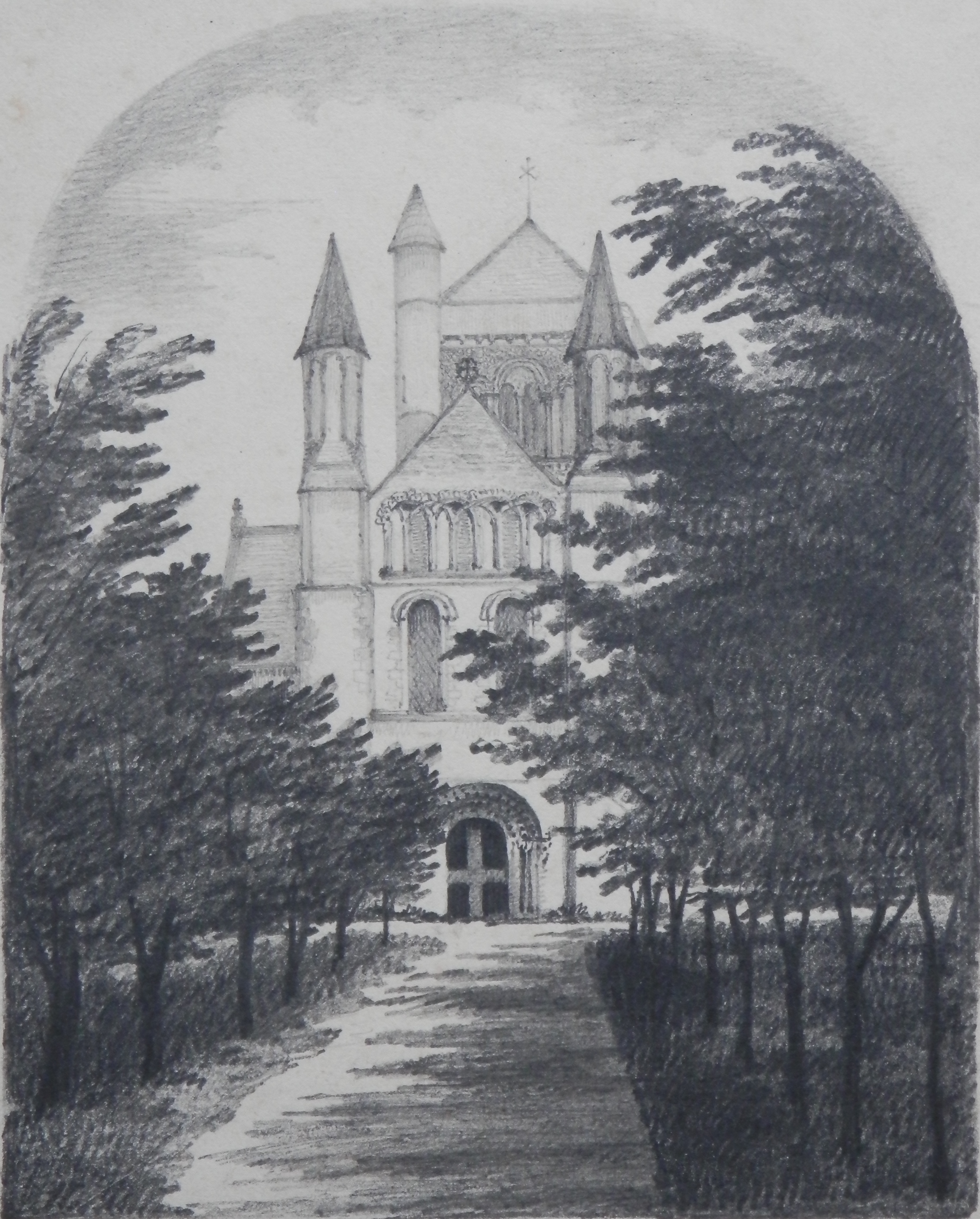
Drawing 1 by unknown artist @1850

Drawing 1 by unknown artist @1850

Drawing 2 by unknown artist @ 1850

Drawing 2 by unknown artist @ 1850

Posted in Drawings and Sketches | Tagged , , , , , , , , | Leave a comment

Drawings from an Earlier Time

Went to the local auction this past week and came away with a number of prints and drawings.  The prints are nice but it was the pencil drawings which caught my eye and which have brought me delight while researching them.  The drawings are not signed so I do not know who they are by but a number of them have titles and dates.  I believe they are by the same artist.

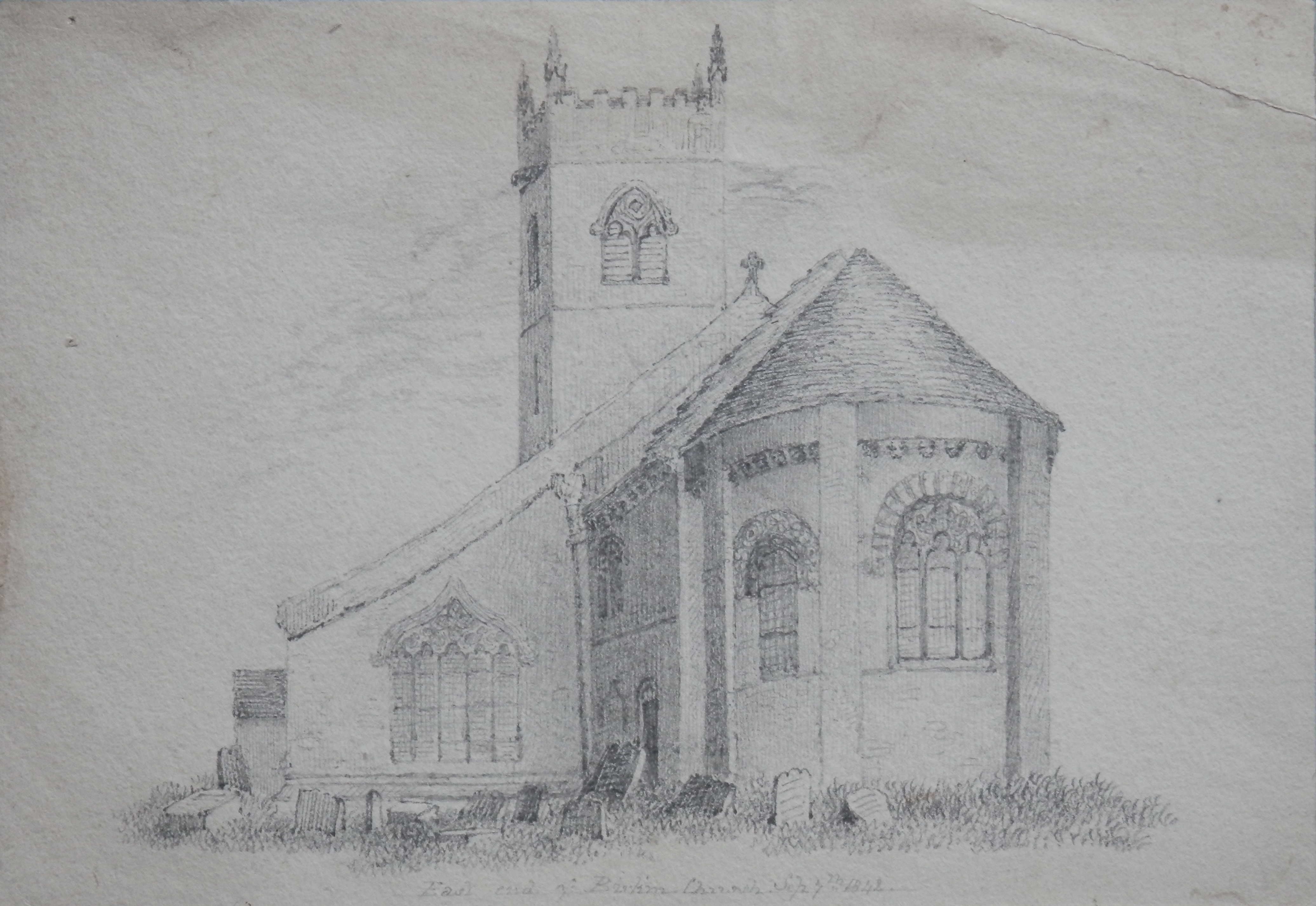
East End of St Mary's Church, Birkin drawing by unknown artist 1842

East End of St Mary’s Church, Birkin drawing by unknown artist 1842

The east end of the Church of St. Mary, on the edge of the village of Birkin, Yorkshire as seen in 1842.  I love that even back then the head-stones were leaning to and fro.  An impressively built Norman church with a Romanesque south door carved with roll mouldings and beak heads which was reset into the south wall of the south aisle when it was rebuilt in 1328 as well it has a richly carved corbel table around chancel and apse.

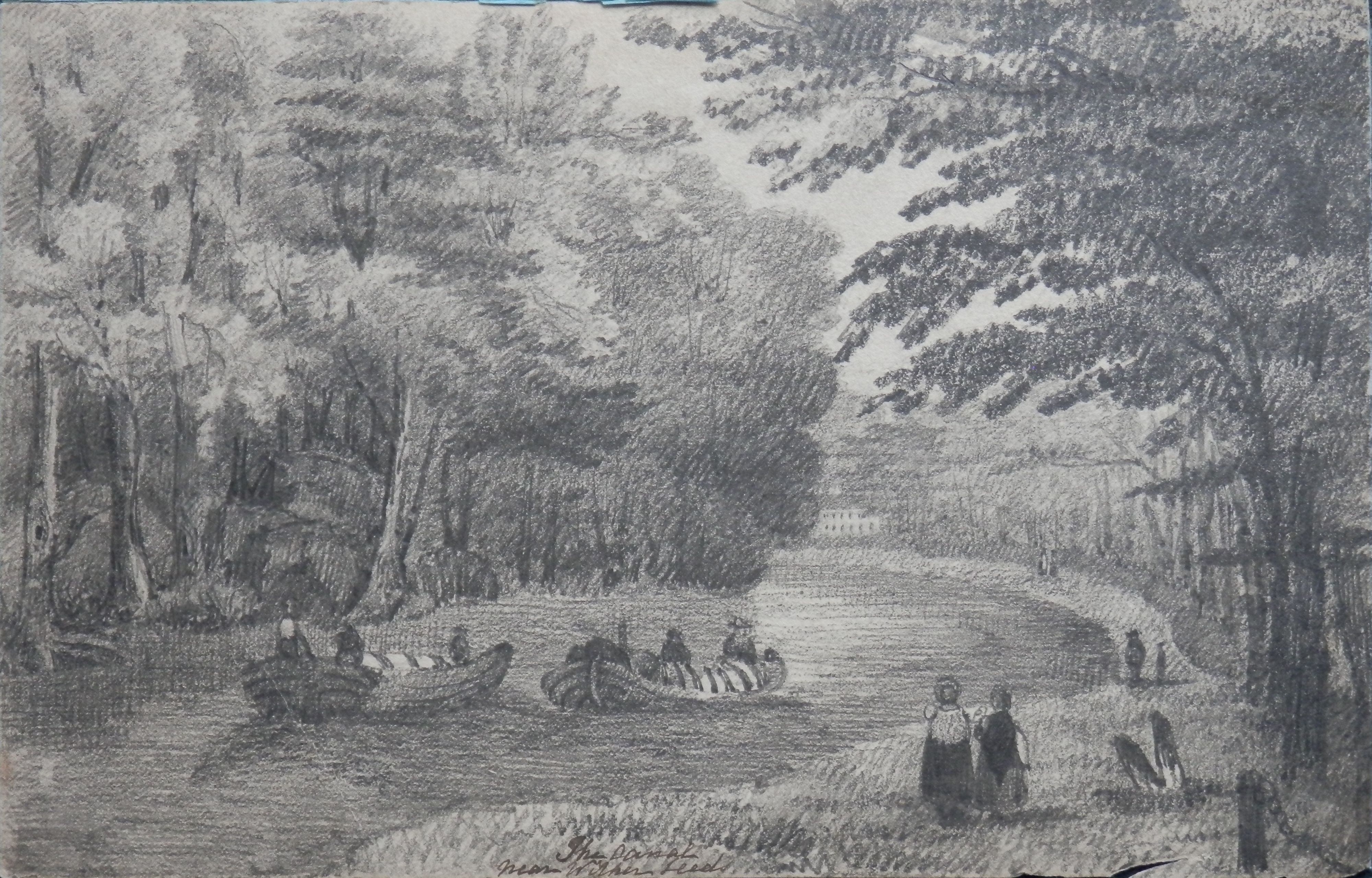
The canal near Wither, Leeds drawing by unknown artist @1850

The canal near Wither, Leeds drawing by unknown artist @1850

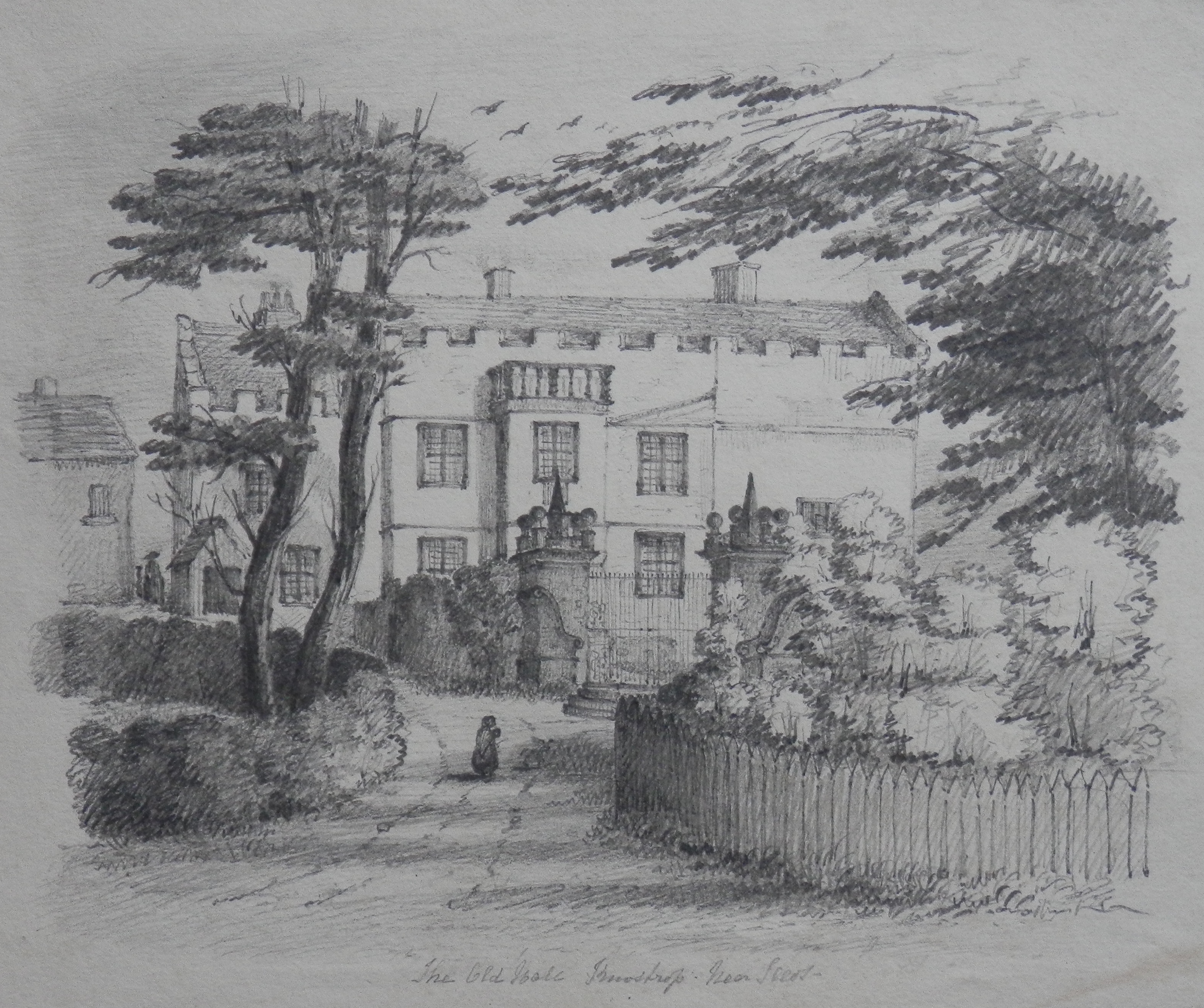
From #St.Mary’sChurch,Birkin lets travel over to a place called Wither Grange on the Leeds -Liverpool canal.  The canal is 127 miles long and crosses the Pennines with 91 locks in the process.  #WitherGrange no longer exists but you can walk by where it use to be.   The canal was built to facilitate the moving of goods and this can be seen in the drawing  as the barges are laden with goods.  Next let’s travel over to #TheOldHall,Knostrop the one time home of artist #JohnAtkinsonGrimshaw.

Old Hall, Knostrop drawing by unknown artist @ 1850

Old Hall, Knostrop drawing by unknown artist @ 1850


Grimshaw became a full time painter in 1861 but it is not known if he received any formal training.  He began painting still-life studies of birds, fruit, and forest scenes eventually finding that he excelled at  the depiction of moonlight, which was to become a notable feature of his work.

So as to not make this chapter too long, I will end here and we will continue our travels with this unknown artist in the next. There are more wonderful and charming places to visit down this road in history.


Posted in Drawings and Sketches | Tagged , , , , , , , , , | Leave a comment