Art Surrounds Me

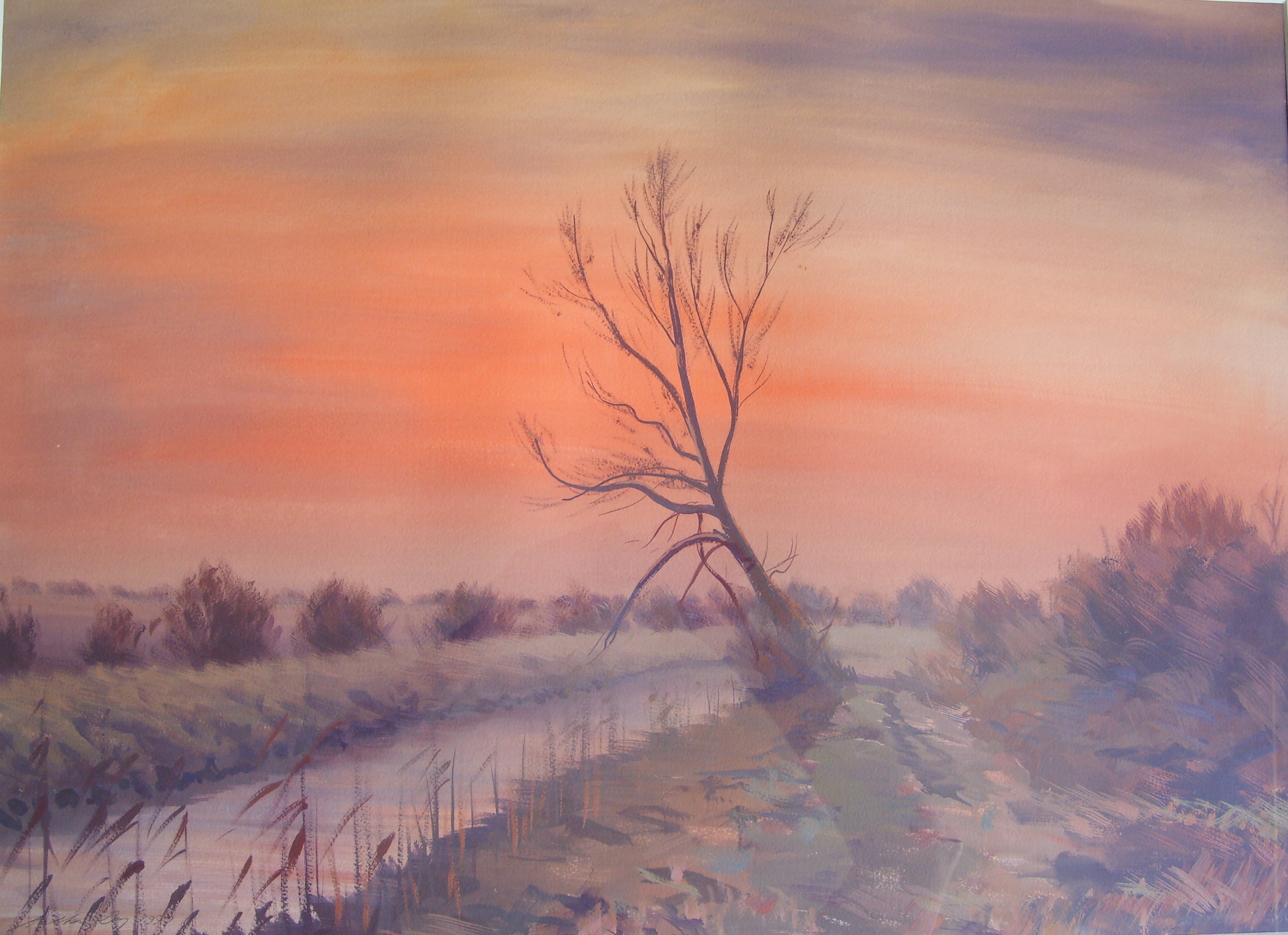
Sunset at Monk’s Lode
Anthony Day 1997

For the last four weekends, we in Cambridgeshire have enjoyed the ‘Open Studio’ programme which kindly allows people such as myself (an art lover) to enter into artists’ studios and look at their work and even watch them at work. One of the stops I made was at the studio of a favourite artist of mine by name of Anthony Day. A well known fenland painter who uses subtle colouring to capture the fenland skies, fields and waters.

His inspiration is found in the land which surrounds him. Walking to most of the scenes which he paints. Local does really mean local. His love and respect for his subject, the fenland, is honestly portrayed in his paintings. Bringing to life the warmth, the expanse, the depth and at times wildness of the fens. Monk’s Lode runs between Cambridge and Ely. Walk or cycle this path and you too can experience the sights, sounds and odours which inspire  Mr Day’s paintings. Feel the fens first hand; their lushness, their starkness, the life they enfold, the vast landscapes, expansive skies, and vivid colours of life and decay. This is a part of the country which many consider ‘too flat’ to be lovely but just one look at Mr Day’s paintings proves that the Fens, even though flat, have a beauty, a depth, an honesty which can be felt. They seem to say “I am what I am. Accept me for what I am. Love and respect me for what I am. I am no more no less”. ‘Sunset at Monk’s Lode’ hangs prominently in my living room and is a continuing reminder that this is the beauty in which I live.

Posted in Watercolour paintings | Tagged , , , , , , | Leave a comment

Art in 2D and 3D

Fountaine de la Place de Ste. Claire, Grenoble
M Besson – artist proof

The reality which we look at in a picture is but a moment, a two dimensional moment with apparent depth and perspective. But the actual history and reality of what we are looking at is likely unknown to us. It has been a joy, a revelation, a new experience to find out what lies behind the image that is before me. Little bits of history, little bits of some ones life, different concepts, perspectives and a broadening of ones knowledge and understanding. Even in some ways an examination of ones self and ones reaction to what is learned. This lovely market scene with fountain in the foreground by M. Besson has a history It has seen history, has been a part of what has gone on before. The fountain is found on the wall of ‘Les Halles Ste. Claire’ or Ste. Claire Market. Does one actually realise that where today’s’ modern glass girded market stands stood a convent from which the Clairisse nuns went out to save the souls of Grenoble. In the 1800’s the city decided that the people wanted physical nourishment and not spiritual. Since that time the French have come to the market place to buy all their culinary needs. Sainte Claire is unique and yet much like other outdoor markets all over Grenoble. It recalls a France that Julia Child loved, a France that still exists somewhat. A France that wants to enjoy grocery shopping as foreplay to a good meal. Customers come to savour the food, not just consume it. The nuns may be gone, but Sainte Claire still serves up a certain spiritual nourishment for the gourmets of Grenoble.

Dini e Cellai Signa sculpture
bust

How does one turn a thought – an idea – into a two dimensional image and then a three dimensional sculpture. This bust from Italian sculptors Dini e Cellai is one of those transformations, from artists mind, to paper, to sculpture. Although I don’t know the actual origin of this bust, it would not surprise if the original is found on one of the many marble sculptures in Florence. Florence is well known for its ceramics and sculptures but most of these works are not made within the city of Florence but are created in the towns and villages lying close by. Signa is one of those villages.

One wonders what he is looking at. What draws his attention. Does he gaze upon the crucifixion of Christ or the Madonna and Child. Does he gaze upon life or death, hope or despair, light or darkness. I might just have to go to Florence and wander the streets searching , seeking to see what he sees.  Whatever it might be, it will be well worth looking at whether it brings joy or sorrow or just contemplation.

Posted in Ceramics/Pottery, Lithographs | Tagged , , , , , , , , , , , | Leave a comment

Art of Home

Having moved across the ocean from the place where I was born has not always been easy. I do not regret having done so, for I and my family have been greatly blessed but there are things I miss – mainly since I have few relatives on this side of the pond. I as a lad grew up on a farm. A dairy farm to be more accurate and I could not resist the following picture since it reminds me so much of the place that use to be my home. It is painted by French-American artist, Jean Mdina, who studied at the San Francisco Academy of Art. It has an old barn in the background with a dirt lane leading to it . Beside the lane stands a forlorn and decrepit wagon. Well past its days of carrying and transporting. Growing up on a farm I know what a labour it is. A labour of love for one must love this life to live it. All your work and struggle can be set aside by disease, drought, flood, or any number of things which one cannot control. Whether life became to hard or cruel for those who struggled on this farm, I do not know. Possibly life was just better somewhere else.

The Farmstead
Jean Mdina


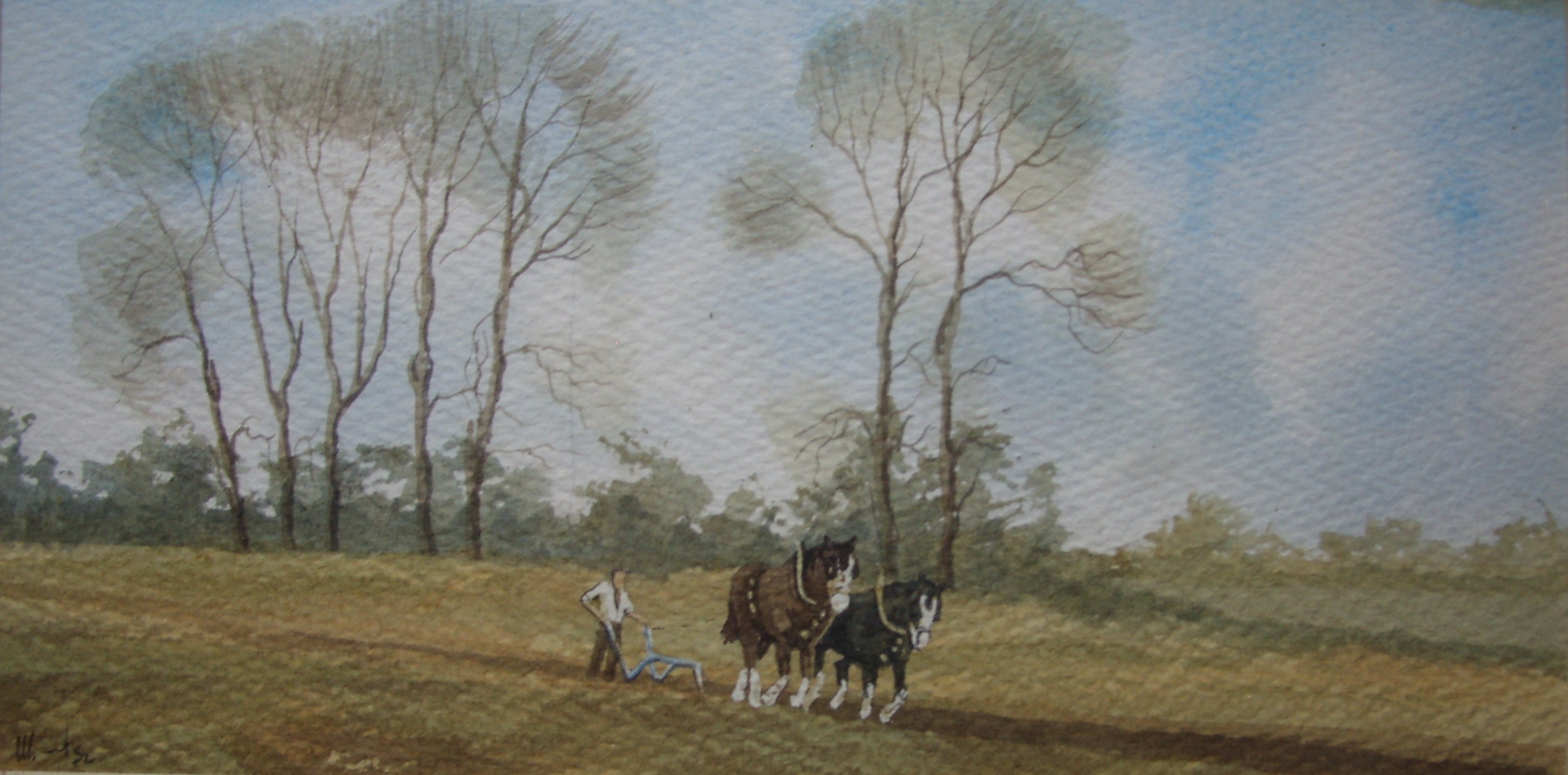
The life of farming is hard but many farmers now have machines to ease the load. Where I grew up, we had close by a group of people called Mennonites or Amish. They farm not with huge hulking machines but with horse and hand. A people who choose not to be laden with the ever crushing burden for ‘bigger and better’. They choose a simpler life close to the land. A harsher, more demanding life but one likely more fulfilling. They work hard. They rely on their relatives and neighbours for assistance. They work together as community to overcome the obstacles which are blocking their path. It is an amazing and possibly even wondrous thing to watch these people at a barn-raising as I have done. Working together as a body they are able to do far far more than we with our huge machines. We could not build a barn in a day but they did. It is a simpler life but harder life. I do at times envy their life as I watch myself run from here to there after some inconsequential thing I’m told I must have. Nick Grant captures so well the charmingly rustic life from the north east of England(Nottinghamshire and area). He brings a sense of tranquillity and a wishful feeling of needing to be in that place. Such is his rendering of image, subtle shading of colour and use of light in his paintings that they evoke this desire for a different life, an easier life;maybe/maybe not, but surely a better one.

Preparing the Land
Nick Grant

Posted in Oil Paintings, Watercolour paintings | Tagged , , , , , , | Leave a comment

Art in Myth and Reality

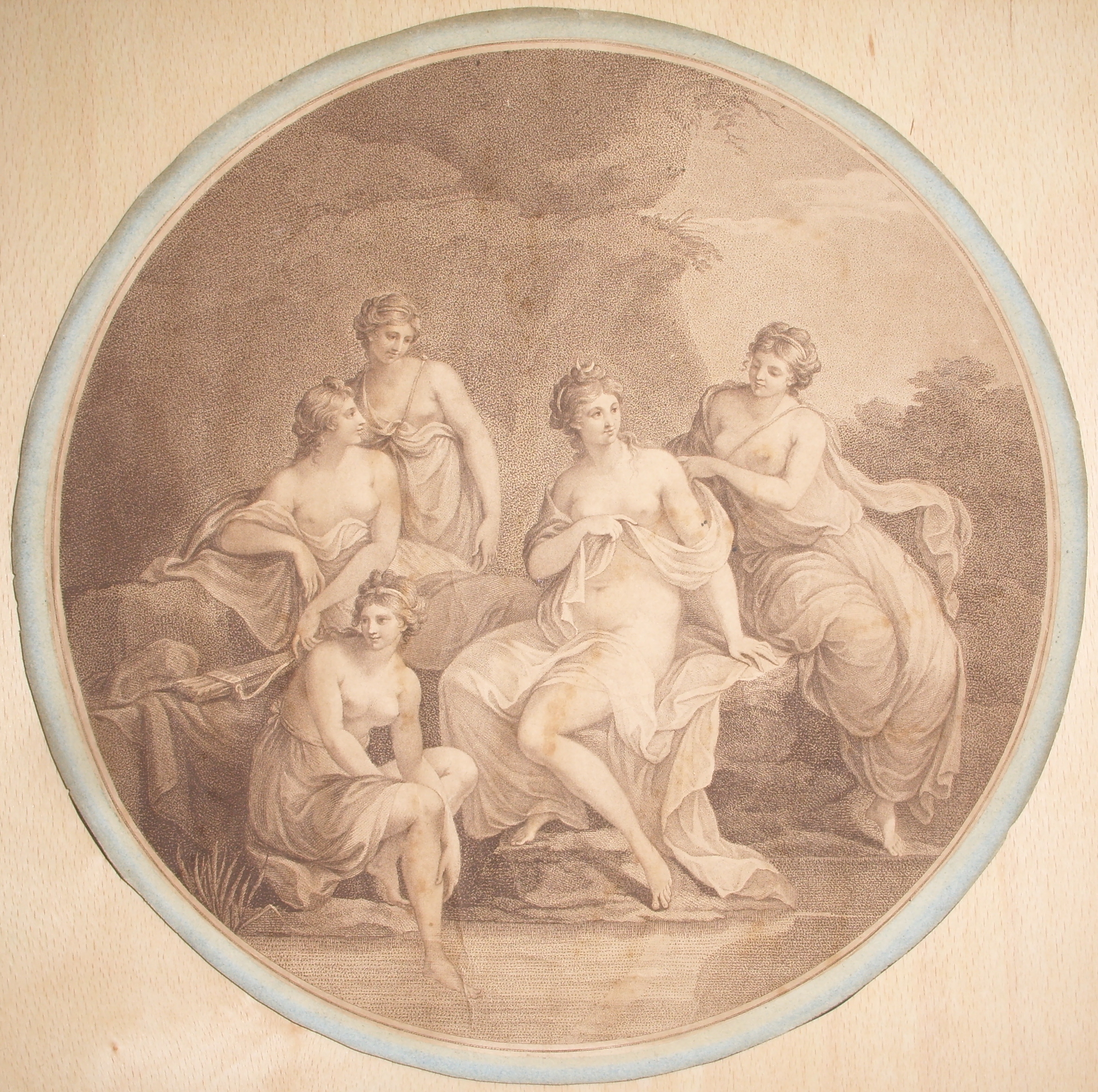
I begin this weeks blog with a piece of work by the Swiss-born artist, Angelica Kauffman, who had a profound career as a neo-classical painter and who was a founding member of the Royal Academy of Arts in 1768. The print in my collection was published on 10th April, 1788 by Robert Sayer of 53 Fleet Street, London. It is an image of Diana bathing while being attended to by four nymphs. As you can see from the photo the image shows its’ age with some slight discolouring and a small crease at the bottom. It is circular in design and done in stipple and etching with red-brown ink. If images on line are correct the image I have is a mirror of the oil painting held by ‘The Art Gallery of South Australia, in Adelaide. Why this is so I do not know but the British Museum hold a print by Robert Samuel Marcuard which is also a reverse of the oil painting.

Diana and Nymphs
pub Robert Sayer, 10 April 1788

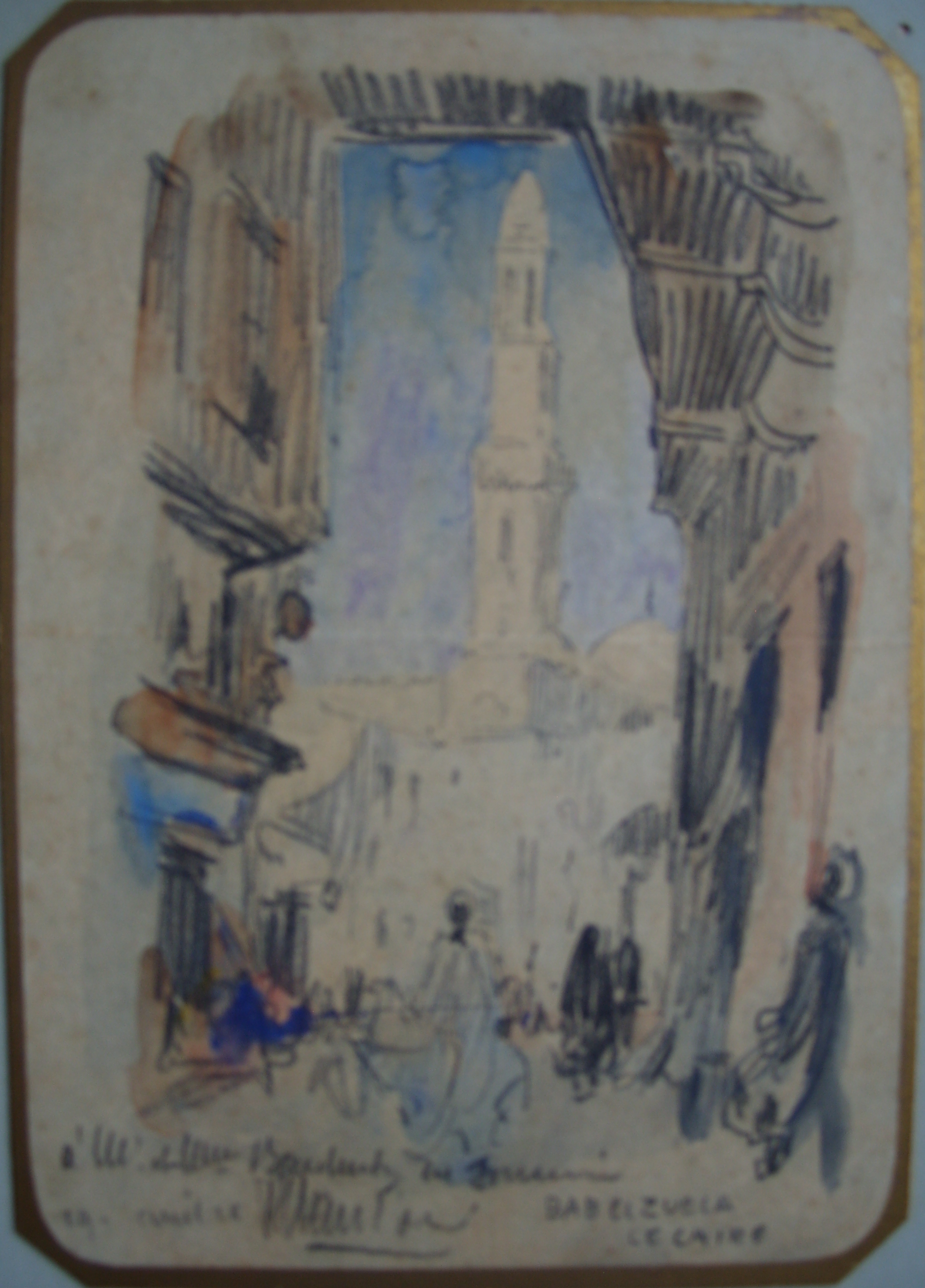
The next item is a small charcoal and wash drawing of ‘Bab El Zuela’ in Cairo. The comment at the bottom of the picture is in French. It is dated 19 April ’28 (I believe 1928 but maybe 1828 – I don’t know) and the signature is not readable by me. It is a street scene with a minaret and mosque in the background found somewhere in the Coptic quarter in Cairo. A quickly drawn sketch for use late to produce a more formal picture or possibly a hand drawn postcard for a friend.It exudes the vibrancy of the market on the street with life’s reliance on faith in the background.

Bab el Zuela le Caire
19 April ’28, signature unknwon

The next find is a charcoal drawing by T I Blackburn. Don’t know anything about the artist but the drawing is dated 1901. In some ways crude and yet has something to it that makes you look. In some ways it is ‘Constable like’ as he drew country scenes also much like this. I don’t know where this mill is but I do hope it still stands and is in use to some extent. As to the horse and cart, they might be stuck they might not – don’t want to get my feet wet .

Mill Scene
T I Blackburn 1901

Posted in Drawings and Sketches, Etching, Watercolour paintings | Tagged , , , , , , , , | Leave a comment

Art in Conflict

Now-a-days we have reporters who are on the front lines of conflicts around the world sending us images of life on the battles edge. Some of the artists that I have already talked about like William Simpson and Paul Mansard covered conflicts which occurred during their life time and because of their art we have a visual record of those confrontations. A snapshot of what war was really like. The two engravings which I present today are from two different types of battle. One a large scale battle and the other much much smaller.
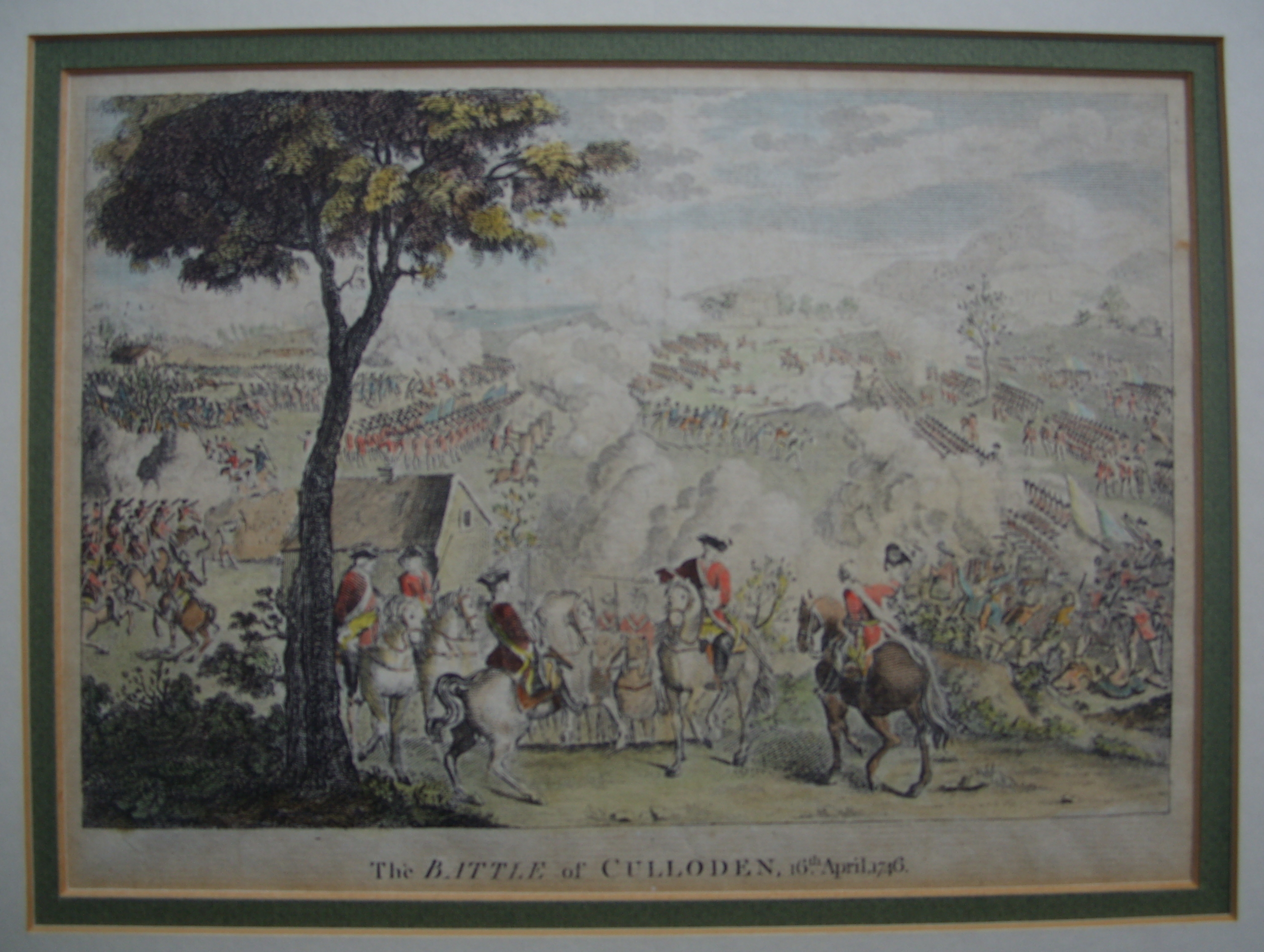
The Battle of Culloden on 16 April 1746 was the last engagement on the British mainland. After weeks of retreat, Bonnie Prince Charlie’s Jacobite army, disheartened and hungry, numbered barely 5,000 men. The Duke of Cumberland’s, 9,000 Government troops, finally caught up with his opponents at Culloden, east of Inverness.
The Highlanders employed their traditional tactic of a ferocious charge against the British line, but Cumberland’s infantry held and the attacking Jacobites were swept by musket fire. Although they succeeded in breaking through in some places, they were quickly repulsed. Cumberland’s cavalry then attacked the Highlanders from both flanks, and the Jacobite army rapidly disintegrated. The last battle of the Jacobite Rebellions probably lasted less than an hour.

The Battle of Culloden 16th April 1746
Line engraving by Luke Sullivan after Augustin Heckel, published by Bowles and Carver, 1746 reprinted 1790


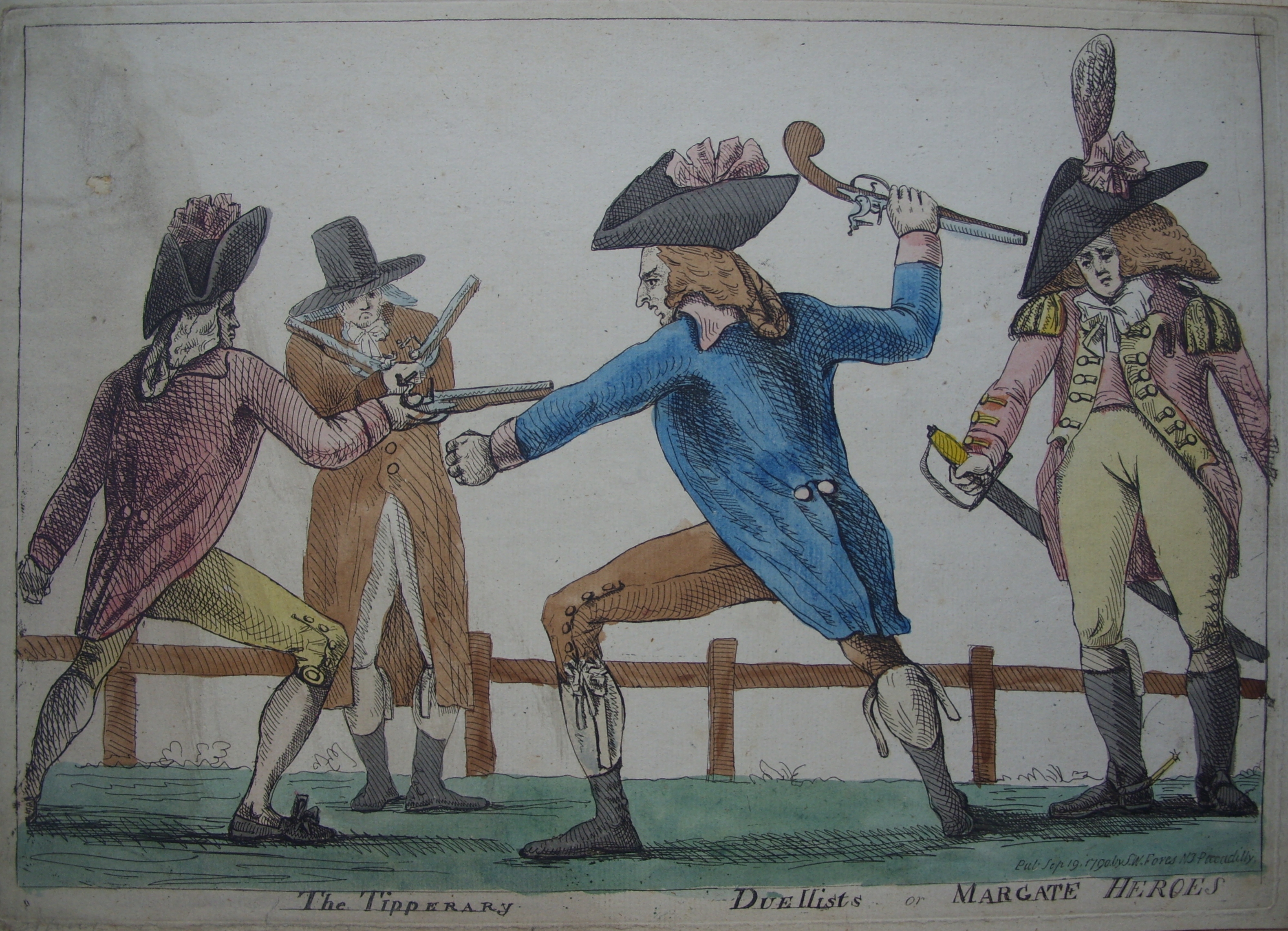
The next engraving is of a duel. A battle between two people, sometimes to the death (if it occurred). The print shows a duel between Mr. Leeson and Col. McCarthy on Sept. 10th at Margate. Both combatants fired two pistols without effect (not an unusual occurrence – if you followed the rules of duelling) and then Leeson clubbed his pistol and McCarthy protested with his pistol presented and the seconds stepped between them to halt any further continuance. A mob had gathered by then and both parties left the field dissatisfied as well as on-lookers. Both Leeson and McCarthy were Irish so hence the title of the etching.

The Tipperary Duellists or Margate Heroes
hand-coloured etching published 19th Sept. 1790 by S W Fores No. 3 Piccadilly

Posted in Etching | Tagged , , , , , , , , , , | Leave a comment

Art in the East

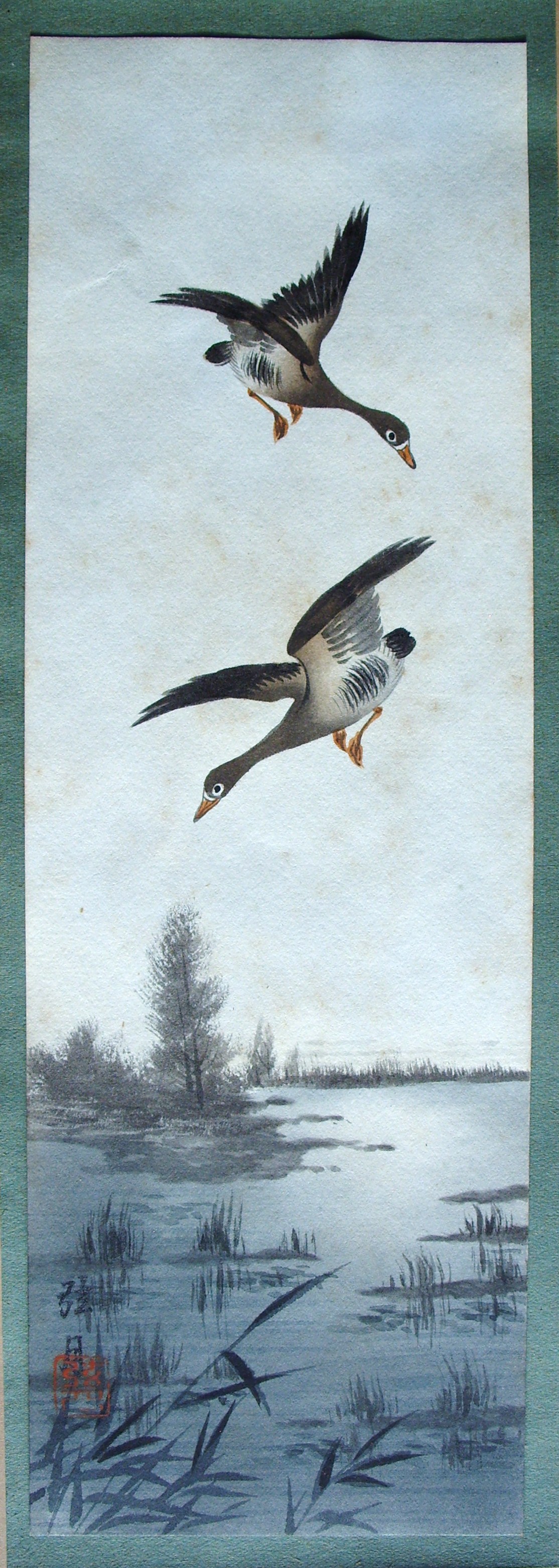
In my art collection I have several small Japanese paintings. In looking at them, I find it amazing how different cultures see and interpret things around them and then portray them. Three of my paintings come from ‘The Matsumoto Studio’. These three Japanese watercolour paintings on paper are from the early to mid 20th century. They all display pairs of Kamo Mallard ducks. Kamo ducks remain faithful to each other when in pairs and these paintings also symbolise a good marriage and happy home. They have a few aging spots on the paper but they are still fine examples of this style and time.

Kamo Mallard ducks
The Matsumoto Studio @ 1920

Kamo Mallard ducks # 2
The Matsumoto Studio @ 1920

Kamo Mallard ducks # 3
The Matsumoto Studio @ 1920


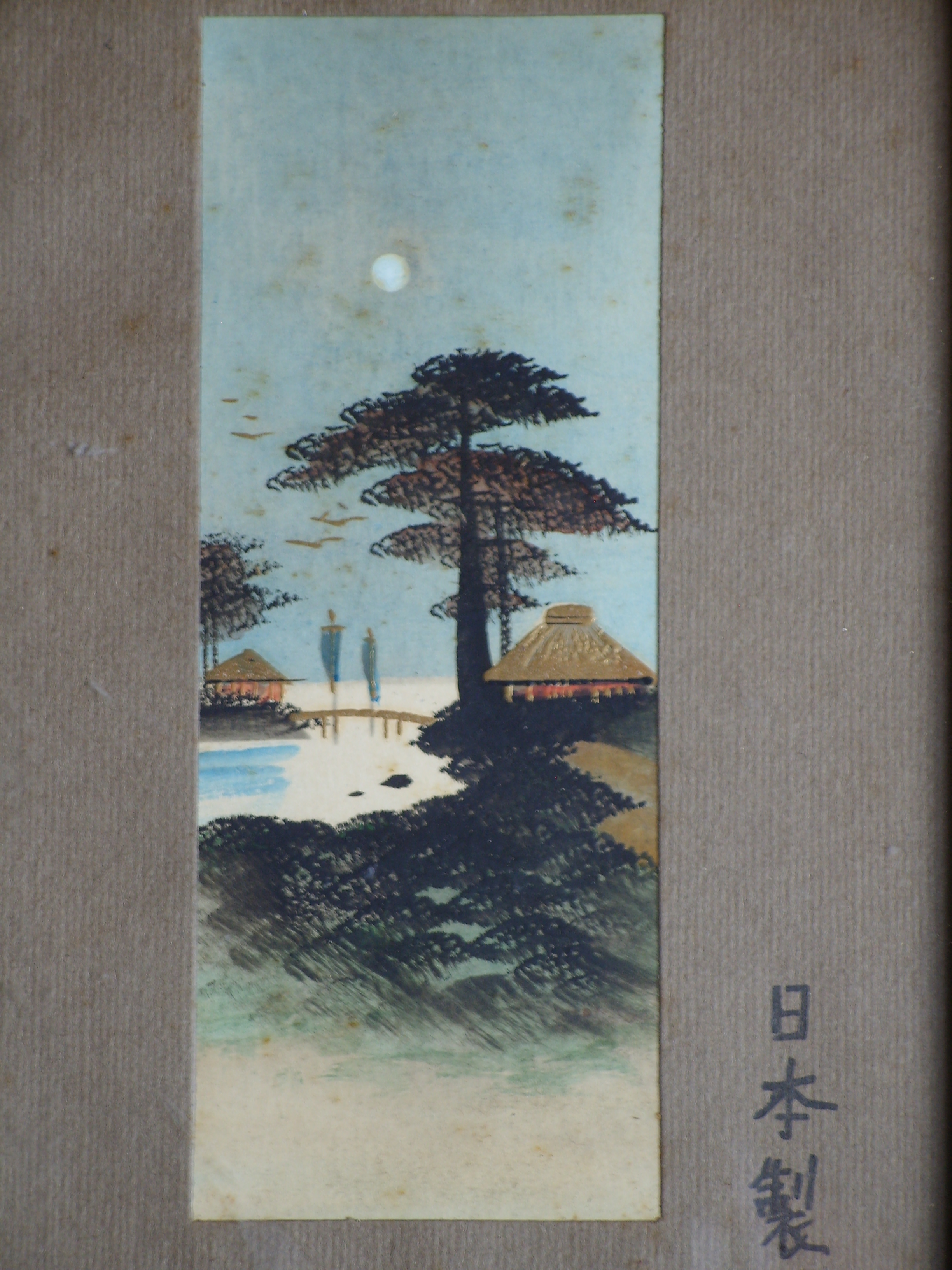
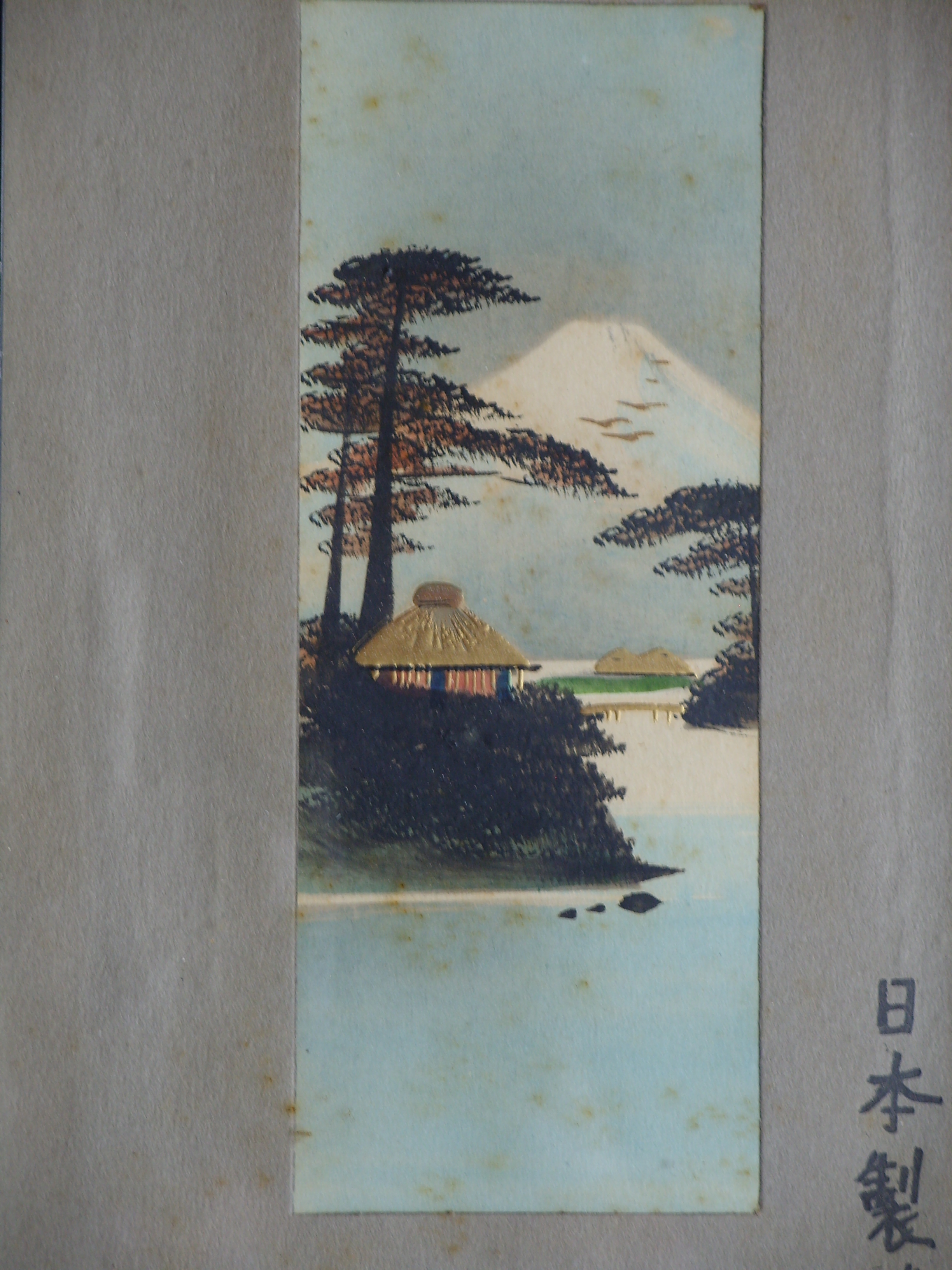
I also have a pair of village scenes high-lighted in gold leaf. I do not know their age but I think they are older than the previous set. Once again the technique is wonderful and unique to this style and culture. One of this set has the famous Mount Fuji in the background. The roofs of the huts, the birds, and the bridges are all done in gold.

Village scene # 1
with gold high-lights

Village scene # 2 with Mt Fuji
with gold high-lights


These scenes are places I would like to see in person. Mt Fuji is spectacular and one can just imagine walking across the bridges from island to small island to visit neighbours and friends. I could sit outside my hut and watch the ducks in their pairs and watch them as they go through their life. Just a place I’d like to go. Maybe some day

Posted in Watercolour paintings | Tagged , , , | Leave a comment

Art of Books

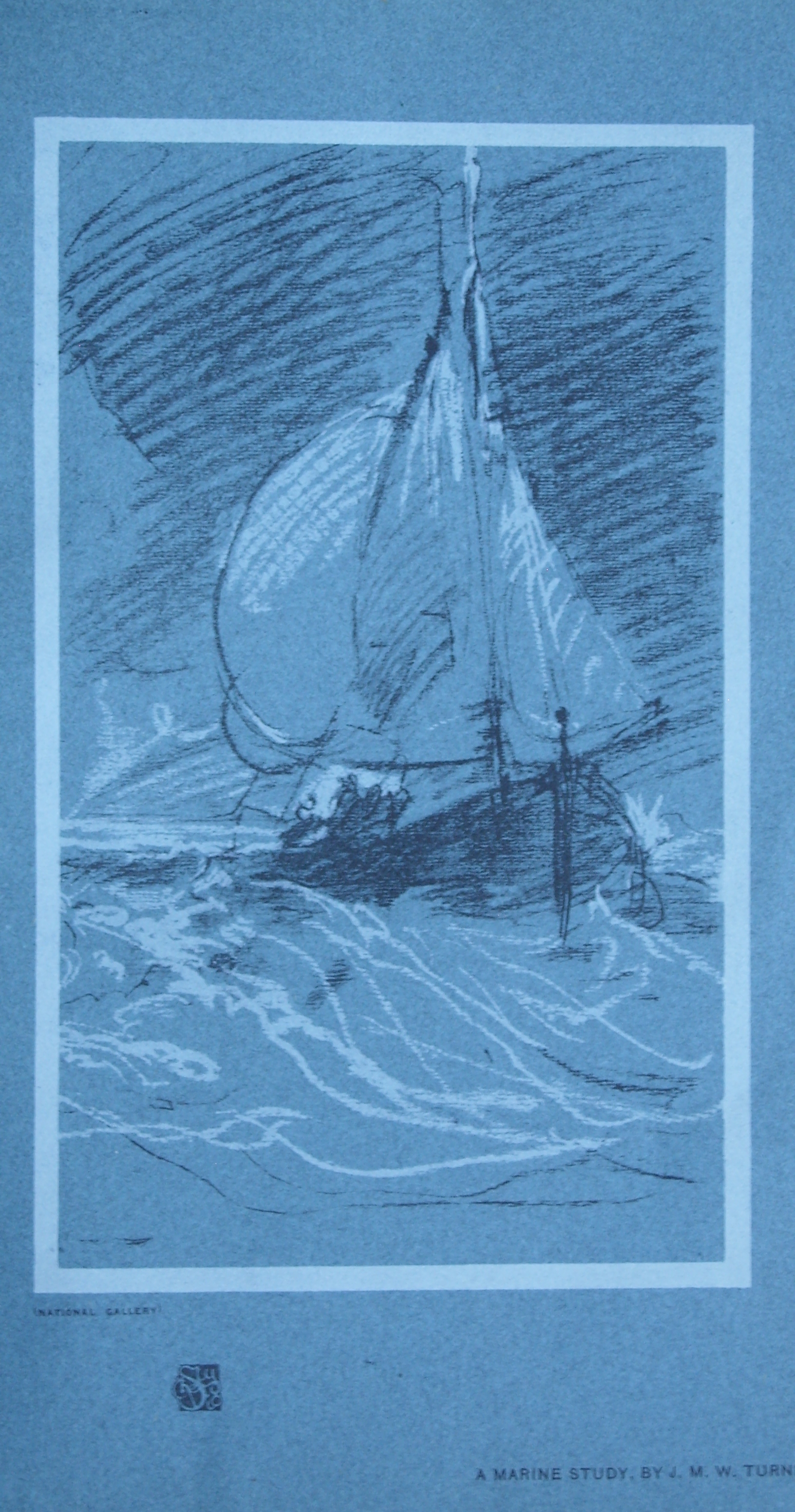
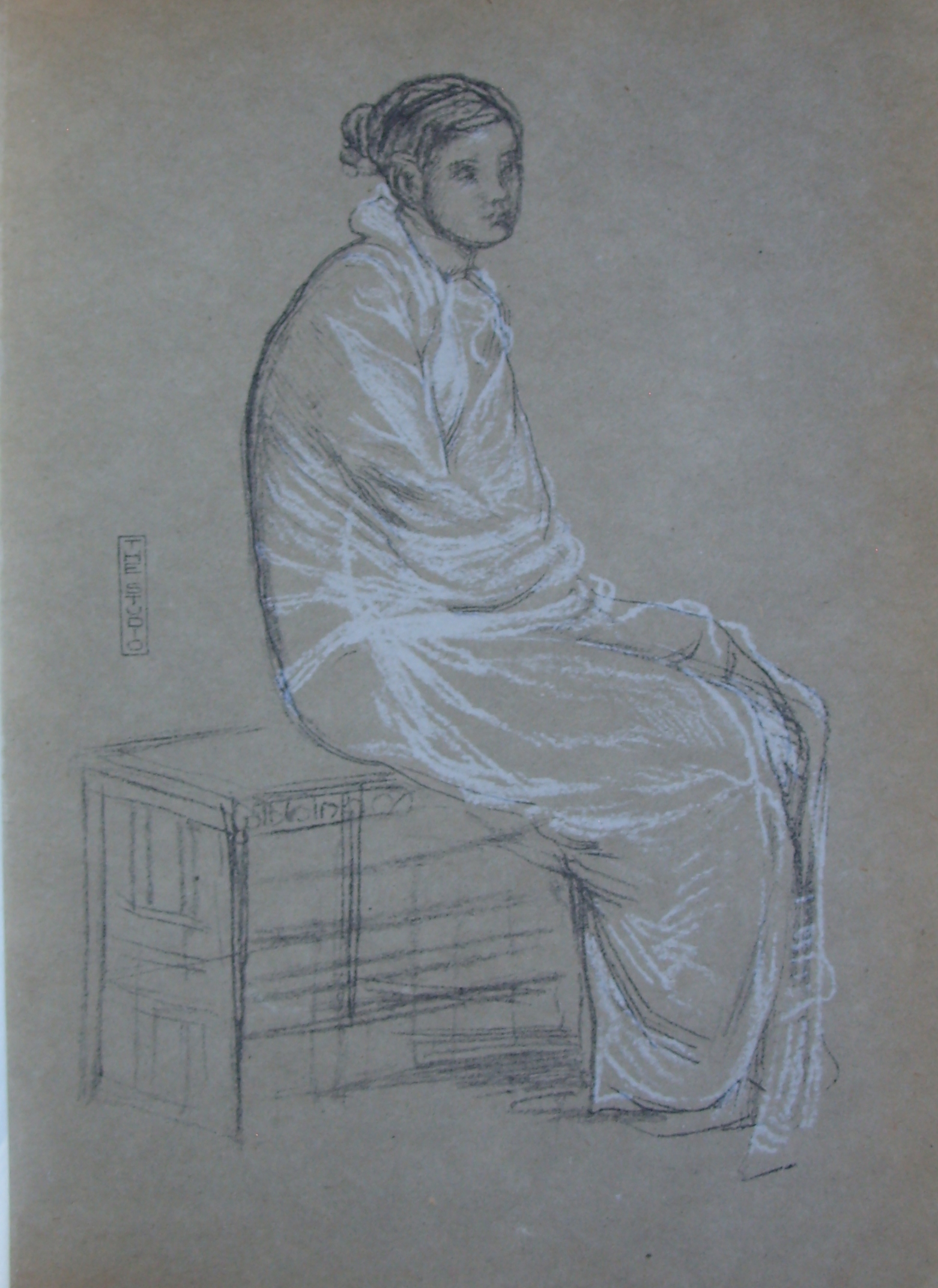
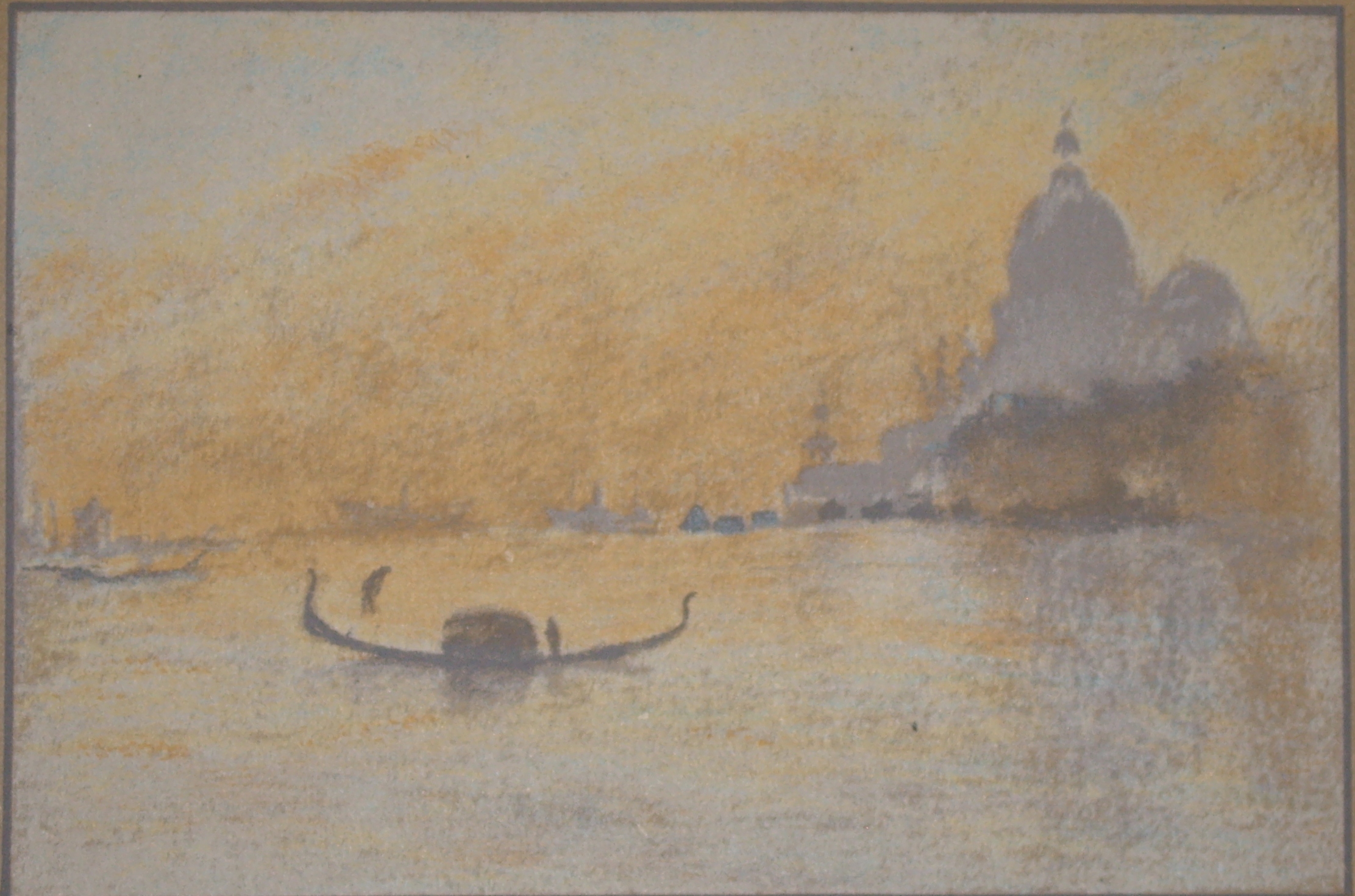
I went out and purchased few old books, art books or books about art, seven volumes in total. Not sure what the total run is but suffice it to say it’s over a hundred. The ones I bought date from 1903 to 1907 (vols 27&28, 34, 35, 37, 39, 42) and are a compilation of ‘The Studio an Illustrated Magazine OF Fine and Applied Art. ‘The Studio’ is a publication noting the contemporary art and artists at the time of issuing. The books I have cover everything from artists to architects, furniture to sculpture. The images of the artwork is to an extremely high quality and in a number of the books is included several first rate lithographs by well known artists. I include a few images from the volumes I have.

;A marine Study’ by J M W Turner
lithograph from The Studio 1906

‘An Early Study’ by J McNeill Whistler
lithograph from ‘The Studio’ 1903

‘The Salute’ by J McNeill Whistler
lithograph from ‘The Studio’ 1906

Posted in Lithographs | Tagged , , , | Leave a comment

Art in Life

Some months back, I and my wife travelled to Israel for a holiday. We stayed in a flat down-town Jerusalem. We went as a celebration of our 30th wedding anniversary. We went to see friends which we have made over the years and to see the city of Jerusalem. Although I could talk about our trip, I want to talk about one incident only which opened my eyes to a truth that I have known as true for a long time but now see with new eyes, more personal eyes. The original incident involves me only through history and genealogy. We were sitting in our friends office relating things of our lives past and present and into this conversation came the comment that my grandfather had hid Jews and Allies on his farm in WW2. For this he was betrayed and sent to the notorious concentration camp at Amersfoort. Needless to say he survived. It is my understanding that he was one of the few men to escape from the cattle cars as he was being transported to the death camp.

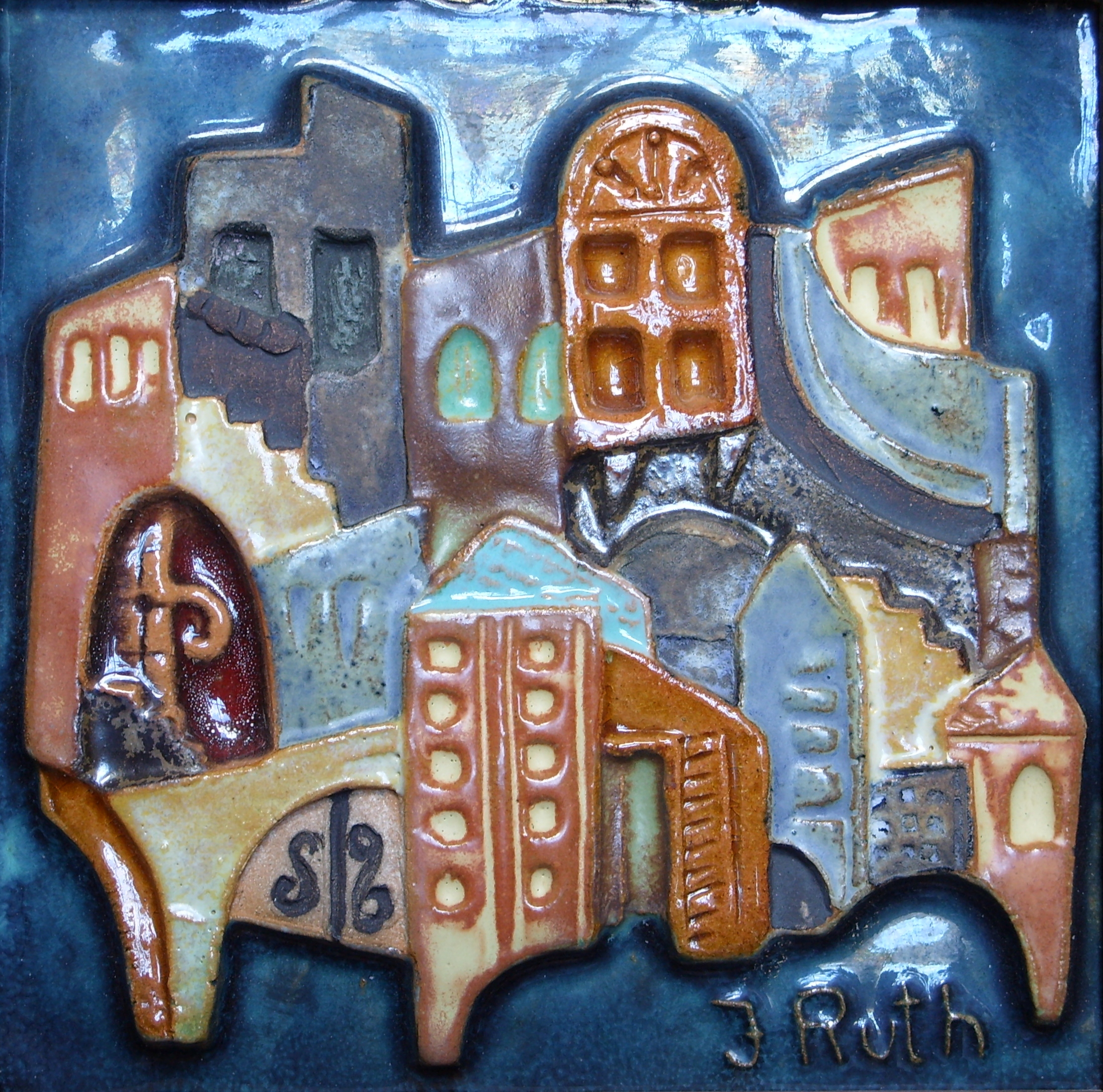
Jerusalem Cityscape – ceramic tile
by Ruth Faktor

Our friend stated a truth that I had not taken in before. He said ‘so you are the descendent of a Holocaust survivor’. This coming from a Jewish man took me aback. I couldn’t respond, wasn’t sure how to respond and yet it was true my grandfather had survived the camps. This momentous point in history became much more personal, so much nearer the heart and so much more pivotal for me.
As one walks through Yad Vashem (The Holocaust Martyrs’ and Heroes’ Museum) one comes across the ‘Avenue of the Righteous Among the Nations’ and the ‘Garden of the Righteous Among the Nations’. I walked with my emotions raw, I am not ashamed to say that I shed a tear, but I also walked with the knowledge and strength that my grandfathers’ name would not have been out of place with the others which I read there. A man who farmed the land, lived by faith, and loved his family and his fellow man.

Posted in Ceramics/Pottery | Tagged | Leave a comment

Art in History

Earlier, I wrote about art representing events in history. William Simpson from my first post was renowned as a war artist. He is remembered for his portrayal of ‘The Charge of the Light Brigade’. It must have been exciting, exhilarating, and dangerous for these war artists to do their work. Paul Mansard traced the progress of the WW1 in Belgium and France. His beautiful and at times disturbing pictures document the loss and devastation caused by the war. They were a response to events and had widespread appeal.

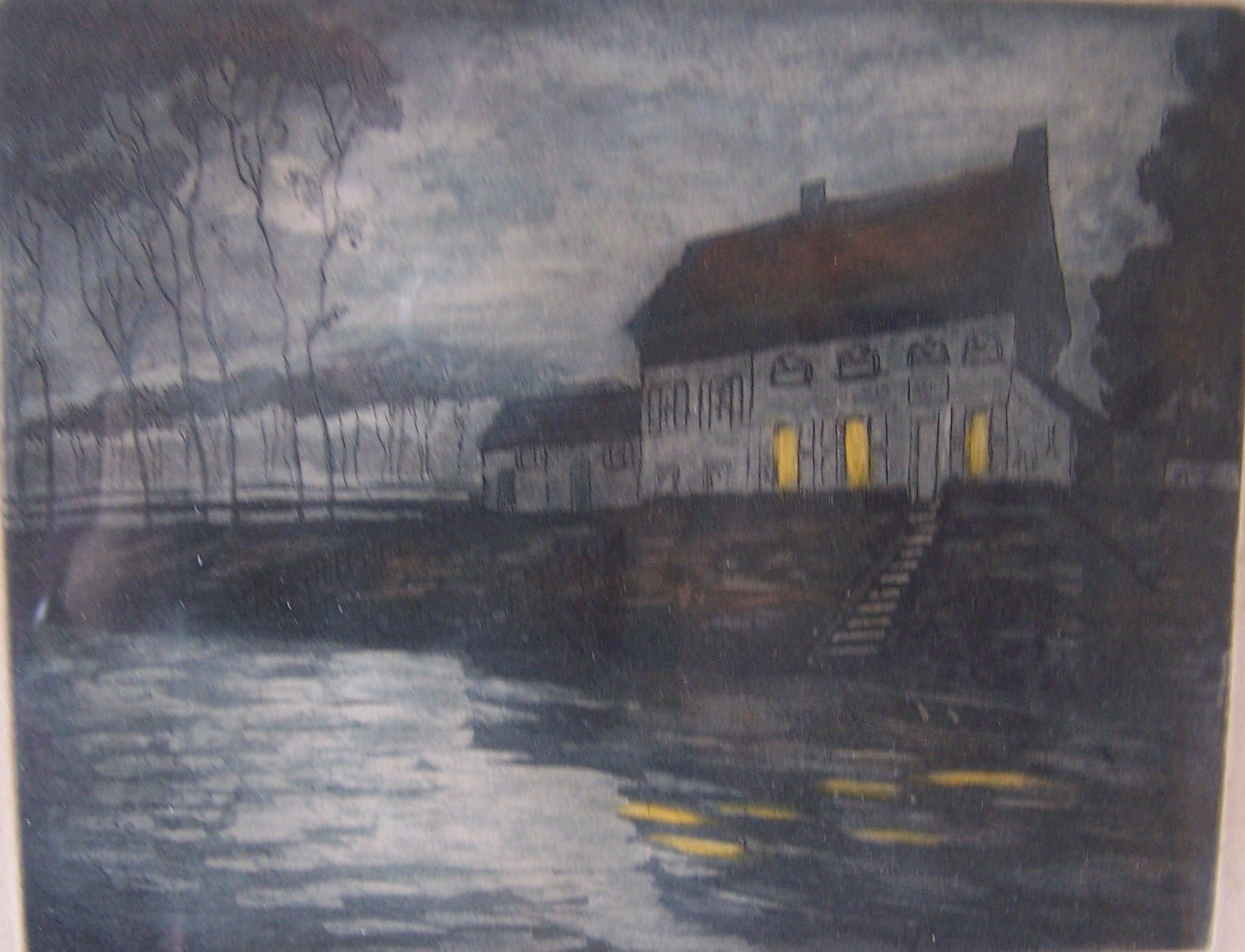
L’Yser – La Maison in Passeur @1914
coloured etching by Paul Mansard

The illustrations were the equivalent of modern-day photojournalism. They recorded what had been lost; the destruction wrought on the landscape with its farms, churches and great civic monuments, and places which had a special significance to those caught up in the conflict.’

The ‘Ferryman’s house’ shown in this etching was a strategic battle site in December of 1914. Although this etching shows little damage, in truth the house was bounded by trenches on both sides containing some 200 men and the Germans maintained machine guns in the house itself. The ‘Ferryman’s house’ fell to allied troops after six attempts. The attack was planned for the evening of Friday, December 4th, 1914. The 11th battalion of the 1st Zouaves, reinforced by the 4th Company of the 94th Territorial, and backed by a company of Bat-d’Af. The dark night was shaken by storm, thunder, lightning, raging winds, snow so wild that the attack was postponed. On the following night the rain covered the initial advance to the wire and the main attack followed quickly and unexpectedly. The fighting was fierce and claustrophobic in the trenches. They fell to the Allies but the worst was yet to be faced. The dread machine guns in the house spewed forth their death as the troops pressed forward. The darkness hid the devastation and the advantage, thankfully. For two hours, darkness streaked by lightning, the attack on the house continued until it fell to the Allies. The ‘Ferryman’s’ house was razed to the ground. But only in the dawn’s light was the cost of this battle truly seen.

Posted in Etching | Tagged , , | 8 Comments

Art in Adventure

When I travel, I like to experience things that I have not done before, go to places I have not been, meet people I don’t know, and taste food I have not eaten before. I have visited quite a number of European countries. I’ve been to Israel, India, Bulgaria. I have a list of places which I would like to see. But adventure can be just around the corner or down the road.

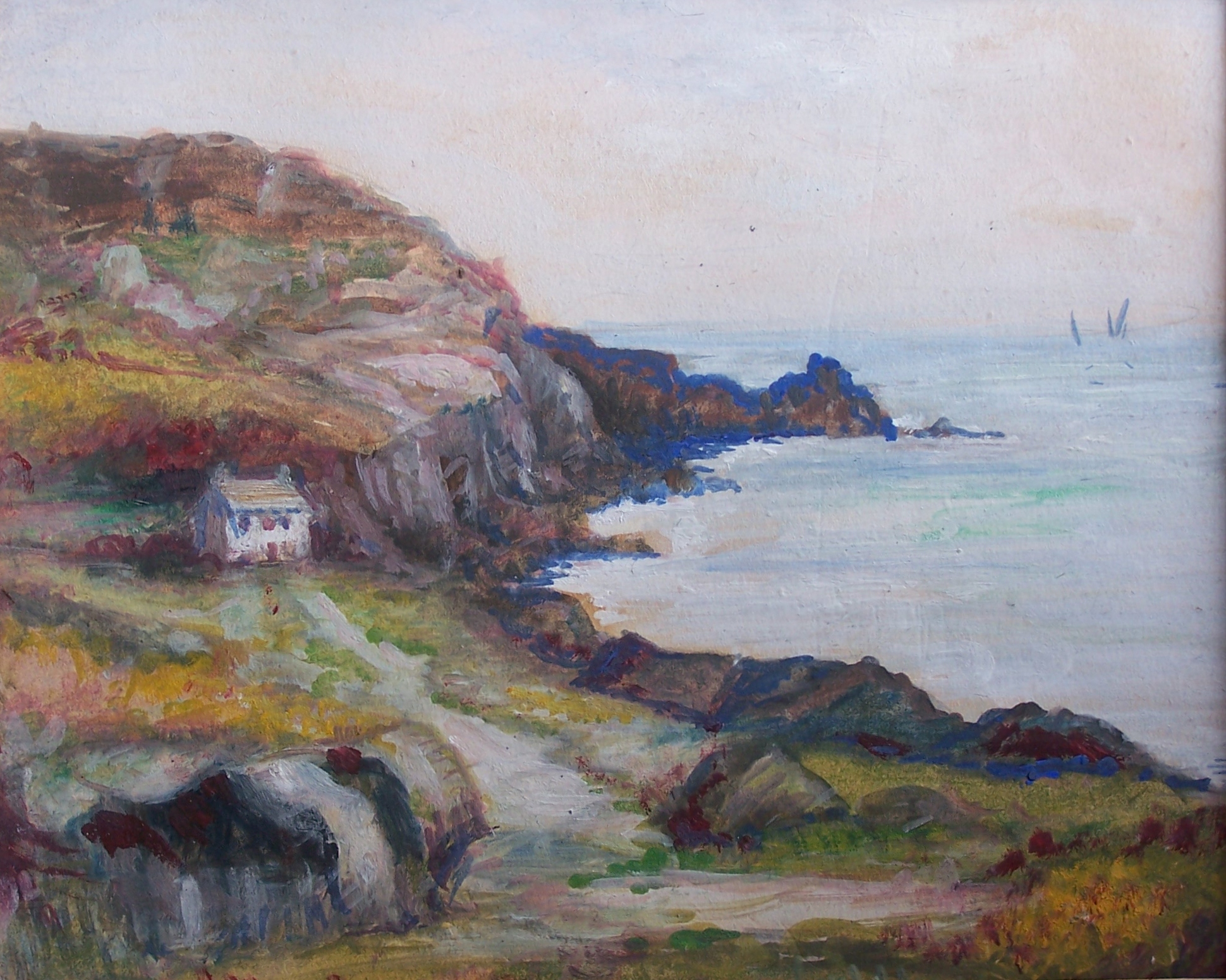
‘Lamorna Cove’, Cornwall 1946
oil painting by R D

It could be a visit to the beautiful Cornish coast to walk along the shore. There are easily accessed beaches but believe me it is an adventure just to get to some of the more secluded beaches. Lamorna Cove is typical of the rugged coastline which one finds in Cornwall. A beautiful place to be  and walk the coastal paths, to scramble down to the beaches. History abounds, every corner you turn brings you to something else you should stop and see from Tintagel (King Arthur’s birth place) to the many fishing villages with their narrow streets.

‘Beinn Griam Beg’ from Forsinard 1919
watercolour by A J Bryans

Or possibly you prefer to visit further a field. Possibly to walk Beinn Griam Beg in Scotland. You might like to stay at the remotest hotel (The Garvault Hotel) in Scotland but it is the closest to Beinn Griam. Walk the wonderful highlands for there is space to move up here. Look and see what space really is, miles of wilderness, untouched, undeveloped. Where getting lost is possible and dangerous. Come fish, come hunt with gun or camera, come birdwatch, this place invites you to come and experience the traditional highland pastimes or come to this place and find beauty, peace, solace and isolation. A little bit of heaven, well maybe just a little maybe a lot.

Posted in Oil Paintings, Watercolour paintings | Tagged , , , , | Leave a comment