With the pricking of a pin

Today, I came across a drawing that I thought, at first, was a print, but after closer inspection, I found that this piece is actually something special. It was in a very cheap frame (I will put it in something more fitting), so it did not have much appeal. After inspection, I realised that the sheet had been glued to a thick backing paper. The sheet itself bore many small creases and a tear. This, I put down to its age.
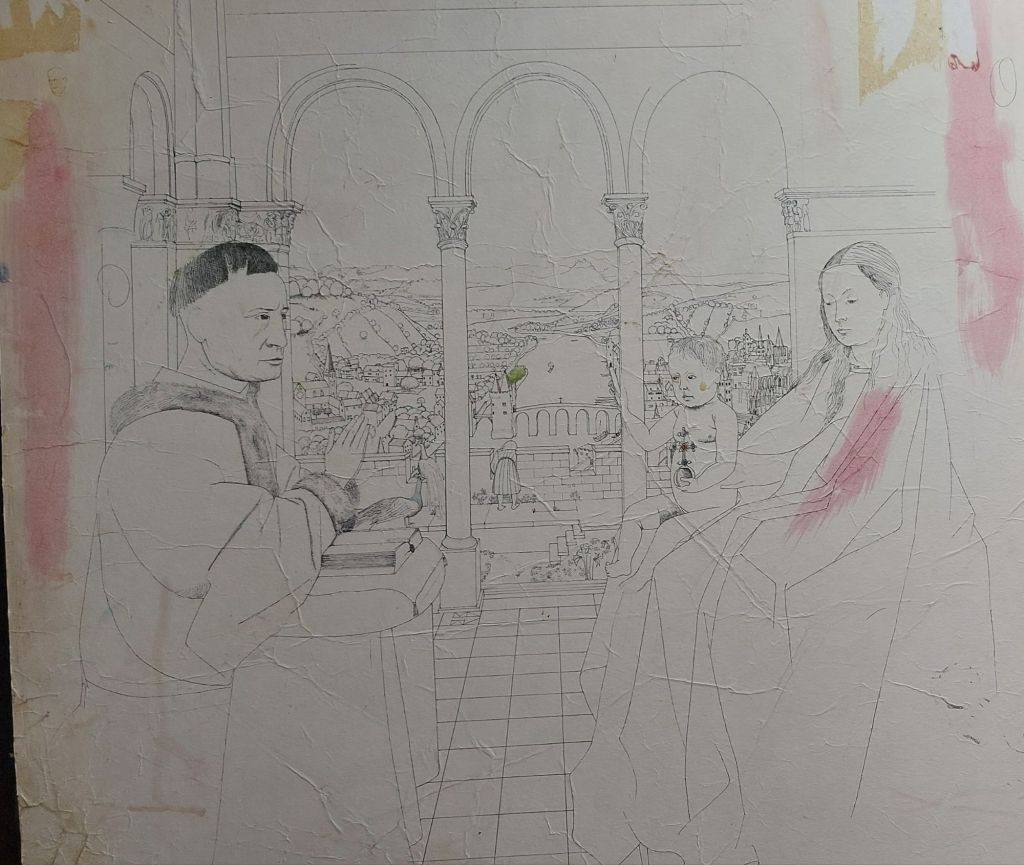
Ink drawing with pin holes of The Madonna of Chancellor Rolin by Jan van Eyck @ 1435

As you can see from the above image, the drawing is of Mary and the Christ Child with possibly St Jerome or another saint. It is very Italianate in style. It is done in mostly black ink (over pencil) with a couple of areas of brown ink and some splashes of colour.
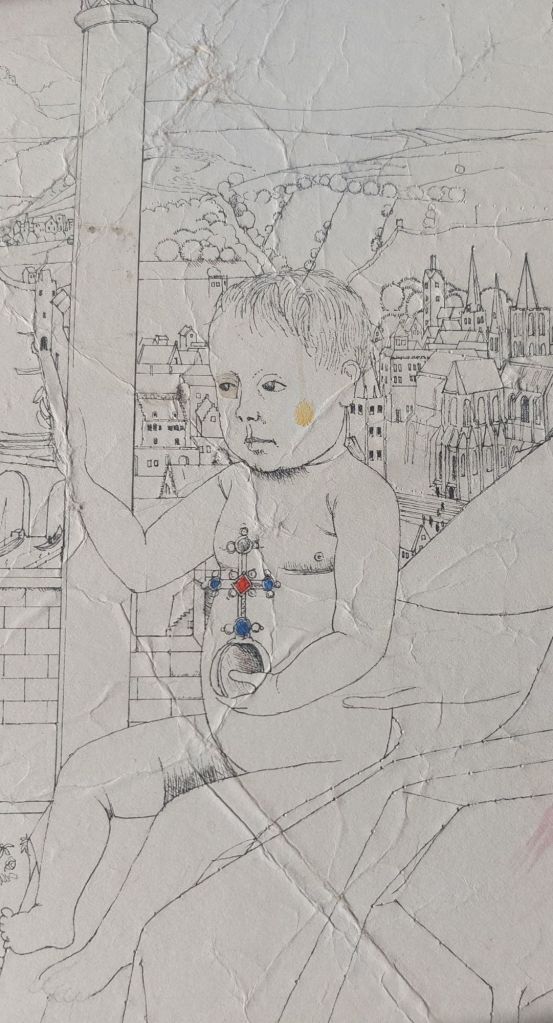
Detail of the Christ Child

It is a fine drawing, but the exciting thing about this piece is that it is full of holes. Little pin pricks along each contour line. This drawing was created by the master of the studio. It would then be laid on another sheet of paper and pricked through by a student. This second sheet with only holes in it would be laid on a prepared surface/canvas and pounced/dabbed with a small sachet of charcoal dust. Thus marking the underlying surface with dots of charcoal, which the artist would follow as he painted.
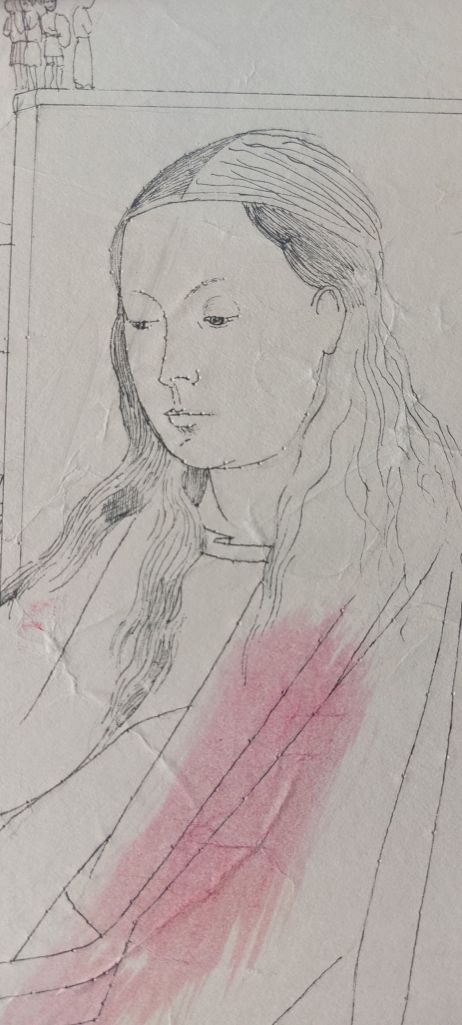
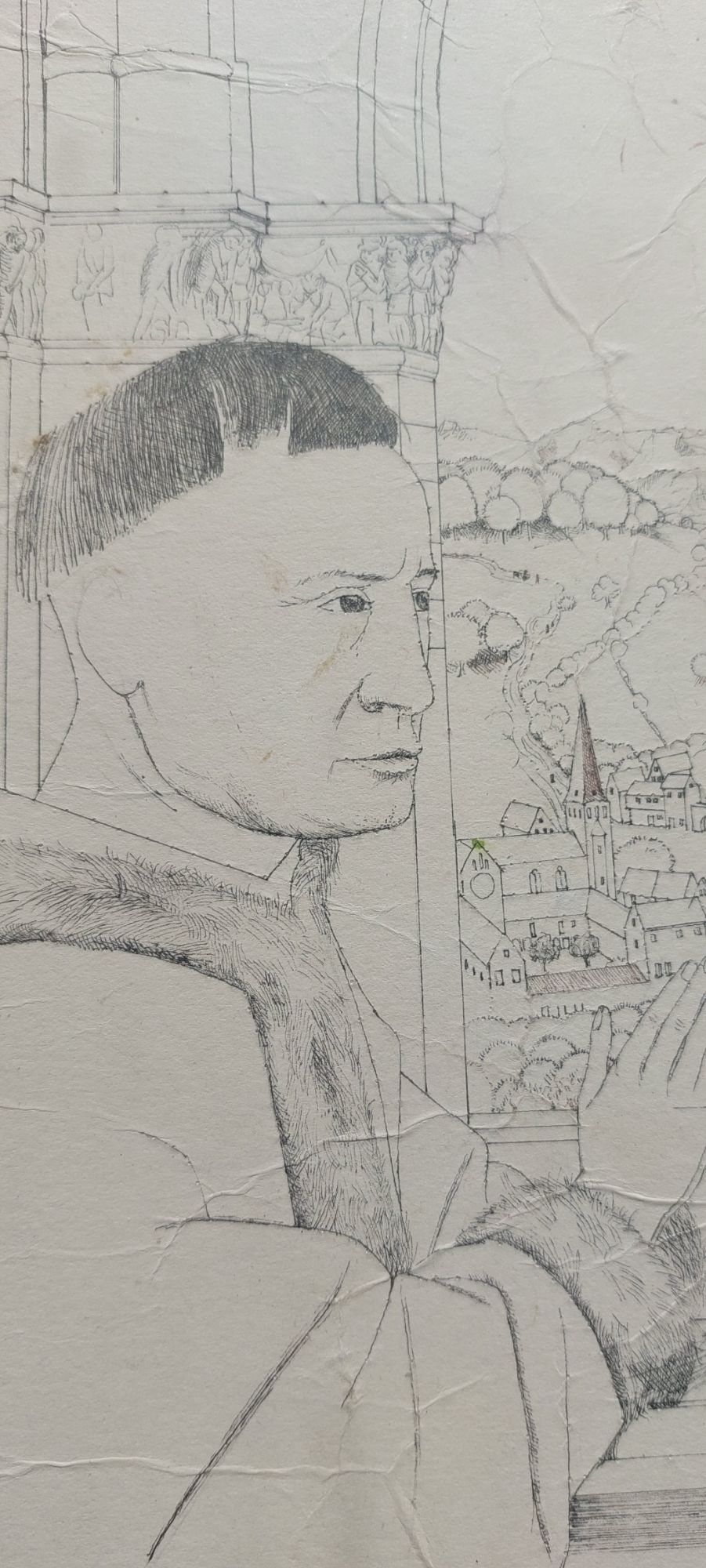
Detail of The Madonna
Detail of Chancellor Rolin

Usually, the drawing or cartoon was kept in the off chance that copies of the piece were to be made.
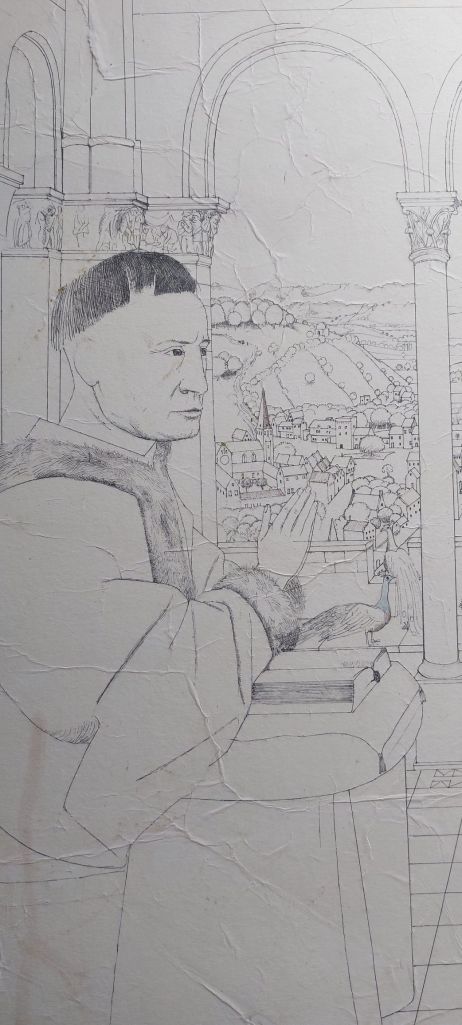
Detail of Chancellor Rolin
Detail of Chancellor Rolin’s hands and cityscape

This method was often used in the renaissance by artists like Michelangelo, Raphael and da Vinci to imprint segments of larger works on to prepared surfaces.

The dating of this piece is very difficult. The paper displays great age as well as the techniques involved. I will guess at a wide age gap, which will range from 1550 to 1800. It is a beautiful piece with rare techniques, and this makes it a fine addition to my collection.

After more research, I have found that this image was painted by #JanVanEyck around 1435. The piece is called #TheMadonnaofChancellorRolin (or the #RolinMadonna) and presently hangs in #TheMuseeDuLouvre in Paris.
Posted in Drawings and Sketches | Tagged , , , , , , , , , , | Leave a comment

A Visit with Allen William Seaby

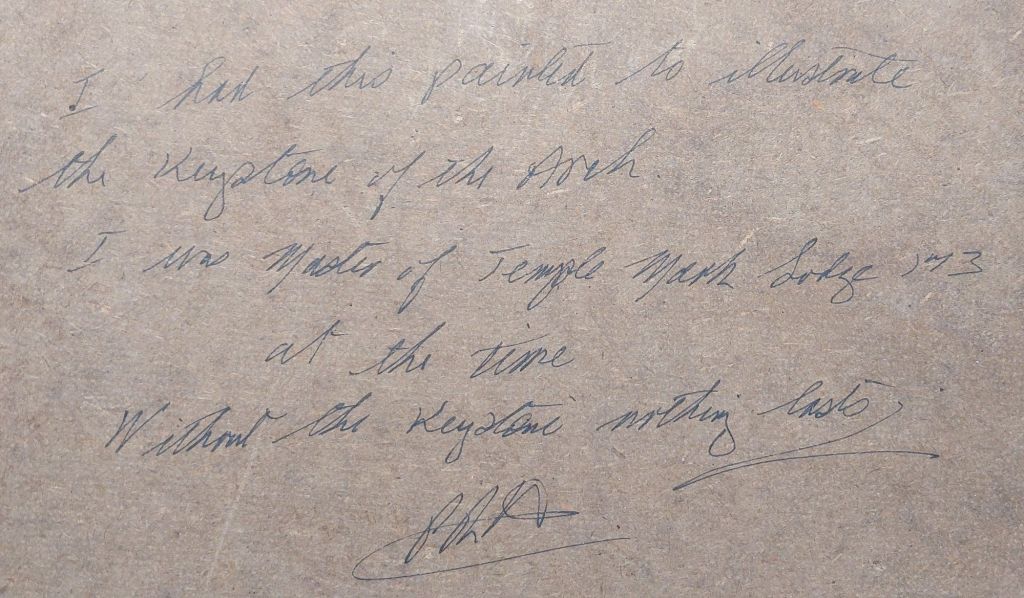
This week, I came across a watercolour by artist #AllenWilliamSeaby (1867-1953). Seaby is best remembered as an ornithological (birds) painter and printmaker in the Japanese style using woodblocks. He collaborated/published a number of books ranging from art history, painting techniques, and children’s literature. There is a little history on the back of the piece that explains why this artwork was created.

History on recto of frame.

This piece,’The Keystone of the Arch’, was commissioned by the Master of #TempleMarkLodge173 to provide inspiration to himself and others.

Seaby was born in London and studied art at the Reading School of Art. Seaby went on to teach at the University of Reading for many years.

The painting from which he made a woodblock print is created using a subdued colour palette with simple and loose brushwork. In many ways, it is perfect for making into a woodblock print. It is 9 1/4″ x 12 1/4″ (235×310). I have to guess at the age of this piece since neither the commendation on the recto nor the image itself is dated, but I would put it in the 1930s to 40s. A beautiful example of Seaby’s working style.

The Keystone of the Arch – watercolour by Allen William Seaby
Posted in Drawings and Sketches, Watercolour paintings | Tagged , , , , , , , | Leave a comment

Isaac Taylor engraver

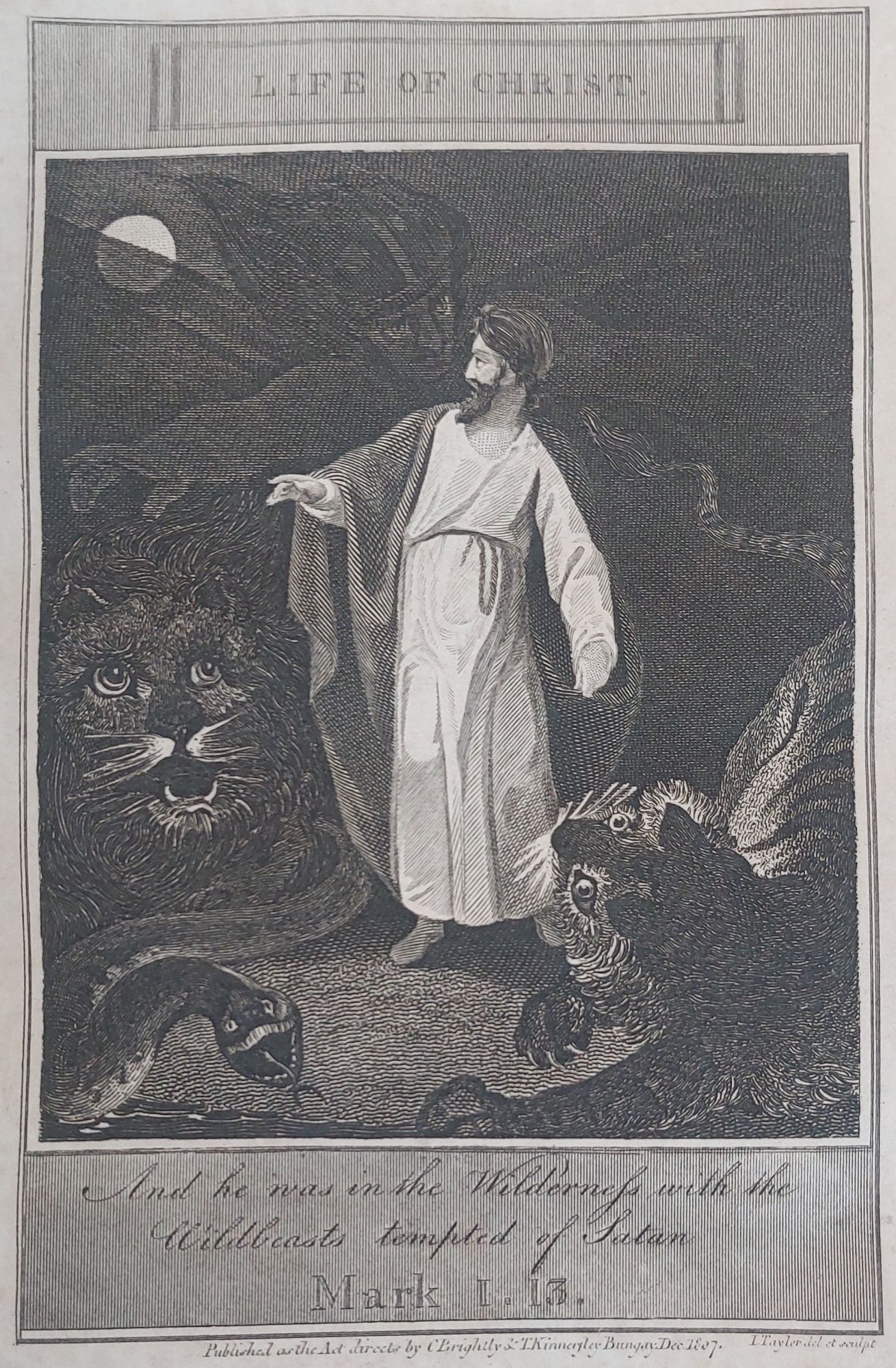
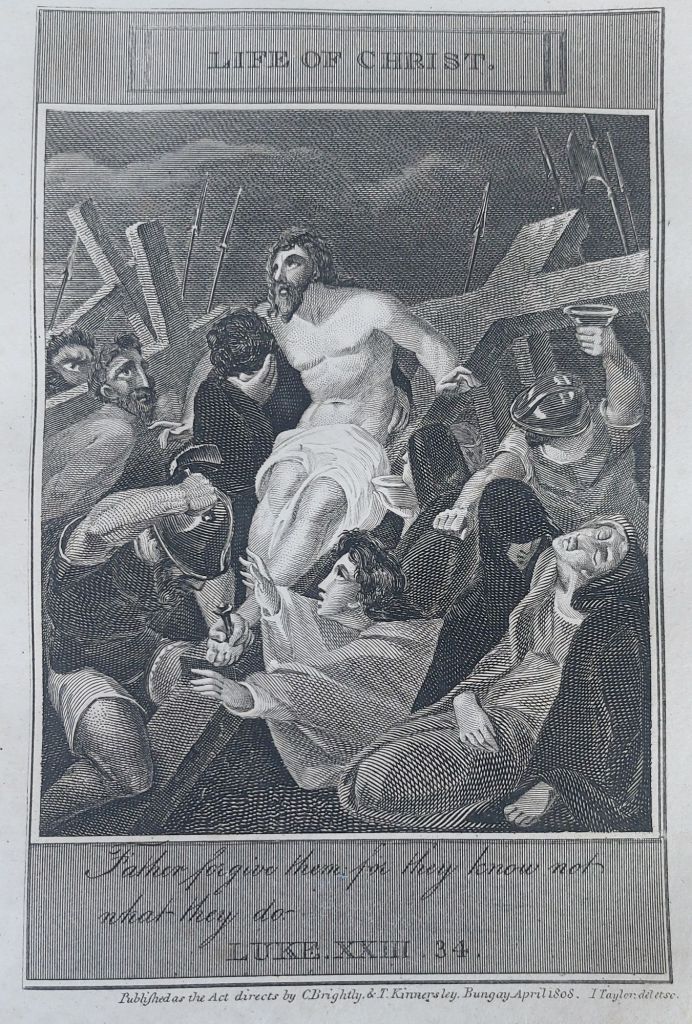
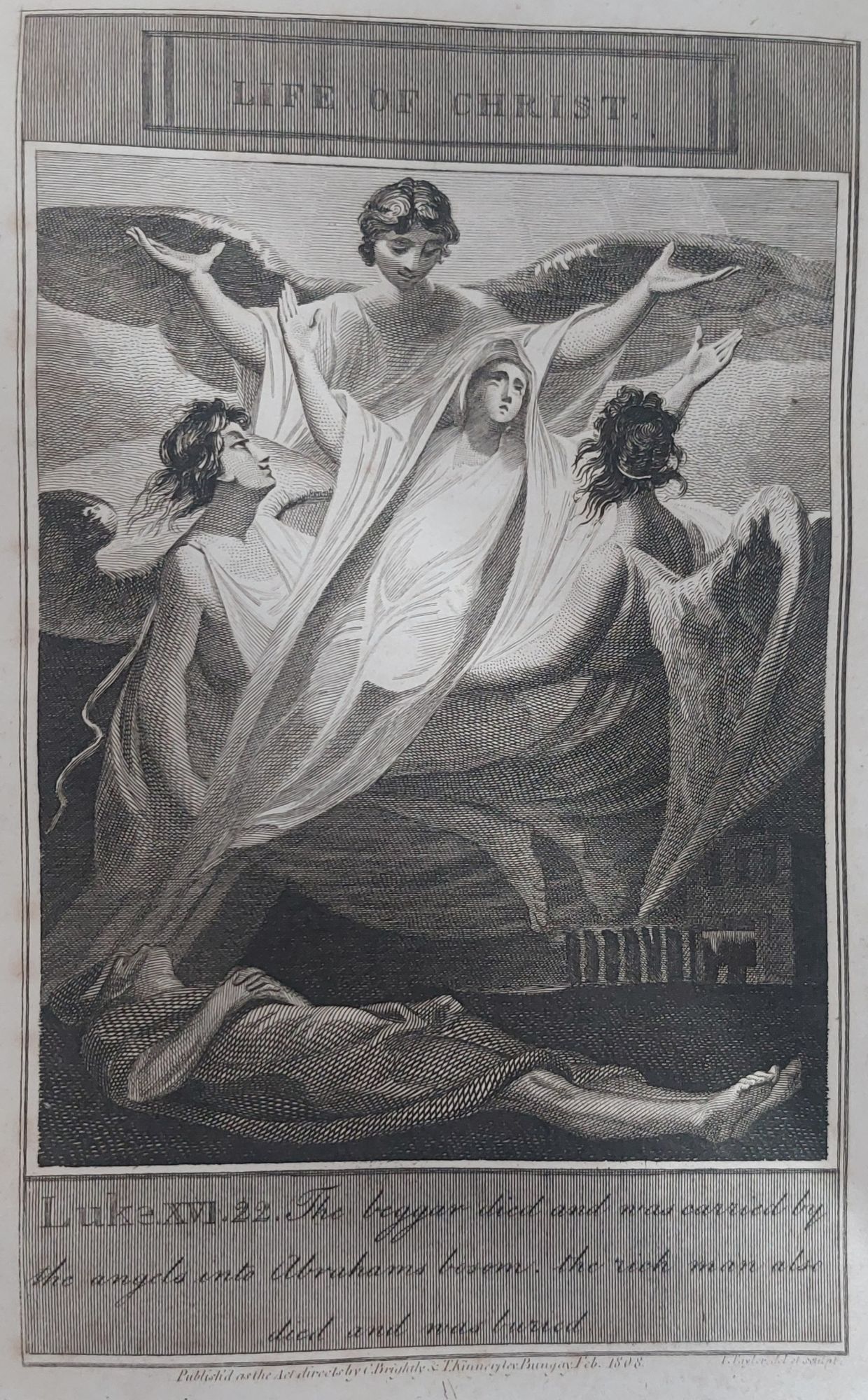
I recently added a book published in 1809 to my collection. To be fair, the book is in rough shape. The front and rear covers are separated from the spine, the pages are aged and discoloured, but within these pages are engravings by #IsaacTaylor (1759-1829). The book is called #TheLifeofChrist. Taylor was born in London. His father was also named Isaac Taylor (1730-1807), and son followed father into the engraving trade. Taylor (the younger) married and moved to Lavenham in Suffolk. Here he became z well known itinerant preavher. Life as an engraver was not easy, and when Isaac received a call to pastor an independent church, he moved to Colchester, and finally to Ongar in Essex to pastor another nonconformist church, where he resided until his death.

The Flight into Egypt – engraving by Isaac Taylor @ 1807
The temptation of Christ – engraving by Isaac Taylor @ 1807

I find these works fascinating and beautiful, wonderfully expressive. To me, there is just something extraordinary in these sublimely engraved black and white images. Age makes them more accessible and more expressive. Look upon the agony in the woman’s face as Christ is crucified, the anger in the body of the soldier as he drives the nail into Christ’s feet. I look at the edges of the pages themselves and see they have been touched hundreds maybe thousands of times. This book has been loved. Maybe that is why I love the imperfect. For I have seen pristine antique engravings, clean and untarnished as the day they were printed but these usually fail to move me for they in all their perfection have not been cherished, looked upon day after day, and loved. Even in some mysterious way affecting people’s lives.

The Crucifixion – engraving by Isaac Taylor  @ 1808
Angels carrying Lazarus to heaven – engraving by Isaac Taylor @ 1808
Posted in Etching, Lino/woodcuts | Tagged , , , , , , , , , | Leave a comment

Two Oddities

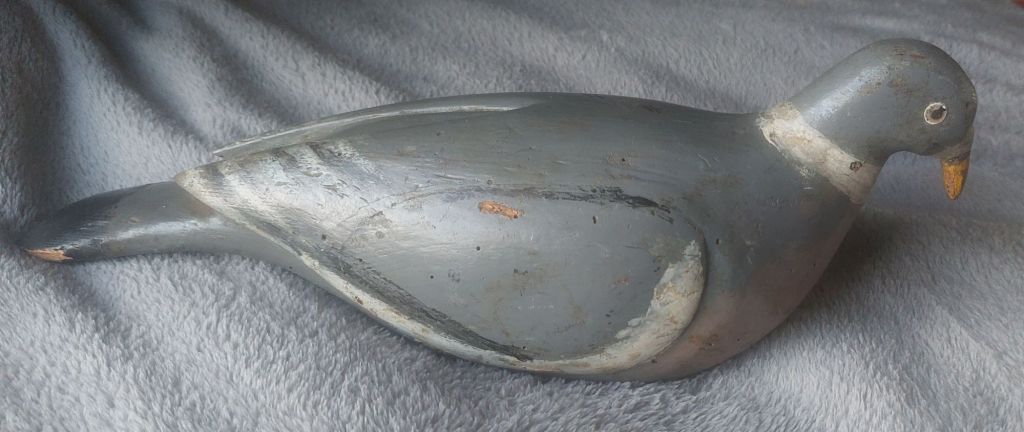
I picked up two items recently, which are outside of my usual pervue. They are both created by artists from very different fields. The first we will look at is a hand carved #decoy of a wood pigeon from the late 19th to early 20th century. It comes with a little damage and signs of woodworm but is still a fine example of this genre.

The #pigeon shows its’ original paint and unlike later decoys it has naile ss eyes and not glass eye beads. There is a pyramid shaped hole in the bottom indicating that in its original form, it might have been a rocking pigeon, but it has lost the mechanism.

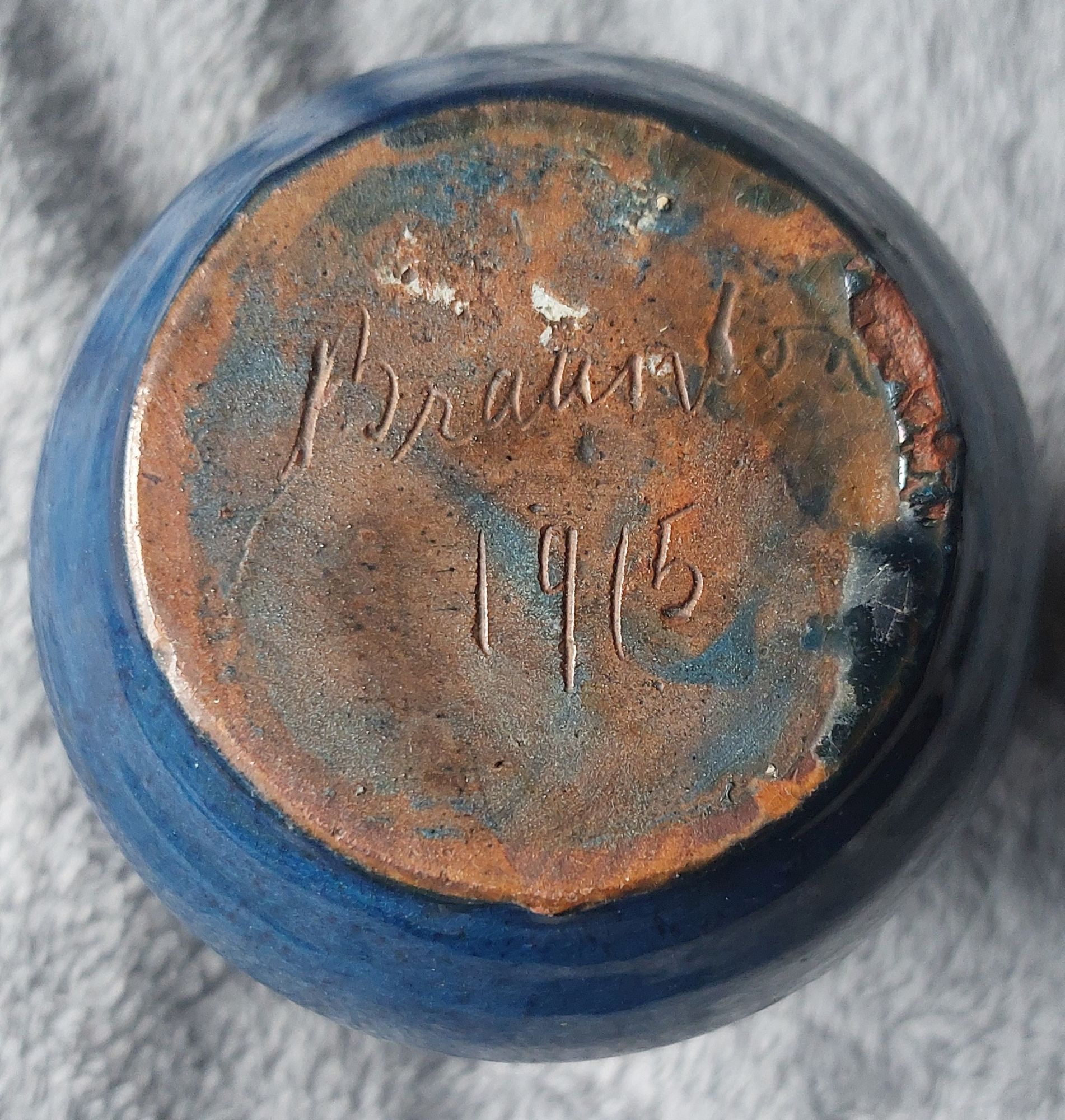
The second piece was thrown in 1915 at the #BraunstonPottery in Devon. The pottery opened in 1912 and ran until 1971. I bought this piece because my wife loves blue, and this small vase is cobalt blue.

This piece also has a small amount of damage but is still a lovely example of the work that Braunton was creating even during wartime.

Hope you enjoyed the pair of unordinary pieces, for me, but these works were created by artists for everyday use.

Posted in Ceramics/Pottery, Sculpture | Tagged , , , , , | Leave a comment

Two Landscapes

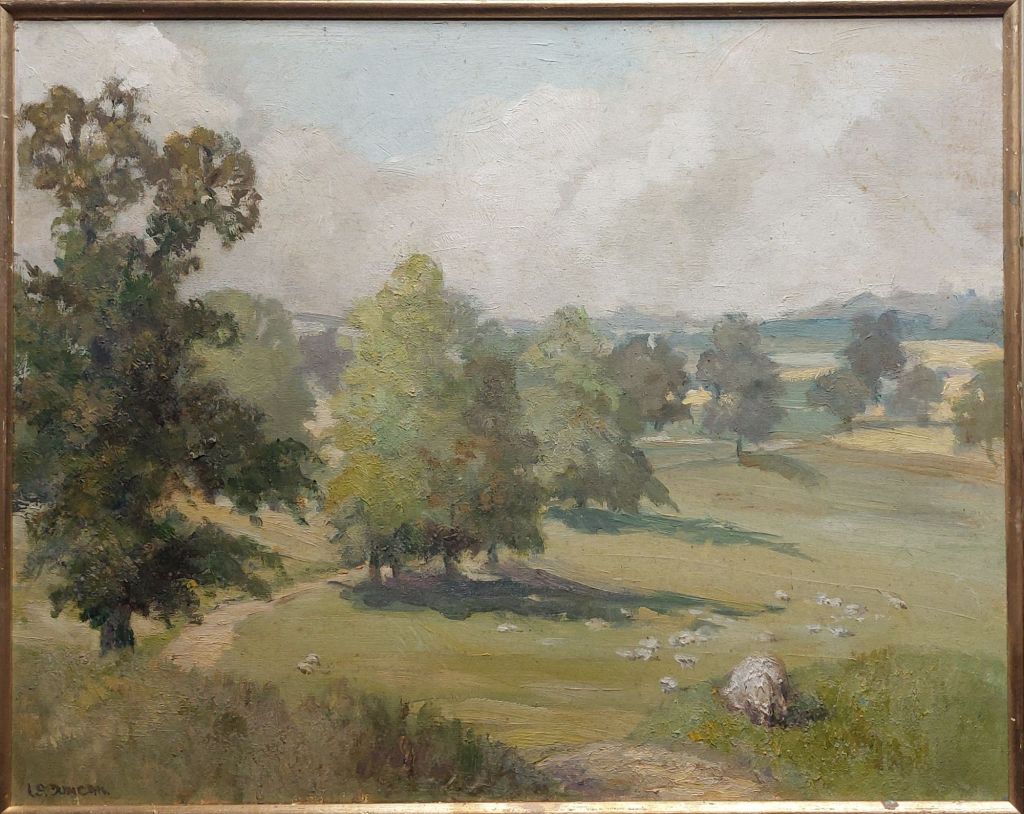
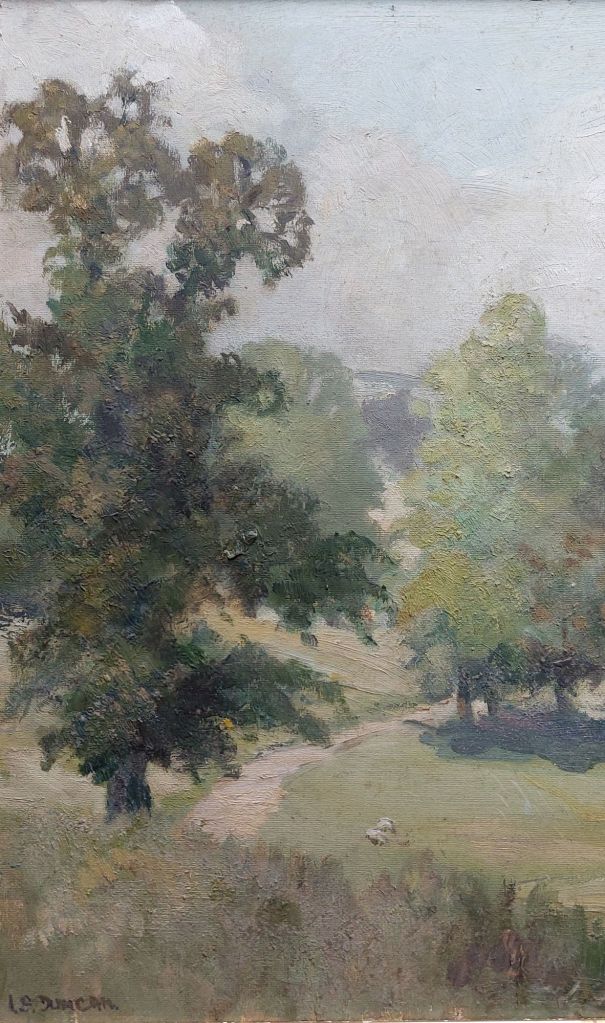
Today, we look at two landscapes, one oil and one watercolour. The oil is a view overlooking the parklands at Hassobury, Farnham, Bishop Stortford. Hassobury is a Victorian Gothic mansion, originally built for the Gosling family, was sold and converted into a private school and has now been redone into a residence. The parklands is delightful and the drive to the mansion consists of paddocks and meadows.

Parklands, Hassobury – oil by I. S. Duncan
Hassobury Parkland

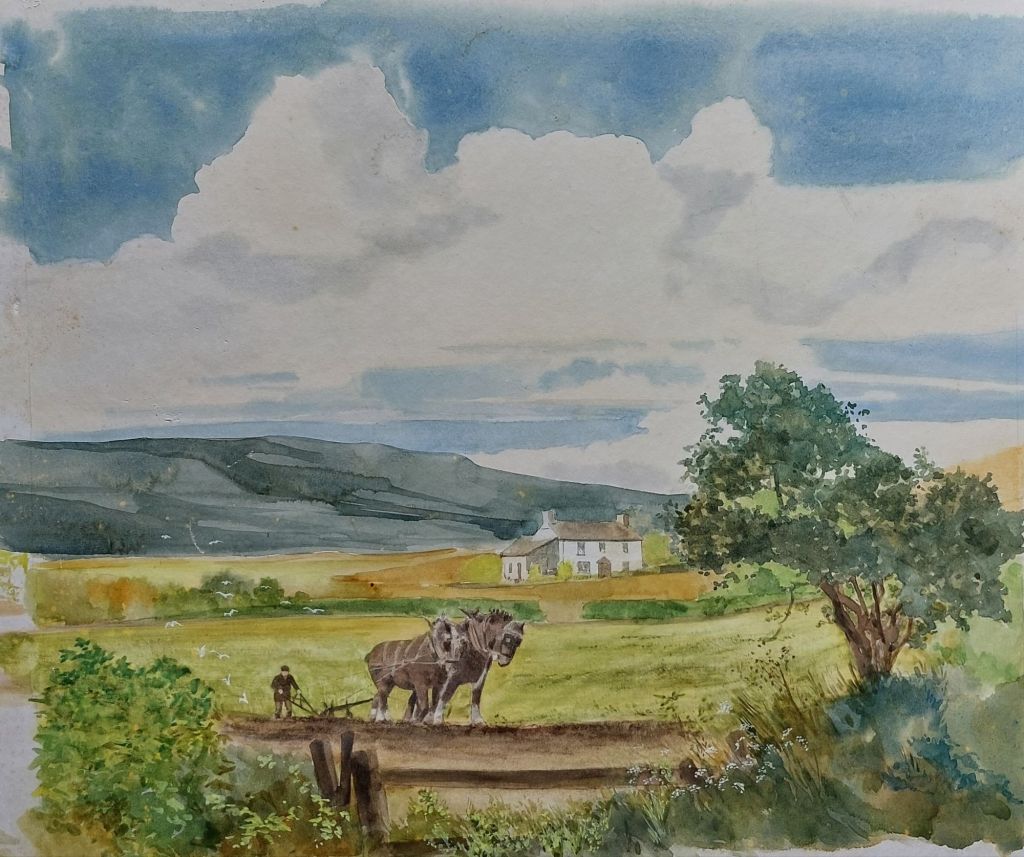
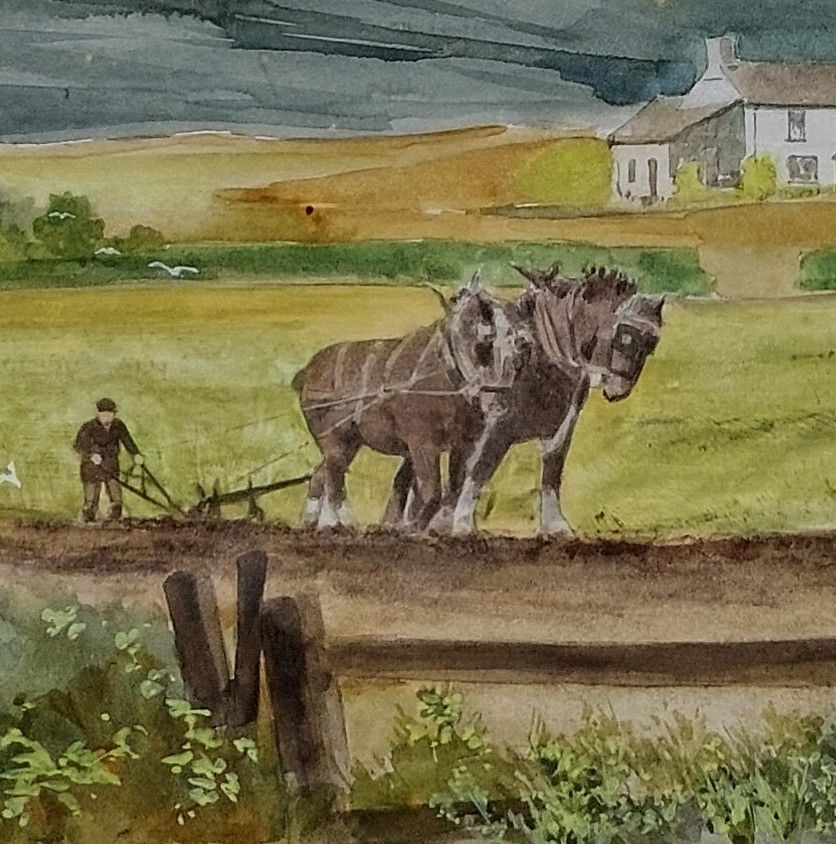
The watercolour is a scene looking across rolling hills and farmland. In the fore is a field being turned by a pair of shire horses pulling a plough. It is simplistic in many ways and yet the portrayal of the horses is superb. This unknown artist has, I think, managed to capture something very beautiful.

Working the Land – unknown artist
the shire horses

Both of these landscapes capture the peace and serenity of the countryside, the beauty of nature and sunshine with green fields, blue skies, and farm animals. As one gazes on these works it’s easy to imagine oneself being there and walking the countryside in the sunshine and fresh air.

Posted in Oil Paintings, Watercolour paintings | Tagged , , , , , , , , , , , | Leave a comment

Charles Edward Hannaford artist

Some weeks back, I visited a charity shop. They at times expose frames and pictures to ghd dldmdnts due to their lack of sale value. I looked thru these pieces and did not find any that I might purchase. One of those pieces was a poster that had been framed. I went to look elsewhere in the charity but eventually came back, finding that someone had opened the frame and taken the poster. This action exposed the piece that I then picked up.

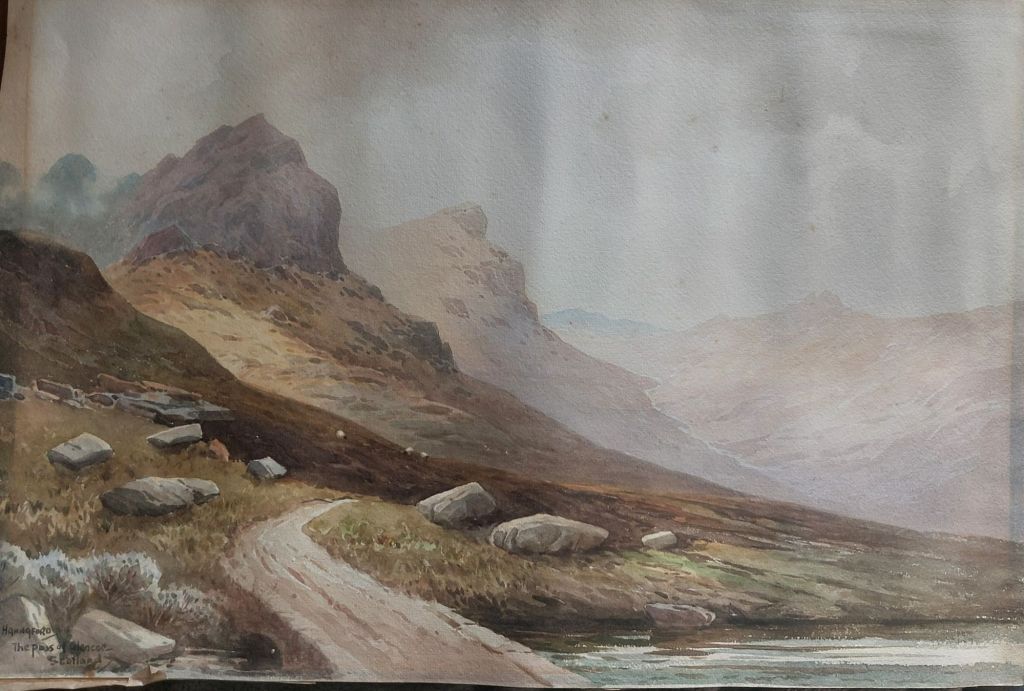
The exposed piece was a watercolour landscape. It bore a title and signature in the lower left of the piece. I thought it a good piece.

The Pass of Glencoe, Scotland – watercolour by Charles Edward Hannaford (1863-1955)

A quite beautiful image of ‘The Pass of Glencoe, Scotland’ by #CharlesEdwardHannaford (1863-1955). Hannaford was born in Liverpool and studied art in London and Paris. He was educated as an engineer/architect, and his work brought him to the notice of artists William Cook and Stanhope Forbes. He was also well thought of and collected by the Royal family. His art brought him to reside in Plymouth, Cornwall, London, and finally moving to Norfolk settling in the town of Thorpe. A very good piece even after being exposed to the elements.
Posted in Watercolour paintings | Tagged , , , , , , | Leave a comment

A Bit of Local History

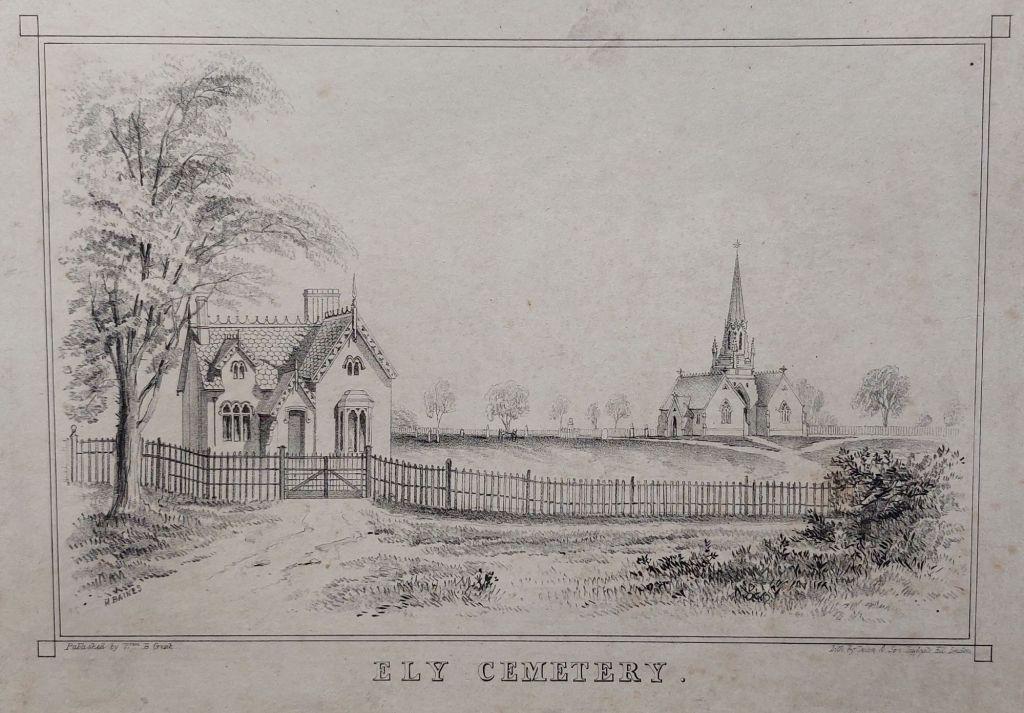
I have lived in the city of Ely since moving to England and am always pleased to find pieces of art of local interest. In this case, it is of interest in regards to the place portrayed as well as the creating artist. The small lithograph shows #ElyCemetary as it was shortly after it opened in 1855. I can date this print to no later than 1870 since the company that pressed the stone moved from the address shown in 1870. The cemetary, itself, was divided into two sections – Anglican and Nonconformist.

Ely Cemetary  – lithograph by Henry Baines @ 1855-70

The lithograph was done by #HenryBaines (1823-1894). Henry Baines is the younger brother to the more famous #ThomasBaines. Henry studied in London and Europe, then returning home to establish his own art academy. Henry’s works comprised of East Anglian landscapes and coastal views featuring sailing ships, fishing boats, and views of King’s Lynn. The images of his hometown are historically important since they show real life in the city in the 19th century.

A nice piece of local history on two aspects.

Posted in Lithographs | Tagged , , , , , , | Leave a comment

Isabella Hedley, part two

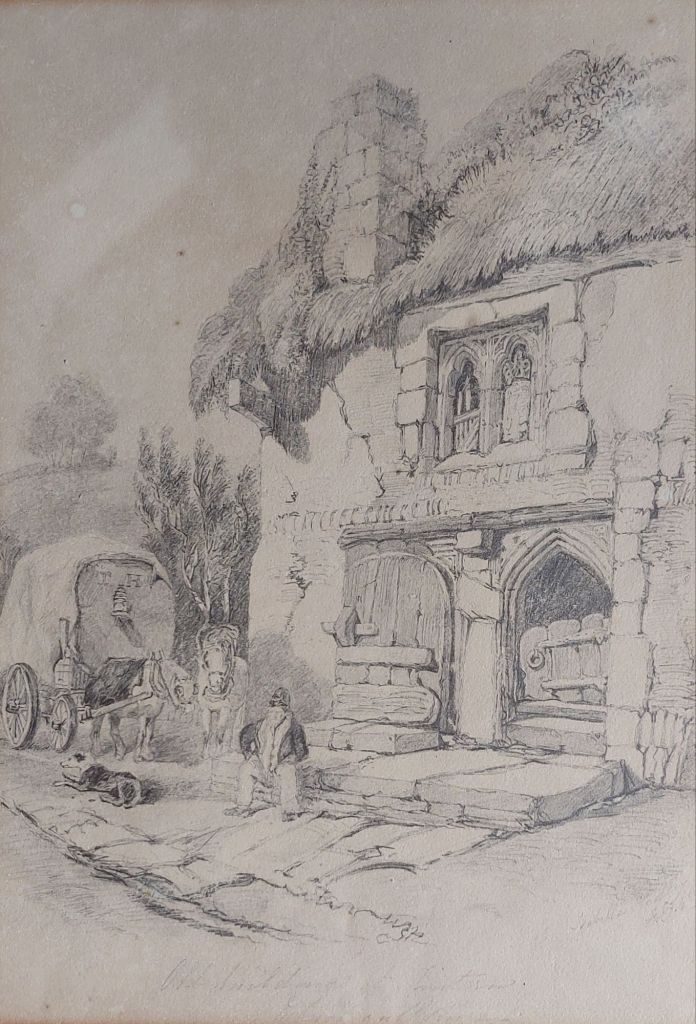
We return to Isabella Hedley and her drawings. Once again, we see quite a competent artist producing good quality works.

Cottage at Hastings – drawing by Isabella Hedley after Paul Sandby Munn @ 1837

A number of these drawings come from the drawing course, which was published by SamuelProut.

Untitled – drawing by Isabella Hedley @ 1837
Fisherman’s Hut, Isle of Wight – drawing by Isabella Hedley @ 1837
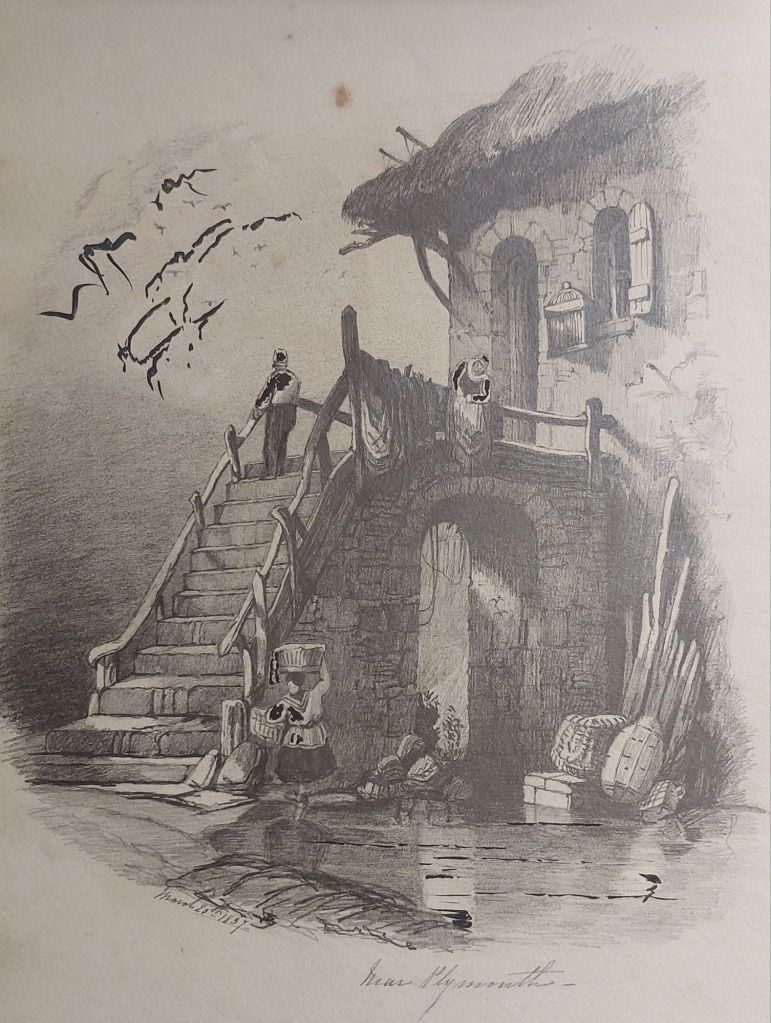
Near Plymouth – drawing by Isabella Hedley after Samuel Prout @ 1837

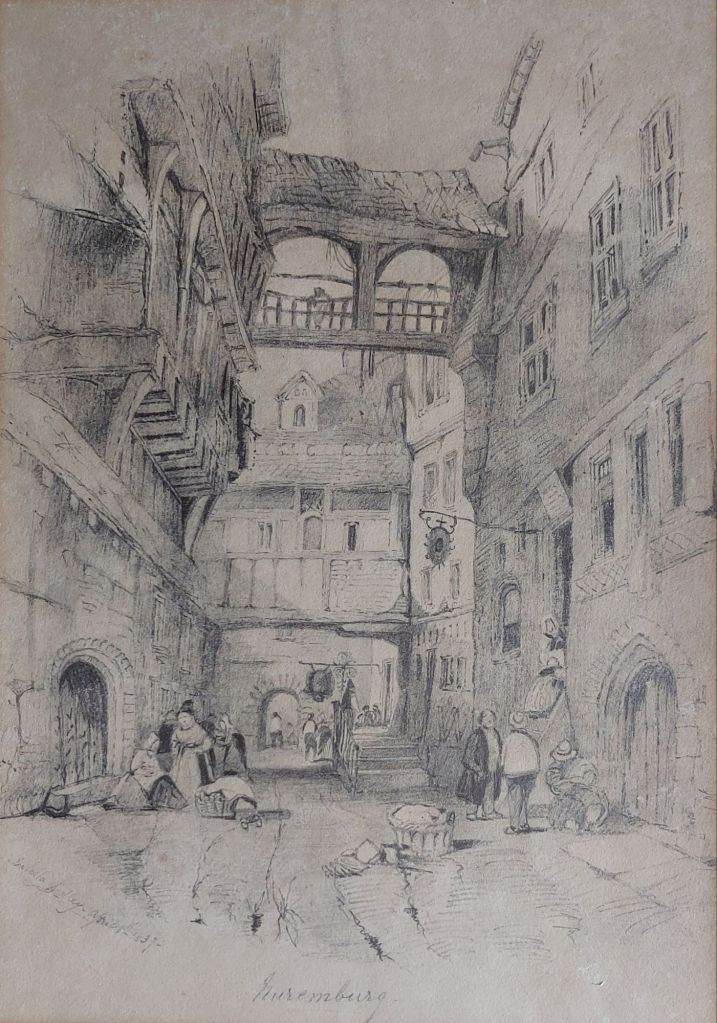
We also see two drawings from European sites.

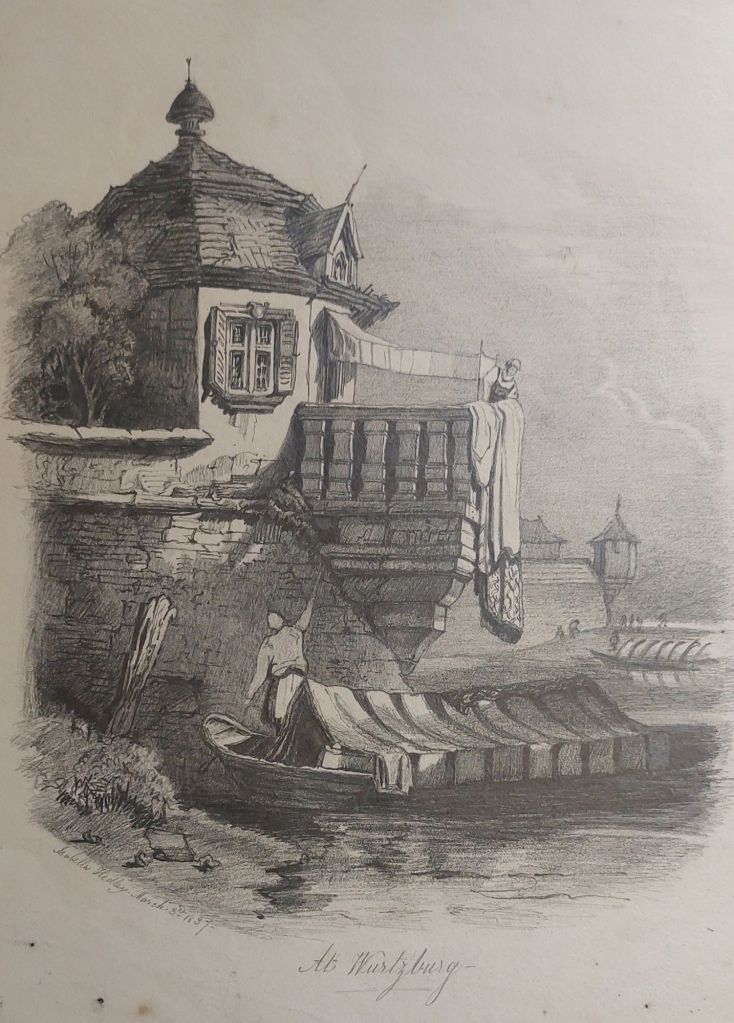
At Wurtzburg – drawing by Isabella Hedley after Samuel Prout @ 1837
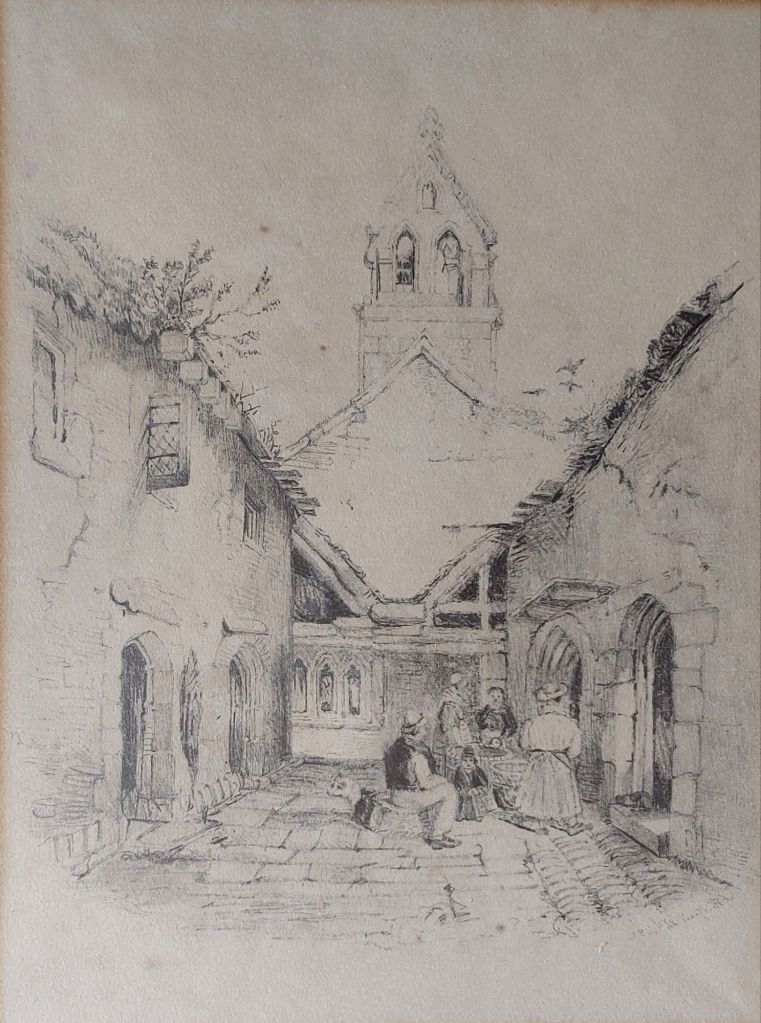
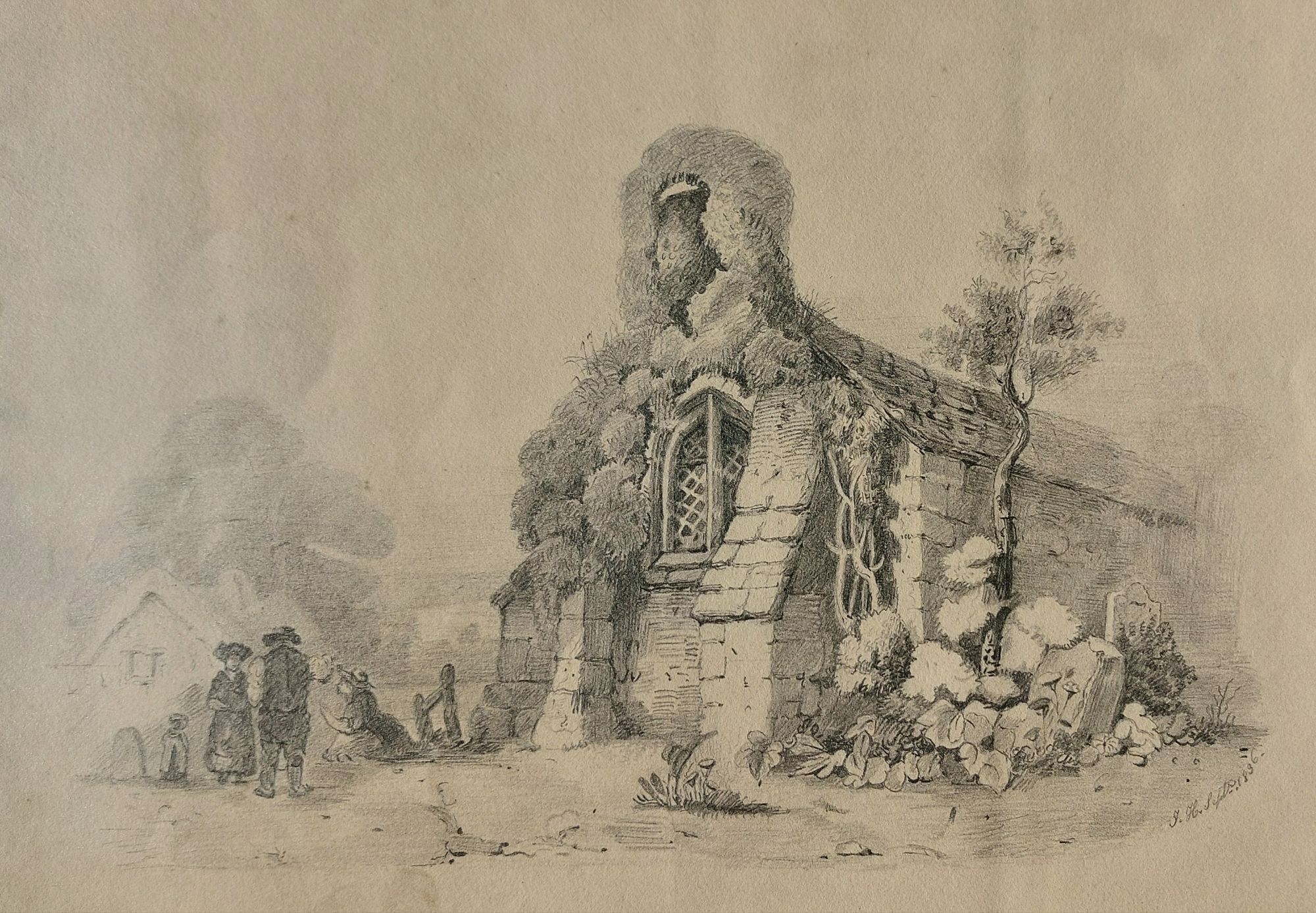
St Margaret’s Chapel, Glastonbury  – drawing by Isabella Hedley after Samuel Prout @ 1837

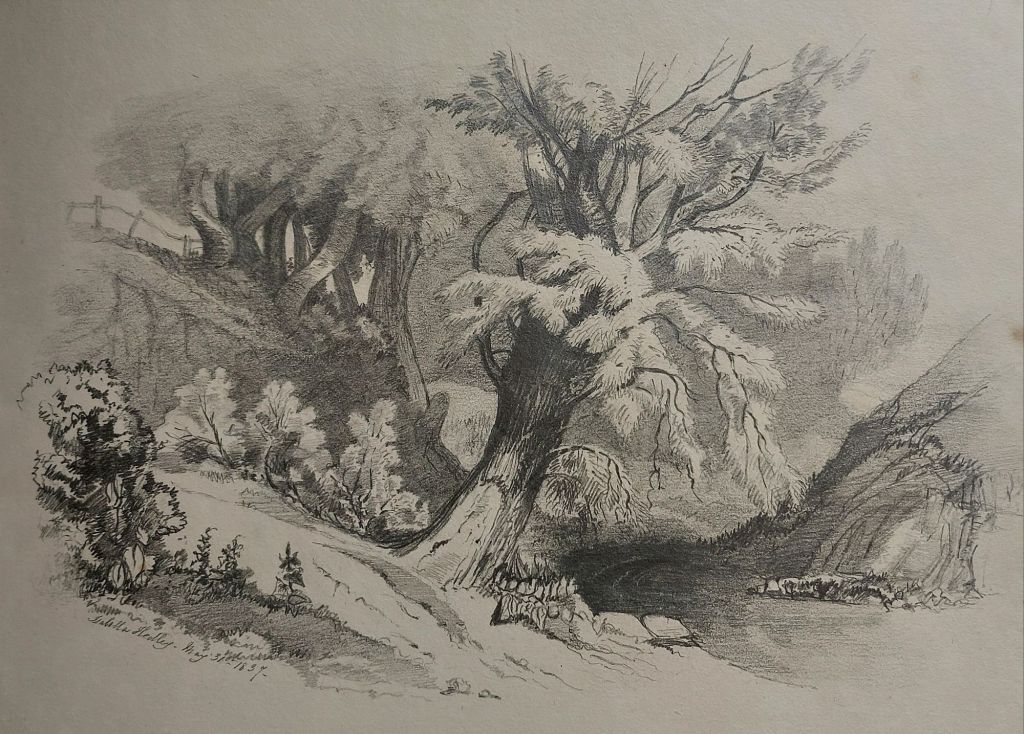
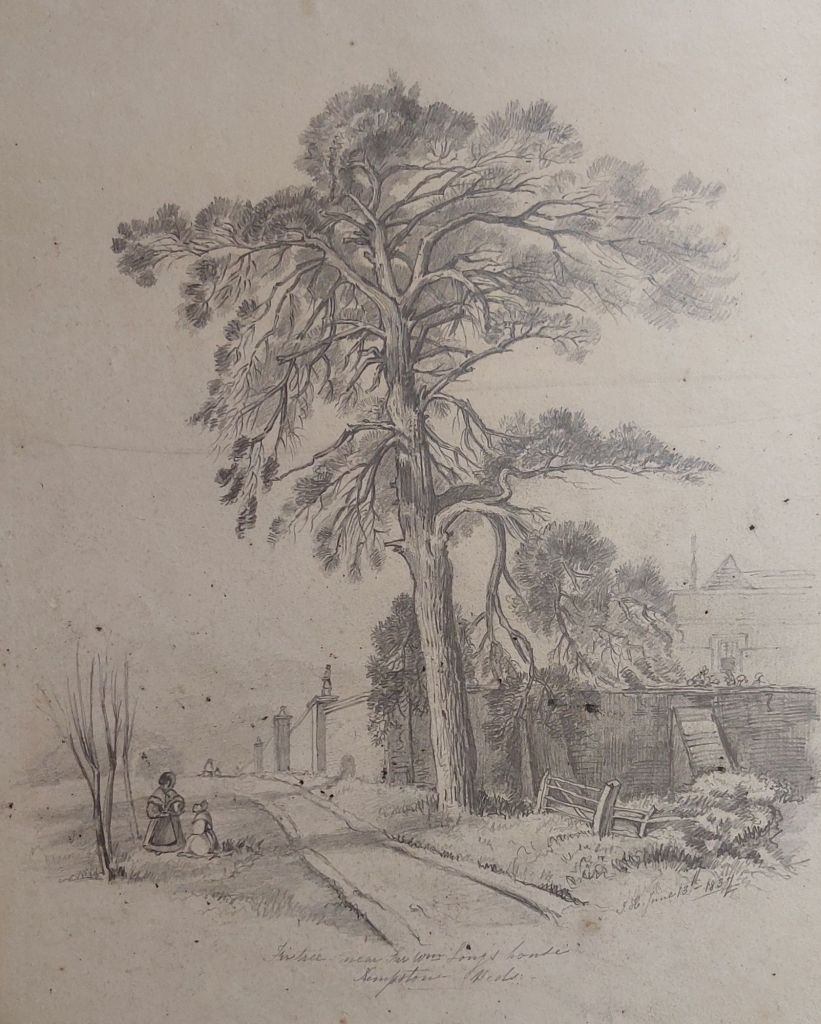
Also, in this set of drawings from 1837, there are two landscape scenes focusing on trees. These two images may be Isabella’s own works for her tutor/drawing class since I have been unable to find images of them.

Untitled – drawing by Isabella Hedley @ 1837
Fir Tree near Sir William Long’s house, Kempston, Bedfordshire  – drawing by Isabella Hedley @ 1837

Again, all of these drawings show a fine artistic eye and a very fine technique.

Posted in Drawings and Sketches | Tagged , , , , | Leave a comment

Isabella Hedley artist

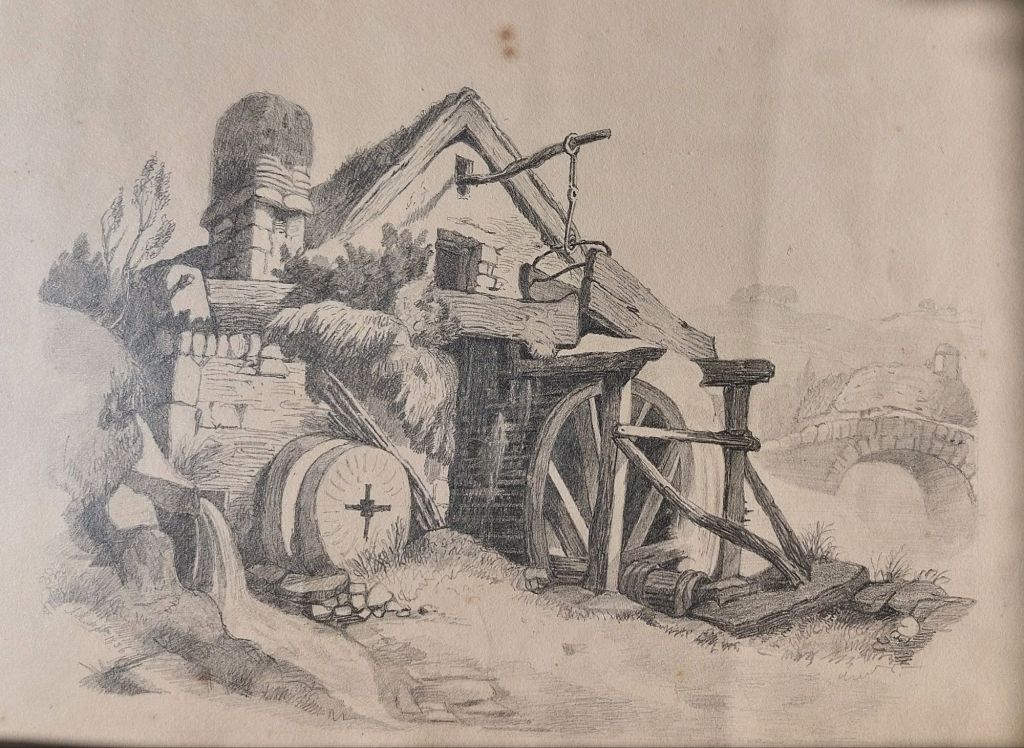
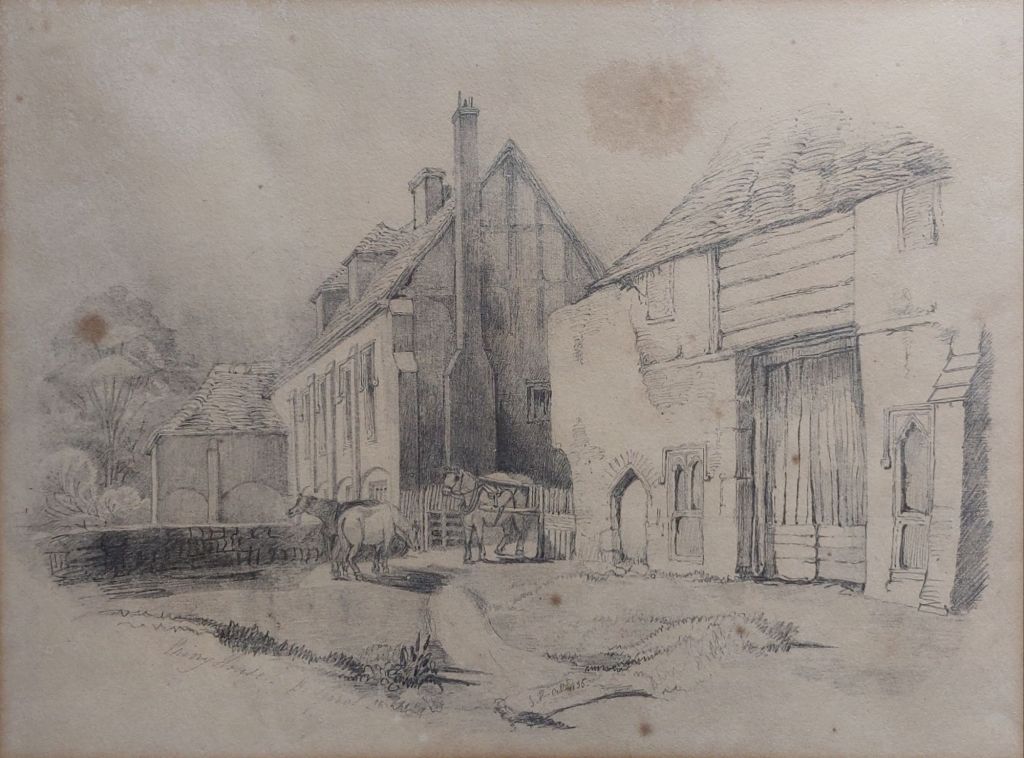
A few weeks back, I came across a set of drawings by artist #IsabellaHedley. The drawings we look at this week were created in 1836. We will look at another set next chapter, which were drawn in 1837. I have found little information about Isabella Hedley.

Near Caerphilly, South Wales
– after Samuel Prout?
Pennycross – after Samuel Prout

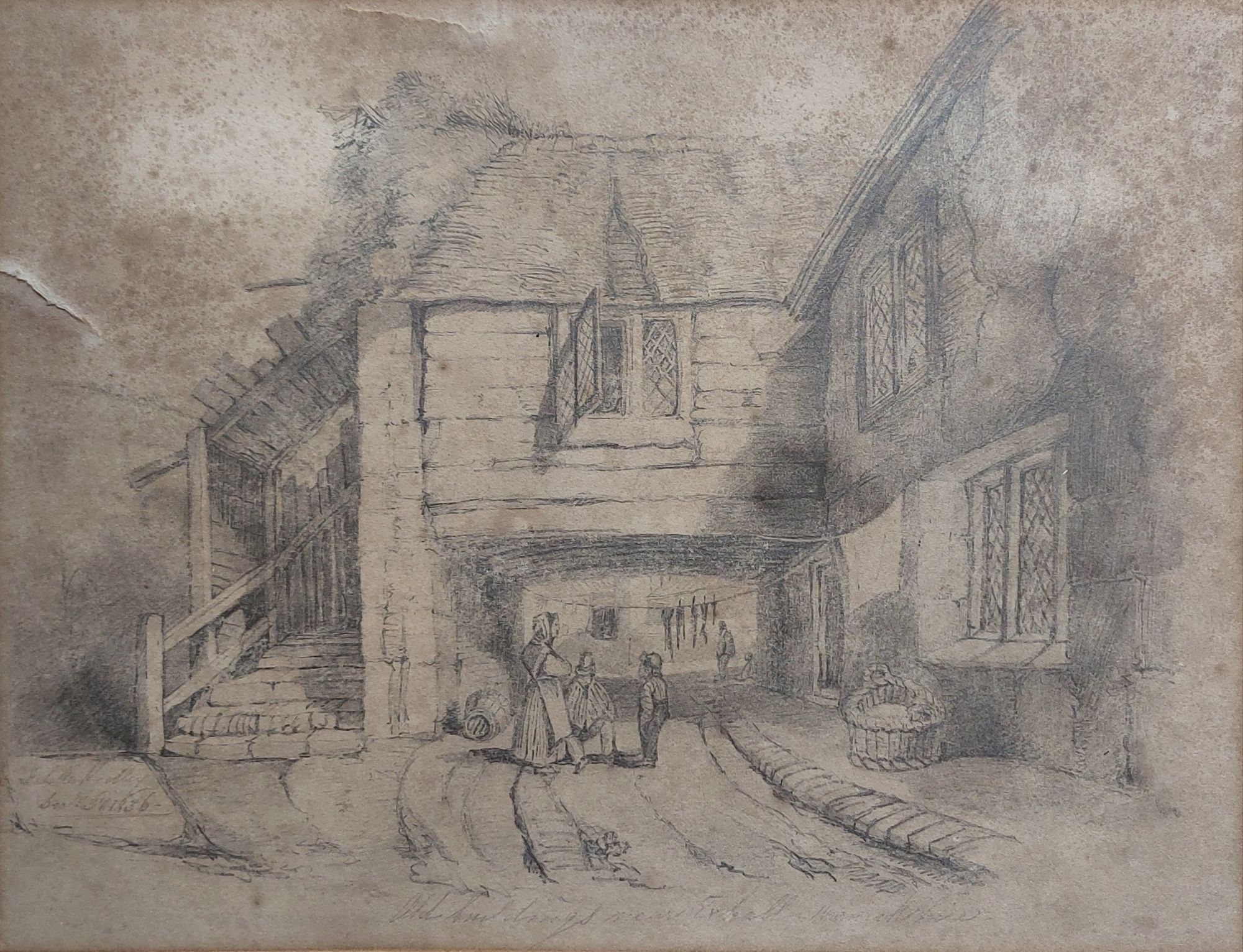
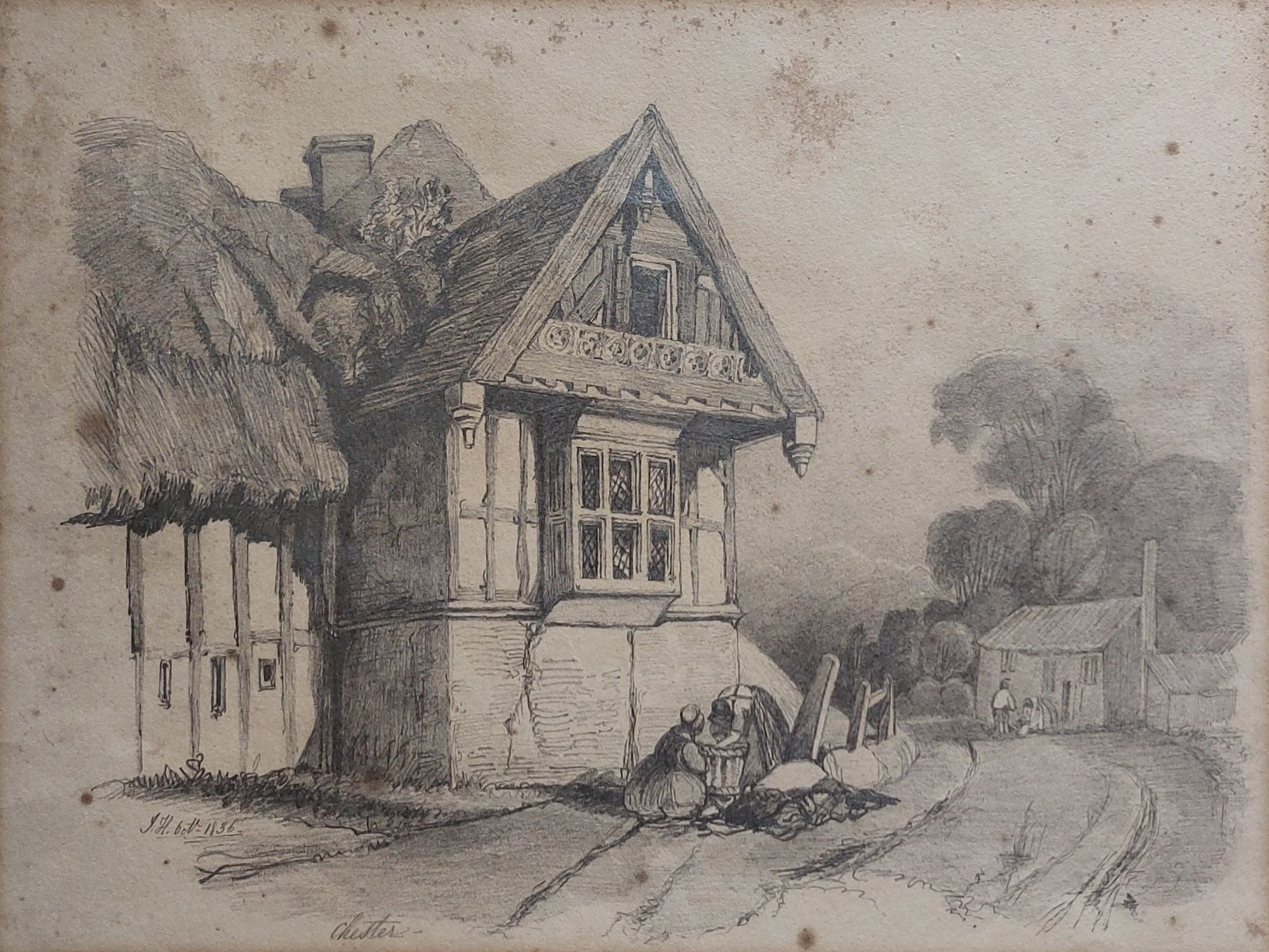
The drawings may be from Isabella’s tutoring, for most of them are images created by #SamuelProut for ‘Rudiments of Landscape in Progressive Studies. Drawn, and Etched in Imitation of Chalk’- collection of soft ground etchings published by Rudolph Ackermann c.1813. The pieces display a good hand and fine eye for copying.

Cottage Exterior – after Samuel Prout
At Tintagel – after Samuel Prout

The works are done in graphite and are of a rural landscape scenes from England and Wales.

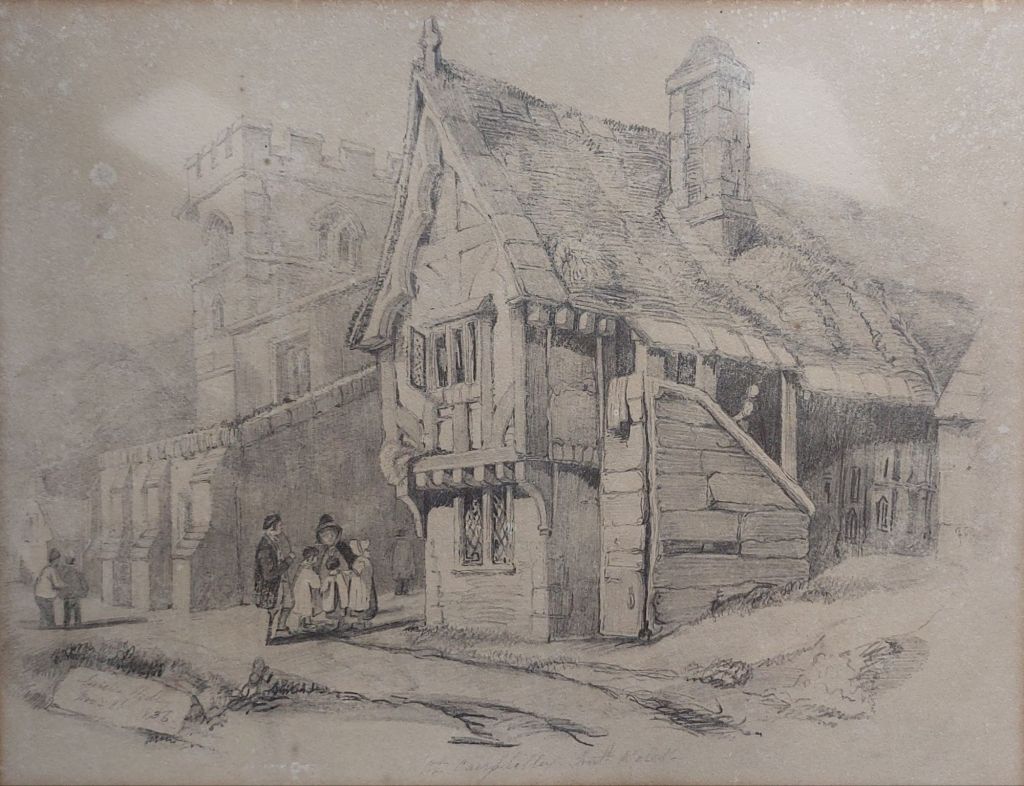
Priory House, Bedford – after Samuel Prout?
Old buildings near Exhall, Warwickshire – after Samuel Prout
Chester – after Samuel Prout?

Isabella Hedley, whomever she may have  been, was a fine artist. Hopefully, she will be remembered as such.

Posted in Drawings and Sketches | Tagged , , , , , , , , | Leave a comment

The Beauty of Drawings II

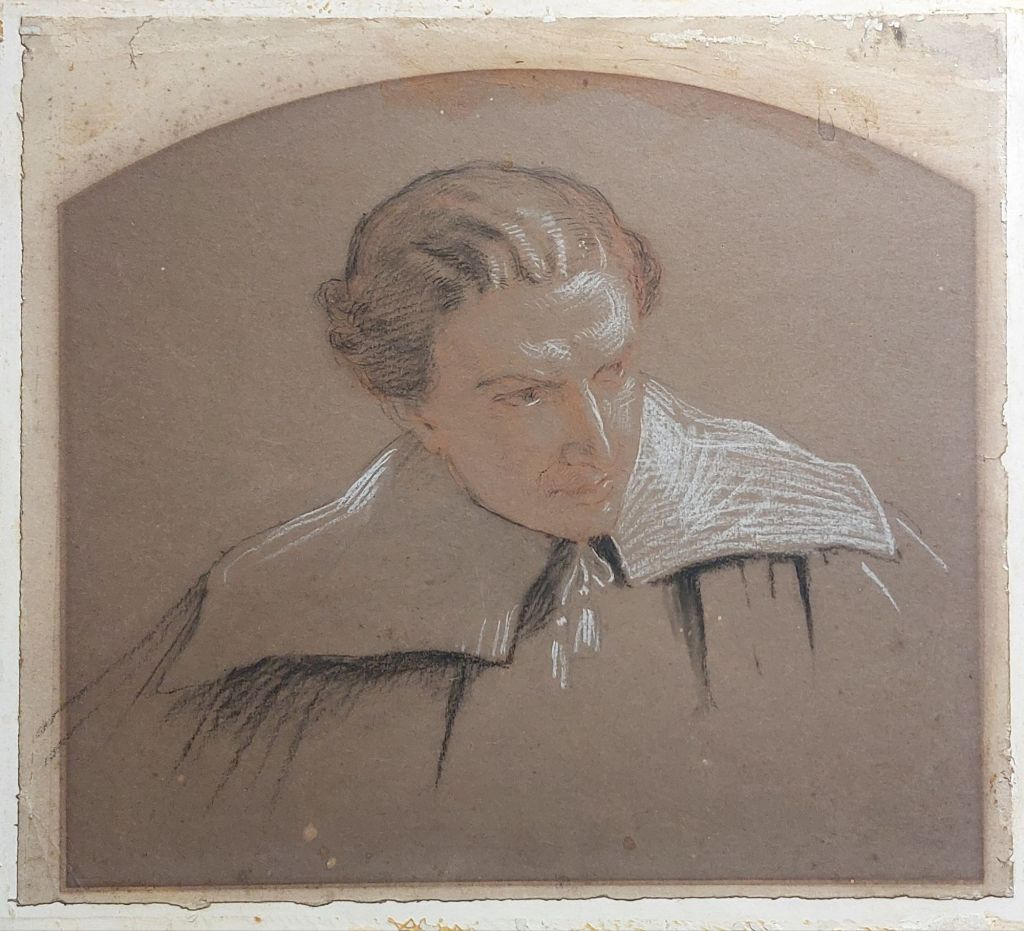
It is always a joy to come across drawings, especially when created by talented artists. The drawing we consider in this chapter is by an unknown artist. After studying it, I have come to the conclusion that it was created in the first half of the 1800’s.

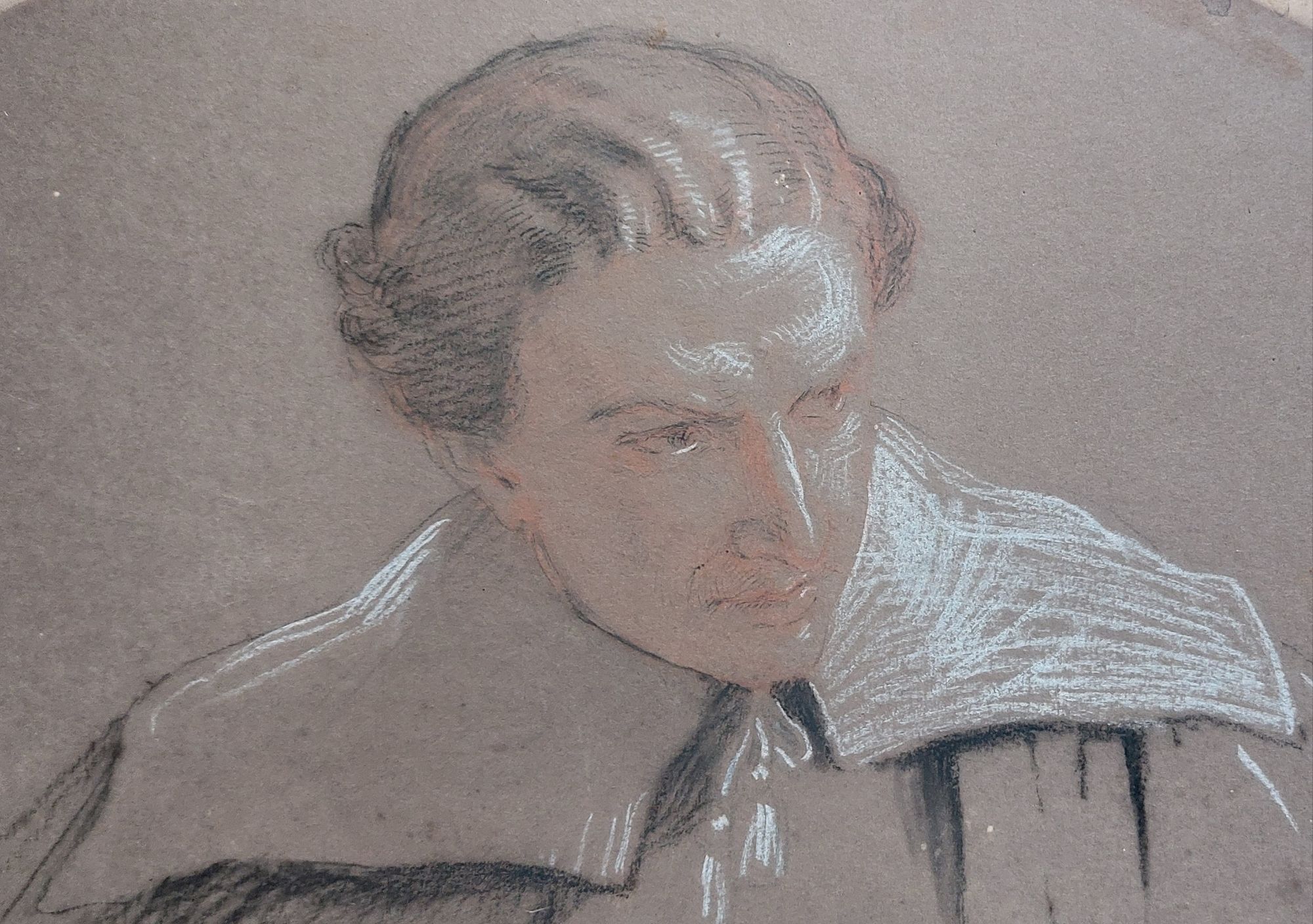
Portrait of an unknown man by an  unknown hand

A portrait of an unknown gentleman done in three colours of chalk.The costume may mean that it might be from the late 1700’s. The paper has darkened over time, and the white chalk has brightened over those same years. An expert hand has created this image. Did it become an oil painting for some famous or wealthy patron? Is it of a famous or wealthy patron? All I can say is that it is beautifully rendered.

close-up of an unknown gentleman
Portrait of an unknown gentleman by an unknown hand
Posted in Drawings and Sketches | Tagged , , | Leave a comment