When we think about the arts in Britain in the first half of the 18th century, one must consider the works of #WilliamHogarth (1697-1764). Hogarth’s works were mostly satirical caricatures that satirised customs at the time and often created in series. ‘The Rakes Progress’ was his most famous series. The engravings of which were much plagiarised, so much so that Hogarth lobbied for The Copyright Act of 1735.

from Marriage A-la-Mode – plate I
This past week, I acquired a set of engravings by #JohnJune (fl. 1740-1770) depicting Hogarth’s Marriage a la mode. June was an engraver and print maker best known for portraits and book illustrations, and he was regularly employed by the publisher Robert Sayer for such. This series might well have been commissioned and published by Sayer or, for that matter, by Hogarth himself.
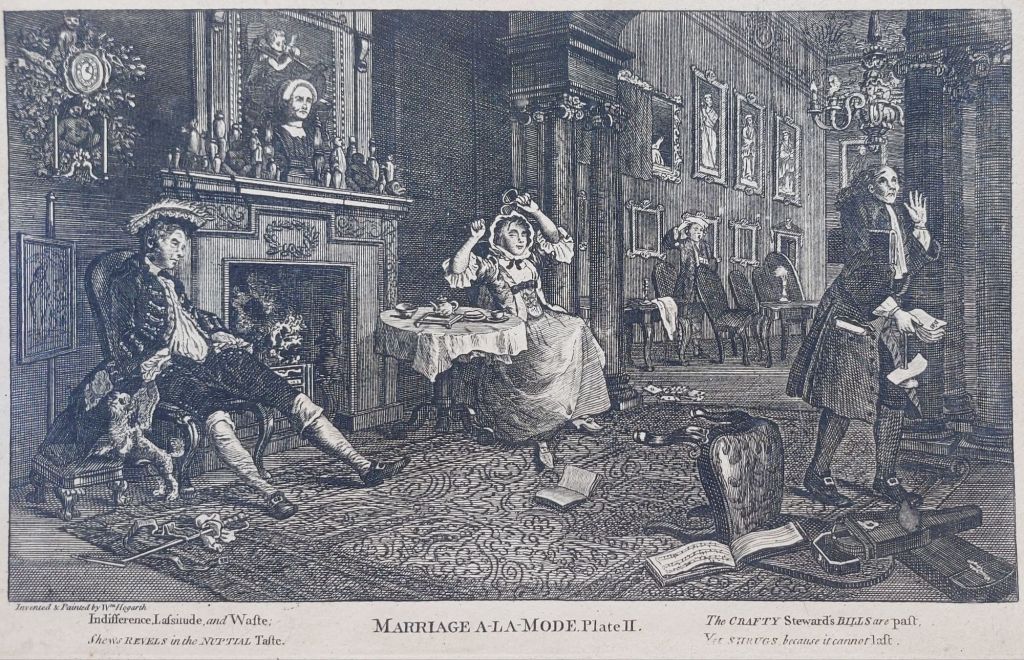
from Marriage A-la-Mode – plate II
Hogarth painted this series of six for Marriage A-la-Mode intending engravings to be made and copies to be sold to the general public. A main source of revenue for many artists.
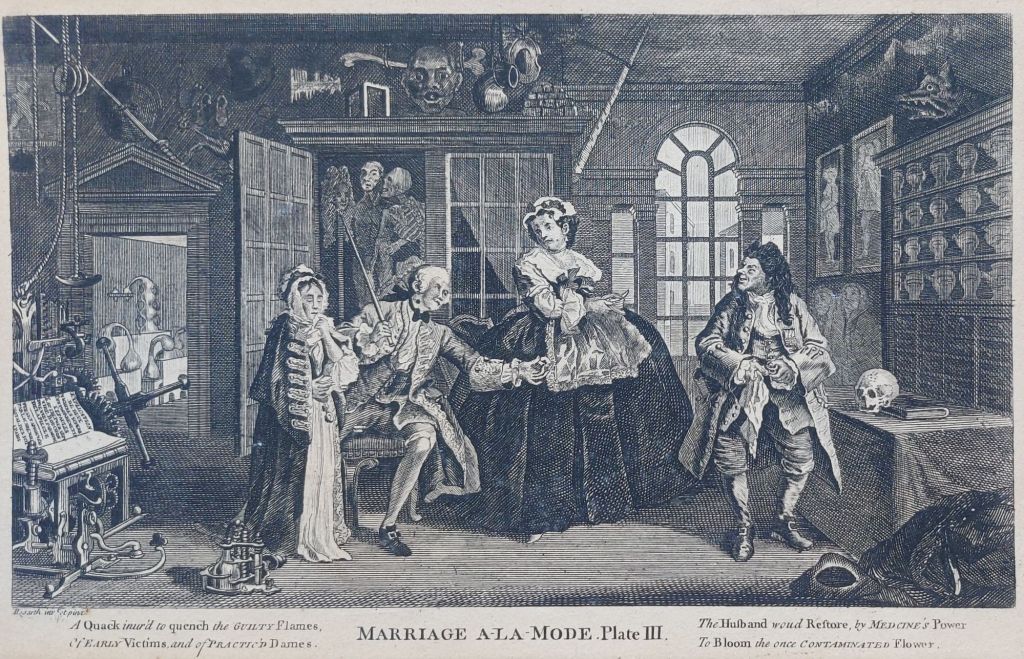
from Marriage A-la-Mode – plate III
The story details the negotiations between an Earl and a London City Alderman to wed the Earl’s son to the Alderman’s daughter (which gives the Earl access to money and the Alderman an aristocratic title) and the resulting wedded non-bliss.
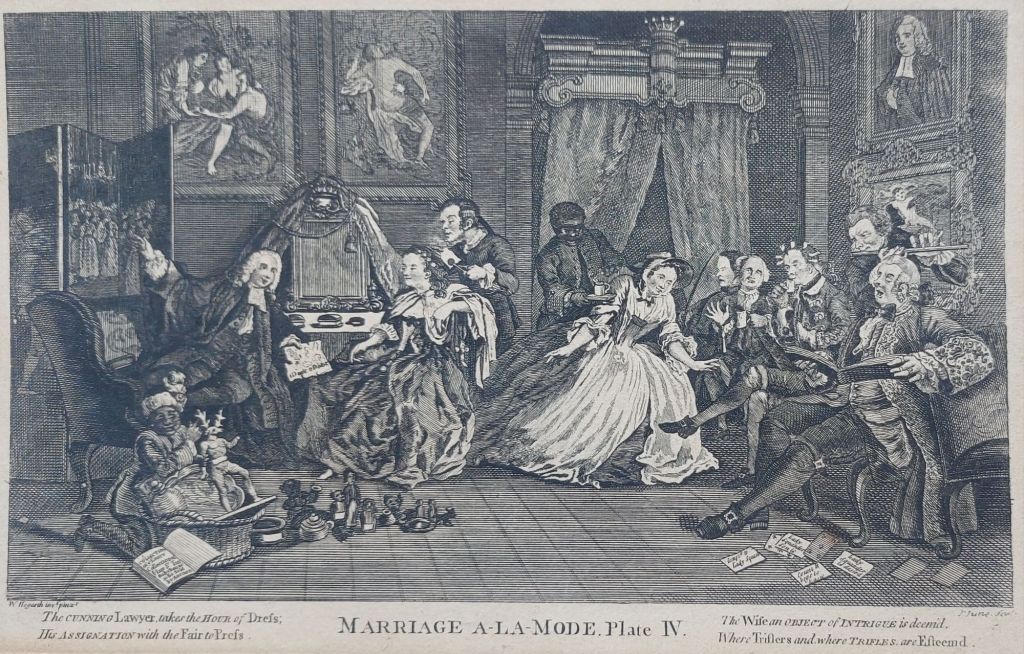
from Marriage A-la-Mode – plate IV
Throughout the series, we see the calamitous results of an ill-considered and pre-arranged marriage for money and social status.
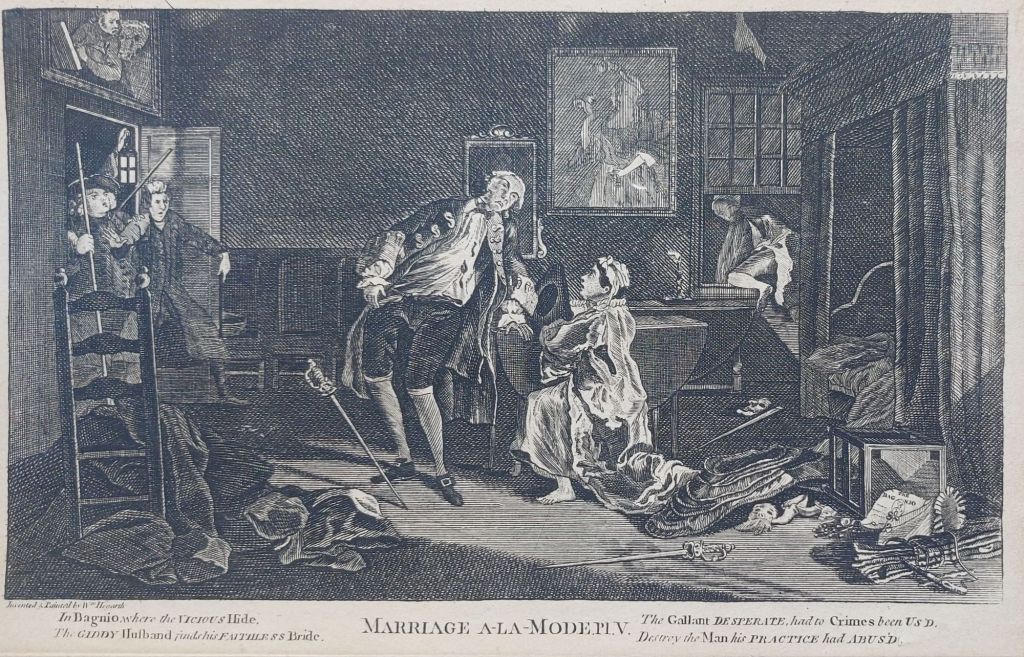
from Marriage A-la-Mode – plate V
The young couple, their families, and acquaintances are portrayed at their worst: seen engaging in affairs, drunkeness, gambling, as well as several other vices.
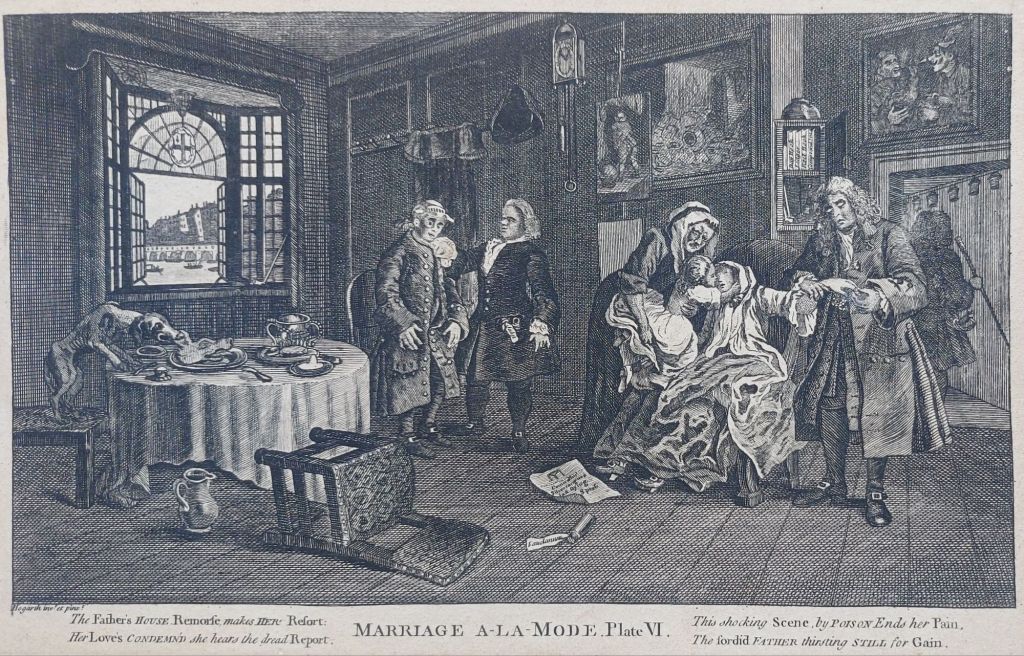
Marriage A-la-Mode – plate VI
Alas, much to Hogarth’s chagrin, the series was not well received, making the artist a very modest amount of income. He had planned to follow on with a series entitled The Happy Marriage, but this did not occur and only exists in a series of very rough sketches.
A very lovely set, wonderfully executed and well inked, which was most likely produced during Hogarth’s life. A good addition to my collection.

