Art Added

Almost a year ago, I wrote a chapter called ‘art on sale’ and in that chapter I wrote on two pieces by Beatrix Holms.  This past week I came across another piece by her.  I never did find any information in regards to her life but with this new piece, I can imagine a little bit more of who she was.
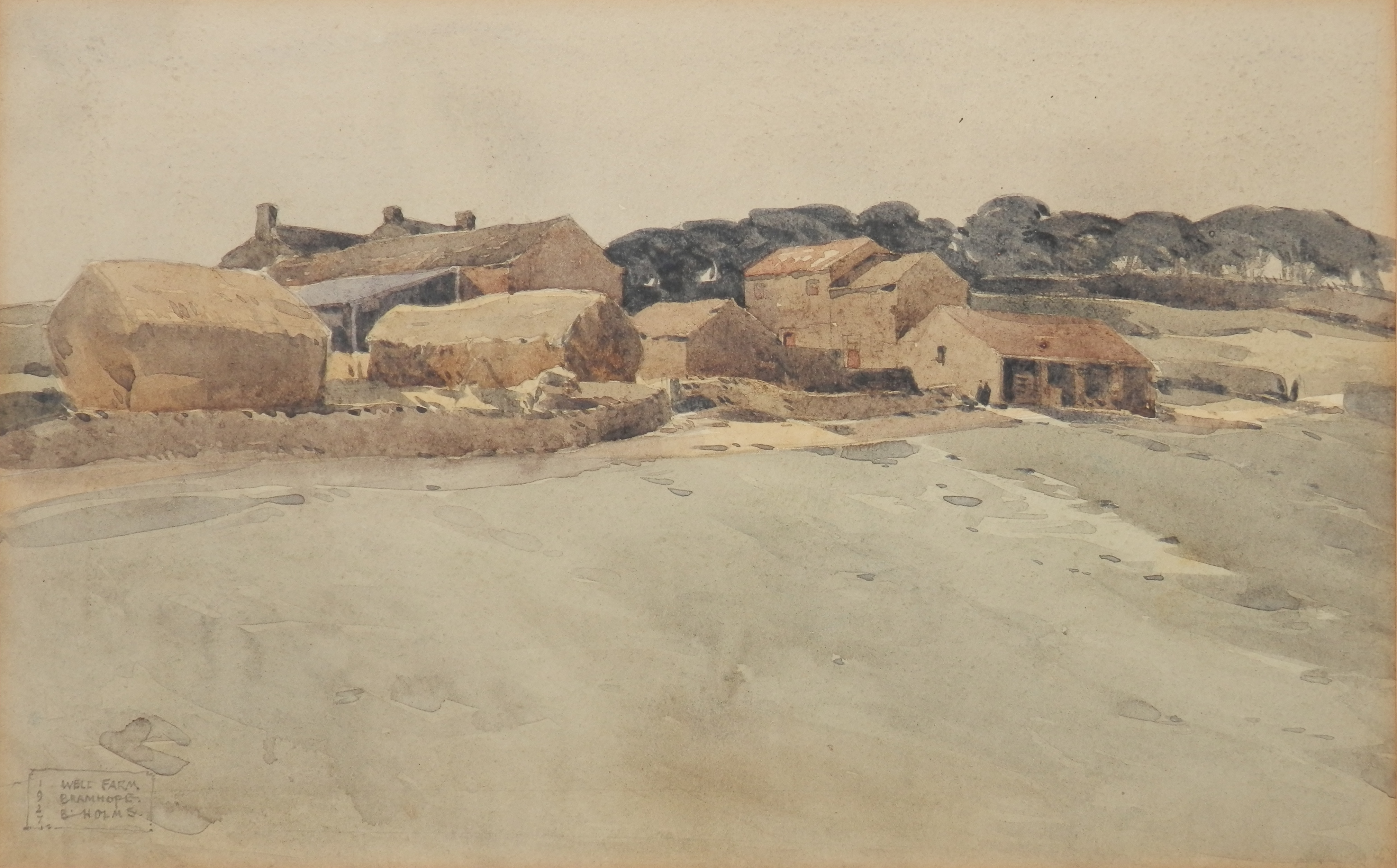
Well Farm, Bramhope nr Leeds by Beatrix Holms @ 1927

Well Farm, Bramhope nr Leeds
watercolour by Beatrix Holms
@ 1927

I give you, #WellFarm by #BeatrixHolms.  The third piece in my collection by her.  From this piece and the other two, I can more surely surmise that Beatrix was a Yorkshire lass living in the Leeds area in the early 1900s.  As shown, this is Well Farm on Black Hill.  It no longer looks anything like this today – for in the 1930’s a large complex was built along side the farm.  Golden Acre Park was once a large pleasure park, officially opened in March of 1932.  Motor launches, rowing boats and dinghy’s sailed the length and breadth of the lake whilst in the centre stood a large tower from which music and announcements were relayed.  Around the lake (a distance of just over a mile) ran a miniature railway connecting the many attractions (including the open air swimming pool, Helter Skelter, and a Zoo) to the rest of the park. The Park closed after a relatively short life at the end of the 1938 season and lay derelict until 1946 when the land was purchased by Leeds City Council.  It now consists of approximately 55 hectares of gardens and mature woodland surrounding an attractive lake which is home to many species of wildfowl.  I think Beatrix would like what it has become today.

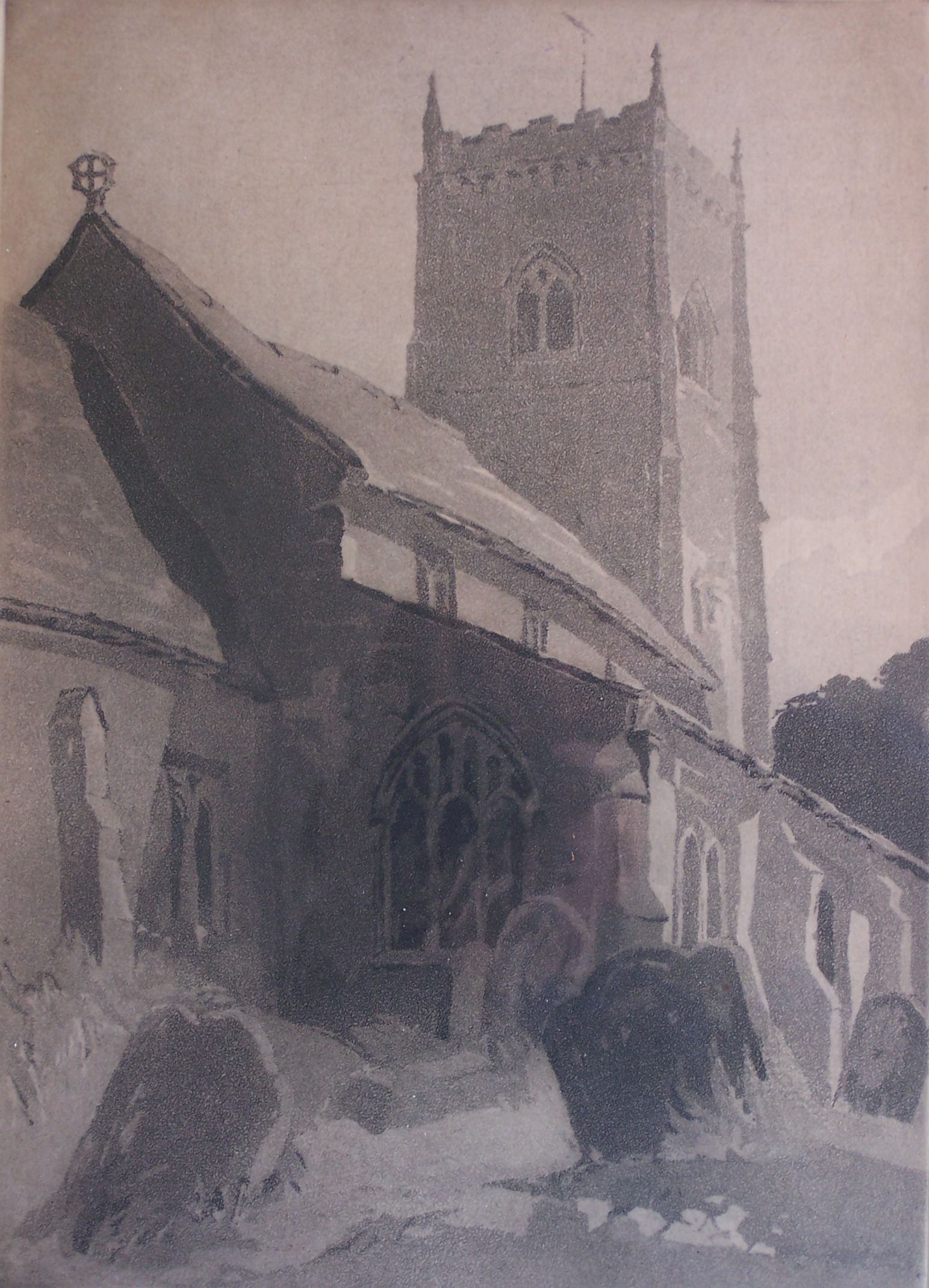
And although I considered that the landscape scene might have been Welsh in my first post, I now lean fairly positively in the Yorkshire direction and of course Barwick in Elmet Church is close to Leeds also.  And so you don’t have to search for them here they are.
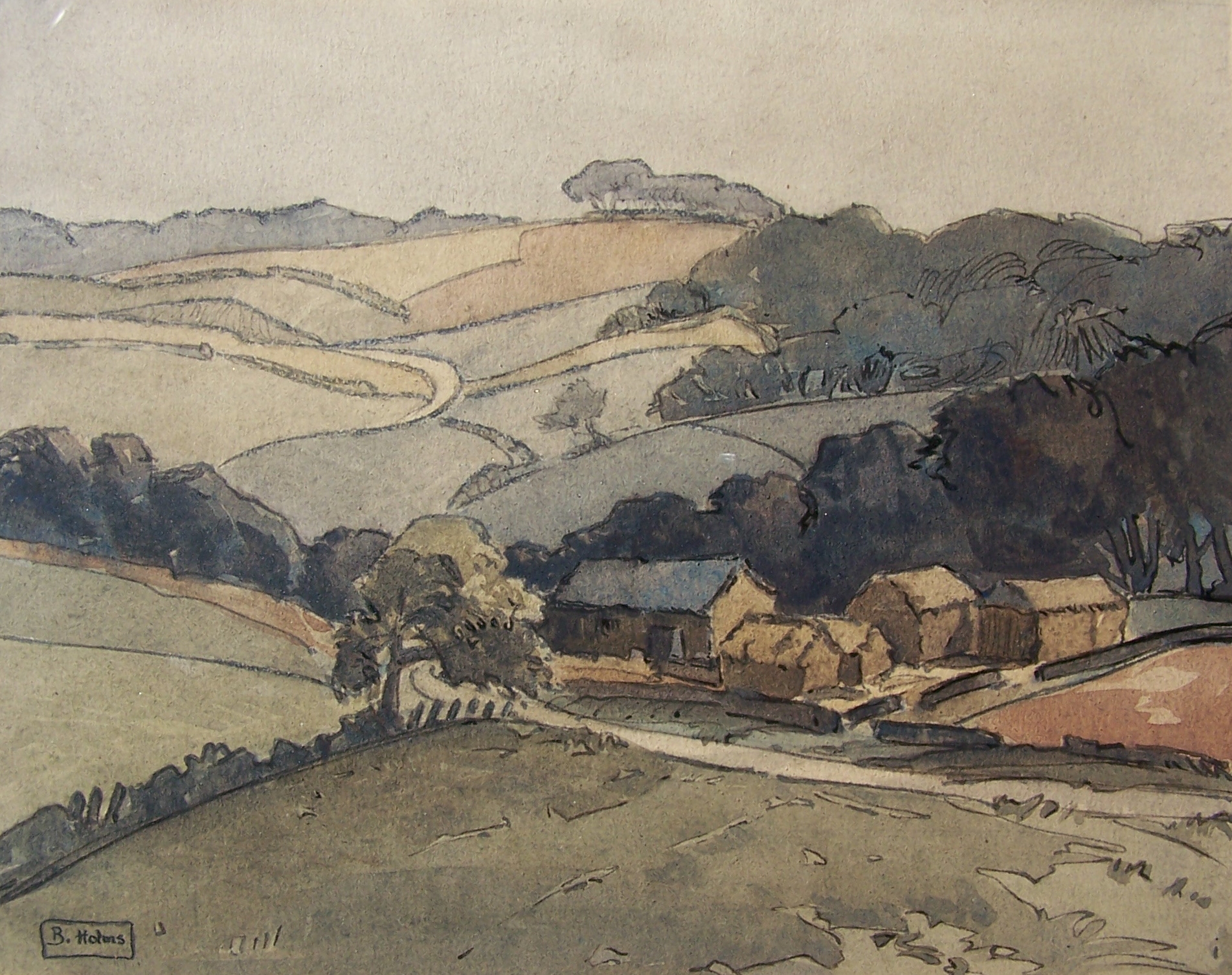
A Yorkshire Valley scene watercolour by Beatrix Holms
A Yorkshire Valley scene
watercolour by Beatrix Holms

'Barwick in Elmet Church, Yorkshire' Aquatint by Beatrix Holms

‘Barwick in Elmet Church, Yorkshire’
Aquatint by Beatrix Holms

A fine and lovely group by the talented Beatrix Holms.
Posted in Etching, Watercolour paintings | Tagged , , , , , , , , , , , , , , , , | Leave a comment

Art of Winter

After receiving a message from my daughter in Laos complaining that she is cold even though the temperature is 24 degrees.  I decided that this might be a fine topic to blog about.  To begin, a few words from a Shakespeare sonnet.

Blow, blow, thou winter wind
Thou art not so unkind
As man’s ingratitude;
Thy tooth is not so keen,
Because thou art not seen,
Although thy breath be rude.

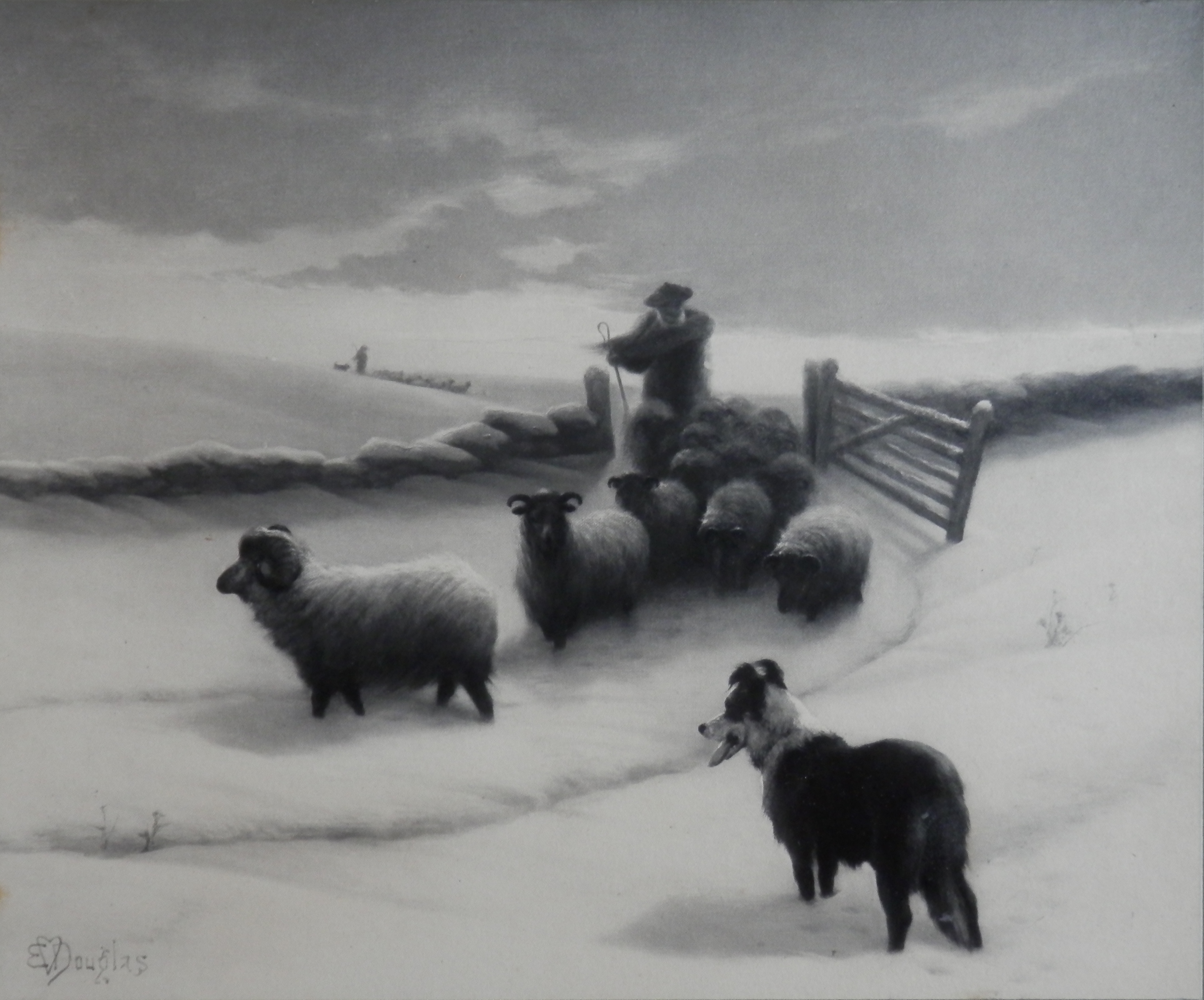
Blow, Blow Thou Wintry Wind print of Edwin Douglas painting @1910

Blow, Blow Thou Wintry Wind
print of Edwin Douglas painting
@1910

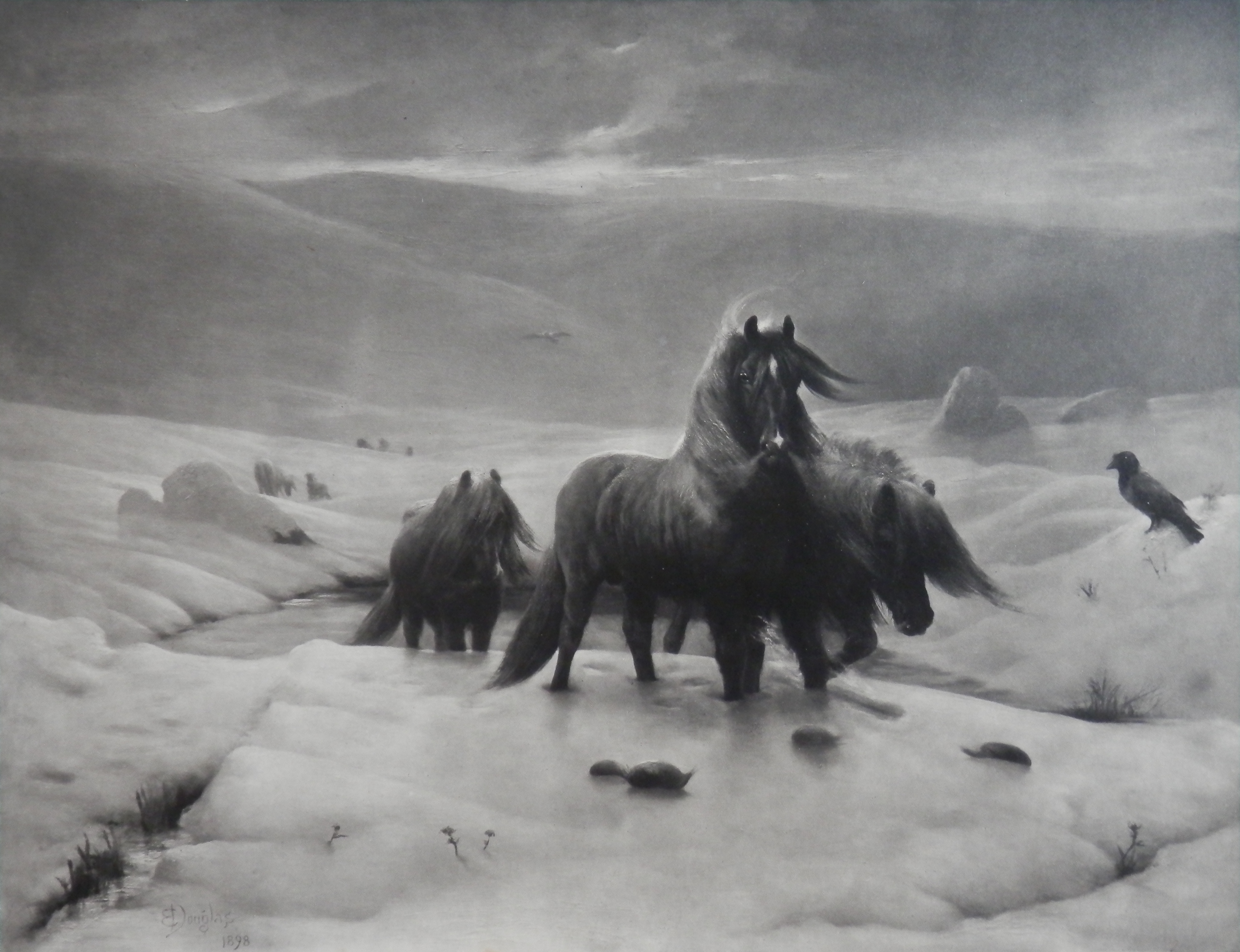
#EdwinDouglas (1848-1914) was a painter of animals and most particularly dogs, for which he was and is widely known and admired.  Edwin Douglas also found that Jersey cattle were particularly paintable.  He admired their graceful heads, their well-marked bodies and found them small enough to group easily and gracefully onto his canvases.  His Jersey cattle pictures eventually became rather popular, especially in the United States.

‘#Blow,BlowThouWintryWind’ is the title of this print and the original oil painting by Douglas.  Finely etched and printed – one can feel the wind as it blows across the land.  The shepherds scarf  and the sheep’s woolly coat blow in the wind as they trek through the freshly fallen snow.

Edwin Douglas was born in Edinburgh and studied there also.  He painted Scottish scenes even after moving south, as with so many of his compatriots, to London in search of patronage and commissions after having exhibited at the Royal Academy in 1869.

title unknown print of Edwin Douglas painting @1898

title unknown
print of Edwin Douglas painting
@1898

Freeze, freeze thou bitter sky,
That does not bite so nigh
As benefits forgot:
Though thou the waters warp,
Thy sting is not so sharp
As a friend remembered not.

One experiences the open countryside which o’er blows the cold, life steeling wind. If you do not belong here you will not live.  Even the hearty struggle.

Enjoy the warmth for winter comes and cold blows the winter wind from the north.

Posted in Lithographs | Tagged , , , , , , , , , , , | 3 Comments

Art of Bovril

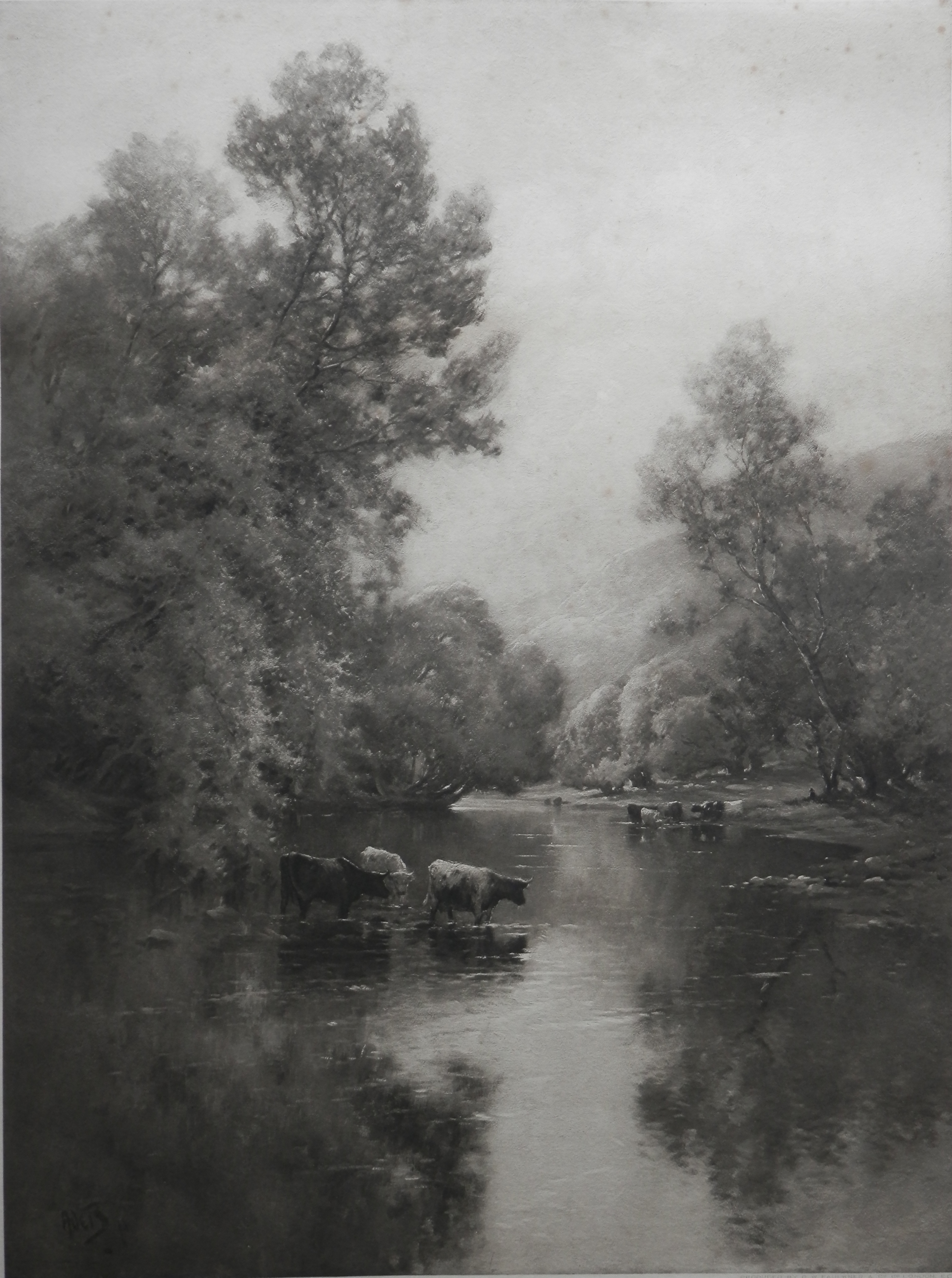
Just the mention of #Bovril likely makes one think of beef extract – but Bovril licensed the reproduction of thirty-nine paintings between 1901 and 1914 from the leading print publisher #CWFaulkner.  Twelve of these were after works by Elsley and six were after Fred Morgan’s paintings.  I recently acquired two of these Bovril prints.  The two I have are after the British artist Alfred De Breanski (1852-1928).

A Welsh Valley artist Alfred be Breanski Bovril print by CW Faulkneer @1914

A Welsh Valley
artist Alfred de Breanski
Bovril print by CW Faulkner
@1914

Bovril first offered a free ‘bonus picture’ in exchange for coupons to purchasers of Bovril in 1901, a practice which continued annually for the next decade, however, the scheme was still going in 1916 when 42 units worth of coupons could be redeemed for two prints by A. J. Elsley. (Without coupons the price of either of these prints was 5/3.) A few signed artist’s proofs on india paper were available that year in exchange for 105 units worth of coupons.

‘A Welsh Valley’ by #AdeBreanski is an impressive print.  Alfred de Breanski Senior was a distinguished landscape painter who became famous for his resplendent views of the Welsh and Scottish Highlands.  Often bathed in a flood of golden light, these landscapes usually feature water and cattle or sheep on grassy banks; sometimes a solitary figure is seen the distance.

In The Heart Of Devon artist Alfred de Breanski Bovril print by CW Faulkner @ 1913

In The Heart Of Devon
artist Alfred de Breanski
Bovril print by CW Faulkner
@ 1913

‘In the Heart of Devon’ is the second print that I acquired and having been to Devon several times, I can attest to the beauty of the county.  De Breanski had a great passion for the wild countryside and he, perhaps more than any other, caught the atmospheric influences of the landscape.

Thank you Bovril for producing these prints. It made wonderful artworks available to the general public for an affordable price.

Posted in Modern prints | Tagged , , , , , , , , | 2 Comments

Art of Unvisited Places

The two artists in today’s chapter have the talent of drawing.  Whether the places which appear in their drawings are real, I do not know but both are unique and interesting for their own reasons.

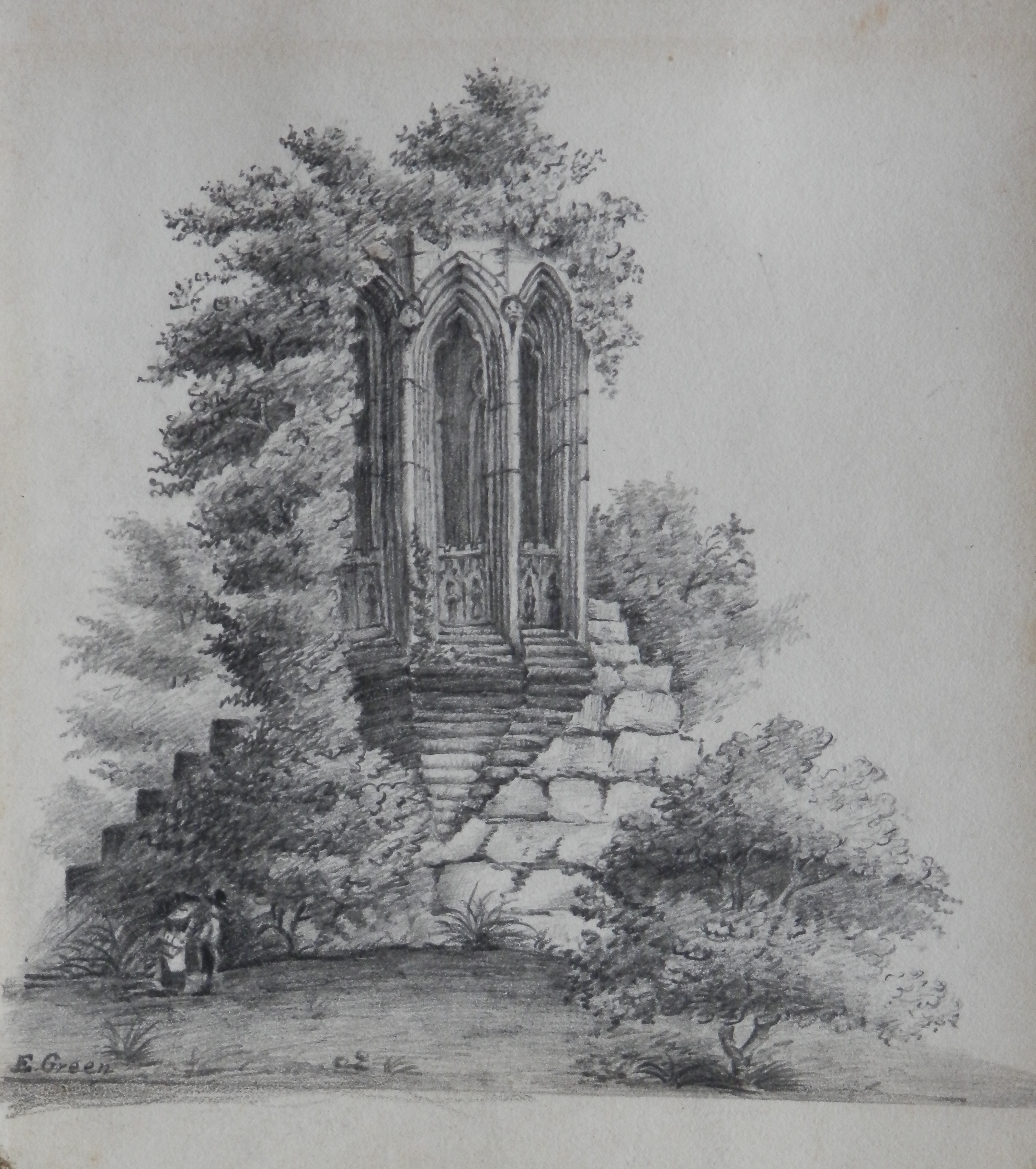
A Ruin Overgrown pencil sketch by E Green

A Ruin Overgrown
pencil sketch
by E Green

#EGreen has captured a ruin which has been overtaken by time and nature.  The balcony appears to float in the air – what is left of the castle appears to be far too little to support the colonnades and weight of the balcony.  It might suggest a lack of perspective by the artist but the remainder of the drawing shows a fine accuracy.  So, likely this place does or did exist and what a place it would have been in its prime.  The two people opposed by the ruin show the impressive size of the  structure.  The shading and detail in the arches and foliage is superb – even down to the sculpted faces at the top of the colonnades.  Can you imagine Juliet leaning out of the balcony looking for Romeo – her beloved?

Now to the city of #Leipzig at the turn of the 20th century.

Leipzig, 1909 pen and ink Beckmann

Leipzig, 1909
pen and ink
Beckmann

I love this building!!   Firstly the building has a wonderfully tall pyramid hip roof and then there is a tower -round even- as well. Now that is what I call different.  I do hope that this place still exists for it would be well worth a visit to see its architecture.  I think the structure is too exact to be imaginary.  The drawing is architecturally impressive.  The other buildings are proper for the age.  There was an artist in Leipzig at that time by the name of #MaxBeckmann (1884-1950).  He was an up and coming artist prior to WWI and became very well known after his service in the war.  War changed his artistic style- from academically correct depictions to a distortion of both figure and space.  War gave him a unique perspective on life. Could this be by a young Max Beckmann?

Two places which if they still exist would well be worth a visit.

Posted in Drawings and Sketches | Tagged , , , , , , | Leave a comment

Art Old and New

From a man who is considered to be a founder in his sector to a man whose art you may have seen but not realized it. .

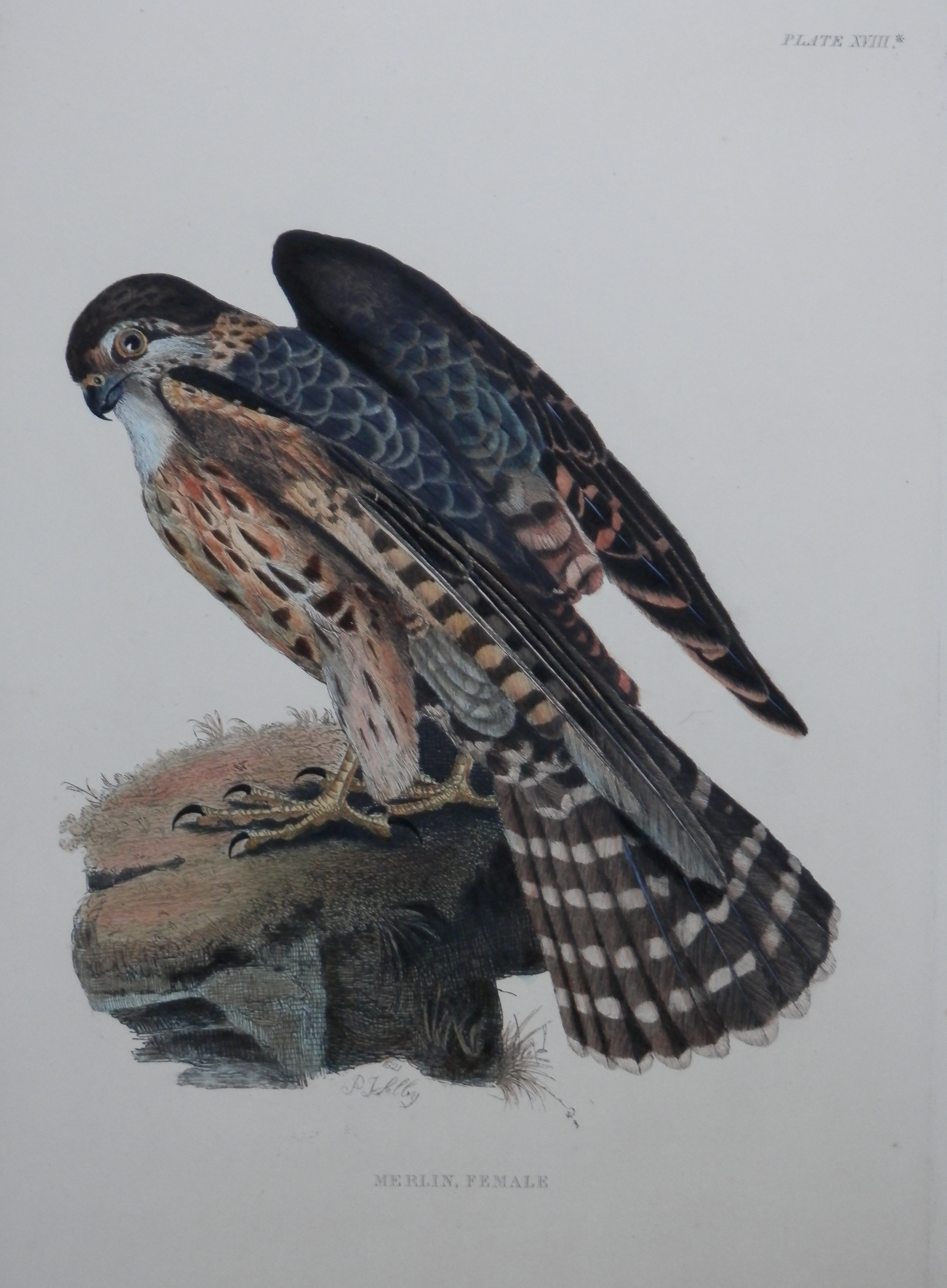
Merlin, Female by PJ Selby 1821

Merlin, Female
by PJ Selby
1821

#PJSelby is considered to be one of the great masters of bird art of the nineteenth century.  He drew most of the birds in this series and did most of the etching himself.  The printing was done by WH Lizar who also supervised the colouring.  Known for his ‘Illustrations of British Ornithology’ – a set of life-sized British birds.  Selby was a gifted artist, and his two volumes of “Illustrations of British Ornithology” are outstandingly beautiful.  The clarity and crispness of his figures give them an austere beauty.  The cool, classical quality of Selby’s plates belongs to the age of elegance. Selby’s bird figures were the most accurate delineations of British birds to that date, and the lively, life-size figures in a more relaxed drawing presentation was a great achievement.  Selby showed a “great interest in ornithology from an early age and made his own notes and careful, coloured drawings of the birds in his district. His main interests were ornithology, forestry, and entomology. He was a skilful fisherman and an excellent shot. Selby’s major work, “Illustrations of British Ornithology”, was published in nineteen parts between 1821 and 1833 and contained some 222 plates etched by Selby.

Avila, Spain by Mervyn Rowe 1965

Avila, Spain
by Mervyn Rowe
1965

You most likely will not know the name Mervyn Rowe but if you are a theatre, opera, television or movie fan , you will likely have seen his art.  #MervynRowe is a set designer and scenic artist.  He has worked with major companies and theatres producing sets.  His sets for ‘Memoir’, starring Soibhan McKenna as Sarah Bernhardht, were acclaimed by the Irish critics as amongst the most beautiful sets seen on the Dublin stage within living memory.  Then television and movies came calling.  Mervyn worked on Boorman’s ‘Excaliber’ and Wolfgang Petersens ‘The Never Ending Story’ along with numerous others.  He has worked with the Royal Shakespeare Company in Stratford-upon -Avon.  So it is quite possible to have seen his work and not realized it.  I love the feeling of freedom and the expressiveness of the brush strokes in this painting.   I hope you enjoy it too.

Posted in Etching, Oil Paintings, Watercolour paintings | Tagged , , , , , , , | Leave a comment

Art of a Green Land

Again this summer, my wife and I took a holiday in Northern Ireland.  The weather was wonderful and the countryside verdant and green.  The sites we visited were not all different from last year since we drove friends to places they had not been even though we had been.

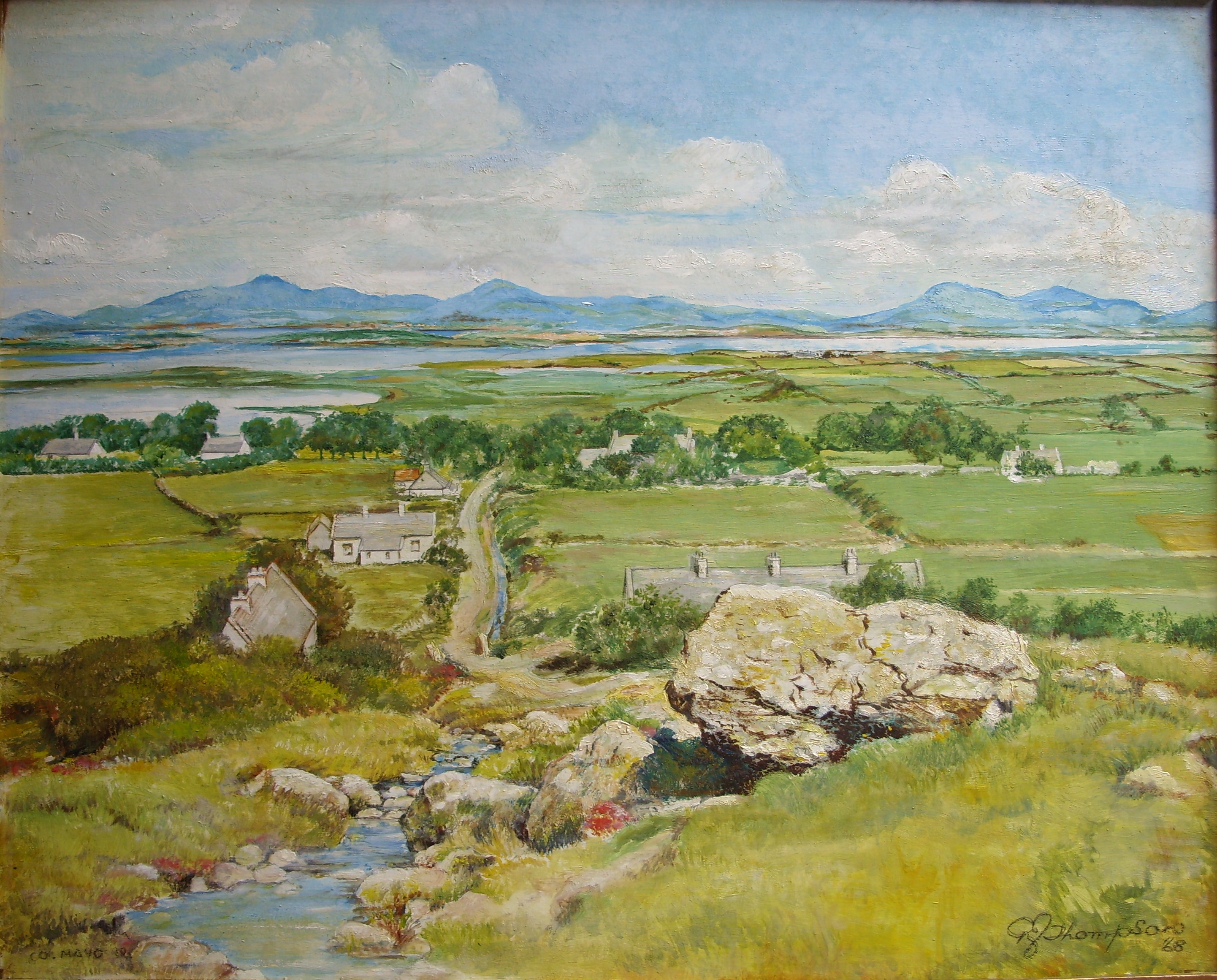
Connemara, Rosmuc County Mayo, Ireland oil painting by G S Thompson 1968

Connemara, Rosmuc
County Mayo, Ireland
oil painting by G S Thompson 1968

As with last year, I post an oil painting from County Mayo in Ireland.  This painting embodies all that one considers Ireland to be.  A green and fertile land, a land of mountains and lakes, of ancient farms and homesteads, a place of grazing sheep and cud chewing dairy cows.

In the distance, is this the mighty Twelve Bens mountains  sweeping down to Galway Bay as seen from #Rosmuc?  #Connemara is a place of ever changing landscape –  of majestic mountains, spectacular beaches, the wild Atlantic, mist covered lakes, pre-historic bogs, and shady glens.

One can imagine climbing this hill and turning to survey the land.  What a sight lies before you.  I love the colours in this painting and my favourite bit is the large boulder just in the front.  It is finely painted with a life and dimensionality one wishes to reach out and touch it.

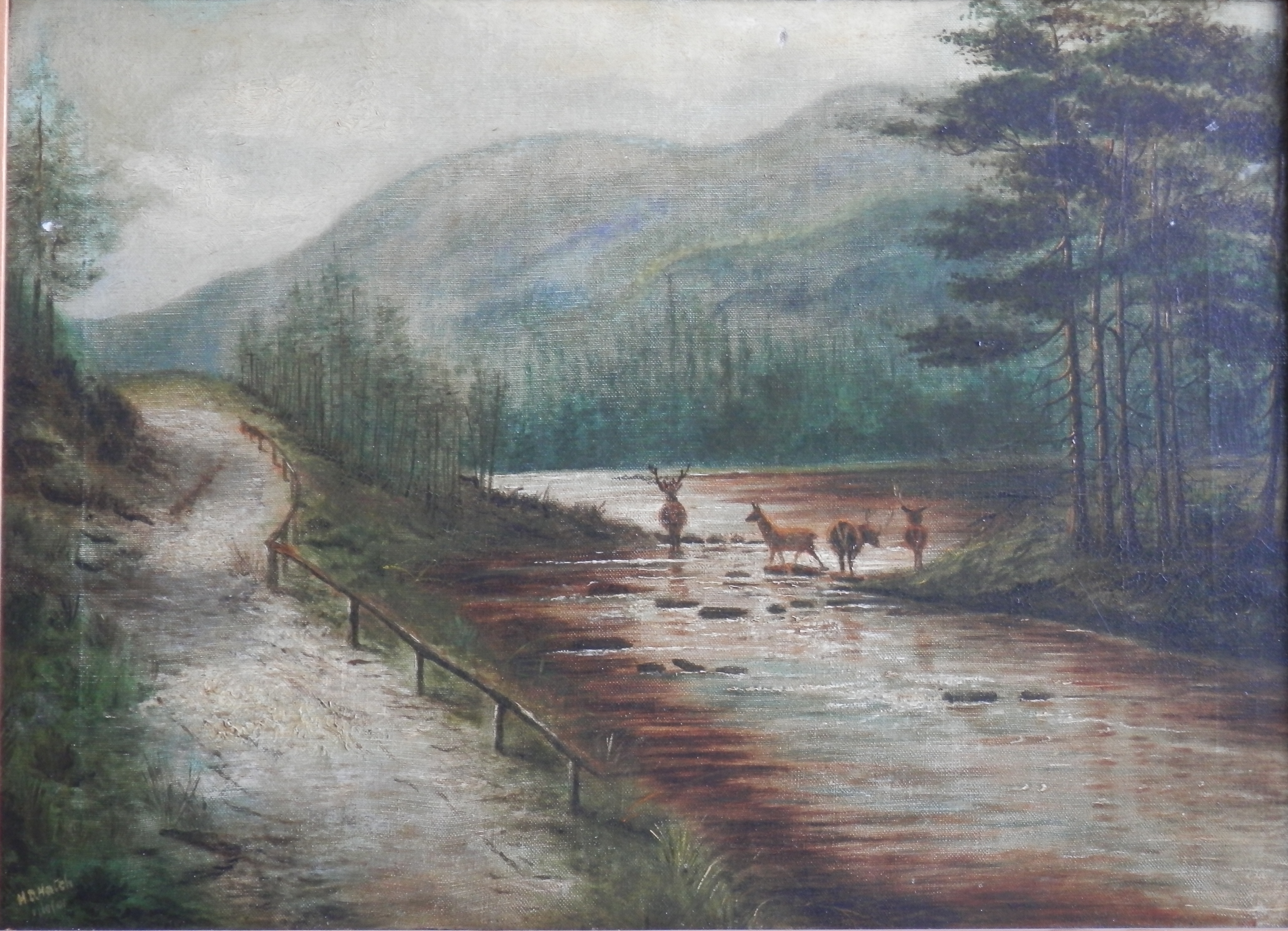
Beside the Road oil painting by H D Hatch Oct 1901

Beside the Road
oil painting by H D Hatch
Oct 1901

This oil is not likely of Ireland but it continues the landscape motif this week.  Sites like that pictured can be found in Wales, Scotland , or England. in the remote places.  One can find back roads and lanes which lead to secluded bits of paradise.  Here the wildlife has not experienced man so fear is not in them.

H. D. Hatch captures the idyllic calm and peace of these places in his painting of 1901.  The site is unspecified but the place is one which we can find  down the country lanes and paths. Do you not feel the desire, the urge to go there and experience this little bit of peace.

Why do these wild places attract us?  What do they hold which we desire?  What is the reason that these lonely and remote places are so healing to us?

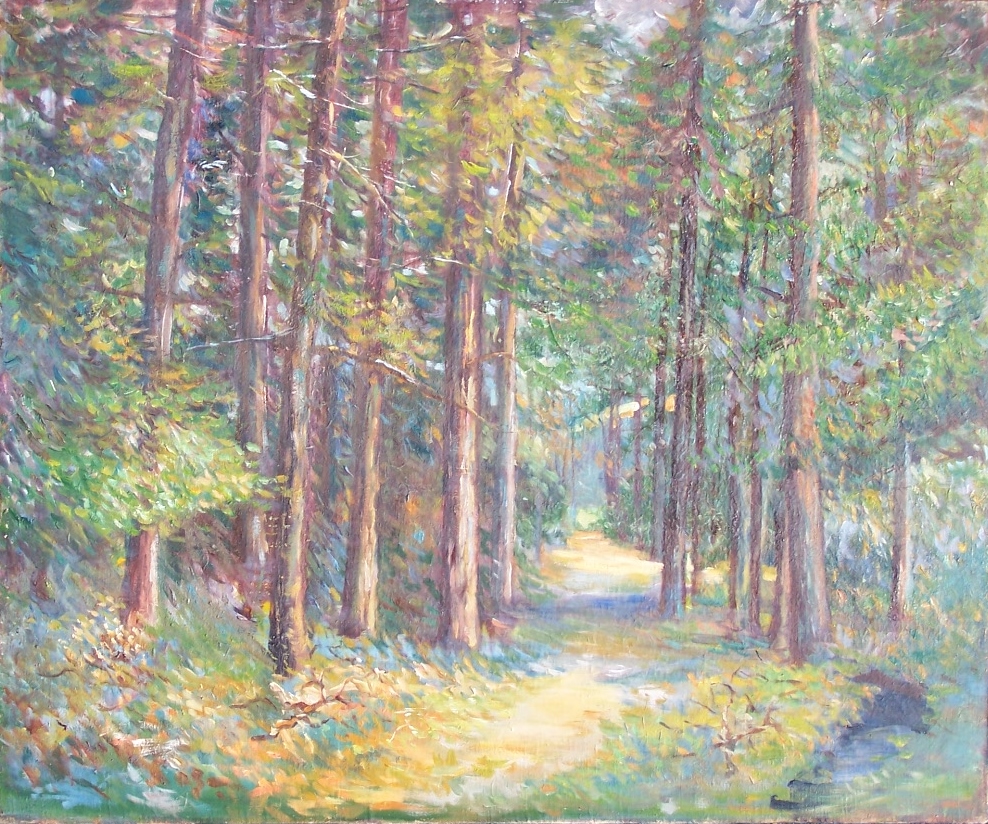
Pine Forest, Kinver oil painting by E E Pritchard 1920

Pine Forest, Kinver
oil painting by E E Pritchard
1920

Just walk down this forest path and feel the healing enter into you.  Be healed by touching the earth, walking barefoot upon the grass, caressing the rough bark of the trees, breathing the scents of the forest, hearing the wind whisper, seeing the colour of life, and tasting the health of this place.

Posted in Oil Paintings | Tagged , , , , , , , , , , | Leave a comment

Art of the Forgotten

As I collect art, I find myself wondering how some fine artists just disappear from public knowledge.  They may be found in galleries but they are not well known.  How does one compete with Turner or Constable?  Today a few artists which should be better known than they are.

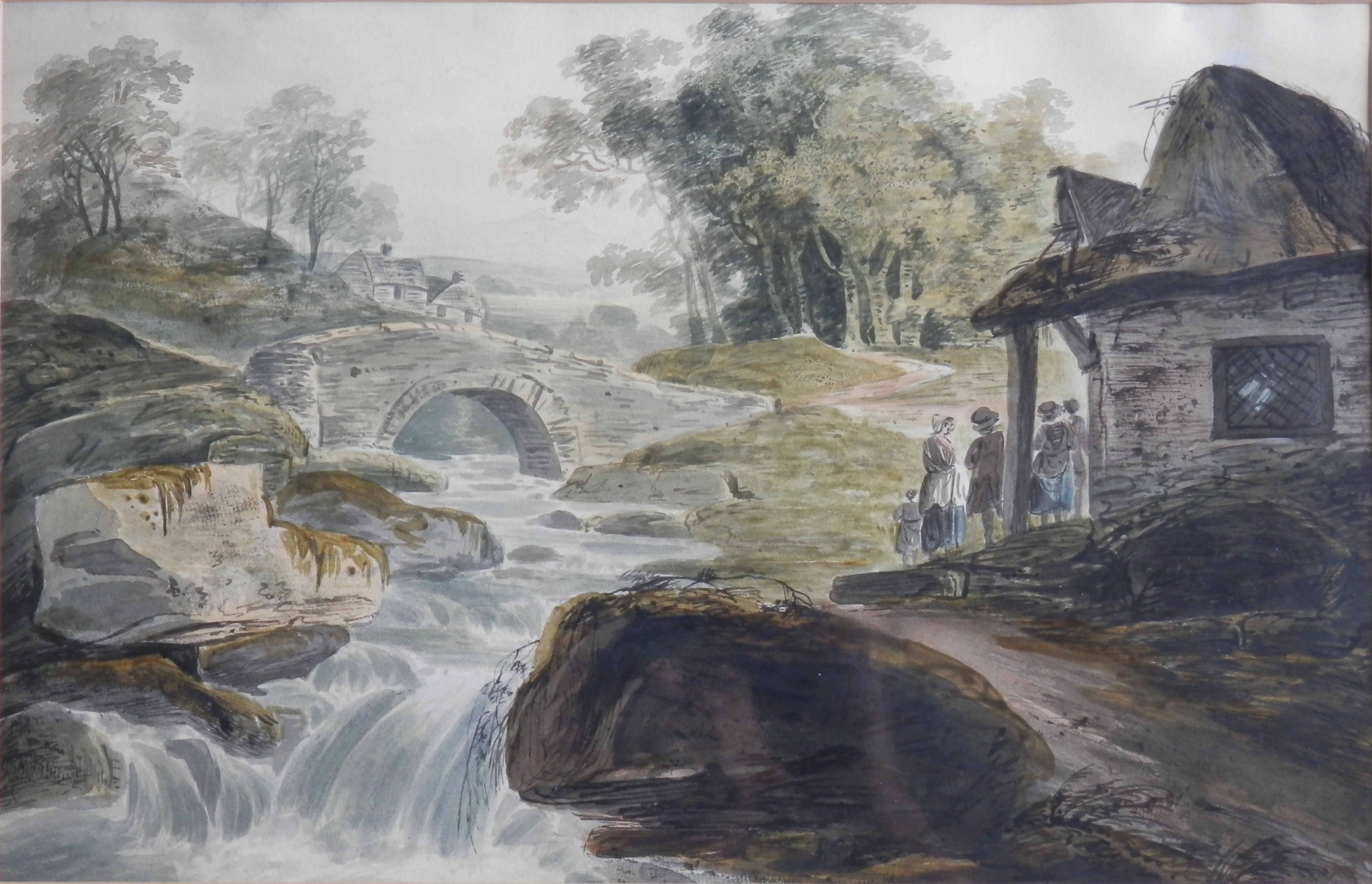
Welsh/Scottish Cotton Mill by Paul Sandby

Welsh/Scottish Cotton Mill
by Paul Sandby @ 1786

We begin with Paul Sandby (1731-1809), who was an English map-maker turned landscape painter in watercolours.  His task as a map-maker was to survey the remote Scottish highlands.  While performing his cartography duties, Sandby began producing watercolours documenting the changes in Scotland as well as Scottish historical events.  Pictured on the left is, I believe, a cotton mill either found in Wales or Scotland.  Thomas Gainsborough described Sandby as the best landscape artist of his time.  Sandby, also, was a founding member of the Royal Academy in 1768.

From #PaulSandby to #WilliamPayne (1755-1830) who did much to advance the technique of watercolour painting, and was one of the first ‘draughtsmen’ to abandon mere topography for a more poetical treatment of landscape scenery.

Welsh River Scene by William Payne

Welsh River Scene
by William Payne

Payne was watercolourist, oil painter and etcher and because of his innovative style he became the most fashionable drawing-master in London.  Payne was also a young friend of Paul Sandby.  Payne’s job brought him to Plymouth where his paintings detailed the 18th-century life and landscape.  As with Sandby, Payne’s prodigious talent eventually brought him to London to continue his painting and teaching.

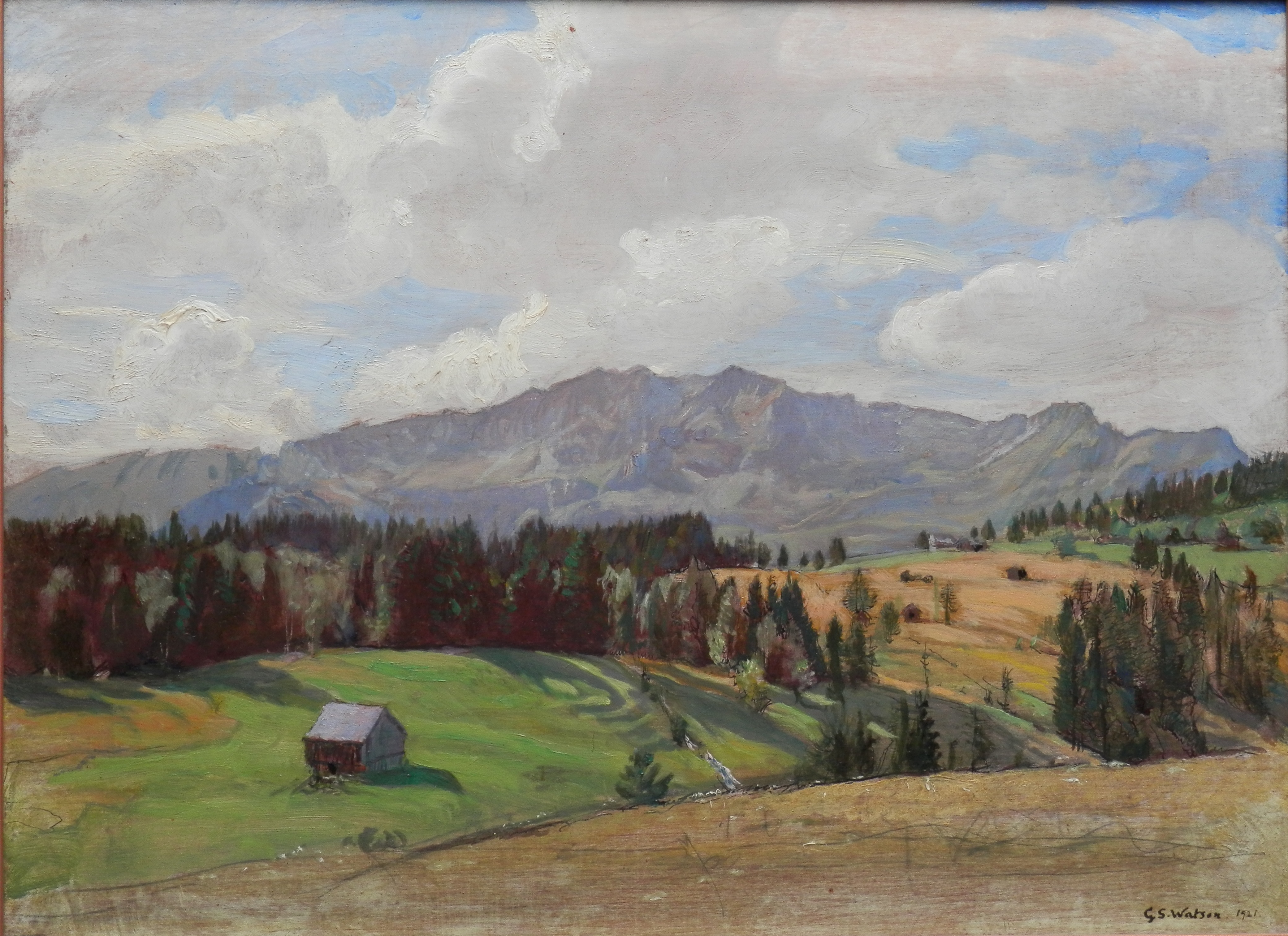
And in London we find artist #GeorgeSpencerWatson (1869-1934).

Rural Idyll by George Spencer Watson

Rural Idyll
by George Spencer Watson

GS Watson was a portrait artist specialising in society portraits and official likenesses.  But he also painted nudes, landscapes, and figure subjects, as well as occasionally trying his hand at sculpture.

I hope you have enjoyed the three artists in today’s chapter. They are well worth looking into and going to see their works.

Posted in Oil Paintings, Watercolour paintings | Tagged , , , , , , , , , , , , , , | Leave a comment

Art of Iran

When I started collecting art I did not know where my love for art would take me.  What would I collect?  Who would I collect?  As I have enlarged my collection, I have encountered art from across the globe by artists that I will never meet.  But their art has touched me and in so doing I wish to pass on  (to what extent I can) my love of their work.  From the distant past to the modern day, from east to west – art takes me to places which never existed or to places and times which I may yet get to see.  Today to Iran.

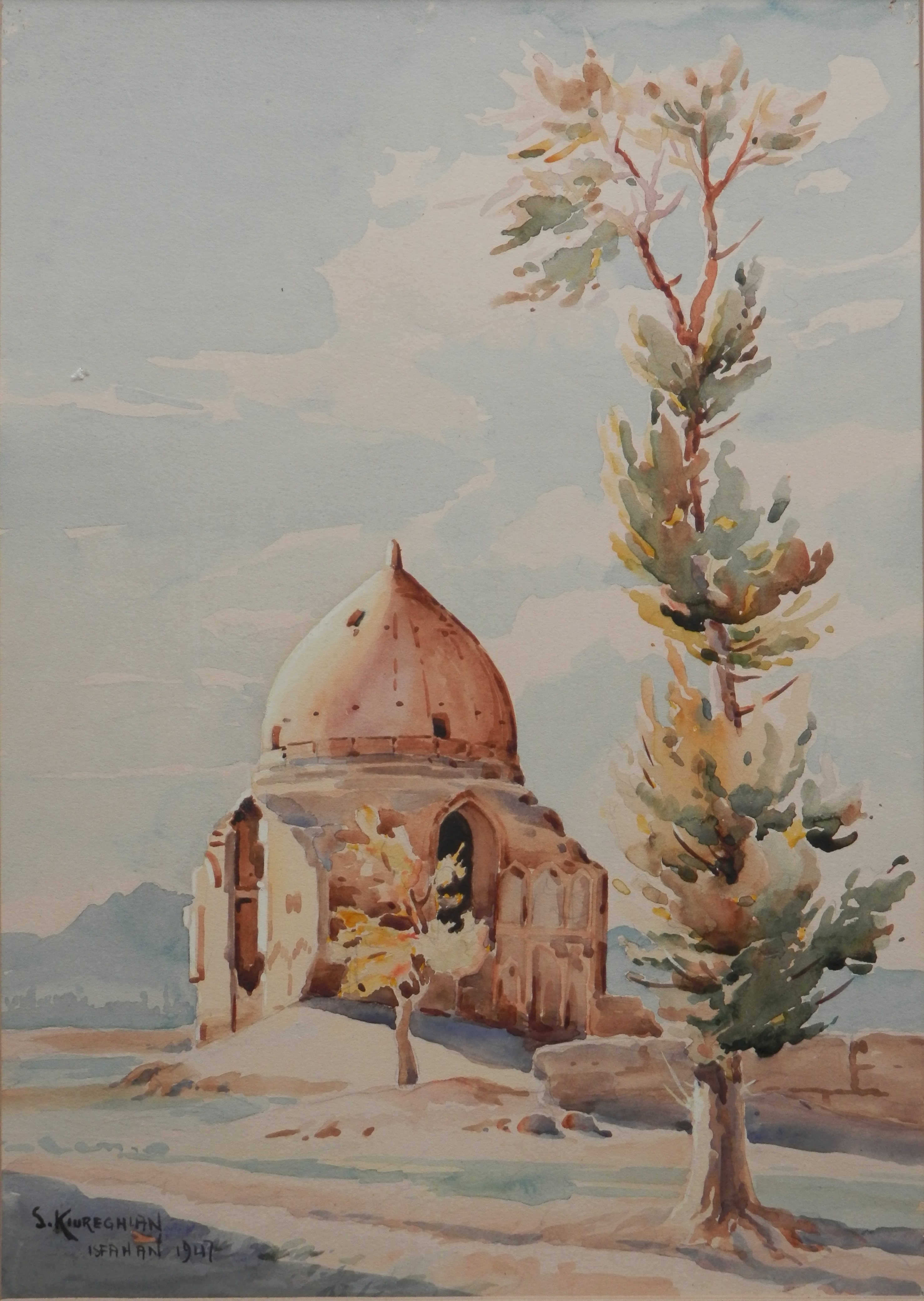
A Holy Place Sumbat Der Kiureghian watercolour - 1947

A Holy Place
by Sumbat Der Kiureghian
watercolour – 1947

Iran is a country much in the news and not always favourably.  But today I give you an artist who possess an unique vision and the ability to express that vision. It lies in the experience of the artist as a man about town, who opens his studio to visitors, who shares in conversation about art and poetry, literature and life, and portrays this vision for all the world to see.  Such was #SumbatDerKiureghian (1913-1999).  A modest studio on Shaharbat street in #Isfahan was his place of work.  The use of watercolour in painting was fairly uncommon in Iran but it was Kiureghian’s choice of medium.  Living and working predominately in Isfahan, Kiureghian found his inspiration from his surroundings – from landscapes to still life, images of Armenia and Persia, to scenes of local culture and society.  Kiureghian would disappear into the local countryside for weeks to paint and sketch and return to his studio re-animated, re-inspired by what he had experienced.

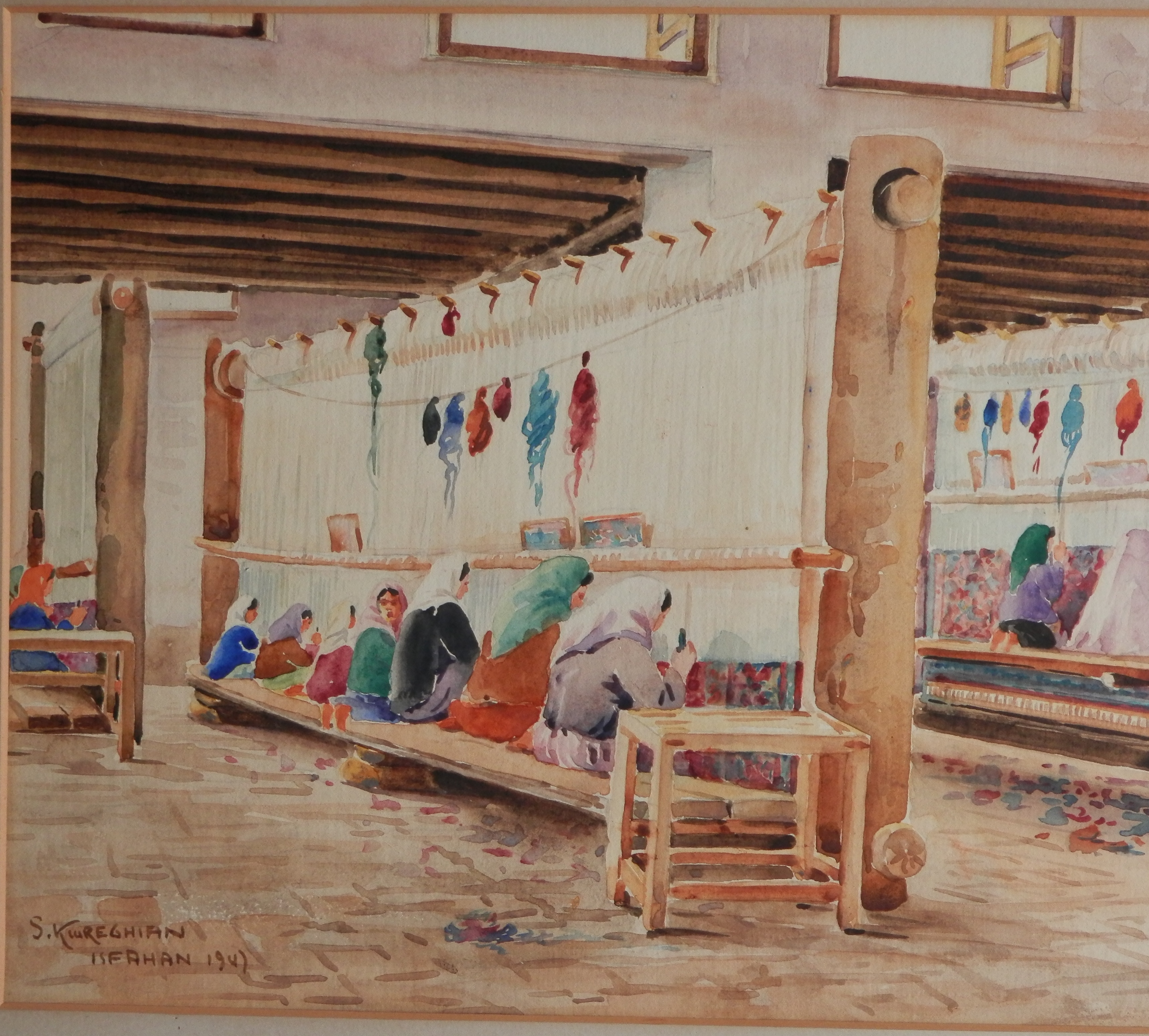
Persian Carpet Weaving by Sumbat Der Kiureghian watercolour - 1947

Persian Carpet Weaving
by Sumbat Der Kiureghian
watercolour – 1947

Sumbat painted what he saw, in the part of the world that he loved, Iran, and specifically Isfahan.

Posted in Watercolour paintings | Tagged , , , , , , | 1 Comment

Art of the Female Form

The  title is a polite way to describe the naked body.  As My collection increases, I have acquired several depictions of the female form.

Paradise Lost by Letizia Cerio pen and ink drawing

Paradise Lost
by Letizia Cerio
pen and ink drawing @ 1948

The name #LetiziaCerio (I use this spelling since it appears on the drawing in this form) is not a household name unless you come from the Isle of Capri.  There she is famous.  She was born in 1906 on Cyprus.  Growing up her love of art led to 80 years of painting, drawing, wallpaper and fabric design. She loved artists of all kinds, fashion, and Capri.  In her lifetime, Letizia Cerio designed wall paper, she drew for Vogue magazine, as well as creating her own art.  Her designs are still being used today by her grand-children in their creations at ‘Eco Capri’.

‘Paradise Lost’ is a pen and ink drawing of two nudes communing with nature – both plant and animal.  Flowers bloom, trees bud, nature and human in harmony.  It has not been kept well so some foxing has begun on the paper.  Even so, a lovely piece.

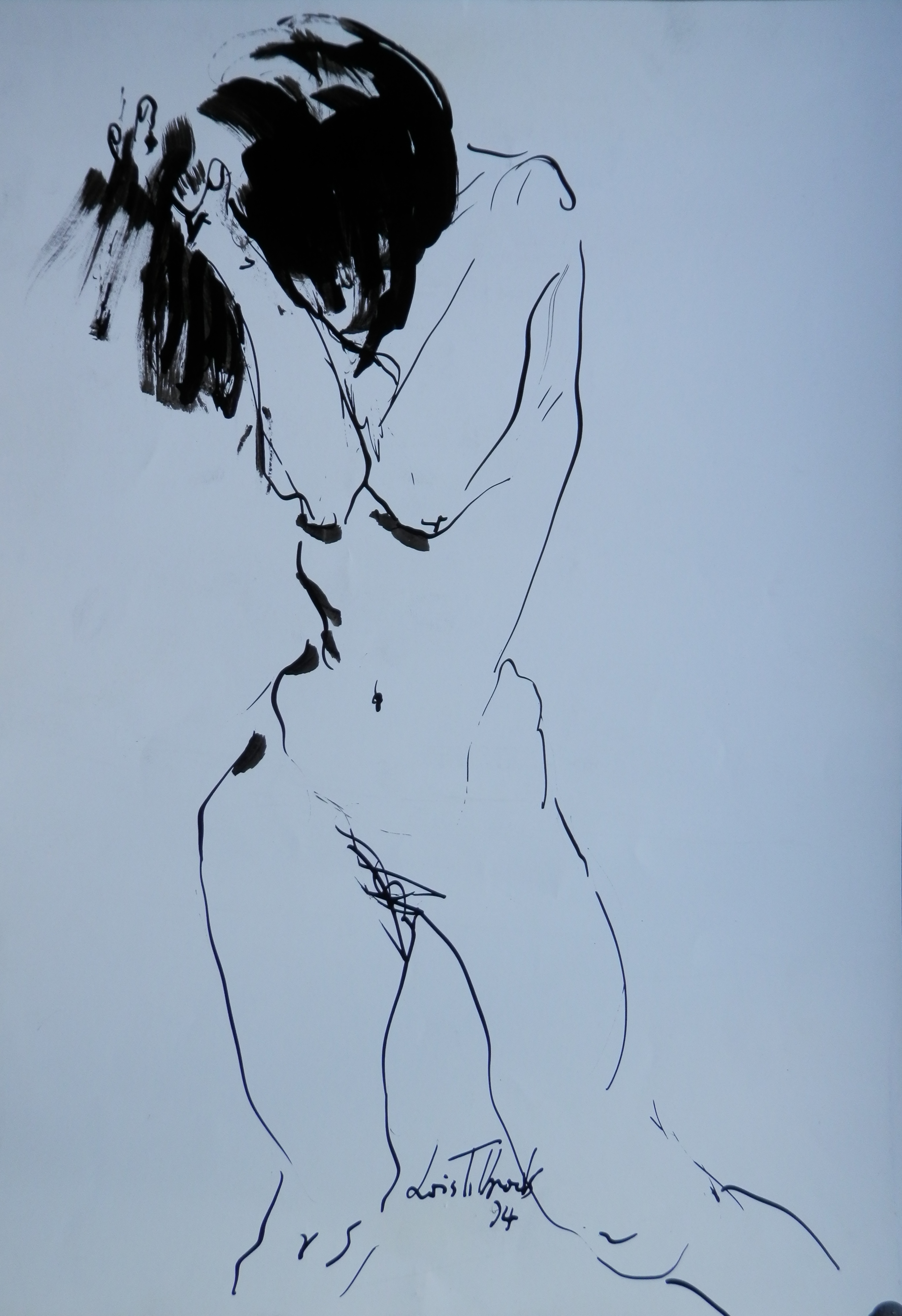
From Cyprus to a woman who was born in Australia.  #LoisTilbrook (1943-2006) was a ‘pioneering’ anthropologist, an educator,  an artist, a curator and a psychotherapist at different points in her life.   She lived, for a while, down the road in the city of Cambridge and died in London in 2006.  A local auction houses’ recent sale of paintings and sculptures by the late Dr Lois Tilbrook, was completely sold out.

Body Study by Lois Tilbrook brush and ink drawing

Body Study
by Lois Tilbrook
brush and ink drawing 1994

An image filled with life and energy.  A few lines and there is a form which captures life in its’ all-together, unashamed and direct.

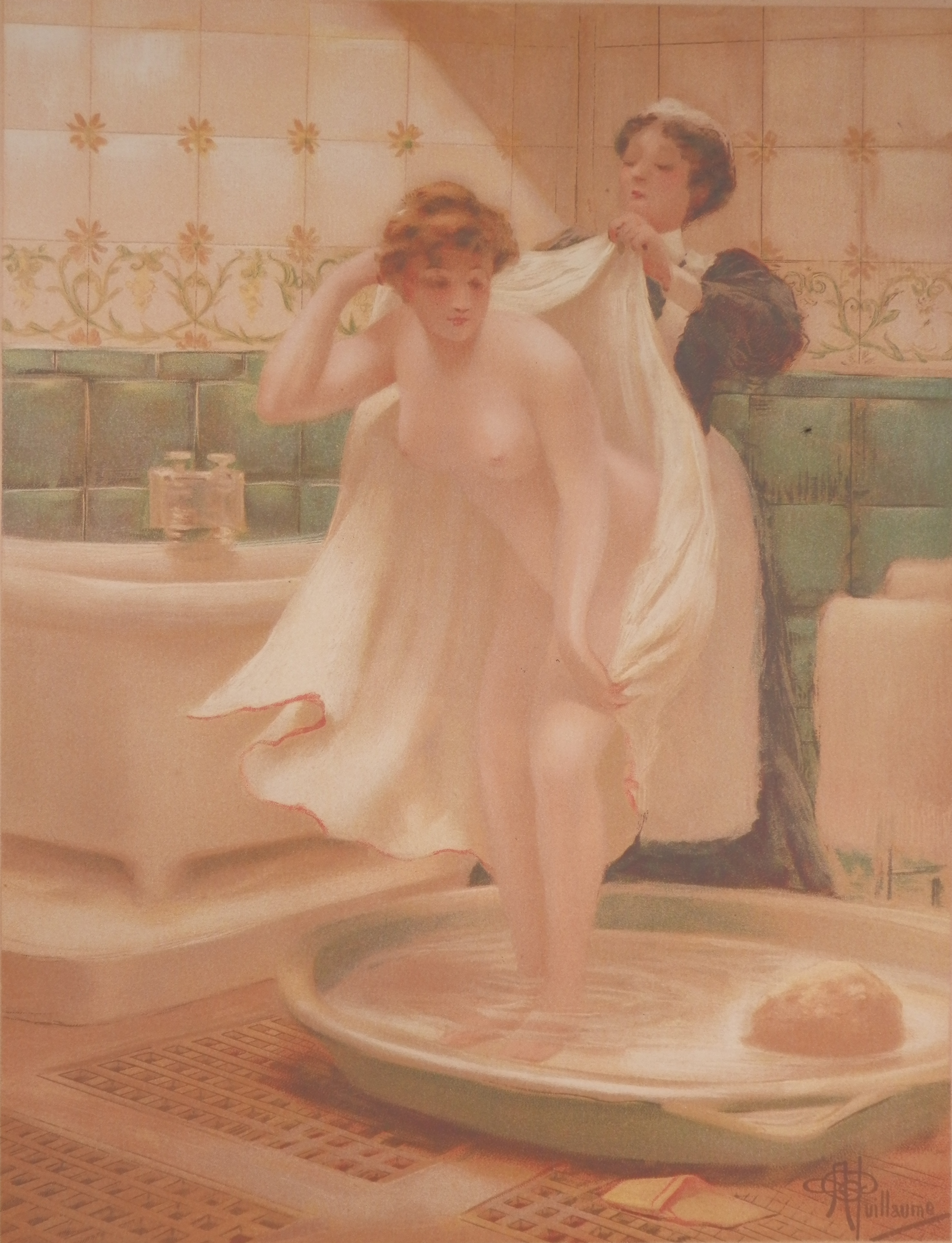
And to finish, we go back in time to visit #AlbertGuillaume (1873 – 1942).  He is remembered for his poster art.  He created theatre posters as well as advertising posters that were greatly influenced by the work of one of the pre-eminent poster painters, Jules Cheret. I call this colour lithograph ‘After the Bath’.

After the Bath by Albert Guillaume @ 1910

After the Bath
by Albert Guillaume
@ 1910

Guillaume is also known for his satirical drawings that were published in Parisian humour magazines.  Guillaume lampooned the foibles of French society.  During the 1890’s – the gay nineties – a collection of notable artists including Guillaume helped transform the boulevards of Paris into a gallery of fine art.  The streets came alive with colour. Posters soon appeared from many of the era’s great masters – shaping the Parisian landscape.

The female form in art.  Beauty  to behold.

Posted in Drawings and Sketches, Lithographs | Tagged , , , , , , , , , , | Leave a comment

Art of Mosaic

Today, I added a print to my collection.  A print which was made in 1738.  Not bad, a couple of small tears – repaired but nice overall.  It was engraved by J. Cole (1715-1774) after  a picture by John Lens.  I, firstly, give you the complete image which will be followed by several images of smaller sections of this engraving.

OLYMPUS DIGITAL CAMERA

Pavimentum hoc tessellatum
engraving by J Cole after J Lens
printed 1738

This print is of  #WeldonRomanVilla mosaic floor from the year 340 AD. The site of the villa and its’ floor were partially excavated in 1738 and then again in 1954.  Nothing of it can be seen now-a-days. The overall image is the centre top while all the others are expanded insets of various parts of the buildings floor. I also show an image of the Weldon villa floor plan which I have borrowed from british-history.ac.uk.  The scale under the main image informs me that the length of the main floor would be roughly 90 feet.  This would make the long lower inset some 40 feet.  Although my image is in black and white the floor most likely would have been very colourful and the long hall itself quite impressive.

Weldon Roman Villa image from british-history.ac.uk

Weldon Roman Villa image from british-history.ac.uk

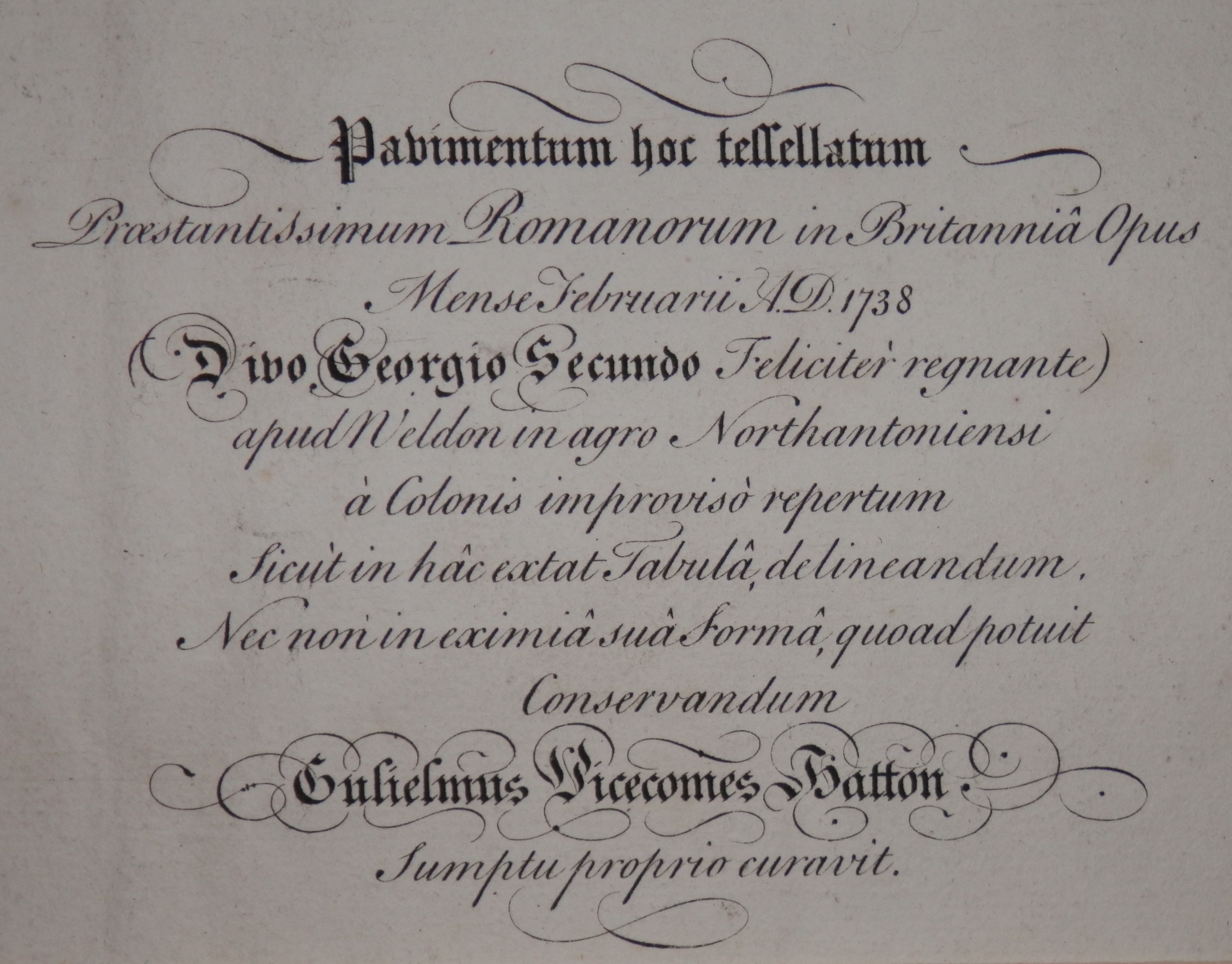
For those of you who are Latin experts, I would appreciate an accurate translation of the following two images.

Pavimentum hoc tessallatum engraving by J Cole @1738

Pavimentum hoc tessallatum
engraving by J Cole @1738

Numismata Supra Depicta engraved by J Cole @ 1738

Numismata Supra Depicta
engraved by J Cole @ 1738

These two written descriptions name George II as king and also name Gulielmus Vicecomes Hatton (Viscount (Christopher) William Hatton).  Christopher Hatton, the 2nd Baron Hatton of Kirby, was created Viscount Hatton of Gretton in 1682.  The title was inherited by his eldest son and then by his youngest son.  The title became extinct in 1762.

The following image is of the ‘Coat of Arms’ at the centre bottom.  It  is of course the crest of the #Hatton family.  The translation of the Latin is ‘Virtue is the safest helmet’.

Hatton Coat of Arms engraved by J Cole @ 1738

Hatton Coat of Arms
engraved by J Cole @ 1738

And to finish off a couple close ups of the insets.  A stunning and impressive floor, I do hope that it exists still but I do not know.

Mosaic 1 engraved by J Cole @ 1738

Mosaic 1
engraved by J Cole @ 1738

Mosaic II engraved by J Cole @ 1738

Mosaic II
engraved by J Cole @ 1738

Mosaic III engraved by J Cole @ 1738

Mosaic III
engraved by J Cole @ 1738

Posted in Etching | Tagged , , , , , , , , , , | Leave a comment