Today, I came across a drawing that I thought, at first, was a print, but after closer inspection, I found that this piece is actually something special. It was in a very cheap frame (I will put it in something more fitting), so it did not have much appeal. After inspection, I realised that the sheet had been glued to a thick backing paper. The sheet itself bore many small creases and a tear. This, I put down to its age.
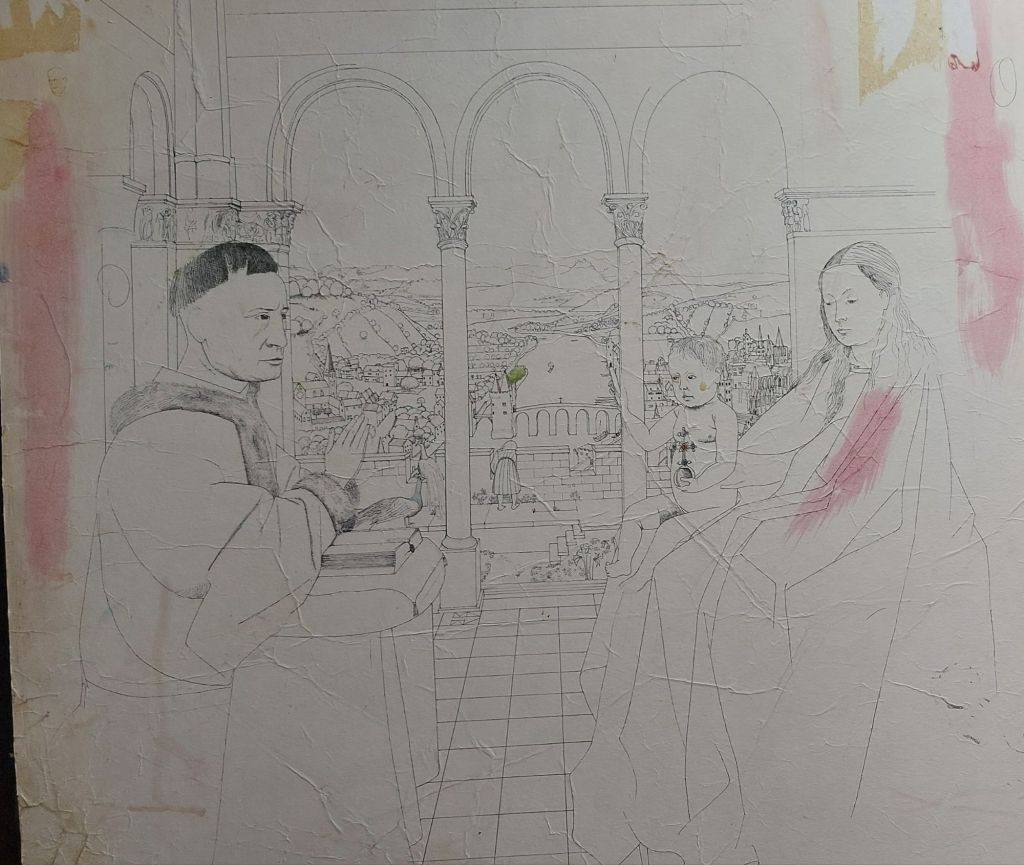
As you can see from the above image, the drawing is of Mary and the Christ Child with possibly St Jerome or another saint. It is very Italianate in style. It is done in mostly black ink (over pencil) with a couple of areas of brown ink and some splashes of colour.
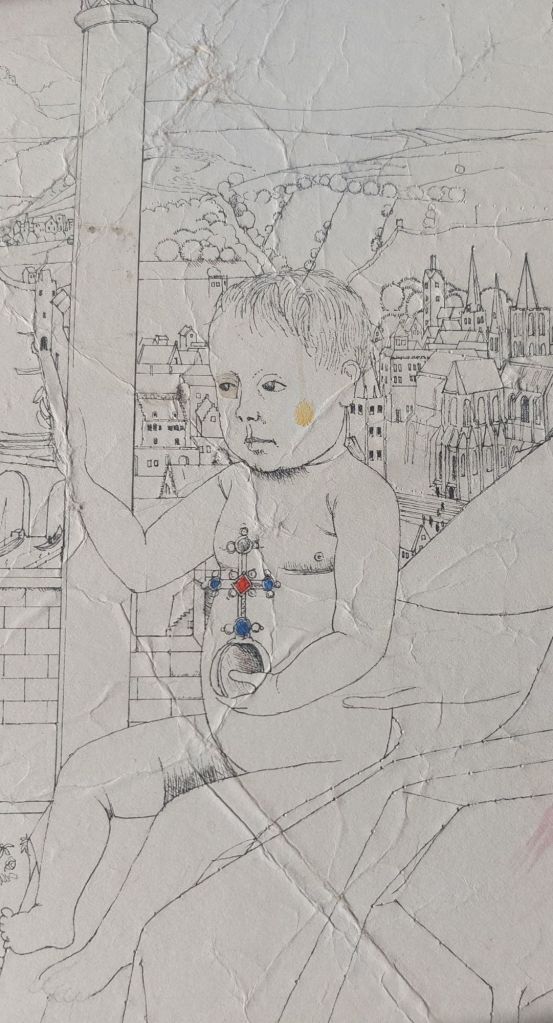
It is a fine drawing, but the exciting thing about this piece is that it is full of holes. Little pin pricks along each contour line. This drawing was created by the master of the studio. It would then be laid on another sheet of paper and pricked through by a student. This second sheet with only holes in it would be laid on a prepared surface/canvas and pounced/dabbed with a small sachet of charcoal dust. Thus marking the underlying surface with dots of charcoal, which the artist would follow as he painted.
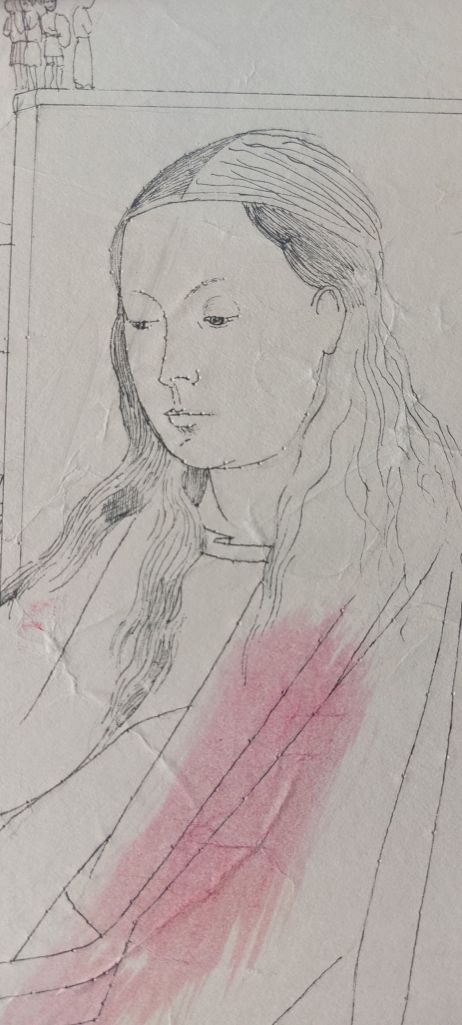
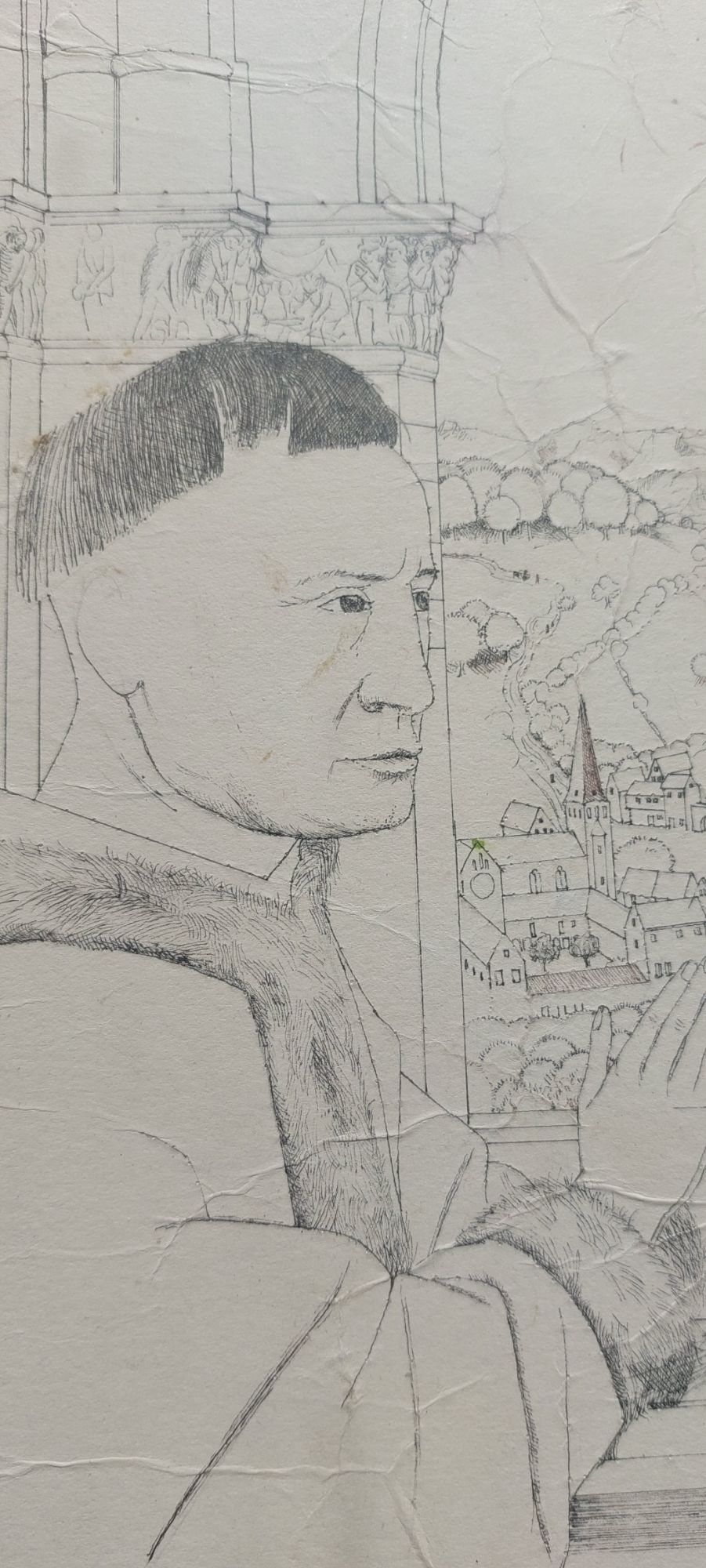
Usually, the drawing or cartoon was kept in the off chance that copies of the piece were to be made.
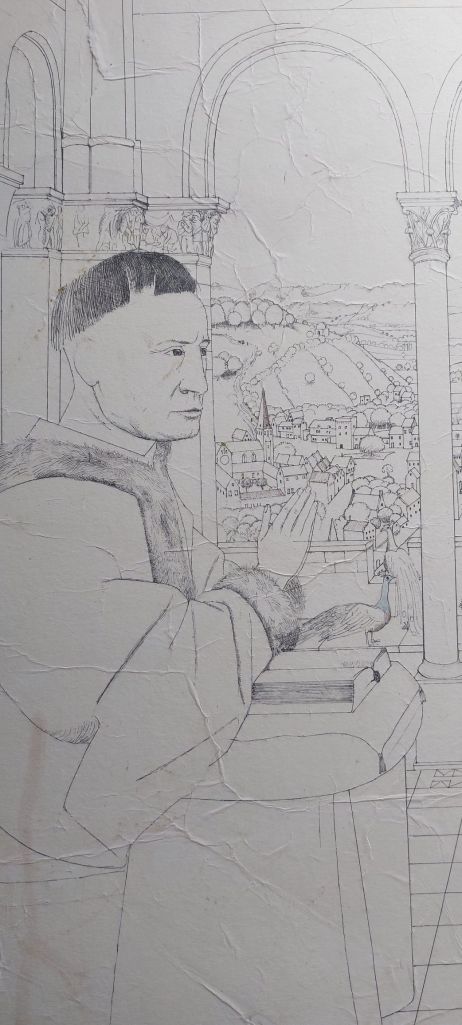

This method was often used in the renaissance by artists like Michelangelo, Raphael and da Vinci to imprint segments of larger works on to prepared surfaces.
The dating of this piece is very difficult. The paper displays great age as well as the techniques involved. I will guess at a wide age gap, which will range from 1550 to 1800. It is a beautiful piece with rare techniques, and this makes it a fine addition to my collection.
After more research, I have found that this image was painted by #JanVanEyck around 1435. The piece is called #TheMadonnaofChancellorRolin (or the #RolinMadonna) and presently hangs in #TheMuseeDuLouvre in Paris.
 ronsartblog